The Communication Puzzle

        Cheryl Bennett
       Professor Leiske
           Com 200
       February 28, 2010
The Communication Puzzle
    In order for communication to be both effective

and successful, all of its pieces need to fit and

complement each other. All of the verbal pieces need

to balance the nonverbal pieces. Without this

harmony, the image and/or message will be confusing

and therefore unsuccessful and ineffective within the

chosen audience.
Contents
 Introduction              Message    Awareness

Personal Awareness         Message

 Location Awareness        Arrangement


 Audience Awareness        Presentation

                            Evaluate
 Audience

                            Communication Cycle
 Gender Awareness
                            References 1 & 2
 Cultural Awareness
What are the Pieces?
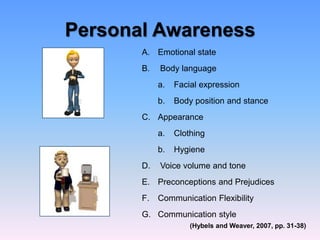
Personal Awareness
       A. Emotional state
       B.   Body language
            a.   Facial expression
            b.   Body position and stance
       C. Appearance
            a.   Clothing
            b.   Hygiene
       D.   Voice volume and tone
       E. Preconceptions and Prejudices
       F.   Communication Flexibility
       G. Communication style
                     (Hybels and Weaver, 2007, pp. 31-38)
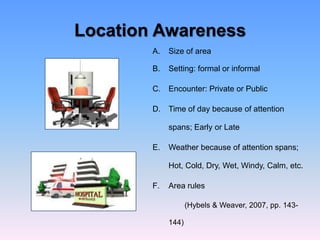
Location Awareness
        A.   Size of area

        B.   Setting: formal or informal

        C.   Encounter: Private or Public

        D.   Time of day because of attention

             spans; Early or Late

        E.   Weather because of attention spans;

             Hot, Cold, Dry, Wet, Windy, Calm, etc.

        F.   Area rules

                    (Hybels & Weaver, 2007, pp. 143-

             144)
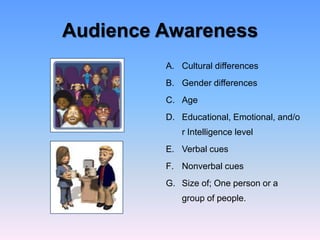
Audience Awareness
         A. Cultural differences
         B. Gender differences
         C. Age
         D. Educational, Emotional, and/o
            r Intelligence level
         E. Verbal cues
         F. Nonverbal cues
         G. Size of; One person or a
            group of people.
Audience
A. Who are you trying to reach?

B. Why that particular group?

C. Watch their nonverbal cues to help stay focused.

D. Keep the audience in mind when forming your message, and

    choosing your method.

E. Provide feedback to their responses.
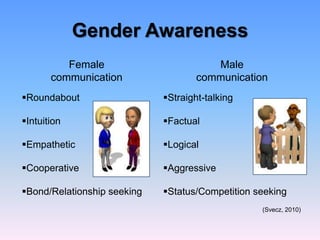
Gender Awareness
          Female                        Male
       communication                 communication
Roundabout                  Straight-talking

Intuition                   Factual

Empathetic                  Logical

Cooperative                 Aggressive

Bond/Relationship seeking   Status/Competition seeking
                                                  (Svecz, 2010)
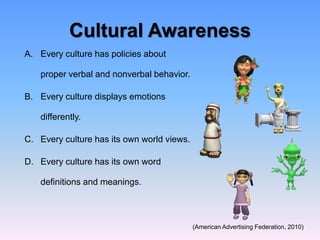
Cultural Awareness
A. Every culture has policies about

   proper verbal and nonverbal behavior.

B. Every culture displays emotions

   differently.

C. Every culture has its own world views.

D. Every culture has its own word

   definitions and meanings.


                                            (American Advertising Federation, 2010)
Message Awareness
         A. Age, education, culturally

            appropriate

         B. Clear and Focused

         C. Easily understood

         D. Length; attention span

         E. Relevance to topic and/or

            audience
             (Hybels and Weaver, 2007, pp. 122-126)
Message
A. What do you want and need to say?
B. What is the focus of your message, its importance?
   a.   To give information, or teach

   b.   To sway opinions towards your own

   c.   To exchange ideas, clarify understandings

   d.   To connect with another individual or group, express empathy

   e.   To express your feelings, wants, needs, or feedback towards someone else

C. How do you want to say your message; what form should it have;
   written, spoken, or both?

D. What do you want your audience to take away from your message?

                                                (Hybels and Weaver, 2007, pp. 122-126)
Arrangement
A. Choose a form that relates to your audience the best
   a.   Auditory (speech)

   b.   Visual (props, presentations, etc.)

   c.   Kinetic (audience involvement)

   d.   A mix of the above methods

B. Consider their informational needs and wants.

C. Consider the culture, educational background, intelligence

    level, and emotional need of the audience.
Presentation
A. How can you make the broadest impact?

B. How can you multiply the effect(s) of your message?

C. How do you wish to deliver your

    message, verbally, nonverbally, or a mix of both?

D. Which style best suits your audience and message?

E. Is it flexible to change per audience?
Evaluate
A. What worked and why?

B. What didn’t and why?

C. What did you learn?

D.   What could or would you change next time?

E. What would improve future communications?

F. Are your communication skills flexible to change in regards

     to your audience, your location, and your message’s

     arrangement and presentation?
The Communication Cycle
Message


Evaluate                Convey


Respond                Receive


           Interpret
                        (Hybels and Weaver, 2007, p. 83)
References
American Advertising Federation, (2010).

   Cultural Barriers. Retrieved from http://www.aaf.org/default.asp?id=911

   on February 27, 2010.

AnimationFactory. (2008.) 3-D Animated Clipart 2. Jupitorimages

   Corporation: New York.

Hybels, S., & Weaver II, R., (2007). Communicating Effectively. New York:

   McGraw Hill.
Svecz, A., (2010). Gender Communication: The Impact Gender has on

  Effective Communication. Retrieved from

  http://trainingpd.suite101.com/article.cfm/gender-communication

  on February 27, 2010.

The communication puzzle animated2

  • 1.
    The Communication Puzzle Cheryl Bennett Professor Leiske Com 200 February 28, 2010
  • 2.
    The Communication Puzzle In order for communication to be both effective and successful, all of its pieces need to fit and complement each other. All of the verbal pieces need to balance the nonverbal pieces. Without this harmony, the image and/or message will be confusing and therefore unsuccessful and ineffective within the chosen audience.
  • 3.
    Contents  Introduction  Message Awareness Personal Awareness  Message  Location Awareness  Arrangement  Audience Awareness  Presentation  Evaluate  Audience  Communication Cycle  Gender Awareness  References 1 & 2  Cultural Awareness
  • 4.
    What are thePieces?
  • 5.
    Personal Awareness A. Emotional state B. Body language a. Facial expression b. Body position and stance C. Appearance a. Clothing b. Hygiene D. Voice volume and tone E. Preconceptions and Prejudices F. Communication Flexibility G. Communication style (Hybels and Weaver, 2007, pp. 31-38)
  • 6.
    Location Awareness A. Size of area B. Setting: formal or informal C. Encounter: Private or Public D. Time of day because of attention spans; Early or Late E. Weather because of attention spans; Hot, Cold, Dry, Wet, Windy, Calm, etc. F. Area rules (Hybels & Weaver, 2007, pp. 143- 144)
  • 7.
    Audience Awareness A. Cultural differences B. Gender differences C. Age D. Educational, Emotional, and/o r Intelligence level E. Verbal cues F. Nonverbal cues G. Size of; One person or a group of people.
  • 8.
    Audience A. Who areyou trying to reach? B. Why that particular group? C. Watch their nonverbal cues to help stay focused. D. Keep the audience in mind when forming your message, and choosing your method. E. Provide feedback to their responses.
  • 9.
    Gender Awareness Female Male communication communication Roundabout Straight-talking Intuition Factual Empathetic Logical Cooperative Aggressive Bond/Relationship seeking Status/Competition seeking (Svecz, 2010)
  • 10.
    Cultural Awareness A. Everyculture has policies about proper verbal and nonverbal behavior. B. Every culture displays emotions differently. C. Every culture has its own world views. D. Every culture has its own word definitions and meanings. (American Advertising Federation, 2010)
  • 11.
    Message Awareness A. Age, education, culturally appropriate B. Clear and Focused C. Easily understood D. Length; attention span E. Relevance to topic and/or audience (Hybels and Weaver, 2007, pp. 122-126)
  • 12.
    Message A. What doyou want and need to say? B. What is the focus of your message, its importance? a. To give information, or teach b. To sway opinions towards your own c. To exchange ideas, clarify understandings d. To connect with another individual or group, express empathy e. To express your feelings, wants, needs, or feedback towards someone else C. How do you want to say your message; what form should it have; written, spoken, or both? D. What do you want your audience to take away from your message? (Hybels and Weaver, 2007, pp. 122-126)
  • 13.
    Arrangement A. Choose aform that relates to your audience the best a. Auditory (speech) b. Visual (props, presentations, etc.) c. Kinetic (audience involvement) d. A mix of the above methods B. Consider their informational needs and wants. C. Consider the culture, educational background, intelligence level, and emotional need of the audience.
  • 14.
    Presentation A. How canyou make the broadest impact? B. How can you multiply the effect(s) of your message? C. How do you wish to deliver your message, verbally, nonverbally, or a mix of both? D. Which style best suits your audience and message? E. Is it flexible to change per audience?
  • 15.
    Evaluate A. What workedand why? B. What didn’t and why? C. What did you learn? D. What could or would you change next time? E. What would improve future communications? F. Are your communication skills flexible to change in regards to your audience, your location, and your message’s arrangement and presentation?
  • 16.
  • 17.
    Message Evaluate Convey Respond Receive Interpret (Hybels and Weaver, 2007, p. 83)
  • 18.
  • 19.
    American Advertising Federation,(2010). Cultural Barriers. Retrieved from http://www.aaf.org/default.asp?id=911 on February 27, 2010. AnimationFactory. (2008.) 3-D Animated Clipart 2. Jupitorimages Corporation: New York. Hybels, S., & Weaver II, R., (2007). Communicating Effectively. New York: McGraw Hill.
  • 20.
    Svecz, A., (2010).Gender Communication: The Impact Gender has on Effective Communication. Retrieved from http://trainingpd.suite101.com/article.cfm/gender-communication on February 27, 2010.