THE CASE FOR
CONTINUOUS SECURITY
By Pete Cheslock 	

Senior Director of Ops and Support at Threat Stack	

@petecheslock
DevOps is a term that has absolutely 

blown up in the last 5 years.
However, many had an immediate adverse
reaction towards Yet Another Buzzword
…especially when the core concepts of
“DevOps” were things people 

had been doing for YEARS!
To shorten the feedback loop 

in development cycles, 

allowing teams to iterate quickly on changes 

and ship features to customer sooner.
The Core Tenant of DevOps
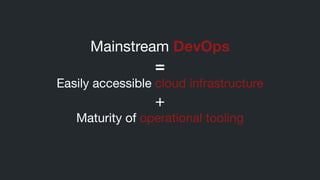
Mainstream DevOps
=

Easily accessible cloud infrastructure

+

Maturity of operational tooling
For companies starting new 

product development initiatives, 

using Configuration Management 

is table stakes to iterate quickly!
IaaS providers today make it 

as easy as possible to provision systems 

to meet infrastructure needs — and quickly.
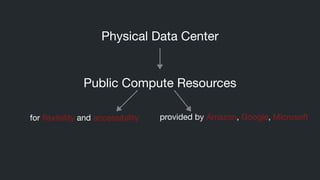
Physical Data Center

Public Compute Resources

for flexibility and accessibility
 provided by Amazon, Google, Microsoft
Companies leverage Infrastructure as Code 

for major speed to market benefits
The Competitive Advantage
Companies can now provision
hundreds (or thousands) of compute
instances in mere minutes.
!
This is an every day activity!
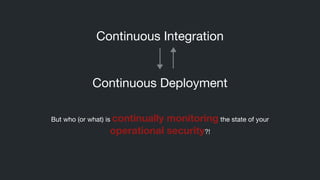
Continuous Integration

Continuous Deployment

But who (or what) is continually monitoring the state of your 

operational security?!
Junior sysadmins can now make changes to:

!
• a Chef Recipe

• a Puppet Manifest

• an Ansible Playbook

!
!
…and deploy it to production — in minutes…
Today…
What is the scope of that change?
to be slowed down by the security team

!
or
!
configuration management changes to be
passed through a Change Control Board
Sysadmins DON’T Want:
to change a variable, open a pull request,
and once merged, their operational
tooling to do the rest!

!
They want their change 

to hit production servers ASAP.
Sysadmins Want:
This is where SecDevOps (or SecOps) comes in.
(ignore the fact that it’s a silly buzzword just like DevOps…)
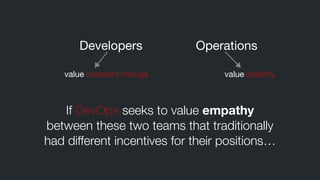
If DevOps seeks to value empathy
between these two teams that traditionally
had different incentives for their positions…
Developers Operations
value constant change value stability
…then SecDevOps seeks to evoke the SAME outcome
with Security teams
(and the rest of the business)
If you’re continually deploying changes,

you must be continually monitoring
security implications for operational changes.
Often times there is no single person that is able
to say with absolute certainty which changes to
infrastructure have additional risks towards your
security posture.
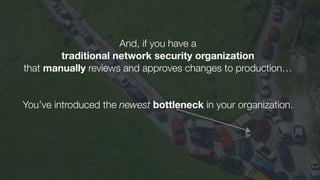
And, if you have a
traditional network security organization
that manually reviews and approves changes to production…
!
!
You’ve introduced the newest bottleneck in your organization.
!
!
!
!
!
!
A SecDevOps methodology allows you to 

improve your security monitoring 

and response times, while maintaining 

your ability to continually 

deploy changes
SecDevOps is the answer to this discussion.
This is the most important (and exciting!) problem
to solve in many organizations!
But it is also one of the hardest problems to solve.
!
This is why at Threat Stack, we’re all excited
to be in a unique position to actively
help companies solve this.
Start Implementing
Continuous Security Today!
!
threatstack.com

The Case For Continuous Security

  • 1.
    THE CASE FOR CONTINUOUSSECURITY By Pete Cheslock Senior Director of Ops and Support at Threat Stack @petecheslock
  • 2.
    DevOps is aterm that has absolutely blown up in the last 5 years.
  • 3.
    However, many hadan immediate adverse reaction towards Yet Another Buzzword
  • 4.
    …especially when thecore concepts of “DevOps” were things people had been doing for YEARS!
  • 6.
    To shorten thefeedback loop in development cycles, allowing teams to iterate quickly on changes and ship features to customer sooner. The Core Tenant of DevOps
  • 7.
    Mainstream DevOps = Easily accessiblecloud infrastructure + Maturity of operational tooling
  • 8.
    For companies startingnew product development initiatives, using Configuration Management is table stakes to iterate quickly!
  • 9.
    IaaS providers todaymake it as easy as possible to provision systems to meet infrastructure needs — and quickly.
  • 10.
    Physical Data Center PublicCompute Resources for flexibility and accessibility provided by Amazon, Google, Microsoft
  • 11.
    Companies leverage Infrastructureas Code for major speed to market benefits The Competitive Advantage
  • 12.
    Companies can nowprovision hundreds (or thousands) of compute instances in mere minutes. ! This is an every day activity!
  • 13.
    Continuous Integration Continuous Deployment Butwho (or what) is continually monitoring the state of your operational security?!
  • 15.
    Junior sysadmins cannow make changes to: ! • a Chef Recipe • a Puppet Manifest • an Ansible Playbook ! ! …and deploy it to production — in minutes… Today…
  • 16.
    What is thescope of that change?
  • 17.
    to be sloweddown by the security team ! or ! configuration management changes to be passed through a Change Control Board Sysadmins DON’T Want:
  • 18.
    to change avariable, open a pull request, and once merged, their operational tooling to do the rest! ! They want their change to hit production servers ASAP. Sysadmins Want:
  • 19.
    This is whereSecDevOps (or SecOps) comes in. (ignore the fact that it’s a silly buzzword just like DevOps…)
  • 20.
    If DevOps seeksto value empathy between these two teams that traditionally had different incentives for their positions… Developers Operations value constant change value stability
  • 21.
    …then SecDevOps seeksto evoke the SAME outcome with Security teams (and the rest of the business)
  • 22.
    If you’re continuallydeploying changes, you must be continually monitoring security implications for operational changes.
  • 23.
    Often times thereis no single person that is able to say with absolute certainty which changes to infrastructure have additional risks towards your security posture.
  • 24.
    And, if youhave a traditional network security organization that manually reviews and approves changes to production… ! ! You’ve introduced the newest bottleneck in your organization. ! ! ! ! ! !
  • 25.
    A SecDevOps methodologyallows you to improve your security monitoring and response times, while maintaining your ability to continually deploy changes SecDevOps is the answer to this discussion.
  • 26.
    This is themost important (and exciting!) problem to solve in many organizations!
  • 27.
    But it isalso one of the hardest problems to solve. ! This is why at Threat Stack, we’re all excited to be in a unique position to actively help companies solve this.
  • 28.