Kwame Owusu-Ansah Owusu Afram
Ghana Communication Technology University
Students should be able to:
 Understand the meaning of a career
 Understanding the career planning process
 Understand the importance of career planning
 Use the step-by-step process to plan for their career
 Know the do’s and don’t when planning for their career
Career Planning Process - Kwame Afram 2
 Career includes all of the work, learning, and leisure activities
that you are involved in throughout your life.
 Career planning is a lifelong process that focuses on making
choices to help you manage your work and personal life. Good
career planning requires information about you, the world of
work and commitment.
Career Planning Process - Kwame Afram 3
Overcoming your barriers to career advancement begins with a
career plan.
Choosing a career path is one of the most significant decisions
you’ll make in your lifetime, and it can be challenging to decide
exactly what you want to do from a professional standpoint.
Career Planning Process - Kwame Afram 4
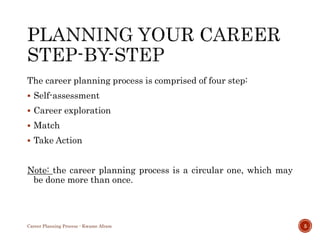
The career planning process is comprised of four step:
 Self-assessment
 Career exploration
 Match
 Take Action
Note: the career planning process is a circular one, which may
be done more than once.
Career Planning Process - Kwame Afram 5
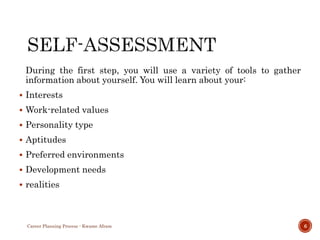
During the first step, you will use a variety of tools to gather
information about yourself. You will learn about your:
 Interests
 Work-related values
 Personality type
 Aptitudes
 Preferred environments
 Development needs
 realities
Career Planning Process - Kwame Afram 6
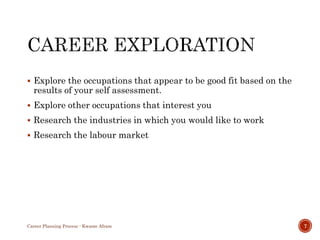
 Explore the occupations that appear to be good fit based on the
results of your self assessment.
 Explore other occupations that interest you
 Research the industries in which you would like to work
 Research the labour market
Career Planning Process - Kwame Afram 7
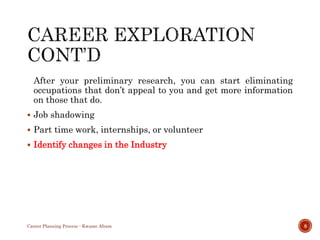
After your preliminary research, you can start eliminating
occupations that don’t appeal to you and get more information
on those that do.
 Job shadowing
 Part time work, internships, or volunteer
 Identify changes in the Industry
Career Planning Process - Kwame Afram 8
During this phase you will decide which occupation is
the best fit for you based on self-assessment and career
exploration.
 Identify occupations that you have qualifications, knowledge,
skills for
 Identify the occupation in which you are most interested in
 Give serious thought to how you will prepare to enter your chosen
career, the costs, barriers, etc
 Go back to the prior phase if you find you need to explore your
options further before making a decision
Career Planning Process - Kwame Afram 9
Its time to put together a plan to reach your goals and start
moving forward.
Write a career action plan
 Identify your long-term and short-term goals
 Apply for a training program, if necessary
 Develop a job search strategy
 Write your resume
 Identify and learn about potential employers
 Compose cover letters
 Prepare for job interviews
Career Planning Process - Kwame Afram 10
Career planning can help you to prepare to:
 Enter the workforce
 Plan for education
 Deal with changing workplace demands
 Anticipate trends or changes
 Plan to upgrade or maintain your skills
 Plan for career advancement
Career Planning Process - Kwame Afram 11
 Listening to people who tell you that you should, or should not,
do something
 Following in someone else’s footsteps
 Not doing your homework
 Not talking to those in the know
 Going for the money, Honey
 Ignoring who you are
 Not considering location
 Not looking beyond a “Best Careers” list
 Ignoring the future
Career Planning Process - Kwame Afram 12
 Getting information from the Labour market
 Are you willing to relocate for your career?
 What does the future hold in store?
 The informational interview
Career Planning Process - Kwame Afram 13
 Thank You
Career Planning Process - Kwame Afram 14
 Antoniu, E., 2010. Career planning process and its role in
human resource development. Annals of the university of
petroşani, economics, 10(2), pp.13-22.
 Lent, R.W., 2013. Career‐life preparedness: Revisiting career
planning and adjustment in the new workplace. The Career
Development Quarterly, 61(1), pp.2-14.
Career Planning Process - Kwame Afram 15

The career planning process

  • 1.
    Kwame Owusu-Ansah OwusuAfram Ghana Communication Technology University
  • 2.
    Students should beable to:  Understand the meaning of a career  Understanding the career planning process  Understand the importance of career planning  Use the step-by-step process to plan for their career  Know the do’s and don’t when planning for their career Career Planning Process - Kwame Afram 2
  • 3.
     Career includesall of the work, learning, and leisure activities that you are involved in throughout your life.  Career planning is a lifelong process that focuses on making choices to help you manage your work and personal life. Good career planning requires information about you, the world of work and commitment. Career Planning Process - Kwame Afram 3
  • 4.
    Overcoming your barriersto career advancement begins with a career plan. Choosing a career path is one of the most significant decisions you’ll make in your lifetime, and it can be challenging to decide exactly what you want to do from a professional standpoint. Career Planning Process - Kwame Afram 4
  • 5.
    The career planningprocess is comprised of four step:  Self-assessment  Career exploration  Match  Take Action Note: the career planning process is a circular one, which may be done more than once. Career Planning Process - Kwame Afram 5
  • 6.
    During the firststep, you will use a variety of tools to gather information about yourself. You will learn about your:  Interests  Work-related values  Personality type  Aptitudes  Preferred environments  Development needs  realities Career Planning Process - Kwame Afram 6
  • 7.
     Explore theoccupations that appear to be good fit based on the results of your self assessment.  Explore other occupations that interest you  Research the industries in which you would like to work  Research the labour market Career Planning Process - Kwame Afram 7
  • 8.
    After your preliminaryresearch, you can start eliminating occupations that don’t appeal to you and get more information on those that do.  Job shadowing  Part time work, internships, or volunteer  Identify changes in the Industry Career Planning Process - Kwame Afram 8
  • 9.
    During this phaseyou will decide which occupation is the best fit for you based on self-assessment and career exploration.  Identify occupations that you have qualifications, knowledge, skills for  Identify the occupation in which you are most interested in  Give serious thought to how you will prepare to enter your chosen career, the costs, barriers, etc  Go back to the prior phase if you find you need to explore your options further before making a decision Career Planning Process - Kwame Afram 9
  • 10.
    Its time toput together a plan to reach your goals and start moving forward. Write a career action plan  Identify your long-term and short-term goals  Apply for a training program, if necessary  Develop a job search strategy  Write your resume  Identify and learn about potential employers  Compose cover letters  Prepare for job interviews Career Planning Process - Kwame Afram 10
  • 11.
    Career planning canhelp you to prepare to:  Enter the workforce  Plan for education  Deal with changing workplace demands  Anticipate trends or changes  Plan to upgrade or maintain your skills  Plan for career advancement Career Planning Process - Kwame Afram 11
  • 12.
     Listening topeople who tell you that you should, or should not, do something  Following in someone else’s footsteps  Not doing your homework  Not talking to those in the know  Going for the money, Honey  Ignoring who you are  Not considering location  Not looking beyond a “Best Careers” list  Ignoring the future Career Planning Process - Kwame Afram 12
  • 13.
     Getting informationfrom the Labour market  Are you willing to relocate for your career?  What does the future hold in store?  The informational interview Career Planning Process - Kwame Afram 13
  • 14.
     Thank You CareerPlanning Process - Kwame Afram 14
  • 15.
     Antoniu, E.,2010. Career planning process and its role in human resource development. Annals of the university of petroşani, economics, 10(2), pp.13-22.  Lent, R.W., 2013. Career‐life preparedness: Revisiting career planning and adjustment in the new workplace. The Career Development Quarterly, 61(1), pp.2-14. Career Planning Process - Kwame Afram 15