THE ALTERNATIVES IN
LANGUAGE ASSESSMENT
   Article by James D Brown and Thom Hudson

          Presentation by Alex Thomas
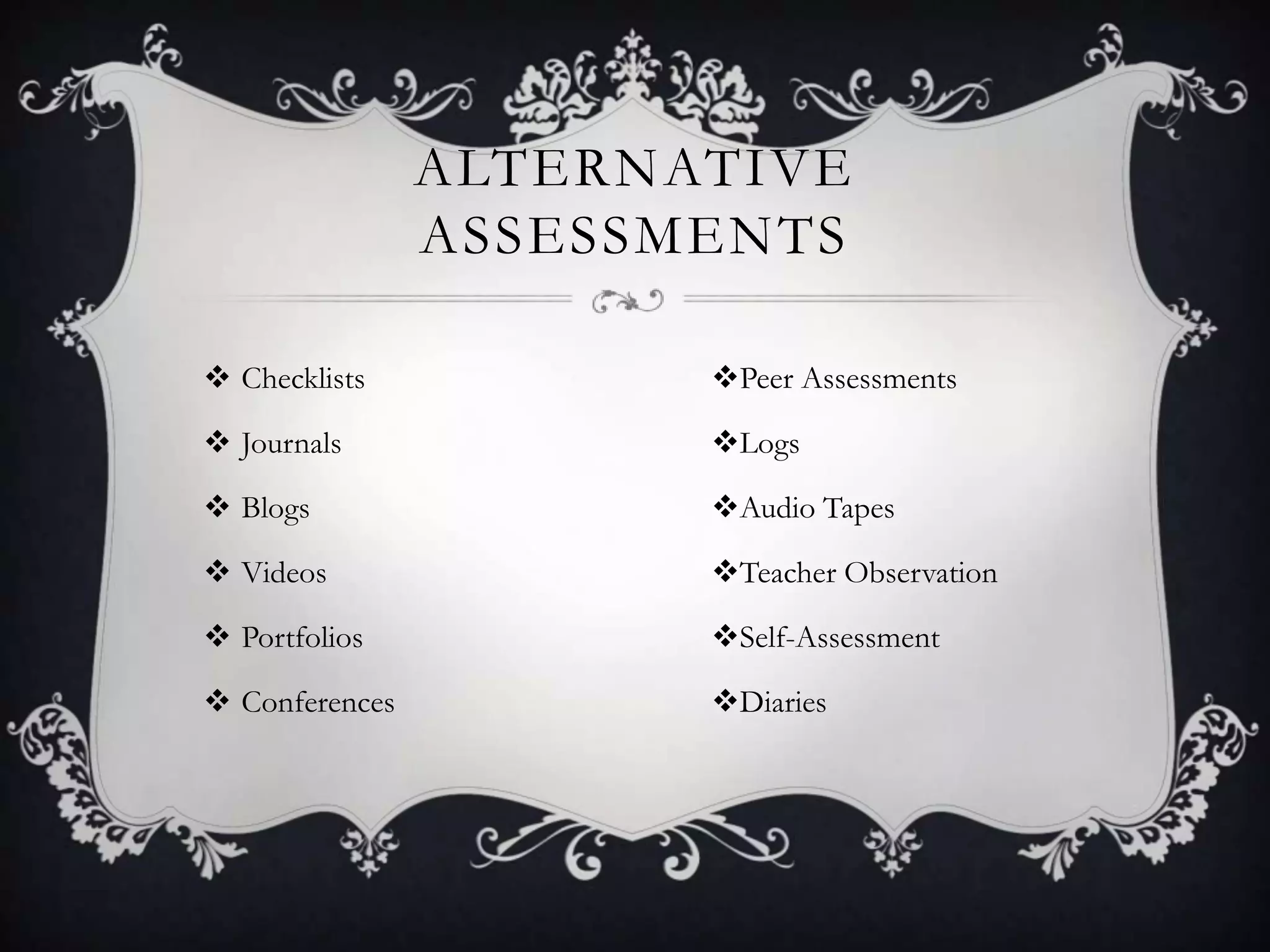
ALTERNATIVE
                ASSESSMENTS

 Checklists           Peer Assessments

 Journals             Logs

 Blogs                Audio Tapes

 Videos               Teacher Observation

 Portfolios           Self-Assessment

 Conferences          Diaries
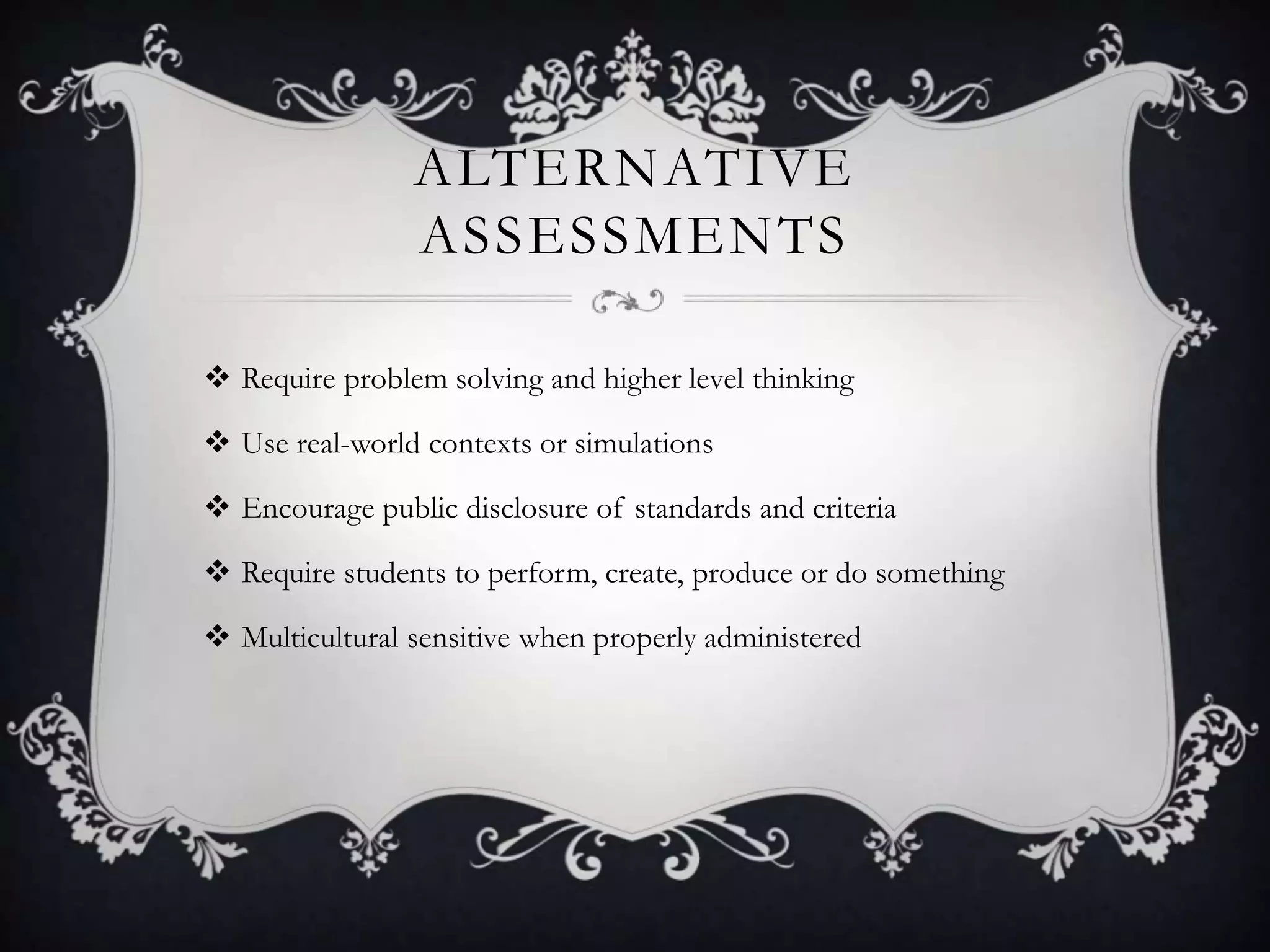
ALTERNATIVE
                ASSESSMENTS

 Require problem solving and higher level thinking

 Use real-world contexts or simulations

 Encourage public disclosure of standards and criteria

 Require students to perform, create, produce or do something

 Multicultural sensitive when properly administered
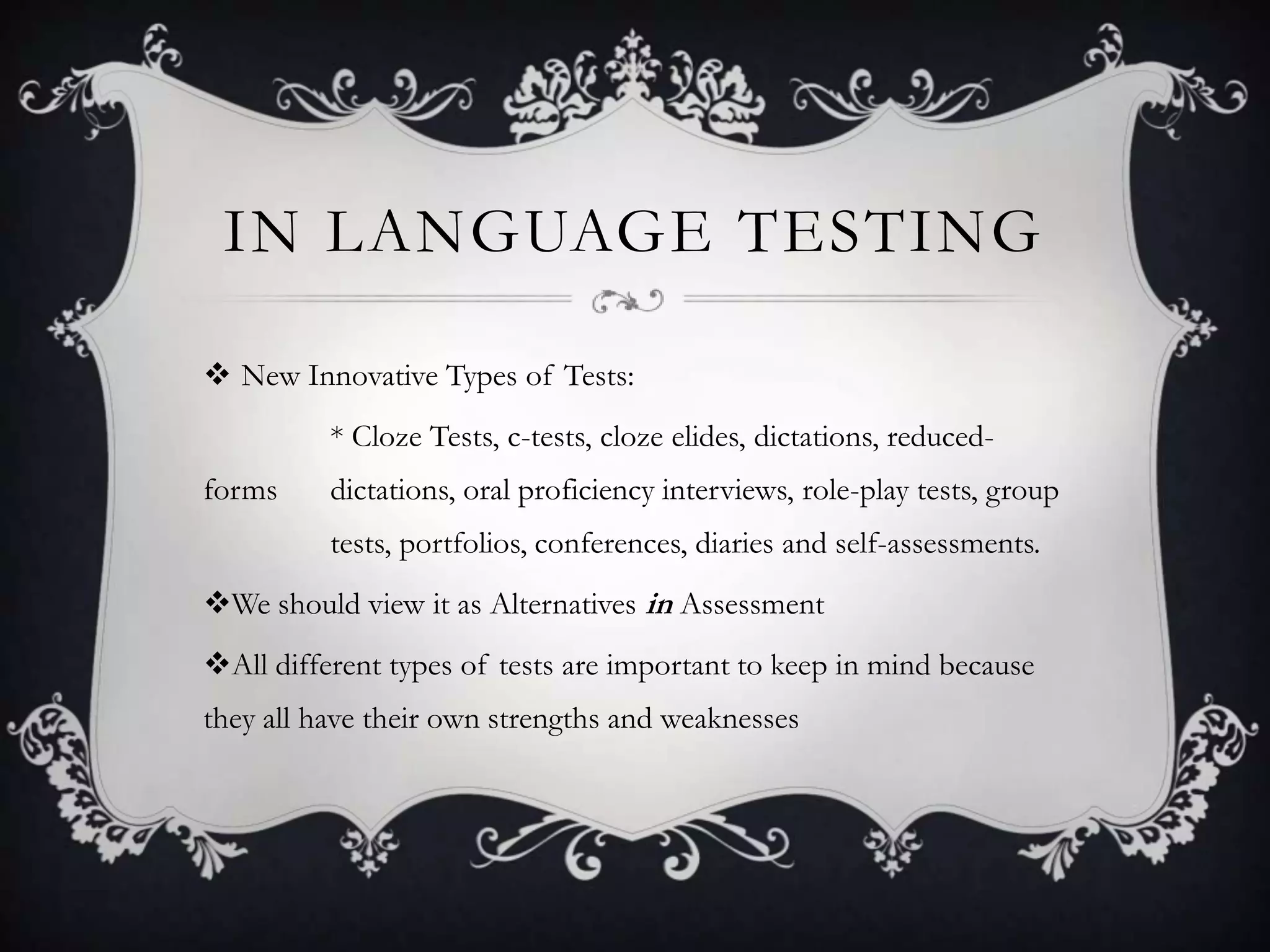
IN LANGUAGE TESTING

 New Innovative Types of Tests:
          * Cloze Tests, c-tests, cloze elides, dictations, reduced-
forms     dictations, oral proficiency interviews, role-play tests, group
          tests, portfolios, conferences, diaries and self-assessments.
We should view it as Alternatives in Assessment
All different types of tests are important to keep in mind because
they all have their own strengths and weaknesses
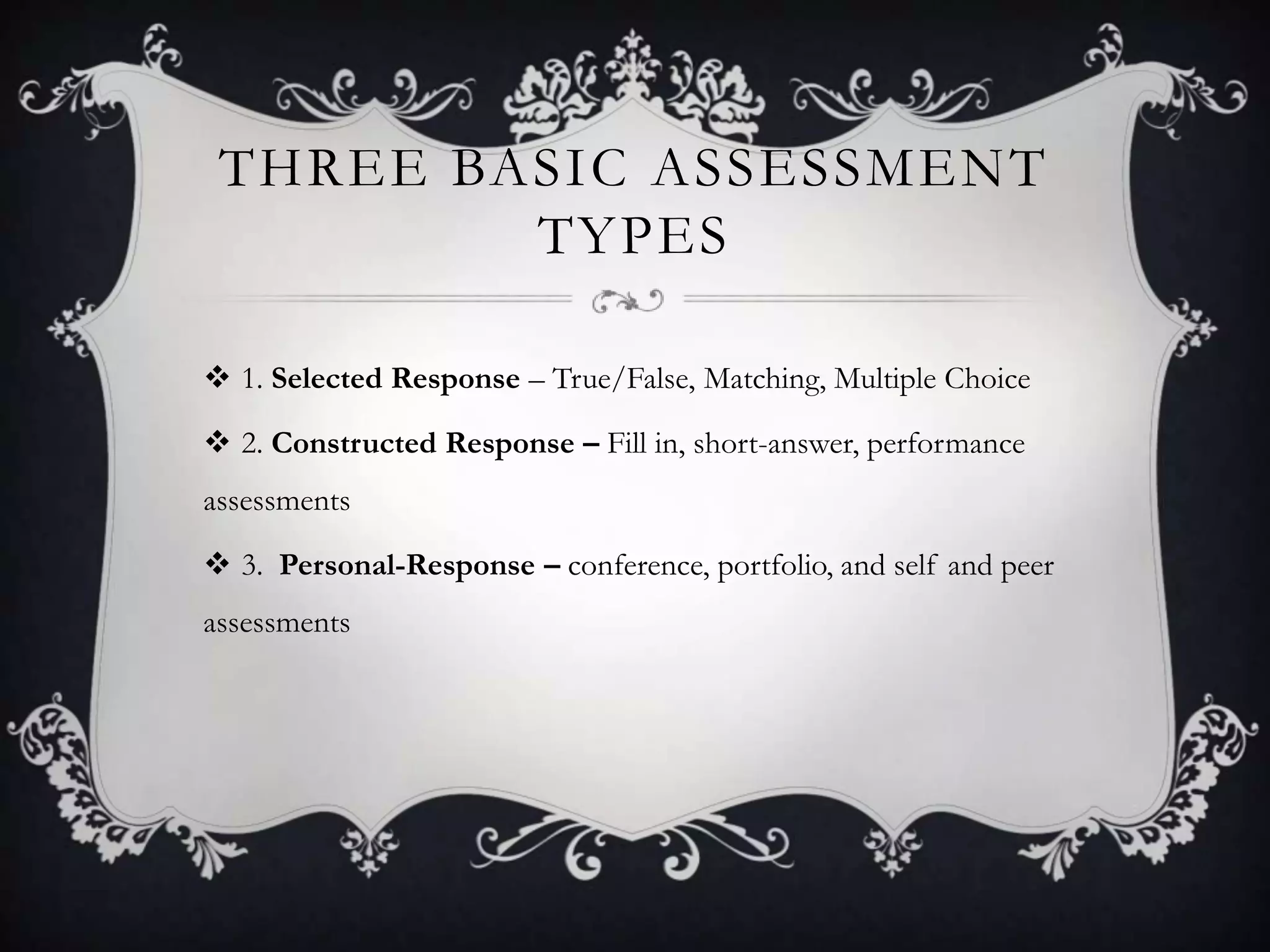
THREE BASIC ASSESSMENT
         TYPES

 1. Selected Response – True/False, Matching, Multiple Choice

 2. Constructed Response – Fill in, short-answer, performance
assessments

 3. Personal-Response – conference, portfolio, and self and peer
assessments
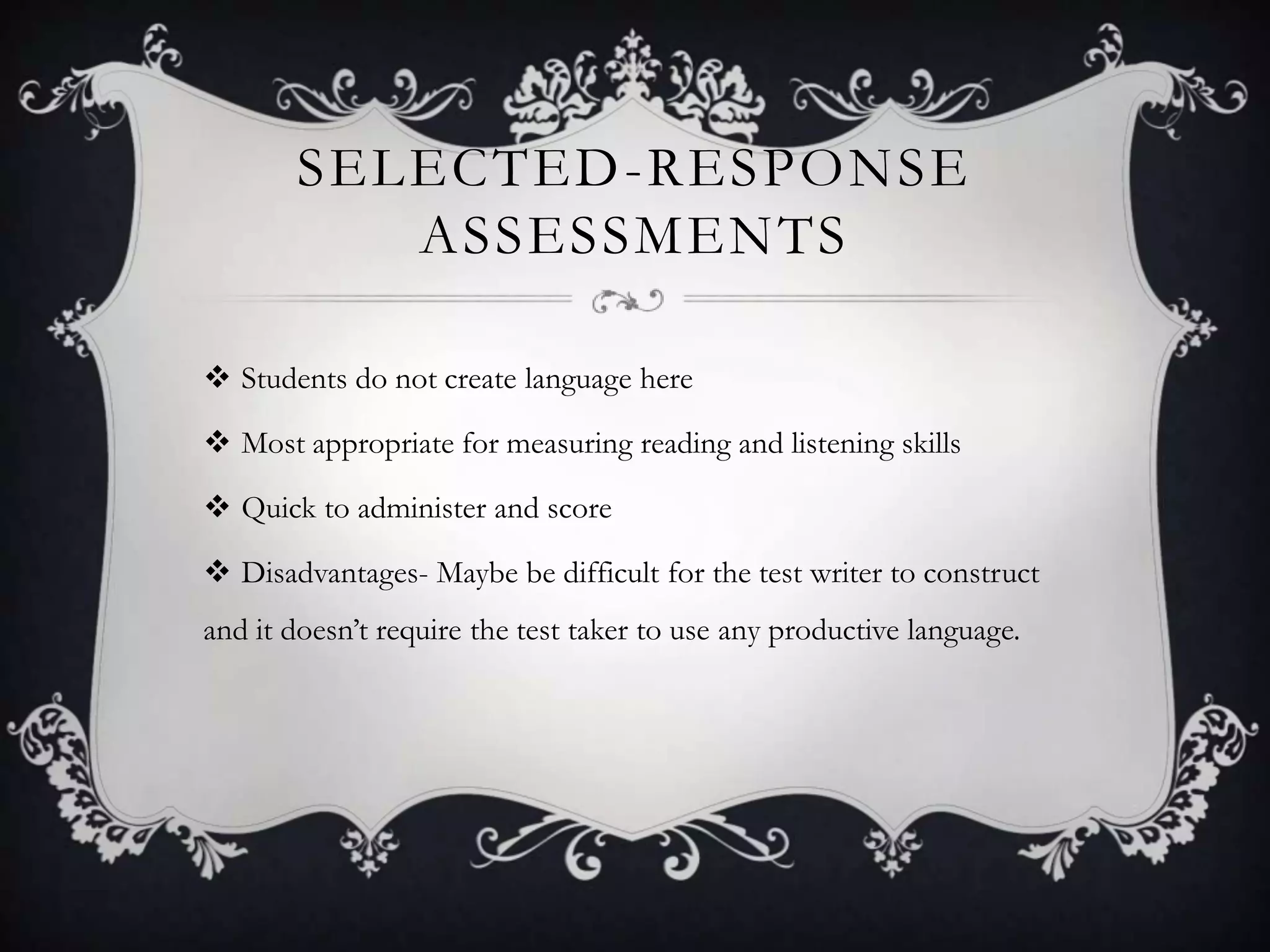
SELECTED -RESPONSE
          ASSESSMENTS

 Students do not create language here

 Most appropriate for measuring reading and listening skills

 Quick to administer and score

 Disadvantages- Maybe be difficult for the test writer to construct
and it doesn’t require the test taker to use any productive language.
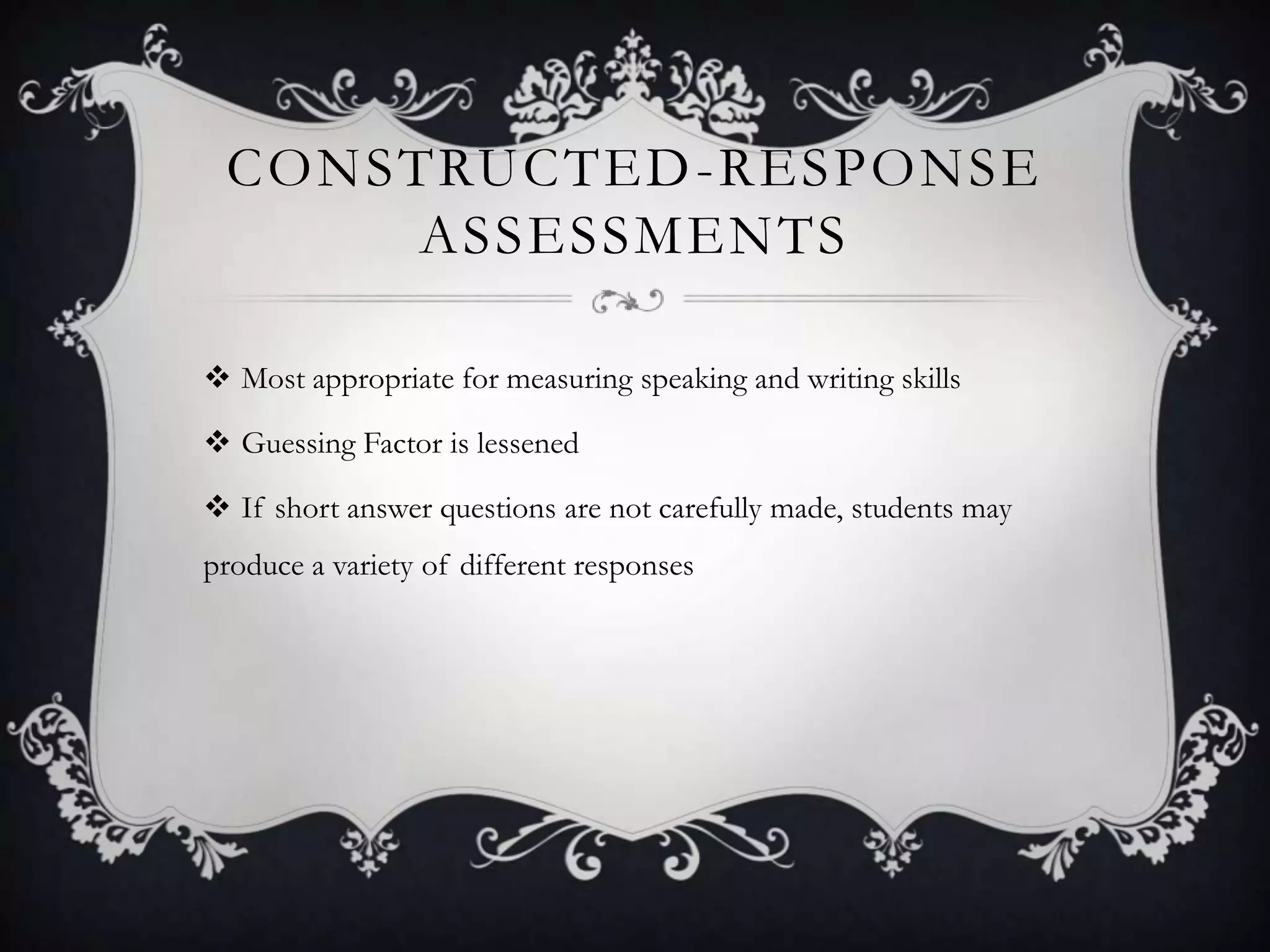
CONSTRUCTED -RESPONSE
      ASSESSMENTS

 Most appropriate for measuring speaking and writing skills

 Guessing Factor is lessened

 If short answer questions are not carefully made, students may
produce a variety of different responses
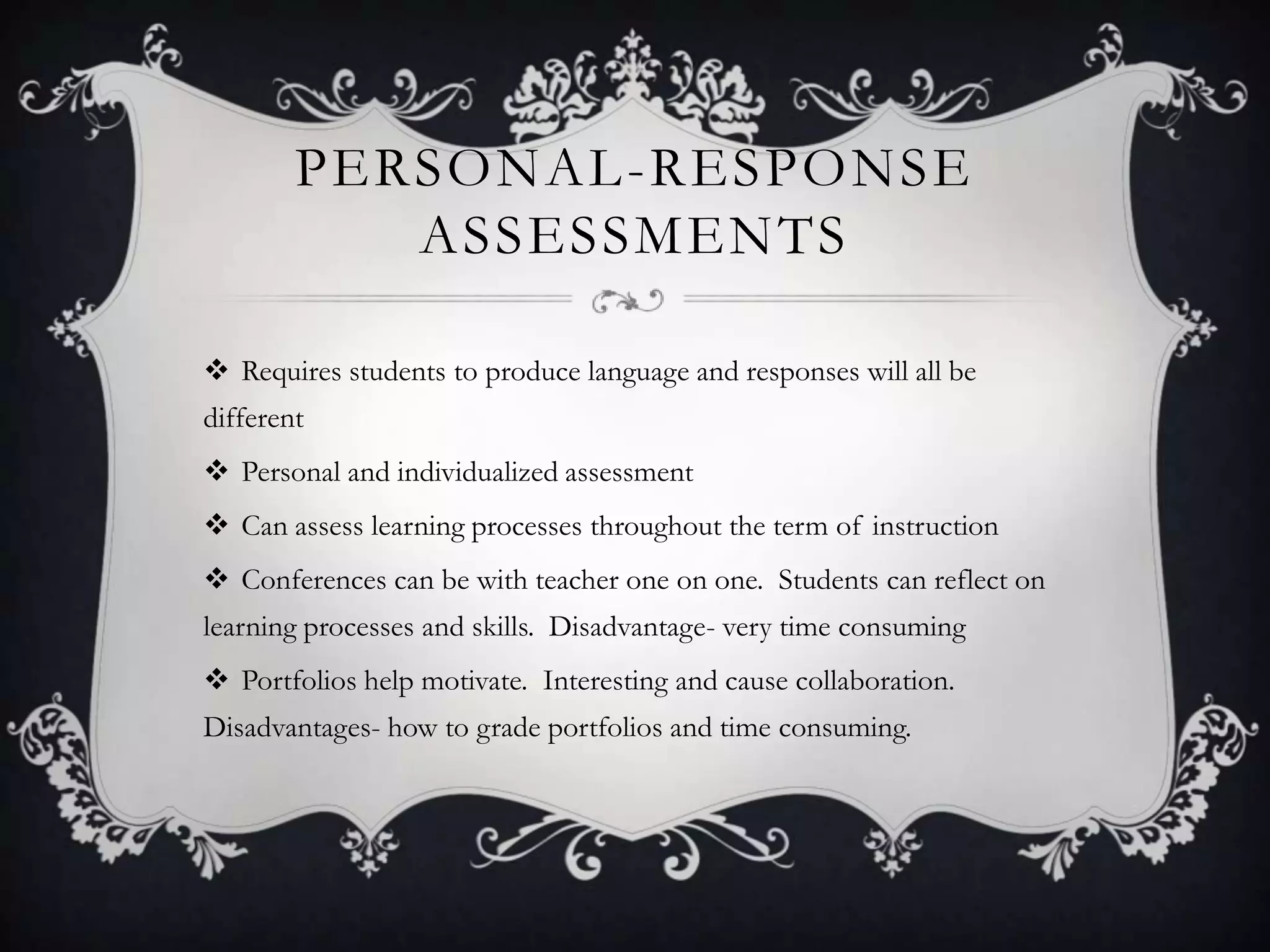
PERSONAL -RESPONSE
           ASSESSMENTS

 Requires students to produce language and responses will all be
different
 Personal and individualized assessment
 Can assess learning processes throughout the term of instruction
 Conferences can be with teacher one on one. Students can reflect on
learning processes and skills. Disadvantage- very time consuming
 Portfolios help motivate. Interesting and cause collaboration.
Disadvantages- how to grade portfolios and time consuming.
WASHBACK

 “Washback is the effect of testing and assessment on the language
teaching curriculum that is related to it. It is also called backwash,
test impact, measurement-driven instruction, curriculum alignment,
and test feedback.” (667)
WASHBACK

 A negative Washback- if the assessment procedures in a
curriculum do not correspond to a curriculum’s goals and objectives

 A positive Washback- when the assessment procedures correspond
to the course goals and objectives.
CONCLUSION

 Many different types of assessments, all with advantages and
disadvantages

 We should view all types of assessments as alternatives and choose
them wisely

 Giving students feedback is very important
QUESTIONS

 What is one example of an alternative in assessment that you have
seen or administered that worked really well in a classroom? What
made it so successful?

 What are your thoughts on Selected Response assessments when it
comes to language learning?

The Alternatives in Language Assessment

  • 1.
    THE ALTERNATIVES IN LANGUAGEASSESSMENT Article by James D Brown and Thom Hudson Presentation by Alex Thomas
  • 2.
    ALTERNATIVE ASSESSMENTS  Checklists Peer Assessments  Journals Logs  Blogs Audio Tapes  Videos Teacher Observation  Portfolios Self-Assessment  Conferences Diaries
  • 3.
    ALTERNATIVE ASSESSMENTS  Require problem solving and higher level thinking  Use real-world contexts or simulations  Encourage public disclosure of standards and criteria  Require students to perform, create, produce or do something  Multicultural sensitive when properly administered
  • 4.
    IN LANGUAGE TESTING New Innovative Types of Tests: * Cloze Tests, c-tests, cloze elides, dictations, reduced- forms dictations, oral proficiency interviews, role-play tests, group tests, portfolios, conferences, diaries and self-assessments. We should view it as Alternatives in Assessment All different types of tests are important to keep in mind because they all have their own strengths and weaknesses
  • 5.
    THREE BASIC ASSESSMENT TYPES  1. Selected Response – True/False, Matching, Multiple Choice  2. Constructed Response – Fill in, short-answer, performance assessments  3. Personal-Response – conference, portfolio, and self and peer assessments
  • 6.
    SELECTED -RESPONSE ASSESSMENTS  Students do not create language here  Most appropriate for measuring reading and listening skills  Quick to administer and score  Disadvantages- Maybe be difficult for the test writer to construct and it doesn’t require the test taker to use any productive language.
  • 7.
    CONSTRUCTED -RESPONSE ASSESSMENTS  Most appropriate for measuring speaking and writing skills  Guessing Factor is lessened  If short answer questions are not carefully made, students may produce a variety of different responses
  • 8.
    PERSONAL -RESPONSE ASSESSMENTS  Requires students to produce language and responses will all be different  Personal and individualized assessment  Can assess learning processes throughout the term of instruction  Conferences can be with teacher one on one. Students can reflect on learning processes and skills. Disadvantage- very time consuming  Portfolios help motivate. Interesting and cause collaboration. Disadvantages- how to grade portfolios and time consuming.
  • 9.
    WASHBACK  “Washback isthe effect of testing and assessment on the language teaching curriculum that is related to it. It is also called backwash, test impact, measurement-driven instruction, curriculum alignment, and test feedback.” (667)
  • 10.
    WASHBACK  A negativeWashback- if the assessment procedures in a curriculum do not correspond to a curriculum’s goals and objectives  A positive Washback- when the assessment procedures correspond to the course goals and objectives.
  • 11.
    CONCLUSION  Many differenttypes of assessments, all with advantages and disadvantages  We should view all types of assessments as alternatives and choose them wisely  Giving students feedback is very important
  • 12.
    QUESTIONS  What isone example of an alternative in assessment that you have seen or administered that worked really well in a classroom? What made it so successful?  What are your thoughts on Selected Response assessments when it comes to language learning?