THE AI APOCALYPSE
HAS BEEN CANCELED:
HOW GENERATIVE AI
CAN PROMOTE A
HEALTHIER WORLD
This presentation © 2023 by Tina D Purnat is licensed under Attribution-NonCommercial-ShareAlike
4.0 International
How you can use this slide deck
Thanks for your interest in this topic. I developed this deck to support public health efforts and have made it available for others to
use it as well. I’ve made full effort to acknowledge sources of information and adaptation of slides from other people. You are
welcome to adapt the slide deck as per the license below. Please make an effort to properly credit the efforts of others that you use.
This presentation © 2023 by Tina D Purnat is
licensed under Attribution-NonCommercial-
ShareAlike 4.0 International
You are free to:
1.Share — copy and redistribute the material in any medium or format
2.Adapt — remix, transform, and build upon the material
3.The licensor cannot revoke these freedoms as long as you follow the license terms.
Under the following terms:
1.Attribution - You must give appropriate credit , provide a link to the license, and indicate if changes were made . You may do so in any reasonable manner,
but not in any way that suggests the licensor endorses you or your use.
2.NonCommercial - You may not use the material for commercial purposes .
3.ShareAlike - If you remix, transform, or build upon the material, you must distribute your contributions under the same license as the original.
4.No additional restrictions - You may not apply legal terms or technological measures that legally restrict others from doing anything the license permits.
Creator: https://www.linkedin.com/in/tinadpurnat/ Work is published at: https://tinapurnat.com
01 02 03
HEALTH SYSTEM & HEALTH INFORMATION
01
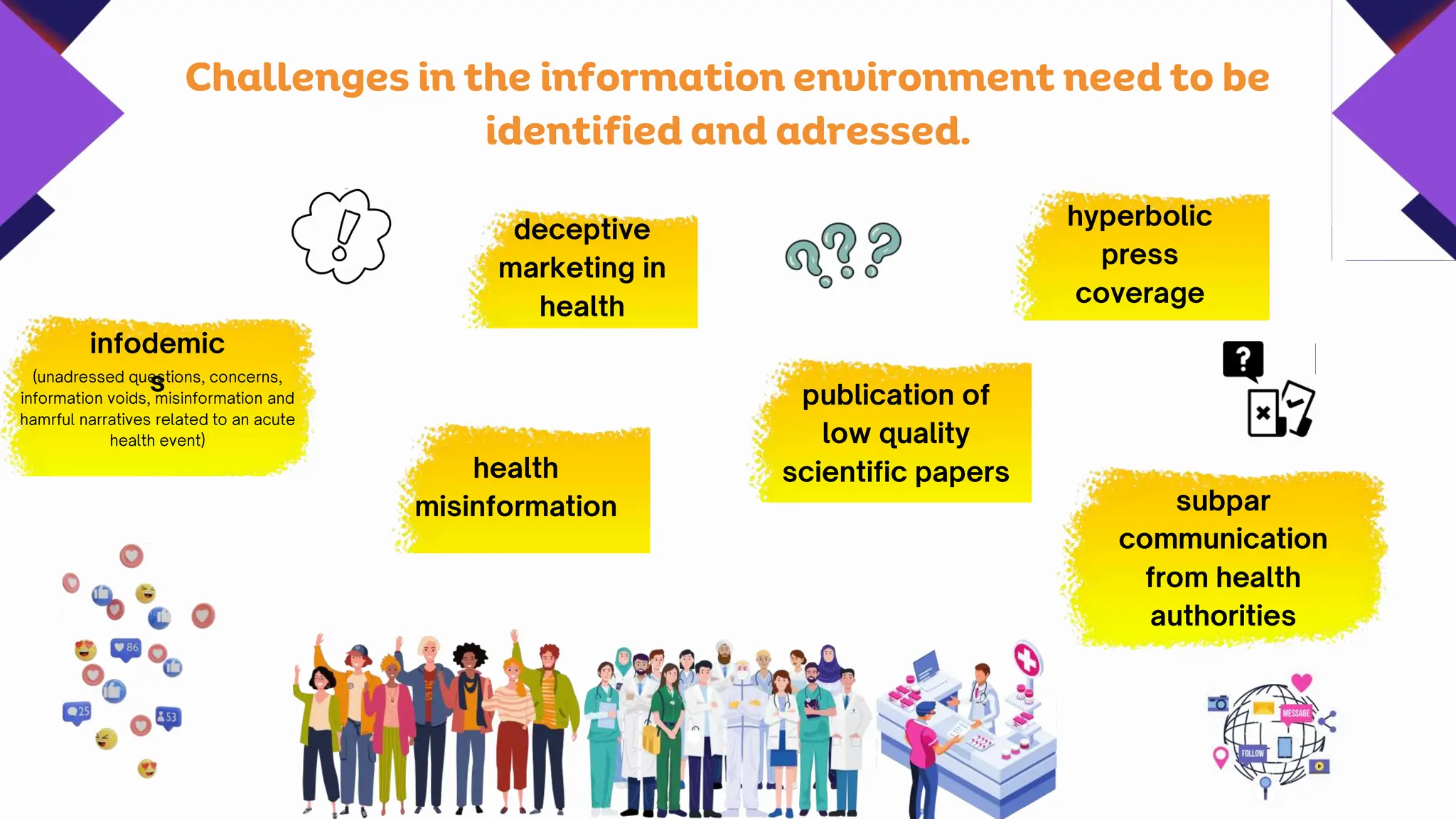
Challenges in the information environment need to be
identified and adressed.
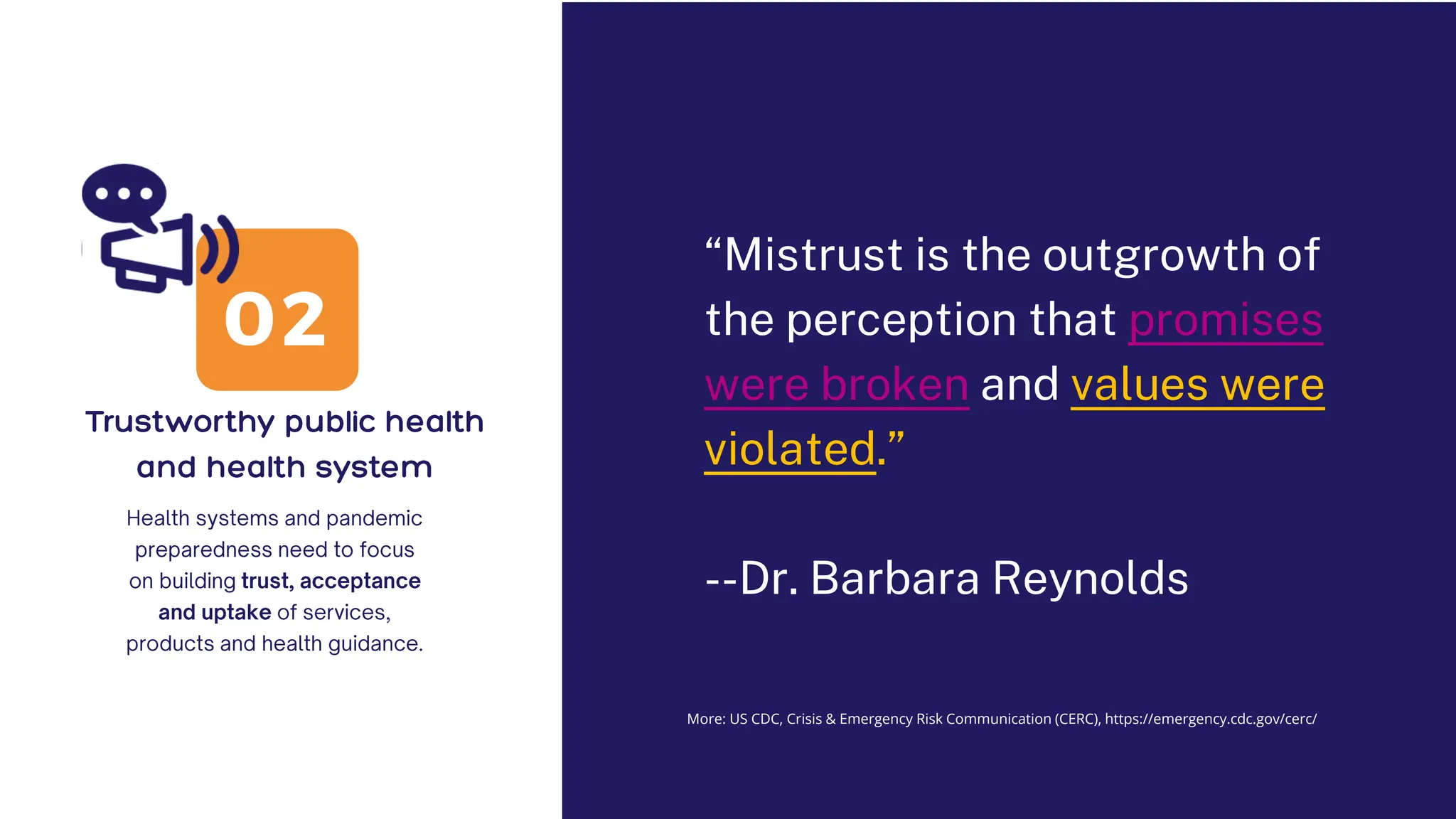
02
“Mistrust is the outgrowth of
the perception that promises
were broken and values were
violated.”
--Dr. Barbara Reynolds
More: US CDC, Crisis & Emergency Risk Communication (CERC), https://emergency.cdc.gov/cerc/
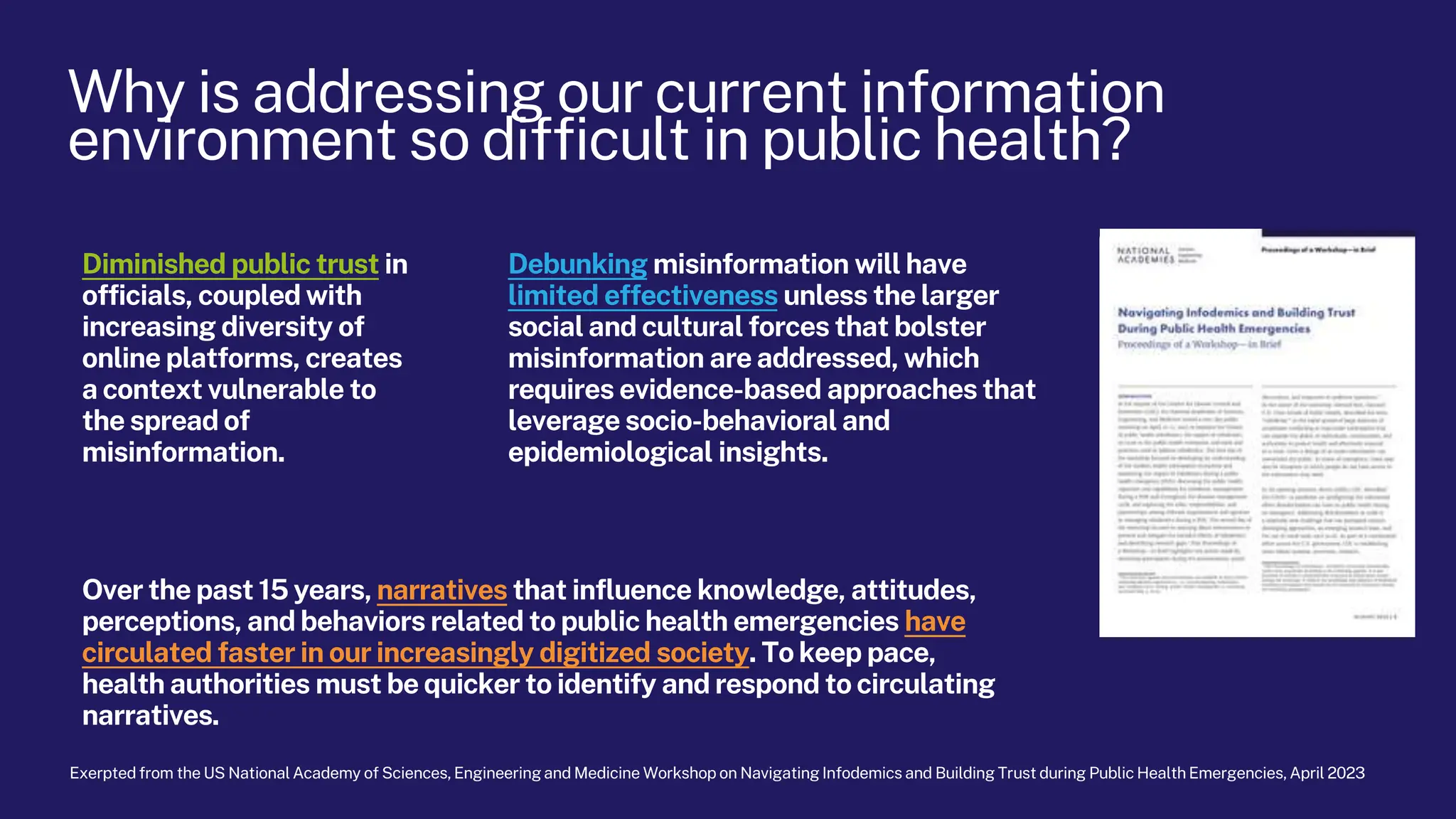
Why is addressing our current information
environment so difficult in public health?
Diminished public trust in
officials, coupled with
increasing diversity of
online platforms, creates
a context vulnerable to
the spread of
misinformation.
Over the past 15 years, narratives that influence knowledge, attitudes,
perceptions, and behaviors related to public health emergencies have
circulated faster in our increasingly digitized society. To keep pace,
health authorities must be quicker to identify and respond to circulating
narratives.
Debunking misinformation will have
limited effectiveness unless the larger
social and cultural forces that bolster
misinformation are addressed, which
requires evidence-based approaches that
leverage socio-behavioral and
epidemiological insights.
Exerpted from the US National Academy of Sciences, Engineering and Medicine Workshop on Navigating Infodemics and Building Trust during Public Health Emergencies, April 2023
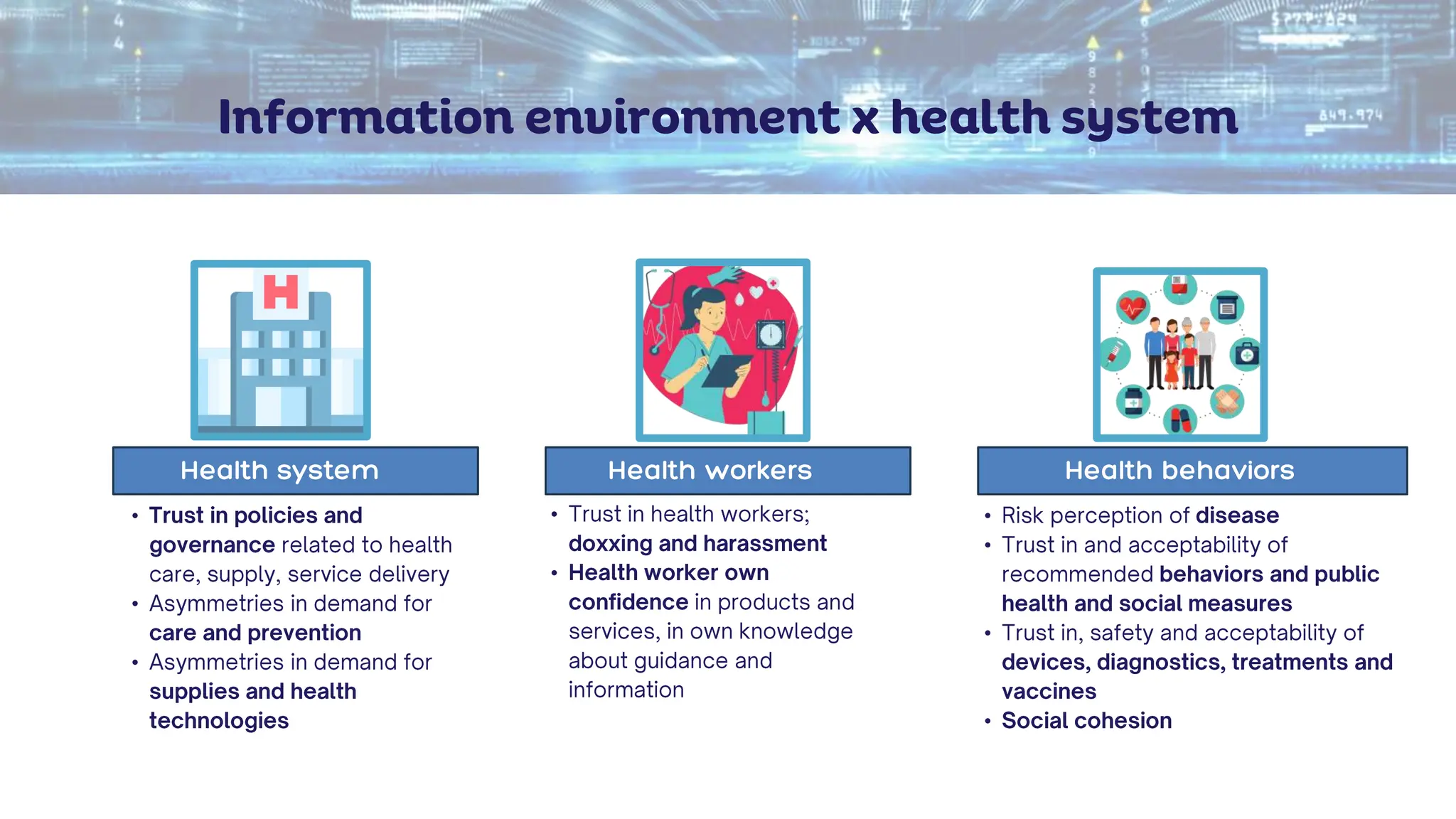
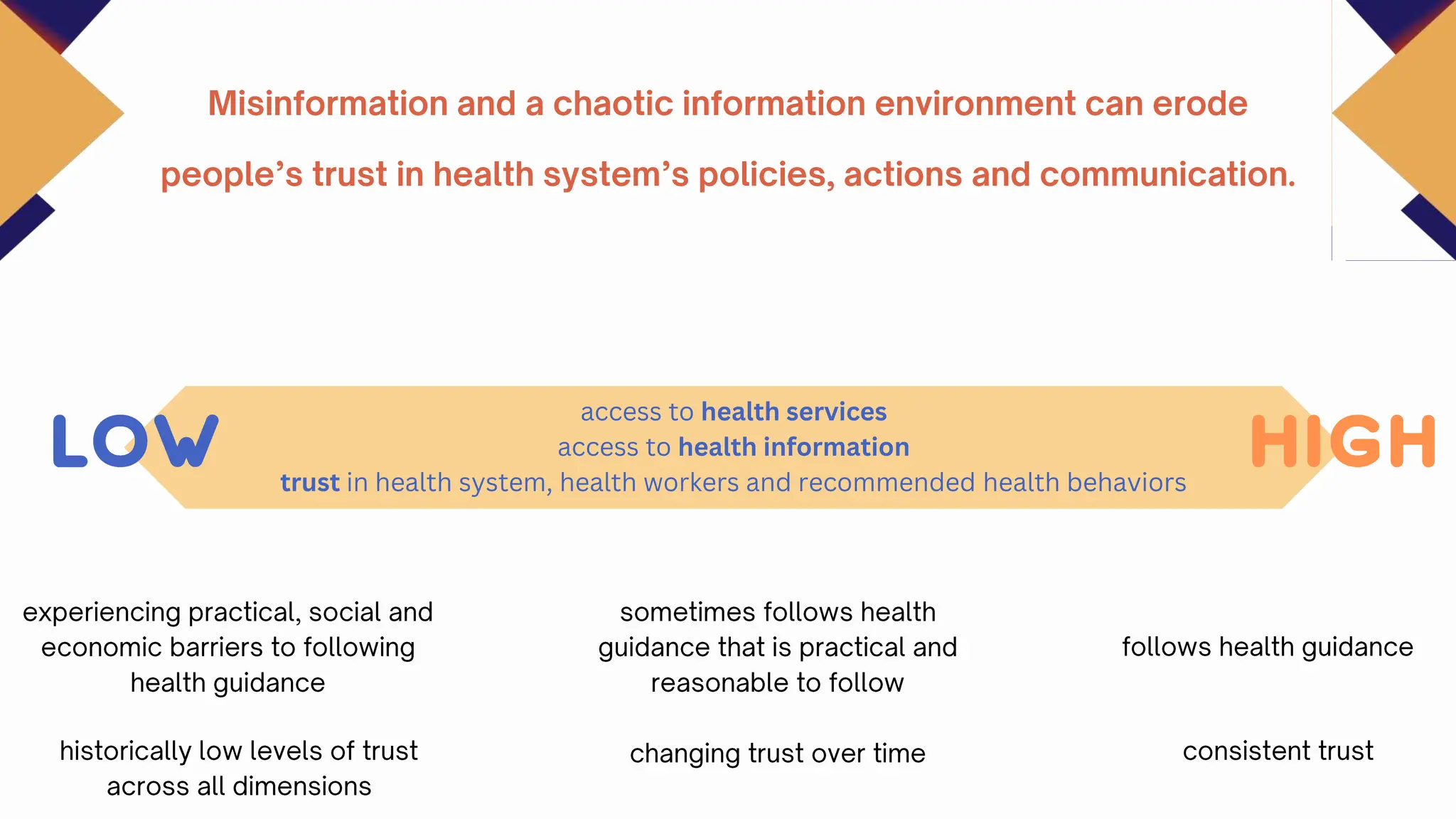
Information environment x health system
•
•
•
•
•
•
•
•
•
access to health services
access to health information
trust in health system, health workers and recommended health behaviors
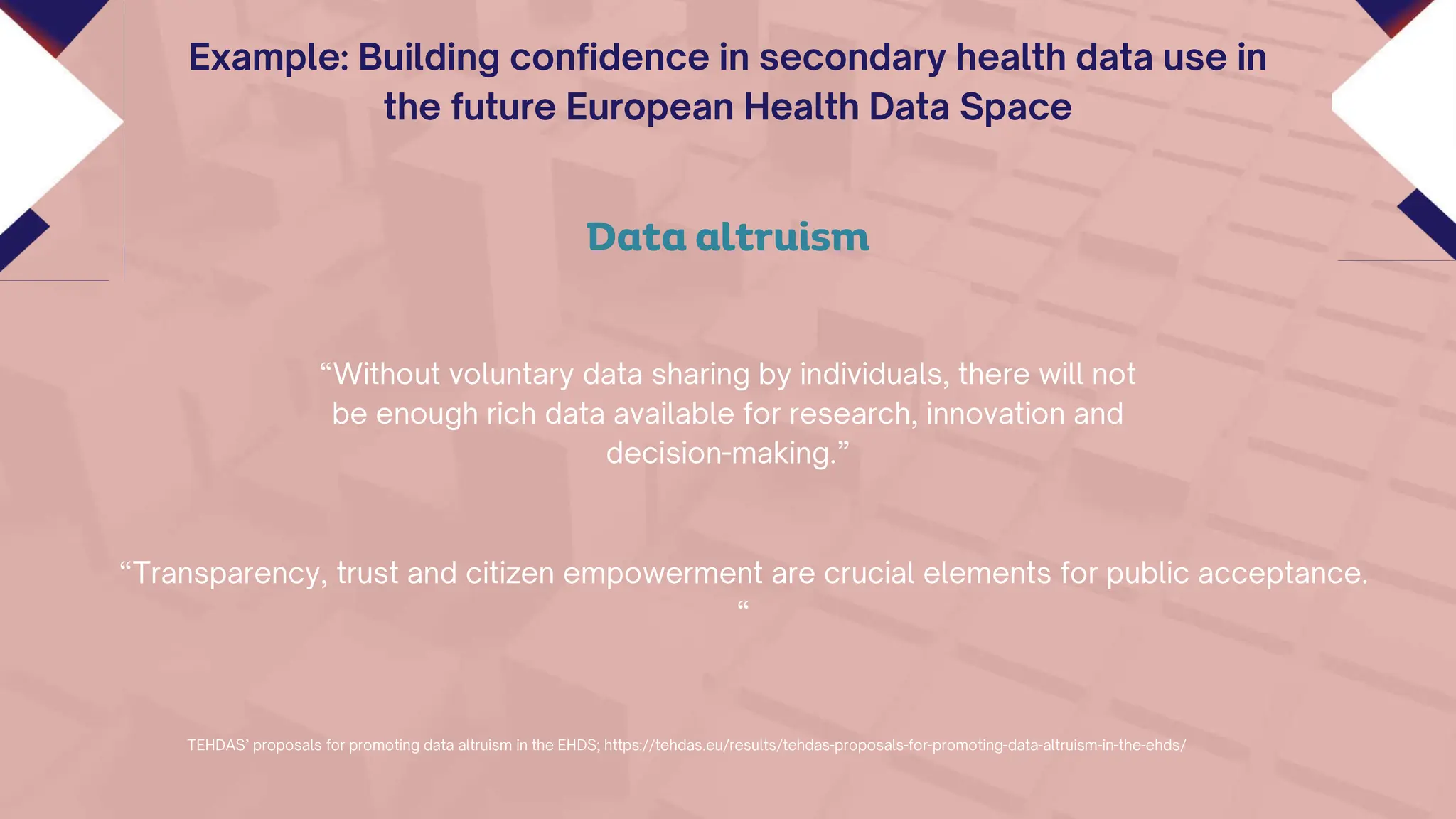
Data altruism
03
Health misinformation affects all levels of
society
‹#›
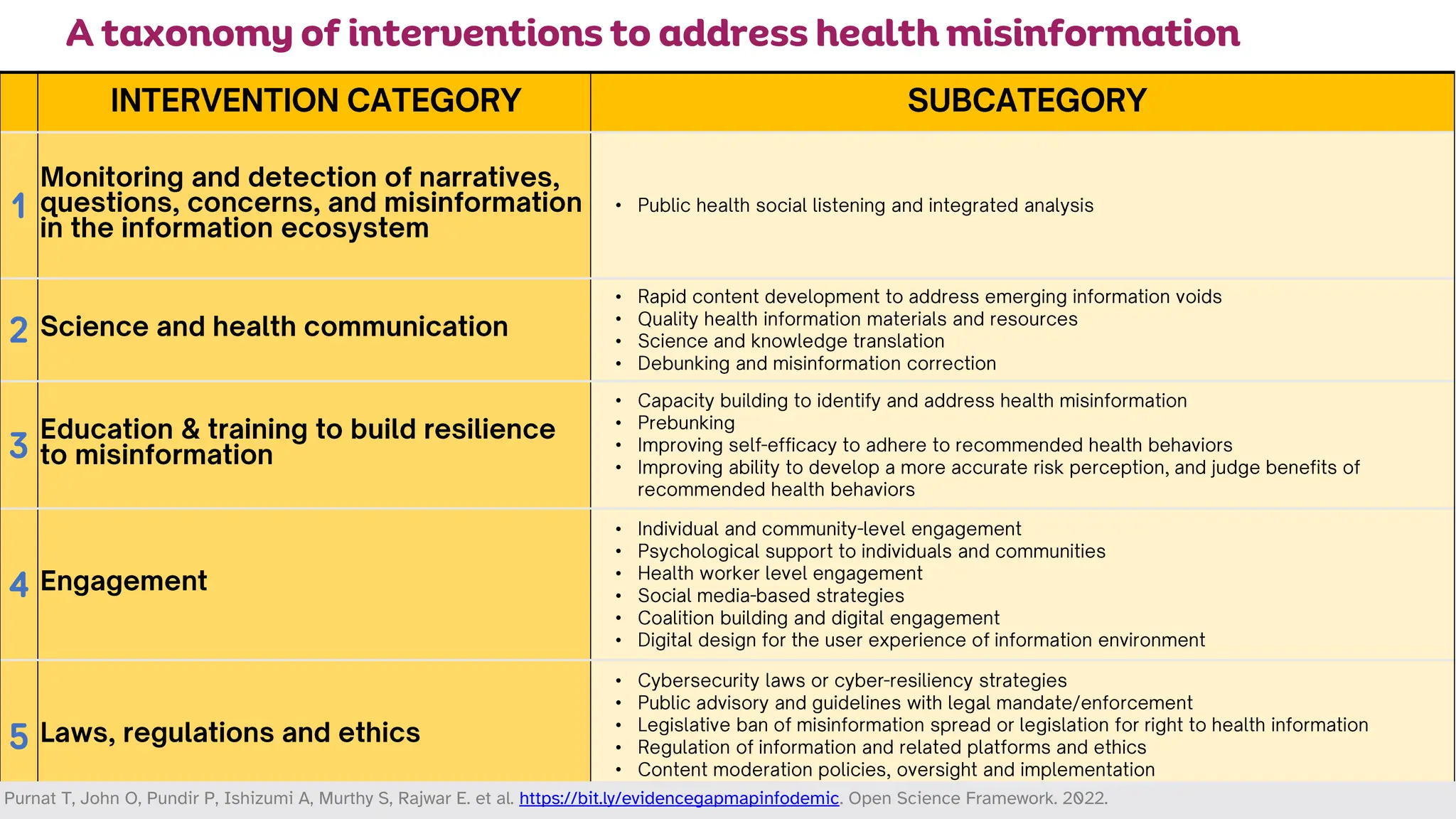
A taxonomy of interventions to address health misinformation
1 •
2
•
•
•
•
3
•
•
•
•
4
•
•
•
•
•
•
5
•
•
•
•
•
•
Purnat T, John O, Pundir P, Ishizumi A, Murthy S, Rajwar E. et al. https://bit.ly/evidencegapmapinfodemic. Open Science Framework. 2022.
•
•
•
•
How can you help cancel the AI
apocalypse?
Thank you
very much!

The AI apocalypse has been canceled

  • 1.
    THE AI APOCALYPSE HASBEEN CANCELED: HOW GENERATIVE AI CAN PROMOTE A HEALTHIER WORLD This presentation © 2023 by Tina D Purnat is licensed under Attribution-NonCommercial-ShareAlike 4.0 International
  • 2.
    How you canuse this slide deck Thanks for your interest in this topic. I developed this deck to support public health efforts and have made it available for others to use it as well. I’ve made full effort to acknowledge sources of information and adaptation of slides from other people. You are welcome to adapt the slide deck as per the license below. Please make an effort to properly credit the efforts of others that you use. This presentation © 2023 by Tina D Purnat is licensed under Attribution-NonCommercial- ShareAlike 4.0 International You are free to: 1.Share — copy and redistribute the material in any medium or format 2.Adapt — remix, transform, and build upon the material 3.The licensor cannot revoke these freedoms as long as you follow the license terms. Under the following terms: 1.Attribution - You must give appropriate credit , provide a link to the license, and indicate if changes were made . You may do so in any reasonable manner, but not in any way that suggests the licensor endorses you or your use. 2.NonCommercial - You may not use the material for commercial purposes . 3.ShareAlike - If you remix, transform, or build upon the material, you must distribute your contributions under the same license as the original. 4.No additional restrictions - You may not apply legal terms or technological measures that legally restrict others from doing anything the license permits. Creator: https://www.linkedin.com/in/tinadpurnat/ Work is published at: https://tinapurnat.com
  • 3.
    01 02 03 HEALTHSYSTEM & HEALTH INFORMATION
  • 4.
  • 8.
    Challenges in theinformation environment need to be identified and adressed.
  • 9.
    02 “Mistrust is theoutgrowth of the perception that promises were broken and values were violated.” --Dr. Barbara Reynolds More: US CDC, Crisis & Emergency Risk Communication (CERC), https://emergency.cdc.gov/cerc/
  • 10.
    Why is addressingour current information environment so difficult in public health? Diminished public trust in officials, coupled with increasing diversity of online platforms, creates a context vulnerable to the spread of misinformation. Over the past 15 years, narratives that influence knowledge, attitudes, perceptions, and behaviors related to public health emergencies have circulated faster in our increasingly digitized society. To keep pace, health authorities must be quicker to identify and respond to circulating narratives. Debunking misinformation will have limited effectiveness unless the larger social and cultural forces that bolster misinformation are addressed, which requires evidence-based approaches that leverage socio-behavioral and epidemiological insights. Exerpted from the US National Academy of Sciences, Engineering and Medicine Workshop on Navigating Infodemics and Building Trust during Public Health Emergencies, April 2023
  • 11.
    Information environment xhealth system • • • • • • • • •
  • 12.
    access to healthservices access to health information trust in health system, health workers and recommended health behaviors
  • 14.
  • 15.
    03 Health misinformation affectsall levels of society
  • 16.
    ‹#› A taxonomy ofinterventions to address health misinformation 1 • 2 • • • • 3 • • • • 4 • • • • • • 5 • • • • • • Purnat T, John O, Pundir P, Ishizumi A, Murthy S, Rajwar E. et al. https://bit.ly/evidencegapmapinfodemic. Open Science Framework. 2022.
  • 17.
  • 18.
    How can youhelp cancel the AI apocalypse?
  • 19.

Editor's Notes