
The State of
Talent Optimization
600 executives reveal the talent optimization
practices that drive superior business results.
2020 REPORT
Designing talent
strategy
The Predictive Index | The 2020 State of Talent Optimization Report
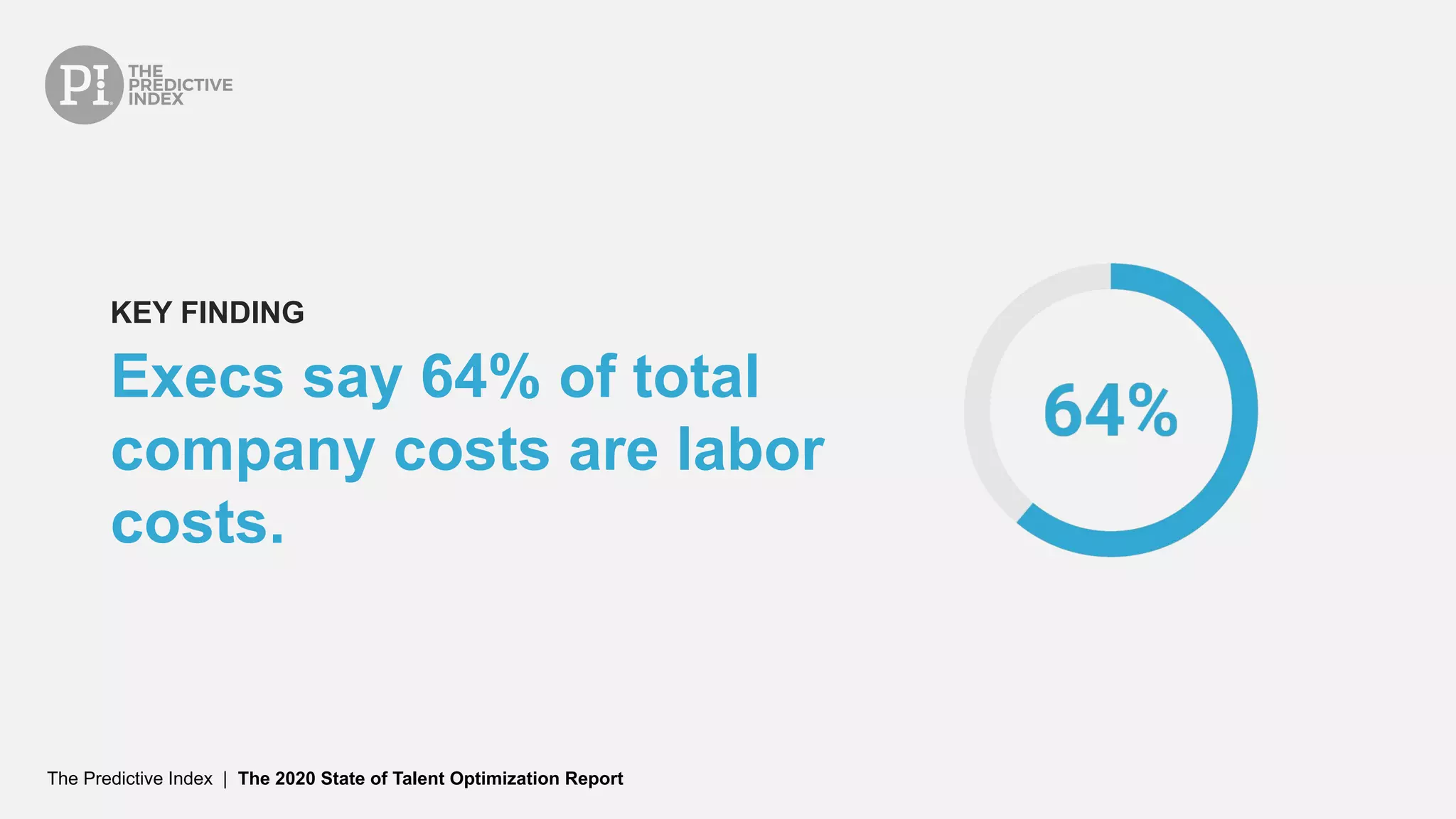
Execs say 64% of total
company costs are labor
costs.
KEY FINDING
The Predictive Index | The 2020 State of Talent Optimization Report
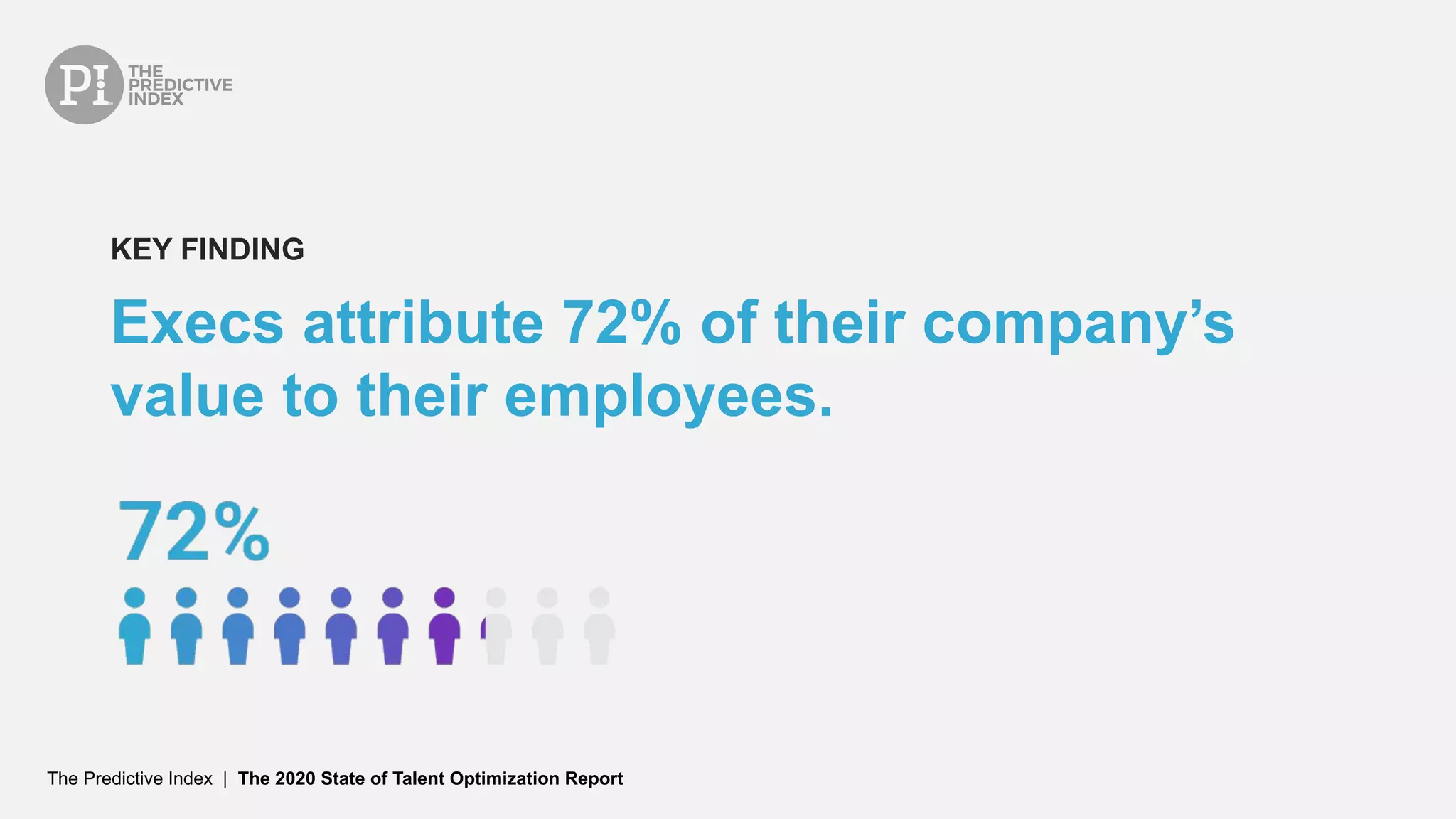
Execs attribute 72% of their company’s
value to their employees.
KEY FINDING
The Predictive Index | The 2020 State of Talent Optimization Report
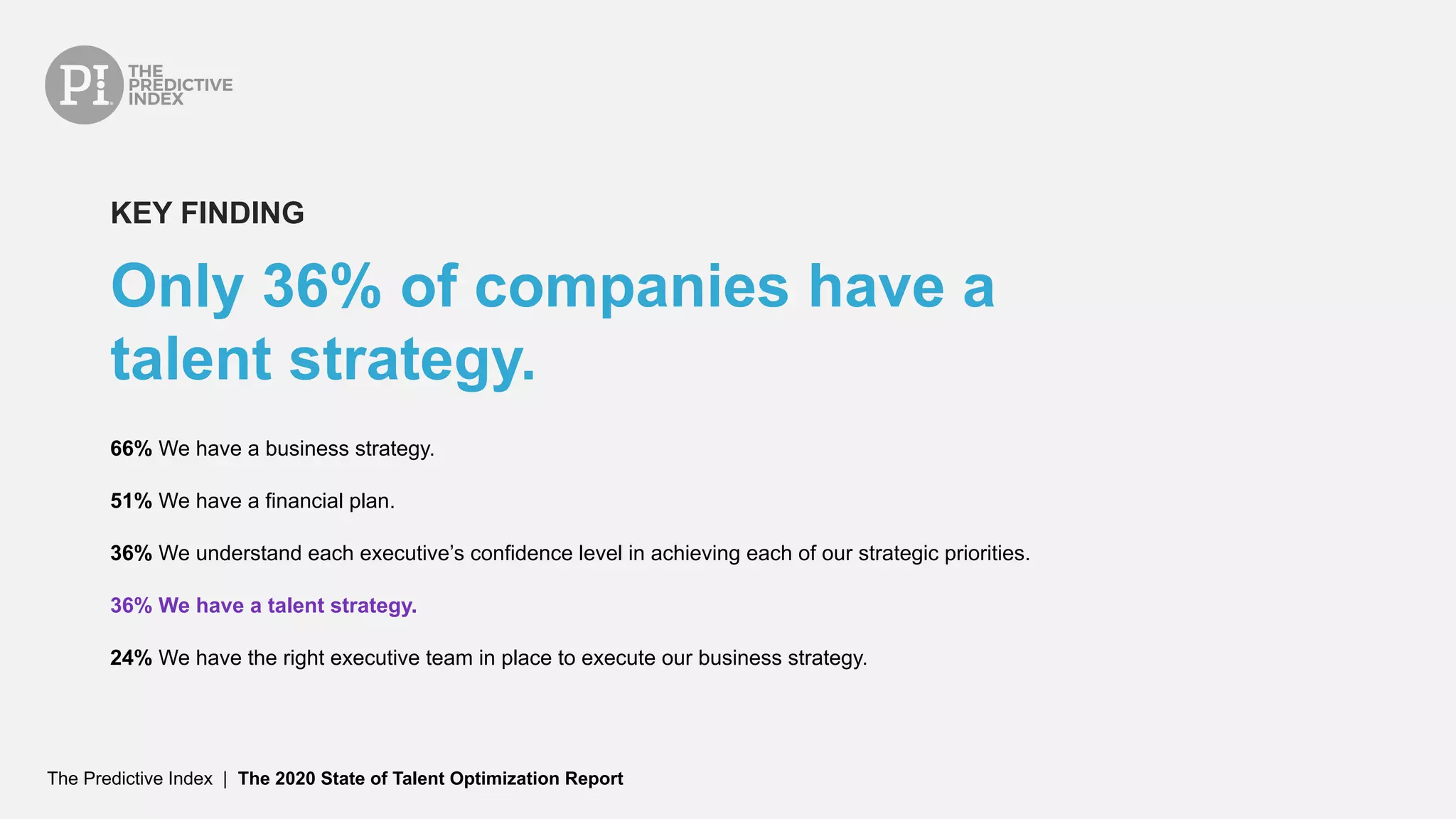
Only 36% of companies have a
talent strategy.
KEY FINDING
66% We have a business strategy.
51% We have a financial plan.
36% We understand each executive’s confidence level in achieving each of our strategic priorities.
36% We have a talent strategy.
24% We have the right executive team in place to execute our business strategy.
The Predictive Index | The 2020 State of Talent Optimization Report
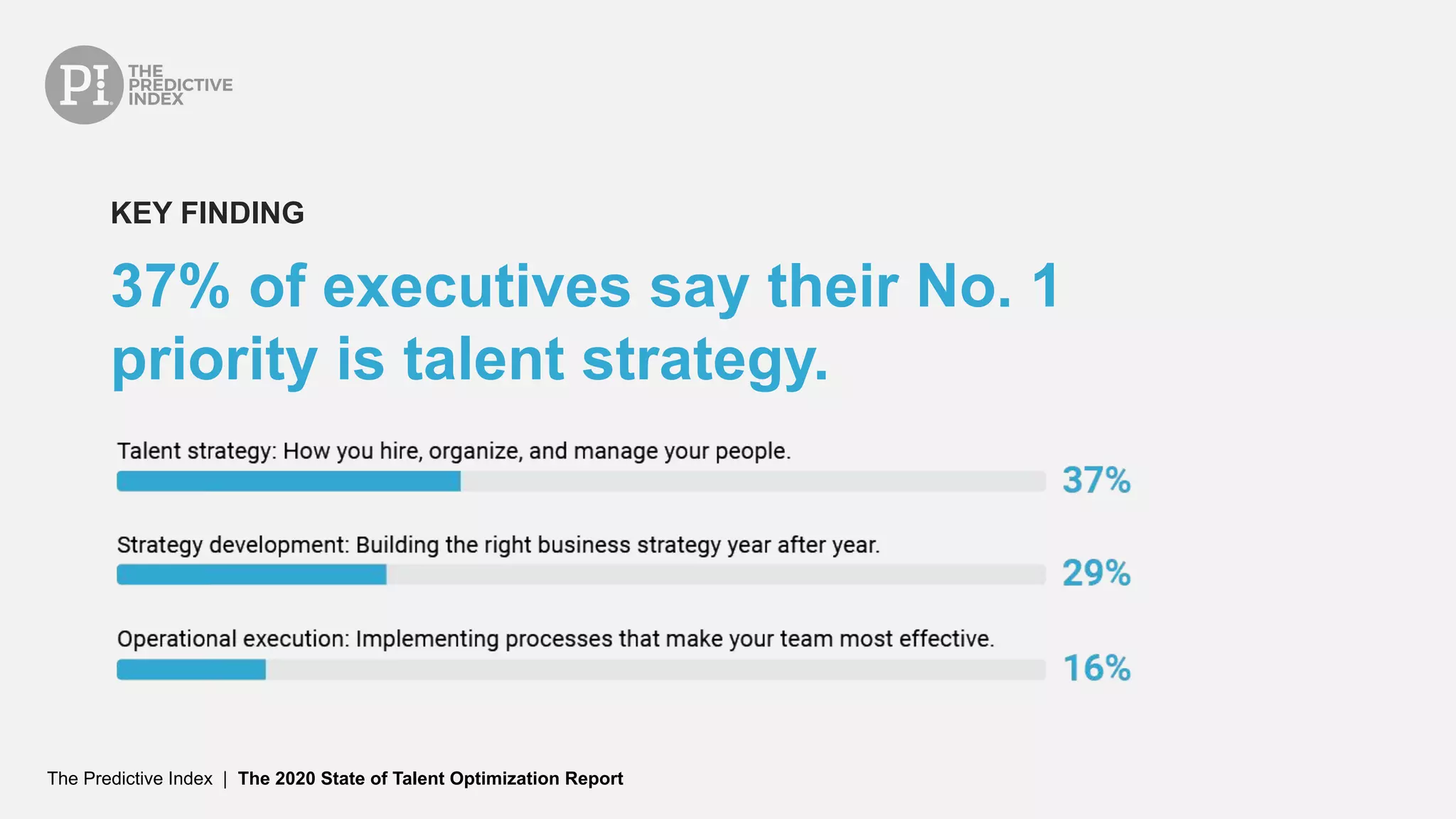
37% of executives say their No. 1
priority is talent strategy.
KEY FINDING
The Predictive Index | The 2020 State of Talent Optimization Report
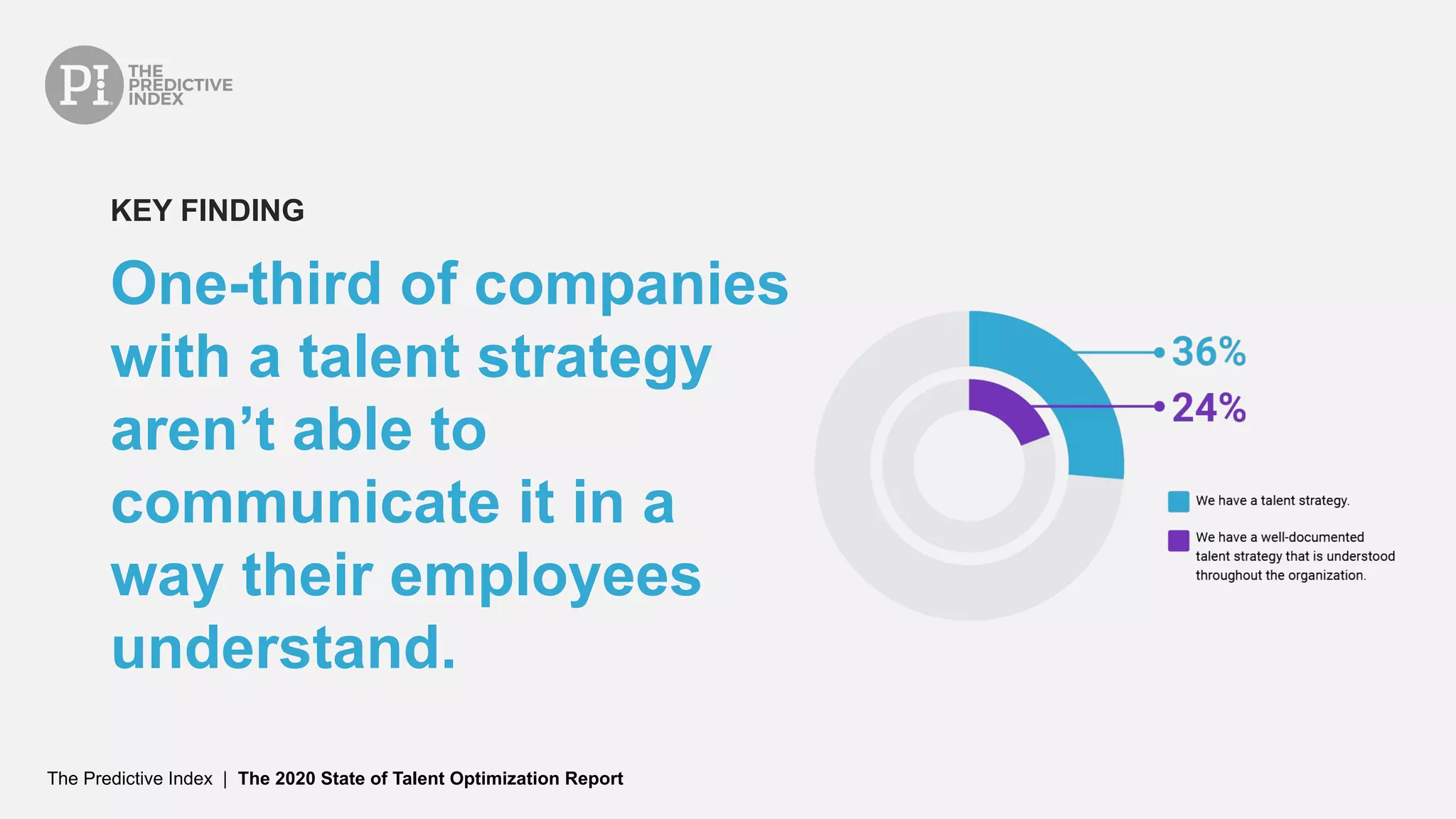
One-third of companies
with a talent strategy
aren’t able to
communicate it in a
way their employees
understand.
KEY FINDING
The Predictive Index | The 2020 State of Talent Optimization Report
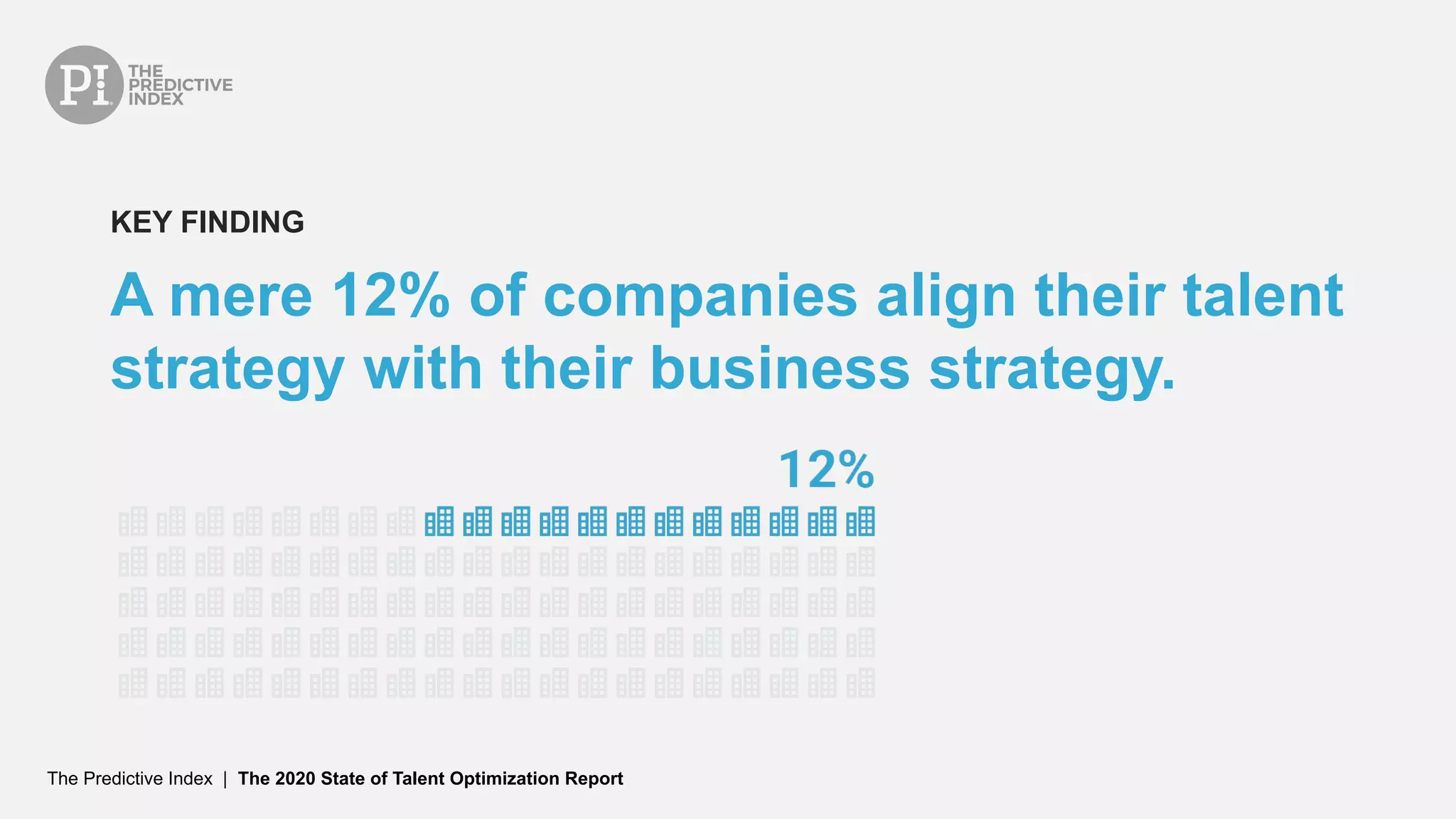
A mere 12% of companies align their talent
strategy with their business strategy.
KEY FINDING
The Predictive Index | The 2020 State of Talent Optimization Report
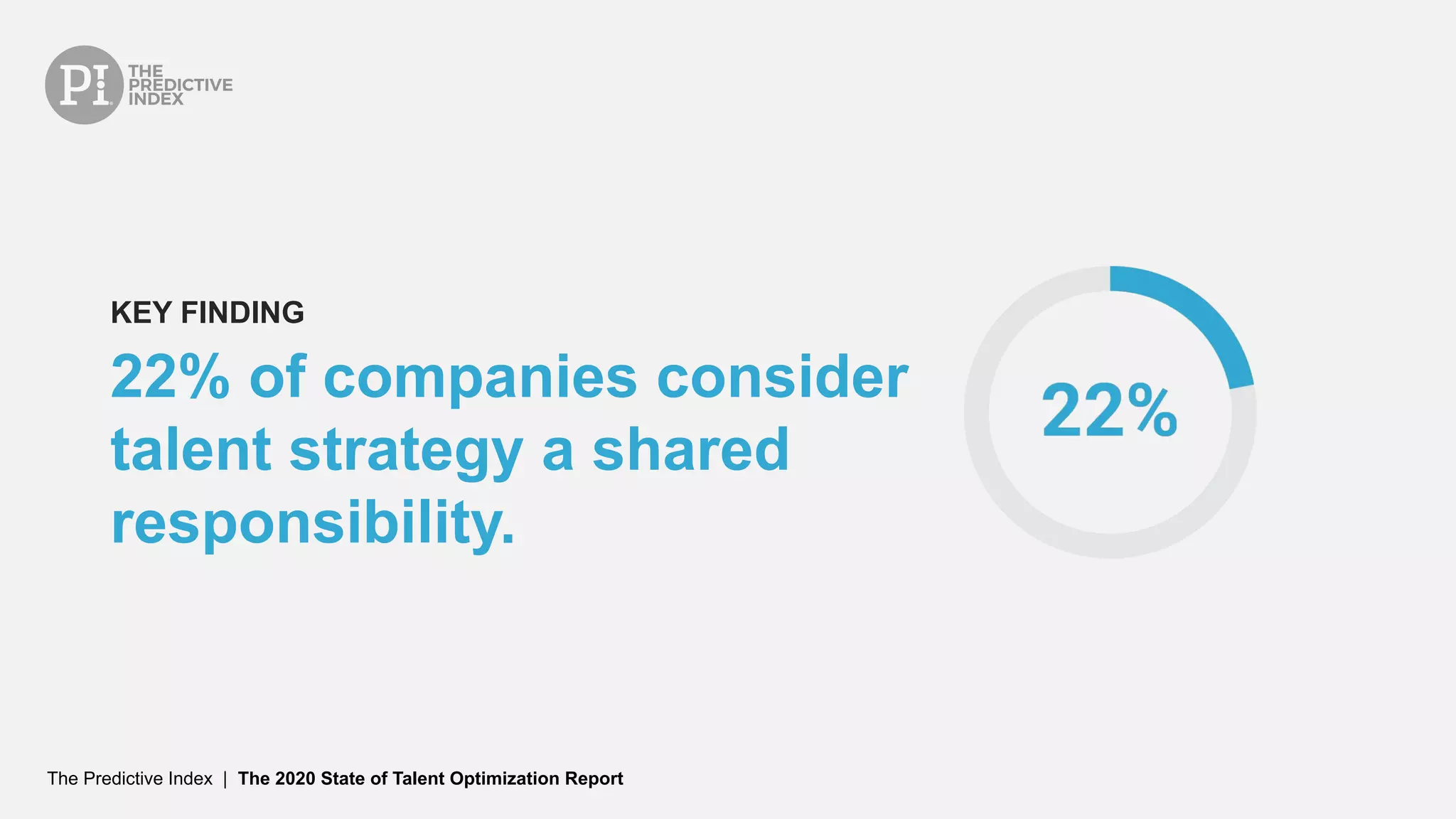
22% of companies consider
talent strategy a shared
responsibility.
KEY FINDING
The Predictive Index | The 2020 State of Talent Optimization Report
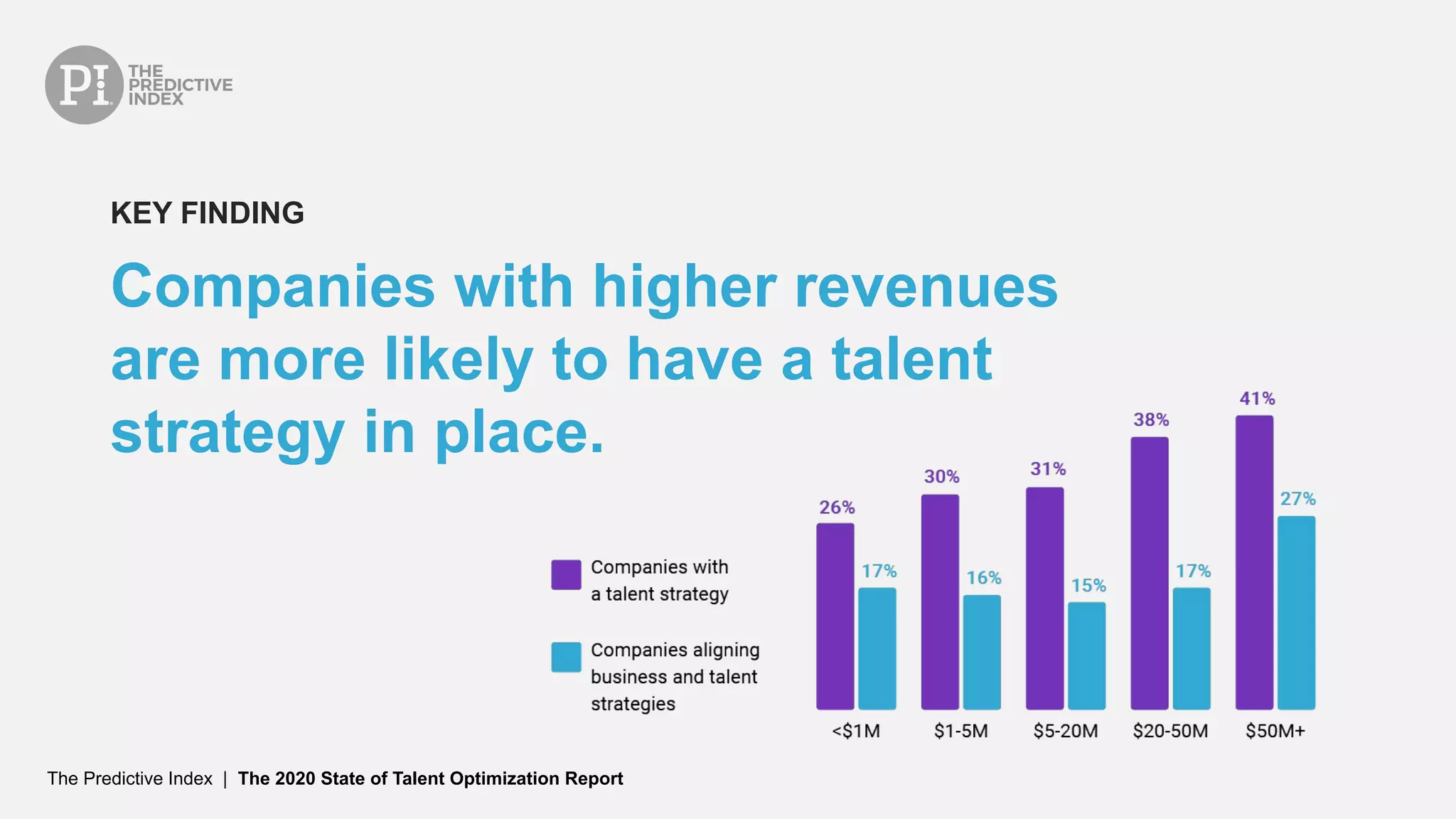
Companies with higher revenues
are more likely to have a talent
strategy in place.
KEY FINDING
The Predictive Index | The 2020 State of Talent Optimization Report
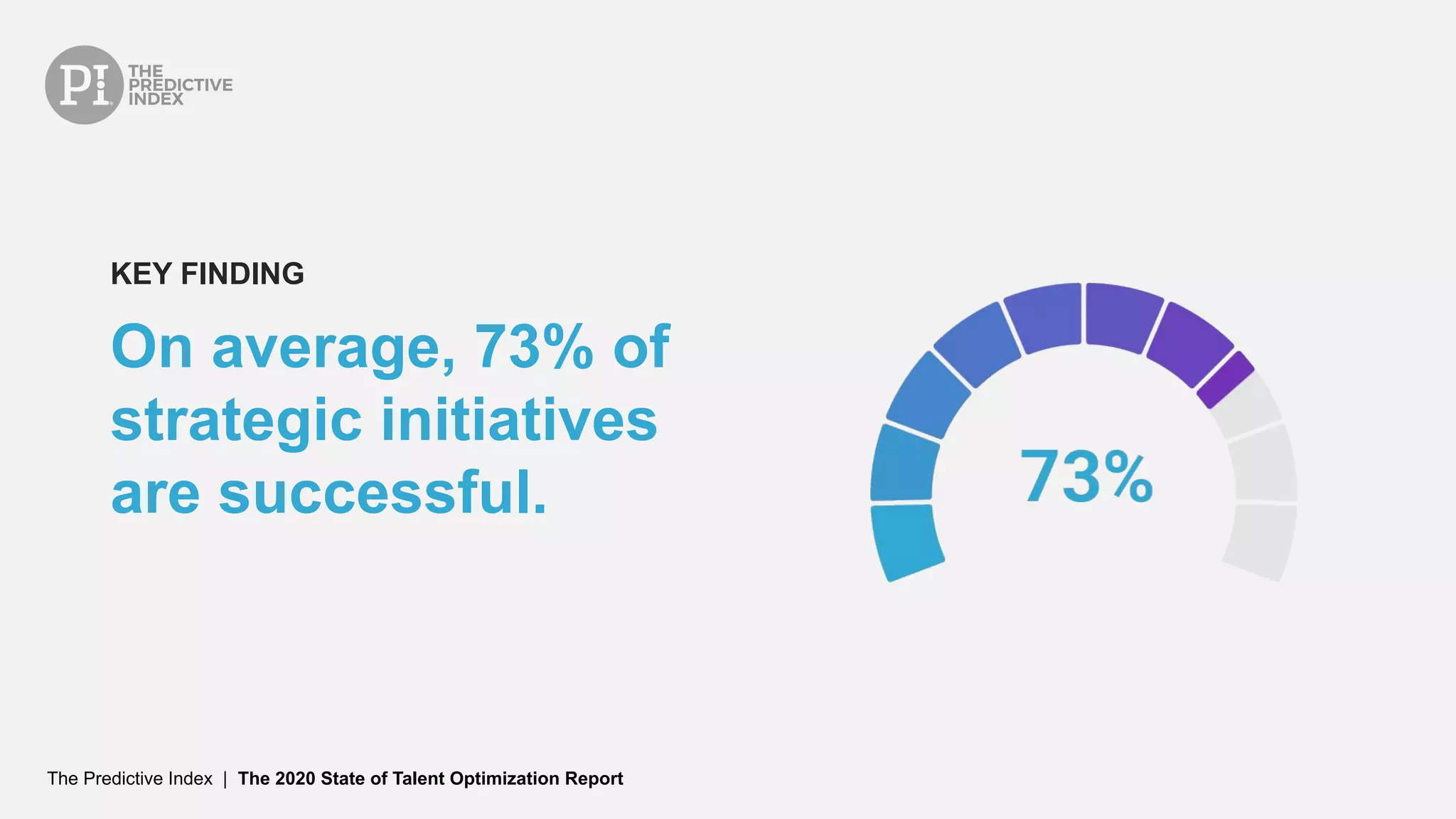
On average, 73% of
strategic initiatives
are successful.
KEY FINDING
The Predictive Index | The 2020 State of Talent Optimization Report
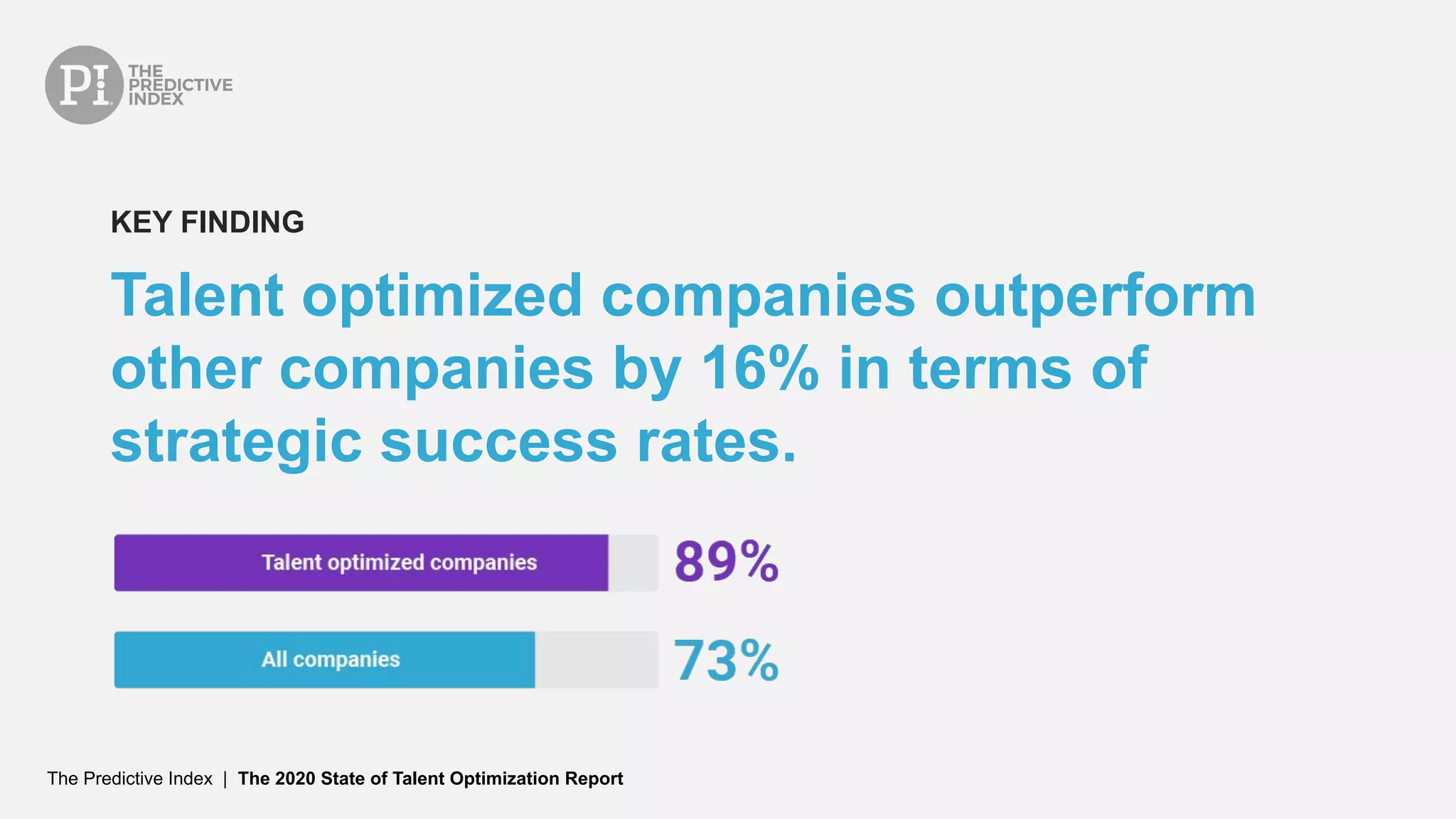
Talent optimized companies outperform
other companies by 16% in terms of
strategic success rates.
KEY FINDING
The Predictive Index | The 2020 State of Talent Optimization Report
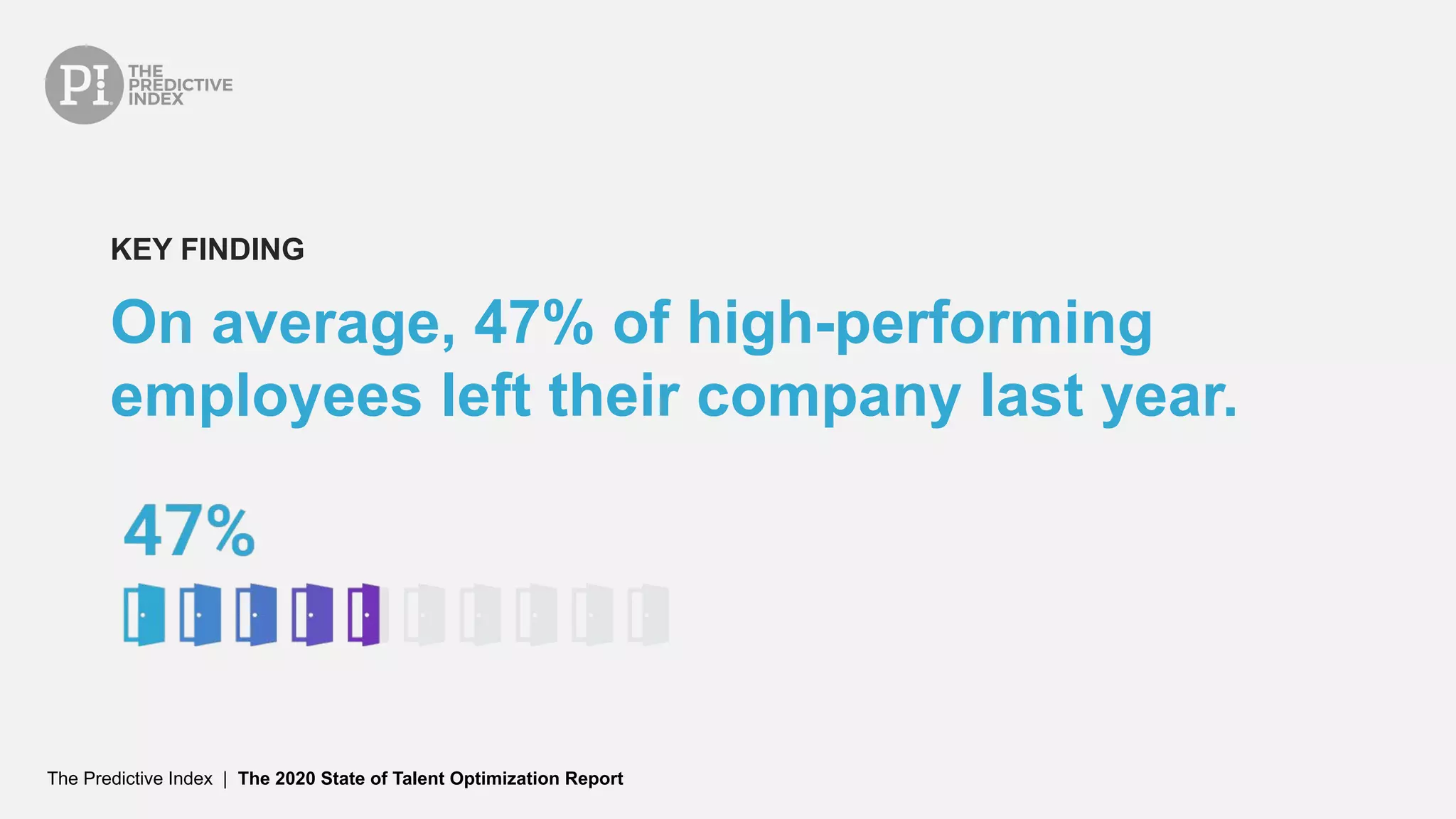
On average, 47% of high-performing
employees left their company last year.
KEY FINDING
The Predictive Index | The 2020 State of Talent Optimization Report
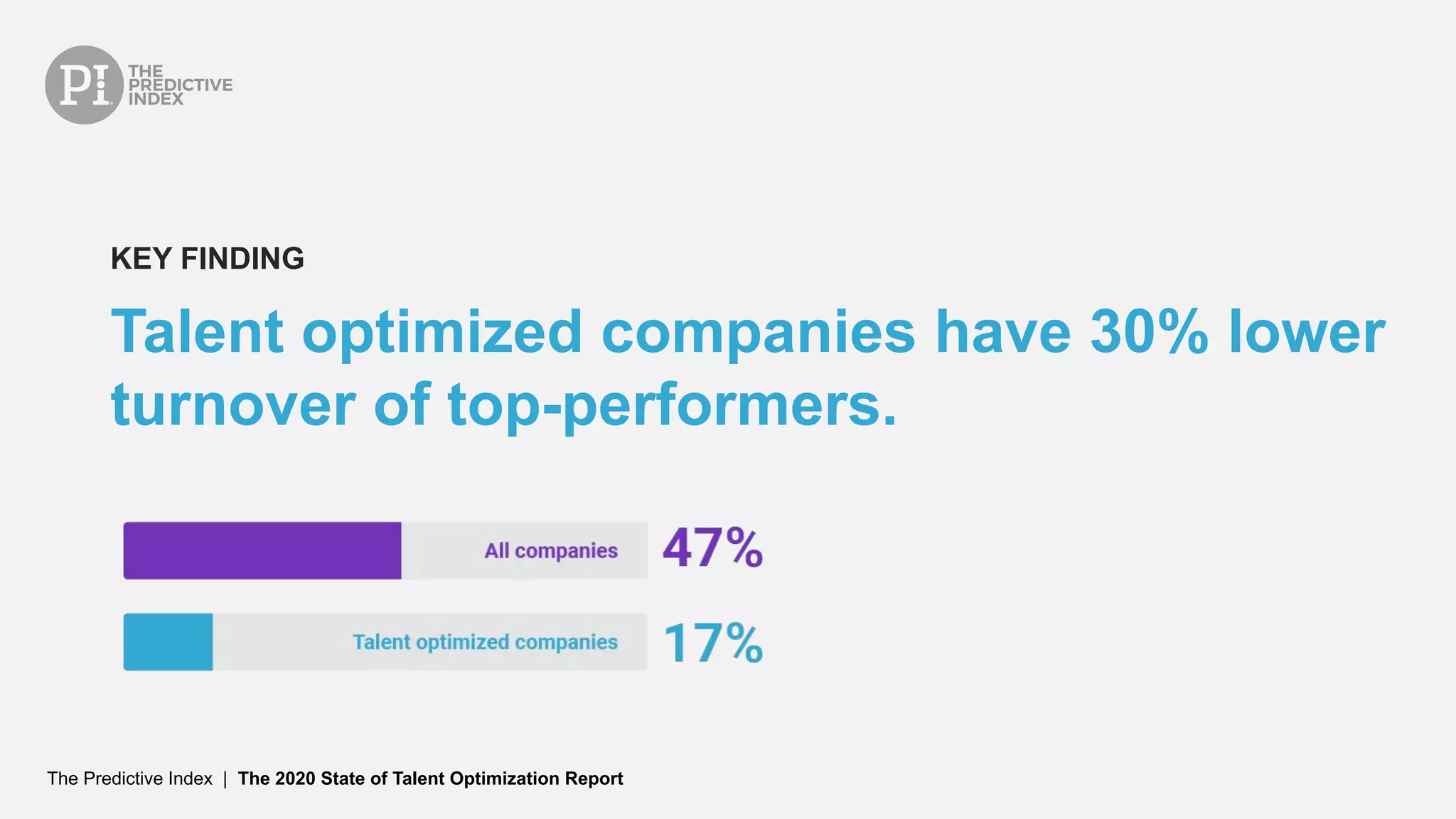
Talent optimized companies have 30% lower
turnover of top-performers.
KEY FINDING
The Predictive Index | The 2020 State of Talent Optimization Report
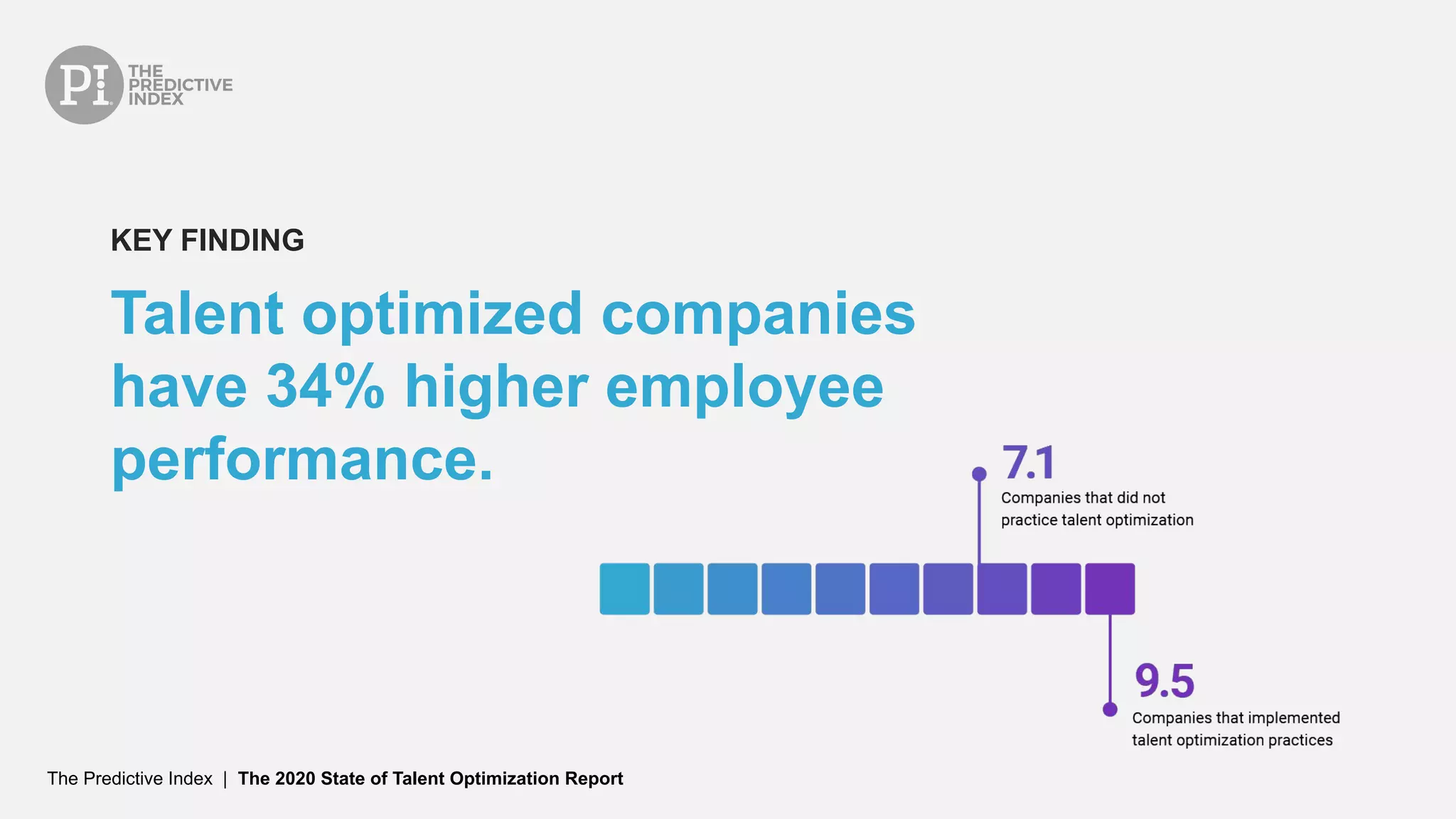
Talent optimized companies
have 34% higher employee
performance.
KEY FINDING
The Predictive Index | The 2020 State of Talent Optimization Report
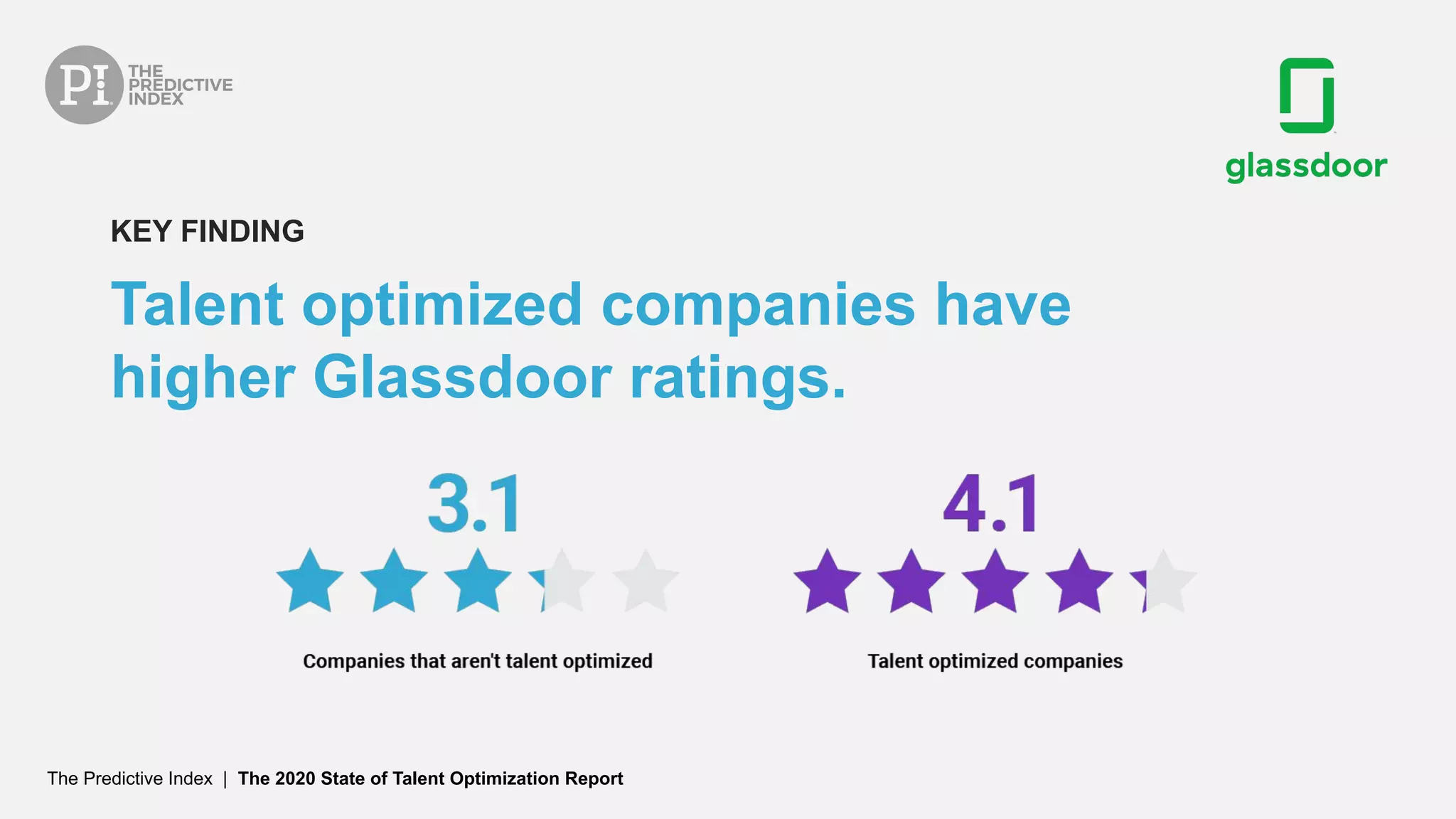
Talent optimized companies have
higher Glassdoor ratings.
KEY FINDING
The Predictive Index | The 2020 State of Talent Optimization Report
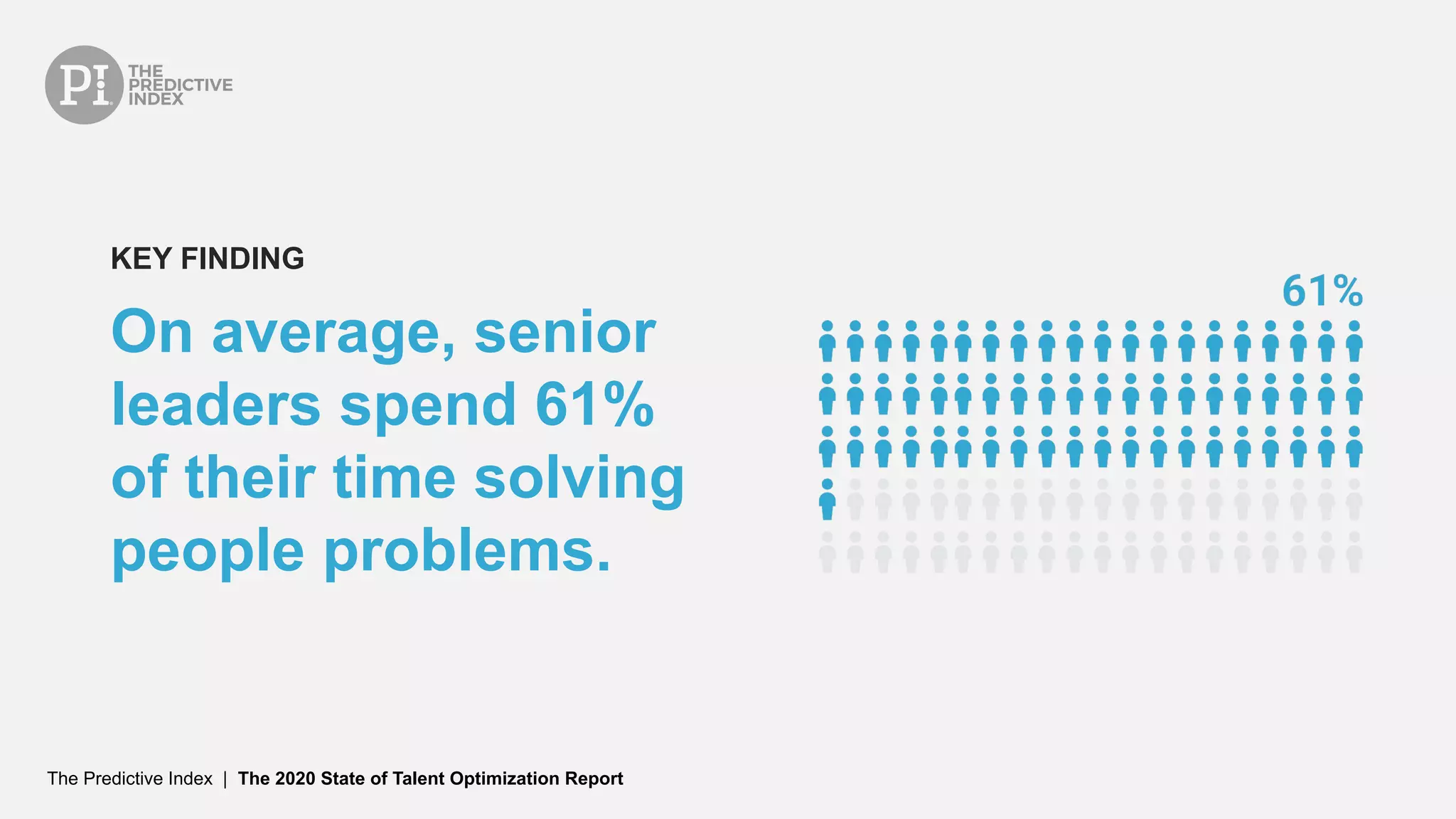
On average, senior
leaders spend 61%
of their time solving
people problems.
KEY FINDING
The Predictive Index | The 2020 State of Talent Optimization Report
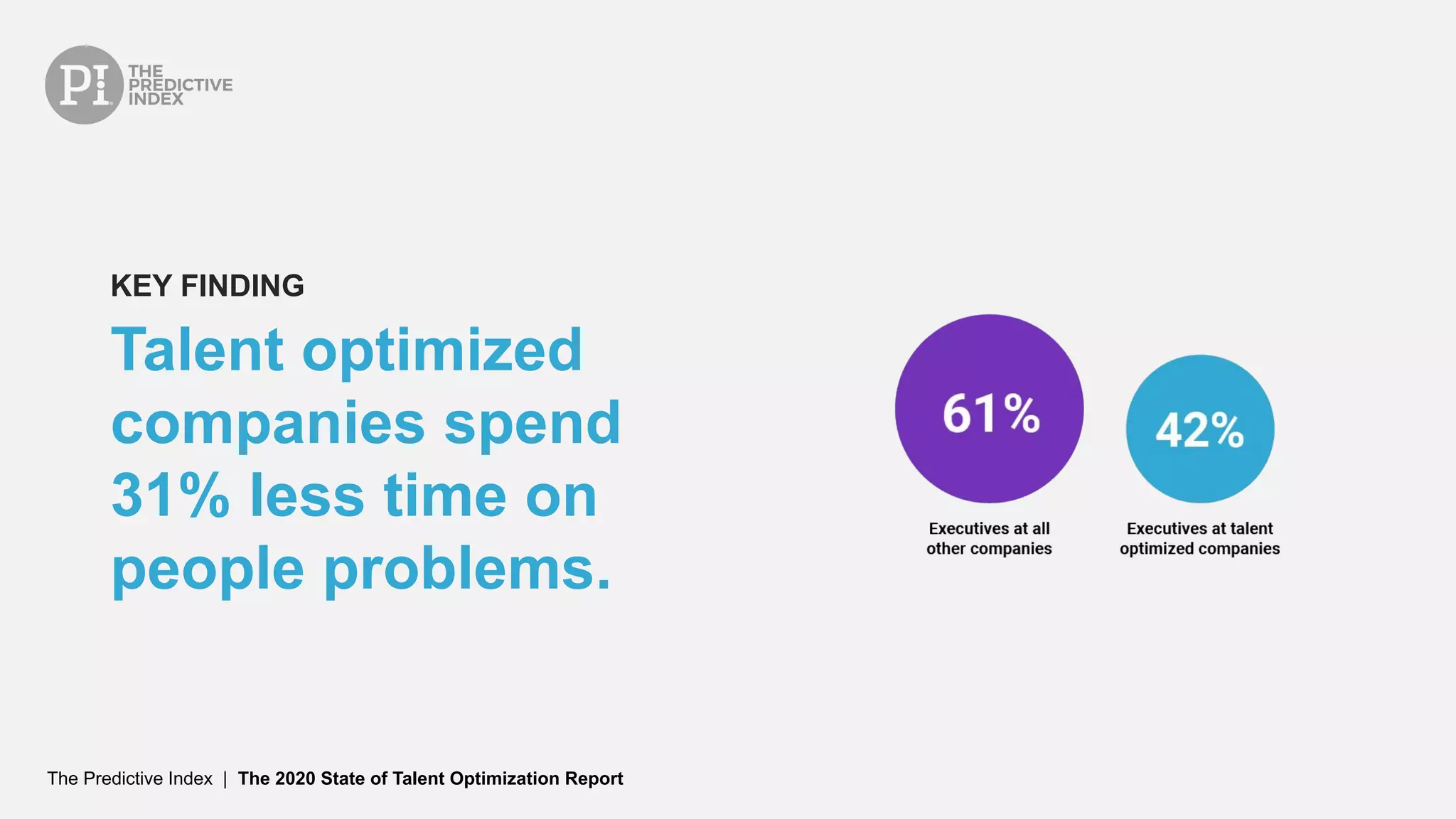
Talent optimized
companies spend
31% less time on
people problems.
KEY FINDING
The Predictive Index | The 2020 State of Talent Optimization Report
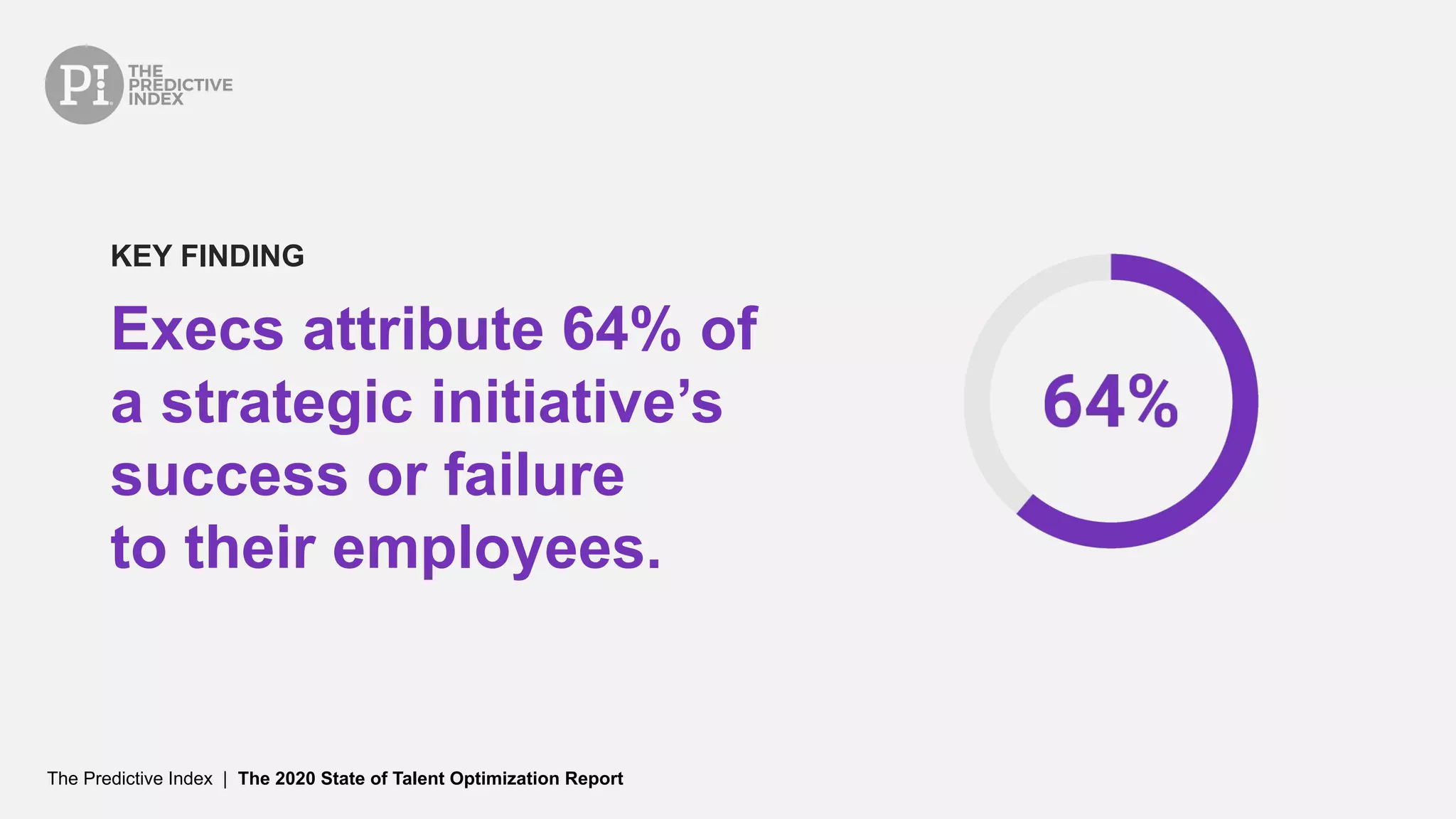
Execs attribute 64% of
a strategic initiative’s
success or failure
to their employees.
KEY FINDING
The Predictive Index | The 2020 State of Talent Optimization Report
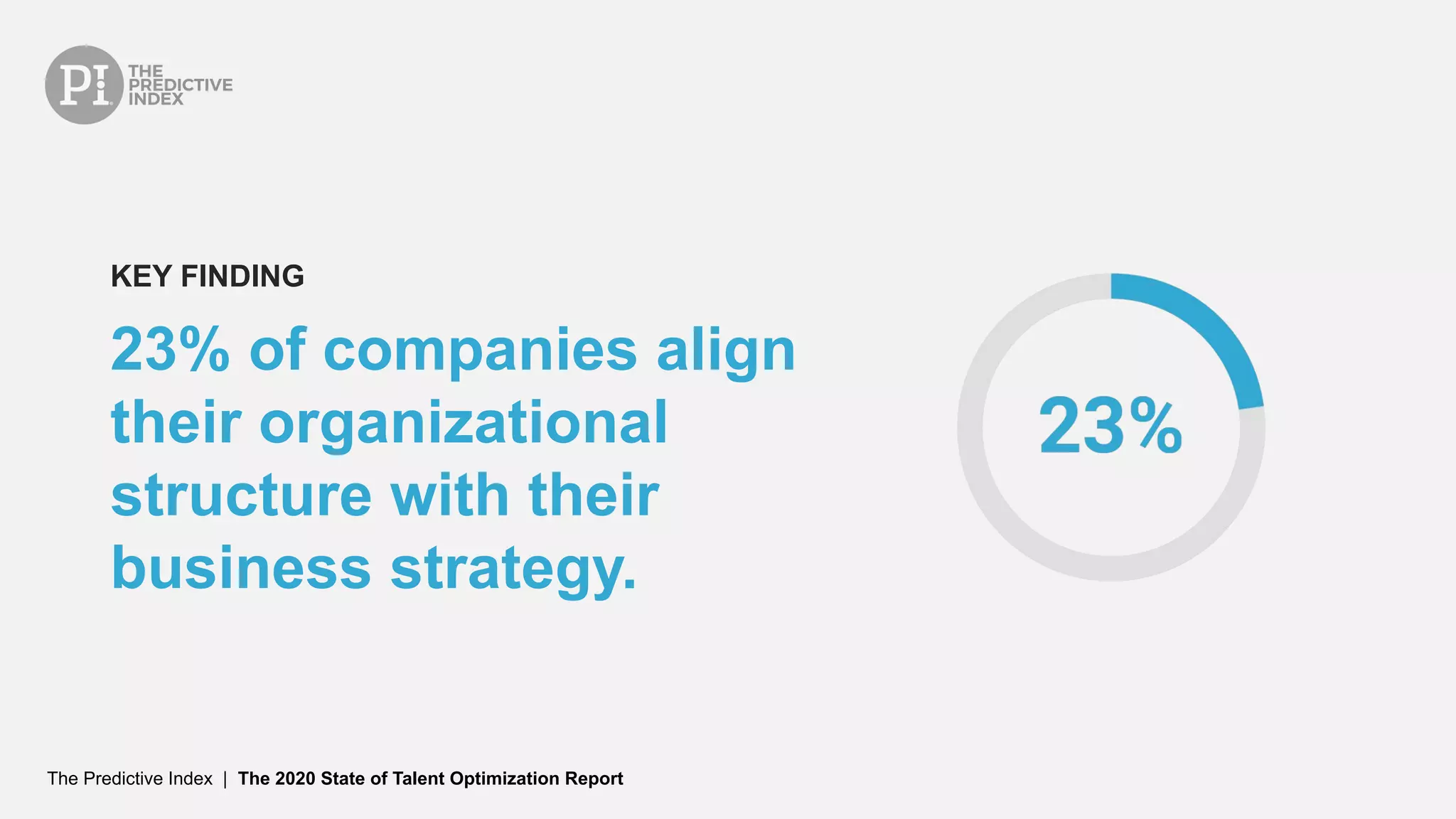
23% of companies align
their organizational
structure with their
business strategy.
KEY FINDING
The Predictive Index | The 2020 State of Talent Optimization Report
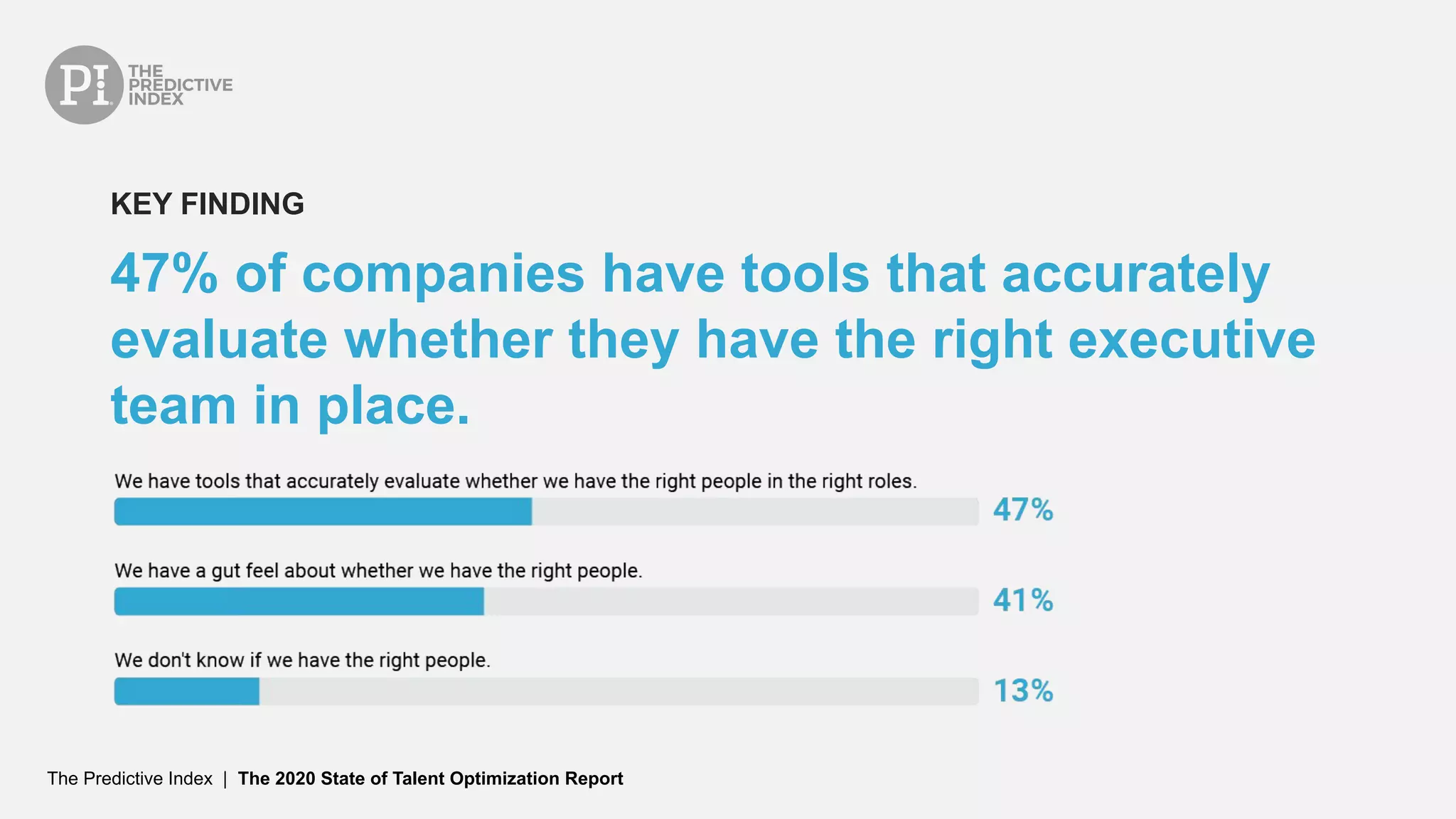
47% of companies have tools that accurately
evaluate whether they have the right executive
team in place.
KEY FINDING
Hiring top talent
The Predictive Index | The 2020 State of Talent Optimization Report
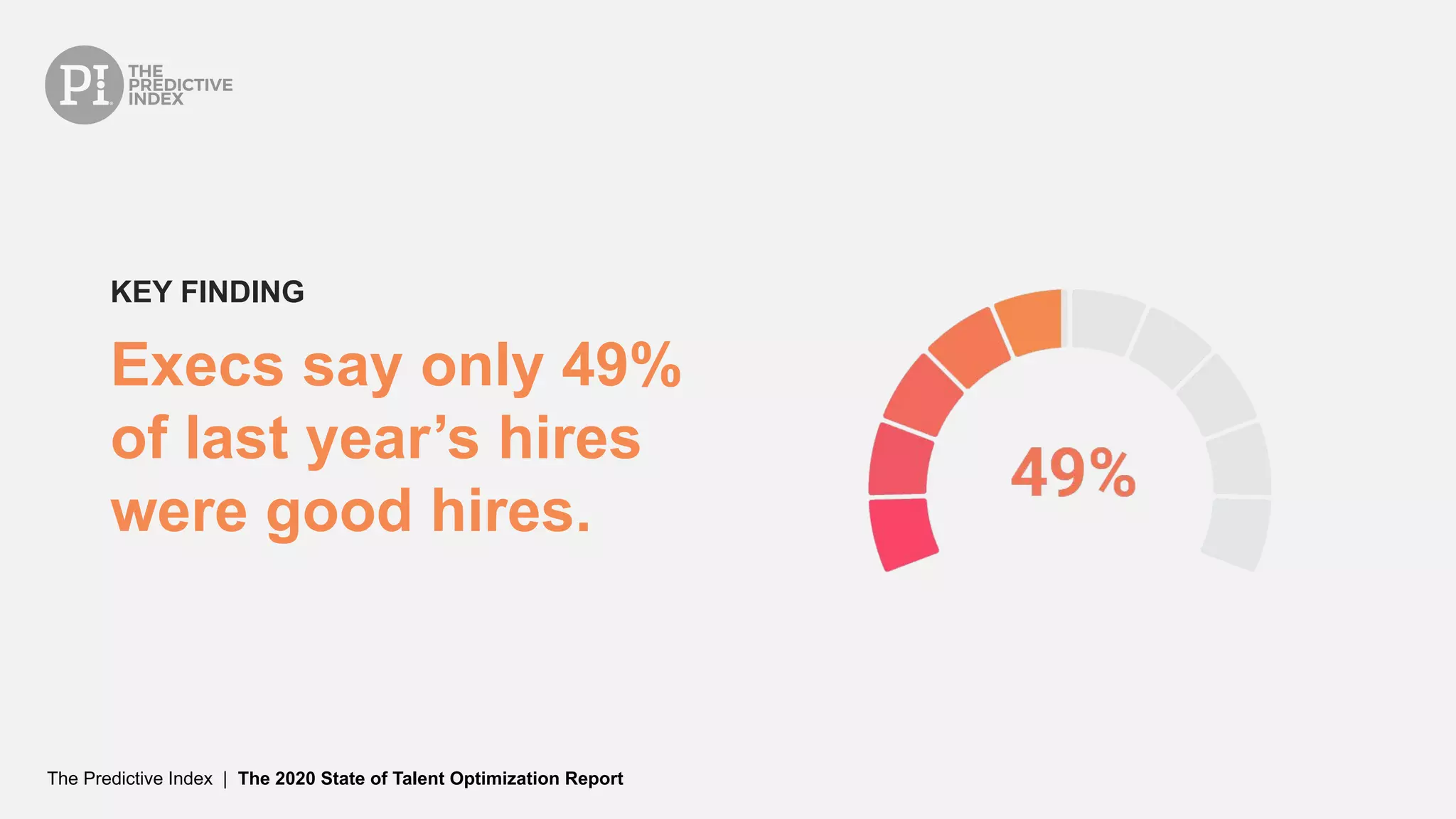
Execs say only 49%
of last year’s hires
were good hires.
KEY FINDING
The Predictive Index | The 2020 State of Talent Optimization Report
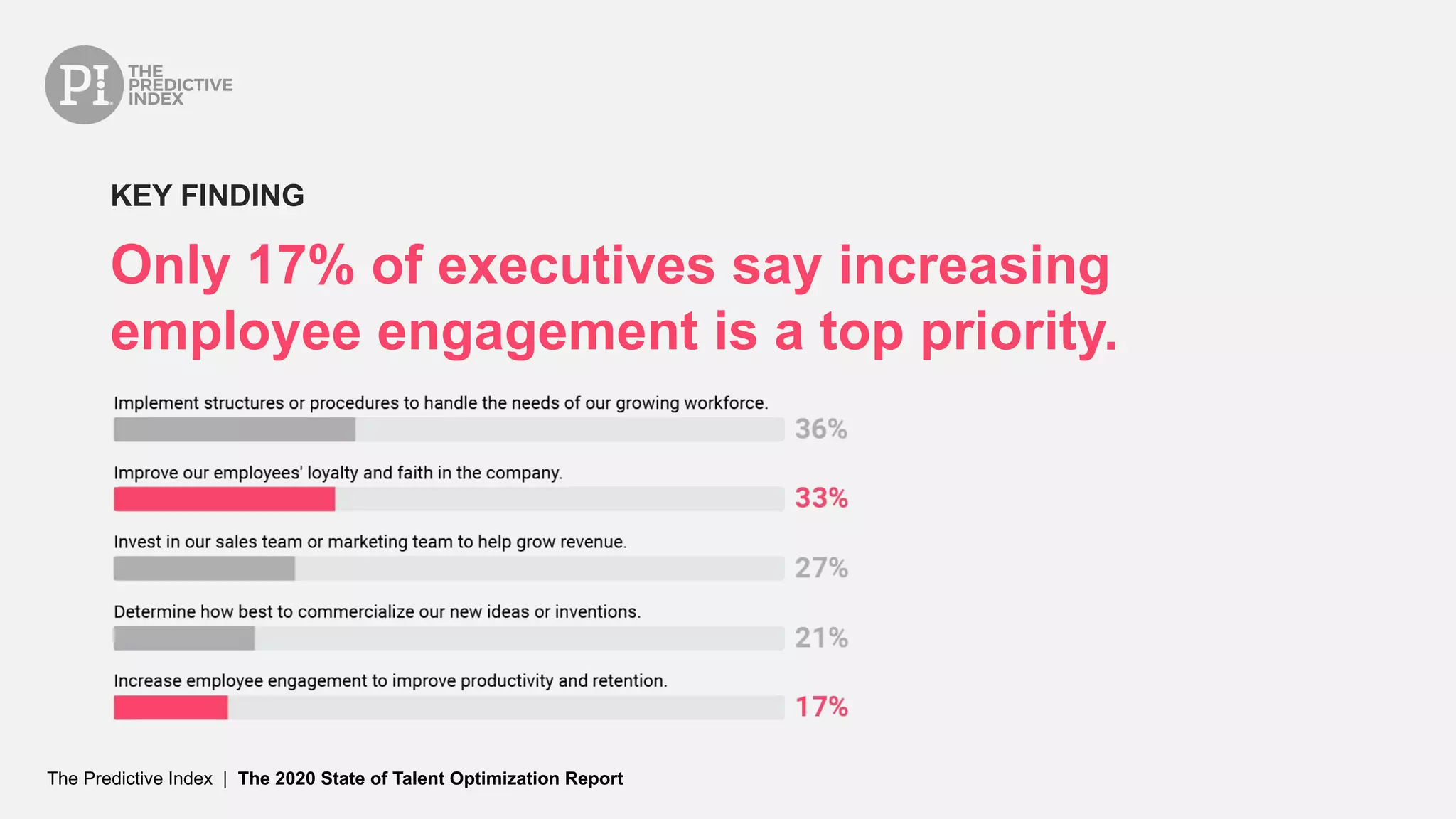
Only 17% of executives say increasing
employee engagement is a top priority.
KEY FINDING
The Predictive Index | The 2020 State of Talent Optimization Report
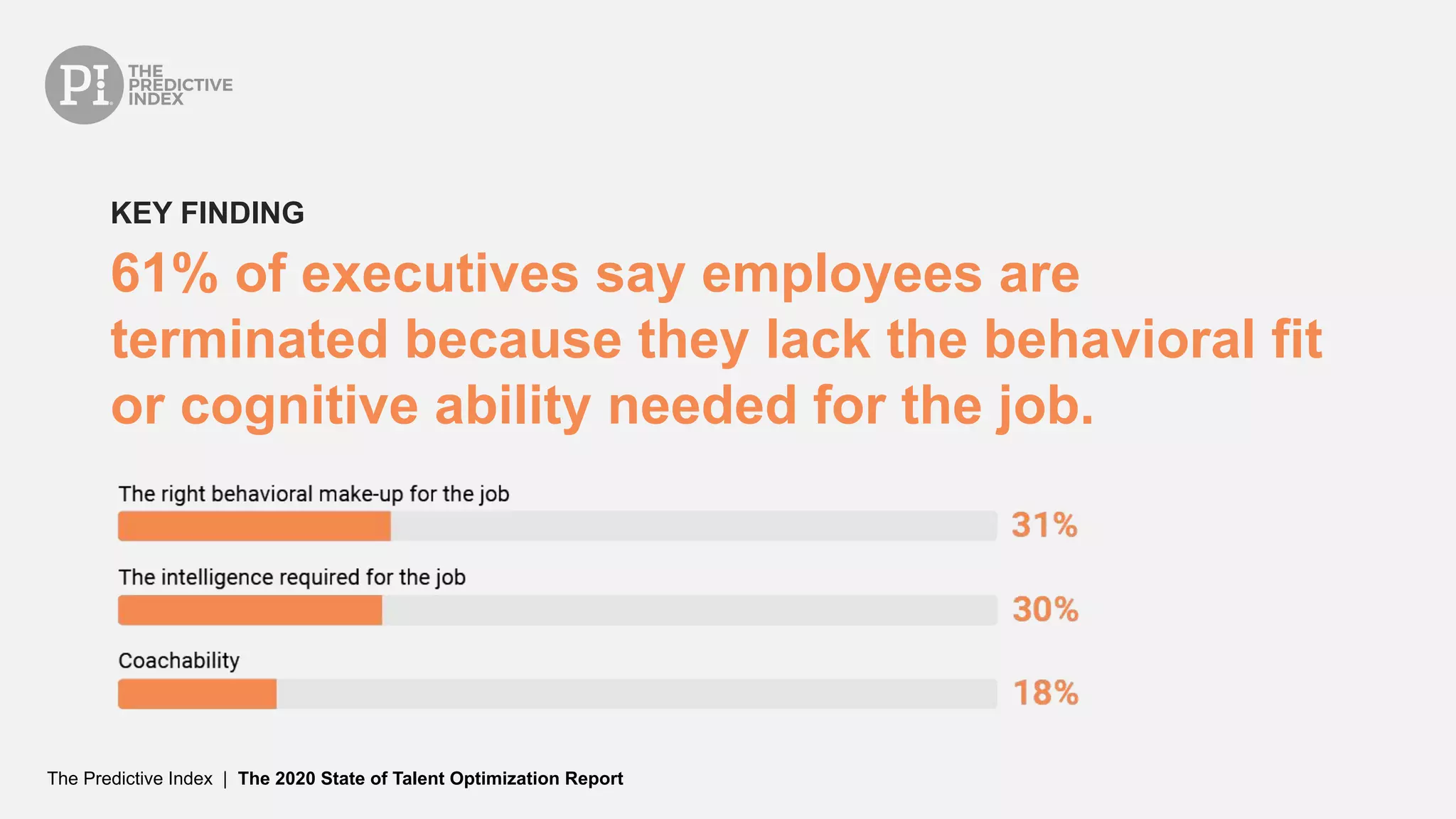
61% of executives say employees are
terminated because they lack the behavioral fit
or cognitive ability needed for the job.
KEY FINDING
The Predictive Index | The 2020 State of Talent Optimization Report
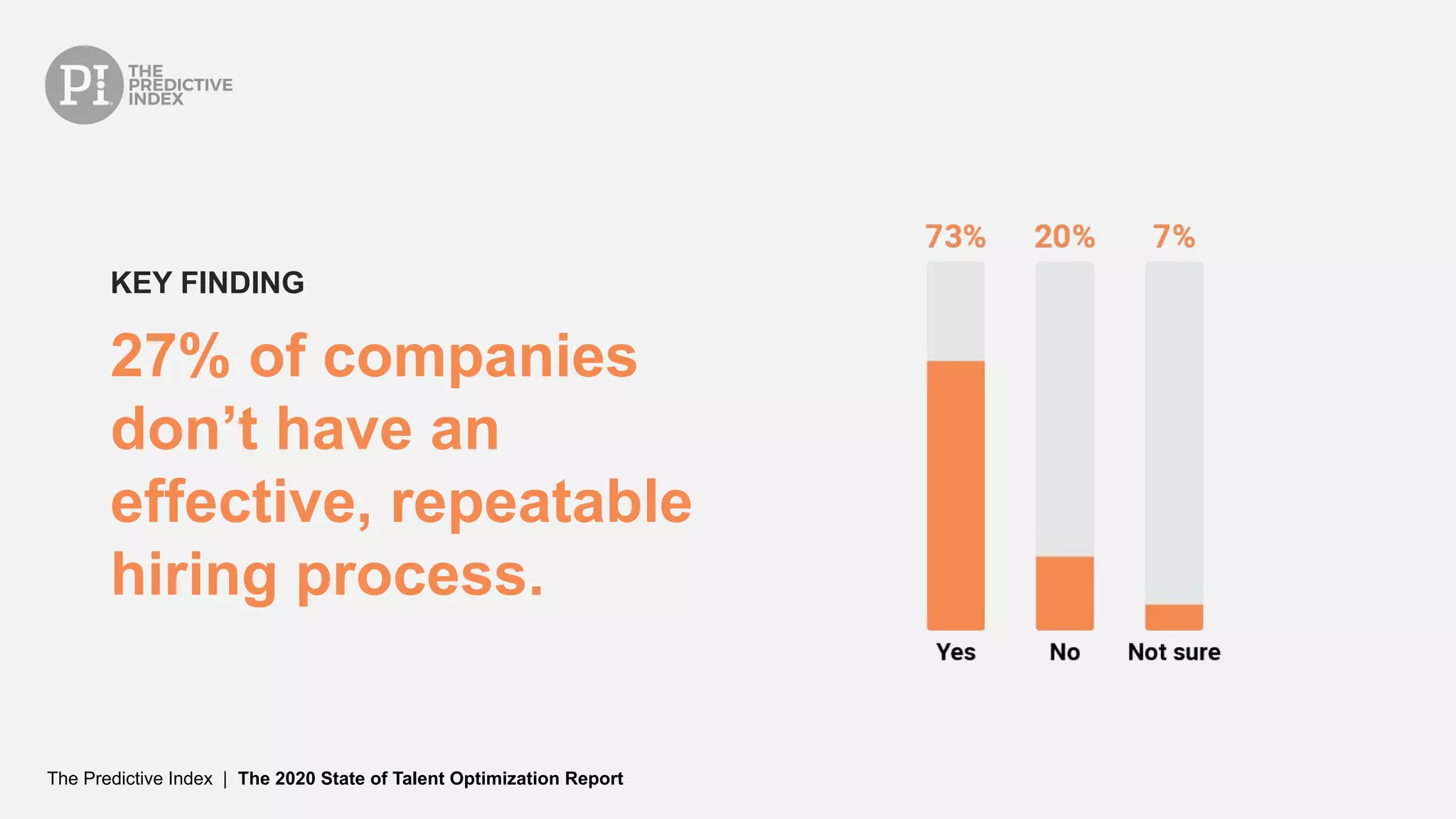
27% of companies
don’t have an
effective, repeatable
hiring process.
KEY FINDING
The Predictive Index | The 2020 State of Talent Optimization Report
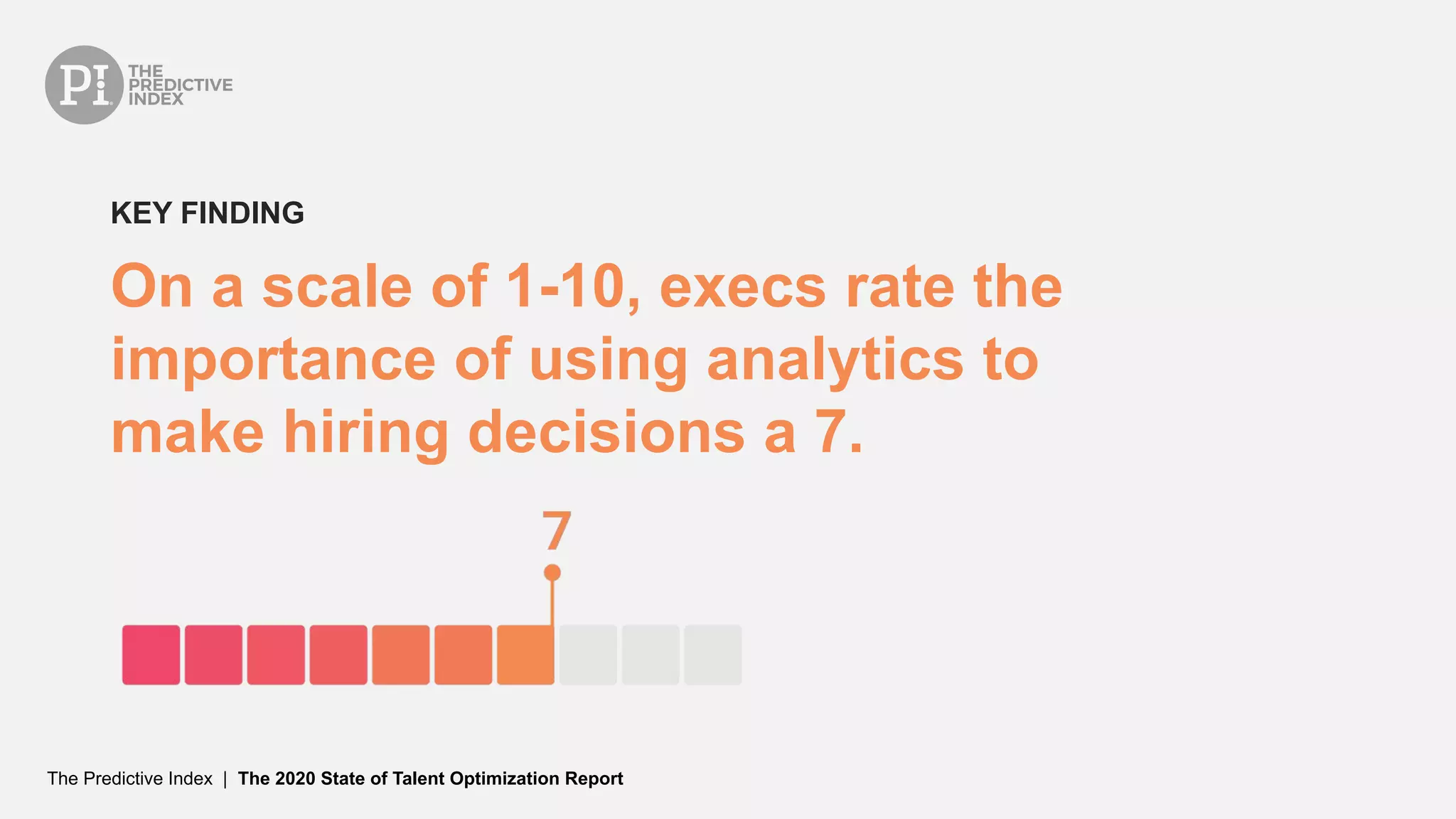
On a scale of 1-10, execs rate the
importance of using analytics to
make hiring decisions a 7.
KEY FINDING
The Predictive Index | The 2020 State of Talent Optimization Report
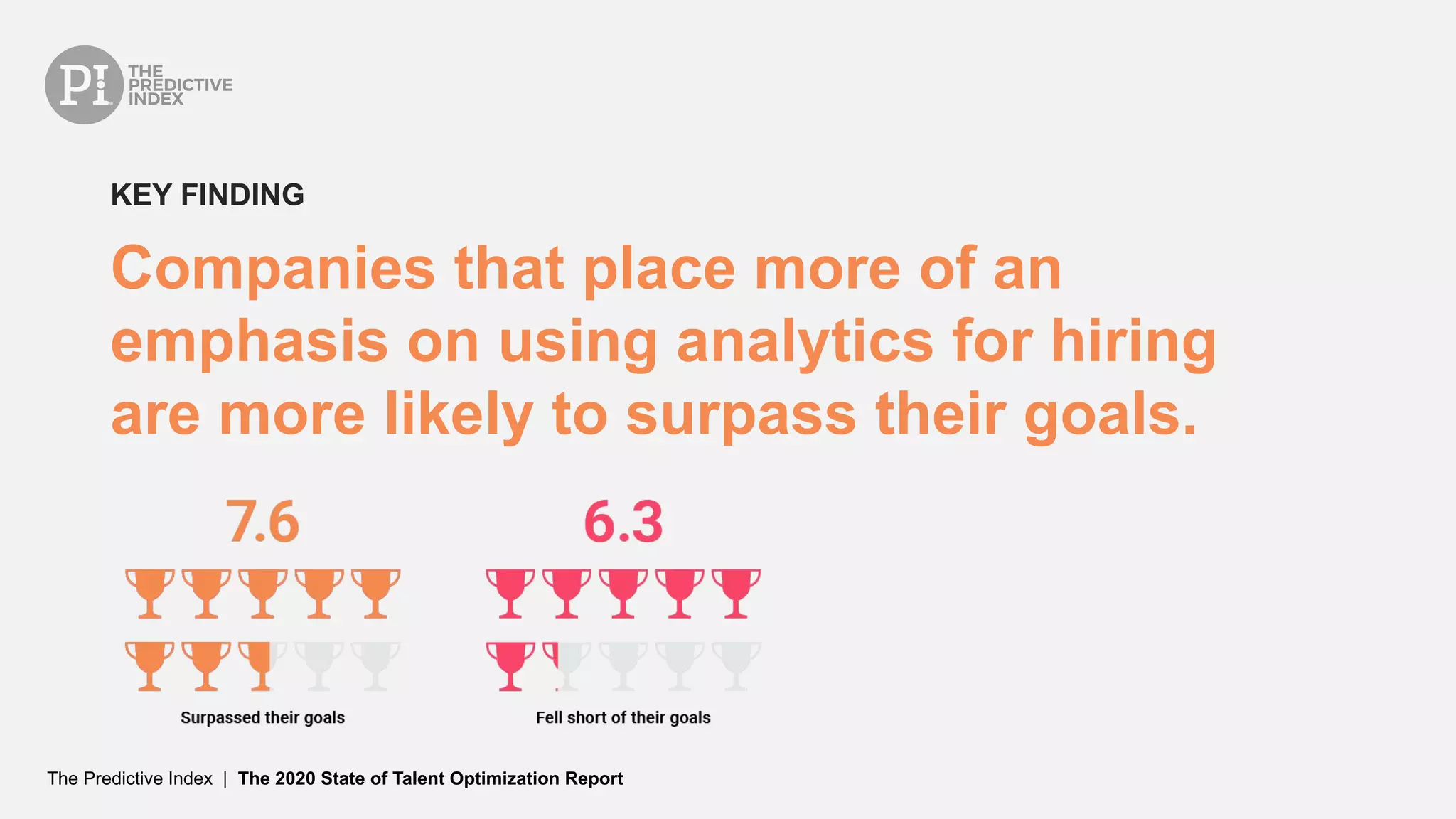
Companies that place more of an
emphasis on using analytics for hiring
are more likely to surpass their goals.
KEY FINDING
The Predictive Index | The 2020 State of Talent Optimization Report
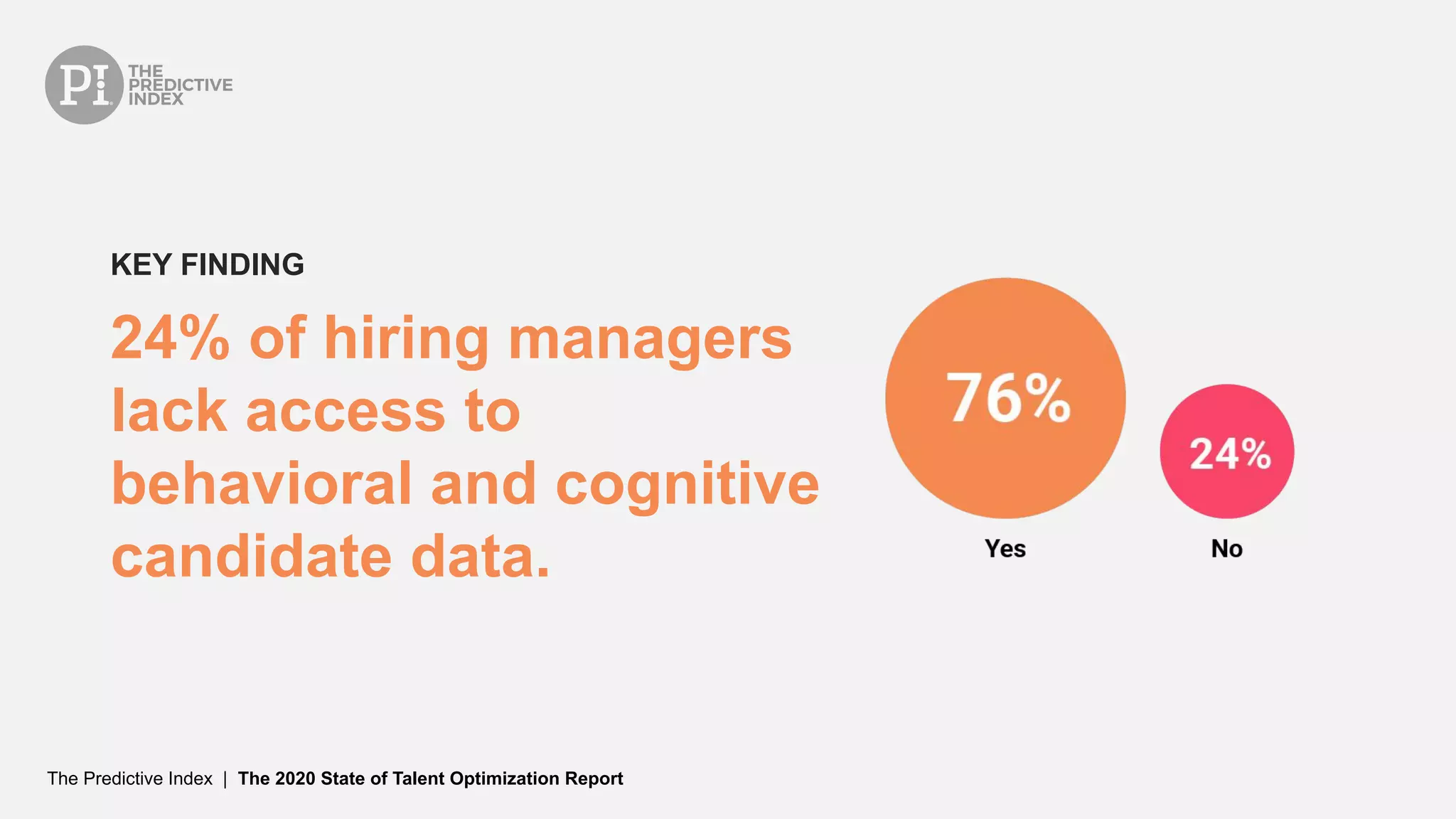
24% of hiring managers
lack access to
behavioral and cognitive
candidate data.
KEY FINDING
The Predictive Index | The 2020 State of Talent Optimization Report
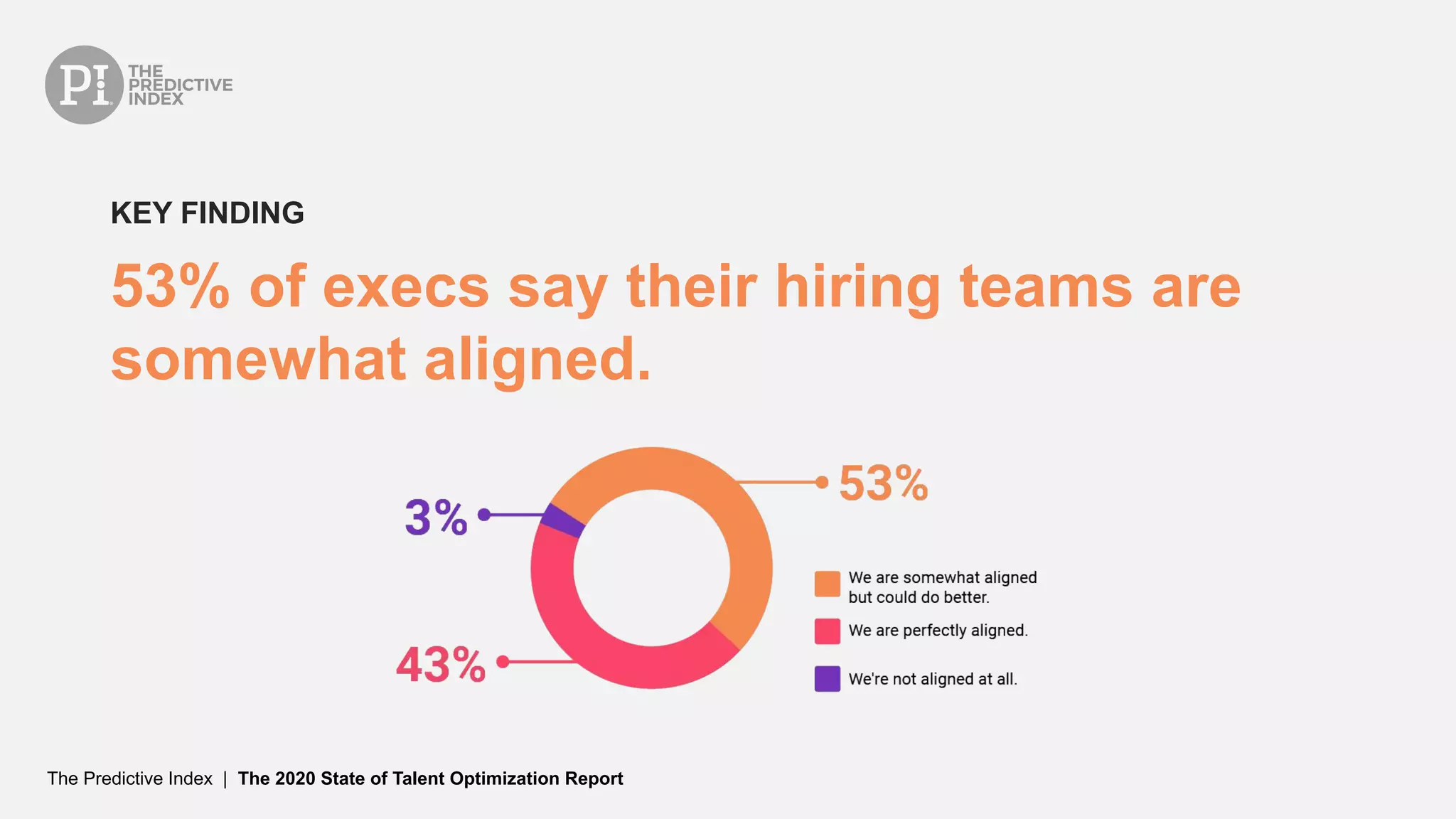
53% of execs say their hiring teams are
somewhat aligned.
KEY FINDING
Inspiring
employees
The Predictive Index | The 2020 State of Talent Optimization Report
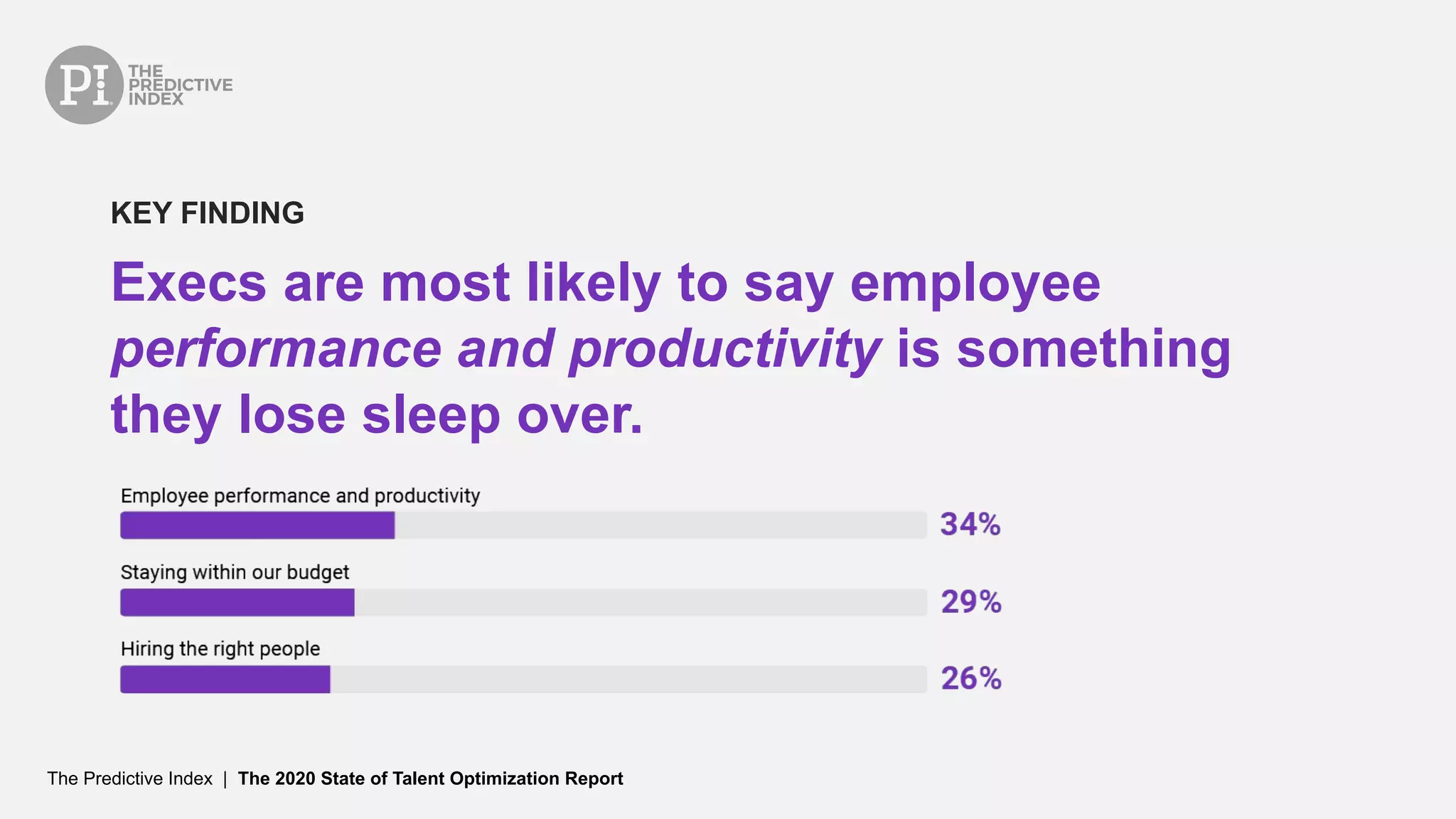
Execs are most likely to say employee
performance and productivity is something
they lose sleep over.
KEY FINDING
The Predictive Index | The 2020 State of Talent Optimization Report
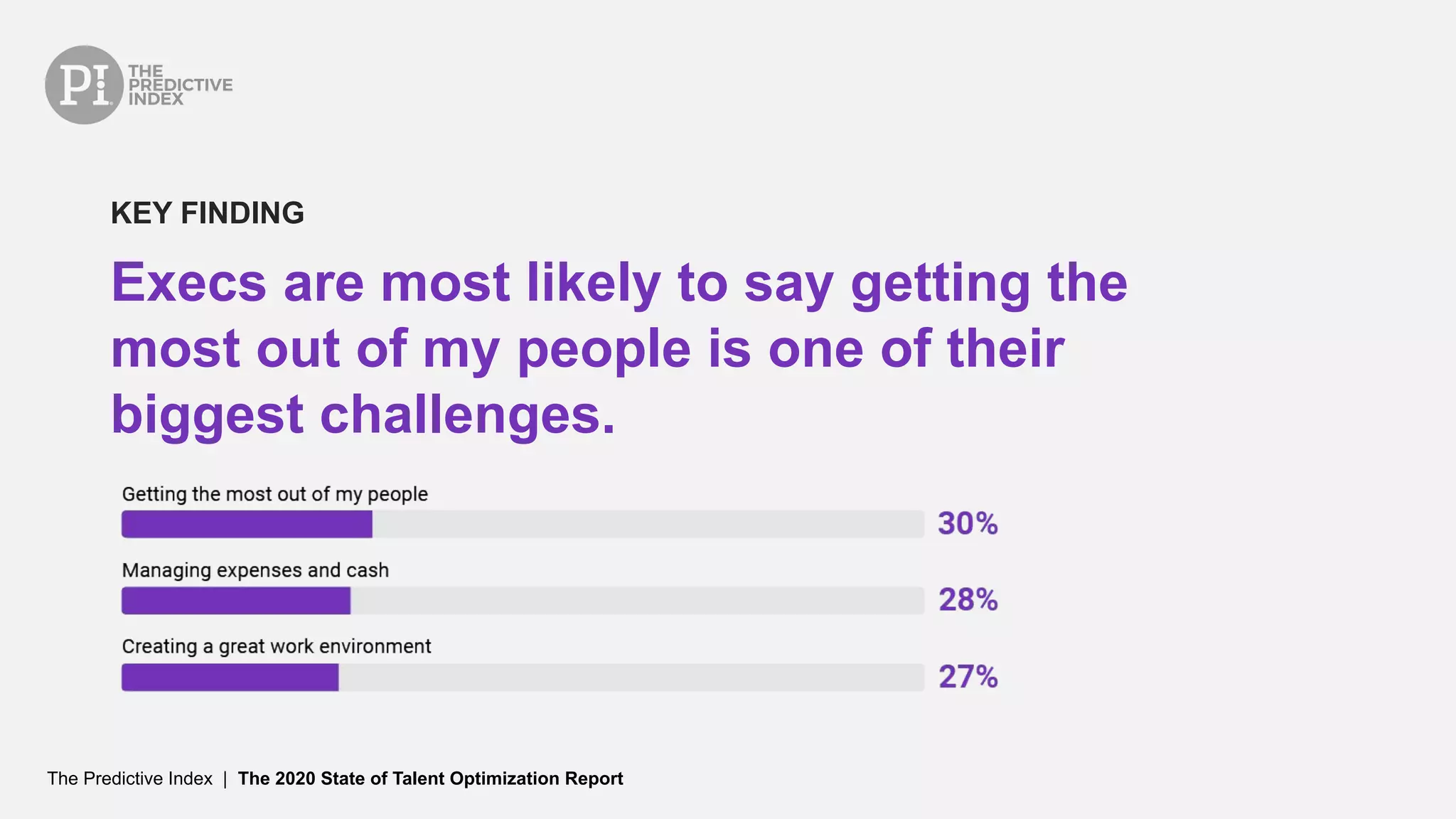
Execs are most likely to say getting the
most out of my people is one of their
biggest challenges.
KEY FINDING
The Predictive Index | The 2020 State of Talent Optimization Report
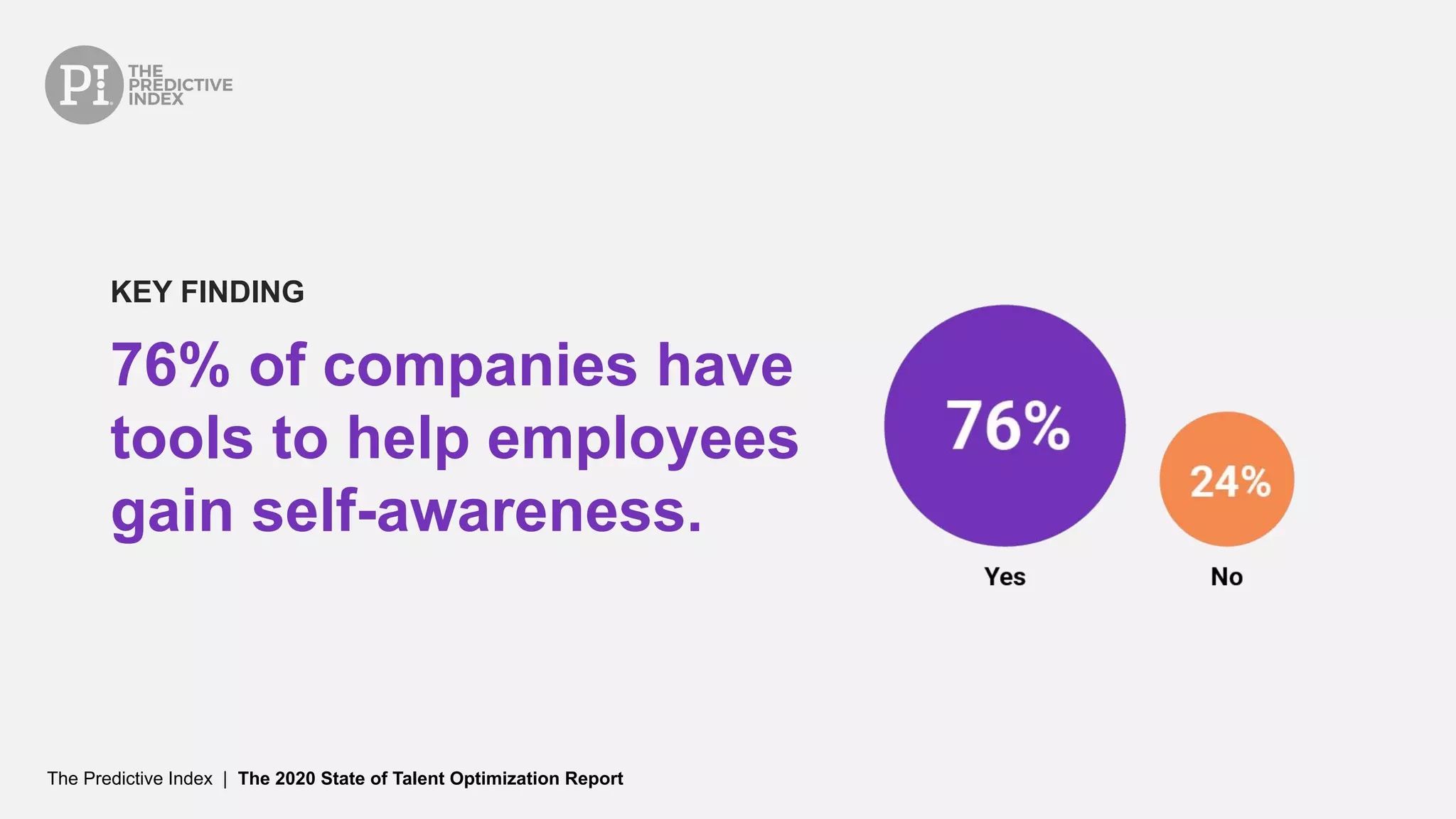
76% of companies have
tools to help employees
gain self-awareness.
KEY FINDING
The Predictive Index | The 2020 State of Talent Optimization Report
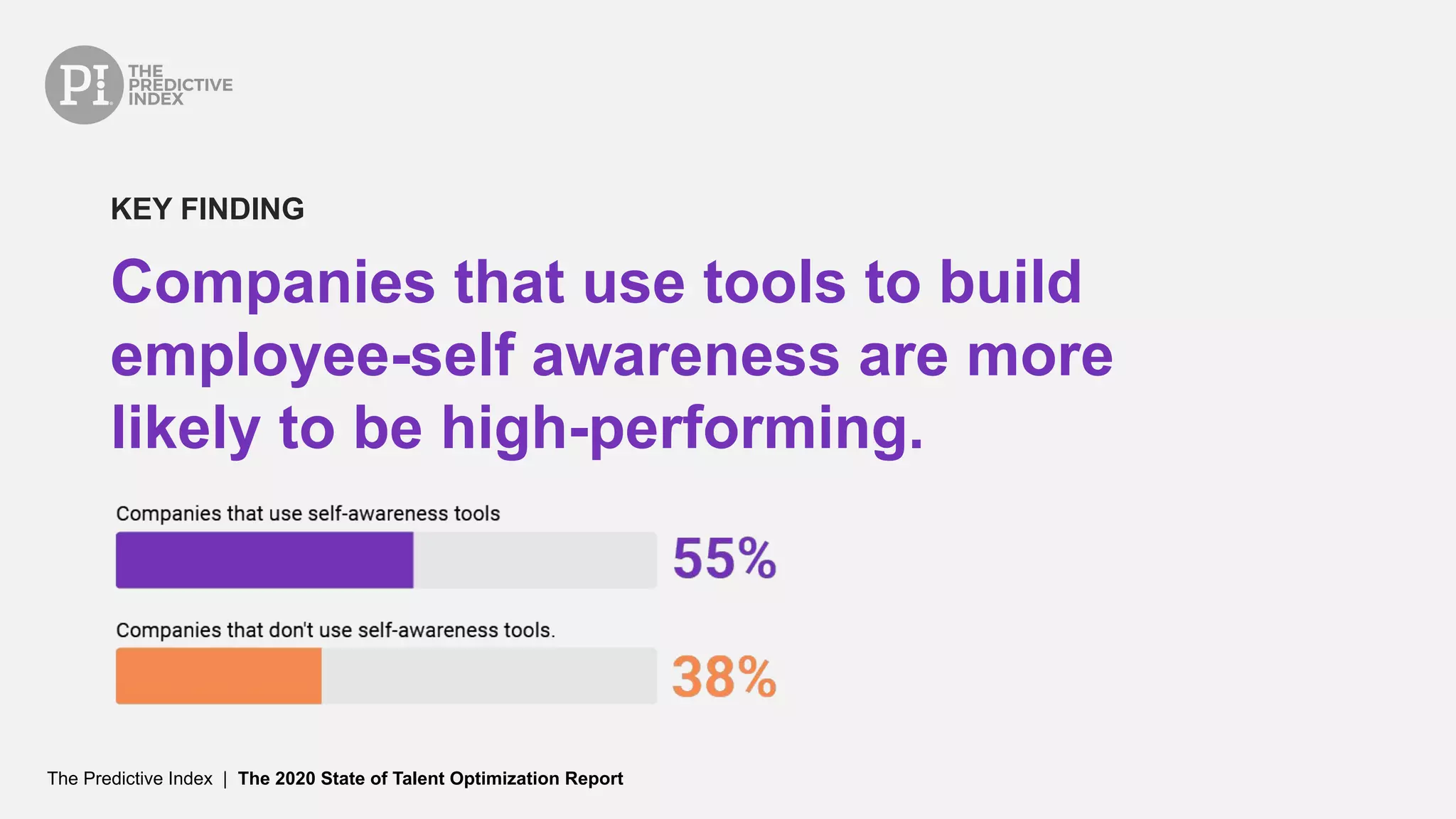
Companies that use tools to build
employee-self awareness are more
likely to be high-performing.
KEY FINDING
The Predictive Index | The 2020 State of Talent Optimization Report
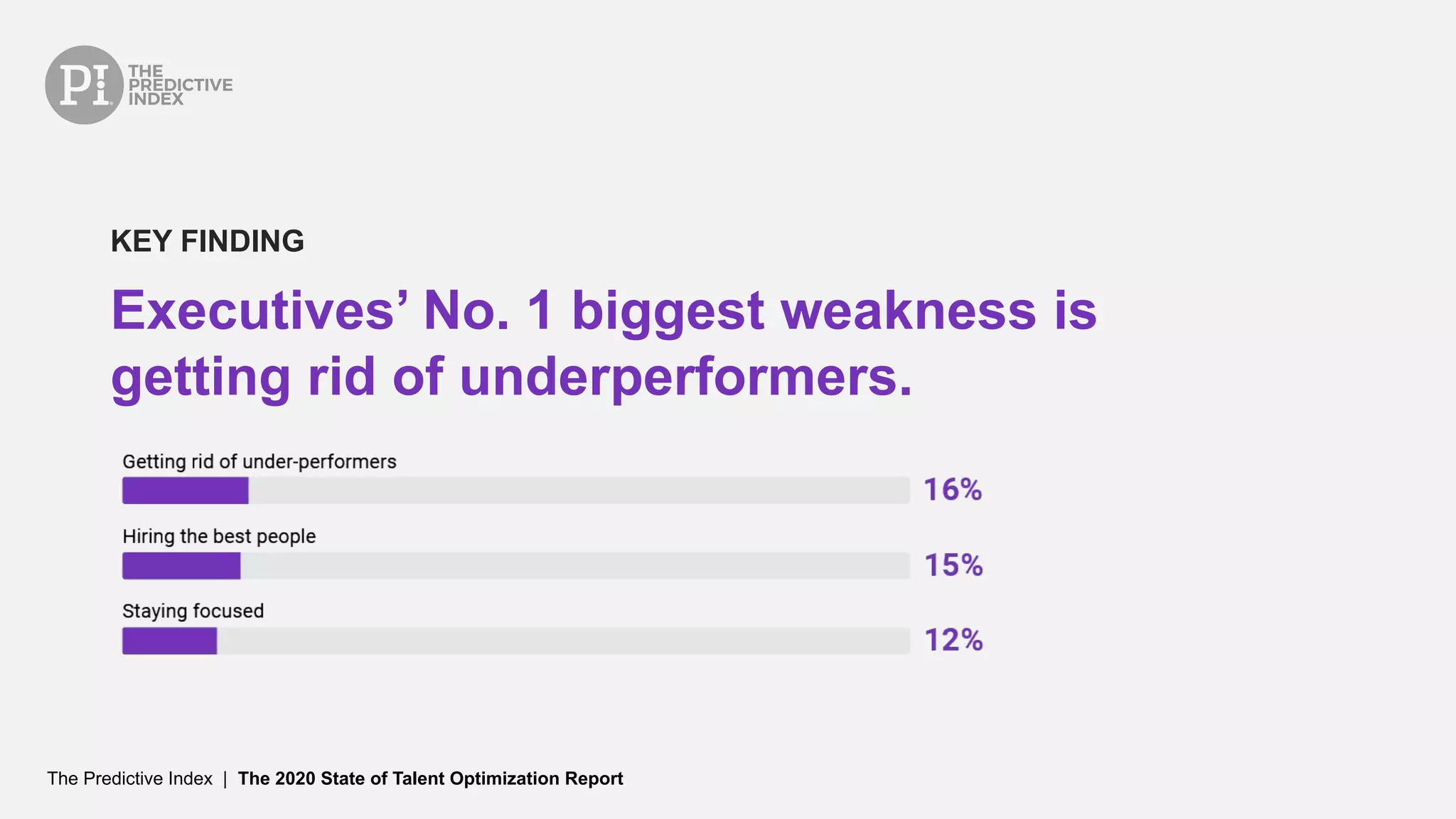
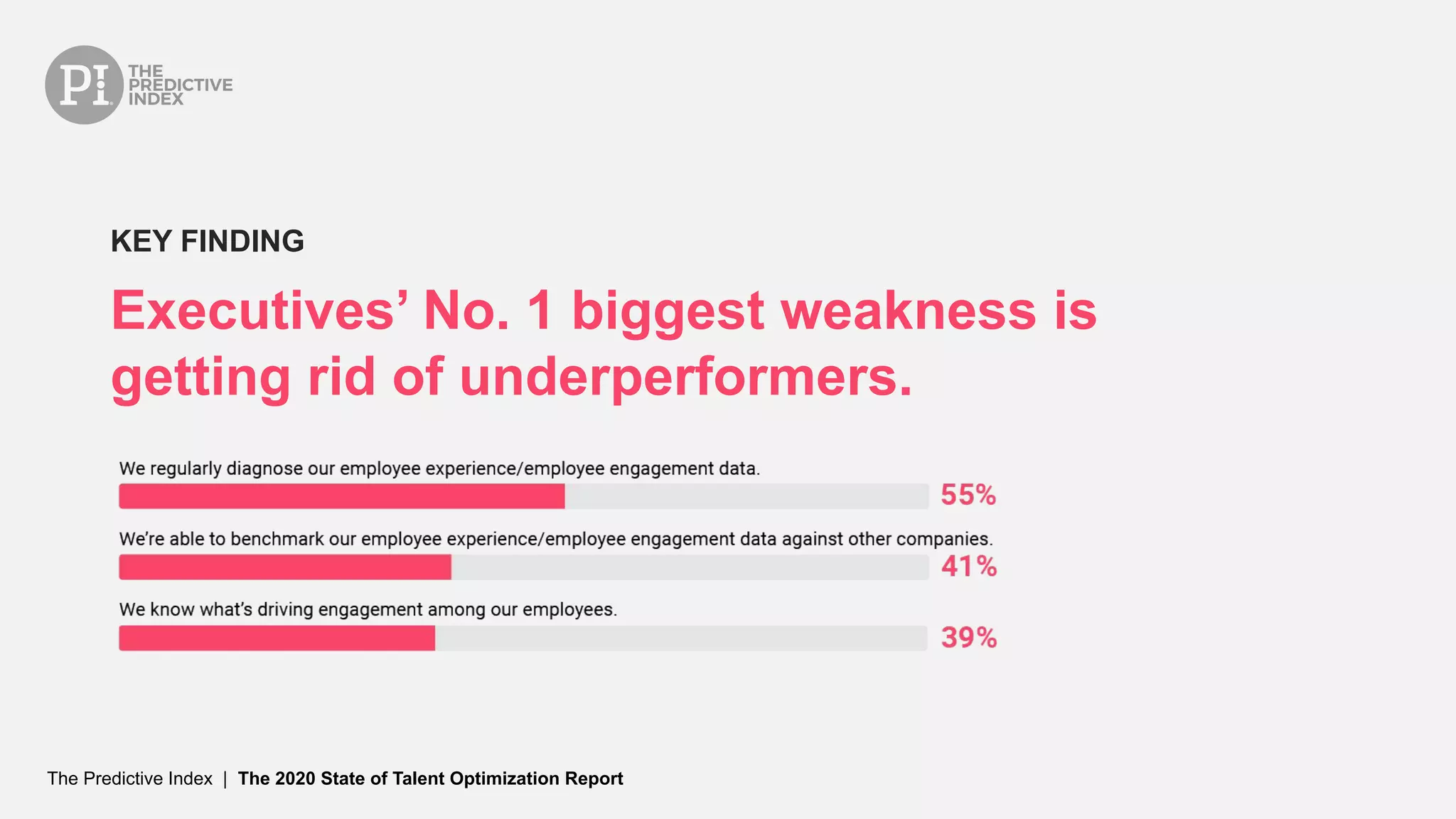
Executives’ No. 1 biggest weakness is
getting rid of underperformers.
KEY FINDING
Diagnosing
employee
engagement
The Predictive Index | The 2020 State of Talent Optimization Report
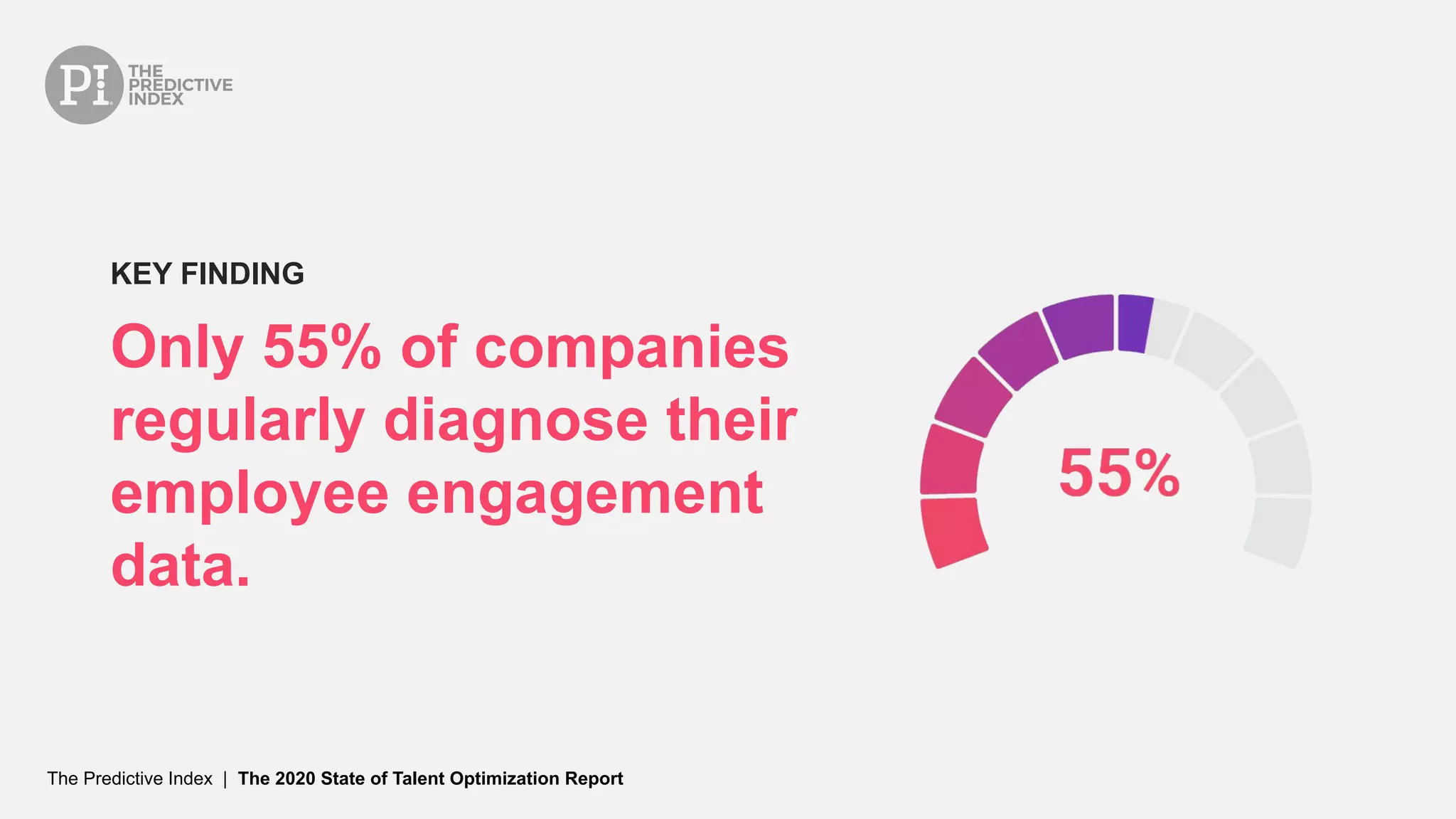
Only 55% of companies
regularly diagnose their
employee engagement
data.
KEY FINDING
The Predictive Index | The 2020 State of Talent Optimization Report
Executives’ No. 1 biggest weakness is
getting rid of underperformers.
KEY FINDING

The 2020 State of Talent Optimization Report | The Predictive Index

  • 1.
    The State of TalentOptimization 600 executives reveal the talent optimization practices that drive superior business results. 2020 REPORT
  • 2.
  • 3.
    The Predictive Index| The 2020 State of Talent Optimization Report Execs say 64% of total company costs are labor costs. KEY FINDING
  • 4.
    The Predictive Index| The 2020 State of Talent Optimization Report Execs attribute 72% of their company’s value to their employees. KEY FINDING
  • 5.
    The Predictive Index| The 2020 State of Talent Optimization Report Only 36% of companies have a talent strategy. KEY FINDING 66% We have a business strategy. 51% We have a financial plan. 36% We understand each executive’s confidence level in achieving each of our strategic priorities. 36% We have a talent strategy. 24% We have the right executive team in place to execute our business strategy.
  • 6.
    The Predictive Index| The 2020 State of Talent Optimization Report 37% of executives say their No. 1 priority is talent strategy. KEY FINDING
  • 7.
    The Predictive Index| The 2020 State of Talent Optimization Report One-third of companies with a talent strategy aren’t able to communicate it in a way their employees understand. KEY FINDING
  • 8.
    The Predictive Index| The 2020 State of Talent Optimization Report A mere 12% of companies align their talent strategy with their business strategy. KEY FINDING
  • 9.
    The Predictive Index| The 2020 State of Talent Optimization Report 22% of companies consider talent strategy a shared responsibility. KEY FINDING
  • 10.
    The Predictive Index| The 2020 State of Talent Optimization Report Companies with higher revenues are more likely to have a talent strategy in place. KEY FINDING
  • 11.
    The Predictive Index| The 2020 State of Talent Optimization Report On average, 73% of strategic initiatives are successful. KEY FINDING
  • 12.
    The Predictive Index| The 2020 State of Talent Optimization Report Talent optimized companies outperform other companies by 16% in terms of strategic success rates. KEY FINDING
  • 13.
    The Predictive Index| The 2020 State of Talent Optimization Report On average, 47% of high-performing employees left their company last year. KEY FINDING
  • 14.
    The Predictive Index| The 2020 State of Talent Optimization Report Talent optimized companies have 30% lower turnover of top-performers. KEY FINDING
  • 15.
    The Predictive Index| The 2020 State of Talent Optimization Report Talent optimized companies have 34% higher employee performance. KEY FINDING
  • 16.
    The Predictive Index| The 2020 State of Talent Optimization Report Talent optimized companies have higher Glassdoor ratings. KEY FINDING
  • 17.
    The Predictive Index| The 2020 State of Talent Optimization Report On average, senior leaders spend 61% of their time solving people problems. KEY FINDING
  • 18.
    The Predictive Index| The 2020 State of Talent Optimization Report Talent optimized companies spend 31% less time on people problems. KEY FINDING
  • 19.
    The Predictive Index| The 2020 State of Talent Optimization Report Execs attribute 64% of a strategic initiative’s success or failure to their employees. KEY FINDING
  • 20.
    The Predictive Index| The 2020 State of Talent Optimization Report 23% of companies align their organizational structure with their business strategy. KEY FINDING
  • 21.
    The Predictive Index| The 2020 State of Talent Optimization Report 47% of companies have tools that accurately evaluate whether they have the right executive team in place. KEY FINDING
  • 22.
  • 23.
    The Predictive Index| The 2020 State of Talent Optimization Report Execs say only 49% of last year’s hires were good hires. KEY FINDING
  • 24.
    The Predictive Index| The 2020 State of Talent Optimization Report Only 17% of executives say increasing employee engagement is a top priority. KEY FINDING
  • 25.
    The Predictive Index| The 2020 State of Talent Optimization Report 61% of executives say employees are terminated because they lack the behavioral fit or cognitive ability needed for the job. KEY FINDING
  • 26.
    The Predictive Index| The 2020 State of Talent Optimization Report 27% of companies don’t have an effective, repeatable hiring process. KEY FINDING
  • 27.
    The Predictive Index| The 2020 State of Talent Optimization Report On a scale of 1-10, execs rate the importance of using analytics to make hiring decisions a 7. KEY FINDING
  • 28.
    The Predictive Index| The 2020 State of Talent Optimization Report Companies that place more of an emphasis on using analytics for hiring are more likely to surpass their goals. KEY FINDING
  • 29.
    The Predictive Index| The 2020 State of Talent Optimization Report 24% of hiring managers lack access to behavioral and cognitive candidate data. KEY FINDING
  • 30.
    The Predictive Index| The 2020 State of Talent Optimization Report 53% of execs say their hiring teams are somewhat aligned. KEY FINDING
  • 31.
  • 32.
    The Predictive Index| The 2020 State of Talent Optimization Report Execs are most likely to say employee performance and productivity is something they lose sleep over. KEY FINDING
  • 33.
    The Predictive Index| The 2020 State of Talent Optimization Report Execs are most likely to say getting the most out of my people is one of their biggest challenges. KEY FINDING
  • 34.
    The Predictive Index| The 2020 State of Talent Optimization Report 76% of companies have tools to help employees gain self-awareness. KEY FINDING
  • 35.
    The Predictive Index| The 2020 State of Talent Optimization Report Companies that use tools to build employee-self awareness are more likely to be high-performing. KEY FINDING
  • 36.
    The Predictive Index| The 2020 State of Talent Optimization Report Executives’ No. 1 biggest weakness is getting rid of underperformers. KEY FINDING
  • 37.
  • 38.
    The Predictive Index| The 2020 State of Talent Optimization Report Only 55% of companies regularly diagnose their employee engagement data. KEY FINDING
  • 39.
    The Predictive Index| The 2020 State of Talent Optimization Report Executives’ No. 1 biggest weakness is getting rid of underperformers. KEY FINDING