Congressional Budget Office
The 2016 Budget Outlook
Presentation at the
Peter G. Peterson Foundation’s
2016 Fiscal Summit
Washington, D.C.
May 11, 2016
Keith Hall
Director
This presentation draws on Updated Budget Projections: 2016 to 2026 (March 2016), www.cbo.gov/publication/51384,
Budgetary and Economic Outcomes Under Paths for Federal Revenues and Noninterest Spending Specified by
Chairman Price, March 2016 (March 2016), www.cbo.gov/publication/51260, and The Budget and Economic Outlook:
2016 to 2026 (January 2016), www.cbo.gov/publication/51129.
1CONGRESSIONAL BUDGET OFFICE
CBO’s Budget Projections Through 2026
as of March 2016
2CONGRESSIONAL BUDGET OFFICE
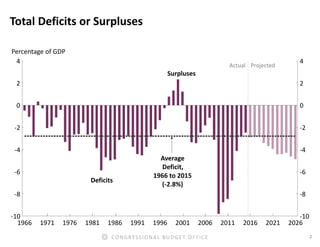
Total Deficits or Surpluses
Percentage of GDP
Actual Projected
Deficits
Surpluses
Average
Deficit,
1966 to 2015
(-2.8%)
1966 1971 1976 1981 1986 1991 1996 2001 2006 2011 2016 2021 2026
-10
-8
-6
-4
-2
0
2
4
-10
-8
-6
-4
-2
0
2
4
3CONGRESSIONAL BUDGET OFFICE
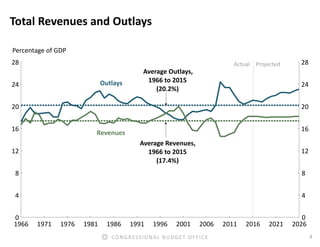
Total Revenues and Outlays
Percentage of GDP
1966 1971 1976 1981 1986 1991 1996 2001 2006 2011 2016 2021 2026
0
4
8
12
16
20
24
28
0
4
8
12
16
20
24
28
Outlays
Revenues
Average Outlays,
1966 to 2015
(20.2%)
Average Revenues,
1966 to 2015
(17.4%)
Actual Projected
4CONGRESSIONAL BUDGET OFFICE
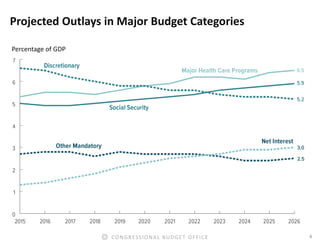
Projected Outlays in Major Budget Categories
Percentage of GDP
5CONGRESSIONAL BUDGET OFFICE
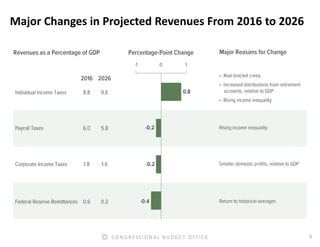
Major Changes in Projected Revenues From 2016 to 2026
6CONGRESSIONAL BUDGET OFFICE
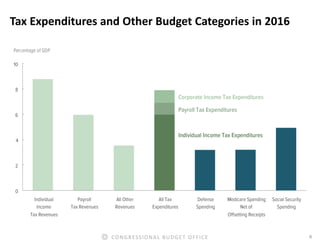
Tax Expenditures and Other Budget Categories in 2016
7CONGRESSIONAL BUDGET OFFICE
CBO’s Budget Projections Through 2040
as of January 2016
8CONGRESSIONAL BUDGET OFFICE
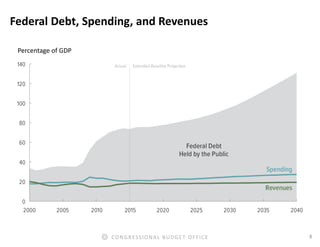
Federal Debt, Spending, and Revenues
Percentage of GDP
9CONGRESSIONAL BUDGET OFFICE
Uncertainty About Projections of Debt
■ Even if future tax and spending policies match the policies
specified in current law, budgetary outcomes will undoubtedly
differ from CBO’s projections.
■ Unexpected changes in the economy, demographics, and other
key factors will occur.
10CONGRESSIONAL BUDGET OFFICE
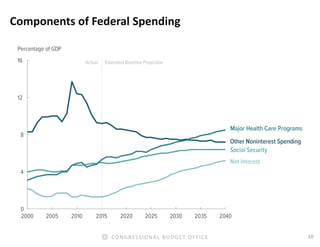
Components of Federal Spending
11CONGRESSIONAL BUDGET OFFICE
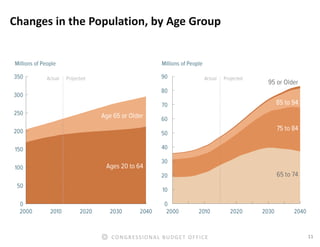
Changes in the Population, by Age Group
12CONGRESSIONAL BUDGET OFFICE
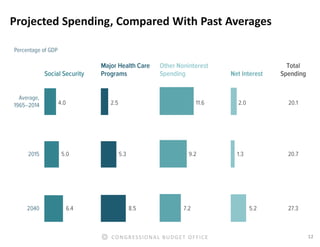
Projected Spending, Compared With Past Averages
13CONGRESSIONAL BUDGET OFFICE
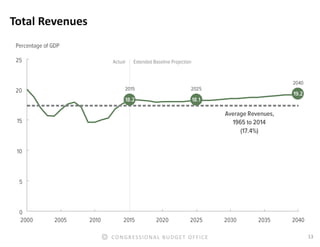
Total Revenues
14CONGRESSIONAL BUDGET OFFICE
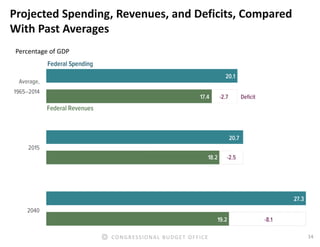
Projected Spending, Revenues, and Deficits, Compared
With Past Averages
Percentage of GDP
15CONGRESSIONAL BUDGET OFFICE
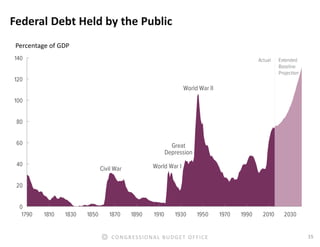
Federal Debt Held by the Public
Percentage of GDP
16CONGRESSIONAL BUDGET OFFICE
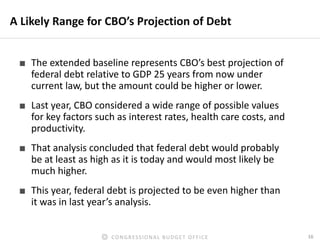
A Likely Range for CBO’s Projection of Debt
■ The extended baseline represents CBO’s best projection of
federal debt relative to GDP 25 years from now under
current law, but the amount could be higher or lower.
■ Last year, CBO considered a wide range of possible values
for key factors such as interest rates, health care costs, and
productivity.
■ That analysis concluded that federal debt would probably
be at least as high as it is today and would most likely be
much higher.
■ This year, federal debt is projected to be even higher than
it was in last year’s analysis.
17CONGRESSIONAL BUDGET OFFICE
A Sustainable Path for the Long Term
■ Lawmakers would have to make major changes to tax
policies, spending policies, or both.
■ The size of such changes would depend upon the
amount of federal debt that lawmakers considered
appropriate.
18CONGRESSIONAL BUDGET OFFICE
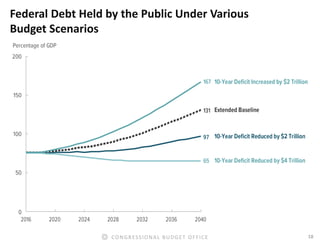
Federal Debt Held by the Public Under Various
Budget Scenarios

The 2016 Budget Outlook

  • 1.
    Congressional Budget Office The2016 Budget Outlook Presentation at the Peter G. Peterson Foundation’s 2016 Fiscal Summit Washington, D.C. May 11, 2016 Keith Hall Director This presentation draws on Updated Budget Projections: 2016 to 2026 (March 2016), www.cbo.gov/publication/51384, Budgetary and Economic Outcomes Under Paths for Federal Revenues and Noninterest Spending Specified by Chairman Price, March 2016 (March 2016), www.cbo.gov/publication/51260, and The Budget and Economic Outlook: 2016 to 2026 (January 2016), www.cbo.gov/publication/51129.
  • 2.
    1CONGRESSIONAL BUDGET OFFICE CBO’sBudget Projections Through 2026 as of March 2016
  • 3.
    2CONGRESSIONAL BUDGET OFFICE TotalDeficits or Surpluses Percentage of GDP Actual Projected Deficits Surpluses Average Deficit, 1966 to 2015 (-2.8%) 1966 1971 1976 1981 1986 1991 1996 2001 2006 2011 2016 2021 2026 -10 -8 -6 -4 -2 0 2 4 -10 -8 -6 -4 -2 0 2 4
  • 4.
    3CONGRESSIONAL BUDGET OFFICE TotalRevenues and Outlays Percentage of GDP 1966 1971 1976 1981 1986 1991 1996 2001 2006 2011 2016 2021 2026 0 4 8 12 16 20 24 28 0 4 8 12 16 20 24 28 Outlays Revenues Average Outlays, 1966 to 2015 (20.2%) Average Revenues, 1966 to 2015 (17.4%) Actual Projected
  • 5.
    4CONGRESSIONAL BUDGET OFFICE ProjectedOutlays in Major Budget Categories Percentage of GDP
  • 6.
    5CONGRESSIONAL BUDGET OFFICE MajorChanges in Projected Revenues From 2016 to 2026
  • 7.
    6CONGRESSIONAL BUDGET OFFICE TaxExpenditures and Other Budget Categories in 2016
  • 8.
    7CONGRESSIONAL BUDGET OFFICE CBO’sBudget Projections Through 2040 as of January 2016
  • 9.
    8CONGRESSIONAL BUDGET OFFICE FederalDebt, Spending, and Revenues Percentage of GDP
  • 10.
    9CONGRESSIONAL BUDGET OFFICE UncertaintyAbout Projections of Debt ■ Even if future tax and spending policies match the policies specified in current law, budgetary outcomes will undoubtedly differ from CBO’s projections. ■ Unexpected changes in the economy, demographics, and other key factors will occur.
  • 11.
  • 12.
    11CONGRESSIONAL BUDGET OFFICE Changesin the Population, by Age Group
  • 13.
    12CONGRESSIONAL BUDGET OFFICE ProjectedSpending, Compared With Past Averages
  • 14.
  • 15.
    14CONGRESSIONAL BUDGET OFFICE ProjectedSpending, Revenues, and Deficits, Compared With Past Averages Percentage of GDP
  • 16.
    15CONGRESSIONAL BUDGET OFFICE FederalDebt Held by the Public Percentage of GDP
  • 17.
    16CONGRESSIONAL BUDGET OFFICE ALikely Range for CBO’s Projection of Debt ■ The extended baseline represents CBO’s best projection of federal debt relative to GDP 25 years from now under current law, but the amount could be higher or lower. ■ Last year, CBO considered a wide range of possible values for key factors such as interest rates, health care costs, and productivity. ■ That analysis concluded that federal debt would probably be at least as high as it is today and would most likely be much higher. ■ This year, federal debt is projected to be even higher than it was in last year’s analysis.
  • 18.
    17CONGRESSIONAL BUDGET OFFICE ASustainable Path for the Long Term ■ Lawmakers would have to make major changes to tax policies, spending policies, or both. ■ The size of such changes would depend upon the amount of federal debt that lawmakers considered appropriate.
  • 19.
    18CONGRESSIONAL BUDGET OFFICE FederalDebt Held by the Public Under Various Budget Scenarios