Š 2015 TGS-NOPEC Geophysical Company ASA. All rights reserved.
See the energy at TGS.com
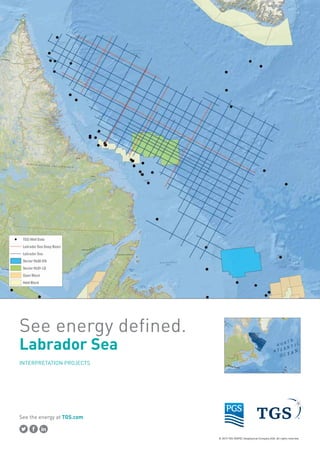
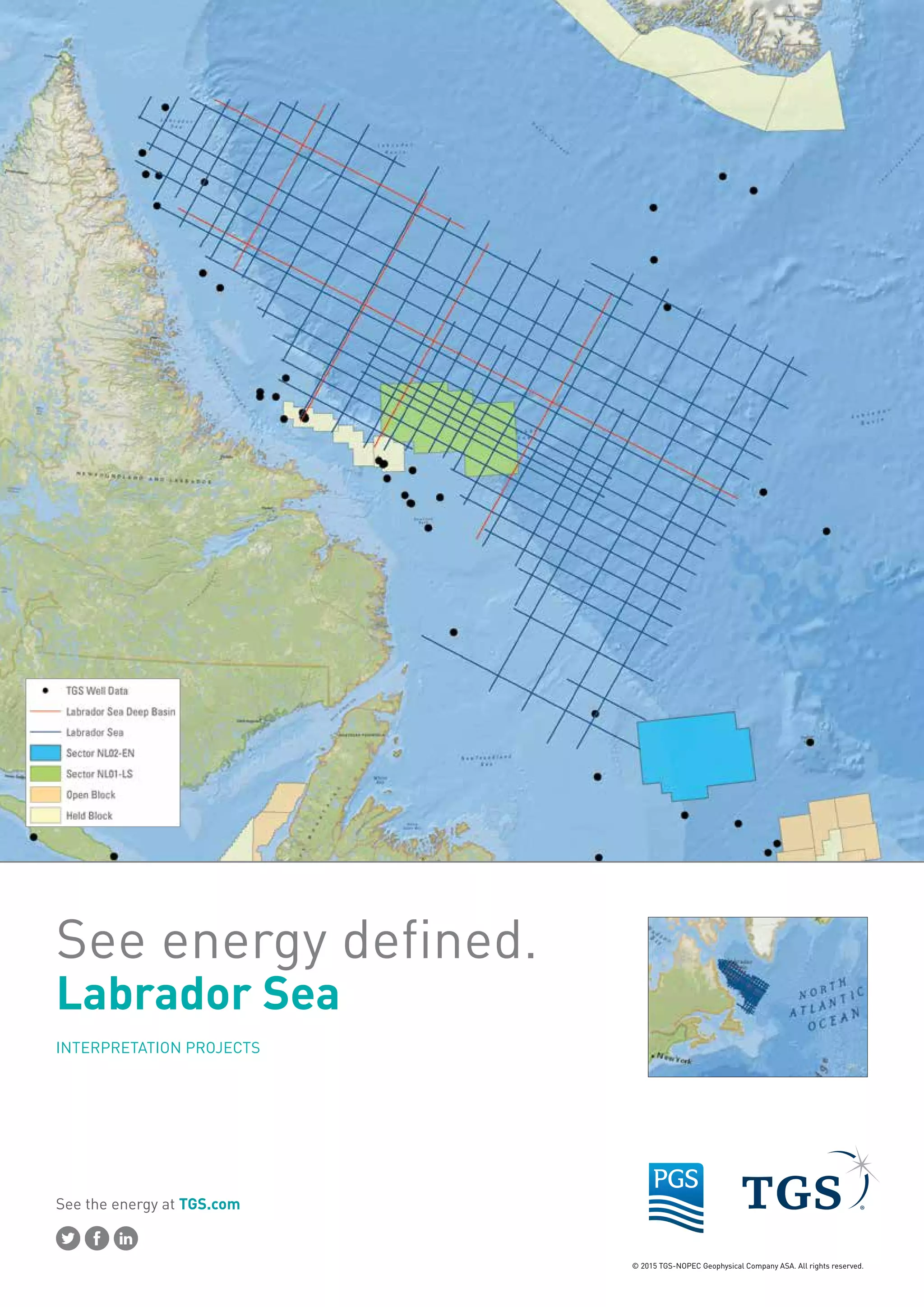
See energy defined.
Labrador Sea
INTERPRETATION PROJECTS
Š 2015 TGS-NOPEC Geophysical Company ASA. All rights reserved.
For more information, contact TGS at:
UK
Tel: +44 208 339 4200
Email: gps-sales@tgs.com
US
Tel: +1 713 860 2100
Email: gps-sales@tgs.com
Sequence Stratigraphic Interpretation and Play Fairway Analysis
PROJECT DETAILS
TGS has generated a sequence stratigraphic and play fairway
analysis interpretation project utilising the new TGS Labrador
Sea seismic survey data and available well data to:
ƒƒ Provide a geologic model of the depositional basin fill
throughout time
ƒƒ Delineate the presence, thickness and distribution of
reservoir and seal with respect to timing and movement
associated with tectonic activity
ƒƒ Identify and risk-assess prospective hydrocarbon leads
by performing basin modeling, AVO analysis and fluid
reservoir modeling
In addition, TGS has integrated and interpreted well log data
to define a sequence stratigraphic framework. Depositional
environments and associated facies are interpreted based on
log character for available wells. Where insufficient well data
is available, seismic facies analysis has been used to define
the gross depositional environments. Gross depositional
environment maps for 14 sequences have been interpreted
and mapped.
DELIVERABLES
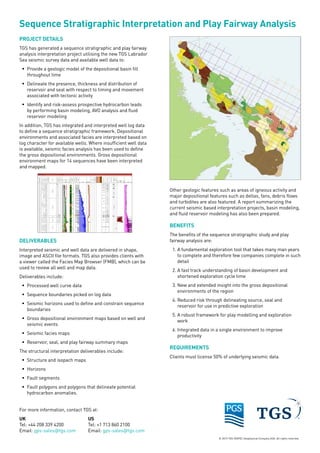
Interpreted seismic and well data are delivered in shape,
image and ASCII file formats. TGS also provides clients with
a viewer called the Facies Map Browser (FMB), which can be
used to review all well and map data.
Deliverables include:
ƒƒ Processed well curve data
ƒƒ Sequence boundaries picked on log data
ƒƒ Seismic horizons used to define and constrain sequence
boundaries
ƒƒ Gross depositional environment maps based on well and
seismic events
ƒƒ Seismic facies maps
ƒƒ Reservoir, seal, and play fairway summary maps
The structural interpretation deliverables include:
ƒƒ Structure and isopach maps
ƒƒ Horizons
ƒƒ Fault segments
ƒƒ Fault polygons and polygons that delineate potential
hydrocarbon anomalies.
Other geologic features such as areas of igneous activity and
major depositional features such as deltas, fans, debris flows
and turbidites are also featured. A report summarizing the
current seismic based interpretation projects, basin modeling,
and fluid reservoir modeling has also been prepared.
BENEFITS
The benefits of the sequence stratigraphic study and play
fairway analysis are:
1.	A fundamental exploration tool that takes many man years
to complete and therefore few companies complete in such
detail
2.	A fast track understanding of basin development and
shortened exploration cycle time
3.	New and extended insight into the gross depositional
environments of the region
4.	Reduced risk through delineating source, seal and
reservoir for use in predictive exploration
5.	A robust framework for play modelling and exploration
work
6.	Integrated data in a single environment to improve
productivity
REQUIREMENTS
Clients must license 50% of underlying seismic data.

TGS GPS- Labrador Interpretation

  • 1.
    Š 2015 TGS-NOPECGeophysical Company ASA. All rights reserved. See the energy at TGS.com See energy defined. Labrador Sea INTERPRETATION PROJECTS
  • 2.
    © 2015 TGS-NOPECGeophysical Company ASA. All rights reserved. For more information, contact TGS at: UK Tel: +44 208 339 4200 Email: gps-sales@tgs.com US Tel: +1 713 860 2100 Email: gps-sales@tgs.com Sequence Stratigraphic Interpretation and Play Fairway Analysis PROJECT DETAILS TGS has generated a sequence stratigraphic and play fairway analysis interpretation project utilising the new TGS Labrador Sea seismic survey data and available well data to: ƒƒ Provide a geologic model of the depositional basin fill throughout time ƒƒ Delineate the presence, thickness and distribution of reservoir and seal with respect to timing and movement associated with tectonic activity ƒƒ Identify and risk-assess prospective hydrocarbon leads by performing basin modeling, AVO analysis and fluid reservoir modeling In addition, TGS has integrated and interpreted well log data to define a sequence stratigraphic framework. Depositional environments and associated facies are interpreted based on log character for available wells. Where insufficient well data is available, seismic facies analysis has been used to define the gross depositional environments. Gross depositional environment maps for 14 sequences have been interpreted and mapped. DELIVERABLES Interpreted seismic and well data are delivered in shape, image and ASCII file formats. TGS also provides clients with a viewer called the Facies Map Browser (FMB), which can be used to review all well and map data. Deliverables include: ƒƒ Processed well curve data ƒƒ Sequence boundaries picked on log data ƒƒ Seismic horizons used to define and constrain sequence boundaries ƒƒ Gross depositional environment maps based on well and seismic events ƒƒ Seismic facies maps ƒƒ Reservoir, seal, and play fairway summary maps The structural interpretation deliverables include: ƒƒ Structure and isopach maps ƒƒ Horizons ƒƒ Fault segments ƒƒ Fault polygons and polygons that delineate potential hydrocarbon anomalies. Other geologic features such as areas of igneous activity and major depositional features such as deltas, fans, debris flows and turbidites are also featured. A report summarizing the current seismic based interpretation projects, basin modeling, and fluid reservoir modeling has also been prepared. BENEFITS The benefits of the sequence stratigraphic study and play fairway analysis are: 1. A fundamental exploration tool that takes many man years to complete and therefore few companies complete in such detail 2. A fast track understanding of basin development and shortened exploration cycle time 3. New and extended insight into the gross depositional environments of the region 4. Reduced risk through delineating source, seal and reservoir for use in predictive exploration 5. A robust framework for play modelling and exploration work 6. Integrated data in a single environment to improve productivity REQUIREMENTS Clients must license 50% of underlying seismic data.