 Test Translation and Adaptation
Rationale
 The aim of translation and adaptation is to achieve
different language versions of the English instrument
that are conceptually equivalent in each of the target
countries/cultures. That is, the instrument should be
equally natural and acceptable and should practically
perform in the same way.
 The focus is on cross-cultural and conceptual, rather
than on linguistic/literal equivalence.
Procedure Of Translation &
Adaptation
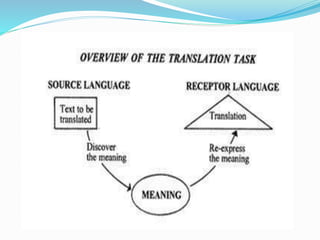
 A well-established method to achieve this goal is to use
forward-translations and back-translations.
 This procedure involve the following basic steps.
 Step-I (Forward Translation)
 The first step is to enlist a bilingual individual familiar
with the test to conduct a word-for-word (or meaning-
for-meaning) translation from the original test to the
target test.
 Verbatim translation.
Guidelines During Forward
Translation
 One translator, preferably a professional psychologist,
familiar with terminology of the area covered by the
instrument and with interview skills should be given
this task. The translator should be knowledgeable of
the English-speaking culture but his/her mother
tongue should be the primary language of the target
culture.
 Instructions should be given in the approach to
translating, emphasizing conceptual rather than literal
translations.
 Translators should always aim at the conceptual
equivalent of a word or phrase, not a word-for-word
translation, i.e. not a literal translation. They should
consider the definition of the original term and
attempt to translate it in the most relevant way.
 Translators should strive to be simple, clear and
concise in formulating an item. Fewer words are better.
Long sentences with many clauses should be avoided.
 The target language should aim for the most common
population. They should consider the typical
respondent for the instrument being translated and
what the respondent will understand when she/he
attempts the items.
 Translators should consider issues of gender and age
applicability and avoid any terms that might be
considered offensive to the target population.
 Step-II (Backward Translation)
 Using the same approach as that outlined in the first
step, the instrument will then be translated back to
English by an independent translator, whose mother
tongue is English and who has no knowledge of the
questionnaire.
 Both steps repeated as often as necessary until only a
minimal gap between the original test and its back-
translation existed.
 Step-III
 In this step bilingual committee review both versions
to ensure the target test met the requirements of
content and construct similarity.
Goals of Expert Panel
 The goal in this step is to identify and resolve the
inadequate expressions/concepts of the translation, as
well as any discrepancies between the forward translation
and the existing or comparable previous versions of the
items if any. The expert panel may question some words
or expressions and suggest alternatives.
 The number of experts in the panel may vary. In
general, the panel should include the original
translator, experts in Psychology, as well as experts
with experience in test development and adaptation.
Step-IV
Incorporating the Changes Suggested By the
Committee
Pre-Testing and Cognitive
Interviewing
 It is necessary to pre-test the instrument on the target
population. Each factor or section will be fully tested
using the following methodology.
1. Pre-test respondents should include individuals
representative of those for whom the test is designed.
 Pre-test respondents should be administered the
instrument and be systematically debriefed. This
debriefing should ask respondents what they thought
the question was asking, whether they could repeat the
question in their own words, what came to their mind
when they heard a particular phrase or term. It should
also ask them to explain how they choose their answer.
These questions should be repeated for each item..
 The answers to these questions should be compared to
the respondent’s actual responses to the instrument
for consistency
 Respondents should also be asked about any word they
did not understand as well as any word or expression
that they found unacceptable or offensive.
 Finally, when alternative words or expressions exist for
one item or expression, the pre-test respondent should
be asked to choose which of the alternatives conforms
better to their usual language.
 This information is best accomplished by in-depth
personal interviews although the organization of a
focus group may be an alternative.
 It is very important that these interviews be conducted
by an experienced interviewer.
 A written report of the pre-testing exercise, together
with selected information regarding the participating
individuals should also be provided.
Final Version
 The final version of the instrument in the target
language should be the result of all the process
described above.
Documentation
 All the cultural adaptation procedures should be traceable
through the appropriate documents. These include, at the least:
1. initial forward version;
2. a summary of recommendations by the expert panel;
3. the back-translation;
4. a summary of problems found during the pre-testing of the
instrument and the modifications proposed; and
5. the final version.
 It is also necessary to describe the samples used in this
process (i.e. the composition of the expert panel and
the pre-test respondent samples). For the latter, the
number of individuals as well as their basic
characteristics should be described.
Thankyou

Test Translation.pptx

  • 1.
     Test Translationand Adaptation
  • 2.
    Rationale  The aimof translation and adaptation is to achieve different language versions of the English instrument that are conceptually equivalent in each of the target countries/cultures. That is, the instrument should be equally natural and acceptable and should practically perform in the same way.  The focus is on cross-cultural and conceptual, rather than on linguistic/literal equivalence.
  • 4.
    Procedure Of Translation& Adaptation  A well-established method to achieve this goal is to use forward-translations and back-translations.  This procedure involve the following basic steps.  Step-I (Forward Translation)  The first step is to enlist a bilingual individual familiar with the test to conduct a word-for-word (or meaning- for-meaning) translation from the original test to the target test.  Verbatim translation.
  • 5.
    Guidelines During Forward Translation One translator, preferably a professional psychologist, familiar with terminology of the area covered by the instrument and with interview skills should be given this task. The translator should be knowledgeable of the English-speaking culture but his/her mother tongue should be the primary language of the target culture.
  • 6.
     Instructions shouldbe given in the approach to translating, emphasizing conceptual rather than literal translations.  Translators should always aim at the conceptual equivalent of a word or phrase, not a word-for-word translation, i.e. not a literal translation. They should consider the definition of the original term and attempt to translate it in the most relevant way.
  • 7.
     Translators shouldstrive to be simple, clear and concise in formulating an item. Fewer words are better. Long sentences with many clauses should be avoided.  The target language should aim for the most common population. They should consider the typical respondent for the instrument being translated and what the respondent will understand when she/he attempts the items.
  • 8.
     Translators shouldconsider issues of gender and age applicability and avoid any terms that might be considered offensive to the target population.
  • 9.
     Step-II (BackwardTranslation)  Using the same approach as that outlined in the first step, the instrument will then be translated back to English by an independent translator, whose mother tongue is English and who has no knowledge of the questionnaire.
  • 10.
     Both stepsrepeated as often as necessary until only a minimal gap between the original test and its back- translation existed.
  • 11.
     Step-III  Inthis step bilingual committee review both versions to ensure the target test met the requirements of content and construct similarity.
  • 12.
    Goals of ExpertPanel  The goal in this step is to identify and resolve the inadequate expressions/concepts of the translation, as well as any discrepancies between the forward translation and the existing or comparable previous versions of the items if any. The expert panel may question some words or expressions and suggest alternatives.
  • 13.
     The numberof experts in the panel may vary. In general, the panel should include the original translator, experts in Psychology, as well as experts with experience in test development and adaptation.
  • 14.
    Step-IV Incorporating the ChangesSuggested By the Committee
  • 15.
    Pre-Testing and Cognitive Interviewing It is necessary to pre-test the instrument on the target population. Each factor or section will be fully tested using the following methodology.
  • 16.
    1. Pre-test respondentsshould include individuals representative of those for whom the test is designed.
  • 17.
     Pre-test respondentsshould be administered the instrument and be systematically debriefed. This debriefing should ask respondents what they thought the question was asking, whether they could repeat the question in their own words, what came to their mind when they heard a particular phrase or term. It should also ask them to explain how they choose their answer. These questions should be repeated for each item..
  • 18.
     The answersto these questions should be compared to the respondent’s actual responses to the instrument for consistency  Respondents should also be asked about any word they did not understand as well as any word or expression that they found unacceptable or offensive.
  • 19.
     Finally, whenalternative words or expressions exist for one item or expression, the pre-test respondent should be asked to choose which of the alternatives conforms better to their usual language.  This information is best accomplished by in-depth personal interviews although the organization of a focus group may be an alternative.  It is very important that these interviews be conducted by an experienced interviewer.
  • 20.
     A writtenreport of the pre-testing exercise, together with selected information regarding the participating individuals should also be provided.
  • 21.
    Final Version  Thefinal version of the instrument in the target language should be the result of all the process described above.
  • 22.
    Documentation  All thecultural adaptation procedures should be traceable through the appropriate documents. These include, at the least: 1. initial forward version; 2. a summary of recommendations by the expert panel; 3. the back-translation; 4. a summary of problems found during the pre-testing of the instrument and the modifications proposed; and 5. the final version.
  • 23.
     It isalso necessary to describe the samples used in this process (i.e. the composition of the expert panel and the pre-test respondent samples). For the latter, the number of individuals as well as their basic characteristics should be described.
  • 24.