


Arlen D Meyers, MD, MBA
University of Colorado School of Medicine
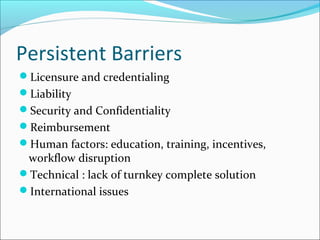
Persistent Barriers
ď‚—Licensure and credentialing
ď‚—Liability
ď‚—Security and Confidentiality
ď‚—Reimbursement
ď‚—Human factors: education, training, incentives,
 workflow disruption
ď‚—Technical : lack of turnkey complete solution
ď‚—International issues
Examples
ď‚—www.medvoy.com
ď‚—www.diversinet.com
ď‚—www.cotelecare.com
ď‚—www.interactivemd.com
ď‚—www.nutritashealth.com
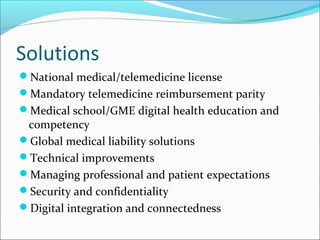
Solutions
ď‚—National medical/telemedicine license
ď‚—Mandatory telemedicine reimbursement parity
ď‚—Medical school/GME digital health education and
 competency
ď‚—Global medical liability solutions
ď‚—Technical improvements
ď‚—Managing professional and patient expectations
ď‚—Security and confidentiality
ď‚—Digital integration and connectedness
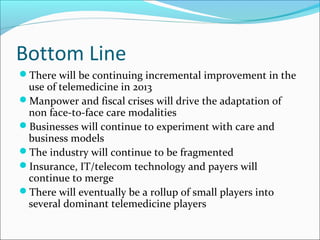
Bottom Line
ď‚—There will be continuing incremental improvement in the
 use of telemedicine in 2013
ď‚—Manpower and fiscal crises will drive the adaptation of
 non face-to-face care modalities
ď‚—Businesses will continue to experiment with care and
 business models
ď‚—The industry will continue to be fragmented
ď‚—Insurance, IT/telecom technology and payers will
 continue to merge
ď‚—There will eventually be a rollup of small players into
 several dominant telemedicine players
Bottom Line
ď‚—There will be continuing incremental improvement in the
 use of telemedicine in 2013
ď‚—Manpower and fiscal crises will drive the adaptation of
 non face-to-face care modalities
ď‚—Businesses will continue to experiment with care and
 business models
ď‚—The industry will continue to be fragmented
ď‚—Insurance, IT/telecom technology and payers will
 continue to merge
ď‚—There will eventually be a rollup of small players into
 several dominant telemedicine players

Telemedicine 2013

  • 1.
    Arlen D Meyers,MD, MBA University of Colorado School of Medicine
  • 2.
    Persistent Barriers ď‚—Licensure andcredentialing ď‚—Liability ď‚—Security and Confidentiality ď‚—Reimbursement ď‚—Human factors: education, training, incentives, workflow disruption ď‚—Technical : lack of turnkey complete solution ď‚—International issues
  • 3.
  • 4.
    Solutions ď‚—National medical/telemedicine license ď‚—Mandatorytelemedicine reimbursement parity ď‚—Medical school/GME digital health education and competency ď‚—Global medical liability solutions ď‚—Technical improvements ď‚—Managing professional and patient expectations ď‚—Security and confidentiality ď‚—Digital integration and connectedness
  • 5.
    Bottom Line ď‚—There willbe continuing incremental improvement in the use of telemedicine in 2013 ď‚—Manpower and fiscal crises will drive the adaptation of non face-to-face care modalities ď‚—Businesses will continue to experiment with care and business models ď‚—The industry will continue to be fragmented ď‚—Insurance, IT/telecom technology and payers will continue to merge ď‚—There will eventually be a rollup of small players into several dominant telemedicine players
  • 6.
    Bottom Line ď‚—There willbe continuing incremental improvement in the use of telemedicine in 2013 ď‚—Manpower and fiscal crises will drive the adaptation of non face-to-face care modalities ď‚—Businesses will continue to experiment with care and business models ď‚—The industry will continue to be fragmented ď‚—Insurance, IT/telecom technology and payers will continue to merge ď‚—There will eventually be a rollup of small players into several dominant telemedicine players