Telemedicine
Presented By:
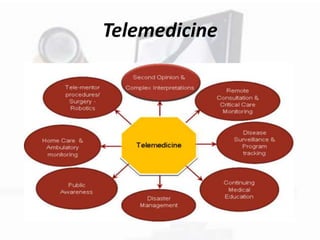
Telemedicine
What is Telemedicine ?
Telemedicine is a rapidly developing application of clinical medicine where
medical information is transferred through the phone or the Internet and
sometimes other networks for the purpose of consulting, and sometimes
remote medical procedures or examinations.
Telemedicine may be as simple as two health professionals discussing a case
over the telephone, or as complex as using satellite technology and video-
conferencing equipment to conduct a real-time consultation between medical
specialists in two different countries.
Telemedicine generally refers to the use of communications and information
technologies for the delivery of clinical care.
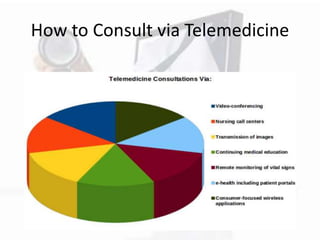
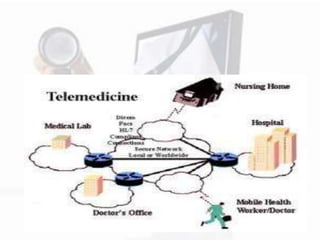
How to Consult via Telemedicine
Benefits Of Telemedicine Services
โ€ข Telemedicine increases access to HealthCare.
โ€ข Telemedicine Improves health outcomes.
โ€ข Telemedicine reduces HealthCare & other costs.
โ€ข Telemedicine assists in addressing shortages of
HealthCare providers.
โ€ข Telehealth supports clinical education programs.
Telemedicine increases access to
HealthCare
โ€ข Rural patients can more easily obtain specialty
services.
โ€ข Rural patients can stay in their local
communities and not travel long distances.
โ€ข Rural hospitals can provide a variety of specialty
services to include, stroke, trauma, and intensive
care services.
โ€ข Specialists and other healthcare providers are
able to expand their โ€œreachโ€ through
telemedicine.
Telemedicine Improves health
outcomes
โ€ข Patients can be diagnosed and treated earlier which
can contribute to improved outcomes and less costly
treatments.
โ€ข Patients with telemedicine supported ICUโ€™s
experience reduced mortality rates, reduced
complications, and reduced hospital stays.
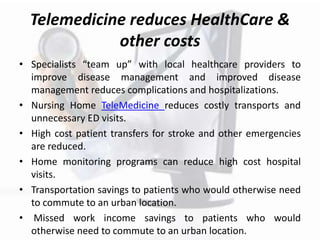
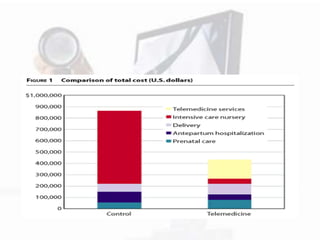
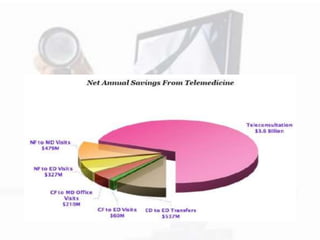
Telemedicine reduces HealthCare &
other costs
โ€ข Specialists โ€œteam upโ€ with local healthcare providers to
improve disease management and improved disease
management reduces complications and hospitalizations.
โ€ข Nursing Home TeleMedicine reduces costly transports and
unnecessary ED visits.
โ€ข High cost patient transfers for stroke and other emergencies
are reduced.
โ€ข Home monitoring programs can reduce high cost hospital
visits.
โ€ข Transportation savings to patients who would otherwise need
to commute to an urban location.
โ€ข Missed work income savings to patients who would
otherwise need to commute to an urban location.
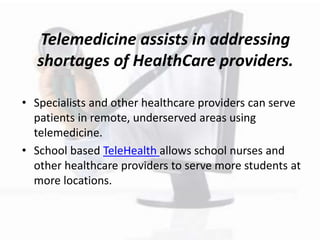
Telemedicine assists in addressing
shortages of HealthCare providers.
โ€ข Specialists and other healthcare providers can serve
patients in remote, underserved areas using
telemedicine.
โ€ข School based TeleHealth allows school nurses and
other healthcare providers to serve more students at
more locations.
Telehealth supports clinical
education programs
โ€ข Rural healthcare providers can more easily obtain
continuing education.
โ€ข Rural clinicians can more easily consult with
specialists.
Contact CareClix +1-855-CARECLX (227 โ€“ 3259)

All about telemedicine

  • 1.
  • 2.
  • 3.
    What is Telemedicine? Telemedicine is a rapidly developing application of clinical medicine where medical information is transferred through the phone or the Internet and sometimes other networks for the purpose of consulting, and sometimes remote medical procedures or examinations. Telemedicine may be as simple as two health professionals discussing a case over the telephone, or as complex as using satellite technology and video- conferencing equipment to conduct a real-time consultation between medical specialists in two different countries. Telemedicine generally refers to the use of communications and information technologies for the delivery of clinical care.
  • 4.
    How to Consultvia Telemedicine
  • 5.
    Benefits Of TelemedicineServices โ€ข Telemedicine increases access to HealthCare. โ€ข Telemedicine Improves health outcomes. โ€ข Telemedicine reduces HealthCare & other costs. โ€ข Telemedicine assists in addressing shortages of HealthCare providers. โ€ข Telehealth supports clinical education programs.
  • 6.
    Telemedicine increases accessto HealthCare โ€ข Rural patients can more easily obtain specialty services. โ€ข Rural patients can stay in their local communities and not travel long distances. โ€ข Rural hospitals can provide a variety of specialty services to include, stroke, trauma, and intensive care services. โ€ข Specialists and other healthcare providers are able to expand their โ€œreachโ€ through telemedicine.
  • 8.
    Telemedicine Improves health outcomes โ€ขPatients can be diagnosed and treated earlier which can contribute to improved outcomes and less costly treatments. โ€ข Patients with telemedicine supported ICUโ€™s experience reduced mortality rates, reduced complications, and reduced hospital stays.
  • 9.
    Telemedicine reduces HealthCare& other costs โ€ข Specialists โ€œteam upโ€ with local healthcare providers to improve disease management and improved disease management reduces complications and hospitalizations. โ€ข Nursing Home TeleMedicine reduces costly transports and unnecessary ED visits. โ€ข High cost patient transfers for stroke and other emergencies are reduced. โ€ข Home monitoring programs can reduce high cost hospital visits. โ€ข Transportation savings to patients who would otherwise need to commute to an urban location. โ€ข Missed work income savings to patients who would otherwise need to commute to an urban location.
  • 12.
    Telemedicine assists inaddressing shortages of HealthCare providers. โ€ข Specialists and other healthcare providers can serve patients in remote, underserved areas using telemedicine. โ€ข School based TeleHealth allows school nurses and other healthcare providers to serve more students at more locations.
  • 14.
    Telehealth supports clinical educationprograms โ€ข Rural healthcare providers can more easily obtain continuing education. โ€ข Rural clinicians can more easily consult with specialists.
  • 16.