TECHNOLOGY READINESS LEVEL
COMMERCIALIZATION IN LAB TECHNOLOGIES
TECHNOLOGY TRANSFER by Mr. Jagan Seshadri
HISTORY OF TRL
TRLs were first developed by
Stan Sadin with NASA in
1974 and have since been
adopted, improved, and
modified for use by many
industries, government
organizations, funders, and
investors.
The Technology Readiness
Level (TRL) of an invention is
assessed at several points in
the technology transfer
process to evaluate the
maturity of the current
invention to better
understand its commercial
feasibility.
DEFINITION OF TRL
&
WHAT IS TRL
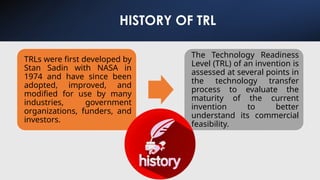
DEFINITION
Technology Readiness Levels (TRL) are a type of
measurement system used to assess the maturity
level of a particular technology.
WHAT IS TRL?
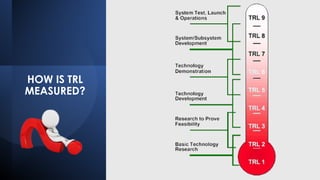
Each technology project is evaluated against the
parameters for each technology level and is then
assigned a TRL rating based on the projects progress.
HOW IS TRL
MEASURED?
TECHNOLOGY READINESS LEVEL
COMMITTEE(INDIA)
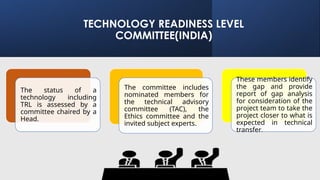
The status of a
technology including
TRL is assessed by a
committee chaired by a
Head.
The committee includes
nominated members for
the technical advisory
committee (TAC), the
Ethics committee and the
invited subject experts.
These members identify
the gap and provide
report of gap analysis
for consideration of the
project team to take the
project closer to what is
expected in technical
transfer.
BIOTECHNOLOGY INDUSTRY RESEARCH ASSISTANT
COUNCIL
BIRAC has an inherent system of
distributing the projects into
different thematic areas for
effective selection process,
efficient project monitoring for
technology maturation and for
tracking investments against
outputs in each sector.
Broadly, the following
thematic areas cover
projects supported under
BIRAC mandate: Drugs,
Biosimilars, Vaccines,
Agriculture, Bio informatics
software
Keeping NASA TRLs as a
reference, BIRAC has come up
with detailed definitions of levels
in the TRL scale for each of the
thematic areas .
These TRL definitions intend to
guide the innovators,
evaluators and investors in
identifying the stage of
technology under development
more objectively.
It also include some of the
regulatory approvals and quality
certifications which may be
relevant for progression of TRLs
and commercialization of the
technology/products in India.
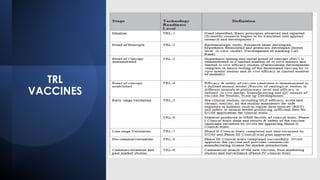
TRL
VACCINES
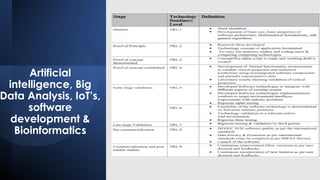
Artificial
intelligence, Big
Data Analysis, IoT’s,
software
development &
Bioinformatics
COMMERCIALIZATION
Commercialization is the process of transforming a
new product or service all the way from
conceptualization to actual sale. In other words, a
product is created and brought to the market for
profit. The commercialization process follows several
stages that start with research and end with a
product’s marketing.
WHY COMMERCIALIZATION IS IMPORTANT?
Commercialization plays a huge part in deciding the role of an
idea, product, or service in society.
It generates job opportunities, creates choices for consumers,
and paves the way for more market needs.
It affects a nation’s economy and sustains the qualities of life
standards. It also demands the learning and propagation of
new skill sets, knowledge, and innovations.
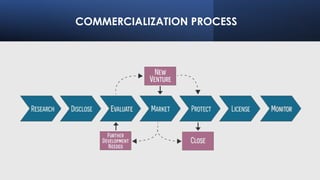
COMMERCIALIZATION PROCESS
TECHNOLOGICAL
COMMERCIALIZATION
Technological commercialization refers to the transfer of
technology from the lab to the market.
For example, suppose a manufacturer has proposed a new
project in IT. Extensive research and modifications take place
even before the consideration of a business model.
TECHNOLOGY TRANSFER
Technology transfer is the movement of data, designs, inventions, materials,
software, technical knowledge or trade secrets from one organisation to
another or from one purpose to another. The technology transfer process is
guided by the policies, procedures and values of each organisation involved in
the process.
What are the Three Phases of Technology Transfer?
• Technology transfer activities can be broadly split into three phases;
preparation, installation and utilisation. These three phases are, in turn,
affected by technological, organisational and environmental factors.
WHY TECHNOLOGY TRANSFER IS IMPORTANT?
Technology transfer is an important part of the technological innovation process,
promoting scientific and technological research and the associated skills and procedures
to wider society and the marketplace.
Tech transfer allows research to develop from the discovery of novel technologies along
the value chain to disclosure, evaluation and the protection of these breakthroughs. From
here, marketing, licensing and further development of products allow the research to
become an impactful product, process or service for society.
As a result, technology transfer creates revenues for universities to use for faculty
recruitment, funding and more research. Companies are able to tap into the advances
brought about by this academic research without having to spend on internal R&D to
create new products to drive business forward.
The advantages of successful technology transfer can be felt through national and
regional economies via growth through innovation, new ventures and stronger industry
to boost employment.
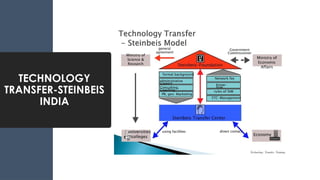
TECHNOLOGY
TRANSFER-STEINBEIS
INDIA
TECHNOLOGY
TRANSFER-
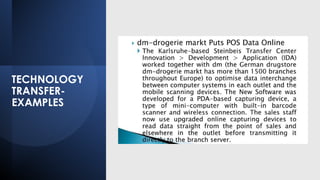
EXAMPLES
Mob: 9150274666
Email: js@beejaacademy.com

Technology Readiness Level in Computer Sci

  • 1.
    TECHNOLOGY READINESS LEVEL COMMERCIALIZATIONIN LAB TECHNOLOGIES TECHNOLOGY TRANSFER by Mr. Jagan Seshadri
  • 2.
    HISTORY OF TRL TRLswere first developed by Stan Sadin with NASA in 1974 and have since been adopted, improved, and modified for use by many industries, government organizations, funders, and investors. The Technology Readiness Level (TRL) of an invention is assessed at several points in the technology transfer process to evaluate the maturity of the current invention to better understand its commercial feasibility.
  • 3.
    DEFINITION OF TRL & WHATIS TRL DEFINITION Technology Readiness Levels (TRL) are a type of measurement system used to assess the maturity level of a particular technology. WHAT IS TRL? Each technology project is evaluated against the parameters for each technology level and is then assigned a TRL rating based on the projects progress.
  • 4.
  • 5.
    TECHNOLOGY READINESS LEVEL COMMITTEE(INDIA) Thestatus of a technology including TRL is assessed by a committee chaired by a Head. The committee includes nominated members for the technical advisory committee (TAC), the Ethics committee and the invited subject experts. These members identify the gap and provide report of gap analysis for consideration of the project team to take the project closer to what is expected in technical transfer.
  • 6.
    BIOTECHNOLOGY INDUSTRY RESEARCHASSISTANT COUNCIL BIRAC has an inherent system of distributing the projects into different thematic areas for effective selection process, efficient project monitoring for technology maturation and for tracking investments against outputs in each sector. Broadly, the following thematic areas cover projects supported under BIRAC mandate: Drugs, Biosimilars, Vaccines, Agriculture, Bio informatics software Keeping NASA TRLs as a reference, BIRAC has come up with detailed definitions of levels in the TRL scale for each of the thematic areas . These TRL definitions intend to guide the innovators, evaluators and investors in identifying the stage of technology under development more objectively. It also include some of the regulatory approvals and quality certifications which may be relevant for progression of TRLs and commercialization of the technology/products in India.
  • 7.
  • 8.
    Artificial intelligence, Big Data Analysis,IoT’s, software development & Bioinformatics
  • 9.
    COMMERCIALIZATION Commercialization is theprocess of transforming a new product or service all the way from conceptualization to actual sale. In other words, a product is created and brought to the market for profit. The commercialization process follows several stages that start with research and end with a product’s marketing.
  • 10.
    WHY COMMERCIALIZATION ISIMPORTANT? Commercialization plays a huge part in deciding the role of an idea, product, or service in society. It generates job opportunities, creates choices for consumers, and paves the way for more market needs. It affects a nation’s economy and sustains the qualities of life standards. It also demands the learning and propagation of new skill sets, knowledge, and innovations.
  • 11.
  • 12.
    TECHNOLOGICAL COMMERCIALIZATION Technological commercialization refersto the transfer of technology from the lab to the market. For example, suppose a manufacturer has proposed a new project in IT. Extensive research and modifications take place even before the consideration of a business model.
  • 13.
    TECHNOLOGY TRANSFER Technology transferis the movement of data, designs, inventions, materials, software, technical knowledge or trade secrets from one organisation to another or from one purpose to another. The technology transfer process is guided by the policies, procedures and values of each organisation involved in the process. What are the Three Phases of Technology Transfer? • Technology transfer activities can be broadly split into three phases; preparation, installation and utilisation. These three phases are, in turn, affected by technological, organisational and environmental factors.
  • 14.
    WHY TECHNOLOGY TRANSFERIS IMPORTANT? Technology transfer is an important part of the technological innovation process, promoting scientific and technological research and the associated skills and procedures to wider society and the marketplace. Tech transfer allows research to develop from the discovery of novel technologies along the value chain to disclosure, evaluation and the protection of these breakthroughs. From here, marketing, licensing and further development of products allow the research to become an impactful product, process or service for society. As a result, technology transfer creates revenues for universities to use for faculty recruitment, funding and more research. Companies are able to tap into the advances brought about by this academic research without having to spend on internal R&D to create new products to drive business forward. The advantages of successful technology transfer can be felt through national and regional economies via growth through innovation, new ventures and stronger industry to boost employment.
  • 15.
  • 16.
  • 17.