Technology in
Professional
Development:
«TechKnowLogia»
Aslı Lidice Gokturk asli.saglam@ozyegin.edu.tr
http://aslisaglam.edublogs.org
27.05.2012
TEACHER KNOWLEDGE
Think about factors that make up
our knowledge.
You may have more than one
answer but prioritise...
Tell us the most important one 
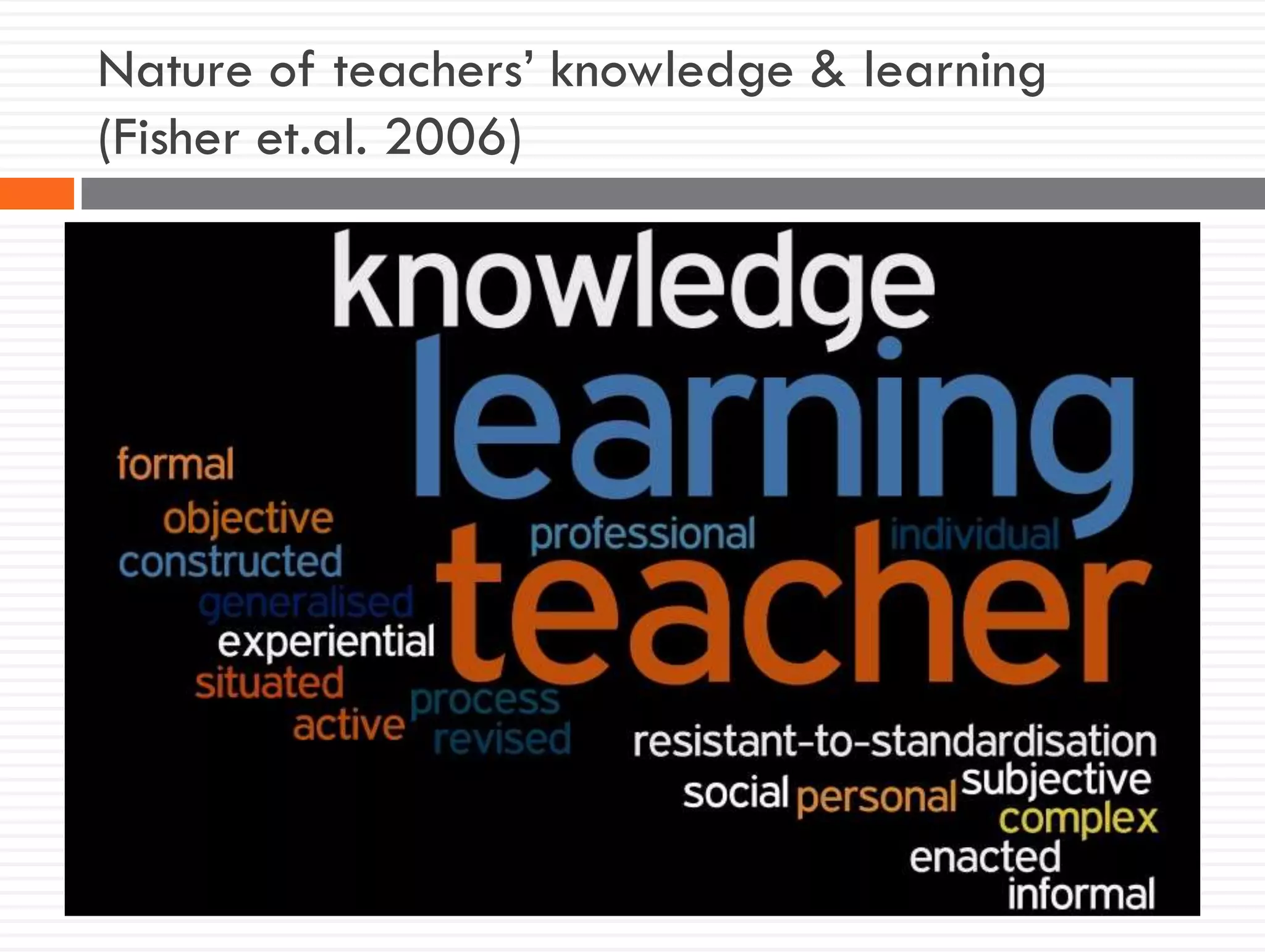
Nature of teachers’ knowledge & learning
(Fisher et.al. 2006)
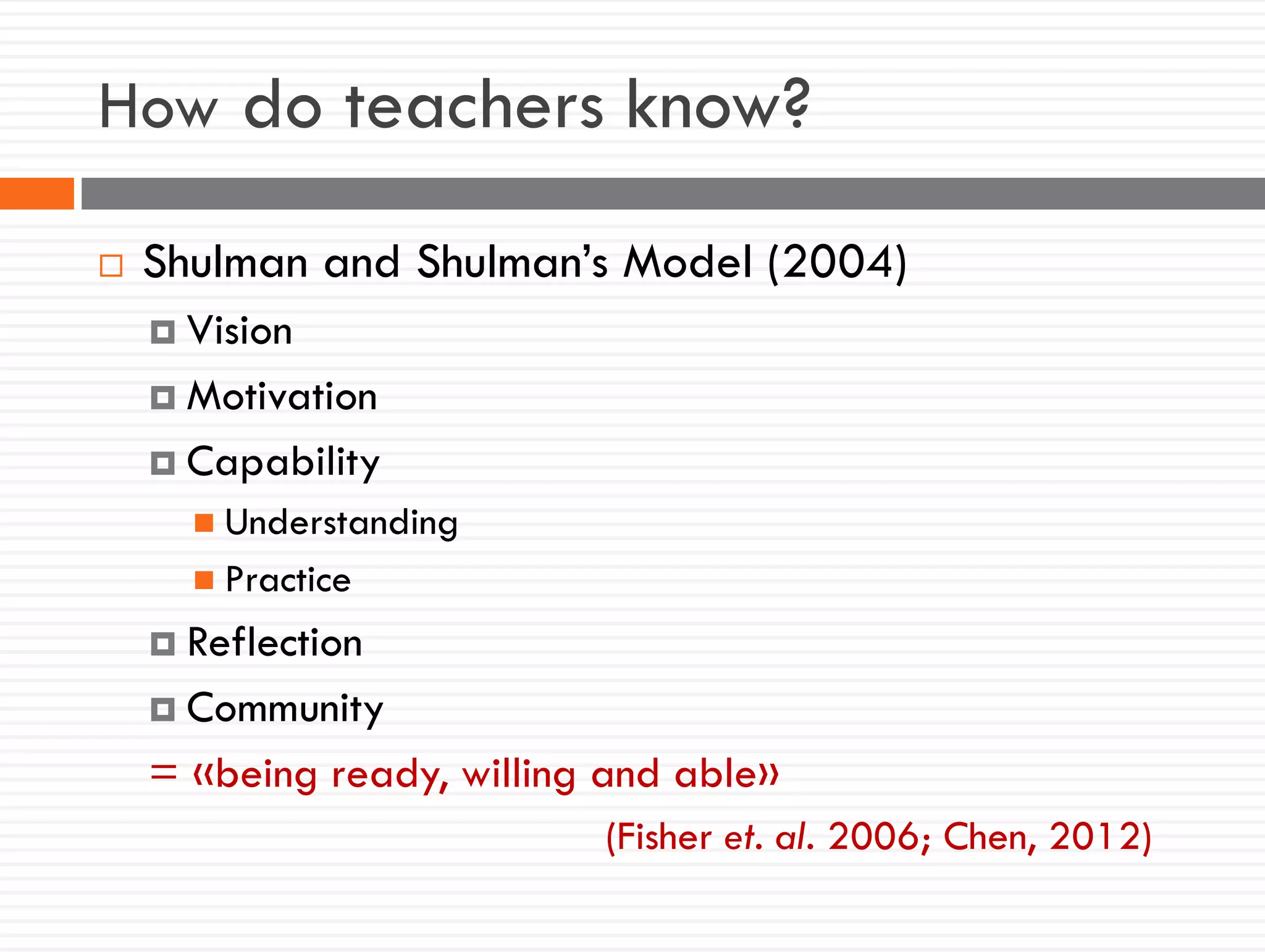
How do teachers know?
 Shulman and Shulman’s Model (2004)
 Vision
 Motivation
 Capability
 Understanding
 Practice
 Reflection
 Community
= «being ready, willing and able»
(Fisher et. al. 2006; Chen, 2012)
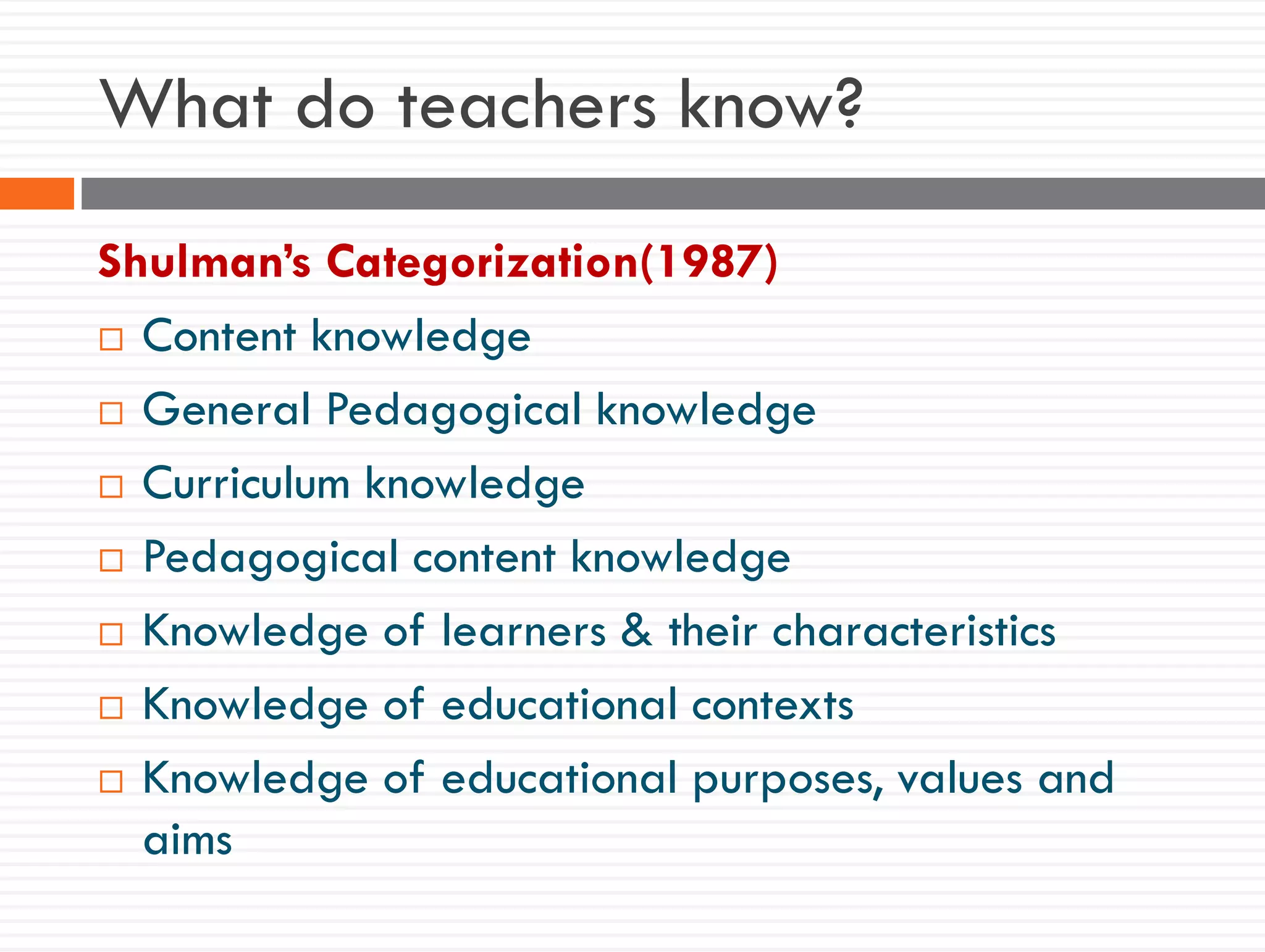
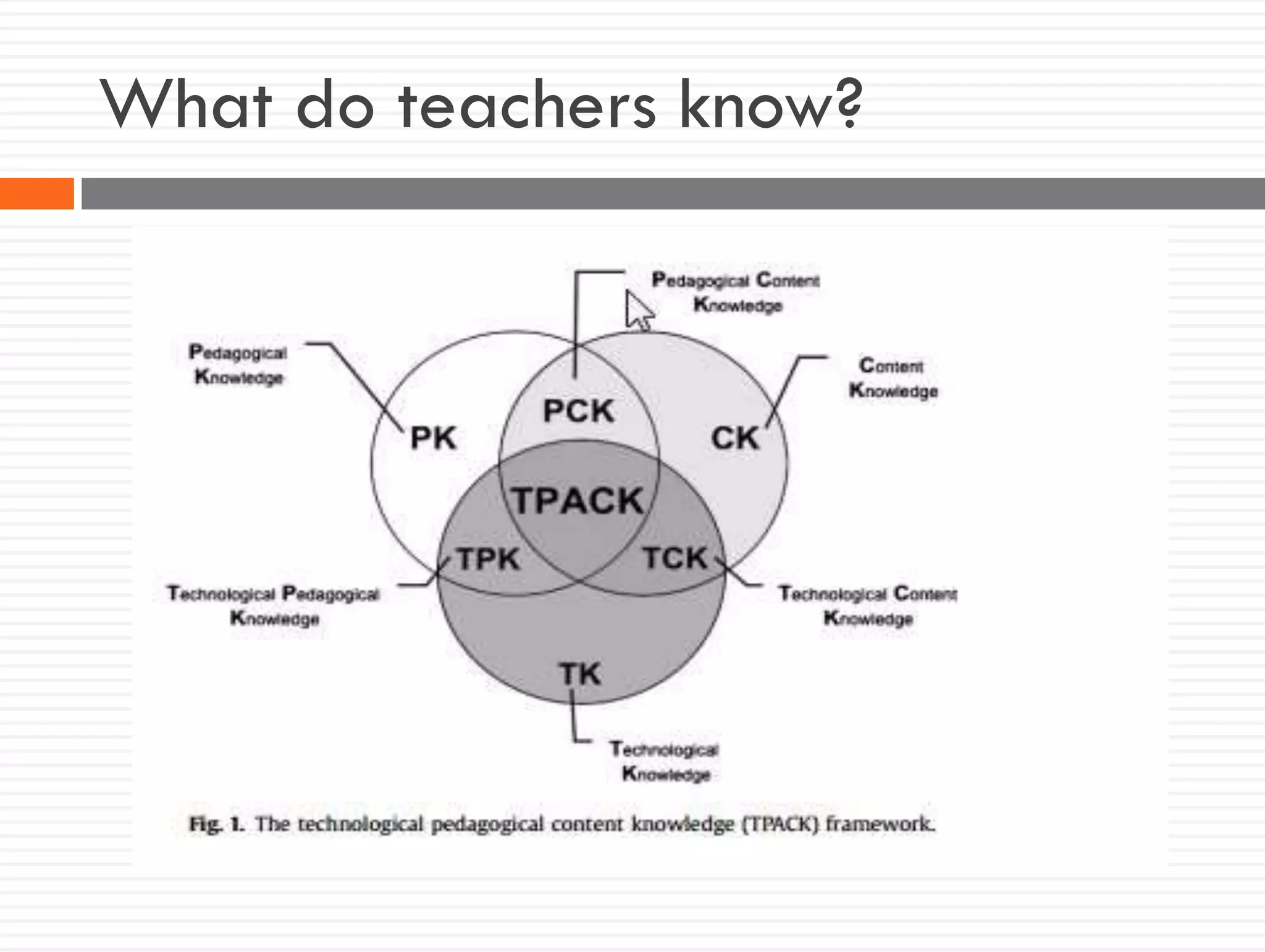
What do teachers know?
Shulman’s Categorization(1987)
 Content knowledge
 General Pedagogical knowledge
 Curriculum knowledge
 Pedagogical content knowledge
 Knowledge of learners & their characteristics
 Knowledge of educational contexts
 Knowledge of educational purposes, values and
aims
EFFECT OF TECHNOLOGY??
 How do you think technology affects teacher
knowledge?
VOXOPOP (an online
message board)
Do you use web tools in your teaching?
How did you learn about them? Did you receive any training?
Pre-service? In-service? Others???
 http://www.voxopop.com/topic/cb455b6f-5f81-4bf7-ba6e-
cd91b9842b41
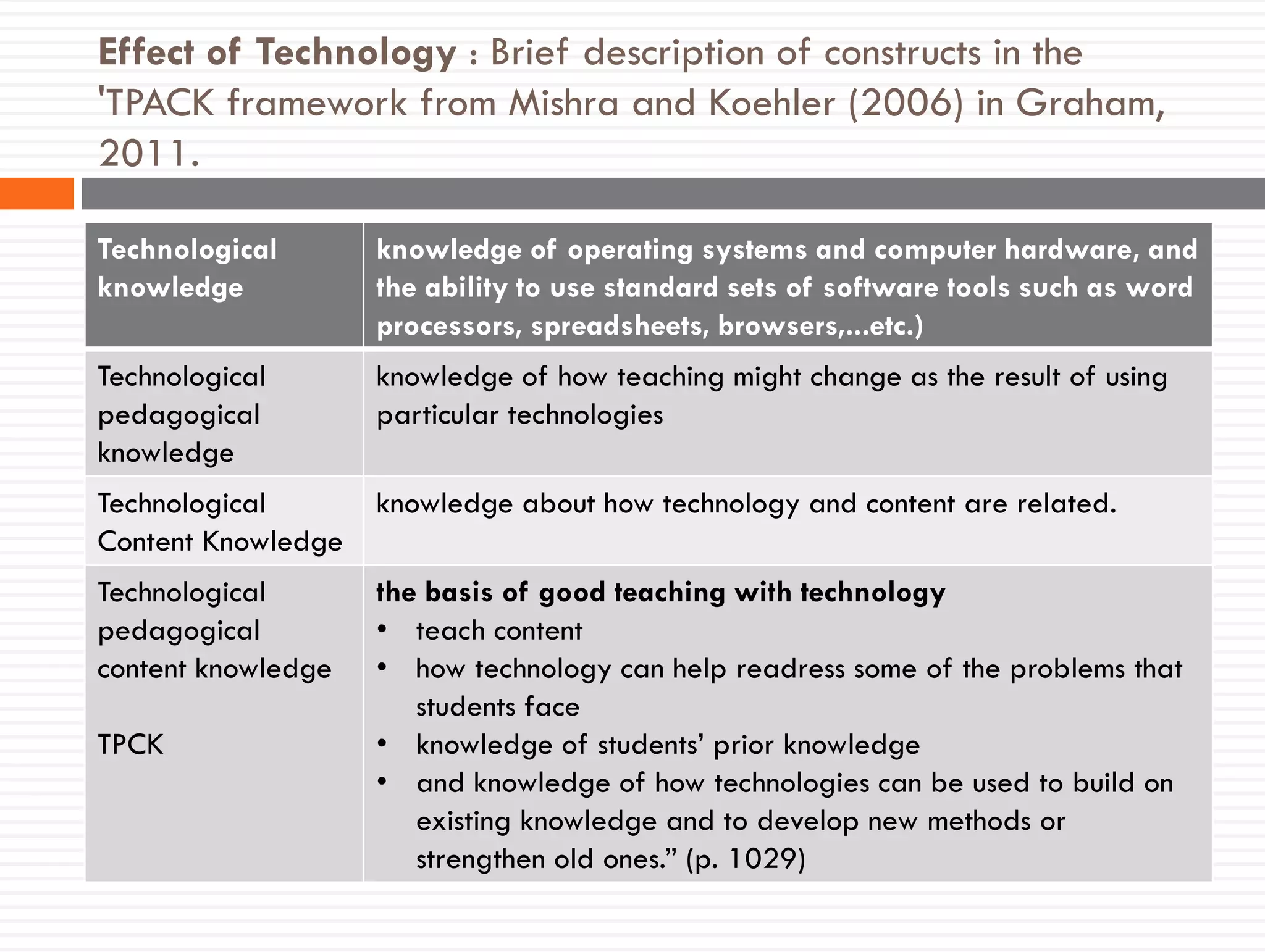
Effect of Technology : Brief description of constructs in the
'TPACK framework from Mishra and Koehler (2006) in Graham,
2011.
Technological
knowledge
knowledge of operating systems and computer hardware, and
the ability to use standard sets of software tools such as word
processors, spreadsheets, browsers,...etc.)
Technological
pedagogical
knowledge
knowledge of how teaching might change as the result of using
particular technologies
Technological
Content Knowledge
knowledge about how technology and content are related.
Technological
pedagogical
content knowledge
TPCK
the basis of good teaching with technology
• teach content
• how technology can help readress some of the problems that
students face
• knowledge of students’ prior knowledge
• and knowledge of how technologies can be used to build on
existing knowledge and to develop new methods or
strengthen old ones.” (p. 1029)
What do teachers know?
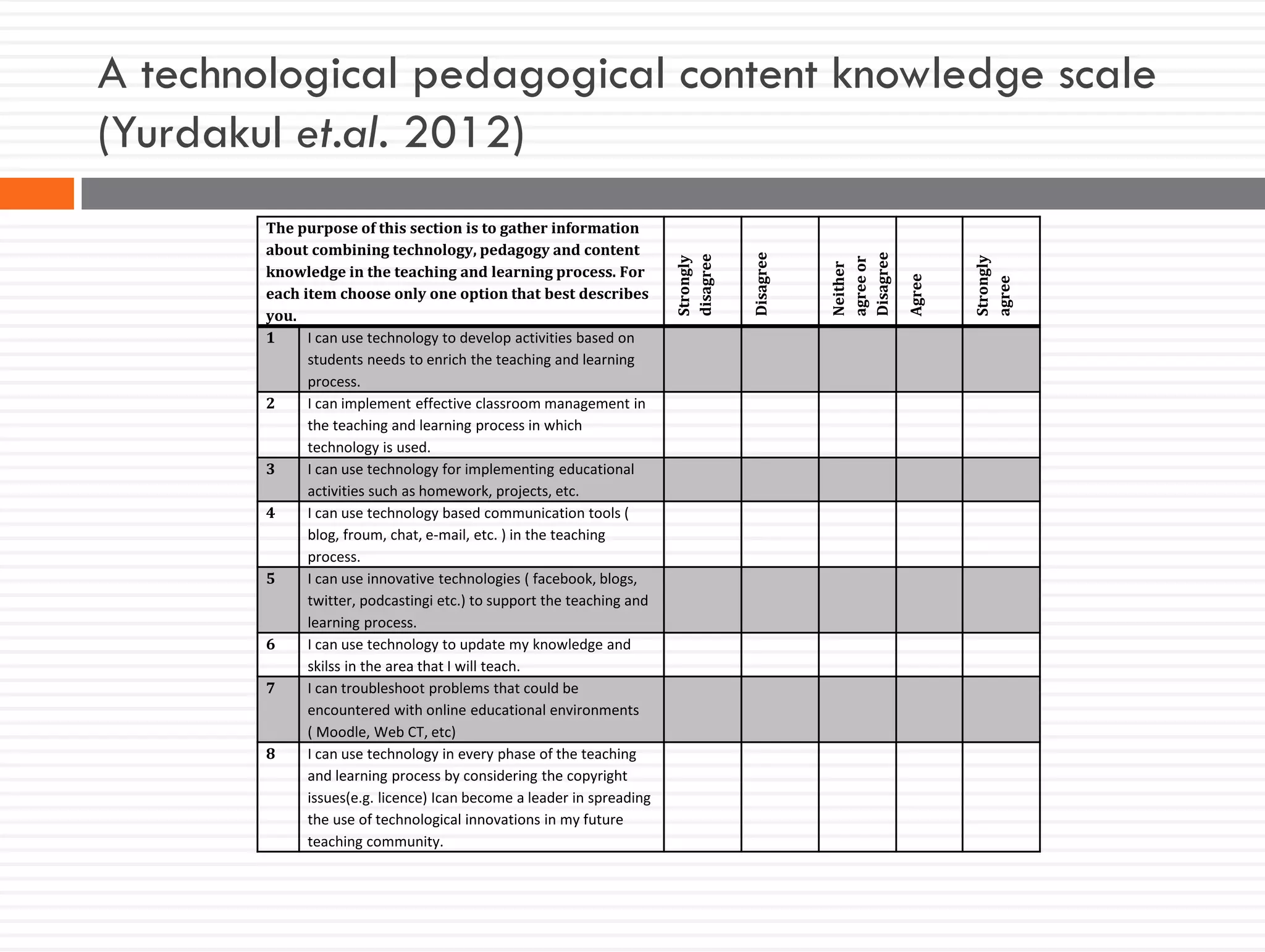
A technological pedagogical content knowledge scale
(Yurdakul et.al. 2012)
The purpose of this section is to gather information
about combining technology, pedagogy and content
knowledge in the teaching and learning process. For
each item choose only one option that best describes
you.
Strongly
disagree
Disagree
Neither
agreeor
Disagree
Agree
Strongly
agree
1 I can use technology to develop activities based on
students needs to enrich the teaching and learning
process.
2 I can implement effective classroom management in
the teaching and learning process in which
technology is used.
3 I can use technology for implementing educational
activities such as homework, projects, etc.
4 I can use technology based communication tools (
blog, froum, chat, e-mail, etc. ) in the teaching
process.
5 I can use innovative technologies ( facebook, blogs,
twitter, podcastingi etc.) to support the teaching and
learning process.
6 I can use technology to update my knowledge and
skilss in the area that I will teach.
7 I can troubleshoot problems that could be
encountered with online educational environments
( Moodle, Web CT, etc)
8 I can use technology in every phase of the teaching
and learning process by considering the copyright
issues(e.g. licence) Ican become a leader in spreading
the use of technological innovations in my future
teaching community.
TPACK is:
Knowing how to present the subject matter with technology in
pedagocially sound ways
So & Kim, 2009
A teacher’s knowledge of how to coordinate and combine the use
of subject-specific activities and topic-specific activities using
emerging technologies to facilitate student learning
Cox&Graham ,2009
TPACK is not simply:
....adding technology to existing teaching and content...
Yurdakul et al,2011
INTERACTION BETWEEN EDUCATIONAL
TECH & TEACHER DEVELOPMENT
 The “new” models of staff development
 study groups,
 teacher networks,
 mentoring relationships,
 committee or task force,
 internship,
 individual research project,
 or teacher resource center
 (Alberta Commission on Learning, 2006; Birman et al., 2000; Sikora &
Alexander, 2004).
INTERACTION BETWEEN EDUCATIONAL TECH &
TEACHER DEVELOPMENT
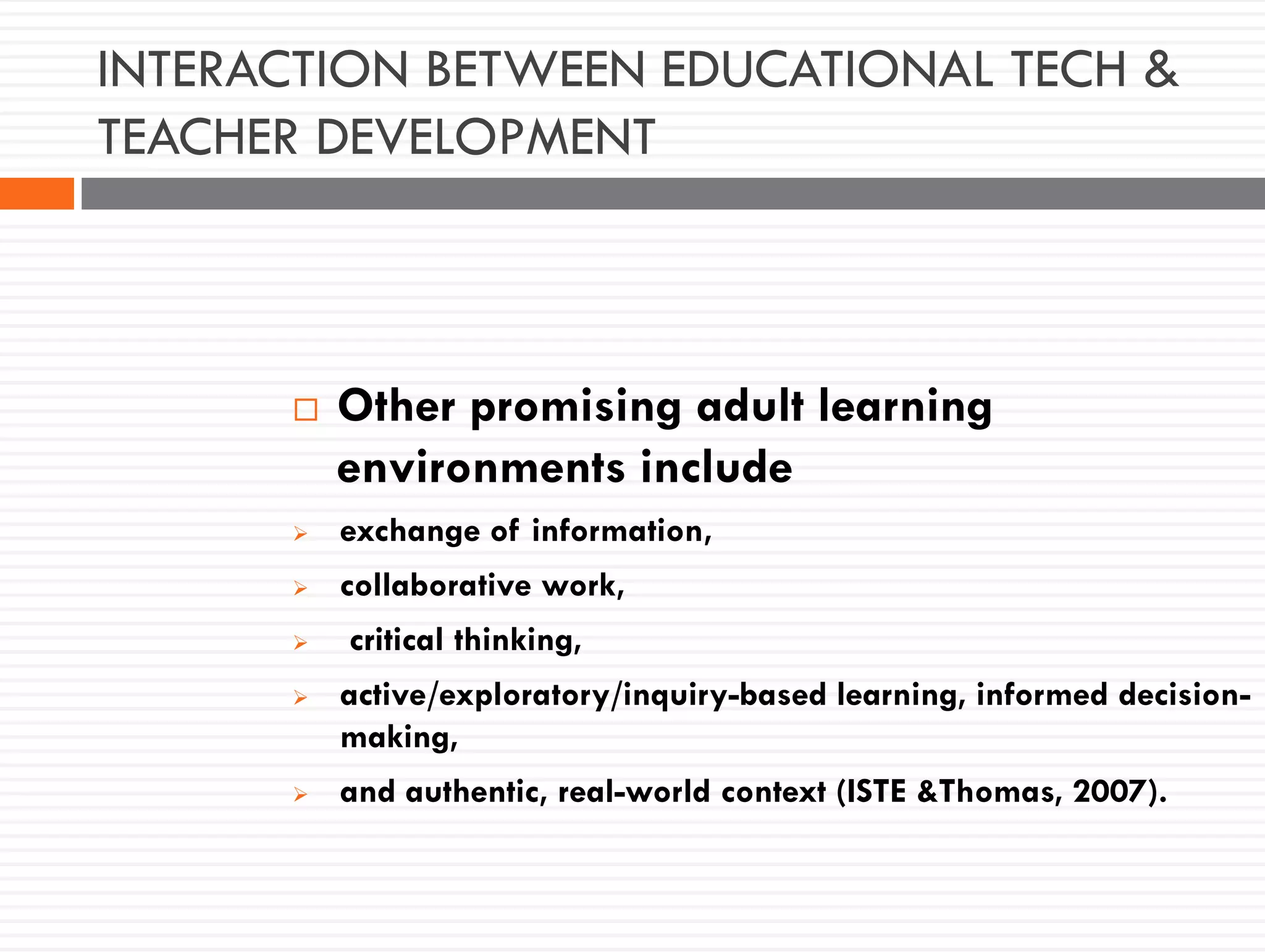
 Other promising adult learning
environments include
 exchange of information,
 collaborative work,
 critical thinking,
 active/exploratory/inquiry-based learning, informed decision-
making,
 and authentic, real-world context (ISTE &Thomas, 2007).
Clusters of Purposeful Activity with Digital
Technologies in Professional Development
 Knowledge Building
 Distributed Cognition
 Community and Communication
 Engagement
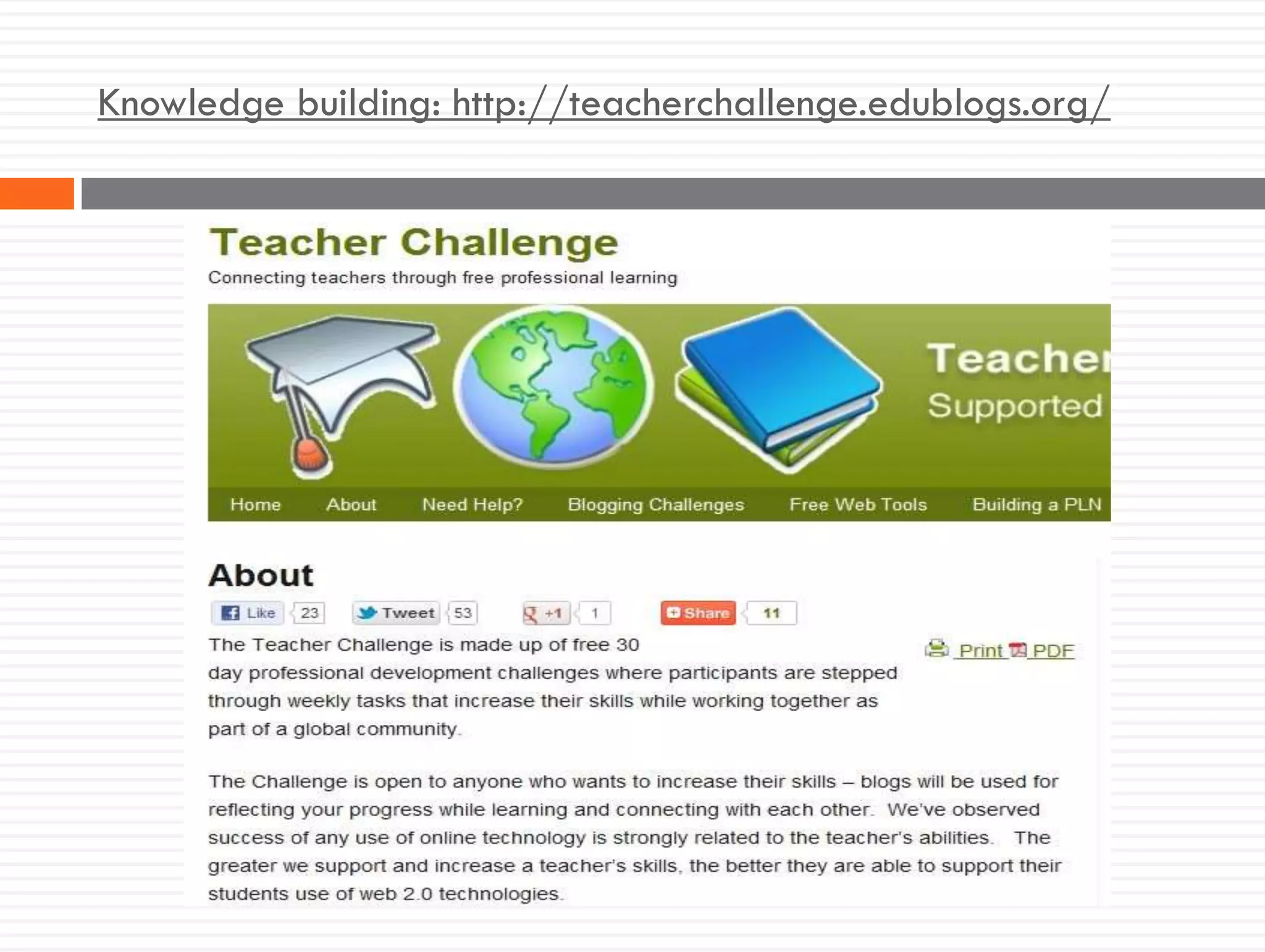
Knowledge building: http://teacherchallenge.edublogs.org/
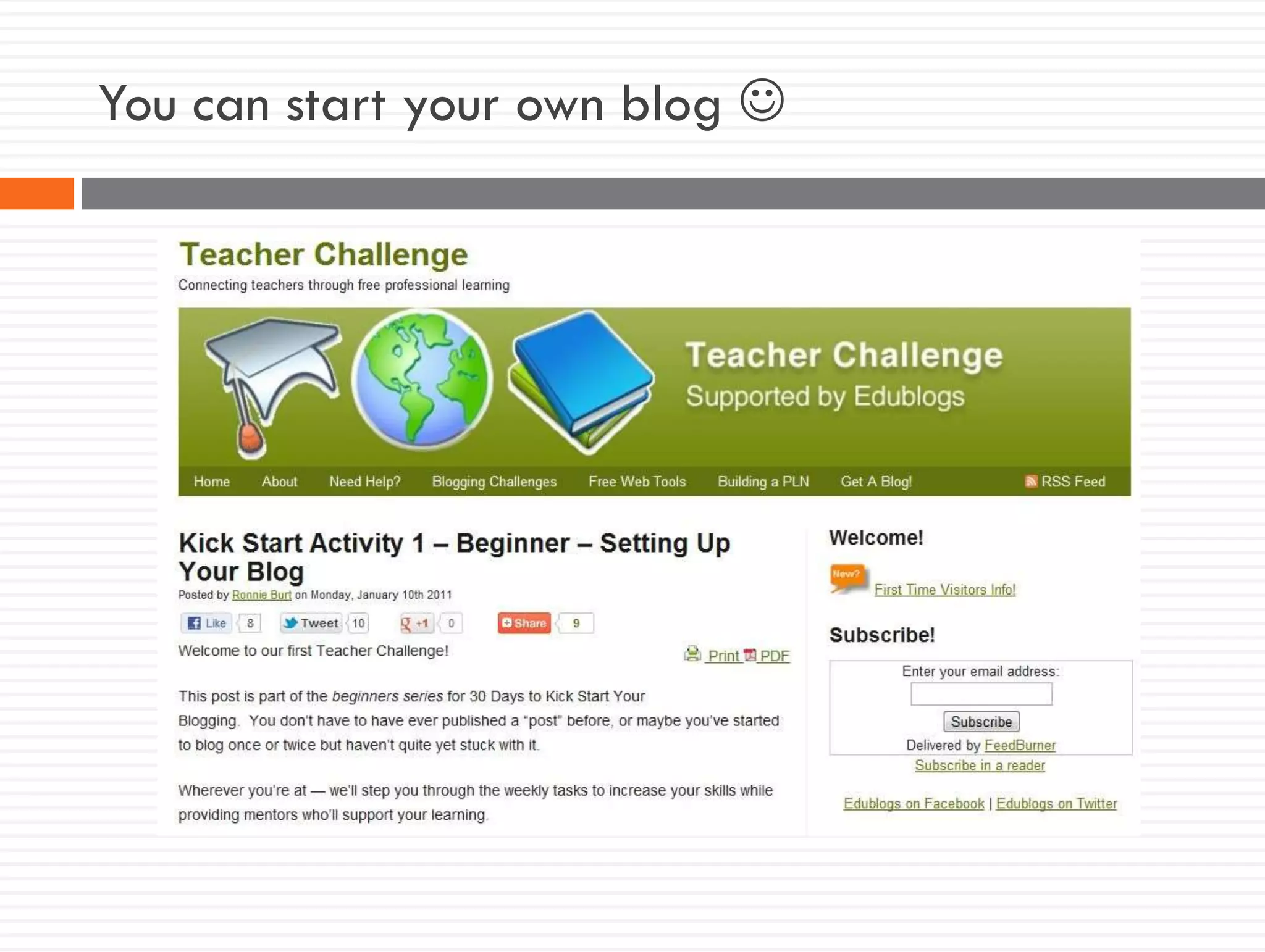
You can start your own blog 
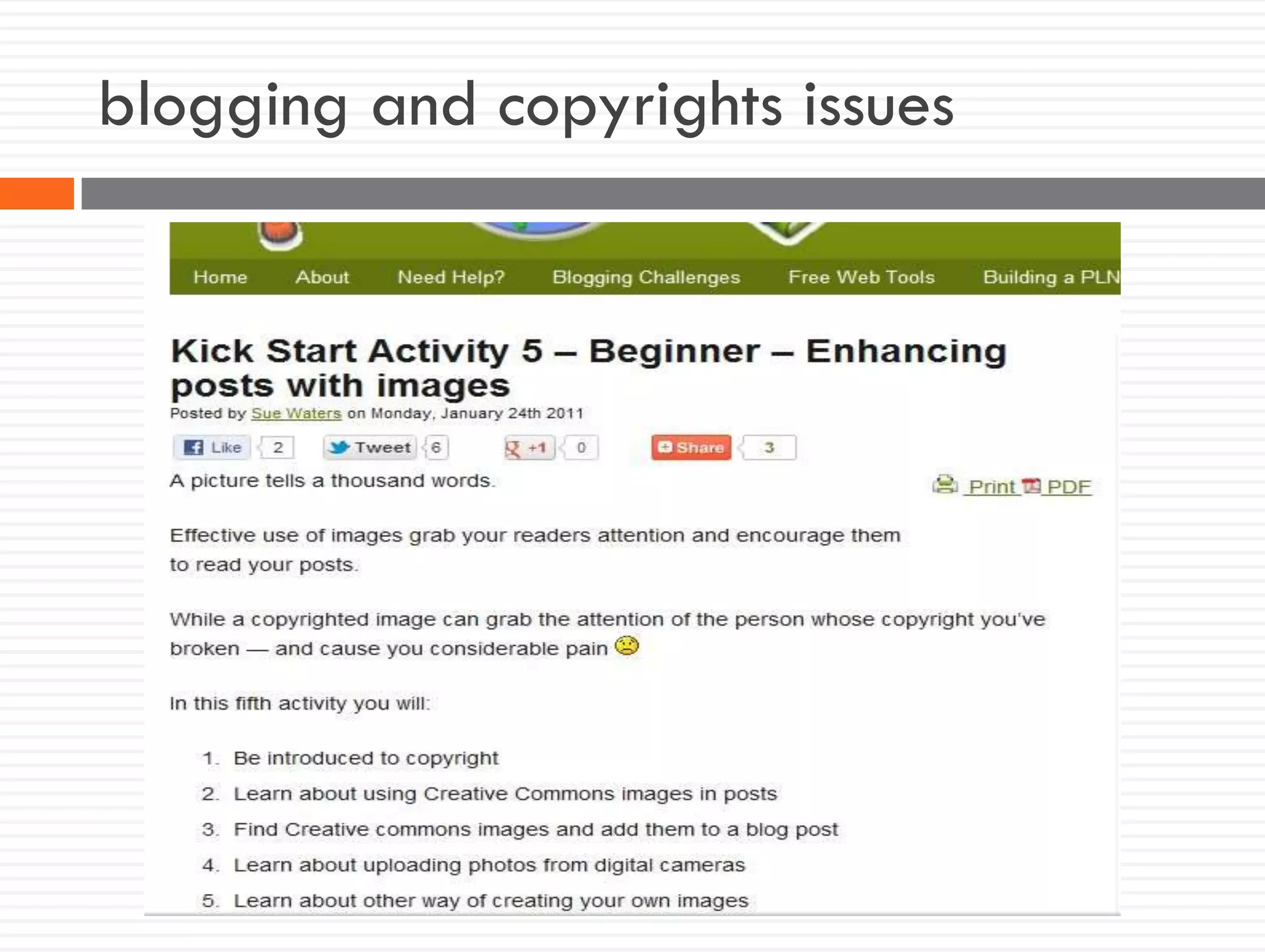
blogging and copyrights issues
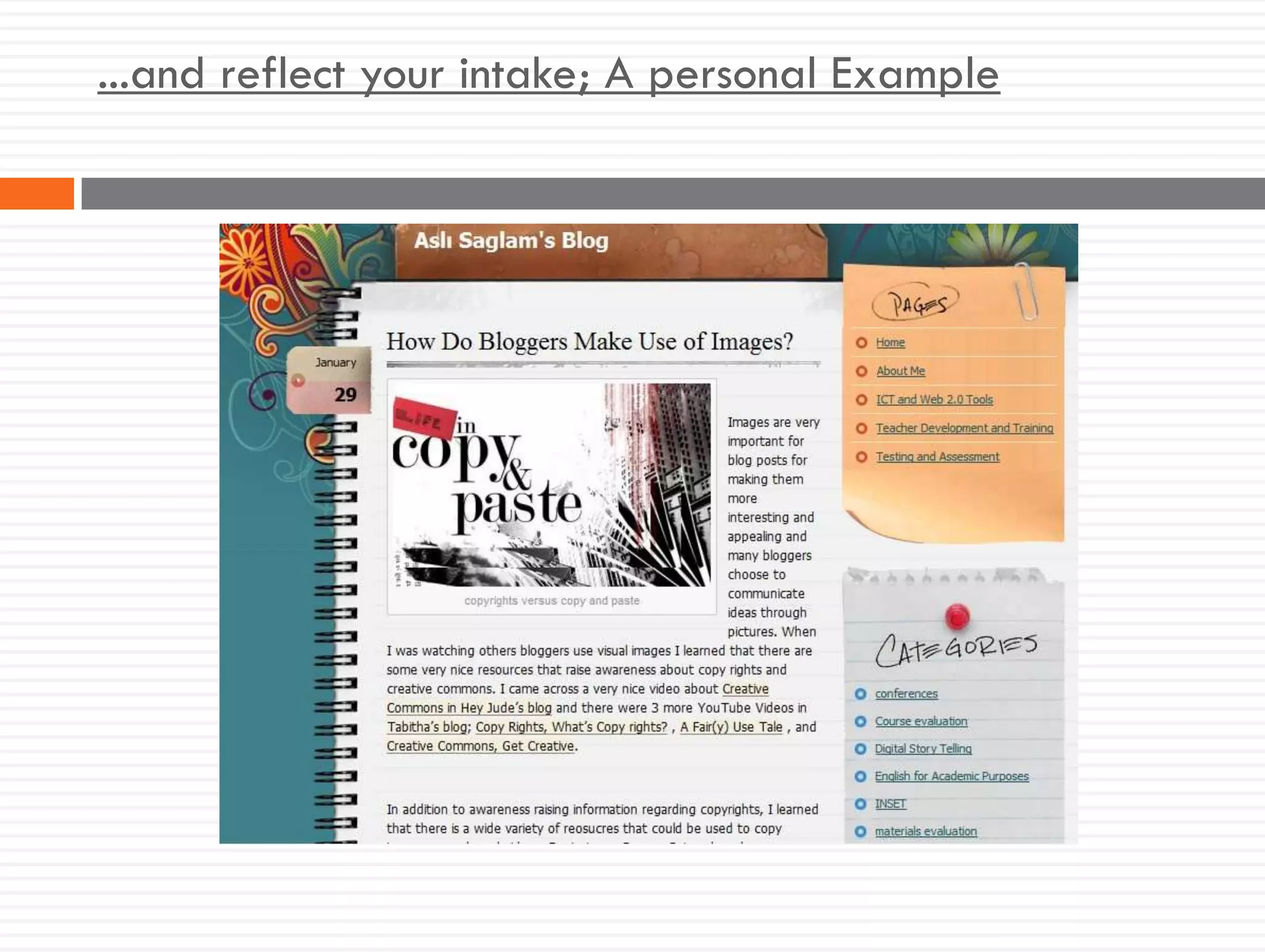
...and reflect your intake; A personal Example
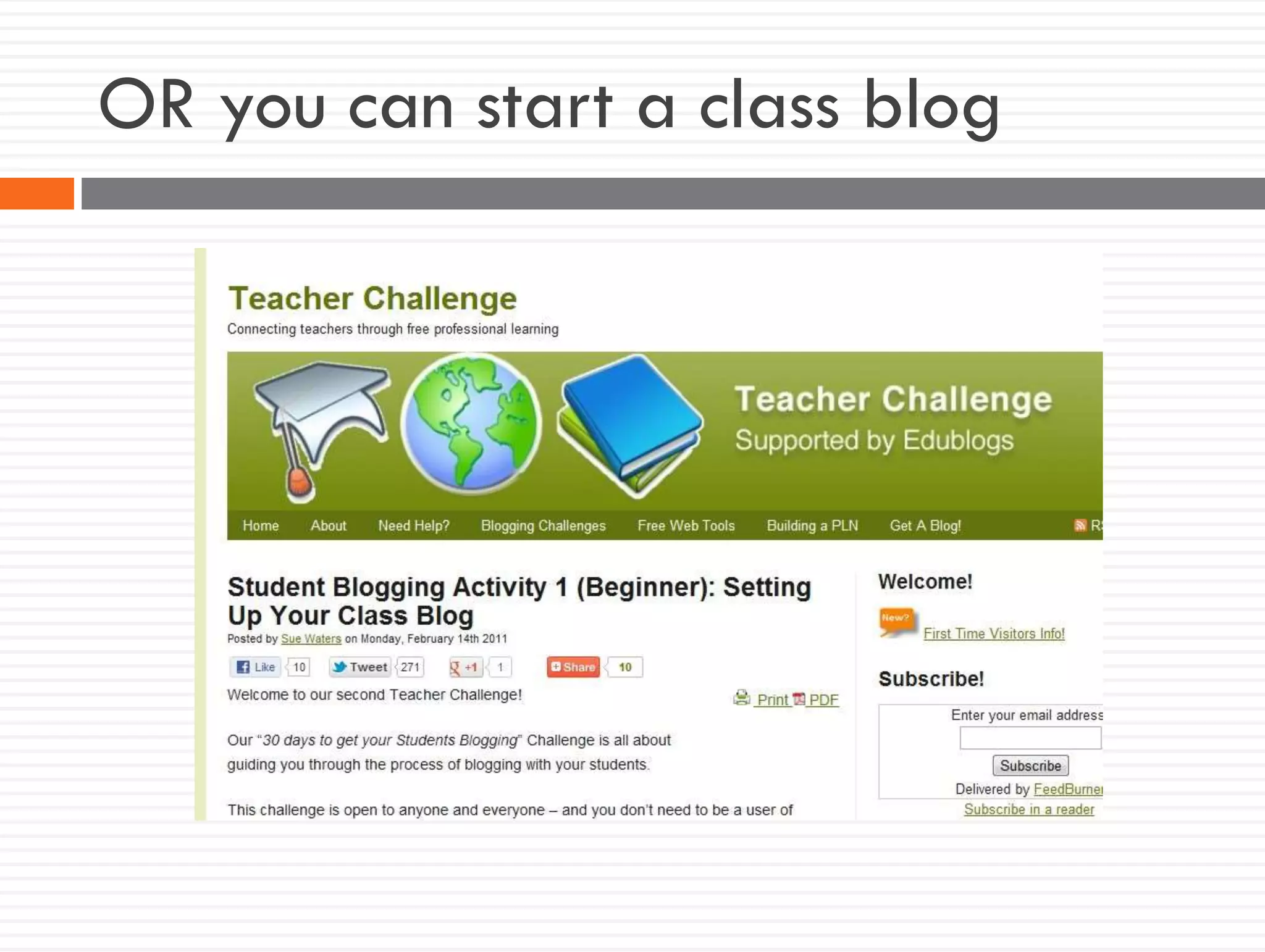
OR you can start a class blog
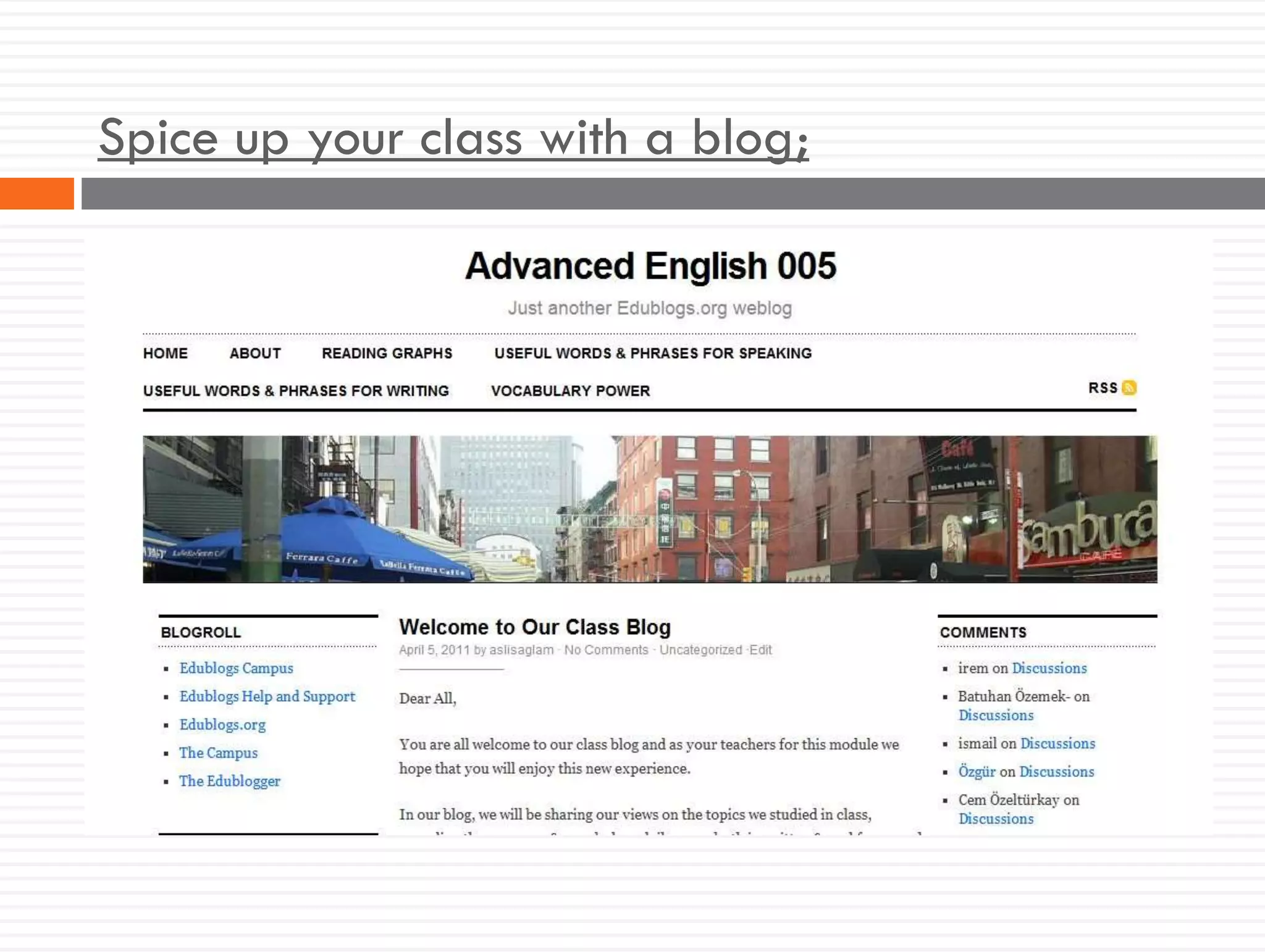
Spice up your class with a blog;
 Input from teacher challange; how to embed media
 Hands on experience in my class blog;
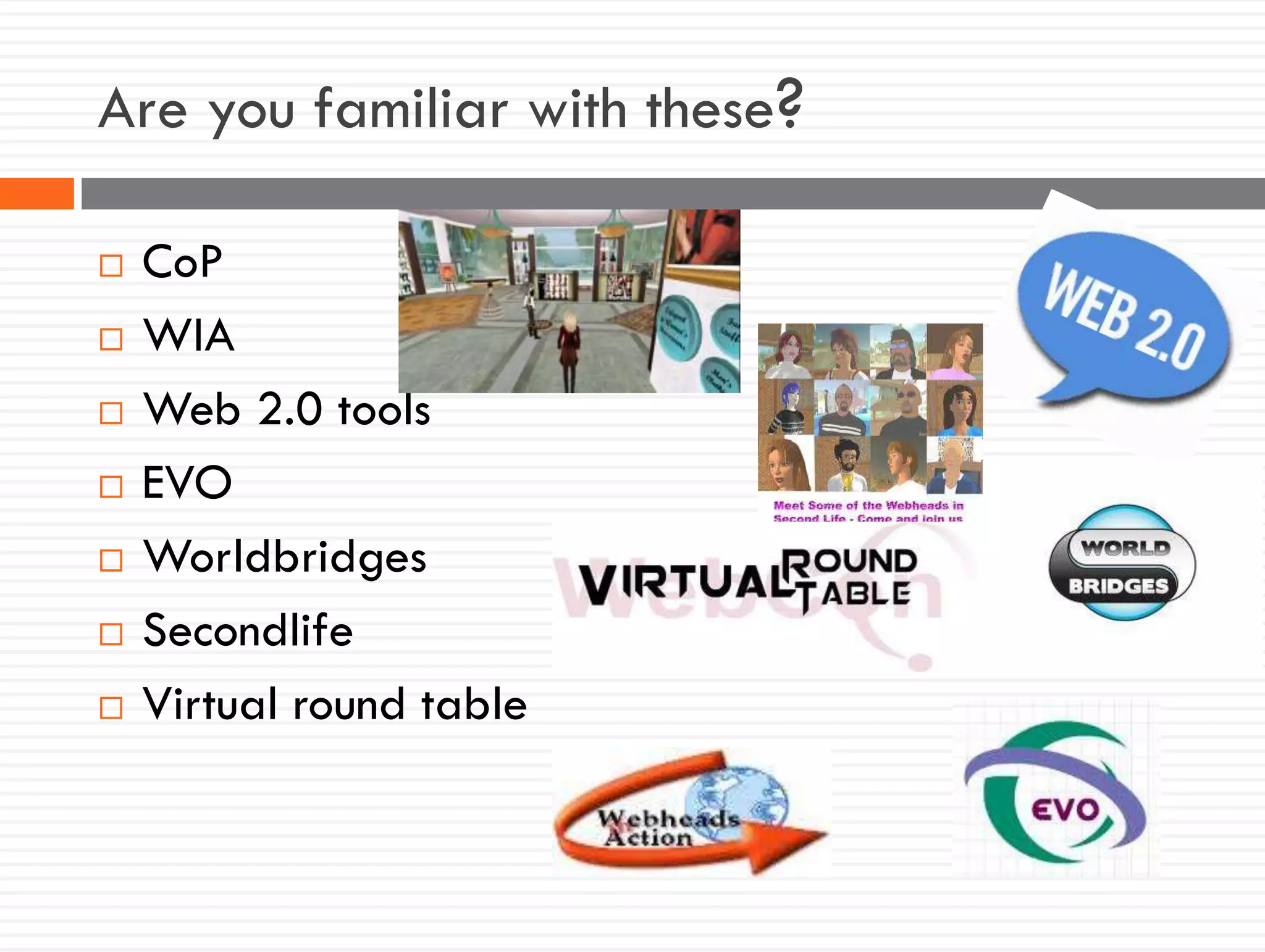
Are you familiar with these?
 CoP
 WIA
 Web 2.0 tools
 EVO
 Worldbridges
 Secondlife
 Virtual round table
WEBHEADS
Online Community of Practice of Teachers and Educators
Practicing Peace and Professional Development through Web 2.0 and
Computer Mediated Communication
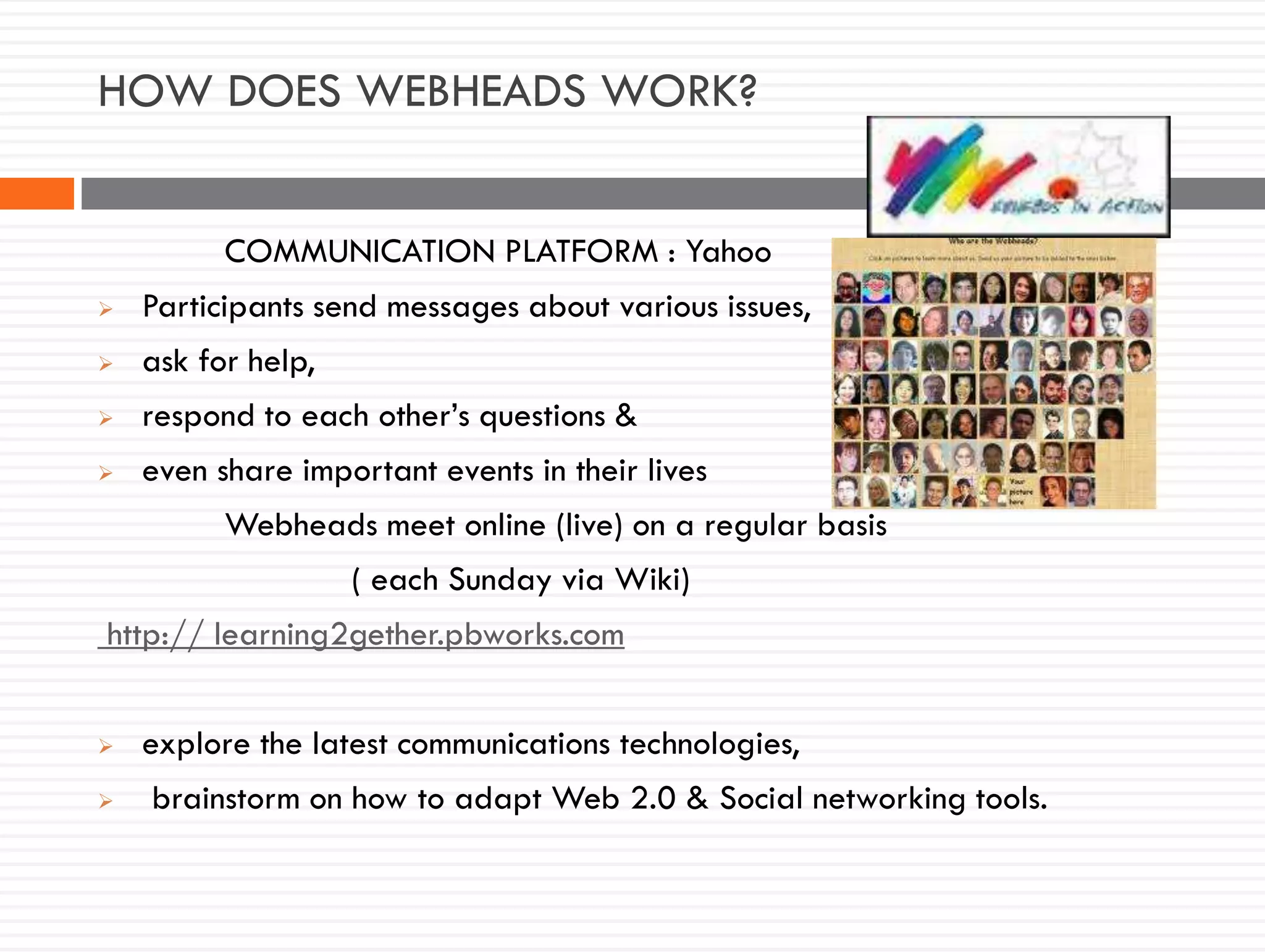
HOW DOES WEBHEADS WORK?
COMMUNICATION PLATFORM : Yahoo
 Participants send messages about various issues,
 ask for help,
 respond to each other’s questions &
 even share important events in their lives
Webheads meet online (live) on a regular basis
( each Sunday via Wiki)
http:// learning2gether.pbworks.com
 explore the latest communications technologies,
 brainstorm on how to adapt Web 2.0 & Social networking tools.
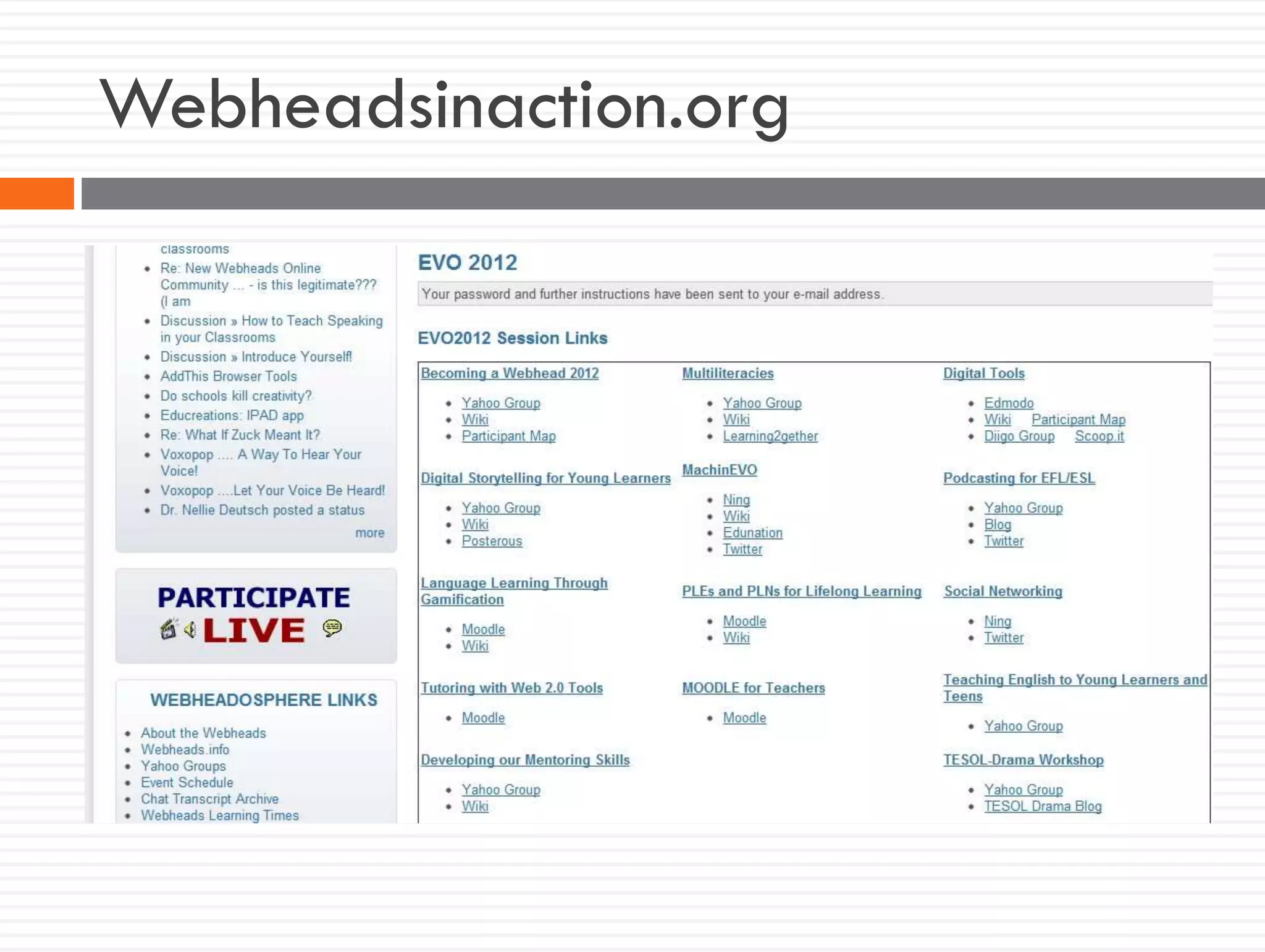
Webheadsinaction.org
TESOL CALL Interest Section
Electronic Village Online (EVO) Sessions
more social scaffolding:
collaborative spirit of WIA
EVO &WORLDBRIDGES
online discussions &workshops varying from
simple discussions to virtual hands-on workshops,
discussion of an issue in the field of teaching language to
experiments with and pedagogy of new technology tools

Provides invaluable service to teachers all over the globe,

Brings the convention to those who cannot travel..
 The sessions are again free and open to all interested parties.
An example; a course on digital story telling
 Syllabus:
http://digitalstorytelling4kids.pbworks.com/w/page/
45606035/Syllabus%29
 Tasks:
http://digitalstorytelling4kids.pbworks.com/w/pag
e/47970204/Week1
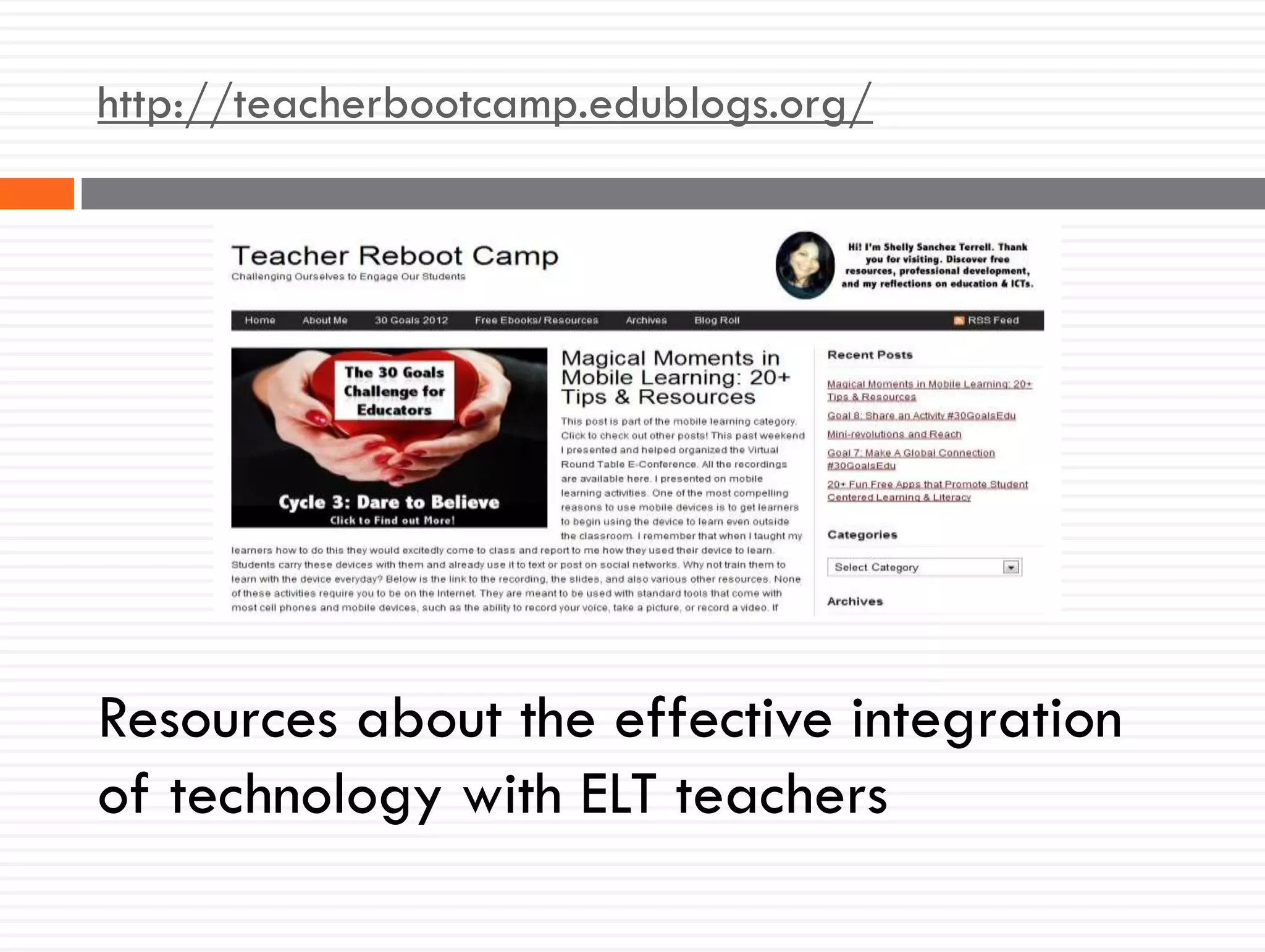
http://teacherbootcamp.edublogs.org/
Resources about the effective integration
of technology with ELT teachers
Virtual Round Table E-Conference
http://www.virtual-round-table.com/page/vrtwebconprogram
an annual web conference for language learning
Technologies
Virtual Round Table E-Conference
http://www.virtual-round-table.com
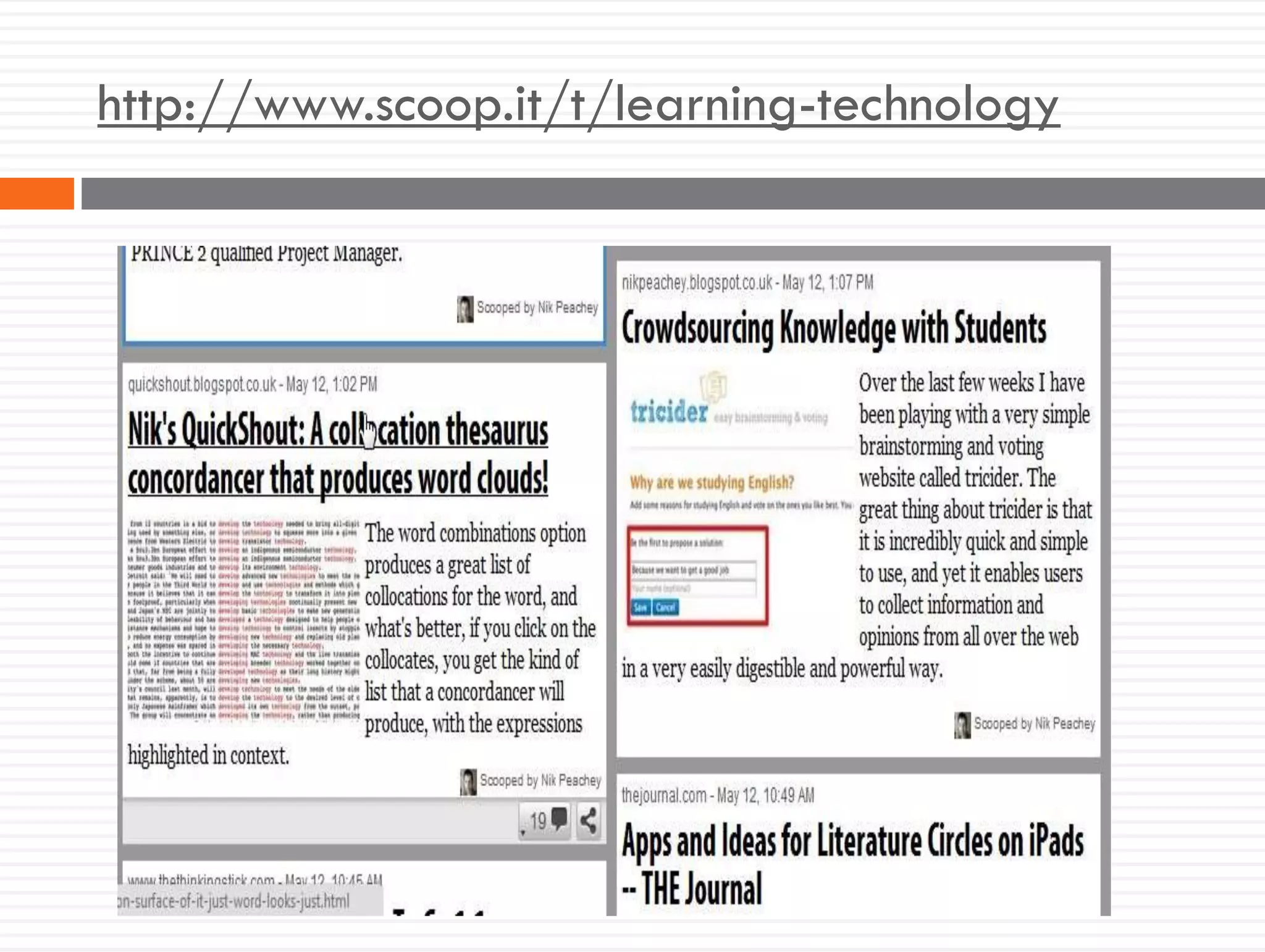
http://www.scoop.it/t/learning-technology
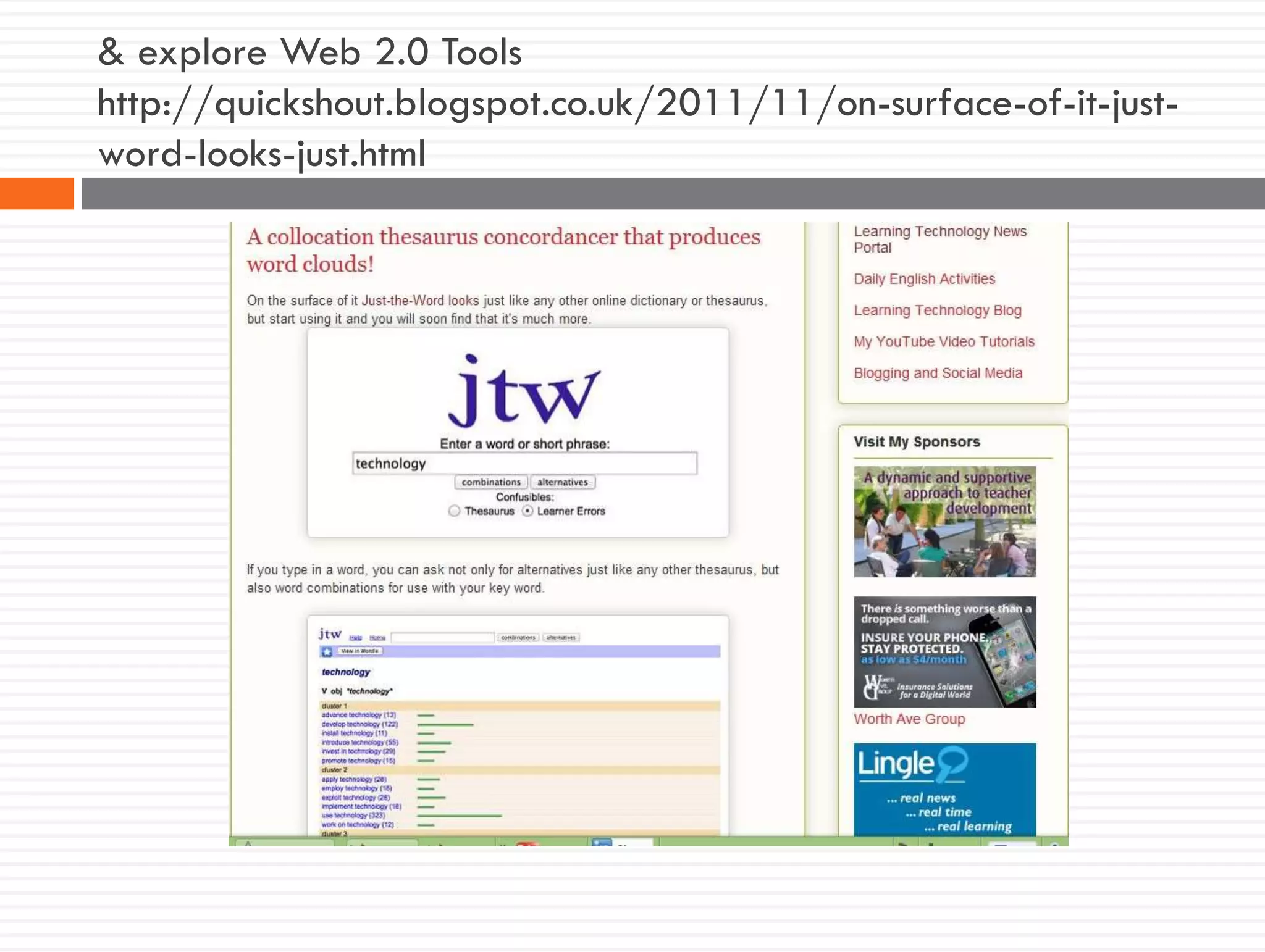
& explore Web 2.0 Tools
http://quickshout.blogspot.co.uk/2011/11/on-surface-of-it-just-
word-looks-just.html
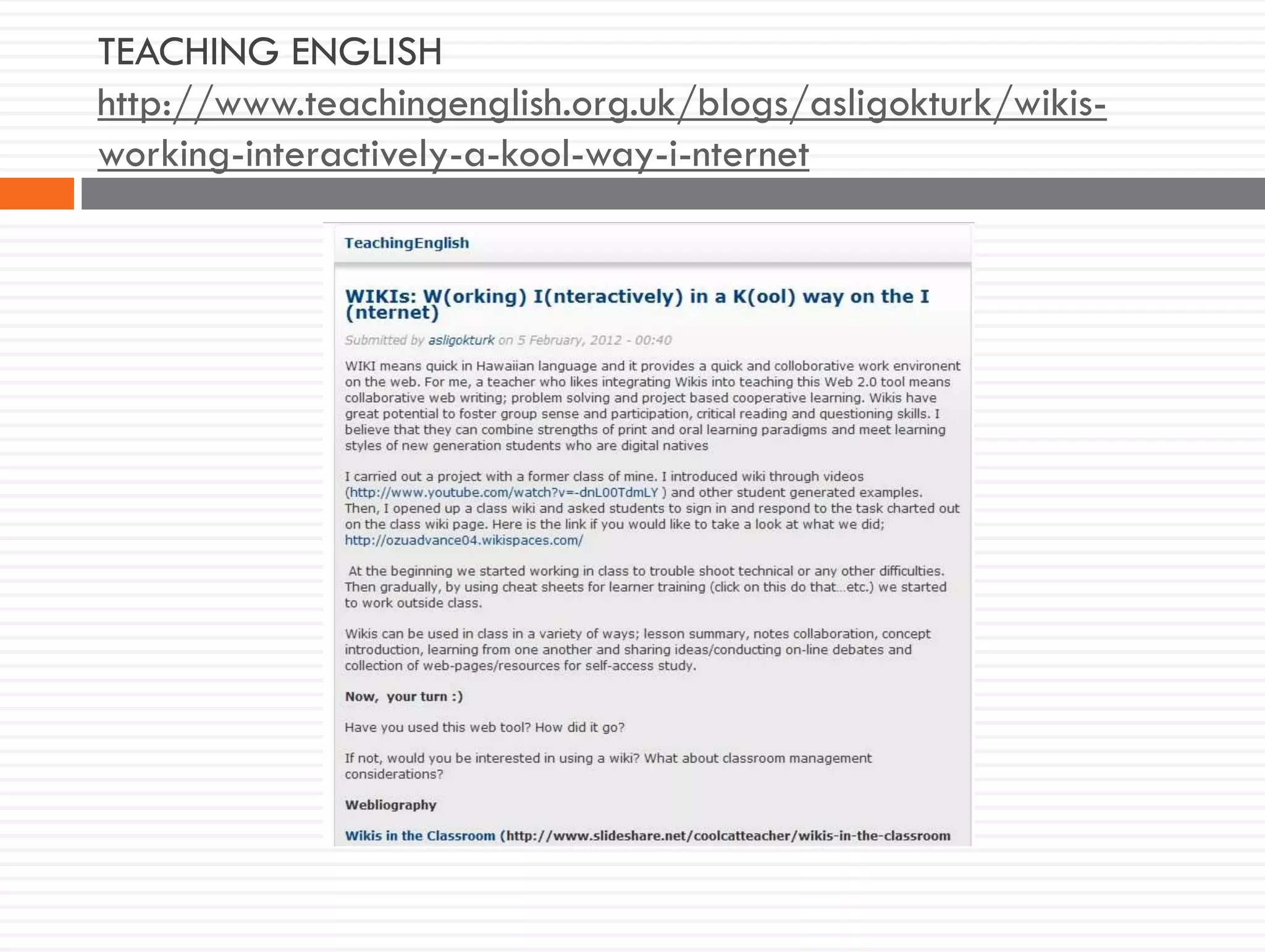
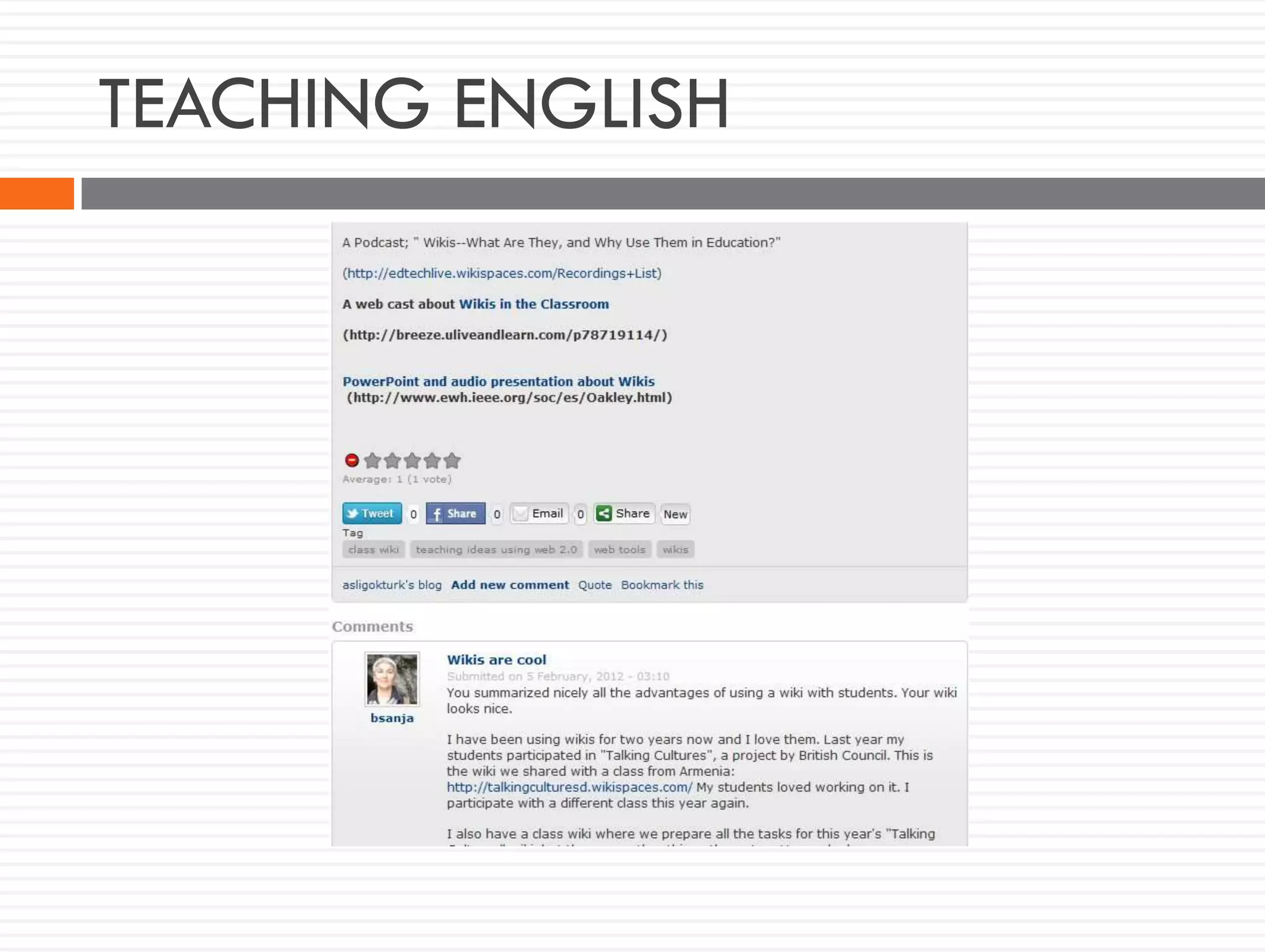
TEACHING ENGLISH
http://www.teachingenglish.org.uk/blogs/asligokturk/wikis-
working-interactively-a-kool-way-i-nternet
TEACHING ENGLISH
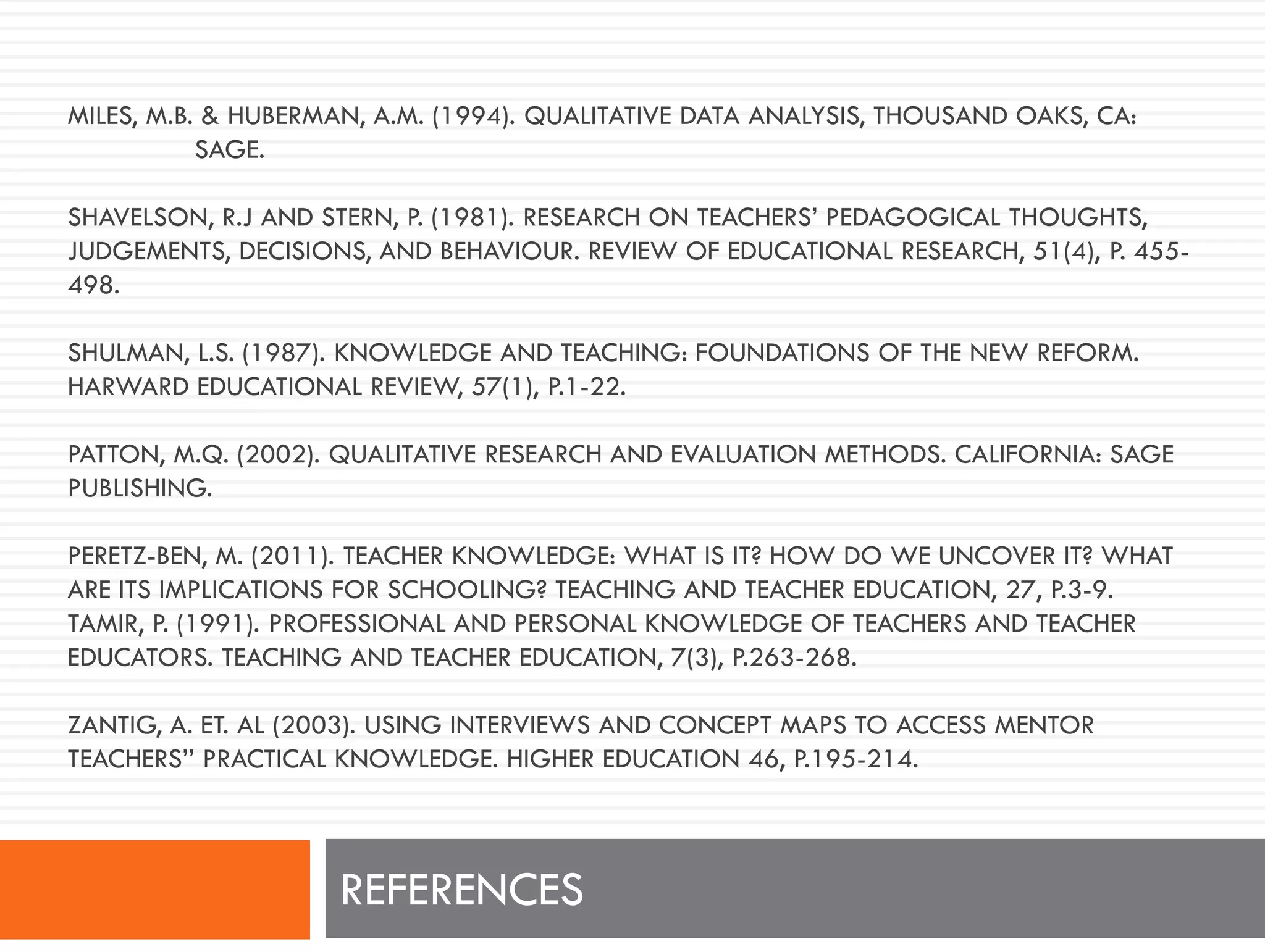
Facebook Groups
 Free on-line videos for teacher training: Blogging
http://www.teachertrainingvideos.com/newBlogger/i
ndex.html
 Elecronic Village Online; Mentoring
http://evosessions.pbworks.com/w/page/48514837
/Mentoring2012
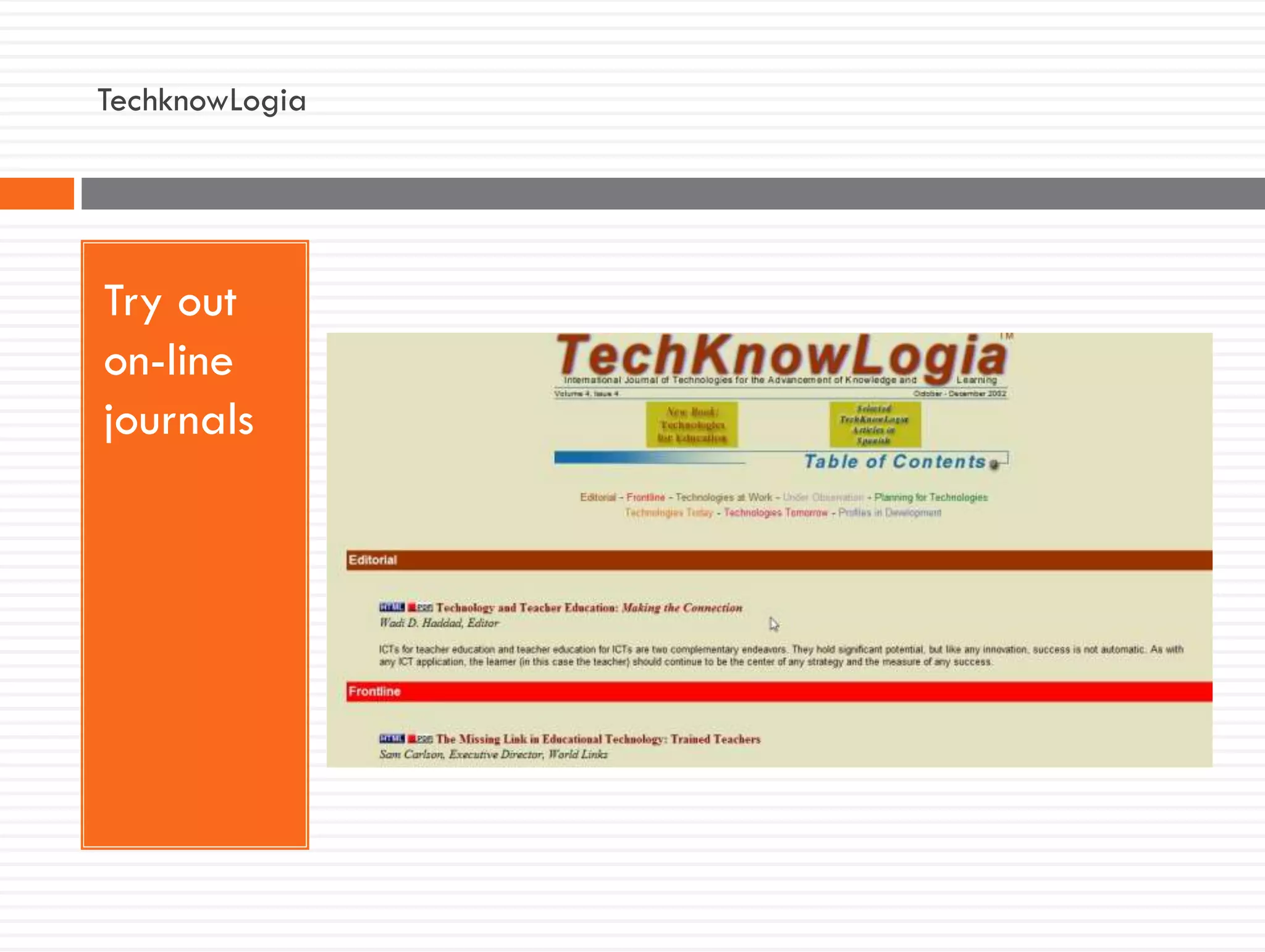
TechknowLogia
Try out
on-line
journals
Facebook Groups;
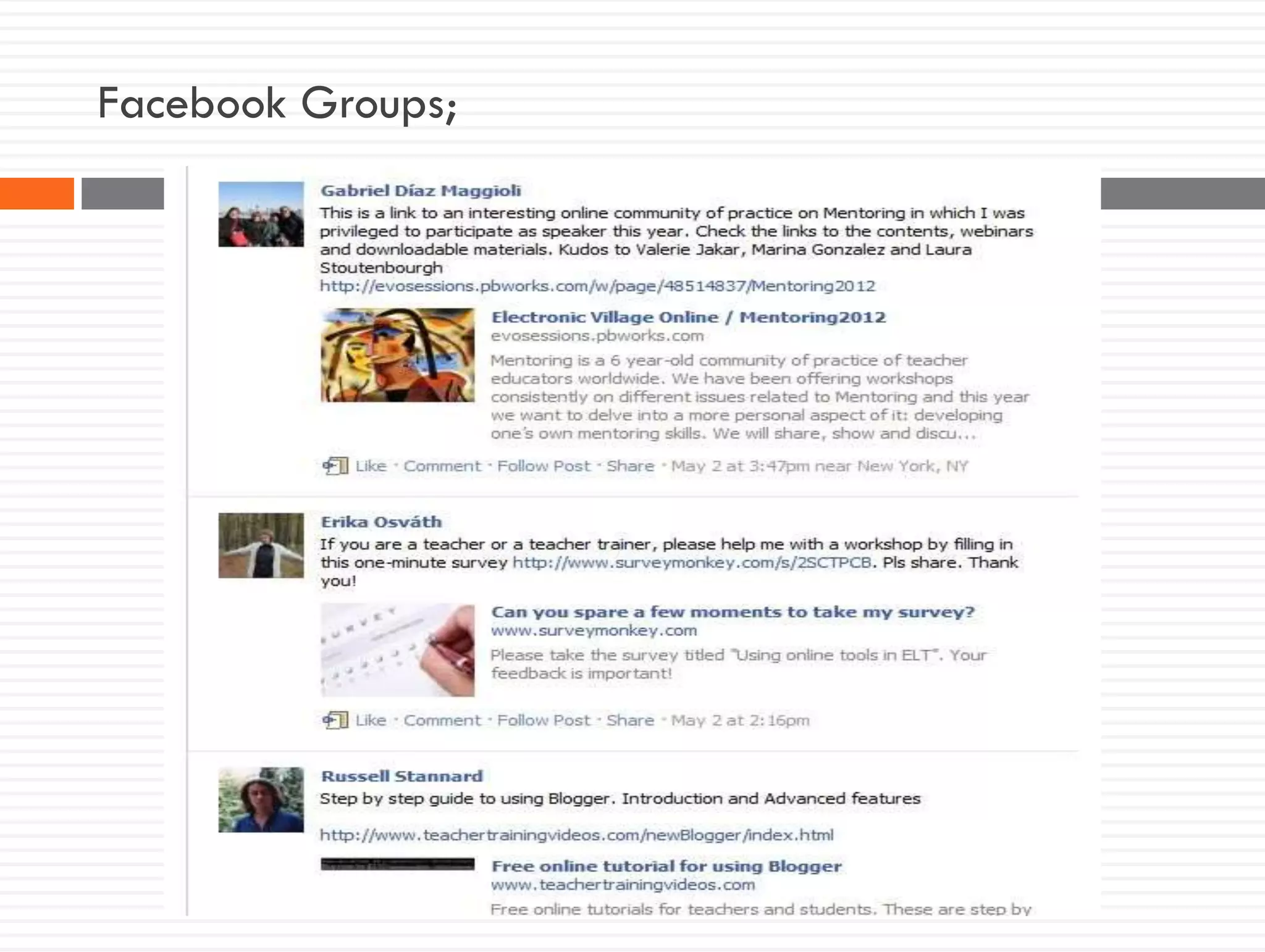
Back to effect of technology
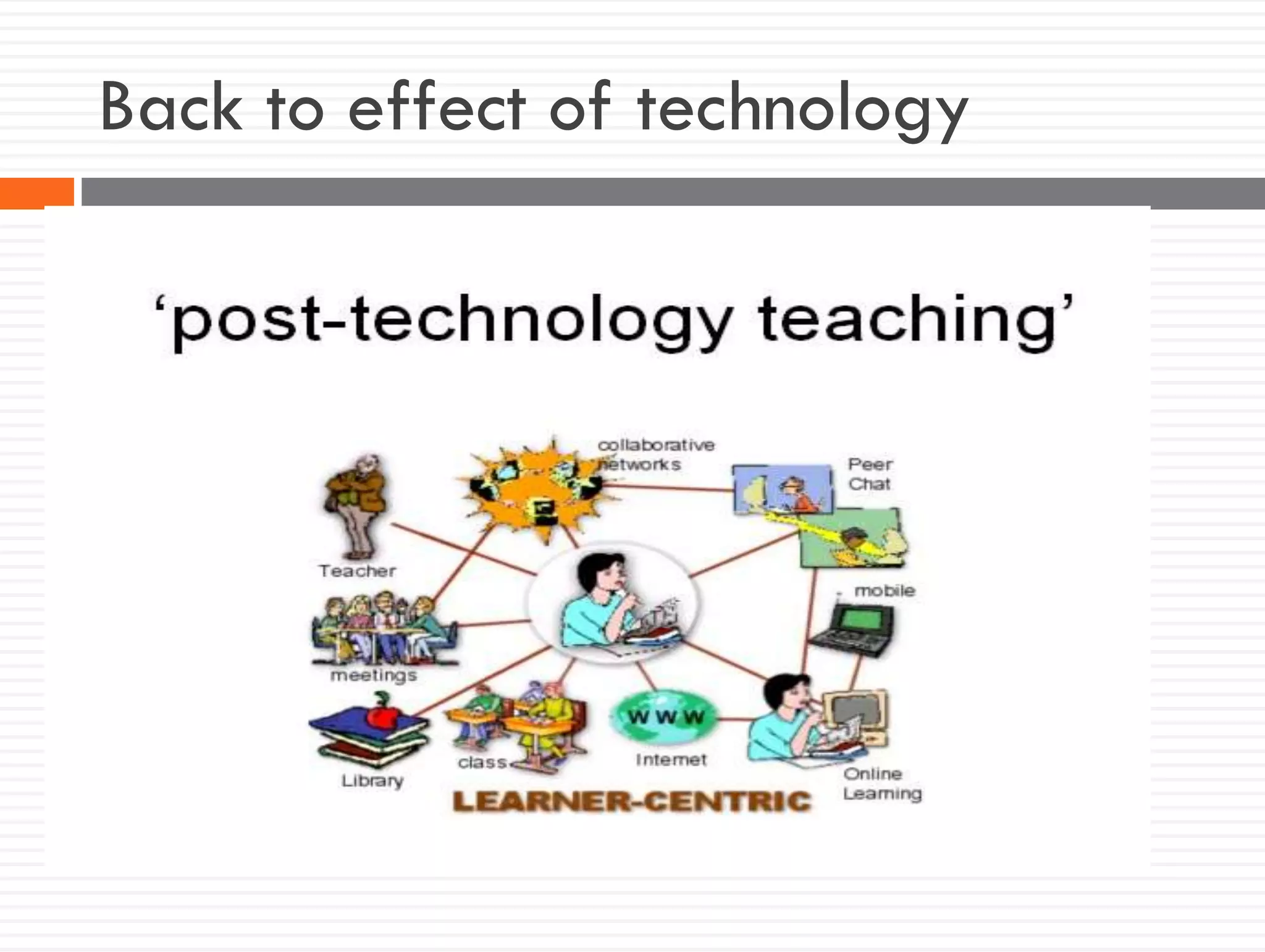
PLN PATHS
http://davidwarlick.com/images/manypaths-20090725-074436.jpg
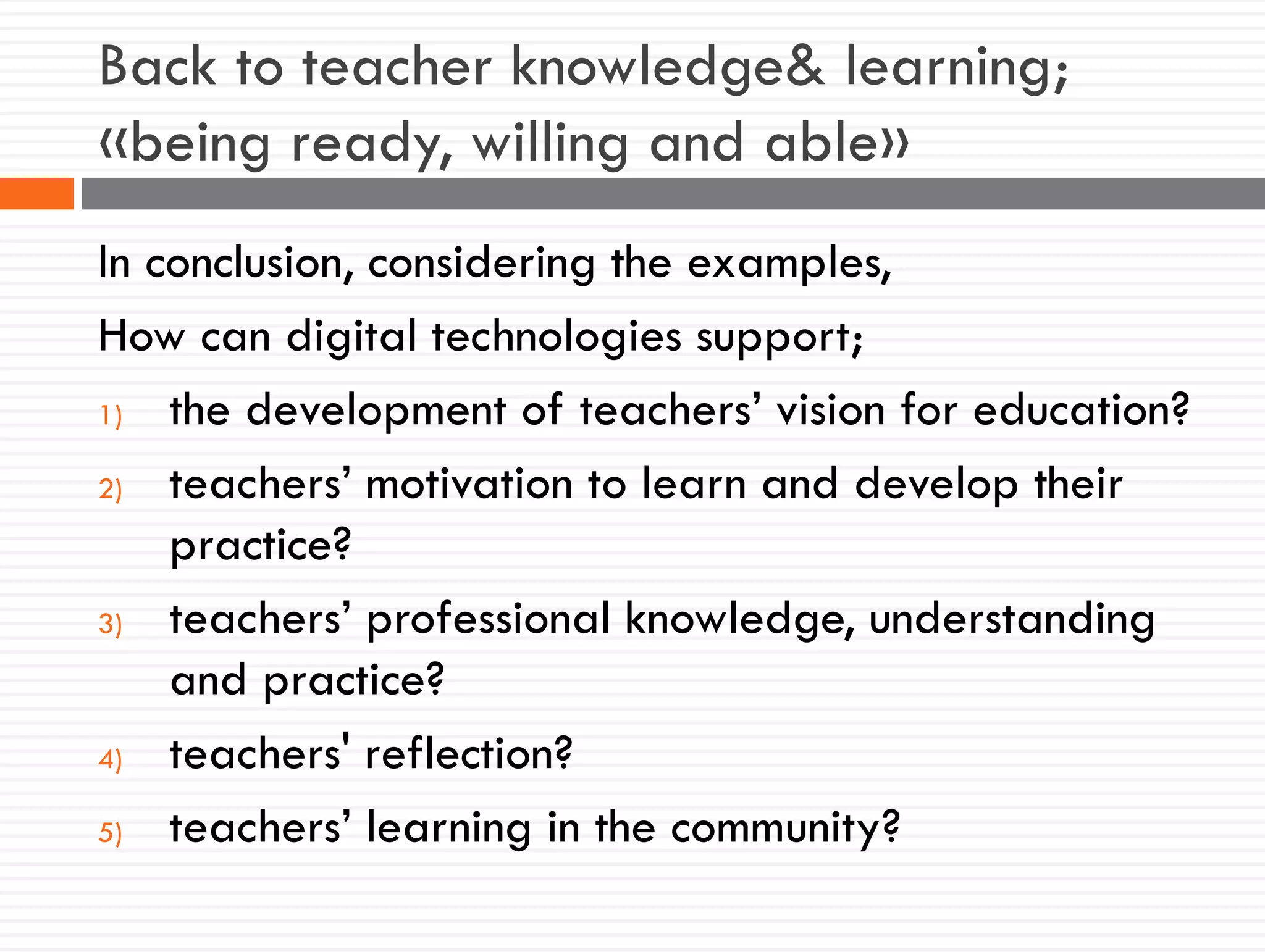
Back to teacher knowledge& learning;
«being ready, willing and able»
In conclusion, considering the examples,
How can digital technologies support;
1) the development of teachers’ vision for education?
2) teachers’ motivation to learn and develop their
practice?
3) teachers’ professional knowledge, understanding
and practice?
4) teachers' reflection?
5) teachers’ learning in the community?
ARIOĞUL, S. (2007). UNDERSTANDING FOREIGN LANGUAGE TEACHERS’ PRACTICAL KNOWLEDGE: WHAT’S THE
ROLE OF PRIOR LANGUAGE LEARNING EXPERIENCE?. JOURNAL OF LANGUAGE AND LINGUISTIC STUDIES, 3,(1), P.
1-14.
BOGDAN, R.C & BIKLEN, S.K. (1998). NEEDHAM HEIGHTS: ALLYN & BACON PUBLISHING.
BORG, S. (2003). TEACHER COGNITION IN LANGUAGE TEACHING: A REVIEW OF RESEARCH ON WHAT
LANGUAGE TEACHERS THINK, KNOW, BELIEVE, AND DO. LANGUAGE TEACHING, 36(2), P. 81-109.
BORG, S. (2006). TEACHER COGNITION AND LANGUAGE EDUCATION. LONDON: CONTINUUM.
CHARLES, G. (2011). THEORETICAL CONSIDERATIONS FOR UNDERSTANDING TECHNOLOGICAL PEDAGOGICAL
CONTENT KNOWLEDGE (TPACK), COMPUTERS AND EDUCATION, 57, 1953-1960.
CHOU, C. (2008). EXPLORING ELEMENTARY ENGLISH TEACHERS’ PRACTICAL KNOWLEDGE: A CASE STUDY OF EFL
TEACHERS IN TAIWAN. ASIA PACIFIC EDUCATION REVIEW, 9(4), P.529-541.
DENZIN, N.K. & LINCOLN, Y.S. (2005). THE SAGE HANDBOOK OF QUALITATIVE RESEARCH. CALIFORNIA: SAGE
PUBLICATIONS, INC.
ELBAZ, F. (1981). THE TEACHER’S “PRACTICAL KNOWLEDGE”: REPORT OF A CASE STUDY. CURRICULUM INQUIRY,
11(1), P.43-71.
FISHER,T. , HIGGINS, C. & LOVELESS, A. (2006). TECAHERS LEARNING WITH DIGITAL TECHNOLOGIES, RETRIEVED
FROM: HTTP://ARCHIVE.FUTURELAB.ORG.UK/RESOURCES/PUBLICATIONS-REPORTS-ARTICLES/LITERATURE-
REVIEWS/LITERATURE-REVIEW129
IM, S. (2010). CONTEMPLATIVE TEACHERS’ PRACTICAL KNOWLEDGE: TOWARDS HOLISTIC TEACHER EDUCATION.
AN UNPUBLISHED DOCTORATE THESIS TO GRADUATE DEPARTMENT OF CURRICULUM, TEACHING AND LEARNING
ONTARIO INSTITUTE FOR STUDIES IN EDUCATION UNIVERSITY OF ONTARIO.
REFERENCES
MILES, M.B. & HUBERMAN, A.M. (1994). QUALITATIVE DATA ANALYSIS, THOUSAND OAKS, CA:
SAGE.
SHAVELSON, R.J AND STERN, P. (1981). RESEARCH ON TEACHERS’ PEDAGOGICAL THOUGHTS,
JUDGEMENTS, DECISIONS, AND BEHAVIOUR. REVIEW OF EDUCATIONAL RESEARCH, 51(4), P. 455-
498.
SHULMAN, L.S. (1987). KNOWLEDGE AND TEACHING: FOUNDATIONS OF THE NEW REFORM.
HARWARD EDUCATIONAL REVIEW, 57(1), P.1-22.
PATTON, M.Q. (2002). QUALITATIVE RESEARCH AND EVALUATION METHODS. CALIFORNIA: SAGE
PUBLISHING.
PERETZ-BEN, M. (2011). TEACHER KNOWLEDGE: WHAT IS IT? HOW DO WE UNCOVER IT? WHAT
ARE ITS IMPLICATIONS FOR SCHOOLING? TEACHING AND TEACHER EDUCATION, 27, P.3-9.
TAMIR, P. (1991). PROFESSIONAL AND PERSONAL KNOWLEDGE OF TEACHERS AND TEACHER
EDUCATORS. TEACHING AND TEACHER EDUCATION, 7(3), P.263-268.
ZANTIG, A. ET. AL (2003). USING INTERVIEWS AND CONCEPT MAPS TO ACCESS MENTOR
TEACHERS’’ PRACTICAL KNOWLEDGE. HIGHER EDUCATION 46, P.195-214.
REFERENCES
Thank you :)
Aslı Sağlam

Technology in professional development "Techknowlogia"

  • 1.
    Technology in Professional Development: «TechKnowLogia» Aslı LidiceGokturk asli.saglam@ozyegin.edu.tr http://aslisaglam.edublogs.org 27.05.2012
  • 2.
    TEACHER KNOWLEDGE Think aboutfactors that make up our knowledge. You may have more than one answer but prioritise... Tell us the most important one 
  • 3.
    Nature of teachers’knowledge & learning (Fisher et.al. 2006)
  • 4.
    How do teachersknow?  Shulman and Shulman’s Model (2004)  Vision  Motivation  Capability  Understanding  Practice  Reflection  Community = «being ready, willing and able» (Fisher et. al. 2006; Chen, 2012)
  • 5.
    What do teachersknow? Shulman’s Categorization(1987)  Content knowledge  General Pedagogical knowledge  Curriculum knowledge  Pedagogical content knowledge  Knowledge of learners & their characteristics  Knowledge of educational contexts  Knowledge of educational purposes, values and aims
  • 6.
    EFFECT OF TECHNOLOGY?? How do you think technology affects teacher knowledge?
  • 7.
    VOXOPOP (an online messageboard) Do you use web tools in your teaching? How did you learn about them? Did you receive any training? Pre-service? In-service? Others???  http://www.voxopop.com/topic/cb455b6f-5f81-4bf7-ba6e- cd91b9842b41
  • 8.
    Effect of Technology: Brief description of constructs in the 'TPACK framework from Mishra and Koehler (2006) in Graham, 2011. Technological knowledge knowledge of operating systems and computer hardware, and the ability to use standard sets of software tools such as word processors, spreadsheets, browsers,...etc.) Technological pedagogical knowledge knowledge of how teaching might change as the result of using particular technologies Technological Content Knowledge knowledge about how technology and content are related. Technological pedagogical content knowledge TPCK the basis of good teaching with technology • teach content • how technology can help readress some of the problems that students face • knowledge of students’ prior knowledge • and knowledge of how technologies can be used to build on existing knowledge and to develop new methods or strengthen old ones.” (p. 1029)
  • 9.
  • 10.
    A technological pedagogicalcontent knowledge scale (Yurdakul et.al. 2012) The purpose of this section is to gather information about combining technology, pedagogy and content knowledge in the teaching and learning process. For each item choose only one option that best describes you. Strongly disagree Disagree Neither agreeor Disagree Agree Strongly agree 1 I can use technology to develop activities based on students needs to enrich the teaching and learning process. 2 I can implement effective classroom management in the teaching and learning process in which technology is used. 3 I can use technology for implementing educational activities such as homework, projects, etc. 4 I can use technology based communication tools ( blog, froum, chat, e-mail, etc. ) in the teaching process. 5 I can use innovative technologies ( facebook, blogs, twitter, podcastingi etc.) to support the teaching and learning process. 6 I can use technology to update my knowledge and skilss in the area that I will teach. 7 I can troubleshoot problems that could be encountered with online educational environments ( Moodle, Web CT, etc) 8 I can use technology in every phase of the teaching and learning process by considering the copyright issues(e.g. licence) Ican become a leader in spreading the use of technological innovations in my future teaching community.
  • 11.
    TPACK is: Knowing howto present the subject matter with technology in pedagocially sound ways So & Kim, 2009 A teacher’s knowledge of how to coordinate and combine the use of subject-specific activities and topic-specific activities using emerging technologies to facilitate student learning Cox&Graham ,2009 TPACK is not simply: ....adding technology to existing teaching and content... Yurdakul et al,2011
  • 12.
    INTERACTION BETWEEN EDUCATIONAL TECH& TEACHER DEVELOPMENT  The “new” models of staff development  study groups,  teacher networks,  mentoring relationships,  committee or task force,  internship,  individual research project,  or teacher resource center  (Alberta Commission on Learning, 2006; Birman et al., 2000; Sikora & Alexander, 2004).
  • 13.
    INTERACTION BETWEEN EDUCATIONALTECH & TEACHER DEVELOPMENT  Other promising adult learning environments include  exchange of information,  collaborative work,  critical thinking,  active/exploratory/inquiry-based learning, informed decision- making,  and authentic, real-world context (ISTE &Thomas, 2007).
  • 14.
    Clusters of PurposefulActivity with Digital Technologies in Professional Development  Knowledge Building  Distributed Cognition  Community and Communication  Engagement
  • 15.
  • 16.
    You can startyour own blog 
  • 17.
  • 18.
    ...and reflect yourintake; A personal Example
  • 19.
    OR you canstart a class blog
  • 20.
    Spice up yourclass with a blog;
  • 21.
     Input fromteacher challange; how to embed media  Hands on experience in my class blog;
  • 22.
    Are you familiarwith these?  CoP  WIA  Web 2.0 tools  EVO  Worldbridges  Secondlife  Virtual round table
  • 23.
    WEBHEADS Online Community ofPractice of Teachers and Educators Practicing Peace and Professional Development through Web 2.0 and Computer Mediated Communication
  • 24.
    HOW DOES WEBHEADSWORK? COMMUNICATION PLATFORM : Yahoo  Participants send messages about various issues,  ask for help,  respond to each other’s questions &  even share important events in their lives Webheads meet online (live) on a regular basis ( each Sunday via Wiki) http:// learning2gether.pbworks.com  explore the latest communications technologies,  brainstorm on how to adapt Web 2.0 & Social networking tools.
  • 25.
  • 26.
    TESOL CALL InterestSection Electronic Village Online (EVO) Sessions more social scaffolding: collaborative spirit of WIA EVO &WORLDBRIDGES online discussions &workshops varying from simple discussions to virtual hands-on workshops, discussion of an issue in the field of teaching language to experiments with and pedagogy of new technology tools  Provides invaluable service to teachers all over the globe,  Brings the convention to those who cannot travel..  The sessions are again free and open to all interested parties.
  • 27.
    An example; acourse on digital story telling  Syllabus: http://digitalstorytelling4kids.pbworks.com/w/page/ 45606035/Syllabus%29  Tasks: http://digitalstorytelling4kids.pbworks.com/w/pag e/47970204/Week1
  • 28.
    http://teacherbootcamp.edublogs.org/ Resources about theeffective integration of technology with ELT teachers
  • 29.
    Virtual Round TableE-Conference http://www.virtual-round-table.com/page/vrtwebconprogram an annual web conference for language learning Technologies Virtual Round Table E-Conference http://www.virtual-round-table.com
  • 30.
  • 31.
    & explore Web2.0 Tools http://quickshout.blogspot.co.uk/2011/11/on-surface-of-it-just- word-looks-just.html
  • 32.
  • 33.
  • 34.
    Facebook Groups  Freeon-line videos for teacher training: Blogging http://www.teachertrainingvideos.com/newBlogger/i ndex.html  Elecronic Village Online; Mentoring http://evosessions.pbworks.com/w/page/48514837 /Mentoring2012
  • 35.
  • 36.
  • 37.
    Back to effectof technology
  • 38.
  • 39.
    Back to teacherknowledge& learning; «being ready, willing and able» In conclusion, considering the examples, How can digital technologies support; 1) the development of teachers’ vision for education? 2) teachers’ motivation to learn and develop their practice? 3) teachers’ professional knowledge, understanding and practice? 4) teachers' reflection? 5) teachers’ learning in the community?
  • 40.
    ARIOĞUL, S. (2007).UNDERSTANDING FOREIGN LANGUAGE TEACHERS’ PRACTICAL KNOWLEDGE: WHAT’S THE ROLE OF PRIOR LANGUAGE LEARNING EXPERIENCE?. JOURNAL OF LANGUAGE AND LINGUISTIC STUDIES, 3,(1), P. 1-14. BOGDAN, R.C & BIKLEN, S.K. (1998). NEEDHAM HEIGHTS: ALLYN & BACON PUBLISHING. BORG, S. (2003). TEACHER COGNITION IN LANGUAGE TEACHING: A REVIEW OF RESEARCH ON WHAT LANGUAGE TEACHERS THINK, KNOW, BELIEVE, AND DO. LANGUAGE TEACHING, 36(2), P. 81-109. BORG, S. (2006). TEACHER COGNITION AND LANGUAGE EDUCATION. LONDON: CONTINUUM. CHARLES, G. (2011). THEORETICAL CONSIDERATIONS FOR UNDERSTANDING TECHNOLOGICAL PEDAGOGICAL CONTENT KNOWLEDGE (TPACK), COMPUTERS AND EDUCATION, 57, 1953-1960. CHOU, C. (2008). EXPLORING ELEMENTARY ENGLISH TEACHERS’ PRACTICAL KNOWLEDGE: A CASE STUDY OF EFL TEACHERS IN TAIWAN. ASIA PACIFIC EDUCATION REVIEW, 9(4), P.529-541. DENZIN, N.K. & LINCOLN, Y.S. (2005). THE SAGE HANDBOOK OF QUALITATIVE RESEARCH. CALIFORNIA: SAGE PUBLICATIONS, INC. ELBAZ, F. (1981). THE TEACHER’S “PRACTICAL KNOWLEDGE”: REPORT OF A CASE STUDY. CURRICULUM INQUIRY, 11(1), P.43-71. FISHER,T. , HIGGINS, C. & LOVELESS, A. (2006). TECAHERS LEARNING WITH DIGITAL TECHNOLOGIES, RETRIEVED FROM: HTTP://ARCHIVE.FUTURELAB.ORG.UK/RESOURCES/PUBLICATIONS-REPORTS-ARTICLES/LITERATURE- REVIEWS/LITERATURE-REVIEW129 IM, S. (2010). CONTEMPLATIVE TEACHERS’ PRACTICAL KNOWLEDGE: TOWARDS HOLISTIC TEACHER EDUCATION. AN UNPUBLISHED DOCTORATE THESIS TO GRADUATE DEPARTMENT OF CURRICULUM, TEACHING AND LEARNING ONTARIO INSTITUTE FOR STUDIES IN EDUCATION UNIVERSITY OF ONTARIO. REFERENCES
  • 41.
    MILES, M.B. &HUBERMAN, A.M. (1994). QUALITATIVE DATA ANALYSIS, THOUSAND OAKS, CA: SAGE. SHAVELSON, R.J AND STERN, P. (1981). RESEARCH ON TEACHERS’ PEDAGOGICAL THOUGHTS, JUDGEMENTS, DECISIONS, AND BEHAVIOUR. REVIEW OF EDUCATIONAL RESEARCH, 51(4), P. 455- 498. SHULMAN, L.S. (1987). KNOWLEDGE AND TEACHING: FOUNDATIONS OF THE NEW REFORM. HARWARD EDUCATIONAL REVIEW, 57(1), P.1-22. PATTON, M.Q. (2002). QUALITATIVE RESEARCH AND EVALUATION METHODS. CALIFORNIA: SAGE PUBLISHING. PERETZ-BEN, M. (2011). TEACHER KNOWLEDGE: WHAT IS IT? HOW DO WE UNCOVER IT? WHAT ARE ITS IMPLICATIONS FOR SCHOOLING? TEACHING AND TEACHER EDUCATION, 27, P.3-9. TAMIR, P. (1991). PROFESSIONAL AND PERSONAL KNOWLEDGE OF TEACHERS AND TEACHER EDUCATORS. TEACHING AND TEACHER EDUCATION, 7(3), P.263-268. ZANTIG, A. ET. AL (2003). USING INTERVIEWS AND CONCEPT MAPS TO ACCESS MENTOR TEACHERS’’ PRACTICAL KNOWLEDGE. HIGHER EDUCATION 46, P.195-214. REFERENCES
  • 42.