Transforming English For You
into Headway
Organizing Reading Tasks in Large
Multilevel Classes Within a Strict
Curriculum and With Limited
Resources
Nothing new
How to do the things you
already know…
…and not to lesson plan
yourself to death.
Teacher Complaints
• Students of many levels in one class
• Too many students in classrooms
• Textbooks inappropriate to the level of
students
• Not enough time for creative lesson
planning
• Strict inspections
Teaching Reading
(All the theory in under 30 seconds)
• Two goals for teachers
– Learn language (vocabulary, functional grammar,
phrases)
– Learn how to work with texts (acquire additional
learning skills)
• Two purposes for students
– For enjoyment
– For information
• Two cognitive modes
– For detail
– For gist
Reading Steps
• Pre-Reading
• While-Reading
• Post-Reading
Sample Reading Lesson
• Using text from English for You 1
• Headway-like reading lesson
• No photocopier necessary
• No supplementary materials necessary
• Reusable exercises
• No students need to leave their seats
• Discipline can be maintained easily (for most of
the lesson)
• Students of all levels can learn something
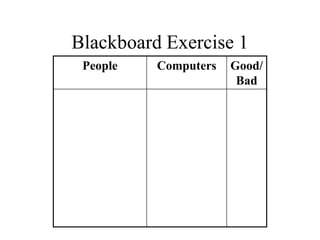
Blackboard Exercise 1
People Computers Good/
Bad
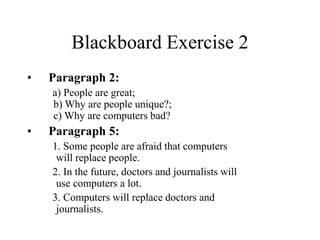
Blackboard Exercise 2
• Paragraph 2:
a) People are great;
b) Why are people unique?;
c) Why are computers bad?
• Paragraph 5:
1. Some people are afraid that computers
will replace people.
2. In the future, doctors and journalists will
use computers a lot.
3. Computers will replace doctors and
journalists.
Lesson Debriefing
• Aims of the lesson
• Steps of the lesson
• How can this activity be modified for
different levels, students, texts
Lesson Aims
• Language skills: vocabulary
• Reading skills: summarizing, searching for
specific information
• Other skills: critical thinking (predictions,
personalization, preferences)
Step 1: Warm up
• Activity:
– Ask students about computers
• Purpose:
– Engage students’ interest
– Activate appropriate vocabulary
• Alternatives: Have this discussion in Albanian;
Review homework with relevant materials; Teach
computer-related vocabulary; Do a vocab game
Step 2: Text prep
• Activity:
– Number paragraphs
• Purpose:
– Make text easier to refer to for all students
– Give students their first encounter with the text
in an easy task
• Notes: Use pencil if necessary
Step 3: Getting to gist through
prediction
• Activity:
– Guess what text is about from title
– Search for the number of words used to refer to
computers and people; write down things said about
people and computers in a chart
• Purpose:
– Summarize the text
– Show Ss a strategy for discovering gist
• Alternatives: Ask Ss (if more advanced) to write
a subtitle to the text; Ask Ss to predict what the
text will say based on certain key words; If
resources allow – use scrambled text
Step 4: New vocabulary
• Activity:
– Find one new word in each of the selected paragraphs
• Purpose:
– Make it easier for Ss to do the upcoming exercises
– Allow lower level Ss to do different activity than higher
level Ss
• Alternatives: Teach selected new words (based on what
you know about Ss) and have Ss find them in text
Step 5: Summarizing the text
• Activity:
– Summarize paragraphs 2-5 in different ways
• Purpose:
– Help Ss understand the main idea of the text
– Show Ss different strategies for summarizing
• Alternatives: With different texts or more
advanced Ss: Ask Ss to break text into sections with
subtitles, draw a chart of the argument, or plot and
characters for stories
Step 6: More vocabulary
• Activity:
– Play a game with synonyms
• Purpose:
– Engage Ss with text some more and give them a
fun activity to do
– Teach Ss new words
– Prepare Ss for difficult exercise on p. 91
(homework)
Step 7: Making connections
• Activity:
– Talk about the context of the text and the Ss views on
the subject matter
• Purpose:
– Help Ss understand the author and his or her intentions
– Allow Ss to express personal opinions on the text
– Help Ss discover statements made by texts
• Alternatives: Use more questions from page 90.
Step 8: Post-reading activities
• Activity:
– Have Ss write a story about a part of the text
• Purpose:
– Employ additional language not in the text
– Show Ss understanding of the contents of the text
– Allow different level students to do an activity at their
own level
• Alternatives: Write about Ss own experiences with
computers (e.g. some questions on p. 90)
Summary through questions
• Why reading skills?
• Why not reading out loud?
• Why not read the whole text at once (or
why not at all)?
• Why/when/how (not) translation?
• Where else could these types of exercises be
used?
• What should have come before and what
comes next?
Contact
dlukes@al.peacecorps.gov
me@dominiklukes.net
www.bohemica.com
www.dominiklukes.net

Teaching Reading

  • 1.
    Transforming English ForYou into Headway Organizing Reading Tasks in Large Multilevel Classes Within a Strict Curriculum and With Limited Resources
  • 2.
    Nothing new How todo the things you already know… …and not to lesson plan yourself to death.
  • 3.
    Teacher Complaints • Studentsof many levels in one class • Too many students in classrooms • Textbooks inappropriate to the level of students • Not enough time for creative lesson planning • Strict inspections
  • 4.
    Teaching Reading (All thetheory in under 30 seconds) • Two goals for teachers – Learn language (vocabulary, functional grammar, phrases) – Learn how to work with texts (acquire additional learning skills) • Two purposes for students – For enjoyment – For information • Two cognitive modes – For detail – For gist
  • 5.
    Reading Steps • Pre-Reading •While-Reading • Post-Reading
  • 6.
    Sample Reading Lesson •Using text from English for You 1 • Headway-like reading lesson • No photocopier necessary • No supplementary materials necessary • Reusable exercises • No students need to leave their seats • Discipline can be maintained easily (for most of the lesson) • Students of all levels can learn something
  • 7.
    Blackboard Exercise 1 PeopleComputers Good/ Bad
  • 8.
    Blackboard Exercise 2 •Paragraph 2: a) People are great; b) Why are people unique?; c) Why are computers bad? • Paragraph 5: 1. Some people are afraid that computers will replace people. 2. In the future, doctors and journalists will use computers a lot. 3. Computers will replace doctors and journalists.
  • 9.
    Lesson Debriefing • Aimsof the lesson • Steps of the lesson • How can this activity be modified for different levels, students, texts
  • 10.
    Lesson Aims • Languageskills: vocabulary • Reading skills: summarizing, searching for specific information • Other skills: critical thinking (predictions, personalization, preferences)
  • 11.
    Step 1: Warmup • Activity: – Ask students about computers • Purpose: – Engage students’ interest – Activate appropriate vocabulary • Alternatives: Have this discussion in Albanian; Review homework with relevant materials; Teach computer-related vocabulary; Do a vocab game
  • 12.
    Step 2: Textprep • Activity: – Number paragraphs • Purpose: – Make text easier to refer to for all students – Give students their first encounter with the text in an easy task • Notes: Use pencil if necessary
  • 13.
    Step 3: Gettingto gist through prediction • Activity: – Guess what text is about from title – Search for the number of words used to refer to computers and people; write down things said about people and computers in a chart • Purpose: – Summarize the text – Show Ss a strategy for discovering gist • Alternatives: Ask Ss (if more advanced) to write a subtitle to the text; Ask Ss to predict what the text will say based on certain key words; If resources allow – use scrambled text
  • 14.
    Step 4: Newvocabulary • Activity: – Find one new word in each of the selected paragraphs • Purpose: – Make it easier for Ss to do the upcoming exercises – Allow lower level Ss to do different activity than higher level Ss • Alternatives: Teach selected new words (based on what you know about Ss) and have Ss find them in text
  • 15.
    Step 5: Summarizingthe text • Activity: – Summarize paragraphs 2-5 in different ways • Purpose: – Help Ss understand the main idea of the text – Show Ss different strategies for summarizing • Alternatives: With different texts or more advanced Ss: Ask Ss to break text into sections with subtitles, draw a chart of the argument, or plot and characters for stories
  • 16.
    Step 6: Morevocabulary • Activity: – Play a game with synonyms • Purpose: – Engage Ss with text some more and give them a fun activity to do – Teach Ss new words – Prepare Ss for difficult exercise on p. 91 (homework)
  • 17.
    Step 7: Makingconnections • Activity: – Talk about the context of the text and the Ss views on the subject matter • Purpose: – Help Ss understand the author and his or her intentions – Allow Ss to express personal opinions on the text – Help Ss discover statements made by texts • Alternatives: Use more questions from page 90.
  • 18.
    Step 8: Post-readingactivities • Activity: – Have Ss write a story about a part of the text • Purpose: – Employ additional language not in the text – Show Ss understanding of the contents of the text – Allow different level students to do an activity at their own level • Alternatives: Write about Ss own experiences with computers (e.g. some questions on p. 90)
  • 19.
    Summary through questions •Why reading skills? • Why not reading out loud? • Why not read the whole text at once (or why not at all)? • Why/when/how (not) translation? • Where else could these types of exercises be used? • What should have come before and what comes next?
  • 20.