Teaching Portfolio


  Eileen G. Crawford
Introduction
“The school is created by society for the purpose of reproducing in the learner the
knowledge, attitudes, values and techniques that have cultural relevancy or currency”        Hilda Taba
(1962)
 Students need to appreciate why the skills and concepts are being instilled and how to make use of these
 skills once they leave school.

 Students must take ownership of their learning and their behavior thereby appreciating the skills and
 concepts being taught.

 This presentation shows examples of how my students were presented with challenges and projects in
 which they applied their knowledge to solve problems and engage in dialogue with their peers rather
 than just recalling facts.

   .
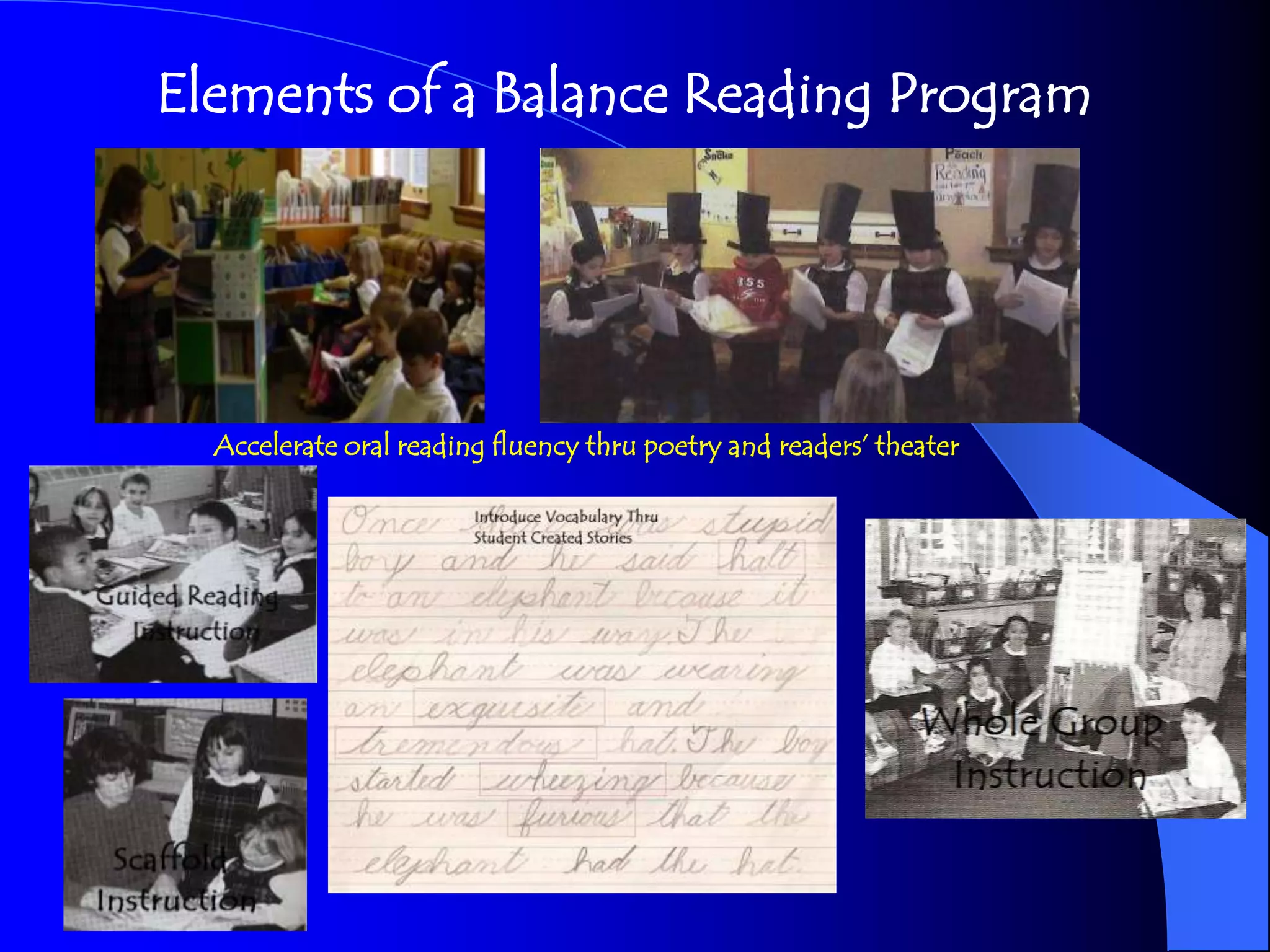
Elements of a Balance Reading Program


  Accelerate oral reading fluency thru poetry and readers’ theater
Elements of a Balance Reading Program
                                    (Continued)
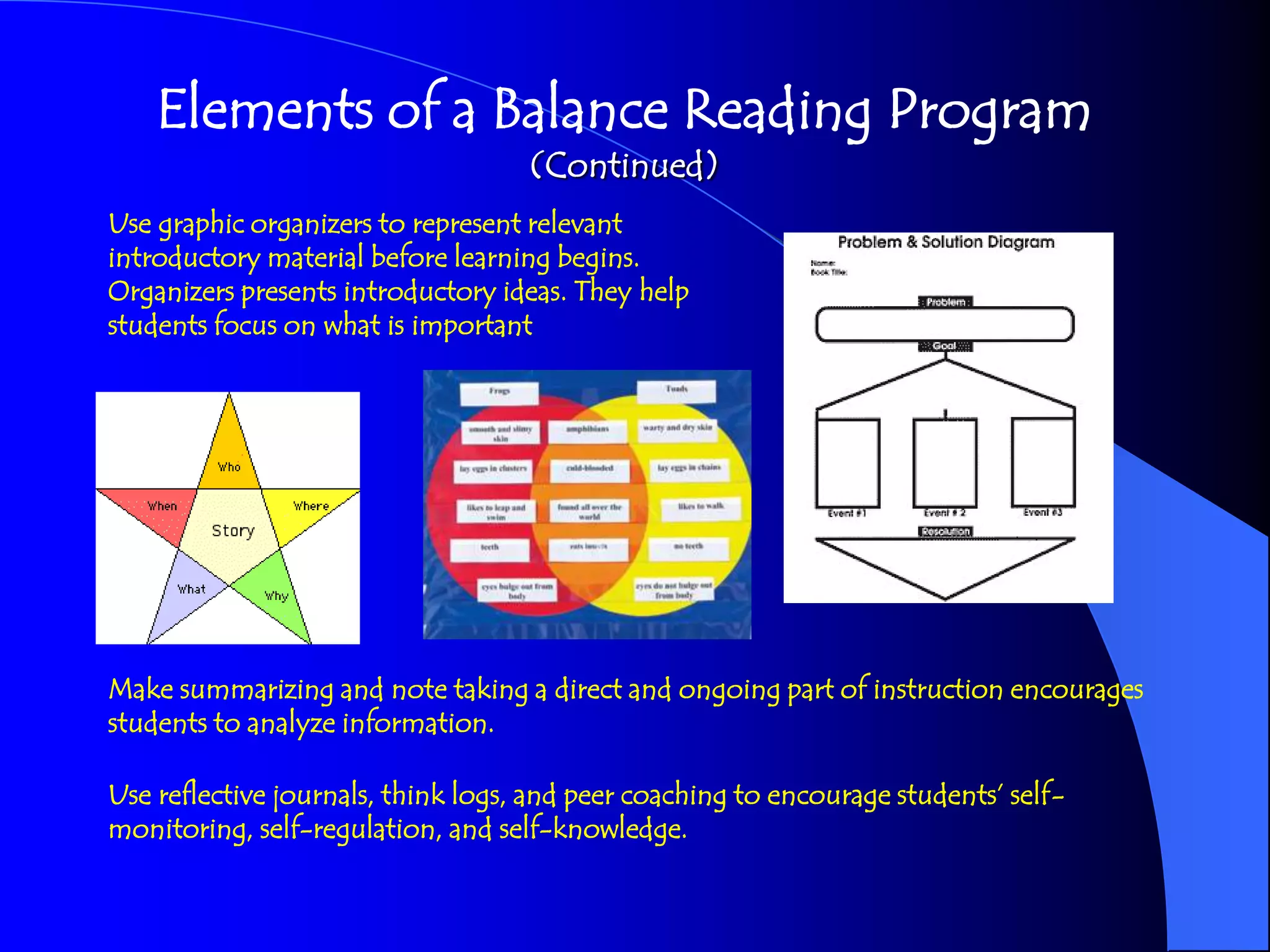
Use graphic organizers to represent relevant
introductory material before learning begins.
Organizers presents introductory ideas. They help
students focus on what is important


Make summarizing and note taking a direct and ongoing part of instruction encourages
students to analyze information.

Use reflective journals, think logs, and peer coaching to encourage students’ self-
monitoring, self-regulation, and self-knowledge.
Elements of a Balance Reading Program
                                      (Continued)
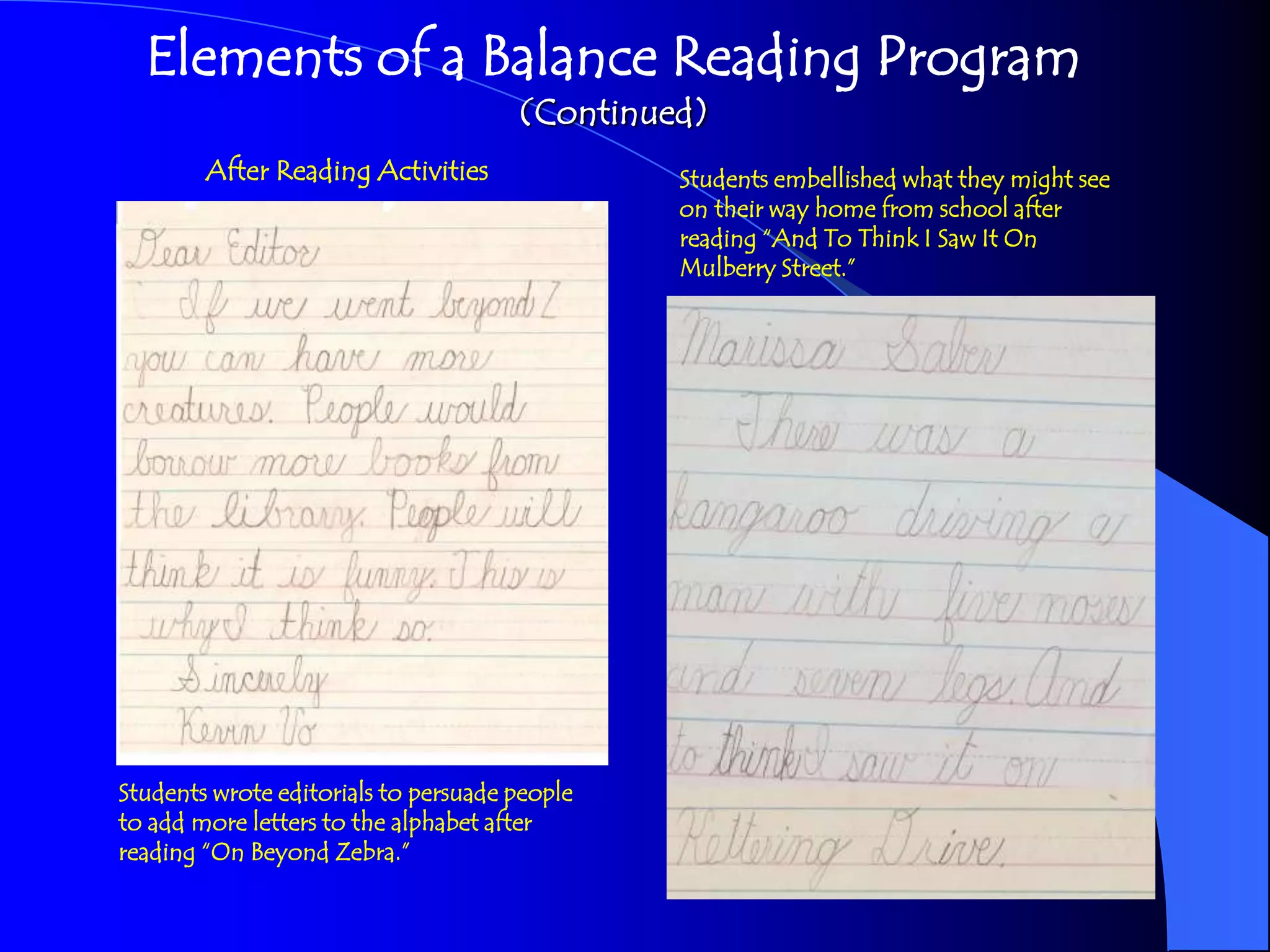
        After Reading Activities               Students embellished what they might see
                                               on their way home from school after
                                               reading “And To Think I Saw It On
                                               Mulberry Street.”


Students wrote editorials to persuade people
to add more letters to the alphabet after
reading “On Beyond Zebra.”
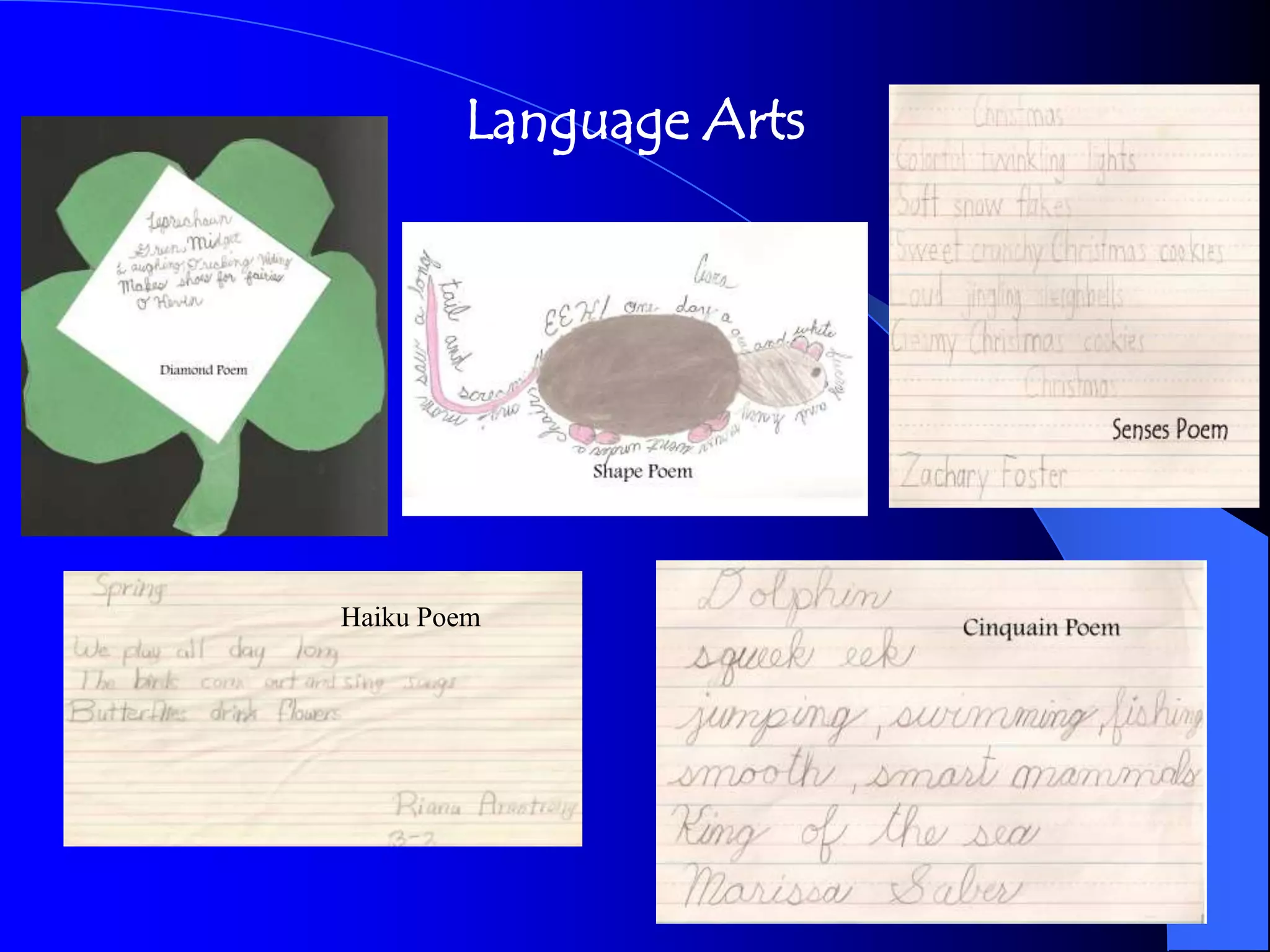
Language Arts


Haiku Poem
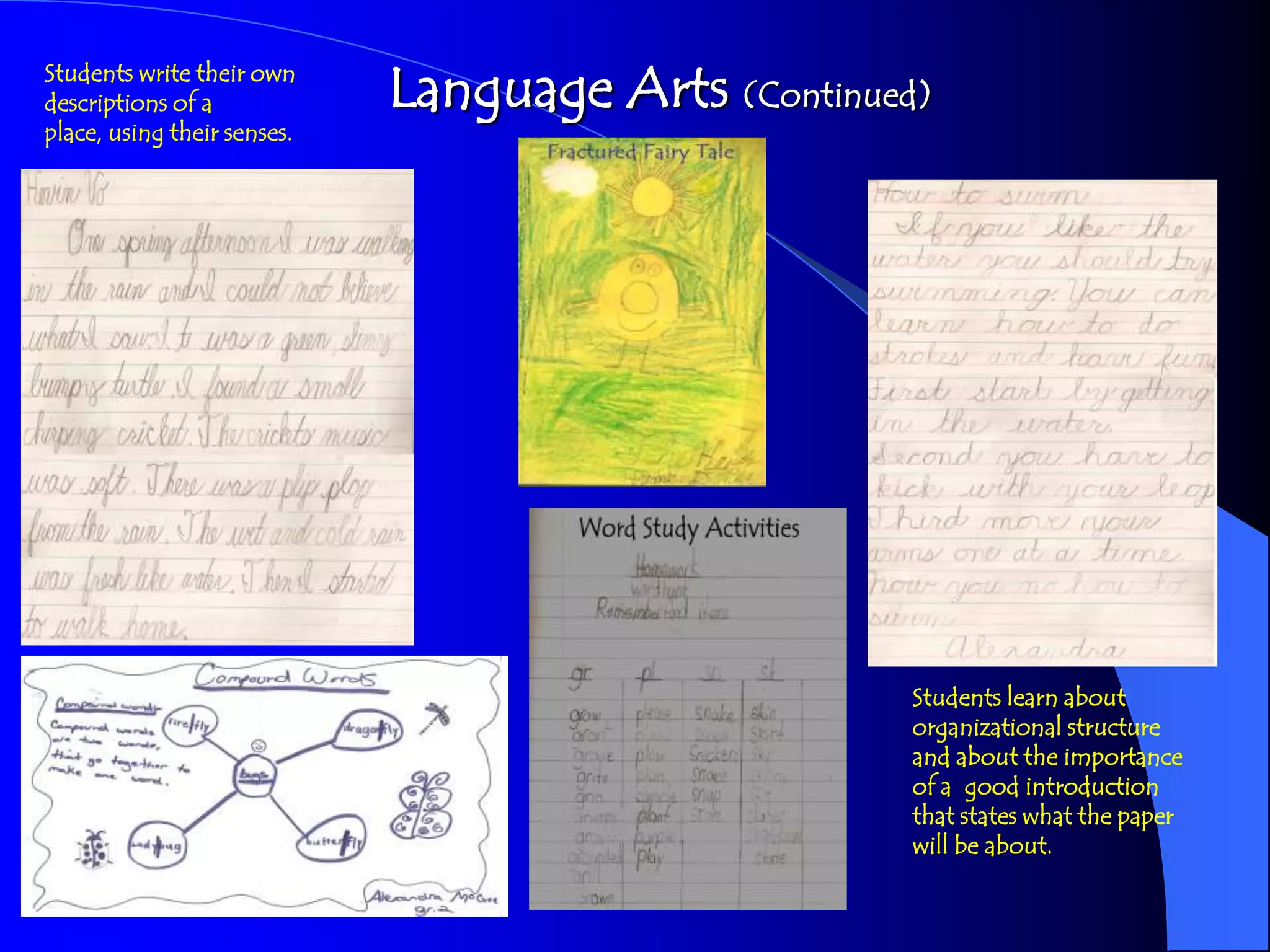
Students write their own
descriptions of a            Language Arts (Continued)
place, using their senses.


                                                     Students learn about
                                                     organizational structure
                                                     and about the importance
                                                     of a good introduction
                                                     that states what the paper
                                                     will be about.
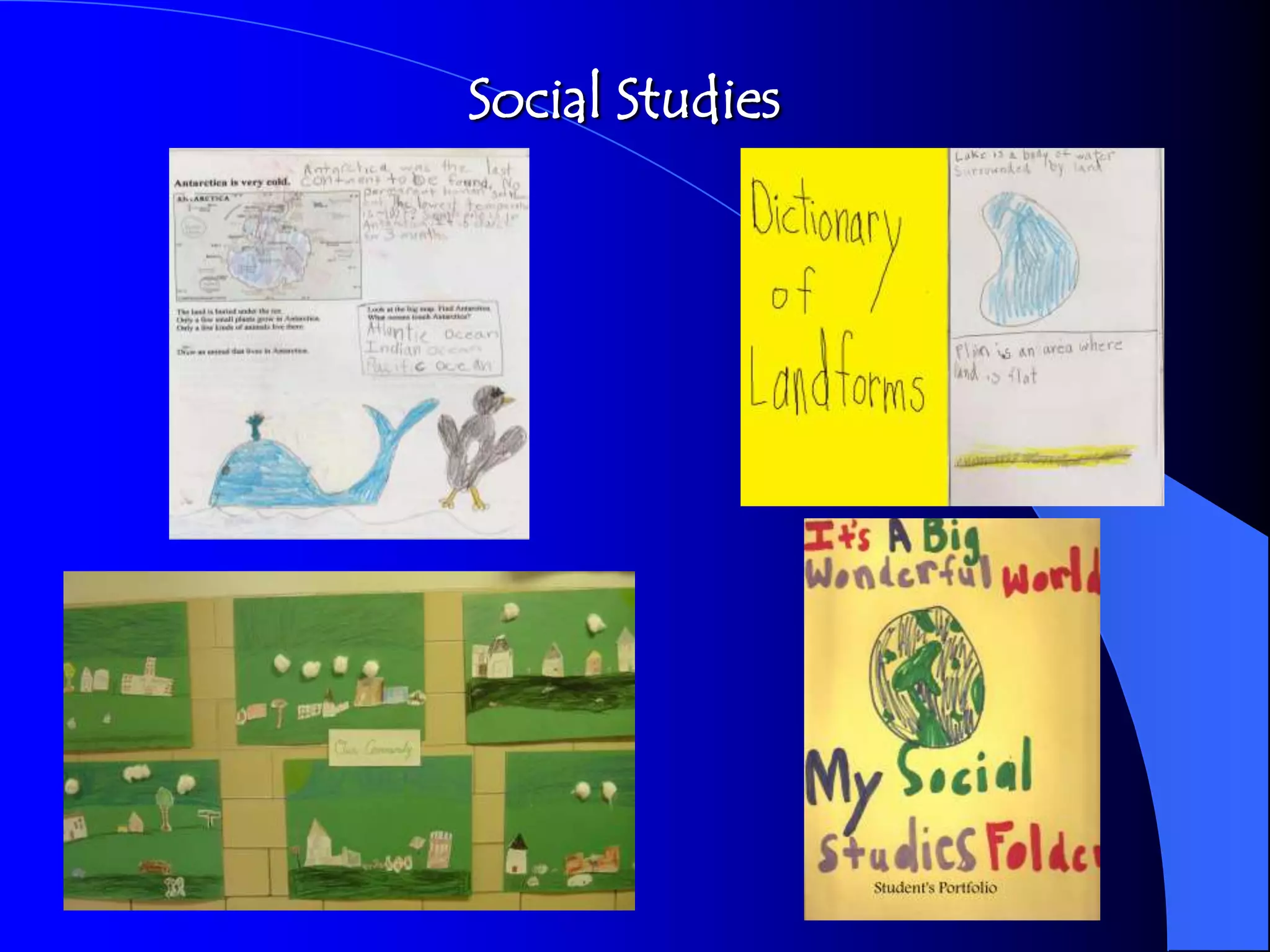
Social Studies
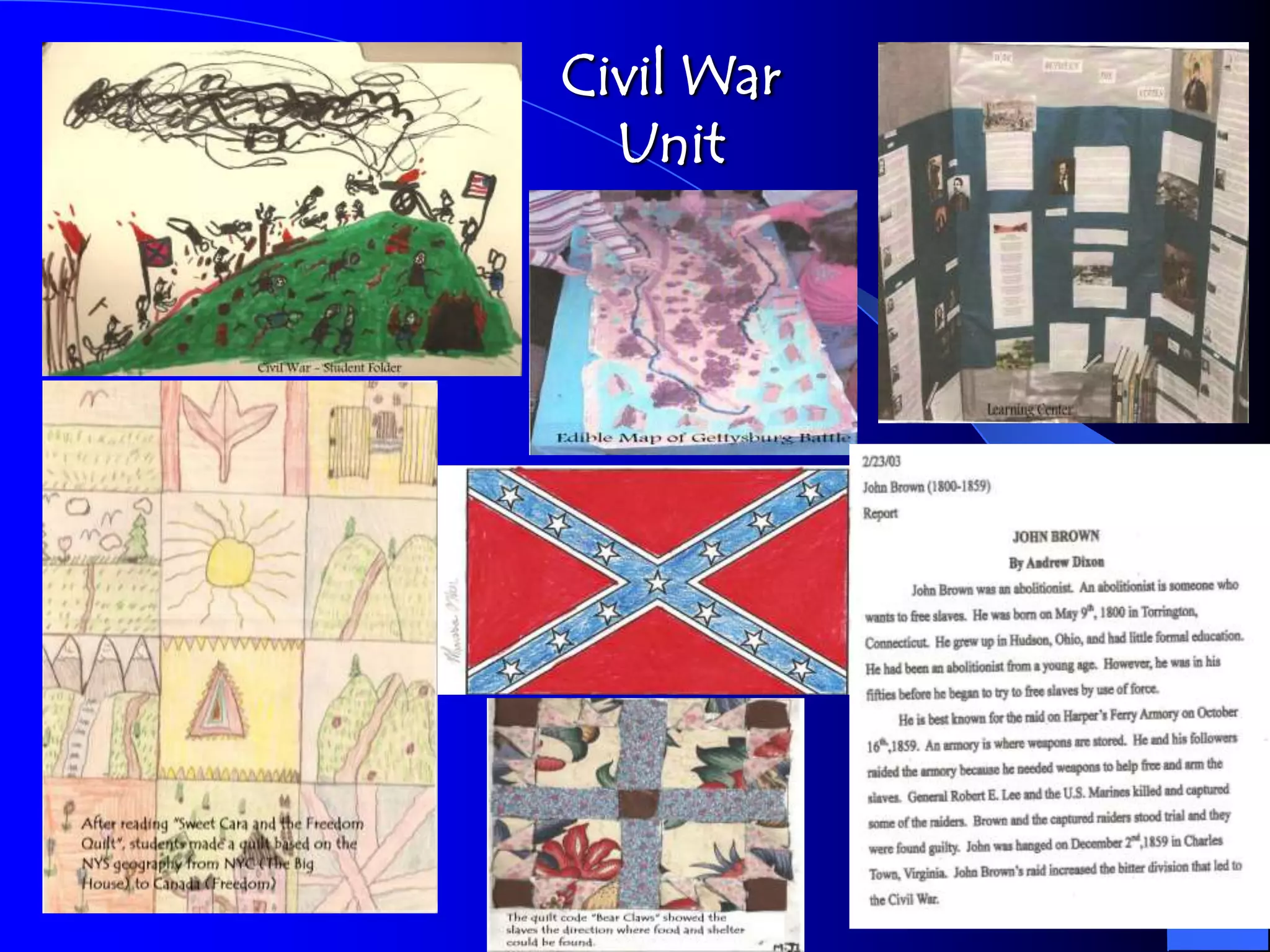
Civil War
  Unit
Science


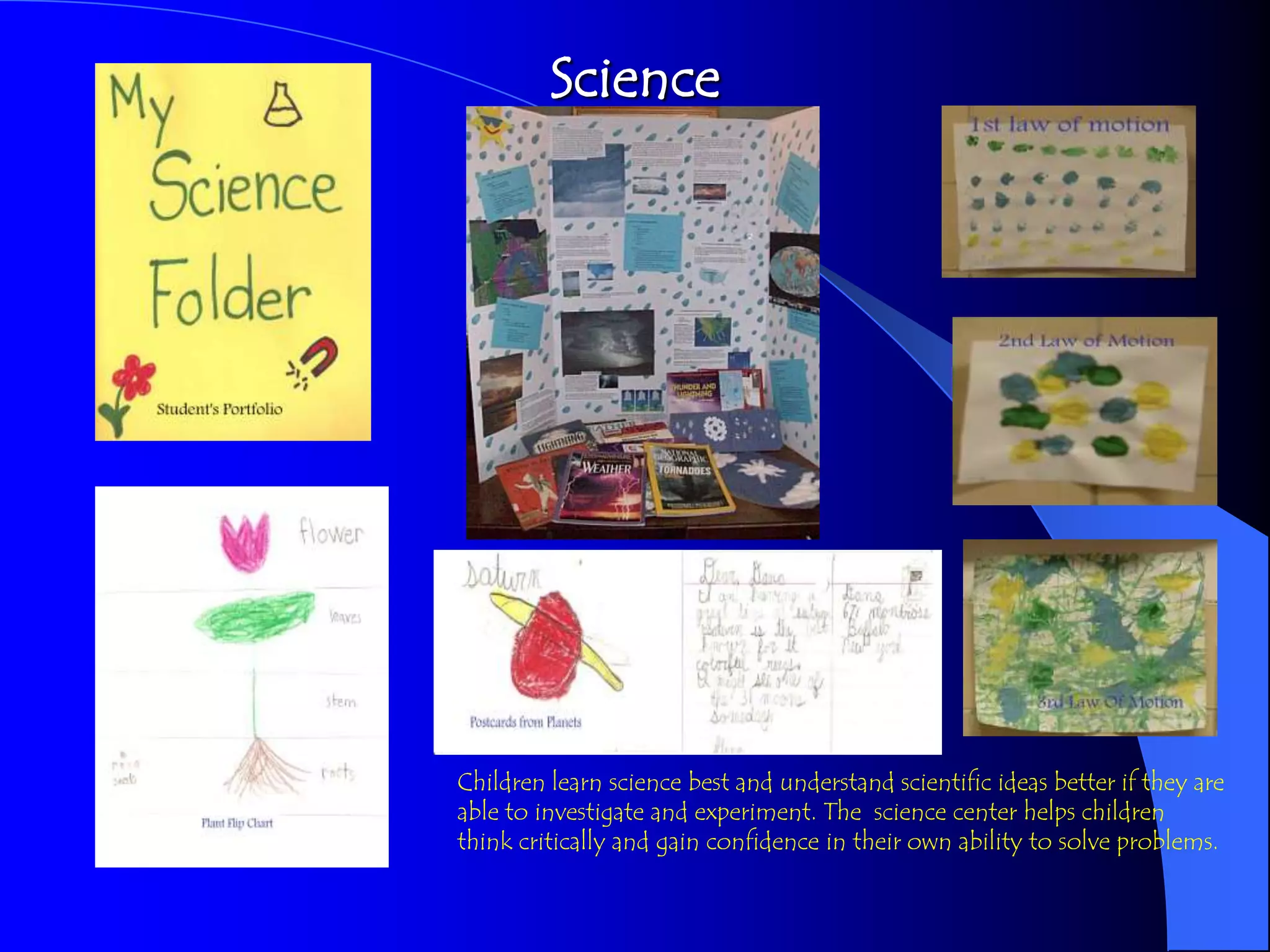
Children learn science best and understand scientific ideas better if they are
able to investigate and experiment. The science center helps children
think critically and gain confidence in their own ability to solve problems.
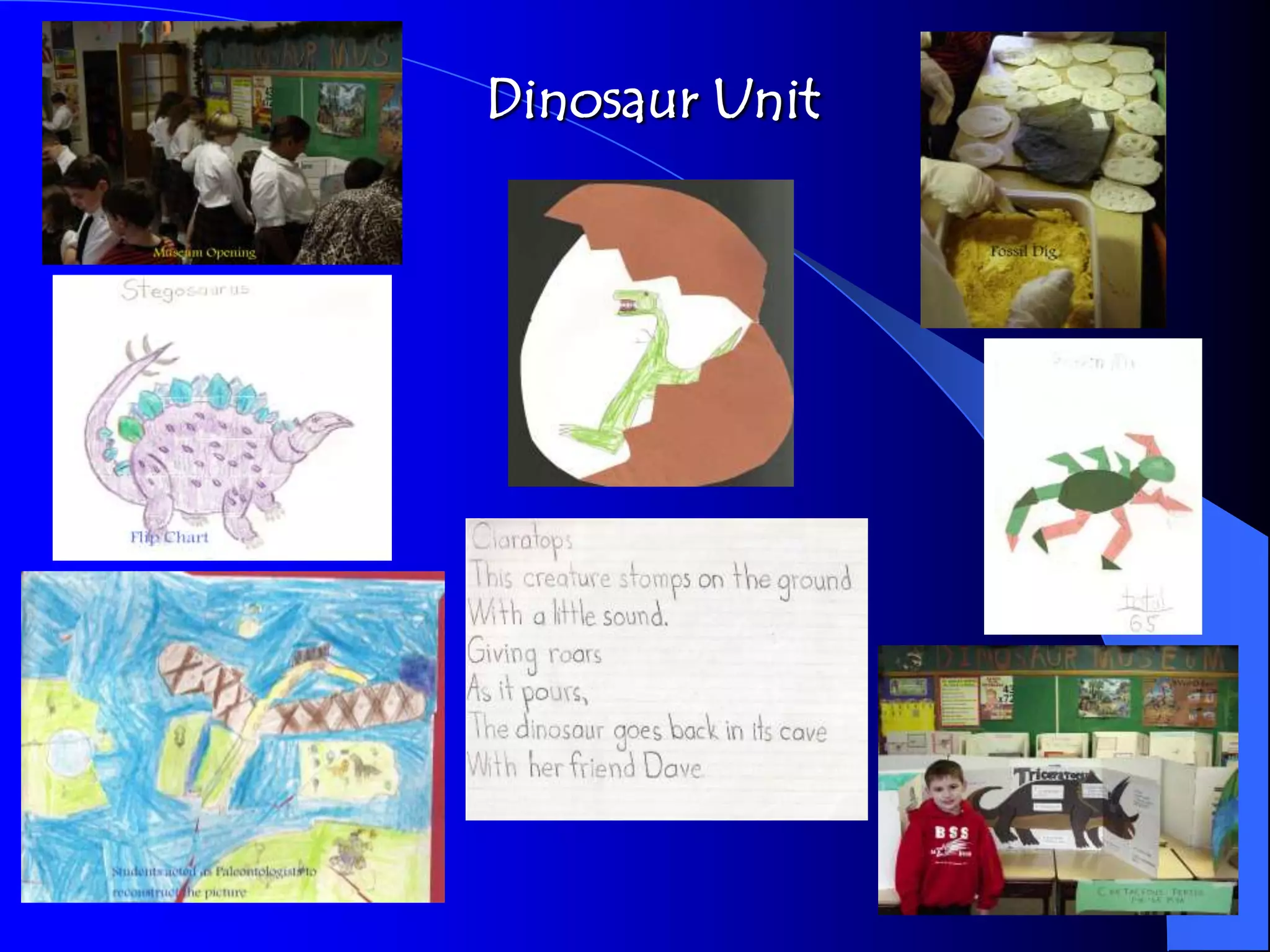
Dinosaur Unit
Math


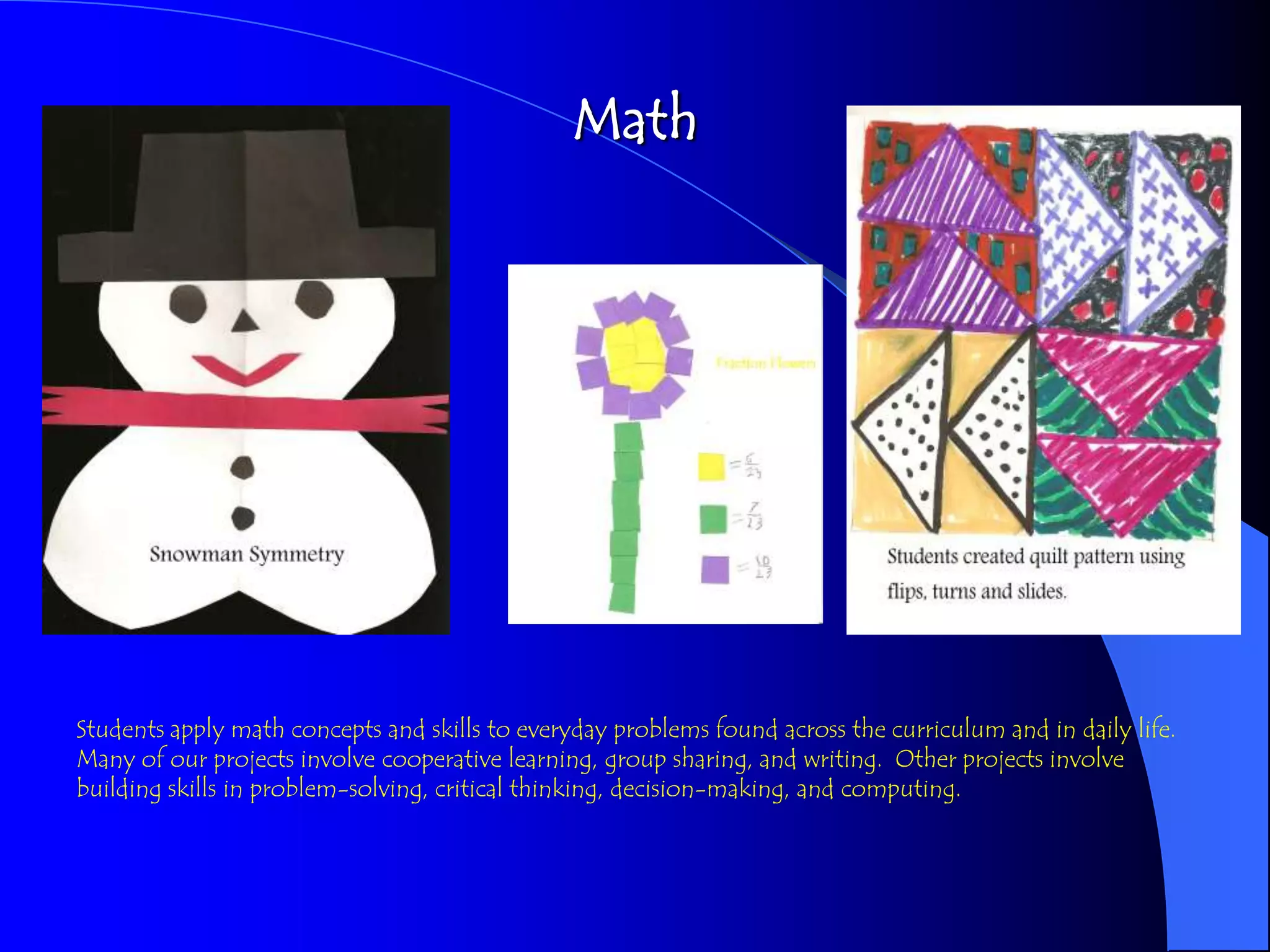
Students apply math concepts and skills to everyday problems found across the curriculum and in daily life.
Many of our projects involve cooperative learning, group sharing, and writing. Other projects involve
building skills in problem-solving, critical thinking, decision-making, and computing.
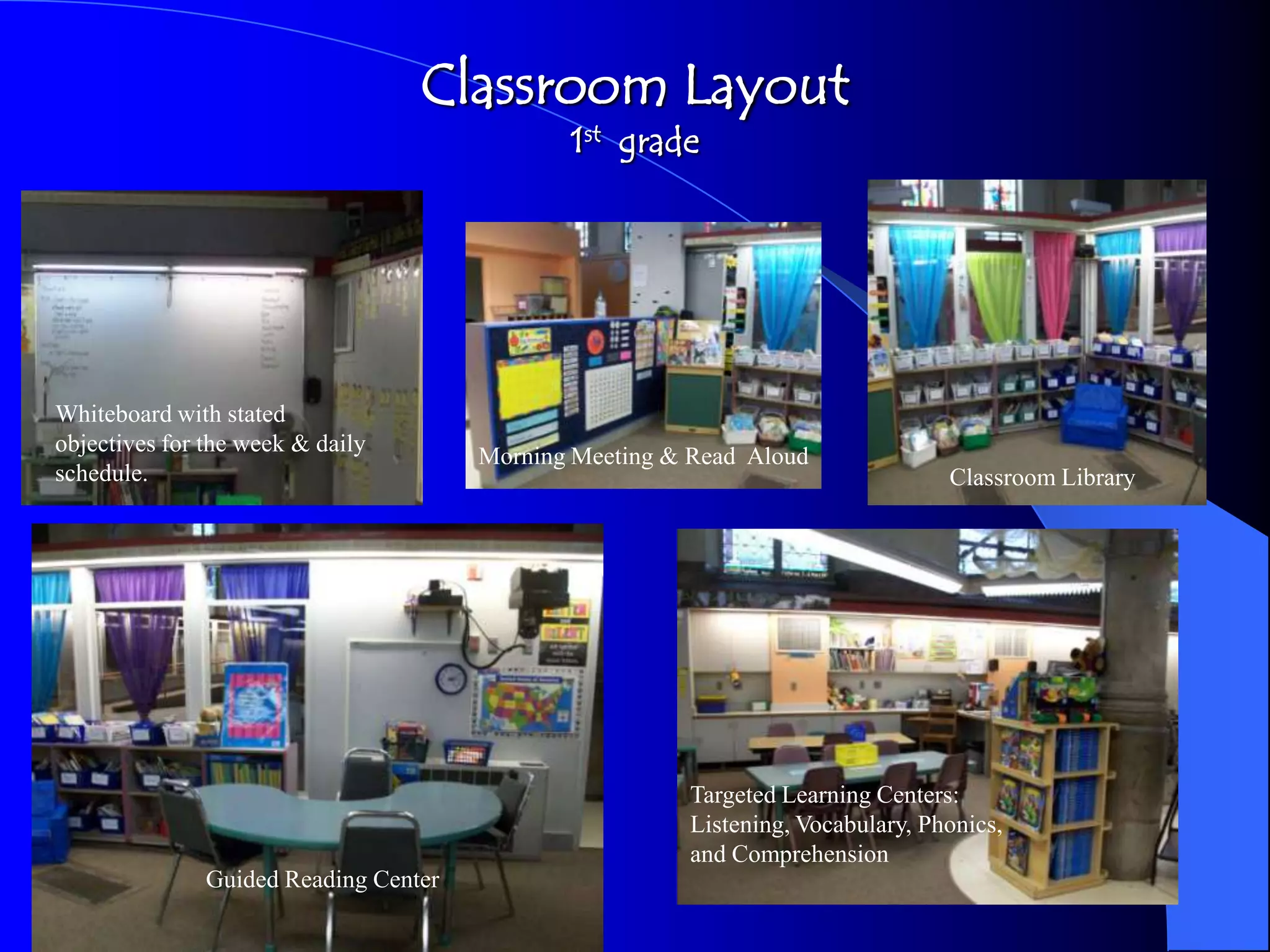
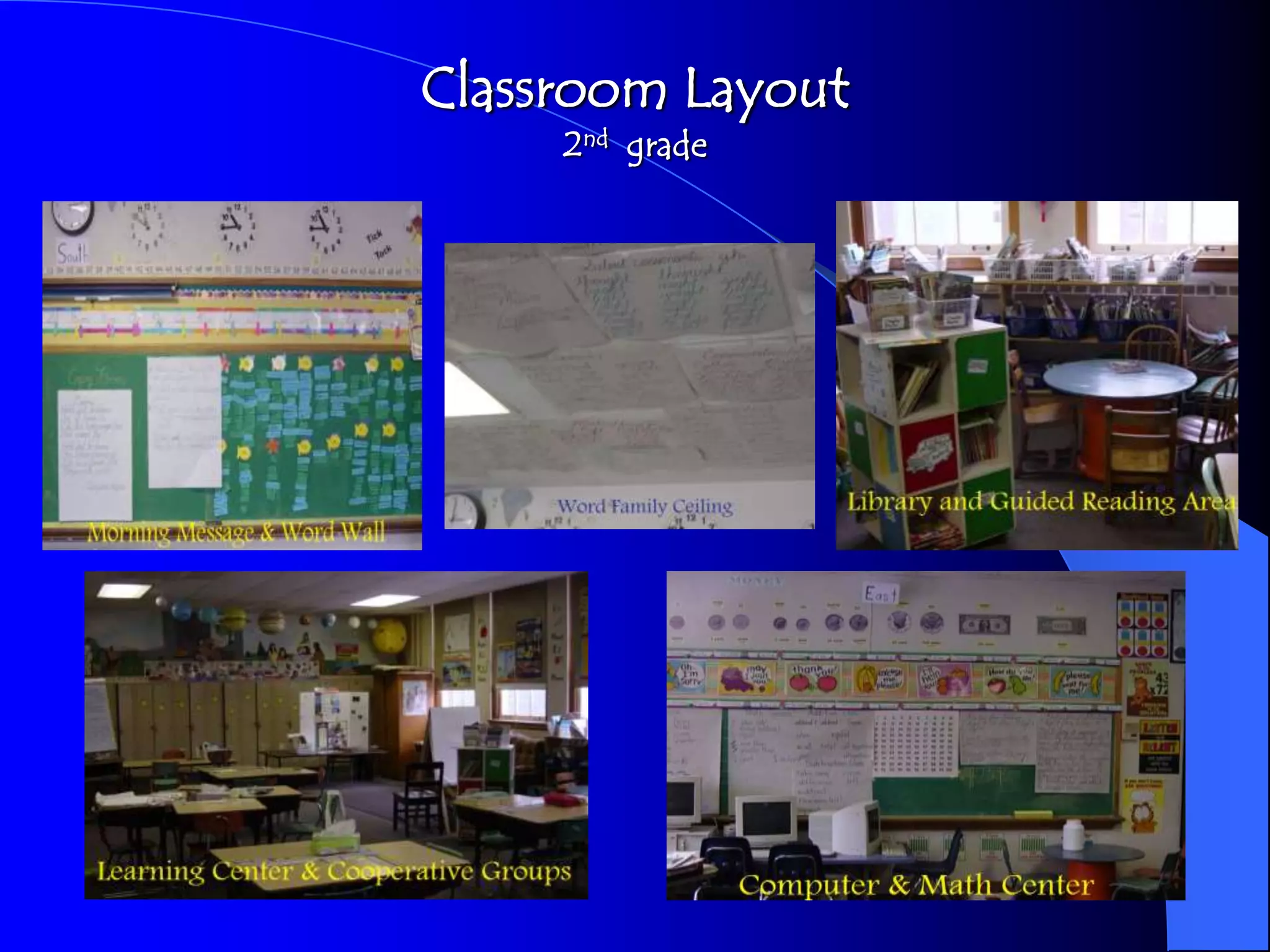
Classroom Layout
                                              1st grade


Whiteboard with stated
objectives for the week & daily
                                       Morning Meeting & Read Aloud
schedule.                                                                        Classroom Library


                                                        Targeted Learning Centers:
                                                        Listening, Vocabulary, Phonics,
                                                        and Comprehension
               Guided Reading Center
Classroom Layout
     2nd grade
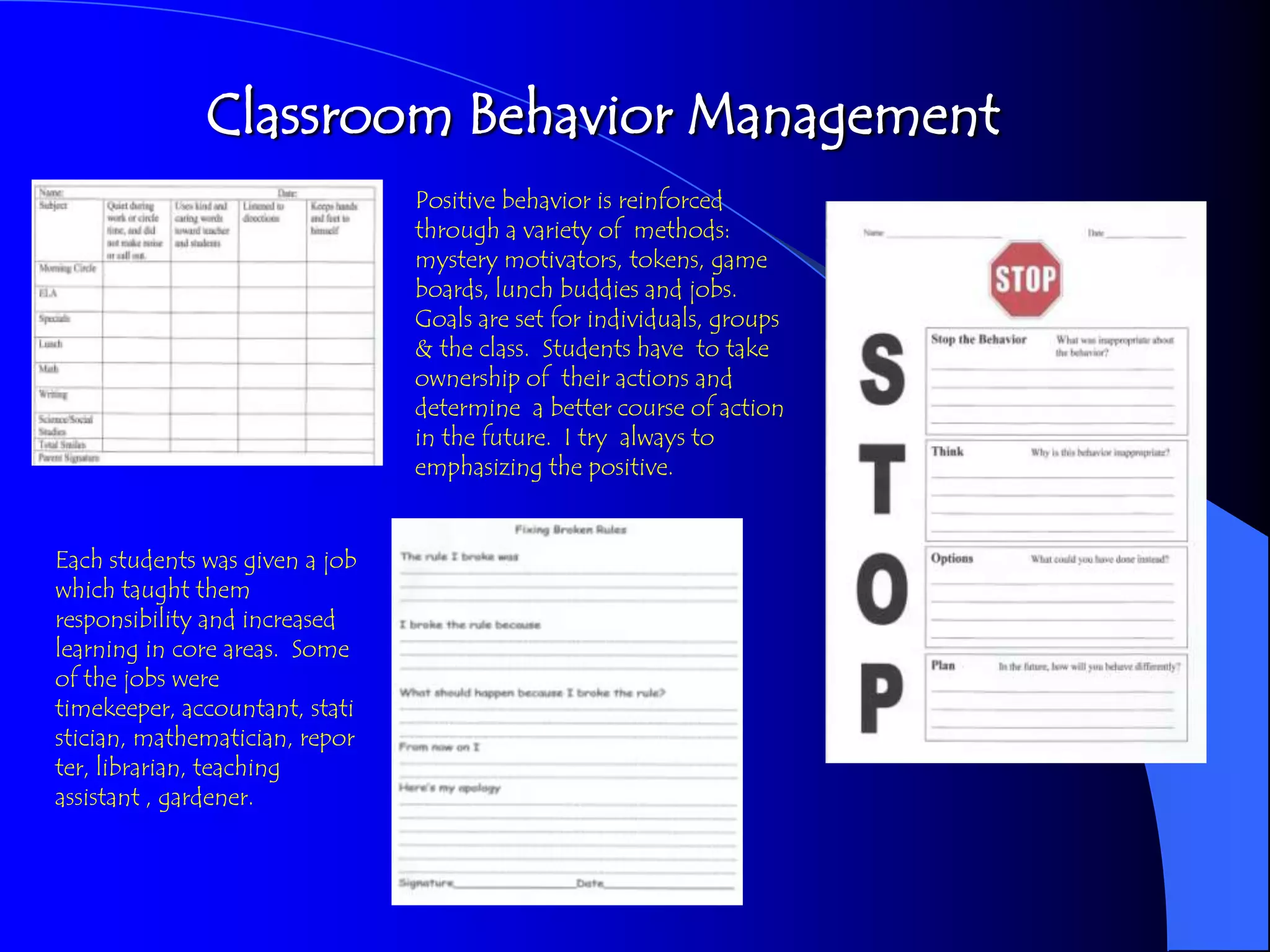
Classroom Behavior Management
                                Positive behavior is reinforced
                                through a variety of methods:
                                mystery motivators, tokens, game
                                boards, lunch buddies and jobs.
                                Goals are set for individuals, groups
                                & the class. Students have to take
                                ownership of their actions and
                                determine a better course of action
                                in the future. I try always to
                                emphasizing the positive.


Each students was given a job
which taught them
responsibility and increased
learning in core areas. Some
of the jobs were
timekeeper, accountant, stati
stician, mathematician, repor
ter, librarian, teaching
assistant , gardener.
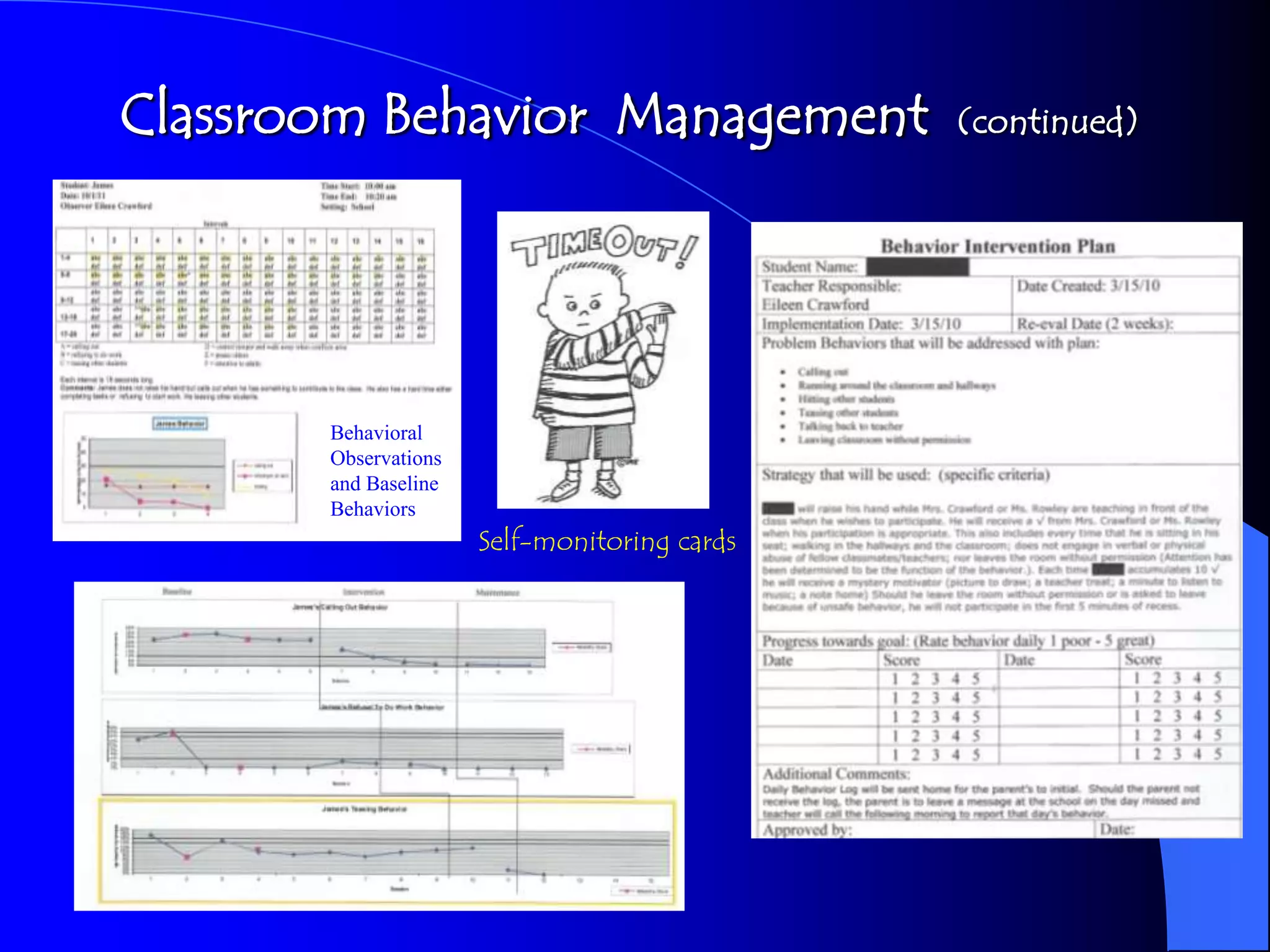
Classroom Behavior Management                 (continued)


       Behavioral
       Observations
       and Baseline
       Behaviors
                      Self-monitoring cards
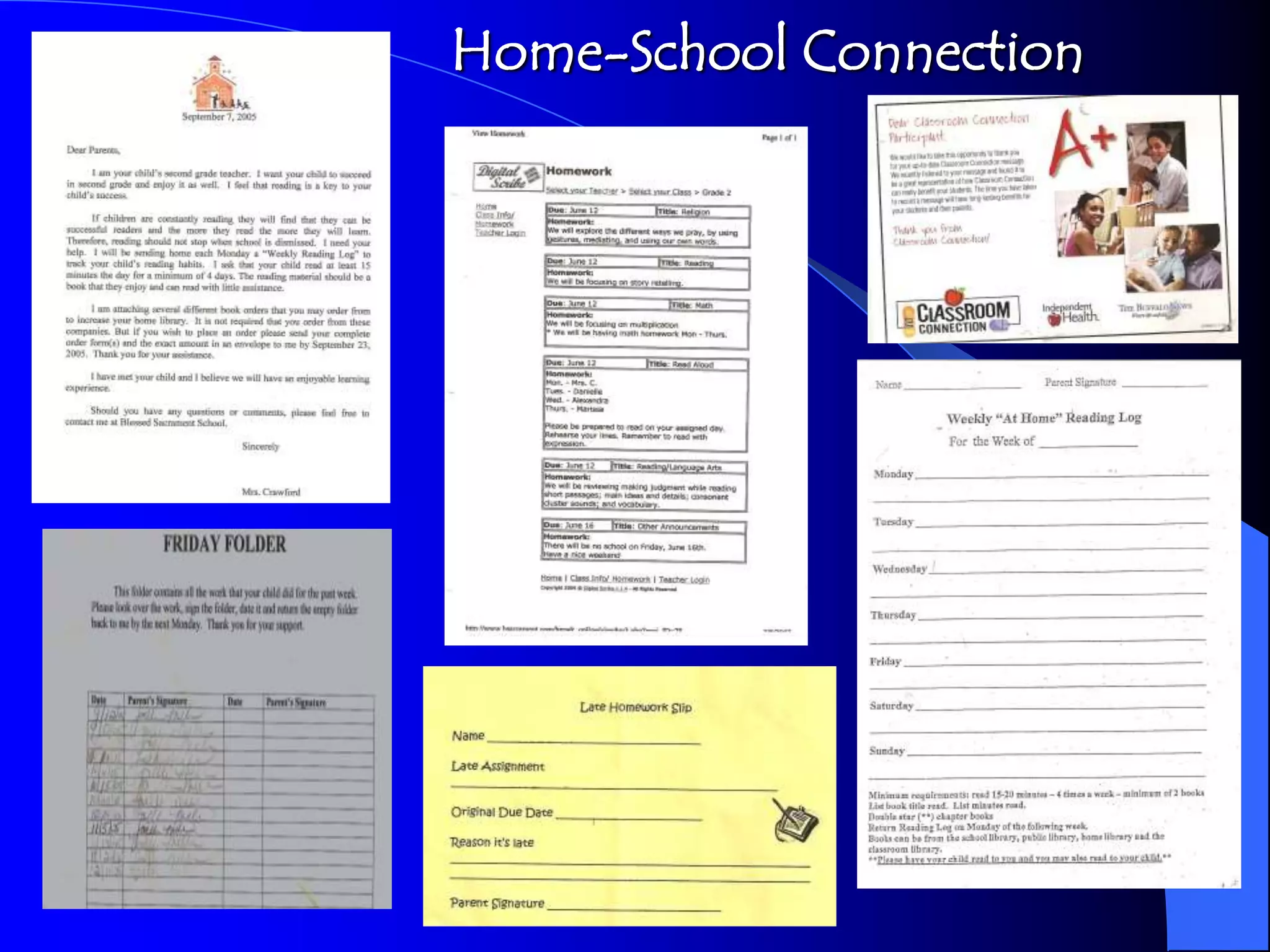
Home-School Connection
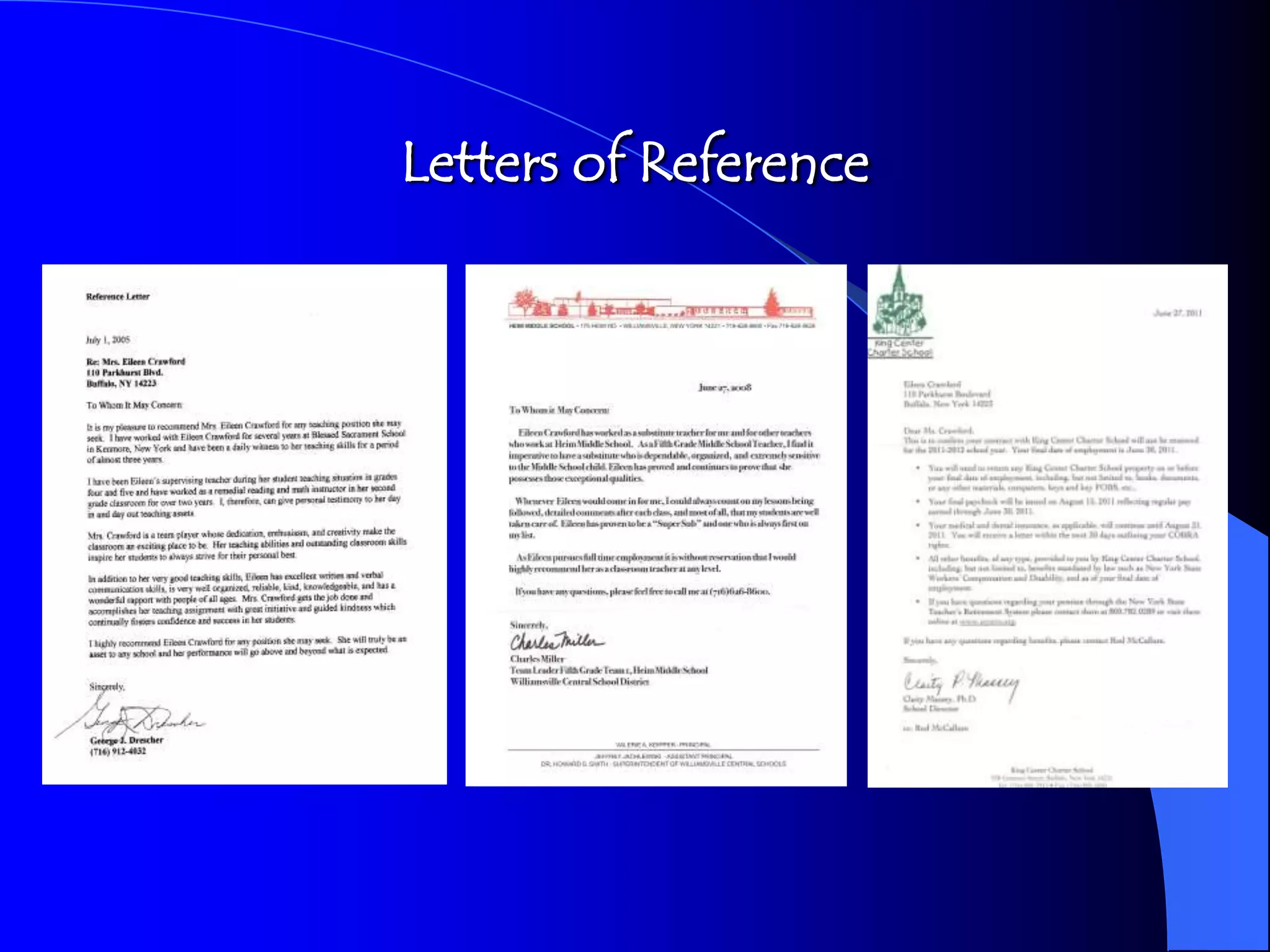
Letters of Reference
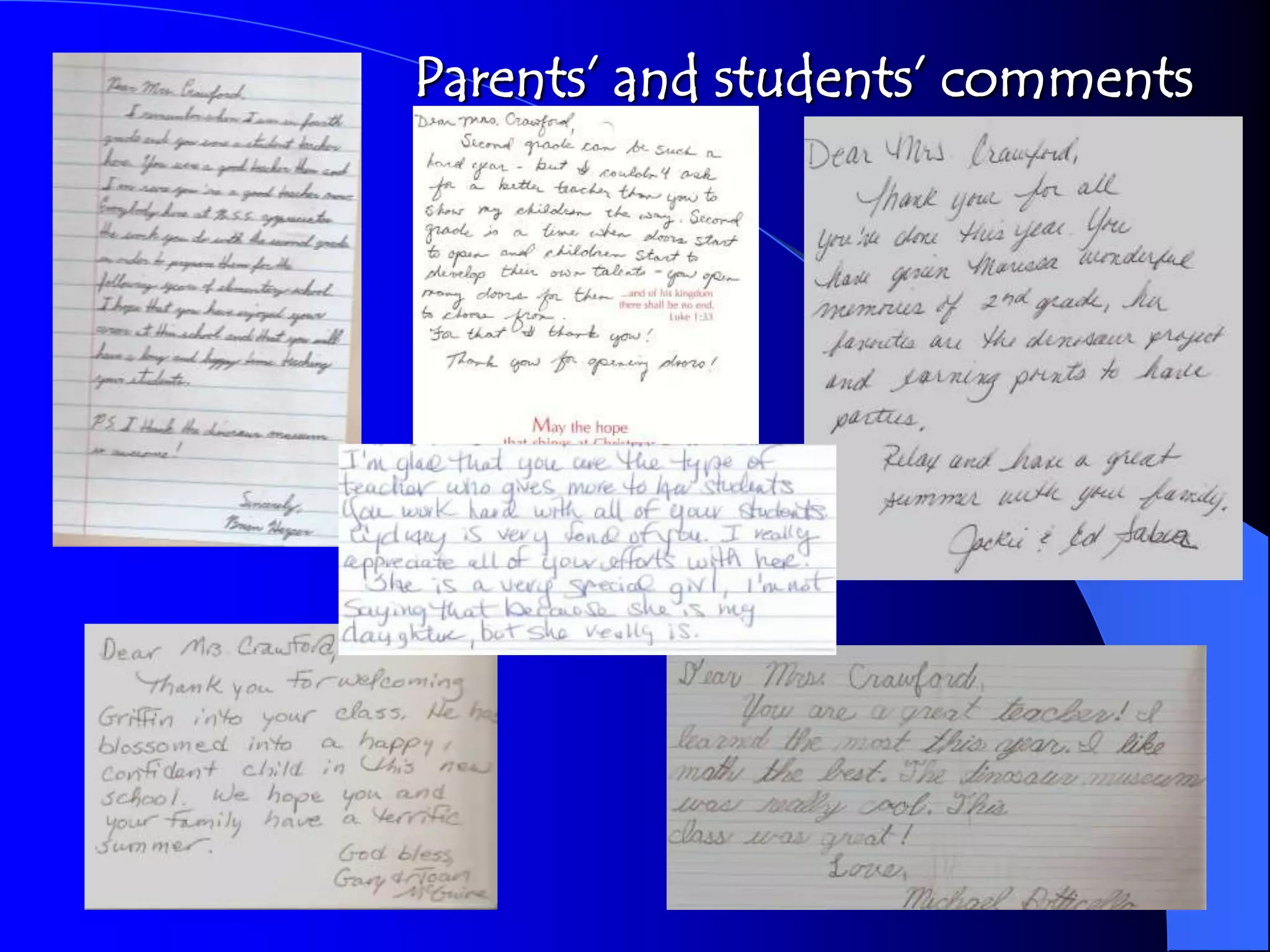
Parents’ and students’ comments
Job Performance Reviews
July 2, 2004,
“Her instructional program …. Manifest resourcefulness in selecting material and adapting them to
her instructional purposes….. Commended for her efforts to design her curriculum to address the
diverse learning styles.”
July 2, 2005
“Maintains high, but realistic academic standards for her students, emphasizing student
responsibility and accountability. Systematically develop objectives, activities and assessments that
reflect higher and lower levels of cognitive skills. Use multiple strategies to assess student
achievement.”

June 5, 2006
“Exhibits excellent classroom management. Designs activities/lessons that engage the student and
encourage active learning.        Displays personal behaviors that promotes student learning:
enthusiasm, energy, sense of humor, initiative, . . . mature judgment, fairness …. Employs
instructional resources available in school and community….”

March 5, 2010
“Accepted the responsibility of working with the most challenging first grade students in order to
get them back into the larger first grade classroom. Established a learning environment that clearly
conveys value of learning at all time. Instituted a culture dedicated to learning through guided
instructional planning process.”
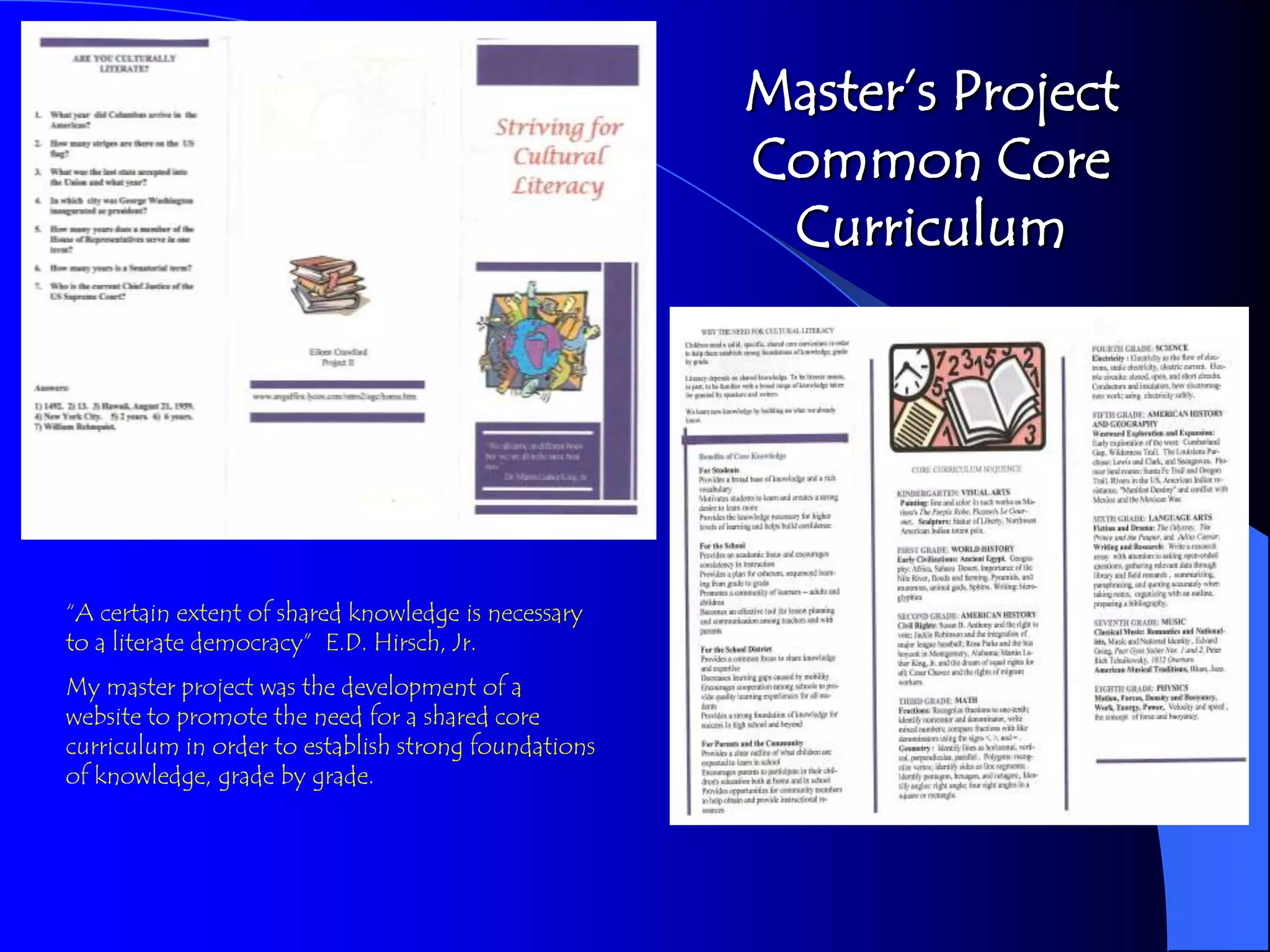
Master’s Project
                                                      Common Core
                                                       Curriculum


“A certain extent of shared knowledge is necessary
to a literate democracy” E.D. Hirsch, Jr.
My master project was the development of a
website to promote the need for a shared core
curriculum in order to establish strong foundations
of knowledge, grade by grade.

Teaching portfolio

  • 1.
    Teaching Portfolio Eileen G. Crawford
  • 2.
    Introduction “The school iscreated by society for the purpose of reproducing in the learner the knowledge, attitudes, values and techniques that have cultural relevancy or currency” Hilda Taba (1962) Students need to appreciate why the skills and concepts are being instilled and how to make use of these skills once they leave school. Students must take ownership of their learning and their behavior thereby appreciating the skills and concepts being taught. This presentation shows examples of how my students were presented with challenges and projects in which they applied their knowledge to solve problems and engage in dialogue with their peers rather than just recalling facts. .
  • 3.
    Elements of aBalance Reading Program Accelerate oral reading fluency thru poetry and readers’ theater
  • 4.
    Elements of aBalance Reading Program (Continued) Use graphic organizers to represent relevant introductory material before learning begins. Organizers presents introductory ideas. They help students focus on what is important Make summarizing and note taking a direct and ongoing part of instruction encourages students to analyze information. Use reflective journals, think logs, and peer coaching to encourage students’ self- monitoring, self-regulation, and self-knowledge.
  • 5.
    Elements of aBalance Reading Program (Continued) After Reading Activities Students embellished what they might see on their way home from school after reading “And To Think I Saw It On Mulberry Street.” Students wrote editorials to persuade people to add more letters to the alphabet after reading “On Beyond Zebra.”
  • 6.
  • 7.
    Students write theirown descriptions of a Language Arts (Continued) place, using their senses. Students learn about organizational structure and about the importance of a good introduction that states what the paper will be about.
  • 8.
  • 9.
  • 10.
    Science Children learn sciencebest and understand scientific ideas better if they are able to investigate and experiment. The science center helps children think critically and gain confidence in their own ability to solve problems.
  • 11.
  • 12.
    Math Students apply mathconcepts and skills to everyday problems found across the curriculum and in daily life. Many of our projects involve cooperative learning, group sharing, and writing. Other projects involve building skills in problem-solving, critical thinking, decision-making, and computing.
  • 13.
    Classroom Layout 1st grade Whiteboard with stated objectives for the week & daily Morning Meeting & Read Aloud schedule. Classroom Library Targeted Learning Centers: Listening, Vocabulary, Phonics, and Comprehension Guided Reading Center
  • 14.
  • 15.
    Classroom Behavior Management Positive behavior is reinforced through a variety of methods: mystery motivators, tokens, game boards, lunch buddies and jobs. Goals are set for individuals, groups & the class. Students have to take ownership of their actions and determine a better course of action in the future. I try always to emphasizing the positive. Each students was given a job which taught them responsibility and increased learning in core areas. Some of the jobs were timekeeper, accountant, stati stician, mathematician, repor ter, librarian, teaching assistant , gardener.
  • 16.
    Classroom Behavior Management (continued) Behavioral Observations and Baseline Behaviors Self-monitoring cards
  • 17.
  • 18.
  • 19.
  • 20.
    Job Performance Reviews July2, 2004, “Her instructional program …. Manifest resourcefulness in selecting material and adapting them to her instructional purposes….. Commended for her efforts to design her curriculum to address the diverse learning styles.” July 2, 2005 “Maintains high, but realistic academic standards for her students, emphasizing student responsibility and accountability. Systematically develop objectives, activities and assessments that reflect higher and lower levels of cognitive skills. Use multiple strategies to assess student achievement.” June 5, 2006 “Exhibits excellent classroom management. Designs activities/lessons that engage the student and encourage active learning. Displays personal behaviors that promotes student learning: enthusiasm, energy, sense of humor, initiative, . . . mature judgment, fairness …. Employs instructional resources available in school and community….” March 5, 2010 “Accepted the responsibility of working with the most challenging first grade students in order to get them back into the larger first grade classroom. Established a learning environment that clearly conveys value of learning at all time. Instituted a culture dedicated to learning through guided instructional planning process.”
  • 21.
    Master’s Project Common Core Curriculum “A certain extent of shared knowledge is necessary to a literate democracy” E.D. Hirsch, Jr. My master project was the development of a website to promote the need for a shared core curriculum in order to establish strong foundations of knowledge, grade by grade.