The learner’s ability to function successfully
Functional Communicability

                             within the specific communicative situations
                             he or she faces.
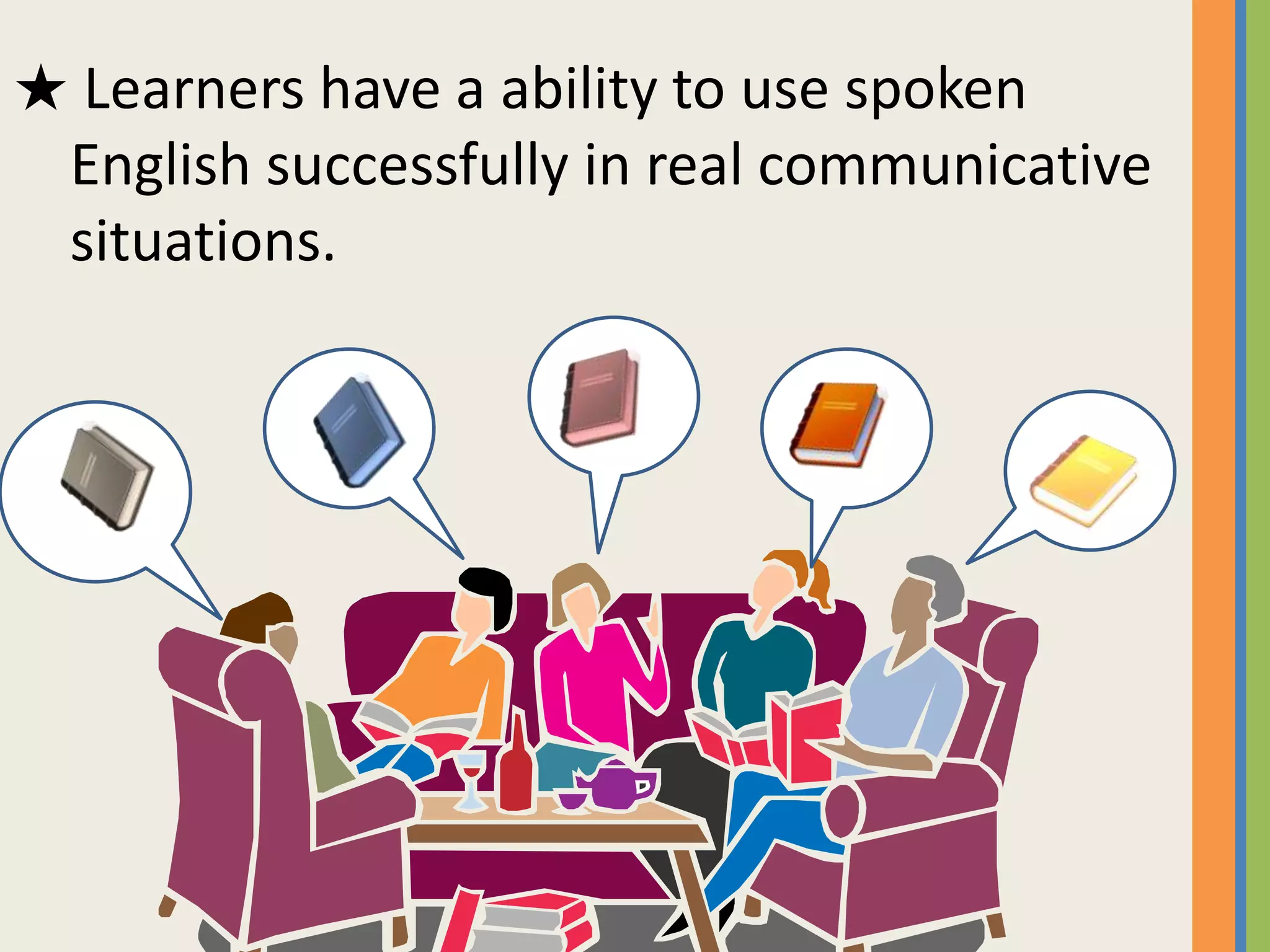
★ Learners have a ability to use spoken
  English successfully in real communicative
  situations.
★ To elicit students’ needs and
interests by giving survey..


                                      The students Interest
What are the features do we need to
choose and which pronunciation
practices should be focus?
Persons who
    influenced
    Functional
 Communicability

Dalton and
  Seidlhofer
KEYWORDS
Dalton and Seidlhofer list six
communicative abilities related to
pronunciation:
1. Prominence: how to make salient
the important points we make
2. Topic management: how to signal
and recognize where one topic ends
and another begins
3. Information status: how to mark
what we assume to be shared
knowledge as opposed to something
new.
4. Turn-taking: when to speak, and
when to be silent, how to yield the
floor to somebody else
5. Social meanings and roles: how to
position ourselves
6. Degree of involvement: how to
convey our attitudes, emotions, etc.
References
http://smp2wlingi-start english.blogspot.com/

http://spaces.isu.edu.tw/upload/18518/9601/TEFL/S
peaking.ppt
THANKYOU!
GODBLESS!

Teaching literature reading response

  • 1.
    The learner’s abilityto function successfully Functional Communicability within the specific communicative situations he or she faces.
  • 2.
    ★ Learners havea ability to use spoken English successfully in real communicative situations.
  • 3.
    ★ To elicitstudents’ needs and interests by giving survey.. The students Interest What are the features do we need to choose and which pronunciation practices should be focus?
  • 4.
    Persons who influenced Functional Communicability Dalton and Seidlhofer
  • 5.
    KEYWORDS Dalton and Seidlhoferlist six communicative abilities related to pronunciation: 1. Prominence: how to make salient the important points we make 2. Topic management: how to signal and recognize where one topic ends and another begins 3. Information status: how to mark what we assume to be shared knowledge as opposed to something new. 4. Turn-taking: when to speak, and when to be silent, how to yield the floor to somebody else 5. Social meanings and roles: how to position ourselves 6. Degree of involvement: how to convey our attitudes, emotions, etc.
  • 6.
  • 7.