Teaching chemistry
Prepared by: Gulshan Akram
Science teacher PDS Mianwali
What is chemistry?
• Chemistry is a branch of physical
science that studies the composition,
structure, properties and change of
matter.
Chemistry teaching
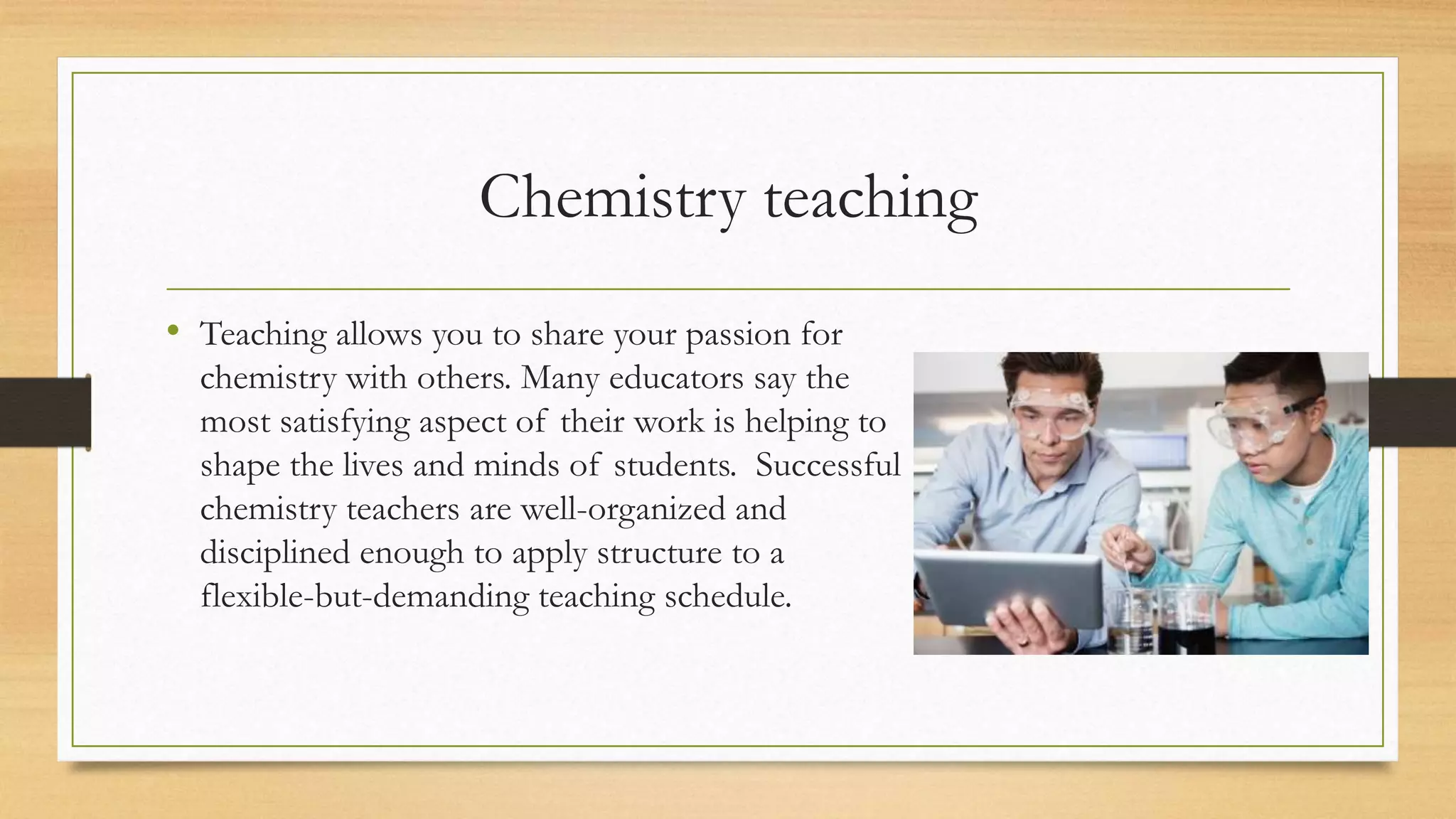
• Teaching allows you to share your passion for
chemistry with others. Many educators say the
most satisfying aspect of their work is helping to
shape the lives and minds of students. Successful
chemistry teachers are well-organized and
disciplined enough to apply structure to a
flexible-but-demanding teaching schedule.
Our students
• They are much more exposed of the fast packed environment.
• Technology has attracted their young minds.
• Most of them do not have the same interest in school as they have when
being exposed to technology.
Have you been paying attention?
Chemistry as a subject
• Abstract and concrete science.
• Phenomena can be spectacular and motivating.
• Relationship between what is observed and what we know today is never
evident.
• Symbolic language is very different from the one known and used in the
school context.
Teaching chemistry now…
Utilization of technological products
Powerpoint
Videos
Animations
Online classrooms
Online tutorial
podcasts
Applications
• Visualizations
• Motivations
• Individualize learning
• Effective and fast learning
• Non-traditional
• Minimize actual classroom demonstration and lectures
Utilization of videos
• example: types of chemical reactions from genyoutube.com
Utilization of virtual laboratories
• Example: viscosity and temperature relationship
Website: www.seed.slb.com/science sectionlanding.aspx?id=26524
Utilization of tutorial websites
• Example: balancing chemical equation
Website: www.daveingram.ca/chemistry/equation1.html
Utilization of downloadable
activities/animations
• Website: http://phet.Colorado.edu.get phet/simlauncher.php
Use of laboratory
• Laboratory practice give actual development of concepts.
• Students learn by doing.
• They experience the chemical changes by themselves.
Conclusions
• Desire and interest are necessary in the implementation of these strategies.
• Big things start with small steps.
• Save files which you think are useful.
• Seek help and learn.
• Know what and how your students learn.
• Do not be afraid to evolve.
Teaching chemistry.pptx

Teaching chemistry.pptx

  • 1.
    Teaching chemistry Prepared by:Gulshan Akram Science teacher PDS Mianwali
  • 3.
    What is chemistry? •Chemistry is a branch of physical science that studies the composition, structure, properties and change of matter.
  • 4.
    Chemistry teaching • Teachingallows you to share your passion for chemistry with others. Many educators say the most satisfying aspect of their work is helping to shape the lives and minds of students. Successful chemistry teachers are well-organized and disciplined enough to apply structure to a flexible-but-demanding teaching schedule.
  • 5.
    Our students • Theyare much more exposed of the fast packed environment. • Technology has attracted their young minds. • Most of them do not have the same interest in school as they have when being exposed to technology.
  • 6.
    Have you beenpaying attention?
  • 7.
    Chemistry as asubject • Abstract and concrete science. • Phenomena can be spectacular and motivating. • Relationship between what is observed and what we know today is never evident. • Symbolic language is very different from the one known and used in the school context.
  • 8.
    Teaching chemistry now… Utilizationof technological products Powerpoint Videos Animations Online classrooms Online tutorial podcasts
  • 9.
    Applications • Visualizations • Motivations •Individualize learning • Effective and fast learning • Non-traditional • Minimize actual classroom demonstration and lectures
  • 10.
    Utilization of videos •example: types of chemical reactions from genyoutube.com
  • 11.
    Utilization of virtuallaboratories • Example: viscosity and temperature relationship Website: www.seed.slb.com/science sectionlanding.aspx?id=26524
  • 12.
    Utilization of tutorialwebsites • Example: balancing chemical equation Website: www.daveingram.ca/chemistry/equation1.html
  • 13.
    Utilization of downloadable activities/animations •Website: http://phet.Colorado.edu.get phet/simlauncher.php
  • 14.
    Use of laboratory •Laboratory practice give actual development of concepts. • Students learn by doing. • They experience the chemical changes by themselves.
  • 15.
    Conclusions • Desire andinterest are necessary in the implementation of these strategies. • Big things start with small steps. • Save files which you think are useful. • Seek help and learn. • Know what and how your students learn. • Do not be afraid to evolve.