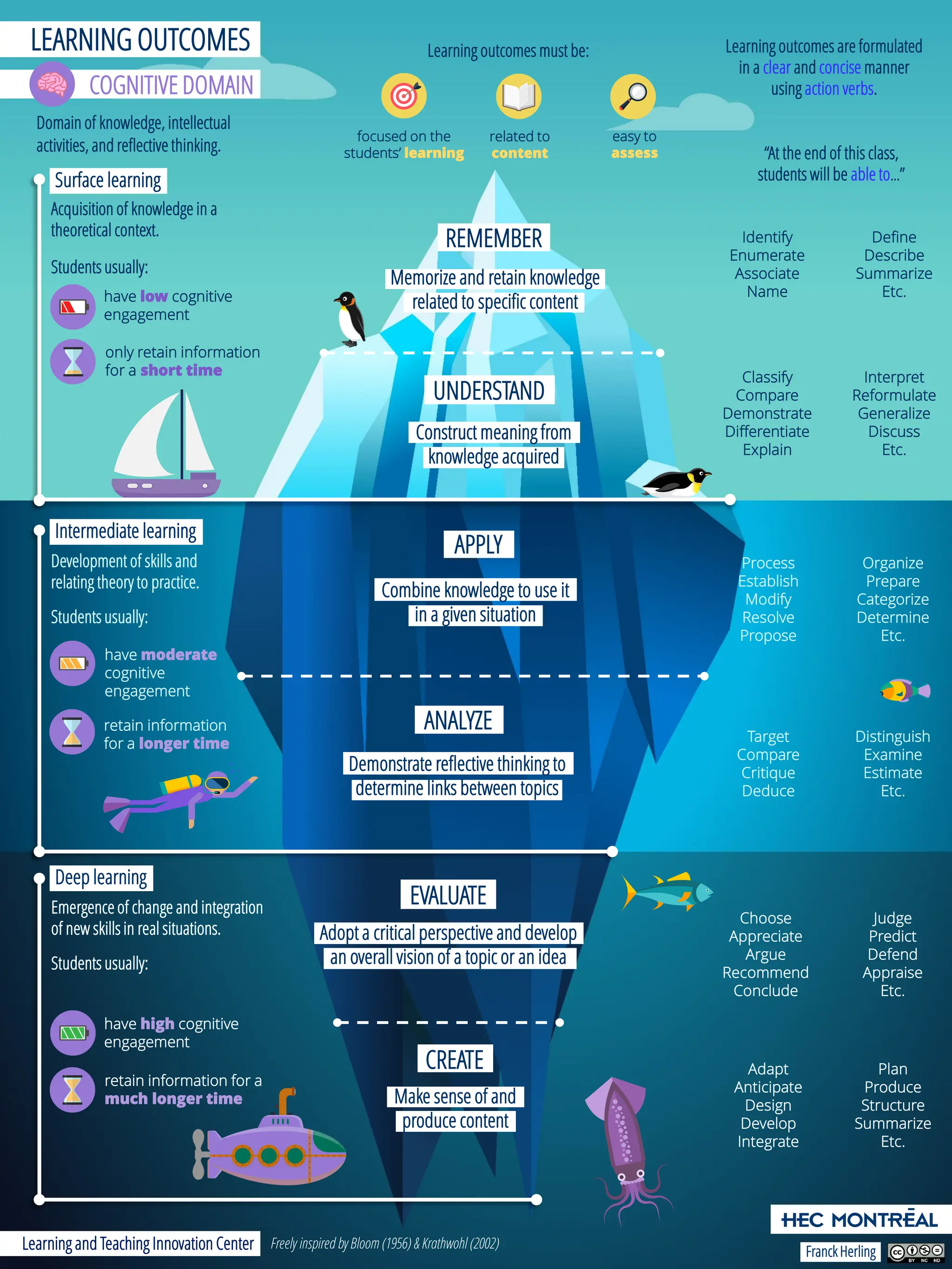
LEARNING OUTCOMES
11
Learning outcomes are formulated
in a clear and concise manner
using action verbs.
COGNITIVE DOMAIN
Surface learning
have high cognitive
engagement
focused on the
students’ learning
related to
content
easy to
assess
retain information for a
much longer time
retain information
for a longer time
only retain information
for a short time
REMEMBER
UNDERSTAND
APPLY
Intermediate learning
Deep learning
ANALYZE
EVALUATE
CREATE
have low cognitive
engagement
have moderate
cognitive
engagement
Identify
Enumerate
Associate
Name
Define
Describe
Summarize
Etc.
Acquisition of knowledge in a
theoretical context.
Students usually:
Domain of knowledge, intellectual
activities, and reflective thinking.
Classify
Compare
Demonstrate
Differentiate
Explain
Interpret
Reformulate
Generalize
Discuss
Etc.
Process
Establish
Modify
Resolve
Propose
Organize
Prepare
Categorize
Determine
Etc.
Target
Compare
Critique
Deduce
Distinguish
Examine
Estimate
Etc.
Combine knowledge to use it
in a given situation
Demonstrate reflective thinking to
determine links between topics
Adopt a critical perspective and develop
an overall vision of a topic or an idea
Choose
Appreciate
Argue
Recommend
Conclude
Judge
Predict
Defend
Appraise
Etc.
Make sense of and
produce content
Adapt
Anticipate
Design
Develop
Integrate
Plan
Produce
Structure
Summarize
Etc.
Construct meaning from
knowledge acquired
Memorize and retain knowledge
related to specific content
Development of skills and
relating theory to practice.
Students usually:
Emergence of change and integration
of new skills in real situations.
Students usually:
Freely inspired by Bloom (1956) & Krathwohl (2002)
Learning outcomes must be:
“At the end of this class,
students will be able to…”
Learning and Teaching Innovation Center Franck Herling

Teaching and Learning Poster: Learning outcomes cognitive.pdf

  • 1.
    LEARNING OUTCOMES 11 Learning outcomesare formulated in a clear and concise manner using action verbs. COGNITIVE DOMAIN Surface learning have high cognitive engagement focused on the students’ learning related to content easy to assess retain information for a much longer time retain information for a longer time only retain information for a short time REMEMBER UNDERSTAND APPLY Intermediate learning Deep learning ANALYZE EVALUATE CREATE have low cognitive engagement have moderate cognitive engagement Identify Enumerate Associate Name Define Describe Summarize Etc. Acquisition of knowledge in a theoretical context. Students usually: Domain of knowledge, intellectual activities, and reflective thinking. Classify Compare Demonstrate Differentiate Explain Interpret Reformulate Generalize Discuss Etc. Process Establish Modify Resolve Propose Organize Prepare Categorize Determine Etc. Target Compare Critique Deduce Distinguish Examine Estimate Etc. Combine knowledge to use it in a given situation Demonstrate reflective thinking to determine links between topics Adopt a critical perspective and develop an overall vision of a topic or an idea Choose Appreciate Argue Recommend Conclude Judge Predict Defend Appraise Etc. Make sense of and produce content Adapt Anticipate Design Develop Integrate Plan Produce Structure Summarize Etc. Construct meaning from knowledge acquired Memorize and retain knowledge related to specific content Development of skills and relating theory to practice. Students usually: Emergence of change and integration of new skills in real situations. Students usually: Freely inspired by Bloom (1956) & Krathwohl (2002) Learning outcomes must be: “At the end of this class, students will be able to…” Learning and Teaching Innovation Center Franck Herling