Teacher in a Digital Era:
Changing Roles and
Competencies
EDU 03 Technology and Communication in
Education.
Submitted to,
Ms Laiji R
Assistant Professor
Mount Tabor Training
College
Submitted By,
Diya Susan Alex
Jessin Raji
Lekshmi R S
Parvathy B R
Prabhav A K
R V Bhagya Lekshmi
Rijo M John
Sandhya S
The Modern Classroom
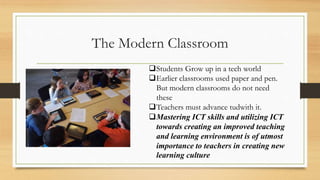
Students Grow up in a tech world
Earlier classrooms used paper and pen.
But modern classrooms do not need
these
Teachers must advance tudwith it.
Mastering ICT skills and utilizing ICT
towards creating an improved teaching
and learning environment is of utmost
importance to teachers in creating new
learning culture
Role of Teacher in Digital Era
• As a professional practitioner, the teacher is likely to become a Role model or
standard for his or her students.
• The teacher should also be a subject developer.
• Teachers role in the 21st century has become more complex in todays changing
world were knowledge is almost unlimited.
• Teachers are expected to become technologically oriented & responsible not only
for their teaching but also for their students learning
• Technology involving everyday ,therefore they must have the ability to grasp new things
more quickly or equiently as compered to their students.
• In this web based learning culture, technical skills & critical thinking are equally
important for a tutor. So that they can think out of box.
• If the teachers has all these qualities, then she will capable of facilitating better learnig
in the classroom & online environments.
• Effectively utilising digital media tools.
• Working with students & help them to grasp new learning opportunities.
• Using global education platform perfectly for regular update.
• They have to cater for special needs of individual students in heteroge classes &
create student centerd learning enviornment which stries for excellence & offers
opertunity for enquiry & active learning
• Teacher need to meet the standards of the curriculam while enhancing students
creativity , curiosity & motivation
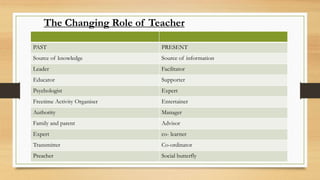
The Changing Role of Teacher
PAST PRESENT
Source of knowledge Source of information
Leader Facilitator
Educator Supporter
Psychologist Expert
Freetime Activity Organiser Entertainer
Authority Manager
Family and parent Advisor
Expert co- learner
Transmitter Co-ordinator
Preacher Social butterfly
• Produce and manage learning documents.
• Analyze quantitative data.
• Organize information graphically.
Research
• Use effective online search strategies.
• Evaluate and compare online information
and sources.
• Save and cite online information and
sources.
Communicate using digital tools.
Collaborate online for learning.
Publish learning resources online.
Media
Differentiate instruction with digital media.
• Awareness of assistive technologies for disabled students
• The ability to use a computer to prepare and present academic
ideas in a variety of forms for better learning by all students.
Capture and edit images, audio, and video.
• Use digital still and video cameras, edit their output on a
computer
• Produce learning materials that range from simple slide shows to
the archiving of student presentations and performances.
Produce digital multimedia educational experiences.
• The teacher can combine media from a wide array of sources
into a useful presentation of academic content
• Can teach skills to students.
Presentation
Create effective digital presentations.
• Use common tools for preparing slide shows, videos, and podcasts.
• The teacher can create presentations that follow the principles of
communication.
• Apply the principles to the evaluation of students' digital work.
Employ new media devices for learning.
• Large Smart Boards to tiny iPods
• Teacher can incorporate a variety of digital devices
into the instruction in the classroom.
• More specific technical skills required of a high school
math teacher or a teacher of visually-impaired students.
• Competencies that would be embedded into
specialized courses and program
Strategies for Preparing Teachers to Use Technologies
Encouraging Teachers to Acquire Necessary Skills:
• Technologies as a demand of present time
• A set of tools they did not ask for and do not know how to use.
Providing sustained support for Teachers’ use of Technologies:
• Teachers to acquire knowledge and skills in how to use technologies..
• Teachers begin to acquire such skills and begin to use technologies
• A need to provide support to teacher use of technologies.
Evaluating Teacher Use of Technologies:
• The issue for education policy makers concerns the extent to which a teacher uses
technologies effectively.
• Important criterion in evaluating a teacher’s performance.
Effects of using technology in
Learning process
• Improve the quality of students learning
• Disseminate the issues of handwriting, pronunciation etc
• Encourage Individual Learning
• Gives a whole view of the matter
• Encourages Peer activities
• Develop Communication skills
• Give a concrete knowledge about the subject
• Give motivation to learners
• Promote independent learning and preference
• Familiarize learner's to use technology
• Provide opportunities to students for their
contributions in learning
• Develop Students thinking level
• Analysis of problems
Conclusion
Teachers are central to effectiveness of technology infrastructure that
serve education.In digital era ,there are lot of changes in technologies are
advanced in classroom.The teachers are changing their teaching methods and
use modern technologies in classroom .So technology as educators helps the
students to shape their future .
Thank You ❤

Teacher in a Digital Era-1.pptx

  • 1.
    Teacher in aDigital Era: Changing Roles and Competencies EDU 03 Technology and Communication in Education. Submitted to, Ms Laiji R Assistant Professor Mount Tabor Training College Submitted By, Diya Susan Alex Jessin Raji Lekshmi R S Parvathy B R Prabhav A K R V Bhagya Lekshmi Rijo M John Sandhya S
  • 3.
    The Modern Classroom StudentsGrow up in a tech world Earlier classrooms used paper and pen. But modern classrooms do not need these Teachers must advance tudwith it. Mastering ICT skills and utilizing ICT towards creating an improved teaching and learning environment is of utmost importance to teachers in creating new learning culture
  • 4.
    Role of Teacherin Digital Era • As a professional practitioner, the teacher is likely to become a Role model or standard for his or her students. • The teacher should also be a subject developer. • Teachers role in the 21st century has become more complex in todays changing world were knowledge is almost unlimited. • Teachers are expected to become technologically oriented & responsible not only for their teaching but also for their students learning
  • 5.
    • Technology involvingeveryday ,therefore they must have the ability to grasp new things more quickly or equiently as compered to their students. • In this web based learning culture, technical skills & critical thinking are equally important for a tutor. So that they can think out of box. • If the teachers has all these qualities, then she will capable of facilitating better learnig in the classroom & online environments. • Effectively utilising digital media tools. • Working with students & help them to grasp new learning opportunities. • Using global education platform perfectly for regular update.
  • 6.
    • They haveto cater for special needs of individual students in heteroge classes & create student centerd learning enviornment which stries for excellence & offers opertunity for enquiry & active learning • Teacher need to meet the standards of the curriculam while enhancing students creativity , curiosity & motivation
  • 7.
    The Changing Roleof Teacher PAST PRESENT Source of knowledge Source of information Leader Facilitator Educator Supporter Psychologist Expert Freetime Activity Organiser Entertainer Authority Manager Family and parent Advisor Expert co- learner Transmitter Co-ordinator Preacher Social butterfly
  • 9.
    • Produce andmanage learning documents. • Analyze quantitative data. • Organize information graphically.
  • 10.
    Research • Use effectiveonline search strategies. • Evaluate and compare online information and sources. • Save and cite online information and sources.
  • 11.
    Communicate using digitaltools. Collaborate online for learning. Publish learning resources online.
  • 12.
    Media Differentiate instruction withdigital media. • Awareness of assistive technologies for disabled students • The ability to use a computer to prepare and present academic ideas in a variety of forms for better learning by all students. Capture and edit images, audio, and video. • Use digital still and video cameras, edit their output on a computer • Produce learning materials that range from simple slide shows to the archiving of student presentations and performances.
  • 13.
    Produce digital multimediaeducational experiences. • The teacher can combine media from a wide array of sources into a useful presentation of academic content • Can teach skills to students. Presentation Create effective digital presentations. • Use common tools for preparing slide shows, videos, and podcasts. • The teacher can create presentations that follow the principles of communication. • Apply the principles to the evaluation of students' digital work.
  • 14.
    Employ new mediadevices for learning. • Large Smart Boards to tiny iPods • Teacher can incorporate a variety of digital devices into the instruction in the classroom. • More specific technical skills required of a high school math teacher or a teacher of visually-impaired students. • Competencies that would be embedded into specialized courses and program
  • 15.
    Strategies for PreparingTeachers to Use Technologies Encouraging Teachers to Acquire Necessary Skills: • Technologies as a demand of present time • A set of tools they did not ask for and do not know how to use. Providing sustained support for Teachers’ use of Technologies: • Teachers to acquire knowledge and skills in how to use technologies.. • Teachers begin to acquire such skills and begin to use technologies • A need to provide support to teacher use of technologies. Evaluating Teacher Use of Technologies: • The issue for education policy makers concerns the extent to which a teacher uses technologies effectively. • Important criterion in evaluating a teacher’s performance.
  • 16.
    Effects of usingtechnology in Learning process • Improve the quality of students learning • Disseminate the issues of handwriting, pronunciation etc • Encourage Individual Learning • Gives a whole view of the matter • Encourages Peer activities • Develop Communication skills • Give a concrete knowledge about the subject • Give motivation to learners
  • 17.
    • Promote independentlearning and preference • Familiarize learner's to use technology • Provide opportunities to students for their contributions in learning • Develop Students thinking level • Analysis of problems
  • 18.
    Conclusion Teachers are centralto effectiveness of technology infrastructure that serve education.In digital era ,there are lot of changes in technologies are advanced in classroom.The teachers are changing their teaching methods and use modern technologies in classroom .So technology as educators helps the students to shape their future .
  • 19.