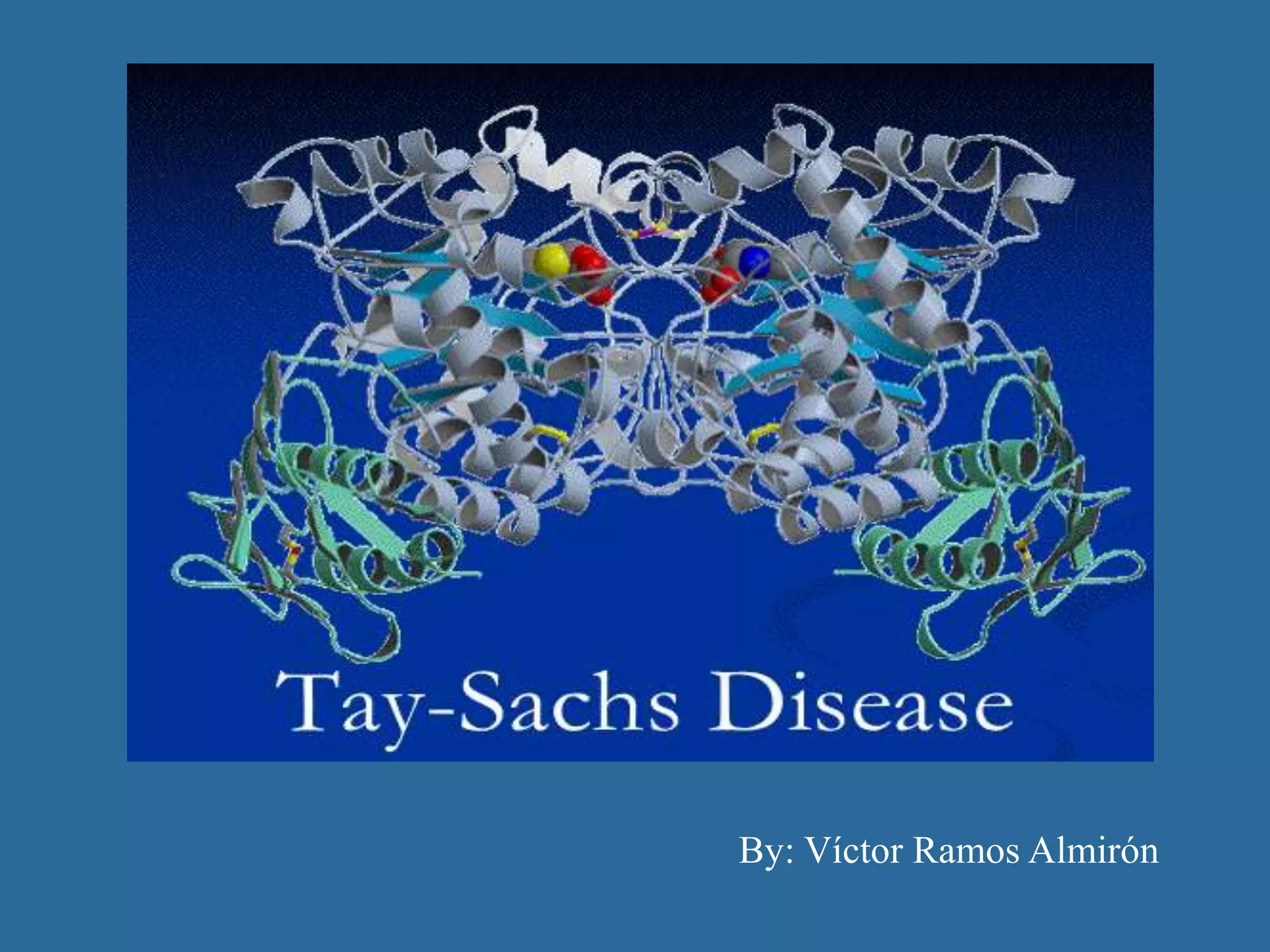
In AD, many of these clumps form, disrupting the work of neurons. This By: Víctor Ramos Almirón
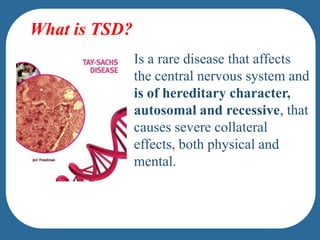
What is TSD?Is a rare disease that affects the central nervous system and is of hereditary character, autosomal and recessive, that causes severe collateral effects, both physical and mental.
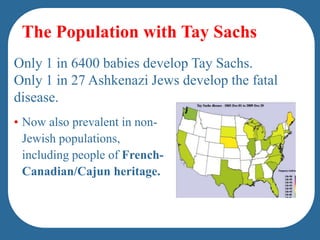
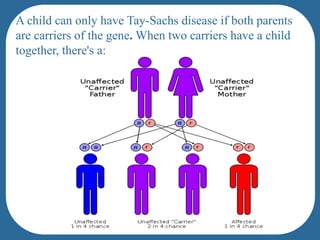
people of French-Canadian/Cajun heritage.The Population with Tay SachsOnly 1 in 6400 babies develop Tay Sachs. Only 1 in 27 Ashkenazi Jews develop the fatal disease. Now also prevalent in non-Jewish populations, including people of French-Canadian/Cajun heritage.A child can only have Tay-Sachs disease if both parents are carriers of the gene. When two carriers have a child together, there's a:
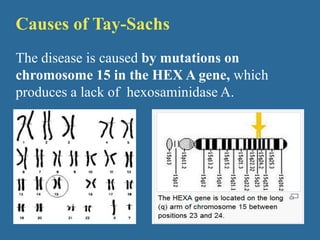
Causes of Tay-SachsThe disease is caused by mutations on chromosome 15 in the HEX A gene, which produces a lack of  hexosaminidase A.
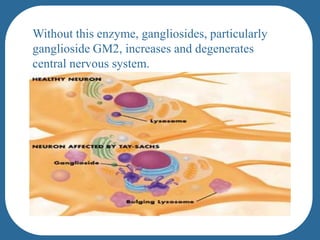
Without this enzyme, gangliosides, particularly ganglioside GM2, increases and degenerates central nervous system.
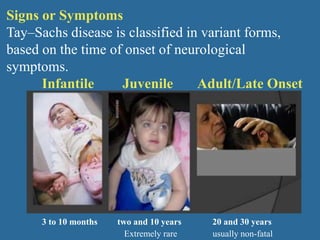
Signs or SymptomsTay–Sachs disease is classified in variant forms, based on the time of onset of neurological symptoms.Infantile        JuvenileAdult/Late Onset3 to 10 months         two and 10 years              20 and 30 yearsExtremely rare                usually non-fatal 
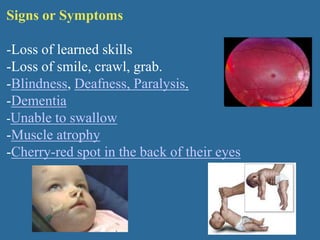
Signs or Symptoms  -Loss of learned skills-Loss of smile, crawl, grab.-Blindness, Deafness, Paralysis.-Dementia-Unable to swallow-Muscle atrophy-Cherry-red spot in the back of their eyes   
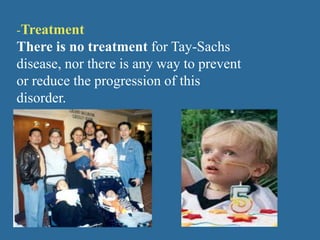
-TreatmentThere is no treatment for Tay-Sachs disease, nor there is any way to prevent or reduce the progression of this disorder.
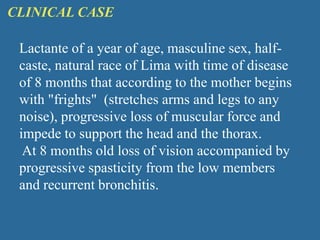
CLINICAL CASELactante of a year of age, masculine sex, half-caste, natural race of Lima with time of disease of 8 months that according to the mother begins with "frights"  (stretches arms and legs to any noise), progressive loss of muscular force and impede to support the head and the thorax.  At 8 months old loss of vision accompanied by progressive spasticity from the low members and recurrent bronchitis.
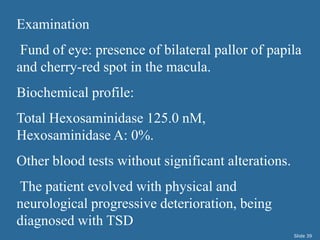
Examination Fund of eye: presence of bilateral pallor of papila and cherry-red spot in the macula.Biochemicalprofile: Total Hexosaminidase 125.0 nM, Hexosaminidase A: 0%. Other bloodtests withoutsignificantalterations. The patient evolved with physical and neurological progressive deterioration, beingdiagnosedwith TSDSlide 39
THE END
 Tay sachs DISEASE

Tay sachs DISEASE

  • 1.
    In AD, manyof these clumps form, disrupting the work of neurons. This By: Víctor Ramos Almirón
  • 2.
    What is TSD?Isa rare disease that affects the central nervous system and is of hereditary character, autosomal and recessive, that causes severe collateral effects, both physical and mental.
  • 3.
    people of French-Canadian/Cajunheritage.The Population with Tay SachsOnly 1 in 6400 babies develop Tay Sachs. Only 1 in 27 Ashkenazi Jews develop the fatal disease. Now also prevalent in non-Jewish populations, including people of French-Canadian/Cajun heritage.A child can only have Tay-Sachs disease if both parents are carriers of the gene. When two carriers have a child together, there's a:
  • 4.
    Causes of Tay-SachsThedisease is caused by mutations on chromosome 15 in the HEX A gene, which produces a lack of hexosaminidase A.
  • 5.
  • 6.
    Signs or SymptomsTay–Sachsdisease is classified in variant forms, based on the time of onset of neurological symptoms.Infantile JuvenileAdult/Late Onset3 to 10 months  two and 10 years 20 and 30 yearsExtremely rare   usually non-fatal 
  • 7.
    Signs or Symptoms -Loss of learned skills-Loss of smile, crawl, grab.-Blindness, Deafness, Paralysis.-Dementia-Unable to swallow-Muscle atrophy-Cherry-red spot in the back of their eyes   
  • 8.
    -TreatmentThere is notreatment for Tay-Sachs disease, nor there is any way to prevent or reduce the progression of this disorder.
  • 9.
    CLINICAL CASELactante ofa year of age, masculine sex, half-caste, natural race of Lima with time of disease of 8 months that according to the mother begins with "frights"  (stretches arms and legs to any noise), progressive loss of muscular force and impede to support the head and the thorax.  At 8 months old loss of vision accompanied by progressive spasticity from the low members and recurrent bronchitis.
  • 10.
    Examination Fund ofeye: presence of bilateral pallor of papila and cherry-red spot in the macula.Biochemicalprofile: Total Hexosaminidase 125.0 nM, Hexosaminidase A: 0%. Other bloodtests withoutsignificantalterations. The patient evolved with physical and neurological progressive deterioration, beingdiagnosedwith TSDSlide 39
  • 11.