Task Manager – an innovative approach to improving hospital communication after hours Dr. Mary Seddon Dr. David Hay
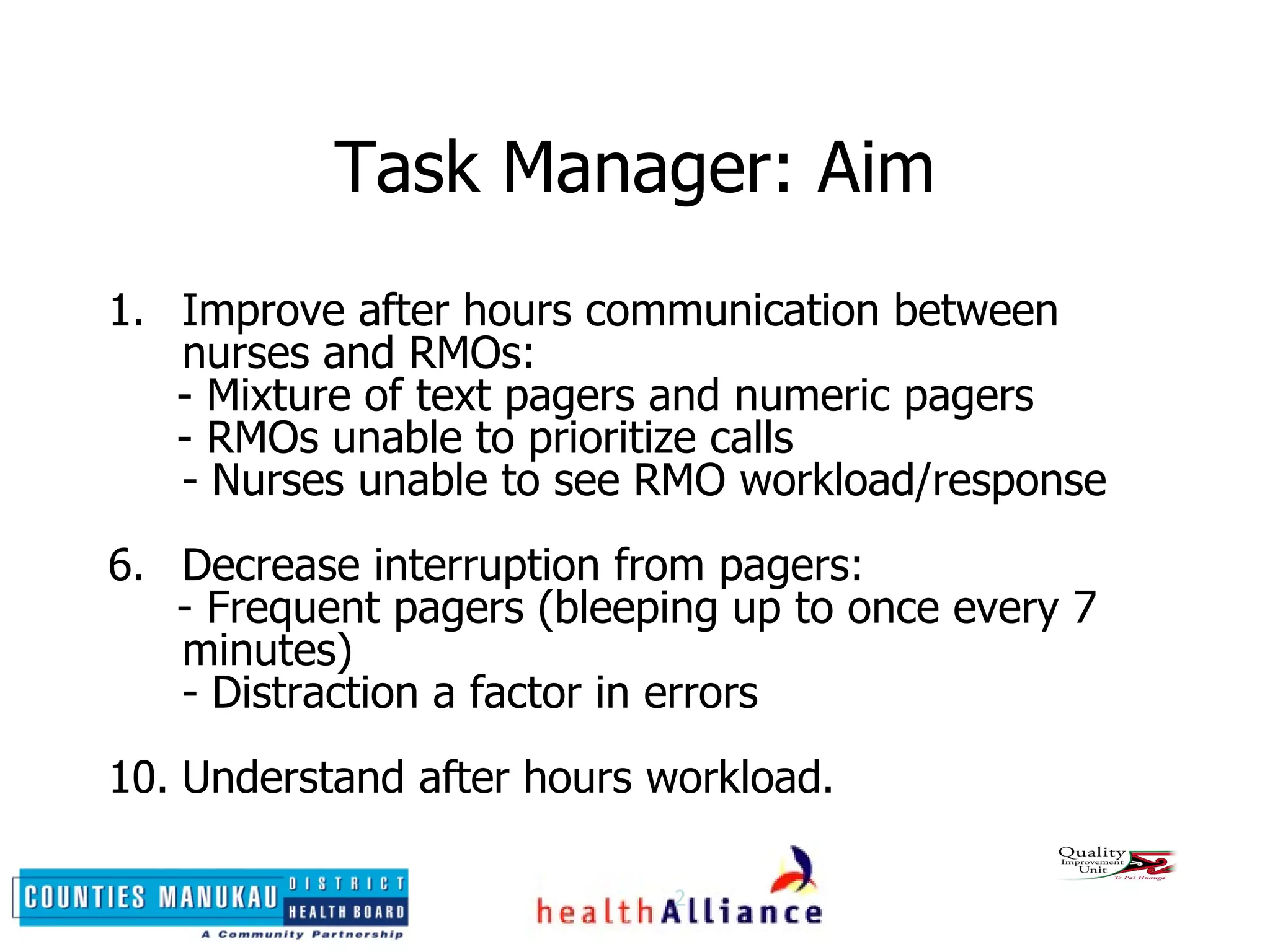
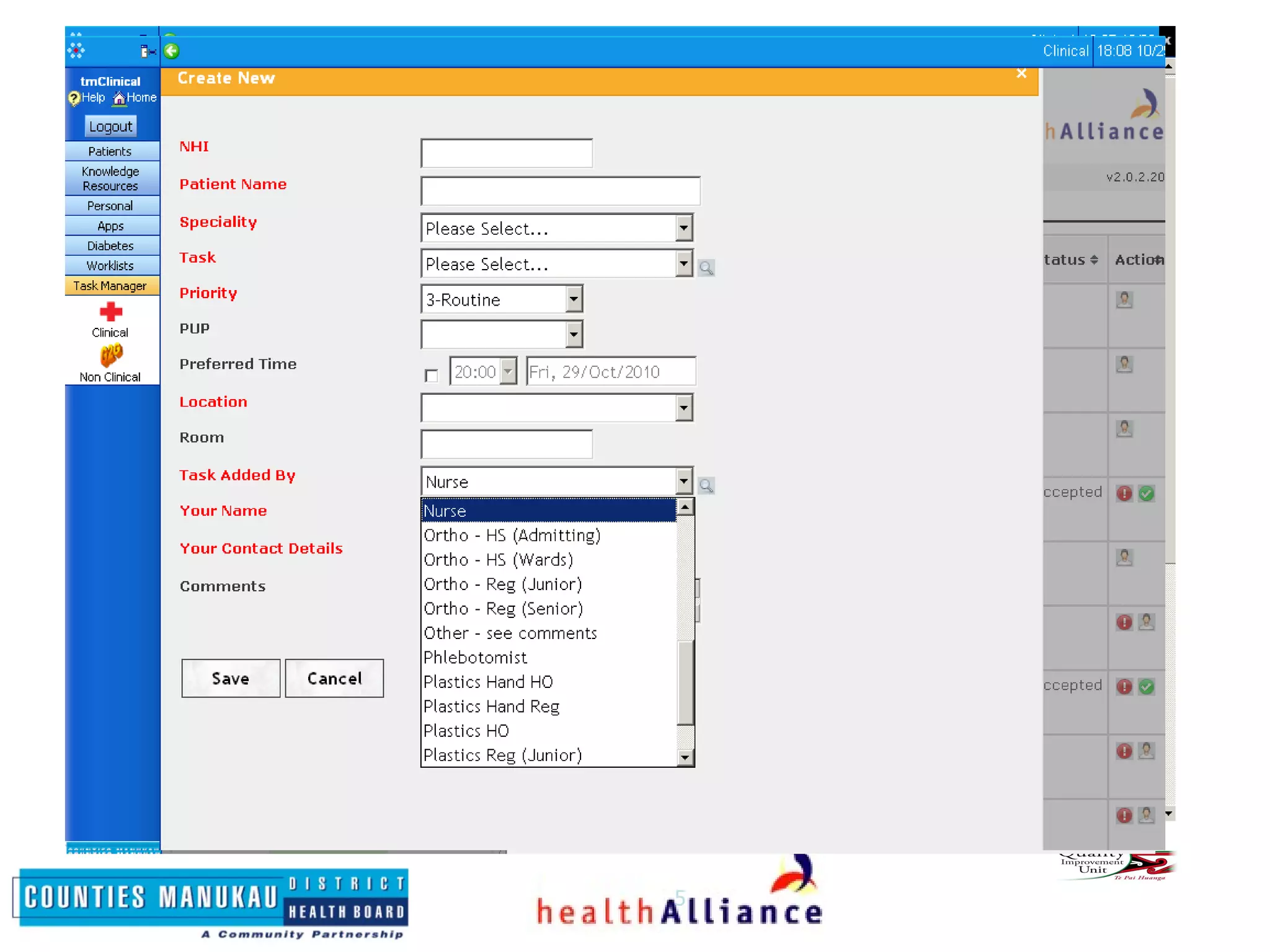
Task Manager: Aim Improve after hours communication between nurses and RMOs: - Mixture of text pagers and numeric pagers  - RMOs unable to prioritize calls - Nurses unable to see RMO workload/response Decrease interruption from pagers: - Frequent pagers (bleeping up to once every 7 minutes) - Distraction a factor in errors Understand after hours workload.
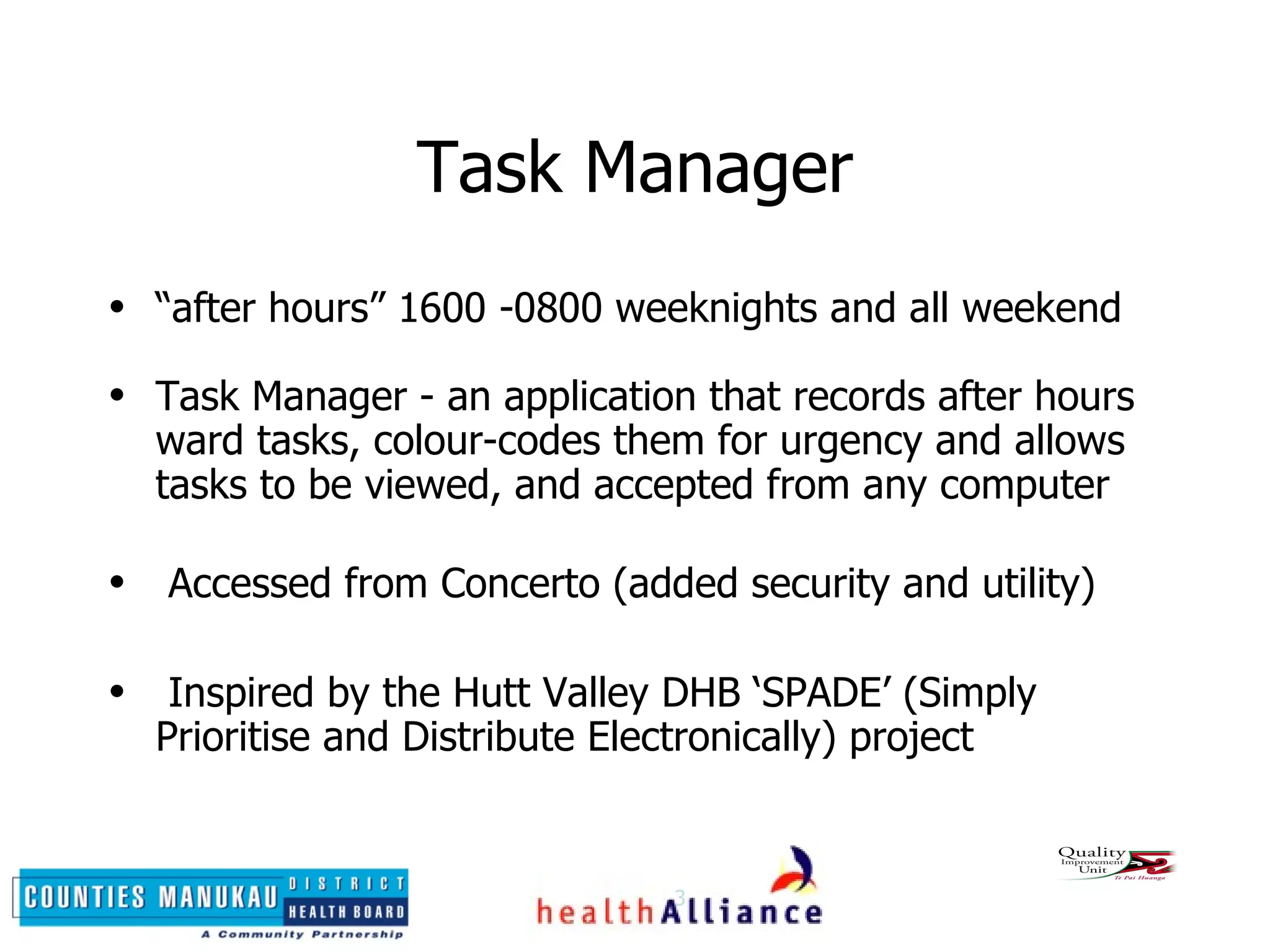
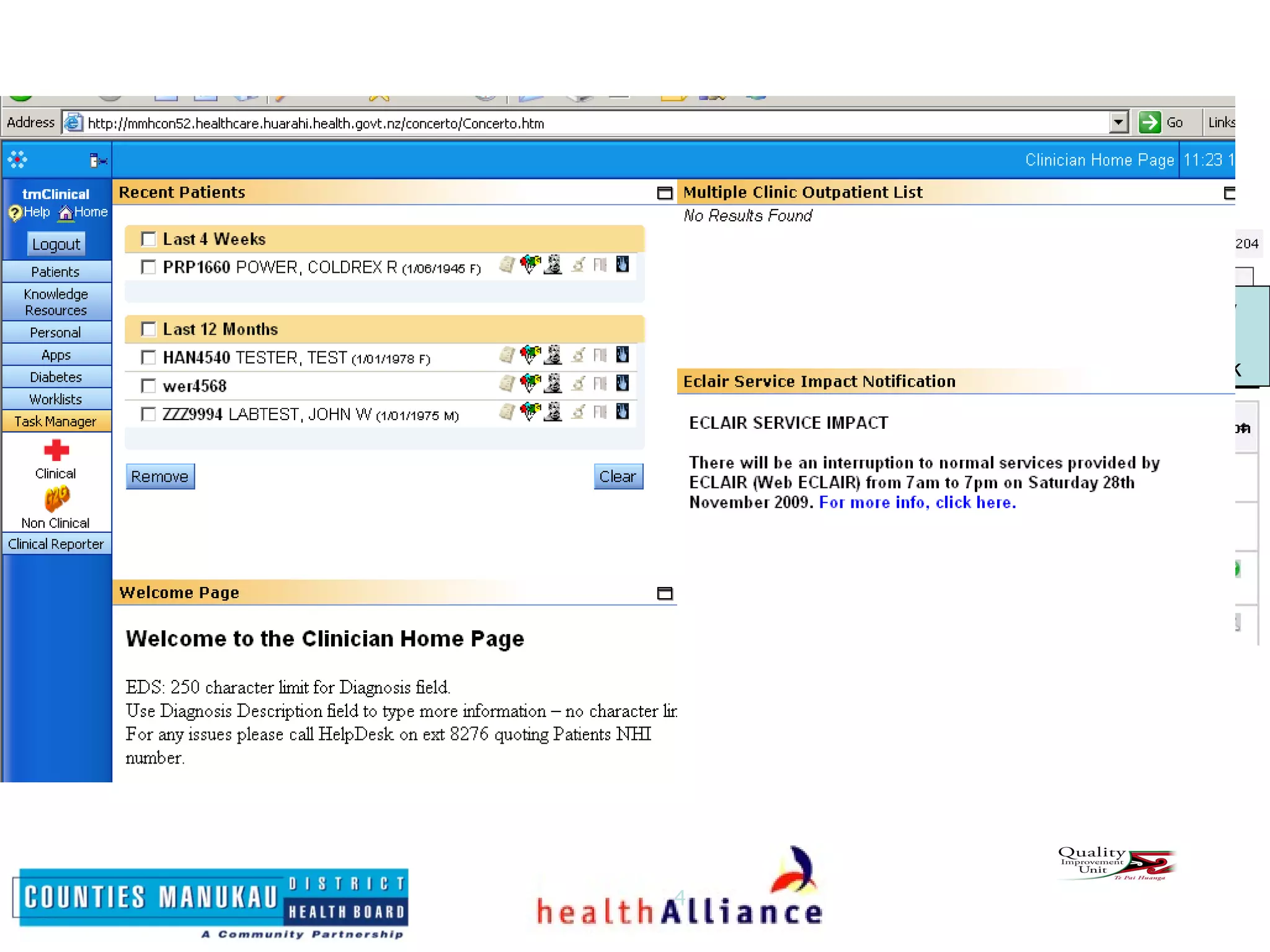
Task Manager “ after hours” 1600 -0800 weeknights and all weekend Task Manager - an application that records after hours ward tasks, colour-codes them for urgency and allows tasks to be viewed, and accepted from any computer Accessed from Concerto (added security and utility) Inspired by the Hutt Valley DHB ‘SPADE’ (Simply Prioritise and Distribute Electronically) project
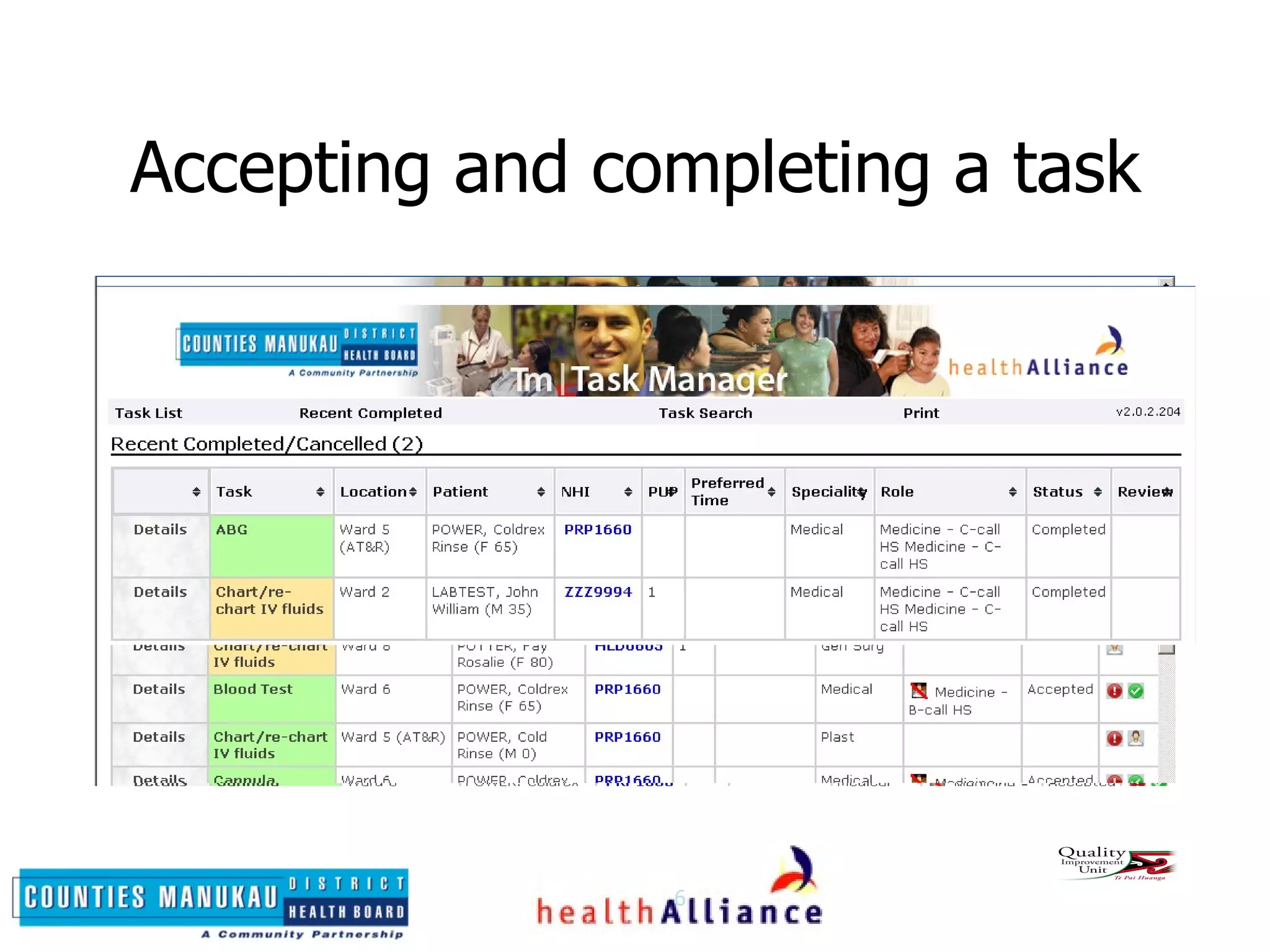
Colour – coded  Sort by location NHI is a hyperlink to e-labs/radiology etc Early warning score Sort by service Nurses know that Dr. has accepted task Indicates comment Can accept and complete tasks from front page
Accepting and completing a task
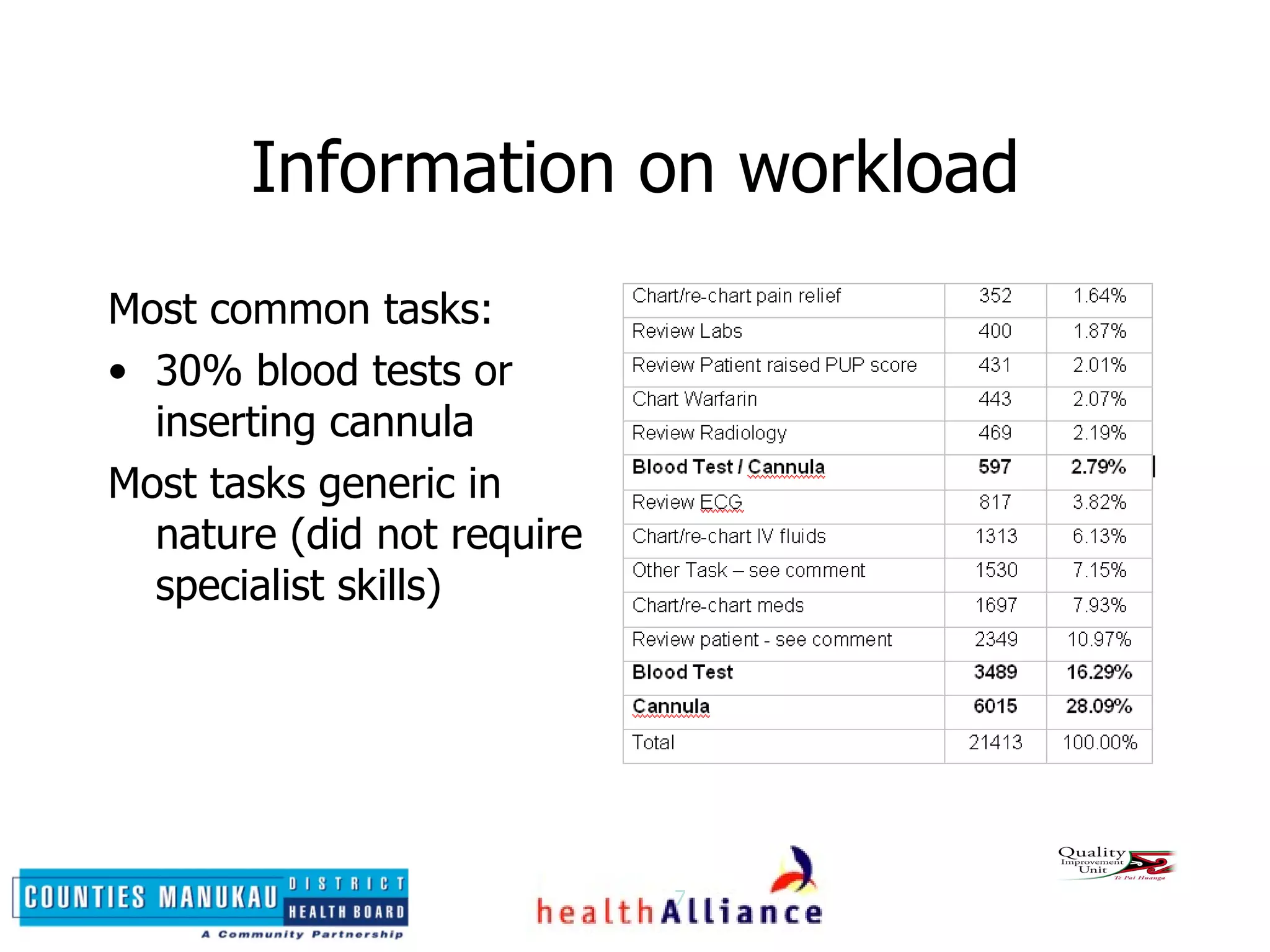
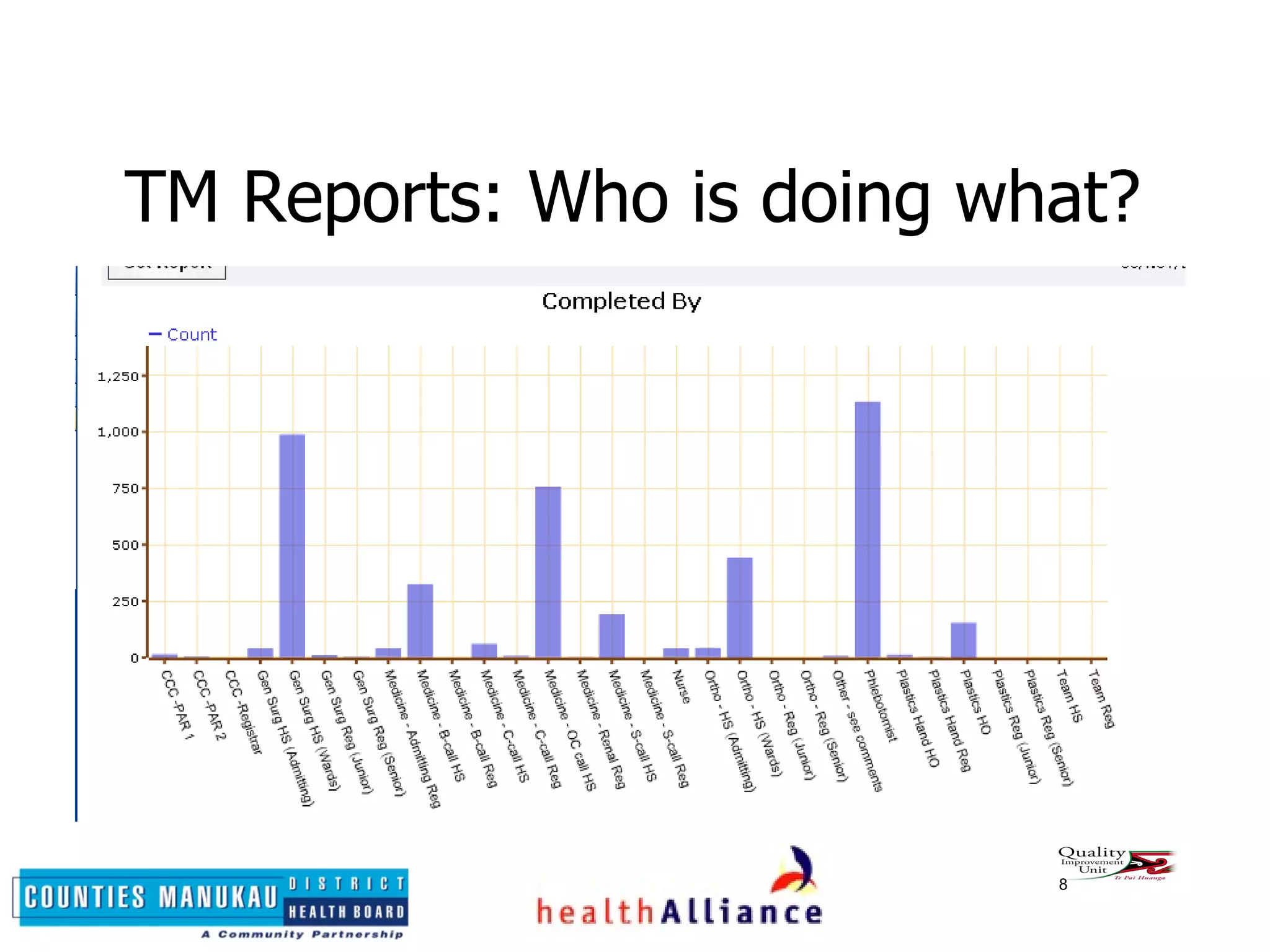
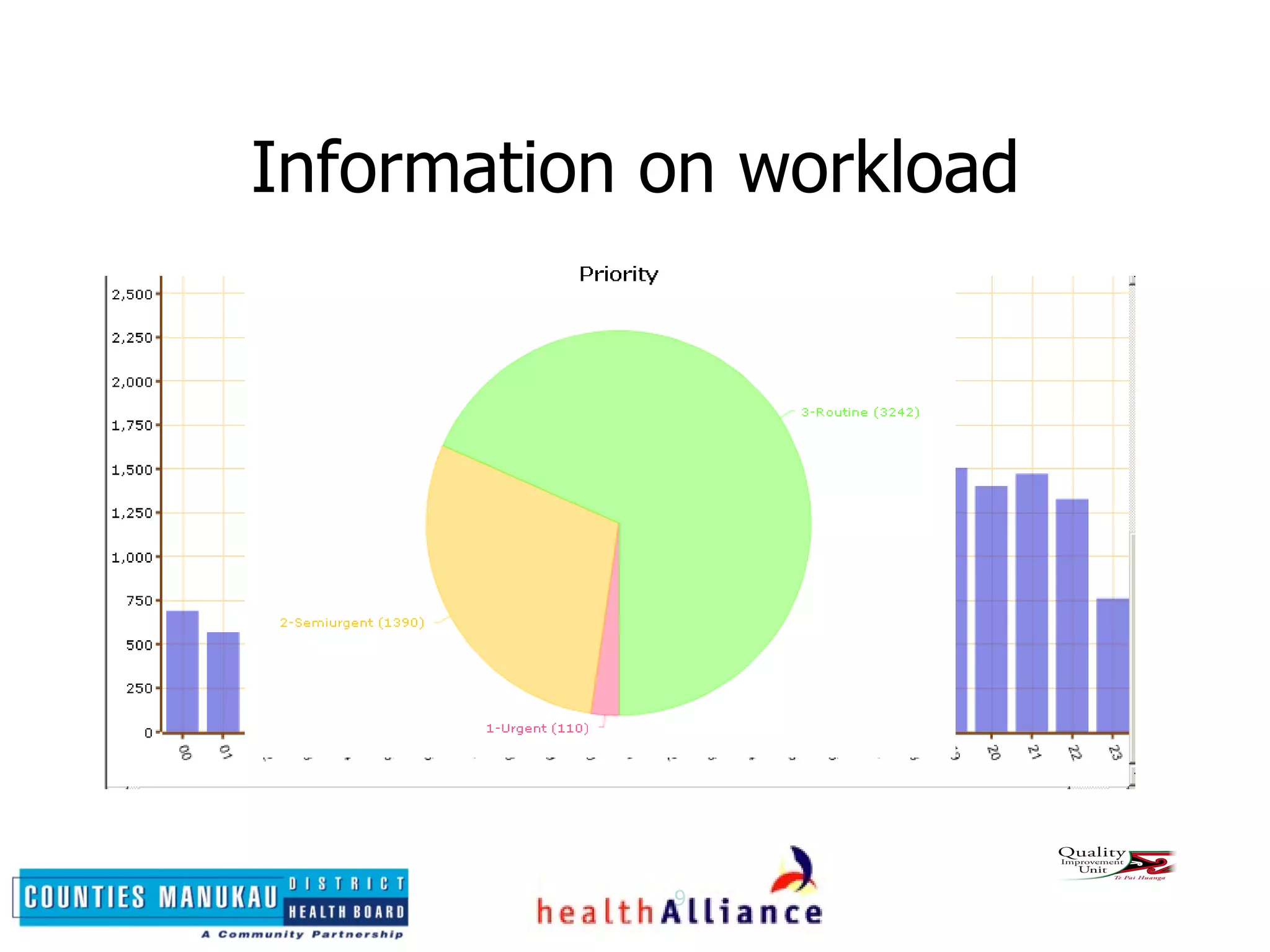
Information on workload Most common tasks: 30% blood tests or inserting cannula Most tasks generic in nature (did not require specialist skills) Tasks completed by: 30% phlebotomists 30% medical house officers 30% surgical house officers Tasks very unevenly distributed
TM Reports: Who is doing what?
Information on workload
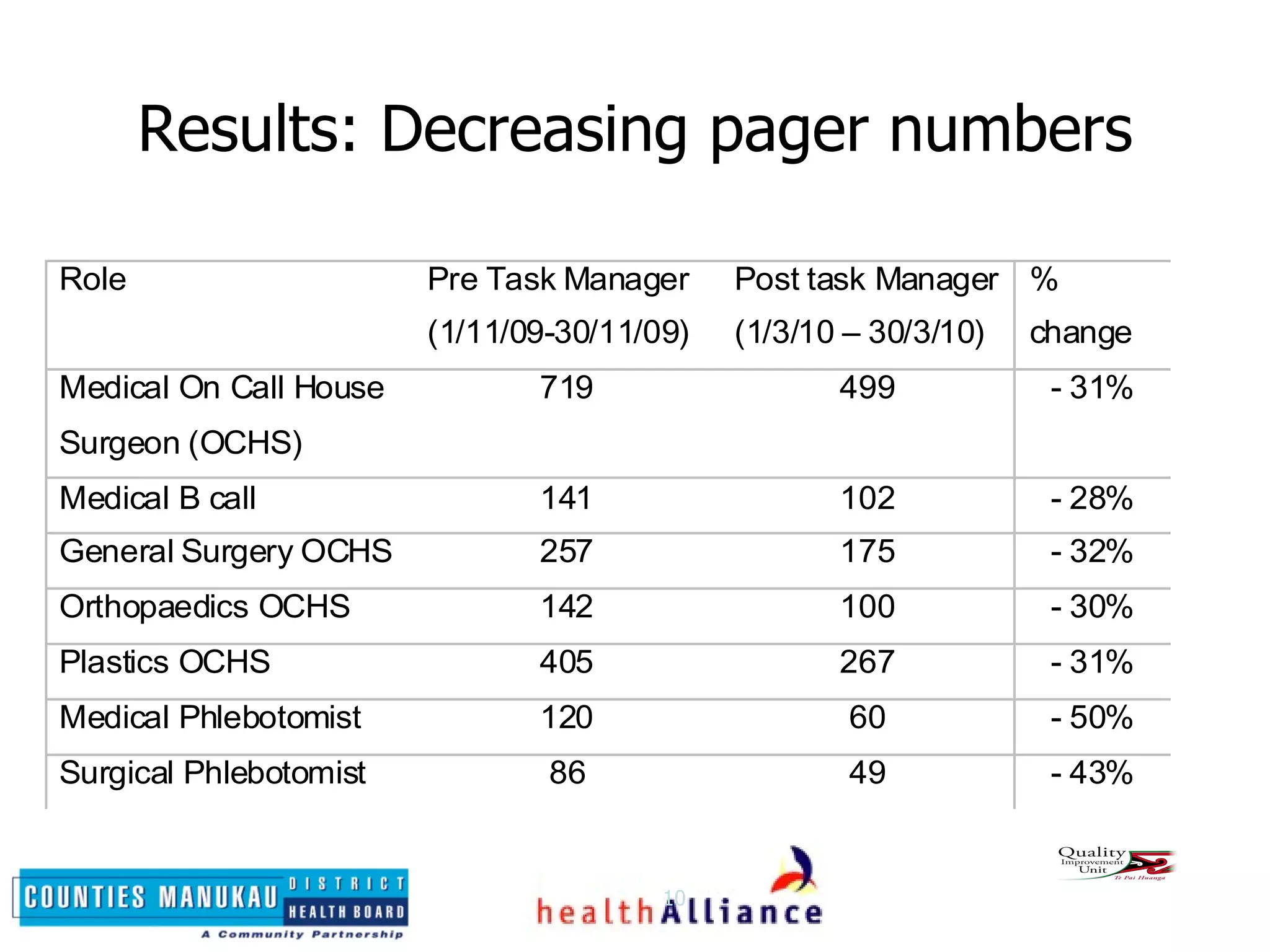
Results: Decreasing pager numbers
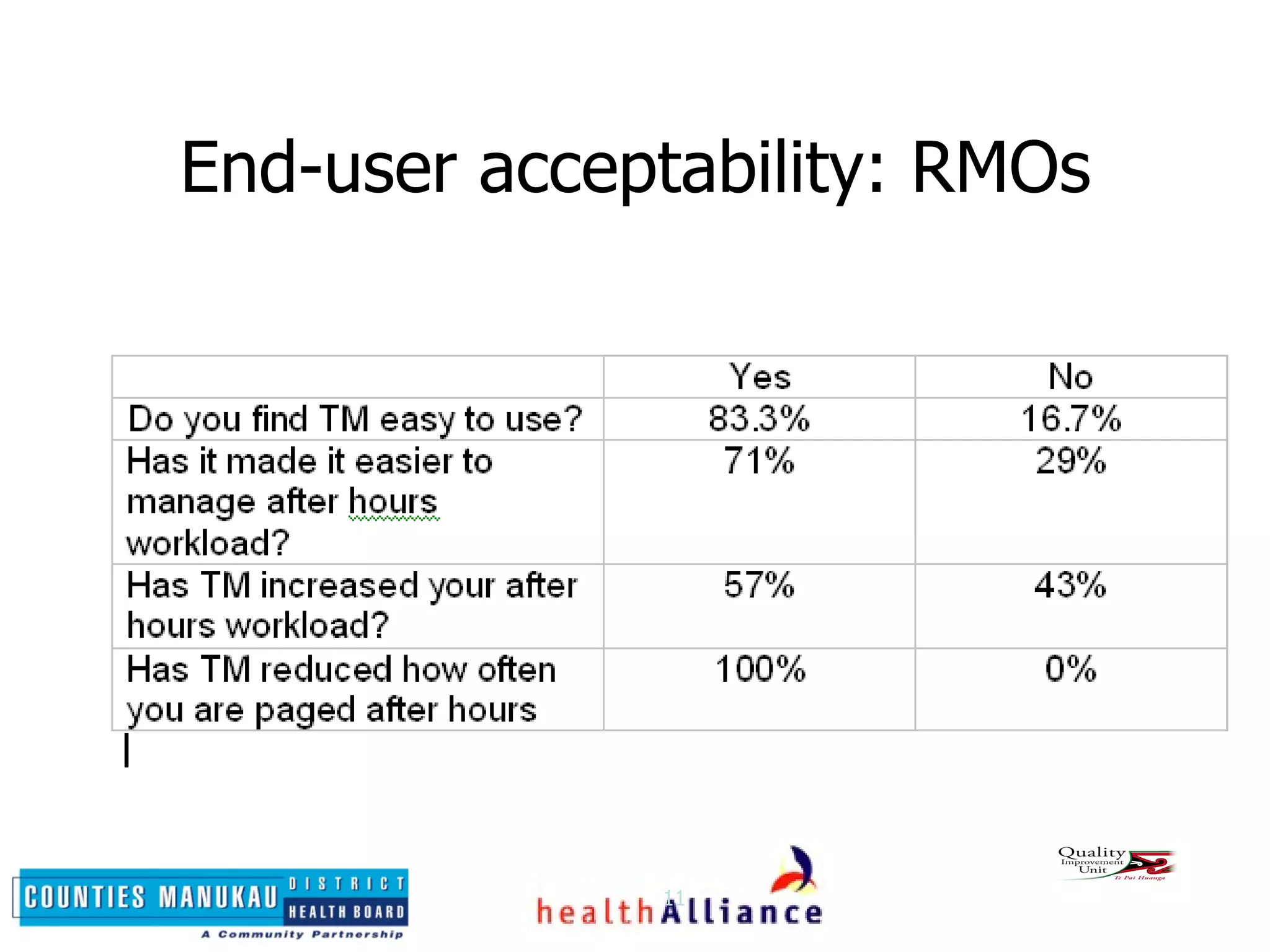
End-user acceptability: RMOs
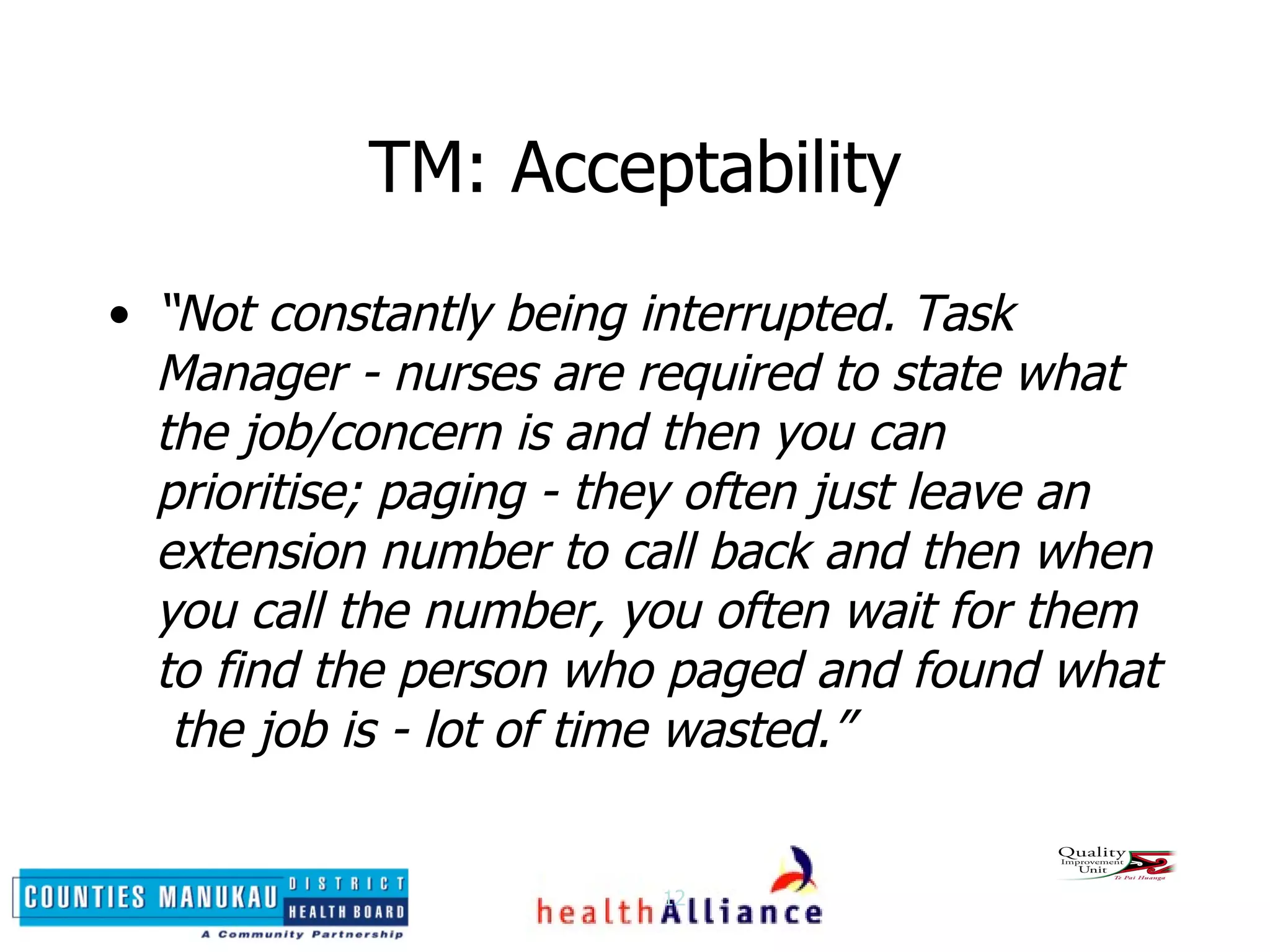
TM: Acceptability “ Not constantly being interrupted. Task Manager - nurses are required to state what the job/concern is and then you can prioritise; paging - they often just leave an  extension number to call back and then when you call the number, you often wait for them to find the person who paged and found what  the job is - lot of time wasted.”
End-user acceptability: Nurses 89% thought that it was easy to use 68% thought that it had improved communication with doctors "We are now sure that our tasks will be acknowledged and actioned" "Don't have to sit near the phone and wait for the doctors or phlebotomists to respond"
Final Thoughts from clinical perspective Value in exposing the amount of work undertaken afterhours (~140/evening & night) Successful in decreasing page rage and improving communication Very little training required for end users If had time again, would not have had a label for “urgent” tasks (would have 3 gradations of routine)
The Architects perspective…
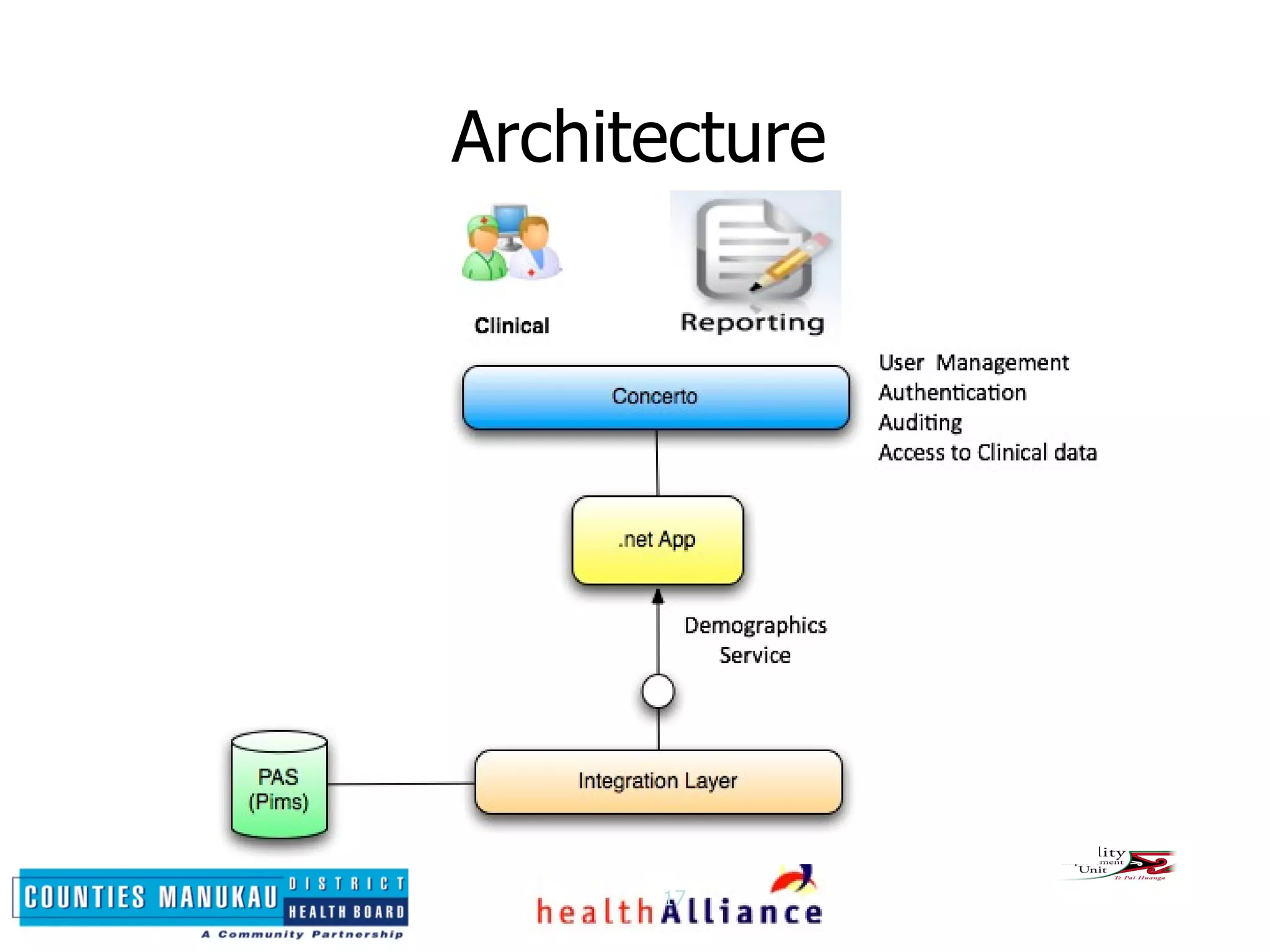
Key Scenarios Ward create a task for a service integration with PAS (Patient Administration System) Display all tasks - multiple sorting/filtering User (RMO) accept task Can display clinical data for that patient (via  Concerto) When finished, task marked as completed Reporting functions Clinical hand over Administrative (‘pain points’, staff loading)
Architecture
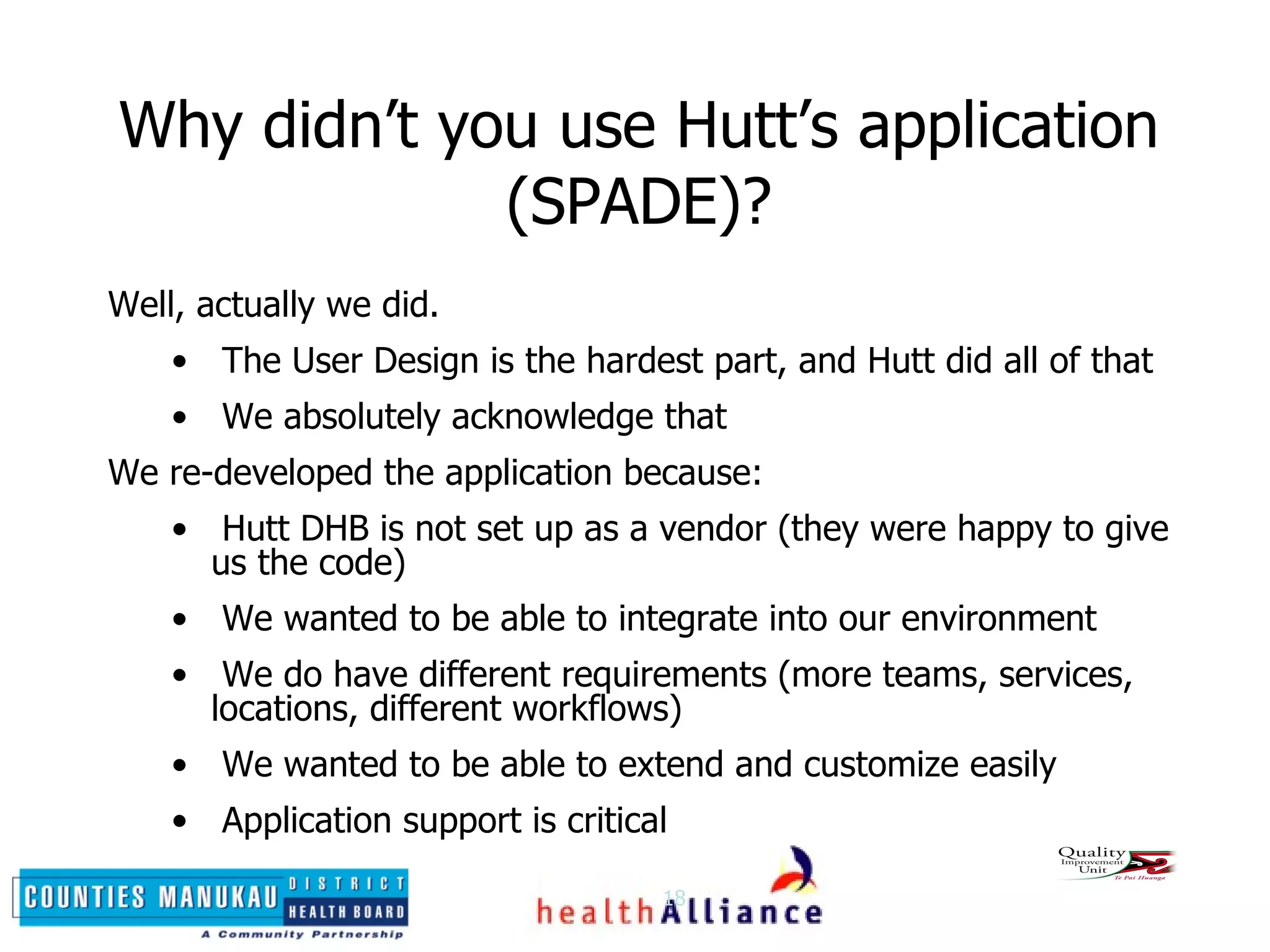
Why didn’t you use Hutt’s application (SPADE)? Well, actually we did.  The User Design is the hardest part, and Hutt did all of that We absolutely acknowledge that We re-developed the application because: Hutt DHB is not set up as a vendor (they were happy to give us the code) We wanted to be able to integrate into our environment We do have different requirements (more teams, services, locations, different workflows) We wanted to be able to extend and customize easily Application support is critical
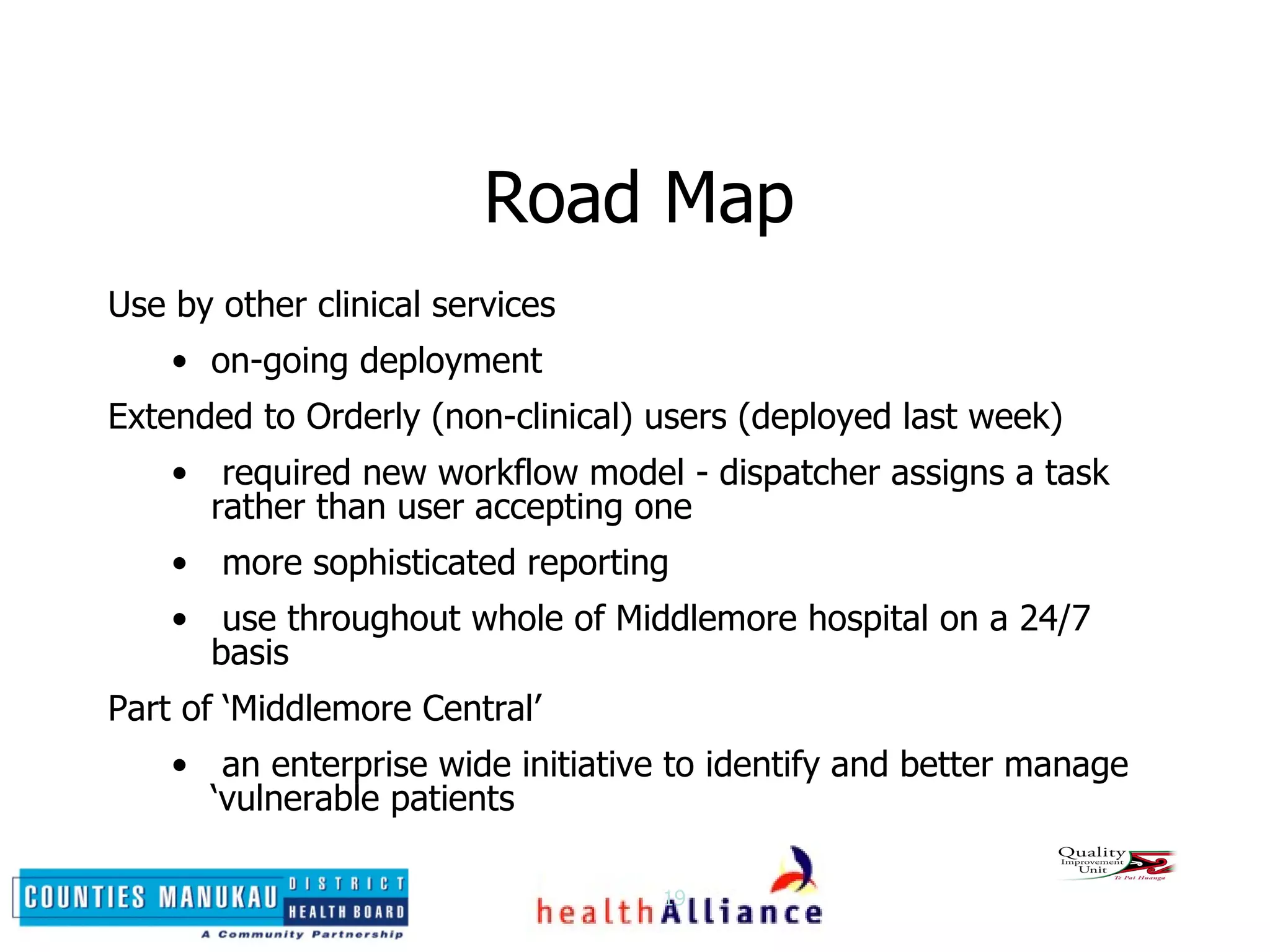
Road Map Use by other clinical services on-going deployment Extended to Orderly (non-clinical) users (deployed last week) required new workflow model - dispatcher assigns a task rather than user accepting one more sophisticated reporting use throughout whole of Middlemore hospital on a 24/7 basis Part of ‘Middlemore Central’ an enterprise wide initiative to identify and better manage ‘vulnerable patients
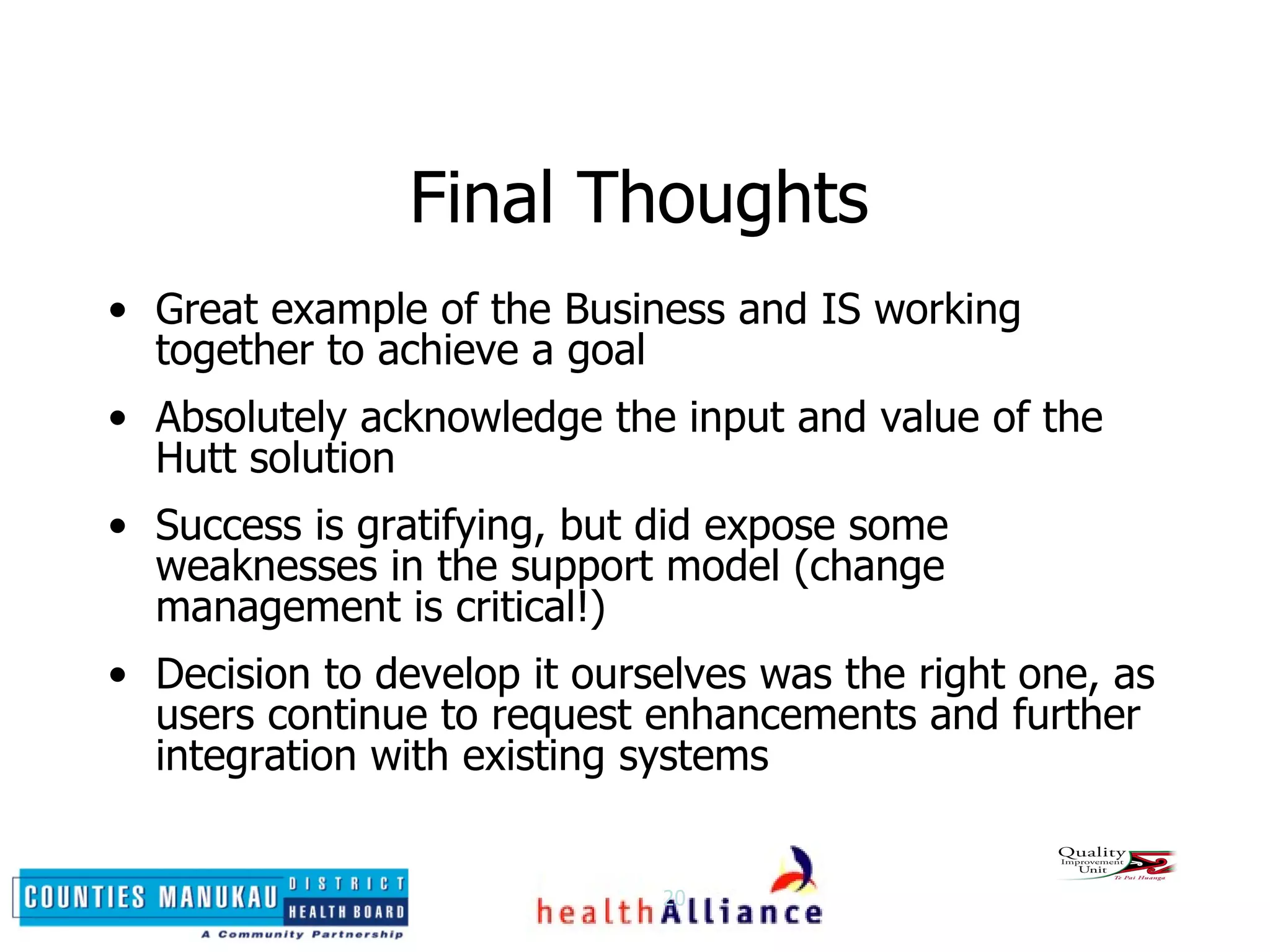
Final Thoughts Great example of the Business and IS working together to achieve a goal Absolutely acknowledge the input and value of the Hutt solution Success is gratifying, but did expose some weaknesses in the support model (change management is critical!) Decision to develop it ourselves was the right one, as users continue to request enhancements and further integration with existing systems

Task Manager – an innovative approach to improving hospital communication after hours

  • 1.
    Task Manager –an innovative approach to improving hospital communication after hours Dr. Mary Seddon Dr. David Hay
  • 2.
    Task Manager: AimImprove after hours communication between nurses and RMOs: - Mixture of text pagers and numeric pagers - RMOs unable to prioritize calls - Nurses unable to see RMO workload/response Decrease interruption from pagers: - Frequent pagers (bleeping up to once every 7 minutes) - Distraction a factor in errors Understand after hours workload.
  • 3.
    Task Manager “after hours” 1600 -0800 weeknights and all weekend Task Manager - an application that records after hours ward tasks, colour-codes them for urgency and allows tasks to be viewed, and accepted from any computer Accessed from Concerto (added security and utility) Inspired by the Hutt Valley DHB ‘SPADE’ (Simply Prioritise and Distribute Electronically) project
  • 4.
    Colour – coded Sort by location NHI is a hyperlink to e-labs/radiology etc Early warning score Sort by service Nurses know that Dr. has accepted task Indicates comment Can accept and complete tasks from front page
  • 6.
  • 7.
    Information on workloadMost common tasks: 30% blood tests or inserting cannula Most tasks generic in nature (did not require specialist skills) Tasks completed by: 30% phlebotomists 30% medical house officers 30% surgical house officers Tasks very unevenly distributed
  • 8.
    TM Reports: Whois doing what?
  • 9.
  • 10.
  • 11.
  • 12.
    TM: Acceptability “Not constantly being interrupted. Task Manager - nurses are required to state what the job/concern is and then you can prioritise; paging - they often just leave an extension number to call back and then when you call the number, you often wait for them to find the person who paged and found what the job is - lot of time wasted.”
  • 13.
    End-user acceptability: Nurses89% thought that it was easy to use 68% thought that it had improved communication with doctors "We are now sure that our tasks will be acknowledged and actioned" "Don't have to sit near the phone and wait for the doctors or phlebotomists to respond"
  • 14.
    Final Thoughts fromclinical perspective Value in exposing the amount of work undertaken afterhours (~140/evening & night) Successful in decreasing page rage and improving communication Very little training required for end users If had time again, would not have had a label for “urgent” tasks (would have 3 gradations of routine)
  • 15.
  • 16.
    Key Scenarios Wardcreate a task for a service integration with PAS (Patient Administration System) Display all tasks - multiple sorting/filtering User (RMO) accept task Can display clinical data for that patient (via Concerto) When finished, task marked as completed Reporting functions Clinical hand over Administrative (‘pain points’, staff loading)
  • 17.
  • 18.
    Why didn’t youuse Hutt’s application (SPADE)? Well, actually we did. The User Design is the hardest part, and Hutt did all of that We absolutely acknowledge that We re-developed the application because: Hutt DHB is not set up as a vendor (they were happy to give us the code) We wanted to be able to integrate into our environment We do have different requirements (more teams, services, locations, different workflows) We wanted to be able to extend and customize easily Application support is critical
  • 19.
    Road Map Useby other clinical services on-going deployment Extended to Orderly (non-clinical) users (deployed last week) required new workflow model - dispatcher assigns a task rather than user accepting one more sophisticated reporting use throughout whole of Middlemore hospital on a 24/7 basis Part of ‘Middlemore Central’ an enterprise wide initiative to identify and better manage ‘vulnerable patients
  • 20.
    Final Thoughts Greatexample of the Business and IS working together to achieve a goal Absolutely acknowledge the input and value of the Hutt solution Success is gratifying, but did expose some weaknesses in the support model (change management is critical!) Decision to develop it ourselves was the right one, as users continue to request enhancements and further integration with existing systems