___Thomas Ross____
Unit 57: Photography and Photographic Practice Terminology
P1, P2, M1, M2
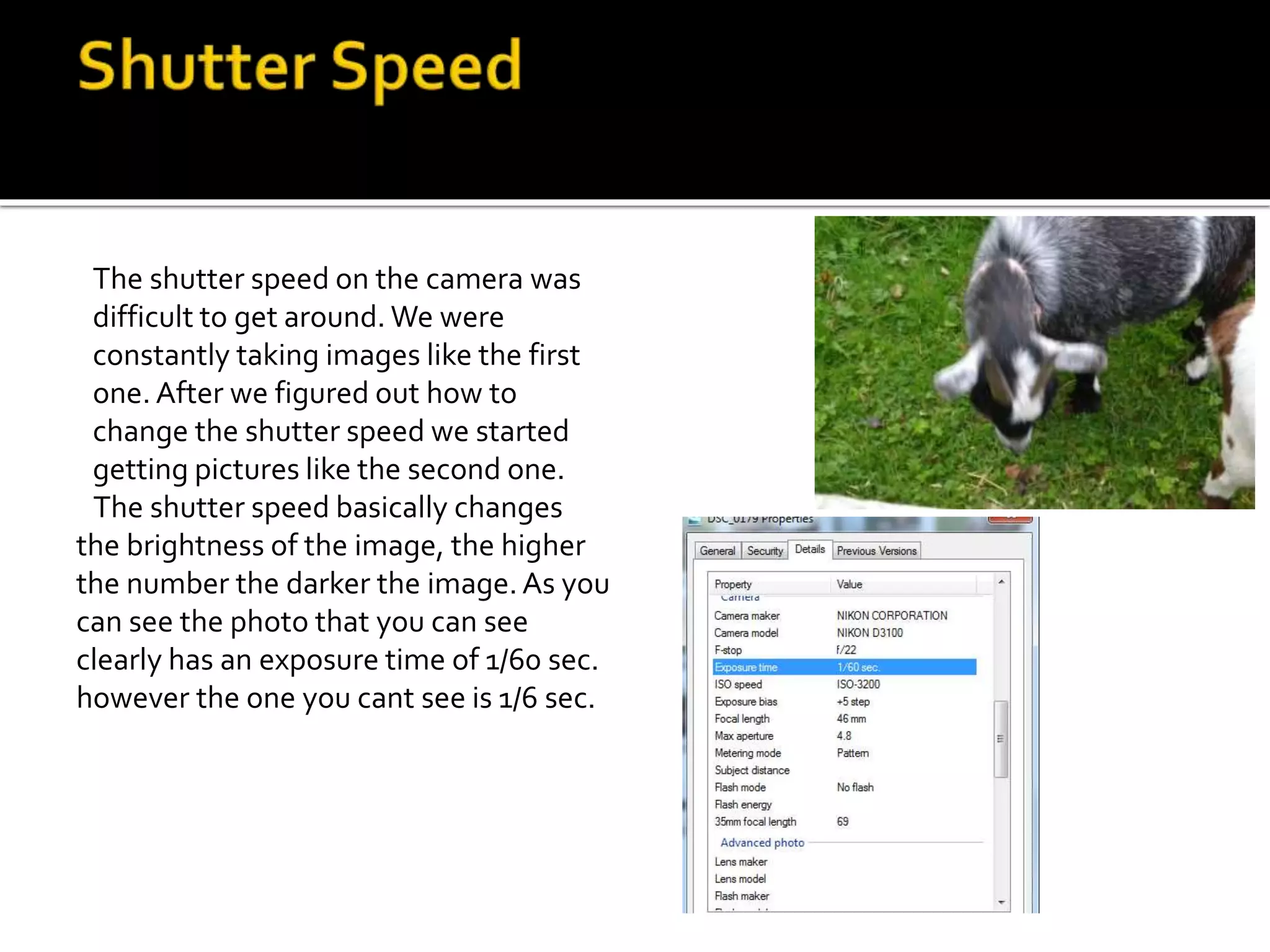
The shutter speed on the camera was
difficult to get around. We were
constantly taking images like the first
one. After we figured out how to
change the shutter speed we started
getting pictures like the second one.
The shutter speed basically changes
the brightness of the image, the higher
the number the darker the image.As you
can see the photo that you can see
clearly has an exposure time of 1/60 sec.
however the one you cant see is 1/6 sec.
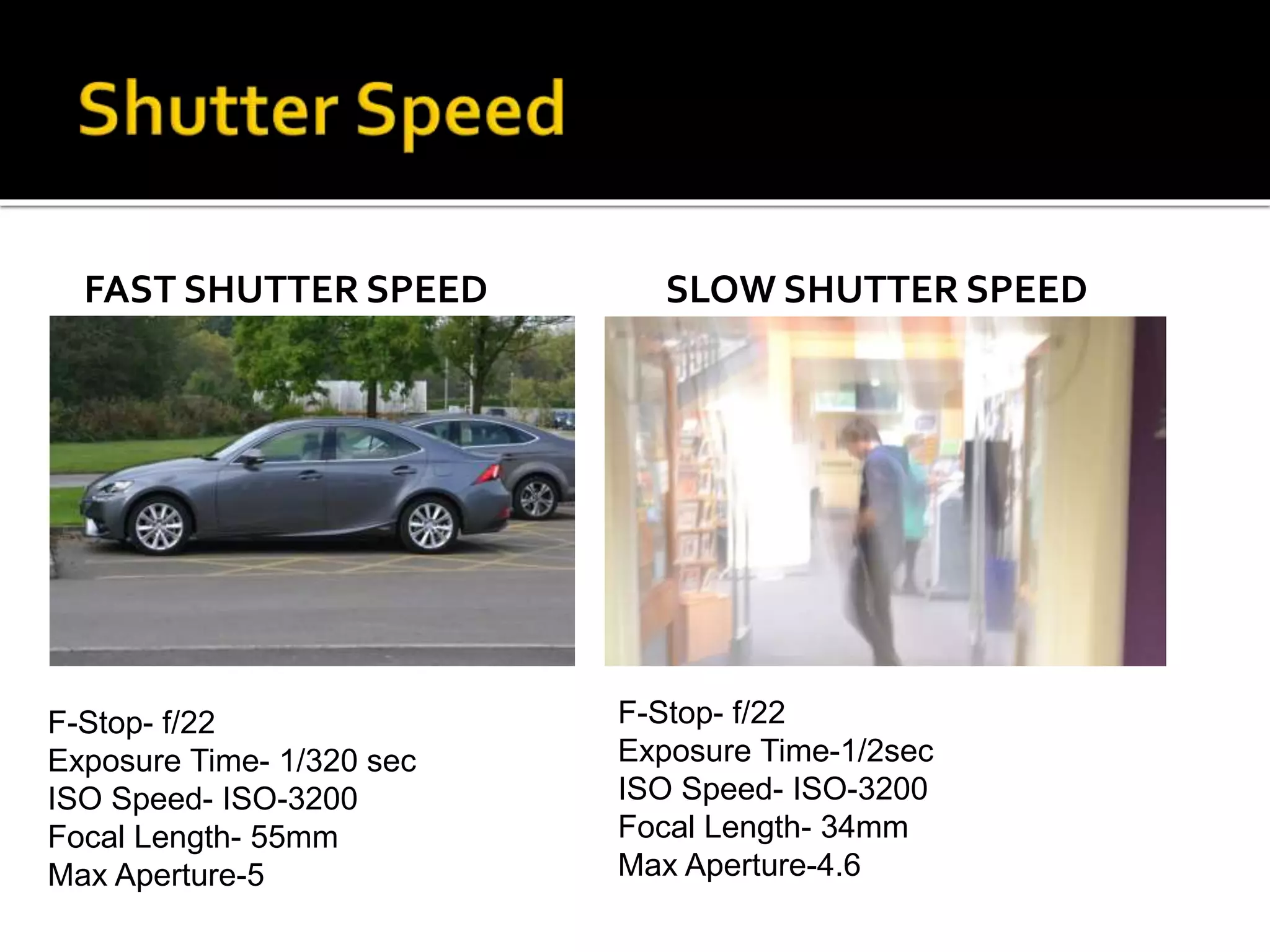
FAST SHUTTER SPEED SLOW SHUTTER SPEED
F-Stop- f/22
Exposure Time- 1/320 sec
ISO Speed- ISO-3200
Focal Length- 55mm
Max Aperture-5
F-Stop- f/22
Exposure Time-1/2sec
ISO Speed- ISO-3200
Focal Length- 34mm
Max Aperture-4.6
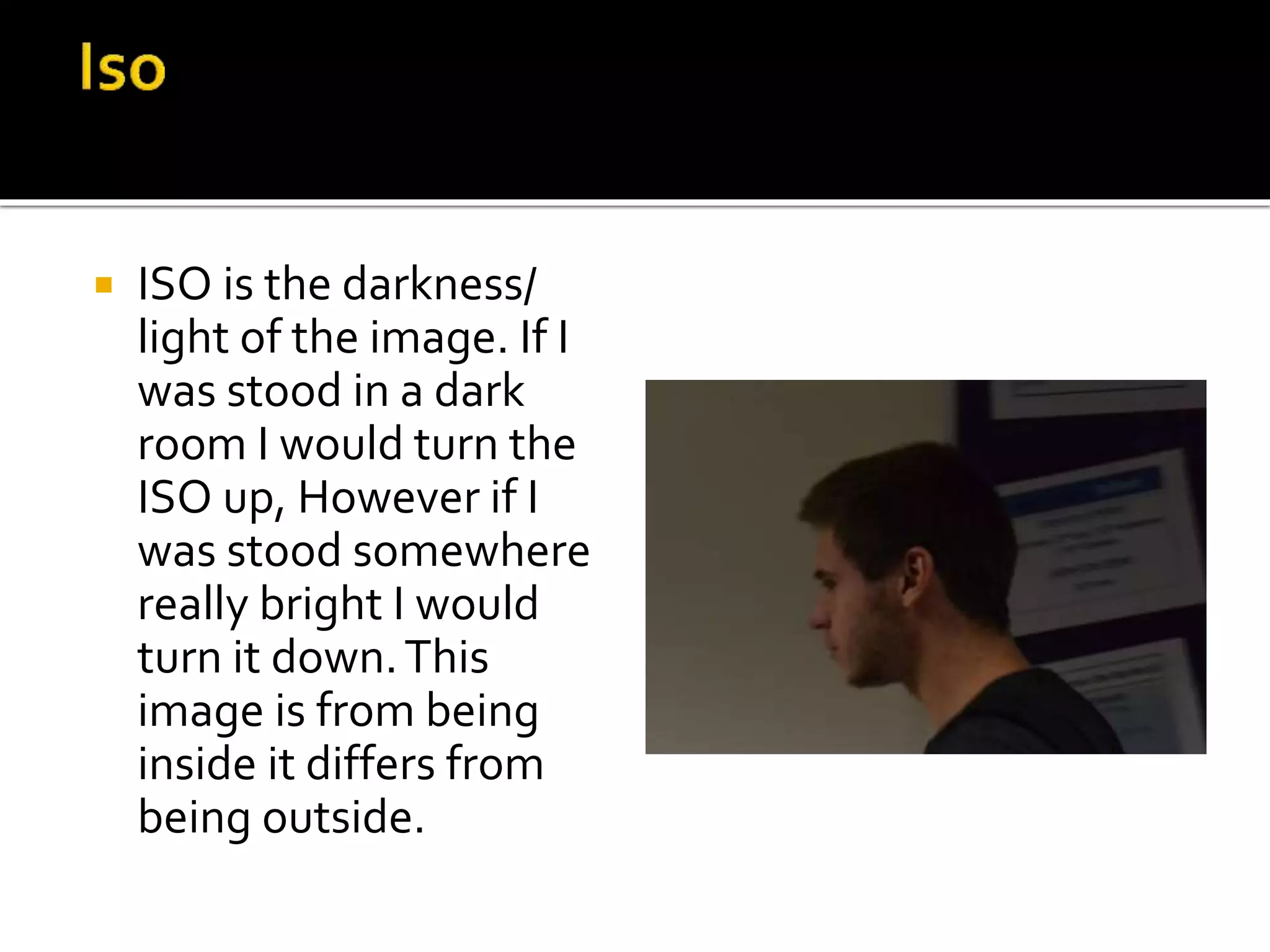
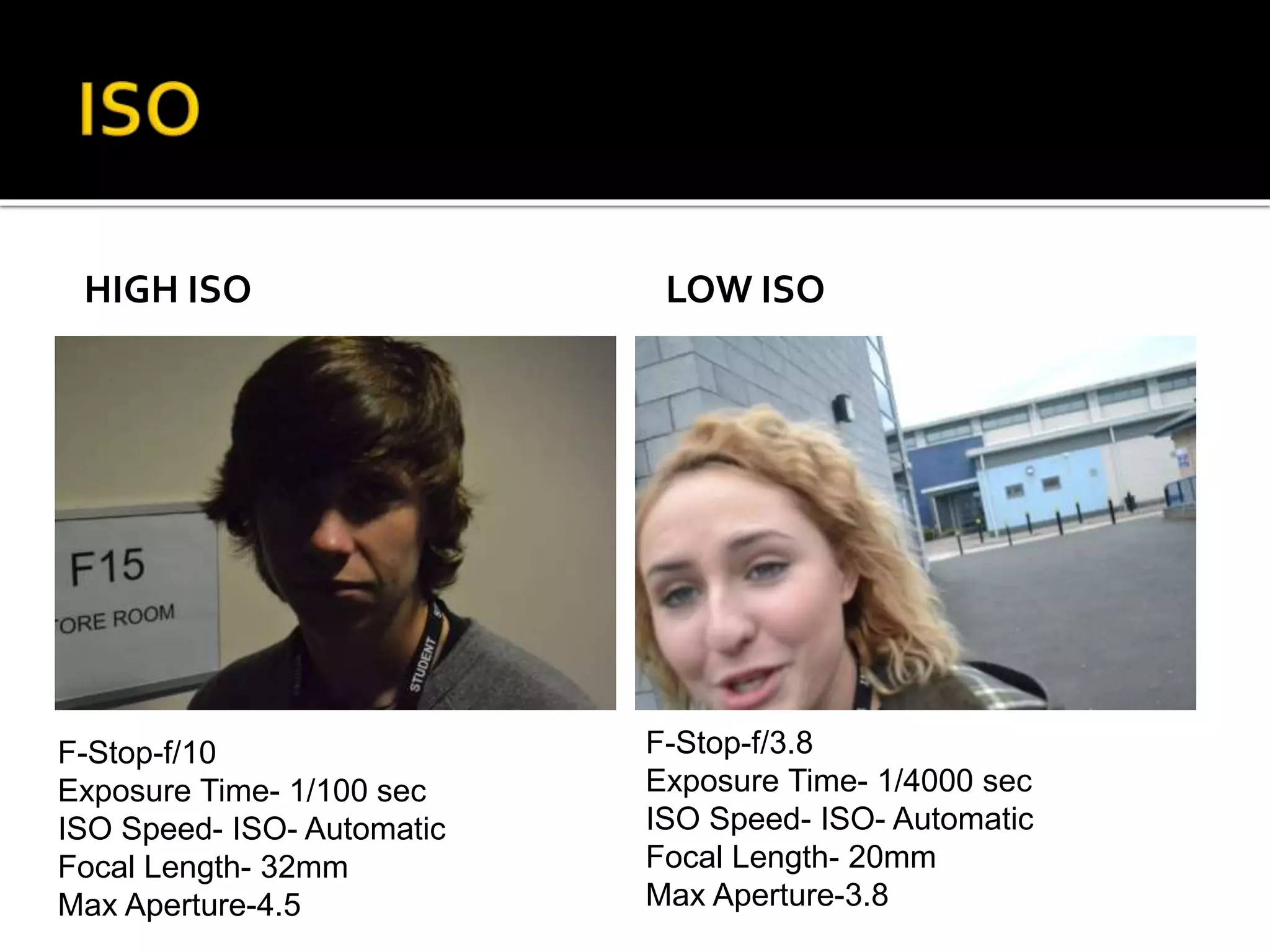
 ISO is the darkness/
light of the image. If I
was stood in a dark
room I would turn the
ISO up, However if I
was stood somewhere
really bright I would
turn it down.This
image is from being
inside it differs from
being outside.
HIGH ISO LOW ISO
F-Stop-f/10
Exposure Time- 1/100 sec
ISO Speed- ISO- Automatic
Focal Length- 32mm
Max Aperture-4.5
F-Stop-f/3.8
Exposure Time- 1/4000 sec
ISO Speed- ISO- Automatic
Focal Length- 20mm
Max Aperture-3.8
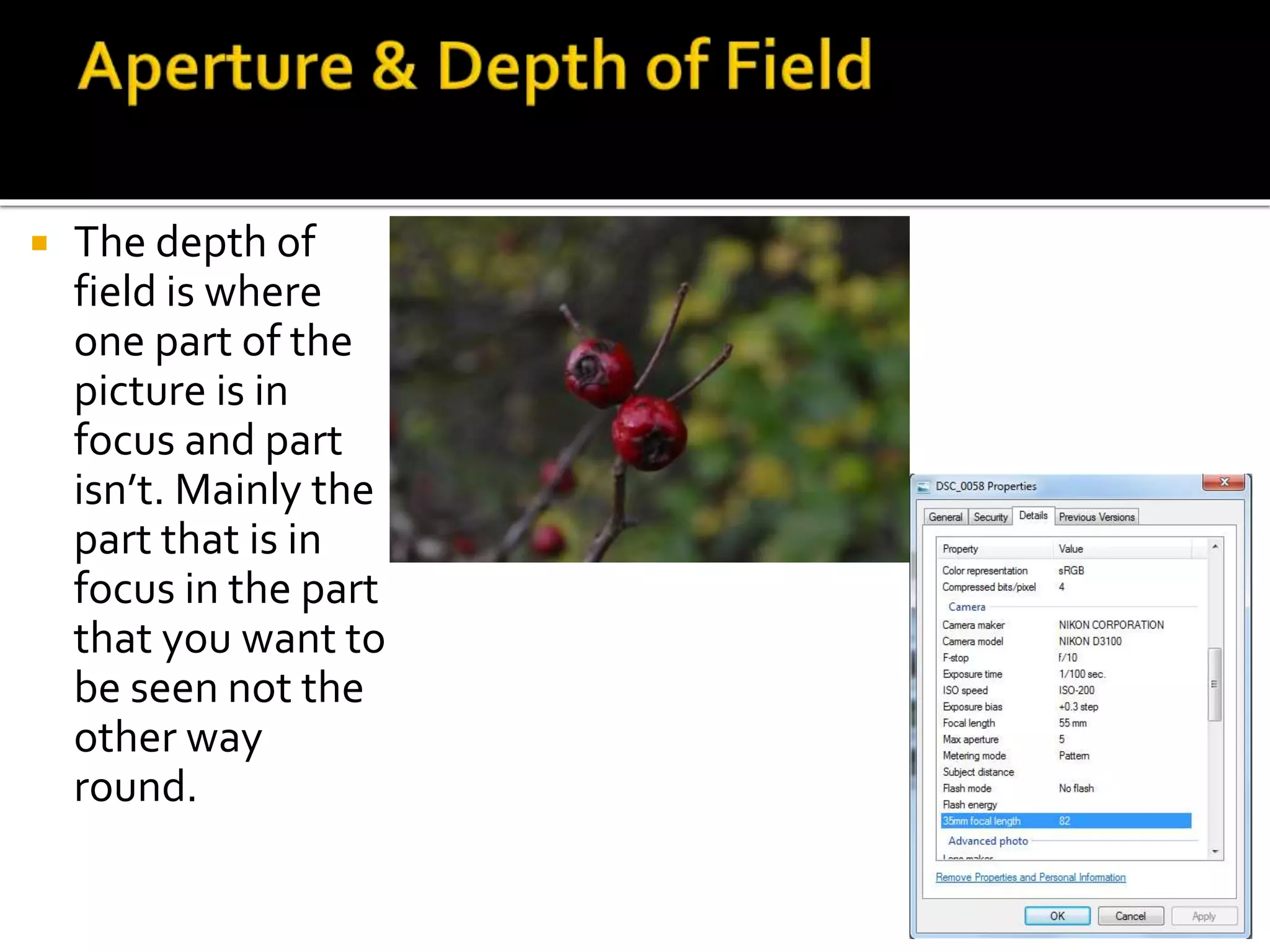
 The depth of
field is where
one part of the
picture is in
focus and part
isn’t. Mainly the
part that is in
focus in the part
that you want to
be seen not the
other way
round.
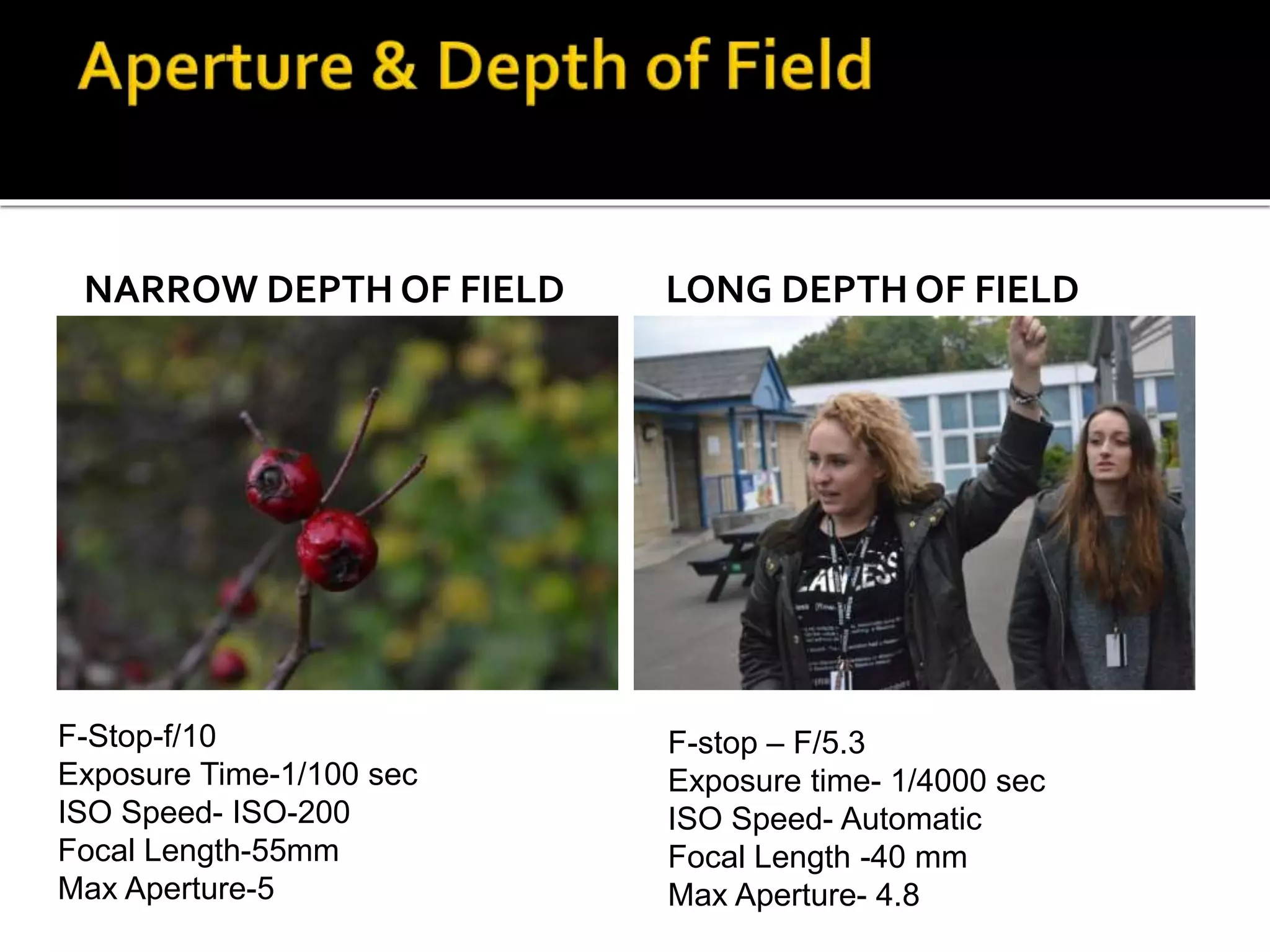
NARROW DEPTH OF FIELD LONG DEPTH OF FIELD
F-stop – F/5.3
Exposure time- 1/4000 sec
ISO Speed- Automatic
Focal Length -40 mm
Max Aperture- 4.8
F-Stop-f/10
Exposure Time-1/100 sec
ISO Speed- ISO-200
Focal Length-55mm
Max Aperture-5
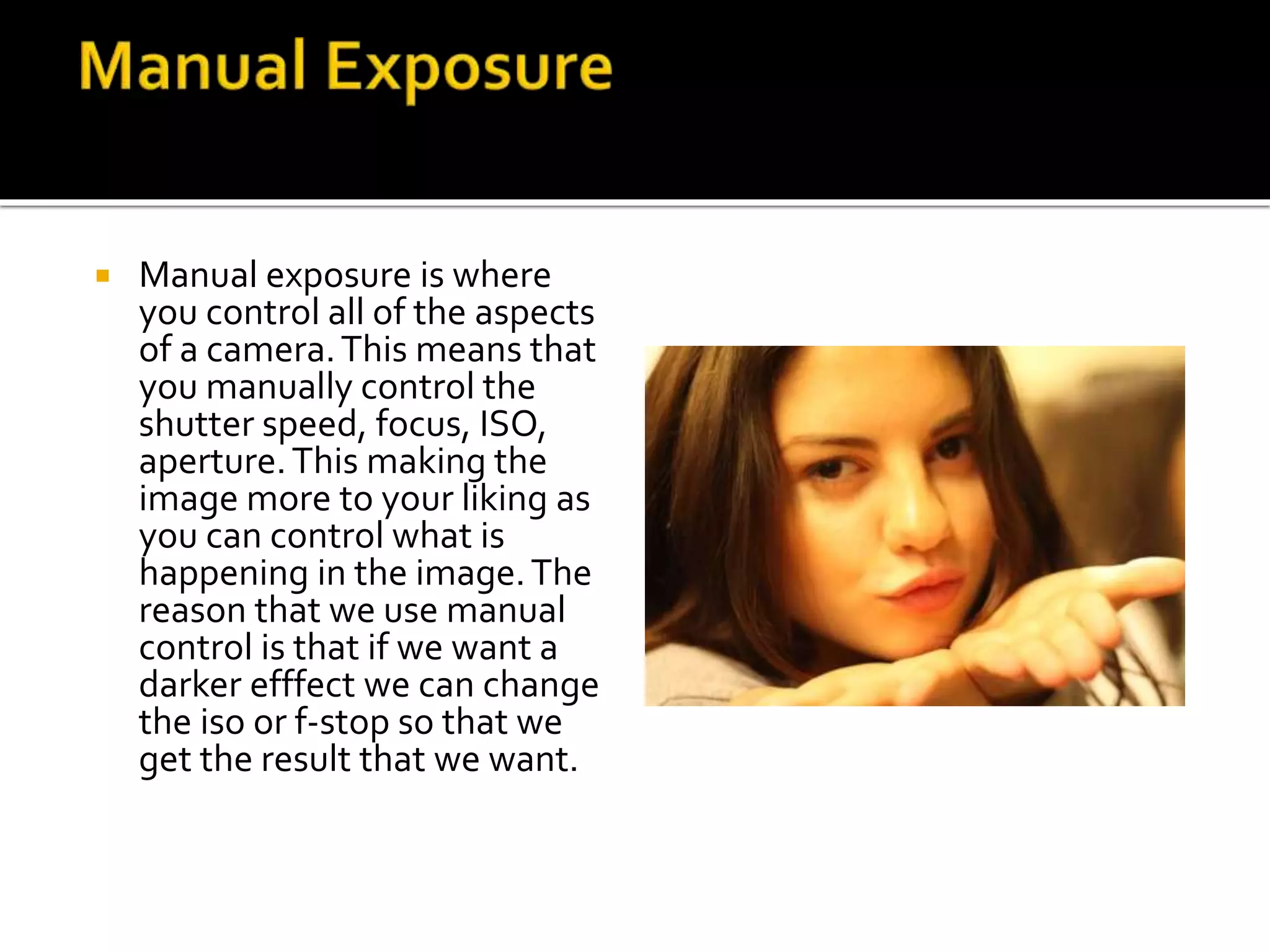
 Manual exposure is where
you control all of the aspects
of a camera.This means that
you manually control the
shutter speed, focus, ISO,
aperture.This making the
image more to your liking as
you can control what is
happening in the image.The
reason that we use manual
control is that if we want a
darker efffect we can change
the iso or f-stop so that we
get the result that we want.
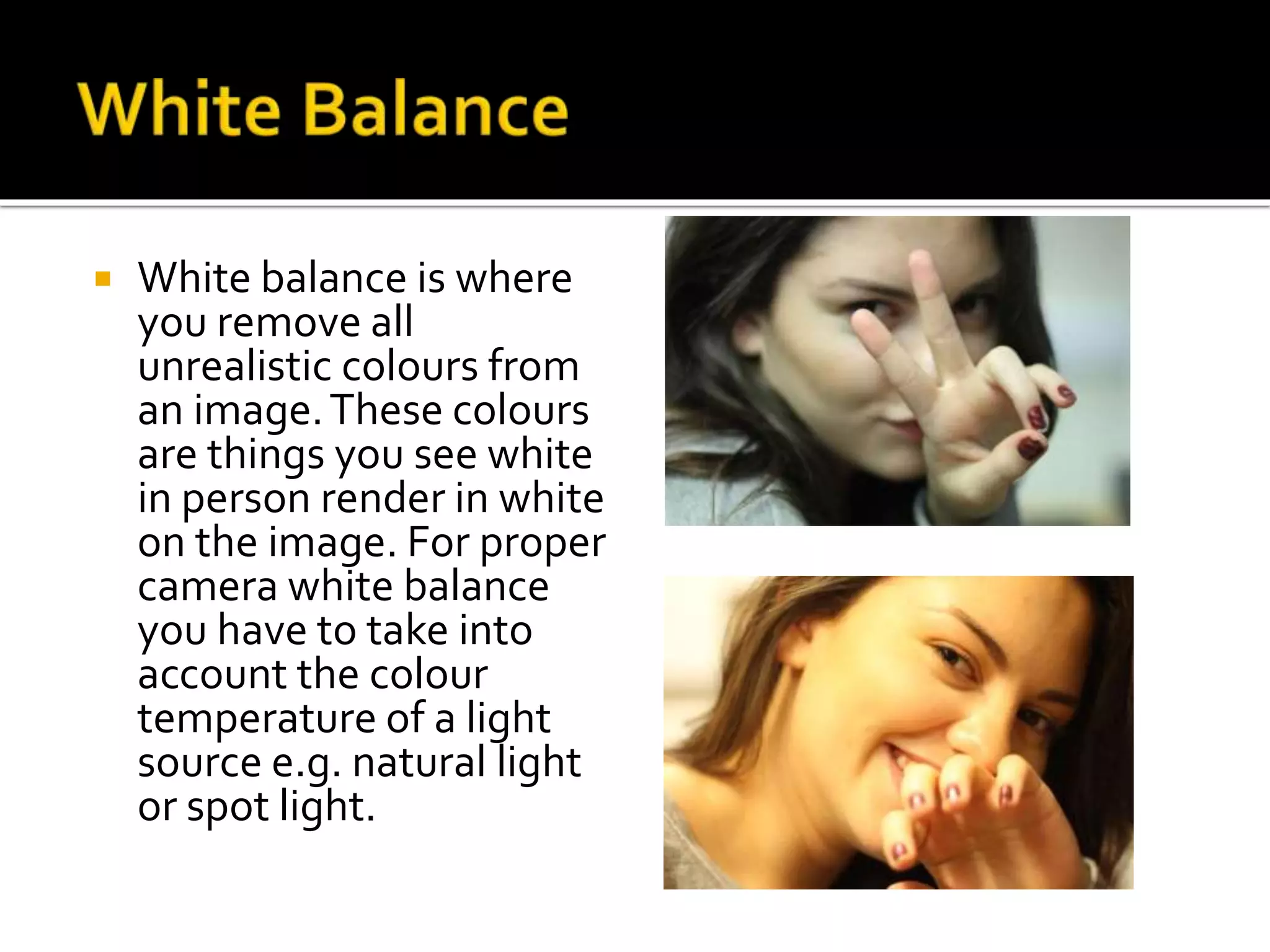
 White balance is where
you remove all
unrealistic colours from
an image.These colours
are things you see white
in person render in white
on the image. For proper
camera white balance
you have to take into
account the colour
temperature of a light
source e.g. natural light
or spot light.
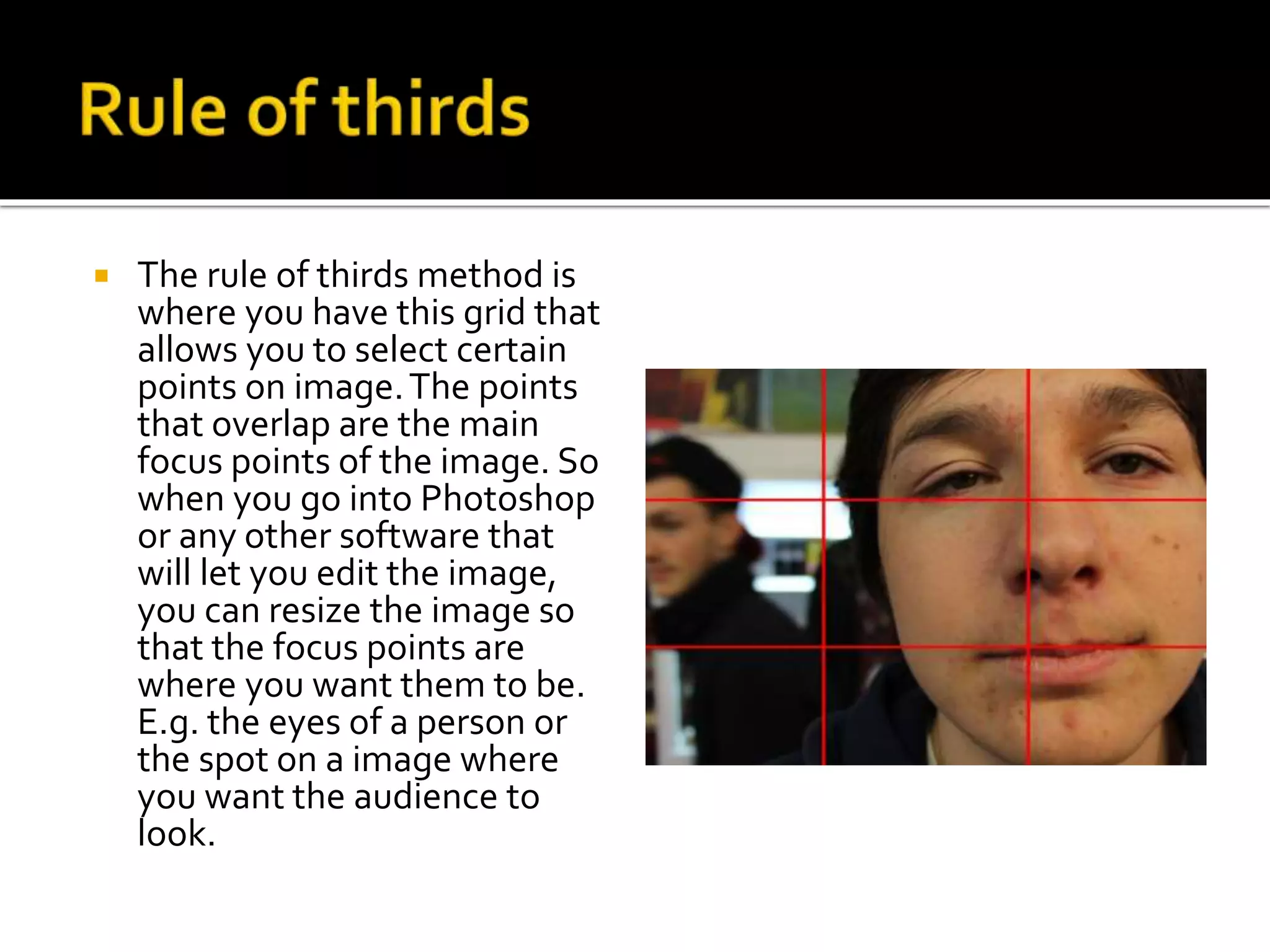
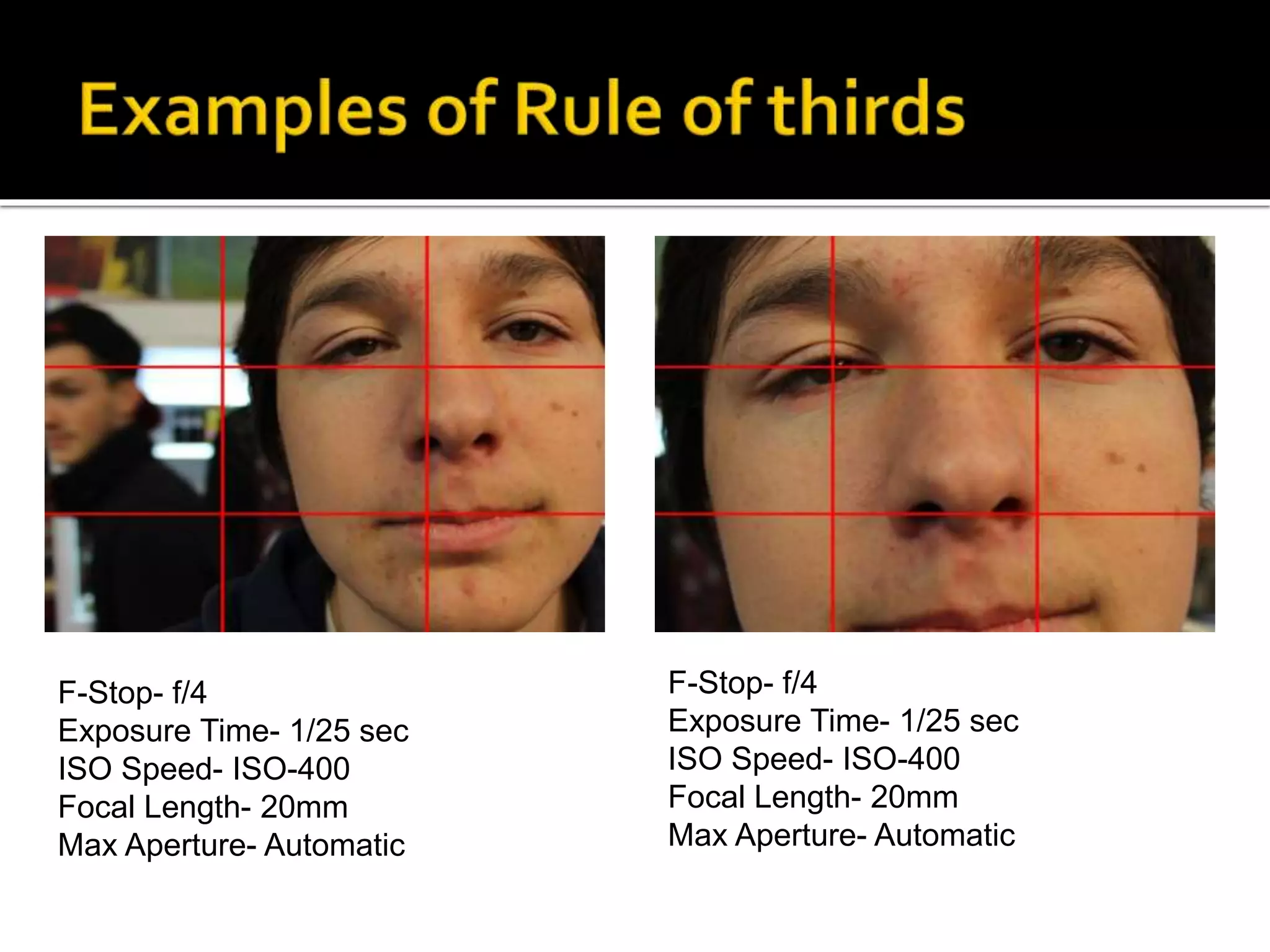
 The rule of thirds method is
where you have this grid that
allows you to select certain
points on image.The points
that overlap are the main
focus points of the image. So
when you go into Photoshop
or any other software that
will let you edit the image,
you can resize the image so
that the focus points are
where you want them to be.
E.g. the eyes of a person or
the spot on a image where
you want the audience to
look.
F-Stop- f/4
Exposure Time- 1/25 sec
ISO Speed- ISO-400
Focal Length- 20mm
Max Aperture- Automatic
F-Stop- f/4
Exposure Time- 1/25 sec
ISO Speed- ISO-400
Focal Length- 20mm
Max Aperture- Automatic

Task 2 photography terminology work sheet

  • 1.
    ___Thomas Ross____ Unit 57:Photography and Photographic Practice Terminology P1, P2, M1, M2
  • 2.
    The shutter speedon the camera was difficult to get around. We were constantly taking images like the first one. After we figured out how to change the shutter speed we started getting pictures like the second one. The shutter speed basically changes the brightness of the image, the higher the number the darker the image.As you can see the photo that you can see clearly has an exposure time of 1/60 sec. however the one you cant see is 1/6 sec.
  • 3.
    FAST SHUTTER SPEEDSLOW SHUTTER SPEED F-Stop- f/22 Exposure Time- 1/320 sec ISO Speed- ISO-3200 Focal Length- 55mm Max Aperture-5 F-Stop- f/22 Exposure Time-1/2sec ISO Speed- ISO-3200 Focal Length- 34mm Max Aperture-4.6
  • 4.
     ISO isthe darkness/ light of the image. If I was stood in a dark room I would turn the ISO up, However if I was stood somewhere really bright I would turn it down.This image is from being inside it differs from being outside.
  • 5.
    HIGH ISO LOWISO F-Stop-f/10 Exposure Time- 1/100 sec ISO Speed- ISO- Automatic Focal Length- 32mm Max Aperture-4.5 F-Stop-f/3.8 Exposure Time- 1/4000 sec ISO Speed- ISO- Automatic Focal Length- 20mm Max Aperture-3.8
  • 6.
     The depthof field is where one part of the picture is in focus and part isn’t. Mainly the part that is in focus in the part that you want to be seen not the other way round.
  • 7.
    NARROW DEPTH OFFIELD LONG DEPTH OF FIELD F-stop – F/5.3 Exposure time- 1/4000 sec ISO Speed- Automatic Focal Length -40 mm Max Aperture- 4.8 F-Stop-f/10 Exposure Time-1/100 sec ISO Speed- ISO-200 Focal Length-55mm Max Aperture-5
  • 8.
     Manual exposureis where you control all of the aspects of a camera.This means that you manually control the shutter speed, focus, ISO, aperture.This making the image more to your liking as you can control what is happening in the image.The reason that we use manual control is that if we want a darker efffect we can change the iso or f-stop so that we get the result that we want.
  • 9.
     White balanceis where you remove all unrealistic colours from an image.These colours are things you see white in person render in white on the image. For proper camera white balance you have to take into account the colour temperature of a light source e.g. natural light or spot light.
  • 10.
     The ruleof thirds method is where you have this grid that allows you to select certain points on image.The points that overlap are the main focus points of the image. So when you go into Photoshop or any other software that will let you edit the image, you can resize the image so that the focus points are where you want them to be. E.g. the eyes of a person or the spot on a image where you want the audience to look.
  • 11.
    F-Stop- f/4 Exposure Time-1/25 sec ISO Speed- ISO-400 Focal Length- 20mm Max Aperture- Automatic F-Stop- f/4 Exposure Time- 1/25 sec ISO Speed- ISO-400 Focal Length- 20mm Max Aperture- Automatic