




Opportunities and Challenges of 
Using Smartphones for Health 
Monitoring and Intervention 
@neal_lathia 
Computer Laboratory 
University of Cambridge
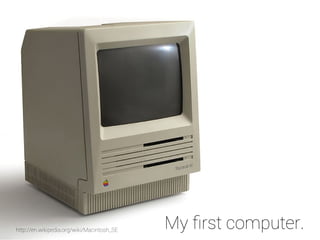
http://en.wikipedia.org/wiki/Macintosh_SE My first computer.
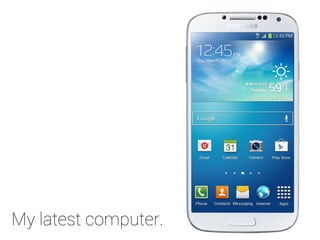
M y latest computer .
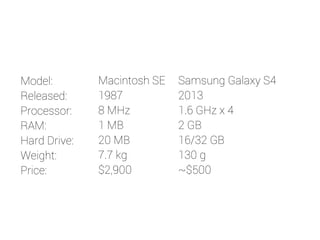
Macintosh SE 
1987 
8 MHz 
1 MB 
20 MB 
7.7 kg 
$2,900 
Model: 
Released: 
Processor: 
RAM: 
Hard Drive: 
Weight: 
Price: 
Samsung Galaxy S4 
2013 
1.6 GHz x 4 
2 GB 
16/32 GB 
130 g 
~$500
1/5: the “basics” 
why health via smartphones? 
why smartphones for health?
why health via smartphones? 
health “in the moment” vs. “reconstructed” 
ubiquity of technology vs. limited face-to-face
Smartphones are incredibly personal devices: 
they are not often shared. 
Research shows that owners regularly keep their 
smartphone within arms length of them. 
A. Dey et. al. Getting Closer: An Empirical Investigation of the Proximity of 
Users to their Smartphones. In ACM Ubicomp 2011.
why smartphones for health? 
2/5: interactivity 
3/5: sensors 
4/5: machine learning
2/5: interactivity * 
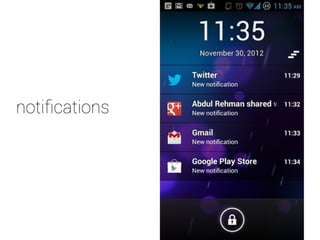
notifications 
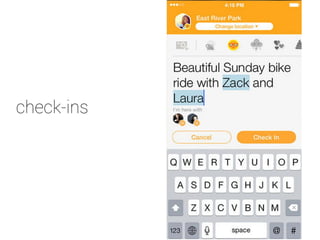
check-ins 
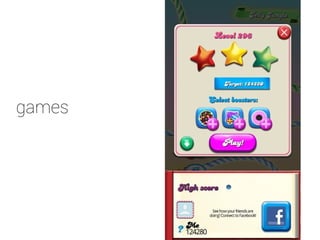
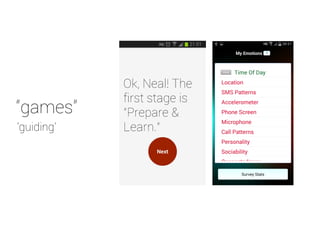
games 
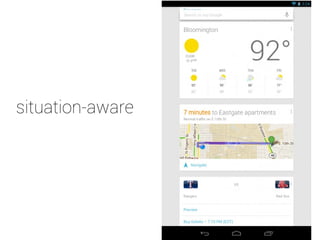
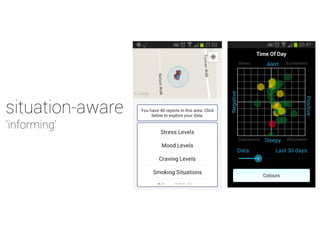
situation-awareness 
momentary, context-aware, engaging 
* I don't research interaction/design
notifications
check-ins
games
situation-aware
Emotion Sense Q Sense 
mood tracking smoking cessation 
Dept. of Psychology Behavioural Sciences
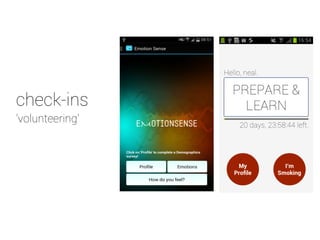
check-ins 
'volunteering'
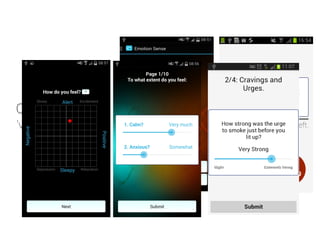
check-ins 
'volunteering'
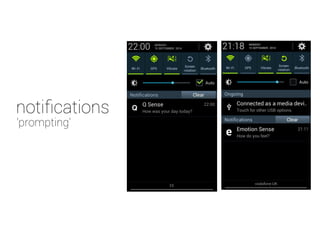
notifications 
'prompting'
“games” 
'guiding'
situation-aware 
'informing'
2/5: interactive apps 
a) active behavioural monitoring 
b) momentary assessment 
c) information delivery
3/5: smartphone sensors 
p assive behavioural monitoring
Sensors were originally added to smartphones 
for purely functional purposes. 
E.g., an accelerometer lets the device know when 
to display the screen in landscape mode; the GPS 
allows the device to support maps/driving apps. 
Only later did researchers uncover that all of 
these sensors could be a valuable source of 
behavioural data.
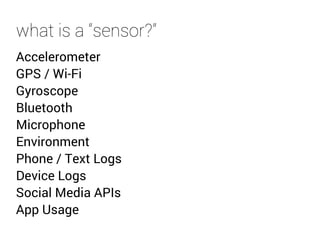
what is a “sensor?” 
Accelerometer 
GPS / Wi-Fi 
Gyroscope 
Bluetooth 
Microphone 
Environment 
Phone / Text Logs 
Device Logs 
Social Media APIs 
App Usage
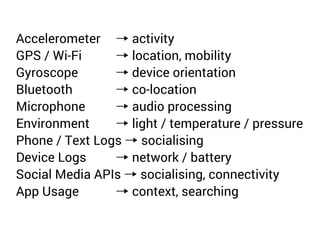
Accelerometer → activity 
GPS / Wi-Fi → location, mobility 
Gyroscope → device orientation 
Bluetooth → co-location 
Microphone → audio processing 
Environment → light / temperature / pressure 
Phone / Text Logs → socialising 
Device Logs → network / battery 
Social Media APIs → socialising, connectivity 
App Usage → context, searching
Sensors do not “directly” encode behaviour. For 
example, sampling from the accelerometer 
provides time series data of changes in 
acceleration. 
All sensor data needs to be processed in order to 
extract/infer behaviours. How, for example, does 
the accelerometer indicate physical activity?
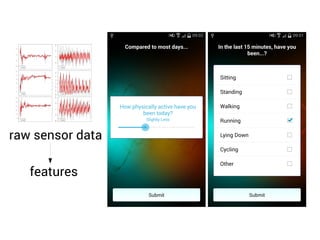
raw sensor data 
features
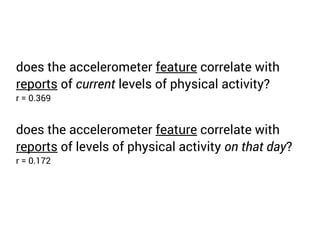
does the accelerometer feature correlate with 
reports of current levels of physical activity? 
r = 0.369 
does the accelerometer feature correlate with 
reports of levels of physical activity on that day? 
r = 0.172
...batteries are still headaches: 
Sensors were originally added to smartphones 
for purely functional purposes. 
These sensors were not built to efficiently collect 
continuous streams of data*. 
* This is changing...? 
K. Rachuri. Smartphones Based Social Sensing: Adaptive Sampling, Sensing 
and Computation Offloading. PhD Thesis, Computer Laboratory. 2012.
4/5: machine learning 
u sing data to infer behaviour
Machine Learning (vs. Behaviour Theory?) 
Behaviours are often too complex and/or 
abstract to directly encode them into software. 
Machine learning a statistical approach that 
centres around using data to learn to identify and 
predict behaviours. Often without knowing much 
(or anything) about what those behaviours 
actually look like.
Two broad categories of learning algorithms, 
which are often referred to as unsupervised and 
supervised learning.
Unsupervised learning, or clustering, assumes 
you have: 
(a) a large dataset of many representations of a 
behaviour, and 
(b) a way of measuring the extent that two 
representations of behaviours are similar. 
… without knowing precisely how to code for that 
behaviour
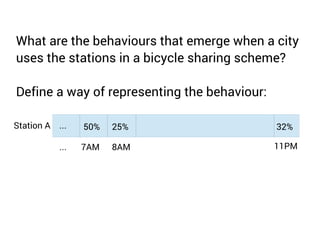
What are the behaviours that emerge when a city 
uses the stations in a bicycle sharing scheme? 
Define a way of representing the behaviour: 
Station A ... 50% 25% 32% 
... 7AM 8AM 11PM
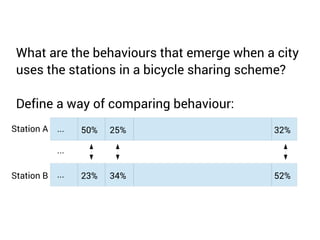
What are the behaviours that emerge when a city 
uses the stations in a bicycle sharing scheme? 
Define a way of comparing behaviour: 
Station A ... 50% 25% 32% 
... 
Station B ... 23% 34% 52%
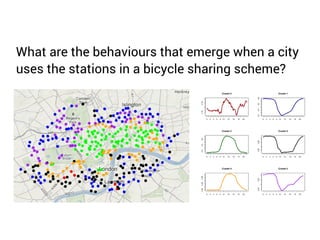
What are the behaviours that emerge when a city 
uses the stations in a bicycle sharing scheme?
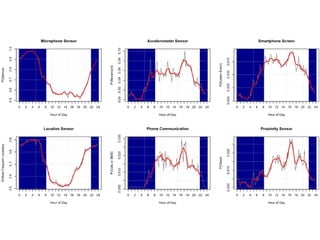
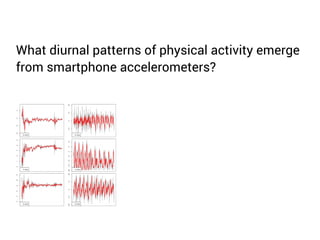
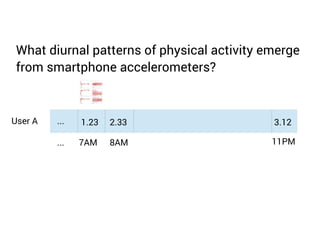
What diurnal patterns of physical activity emerge 
from smartphone accelerometers?
What diurnal patterns of physical activity emerge 
from smartphone accelerometers? 
User A ... 1.23 2.33 3.12 
... 7AM 8AM 11PM
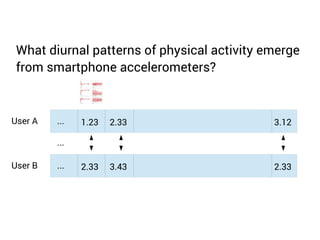
What diurnal patterns of physical activity emerge 
from smartphone accelerometers? 
User A ... 1.23 2.33 3.12 
... 
User B ... 2.33 3.43 2.33
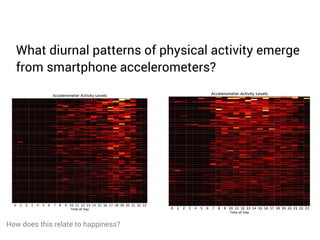
What diurnal patterns of physical activity emerge 
from smartphone accelerometers? 
How does this relate to happiness?
4/5: machine learning 
u sing data to infer & predict behaviour 
* I didn't include supervised learning, which is awesome
5/5: challenges & opportunities
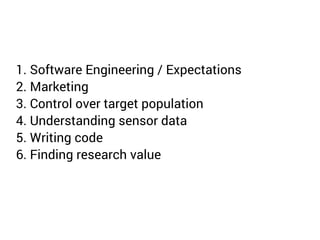
1. Software Engineering / Expectations 
2. Marketing 
3. Control over target population 
4. Understanding sensor data 
5. Writing code 
6. Finding research value
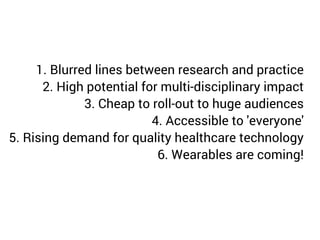
1. Blurred lines between research and practice 
2. High potential for multi-disciplinary impact 
3. Cheap to roll-out to huge audiences 
4. Accessible to 'everyone' 
5. Rising demand for quality healthcare technology 
6. Wearables are coming!
Opportunities and Challenges of 
Using Smartphones for Health 
Monitoring and Intervention 
@neal_lathia 
Computer Laboratory 
University of Cambridge
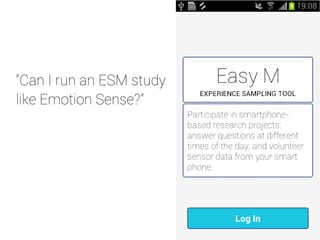
“Can I run an ESM study 
like Emotion Sense?”

Opportunities and Challenges of Using Smartphones for Health Monitoring and Intervention

  • 1.
    Opportunities and Challengesof Using Smartphones for Health Monitoring and Intervention @neal_lathia Computer Laboratory University of Cambridge
  • 2.
  • 3.
    M y latestcomputer .
  • 4.
    Macintosh SE 1987 8 MHz 1 MB 20 MB 7.7 kg $2,900 Model: Released: Processor: RAM: Hard Drive: Weight: Price: Samsung Galaxy S4 2013 1.6 GHz x 4 2 GB 16/32 GB 130 g ~$500
  • 5.
    1/5: the “basics” why health via smartphones? why smartphones for health?
  • 6.
    why health viasmartphones? health “in the moment” vs. “reconstructed” ubiquity of technology vs. limited face-to-face
  • 7.
    Smartphones are incrediblypersonal devices: they are not often shared. Research shows that owners regularly keep their smartphone within arms length of them. A. Dey et. al. Getting Closer: An Empirical Investigation of the Proximity of Users to their Smartphones. In ACM Ubicomp 2011.
  • 8.
    why smartphones forhealth? 2/5: interactivity 3/5: sensors 4/5: machine learning
  • 9.
    2/5: interactivity * notifications check-ins games situation-awareness momentary, context-aware, engaging * I don't research interaction/design
  • 10.
  • 11.
  • 12.
  • 13.
  • 14.
    Emotion Sense QSense mood tracking smoking cessation Dept. of Psychology Behavioural Sciences
  • 15.
  • 16.
  • 17.
  • 18.
  • 19.
  • 20.
    2/5: interactive apps a) active behavioural monitoring b) momentary assessment c) information delivery
  • 21.
    3/5: smartphone sensors p assive behavioural monitoring
  • 22.
    Sensors were originallyadded to smartphones for purely functional purposes. E.g., an accelerometer lets the device know when to display the screen in landscape mode; the GPS allows the device to support maps/driving apps. Only later did researchers uncover that all of these sensors could be a valuable source of behavioural data.
  • 23.
    what is a“sensor?” Accelerometer GPS / Wi-Fi Gyroscope Bluetooth Microphone Environment Phone / Text Logs Device Logs Social Media APIs App Usage
  • 24.
    Accelerometer → activity GPS / Wi-Fi → location, mobility Gyroscope → device orientation Bluetooth → co-location Microphone → audio processing Environment → light / temperature / pressure Phone / Text Logs → socialising Device Logs → network / battery Social Media APIs → socialising, connectivity App Usage → context, searching
  • 25.
    Sensors do not“directly” encode behaviour. For example, sampling from the accelerometer provides time series data of changes in acceleration. All sensor data needs to be processed in order to extract/infer behaviours. How, for example, does the accelerometer indicate physical activity?
  • 26.
    raw sensor data features
  • 27.
    does the accelerometerfeature correlate with reports of current levels of physical activity? r = 0.369 does the accelerometer feature correlate with reports of levels of physical activity on that day? r = 0.172
  • 30.
    ...batteries are stillheadaches: Sensors were originally added to smartphones for purely functional purposes. These sensors were not built to efficiently collect continuous streams of data*. * This is changing...? K. Rachuri. Smartphones Based Social Sensing: Adaptive Sampling, Sensing and Computation Offloading. PhD Thesis, Computer Laboratory. 2012.
  • 31.
    4/5: machine learning u sing data to infer behaviour
  • 32.
    Machine Learning (vs.Behaviour Theory?) Behaviours are often too complex and/or abstract to directly encode them into software. Machine learning a statistical approach that centres around using data to learn to identify and predict behaviours. Often without knowing much (or anything) about what those behaviours actually look like.
  • 33.
    Two broad categoriesof learning algorithms, which are often referred to as unsupervised and supervised learning.
  • 34.
    Unsupervised learning, orclustering, assumes you have: (a) a large dataset of many representations of a behaviour, and (b) a way of measuring the extent that two representations of behaviours are similar. … without knowing precisely how to code for that behaviour
  • 35.
    What are thebehaviours that emerge when a city uses the stations in a bicycle sharing scheme? Define a way of representing the behaviour: Station A ... 50% 25% 32% ... 7AM 8AM 11PM
  • 36.
    What are thebehaviours that emerge when a city uses the stations in a bicycle sharing scheme? Define a way of comparing behaviour: Station A ... 50% 25% 32% ... Station B ... 23% 34% 52%
  • 37.
    What are thebehaviours that emerge when a city uses the stations in a bicycle sharing scheme?
  • 38.
    What diurnal patternsof physical activity emerge from smartphone accelerometers?
  • 39.
    What diurnal patternsof physical activity emerge from smartphone accelerometers? User A ... 1.23 2.33 3.12 ... 7AM 8AM 11PM
  • 40.
    What diurnal patternsof physical activity emerge from smartphone accelerometers? User A ... 1.23 2.33 3.12 ... User B ... 2.33 3.43 2.33
  • 41.
    What diurnal patternsof physical activity emerge from smartphone accelerometers? How does this relate to happiness?
  • 42.
    4/5: machine learning u sing data to infer & predict behaviour * I didn't include supervised learning, which is awesome
  • 43.
    5/5: challenges &opportunities
  • 44.
    1. Software Engineering/ Expectations 2. Marketing 3. Control over target population 4. Understanding sensor data 5. Writing code 6. Finding research value
  • 45.
    1. Blurred linesbetween research and practice 2. High potential for multi-disciplinary impact 3. Cheap to roll-out to huge audiences 4. Accessible to 'everyone' 5. Rising demand for quality healthcare technology 6. Wearables are coming!
  • 46.
    Opportunities and Challengesof Using Smartphones for Health Monitoring and Intervention @neal_lathia Computer Laboratory University of Cambridge
  • 47.
    “Can I runan ESM study like Emotion Sense?”