TABLE SETTING
Mrs.R.Subha, M.Sc., M.Phil., D.C.T.,
Assistant Professor of Home Science,
V.V.Vanniaperumal College for Women,
Virudhunagar
Introduction
• Proper table setting is an art form.
• Casual or formal, traditional or modern, presentation is everything.
• When properly set, tableware arrangements enhance the dining experience.
• Make a lasting impression using our flatware, dinnerware and drinkware
setting tips.
Definition
• Table setting (laying a table) or place setting refers to the way to
set a table with tableware—such as eating utensils and for
serving and eating. The arrangement for a single diner is called a
place setting.
Basic Table Setting
• Simple table setting is appropriate for all types of restaurants and
casual events
• Basic table setting for a daily dinner/ special brunch.
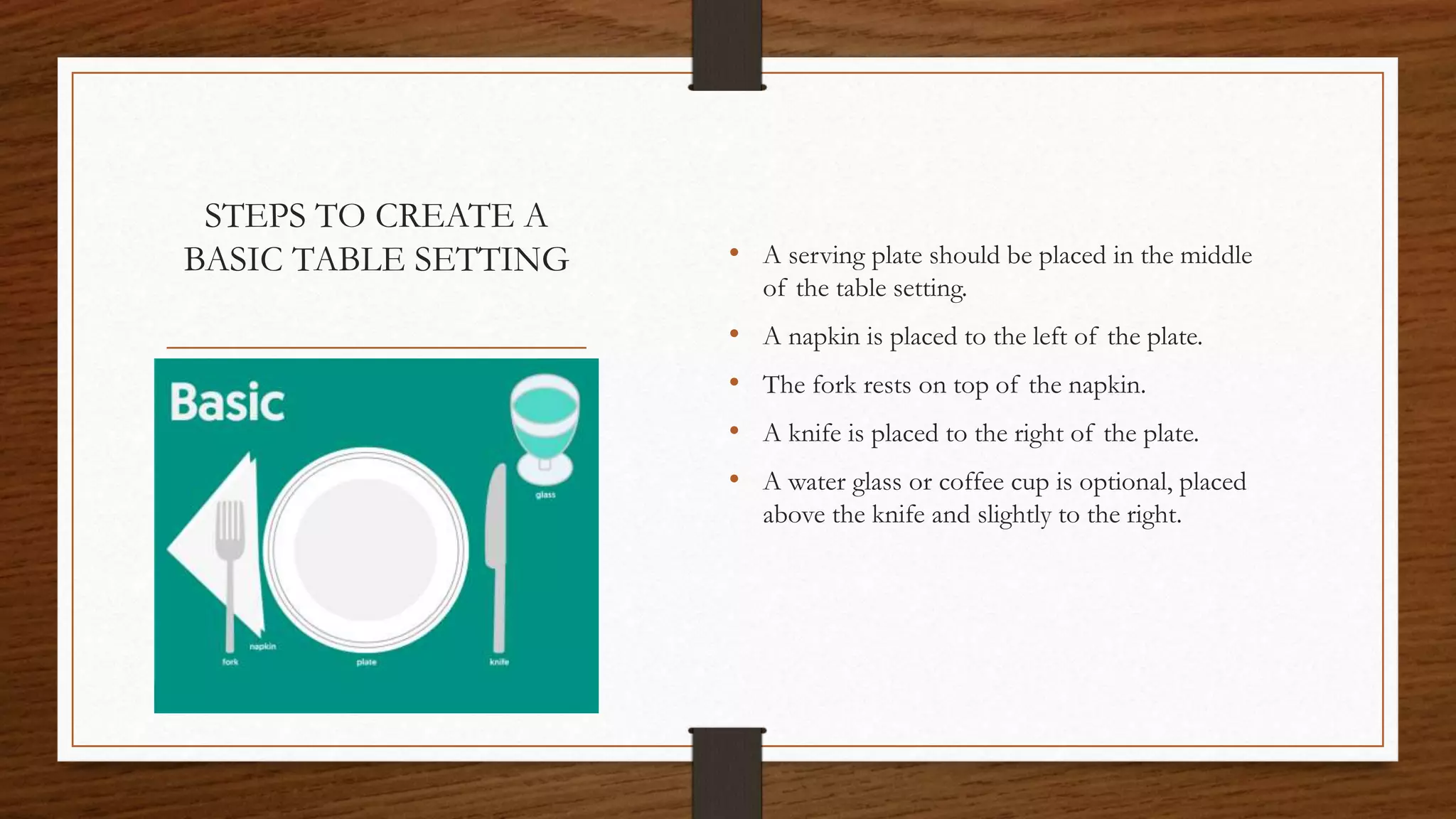
• Charger plate, a knife and fork, a water glass and a napkin.
• Often with a basic table setting there is no dessert cutlery
• Also does not need to be a wine glass if you are not drinking wine
STEPS TO CREATE A
BASIC TABLE SETTING • A serving plate should be placed in the middle
of the table setting.
• A napkin is placed to the left of the plate.
• The fork rests on top of the napkin.
• A knife is placed to the right of the plate.
• A water glass or coffee cup is optional, placed
above the knife and slightly to the right.
Casual Table Setting
• Commonly used at banquets and luncheons, this setting is also
referred to as an informal table setting.
• Popular choice for wedding table settings and contemporary casual
restaurants.
• This setting is similar to a formal table setting, but is designed for
three courses instead of six.
• The flatware provided will be enough for a soup or salad, main
course, and dessert.
STEPS TO CREATE A CASUAL
TABLE SETTING
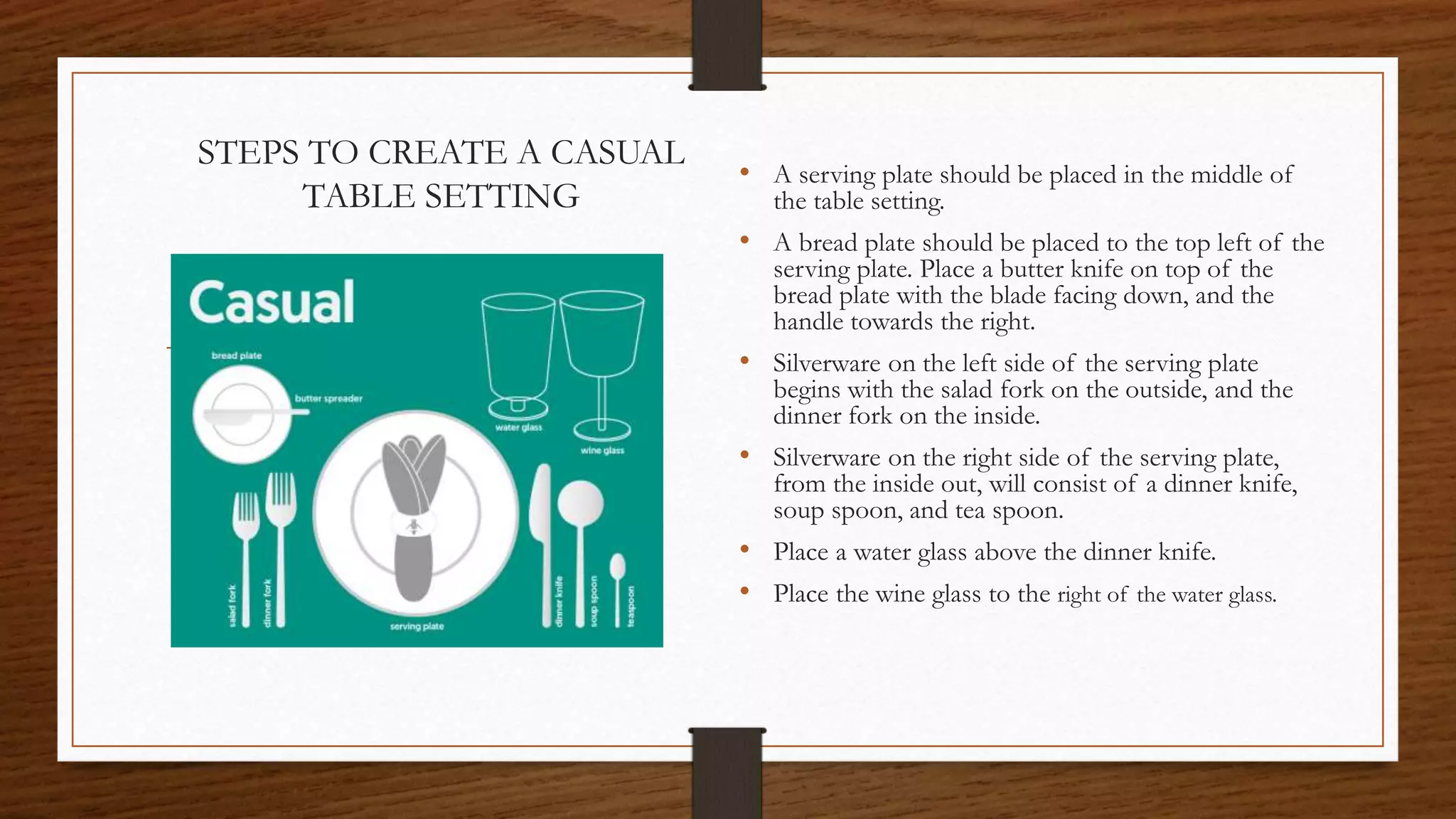
• A serving plate should be placed in the middle of
the table setting.
• A bread plate should be placed to the top left of the
serving plate. Place a butter knife on top of the
bread plate with the blade facing down, and the
handle towards the right.
• Silverware on the left side of the serving plate
begins with the salad fork on the outside, and the
dinner fork on the inside.
• Silverware on the right side of the serving plate,
from the inside out, will consist of a dinner knife,
soup spoon, and tea spoon.
• Place a water glass above the dinner knife.
• Place the wine glass to the right of the water glass.
Formal Table Setting
• This is the style of place setting - used at fine dining restaurants,
formal events and black tie weddings.
• Designed for a six course meal including an appetizer, soup, salad,
a starch, and dessert.
• This setting employs more flatware and glassware than the other
settings.
• Charger plates can also be used and should be placed beneath
the serving plate.
STEPS TO CREATE A FORMAL
DINNER TABLE SETTING
• Begin by placing an ironed tablecloth on the table.
• A serving plate goes in the center of the place setting.
• A bread plate should be placed to the top left of the serving
plate. Place a butter knife on top of the bread plate with the
blade facing down, and the handle towards the right.
• Silverware on the left side of the serving plate begins with the
salad fork on the outside, and the dinner fork on the inside.
• Silverware on the right side of the serving plate, from the inside
out, will consist of a dinner knife, salad knife, soup spoon, and
tea spoon.
• All flatware should be evenly spaced, and the bottoms should
line up with the bottom of the serving plate.
• The dessert spoon should be placed directly above the serving
plate, in horizontal alignment with the handle towards the right.
• Place a water glass above the dinner knife.
• Place the white wine glass below the water glass and slightly to
the right.
• Place the red wine glass above the white wine glass and slightly
to the right.
• A cup and saucer should be placed above the soup spoon and
slightly to the right.
Summary
• Decide occasion – amount of course to be served
• Keep theme – in picking table cloth, napkins, colours and center plate.

TABLE SETTING ethiqutte.pptx

  • 1.
    TABLE SETTING Mrs.R.Subha, M.Sc.,M.Phil., D.C.T., Assistant Professor of Home Science, V.V.Vanniaperumal College for Women, Virudhunagar
  • 2.
    Introduction • Proper tablesetting is an art form. • Casual or formal, traditional or modern, presentation is everything. • When properly set, tableware arrangements enhance the dining experience. • Make a lasting impression using our flatware, dinnerware and drinkware setting tips.
  • 3.
    Definition • Table setting(laying a table) or place setting refers to the way to set a table with tableware—such as eating utensils and for serving and eating. The arrangement for a single diner is called a place setting.
  • 6.
    Basic Table Setting •Simple table setting is appropriate for all types of restaurants and casual events • Basic table setting for a daily dinner/ special brunch. • Charger plate, a knife and fork, a water glass and a napkin. • Often with a basic table setting there is no dessert cutlery • Also does not need to be a wine glass if you are not drinking wine
  • 7.
    STEPS TO CREATEA BASIC TABLE SETTING • A serving plate should be placed in the middle of the table setting. • A napkin is placed to the left of the plate. • The fork rests on top of the napkin. • A knife is placed to the right of the plate. • A water glass or coffee cup is optional, placed above the knife and slightly to the right.
  • 8.
    Casual Table Setting •Commonly used at banquets and luncheons, this setting is also referred to as an informal table setting. • Popular choice for wedding table settings and contemporary casual restaurants. • This setting is similar to a formal table setting, but is designed for three courses instead of six. • The flatware provided will be enough for a soup or salad, main course, and dessert.
  • 9.
    STEPS TO CREATEA CASUAL TABLE SETTING • A serving plate should be placed in the middle of the table setting. • A bread plate should be placed to the top left of the serving plate. Place a butter knife on top of the bread plate with the blade facing down, and the handle towards the right. • Silverware on the left side of the serving plate begins with the salad fork on the outside, and the dinner fork on the inside. • Silverware on the right side of the serving plate, from the inside out, will consist of a dinner knife, soup spoon, and tea spoon. • Place a water glass above the dinner knife. • Place the wine glass to the right of the water glass.
  • 10.
    Formal Table Setting •This is the style of place setting - used at fine dining restaurants, formal events and black tie weddings. • Designed for a six course meal including an appetizer, soup, salad, a starch, and dessert. • This setting employs more flatware and glassware than the other settings. • Charger plates can also be used and should be placed beneath the serving plate.
  • 11.
    STEPS TO CREATEA FORMAL DINNER TABLE SETTING • Begin by placing an ironed tablecloth on the table. • A serving plate goes in the center of the place setting. • A bread plate should be placed to the top left of the serving plate. Place a butter knife on top of the bread plate with the blade facing down, and the handle towards the right. • Silverware on the left side of the serving plate begins with the salad fork on the outside, and the dinner fork on the inside. • Silverware on the right side of the serving plate, from the inside out, will consist of a dinner knife, salad knife, soup spoon, and tea spoon. • All flatware should be evenly spaced, and the bottoms should line up with the bottom of the serving plate. • The dessert spoon should be placed directly above the serving plate, in horizontal alignment with the handle towards the right. • Place a water glass above the dinner knife. • Place the white wine glass below the water glass and slightly to the right. • Place the red wine glass above the white wine glass and slightly to the right. • A cup and saucer should be placed above the soup spoon and slightly to the right.
  • 12.
    Summary • Decide occasion– amount of course to be served • Keep theme – in picking table cloth, napkins, colours and center plate.