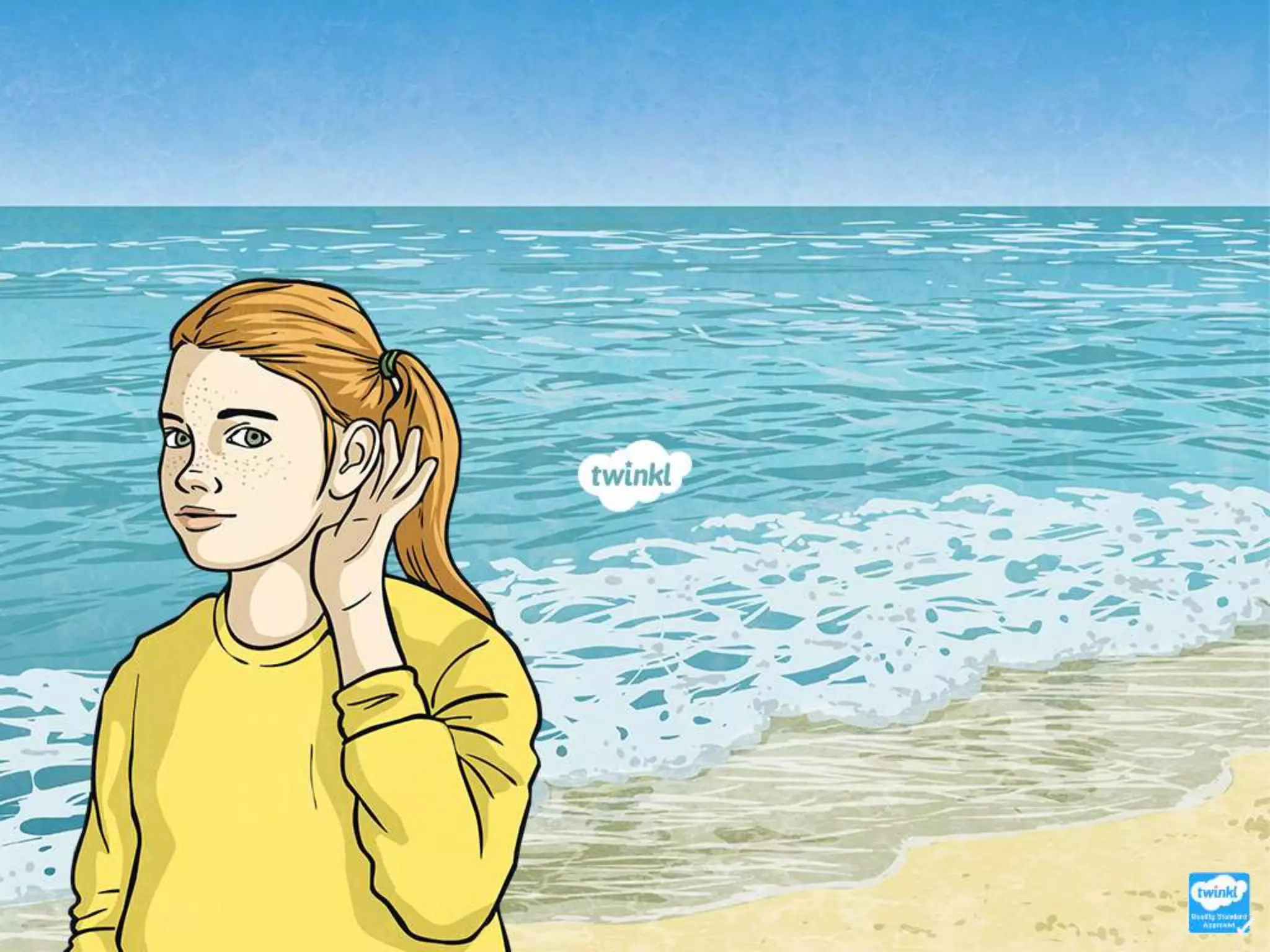
How Sound is Made
• Like light, sound travels through the air in waves.
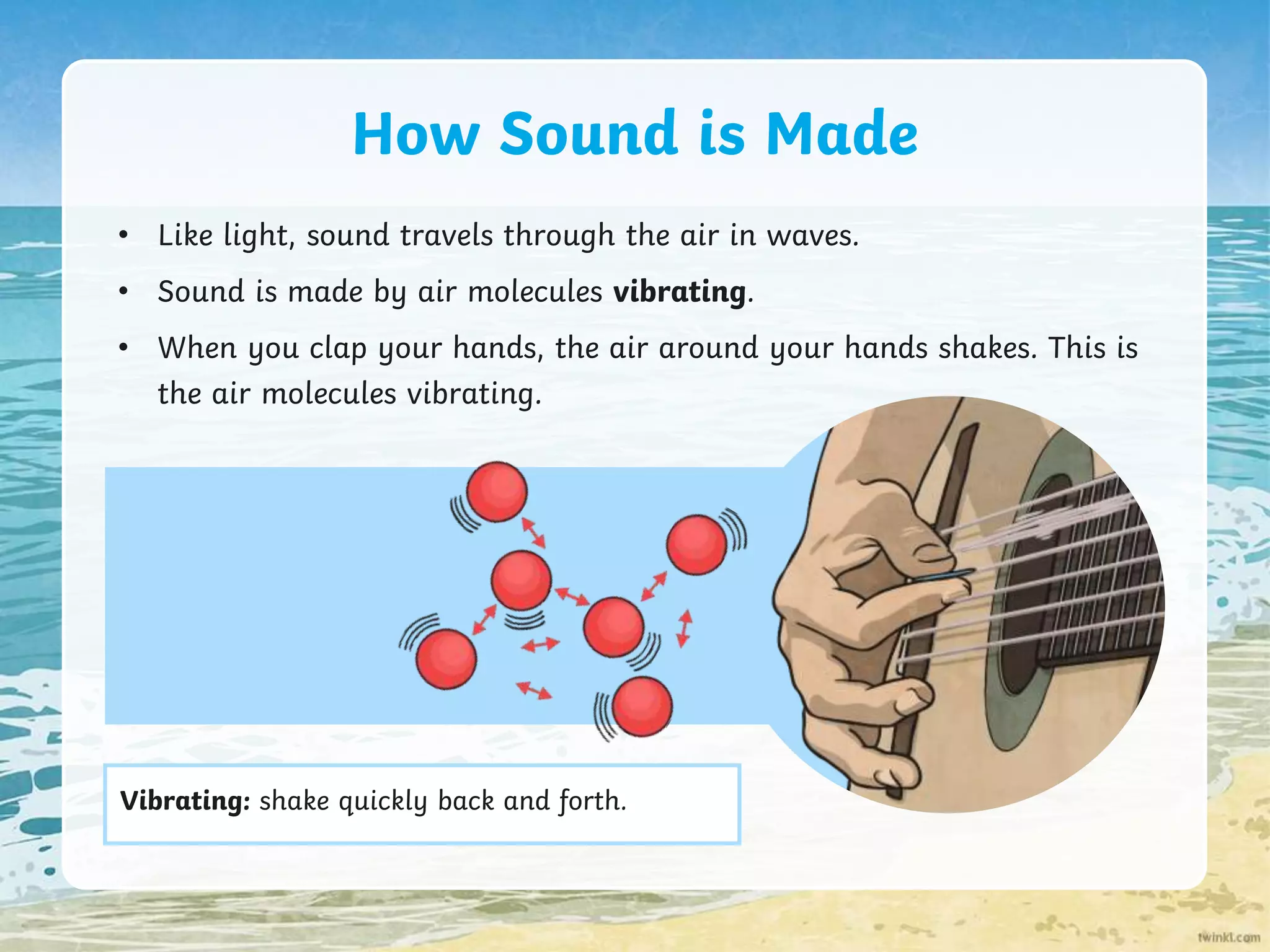
• Sound is made by air molecules vibrating.
• When you clap your hands, the air around your hands shakes. This is
the air molecules vibrating.
Vibrating: shake quickly back and forth.
How Sound is Made
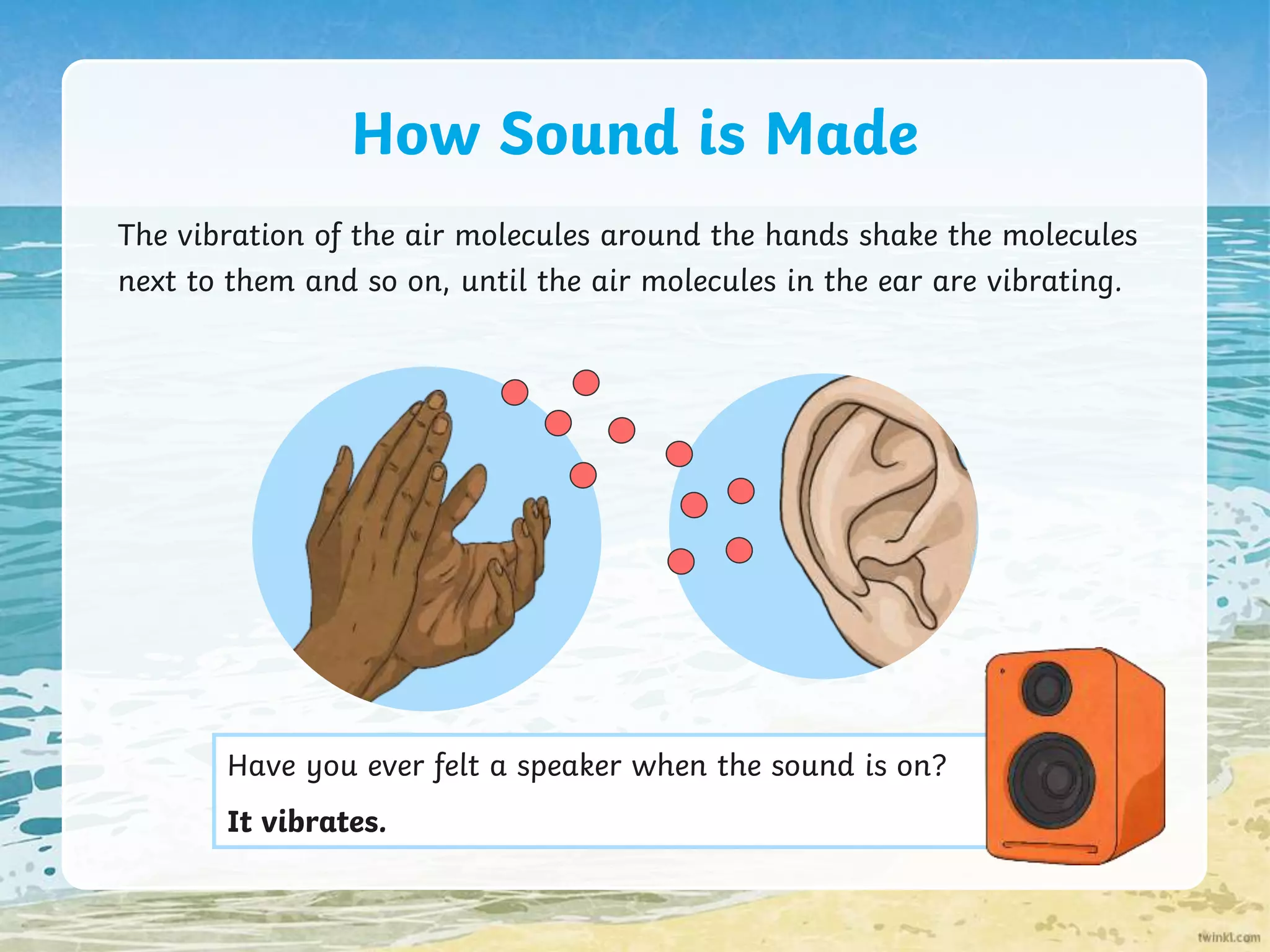
The vibration of the air molecules around the hands shake the molecules
next to them and so on, until the air molecules in the ear are vibrating.
Have you ever felt a speaker when the sound is on?
It vibrates.
How Sound is Made
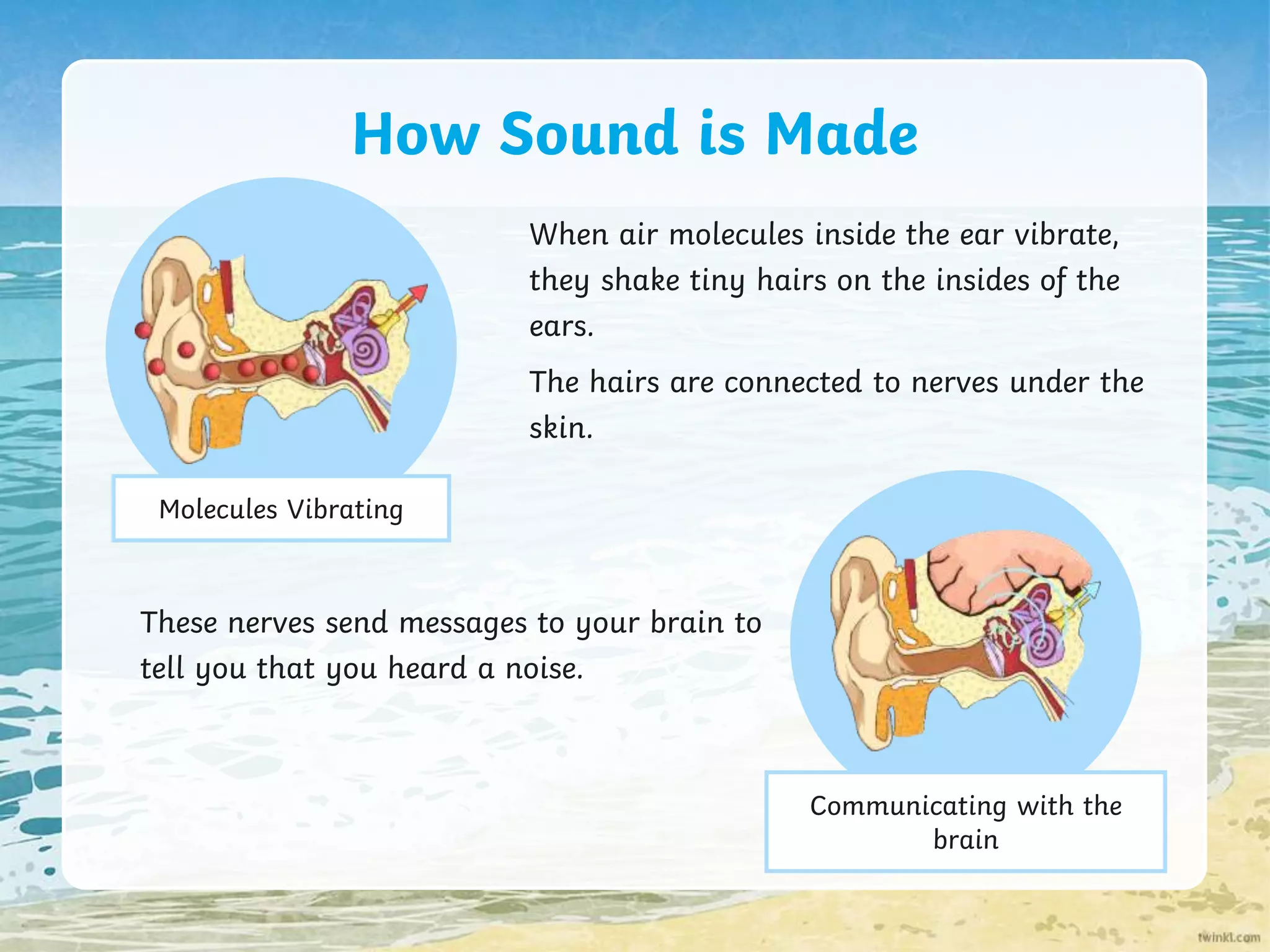
When air molecules inside the ear vibrate,
they shake tiny hairs on the insides of the
ears.
The hairs are connected to nerves under the
skin.
Molecules Vibrating
Communicating with the
brain
These nerves send messages to your brain to
tell you that you heard a noise.
How Sound is Made
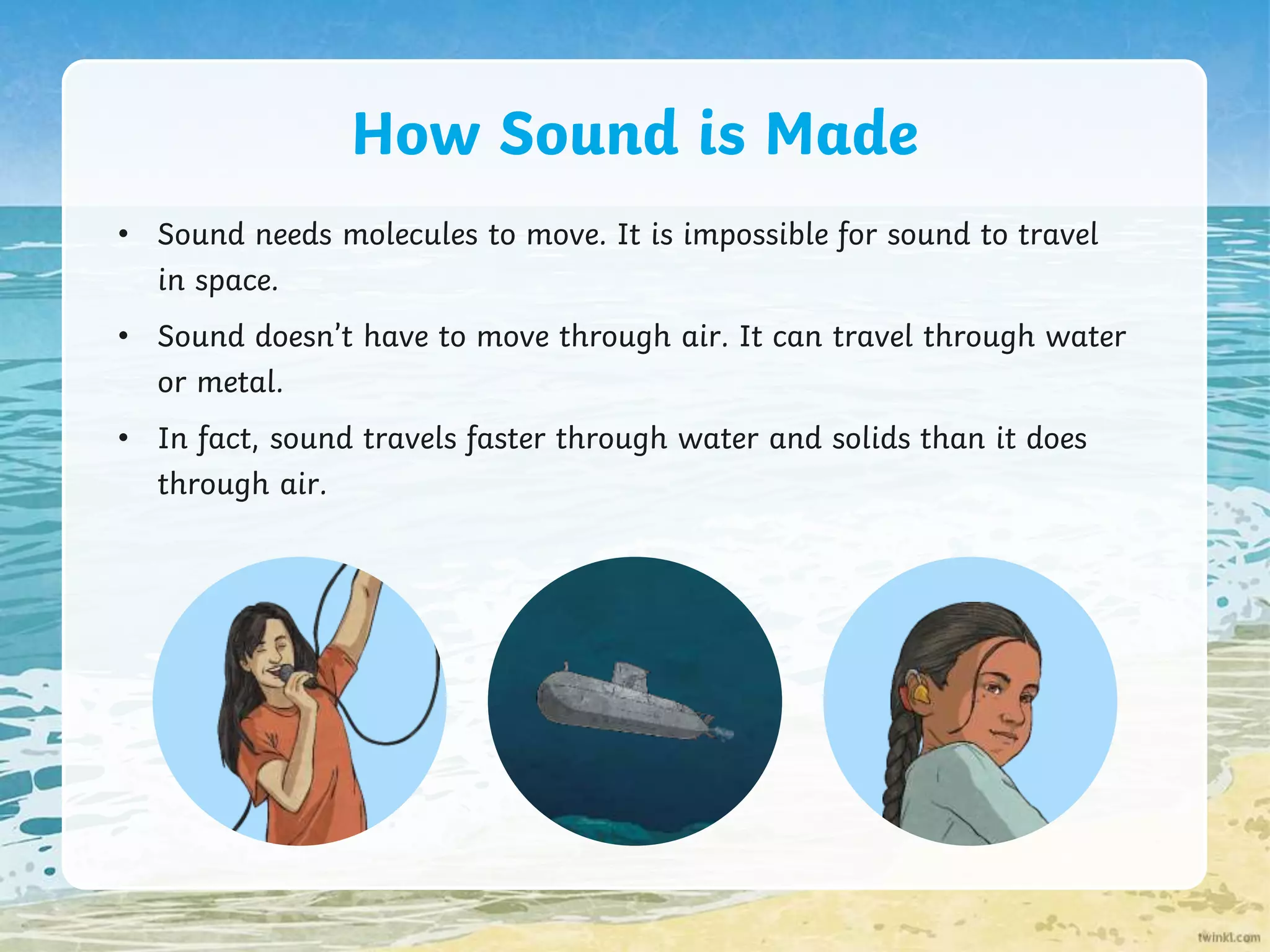
• Sound needs molecules to move. It is impossible for sound to travel
in space.
• Sound doesn’t have to move through air. It can travel through water
or metal.
• In fact, sound travels faster through water and solids than it does
through air.
How Sound is Made
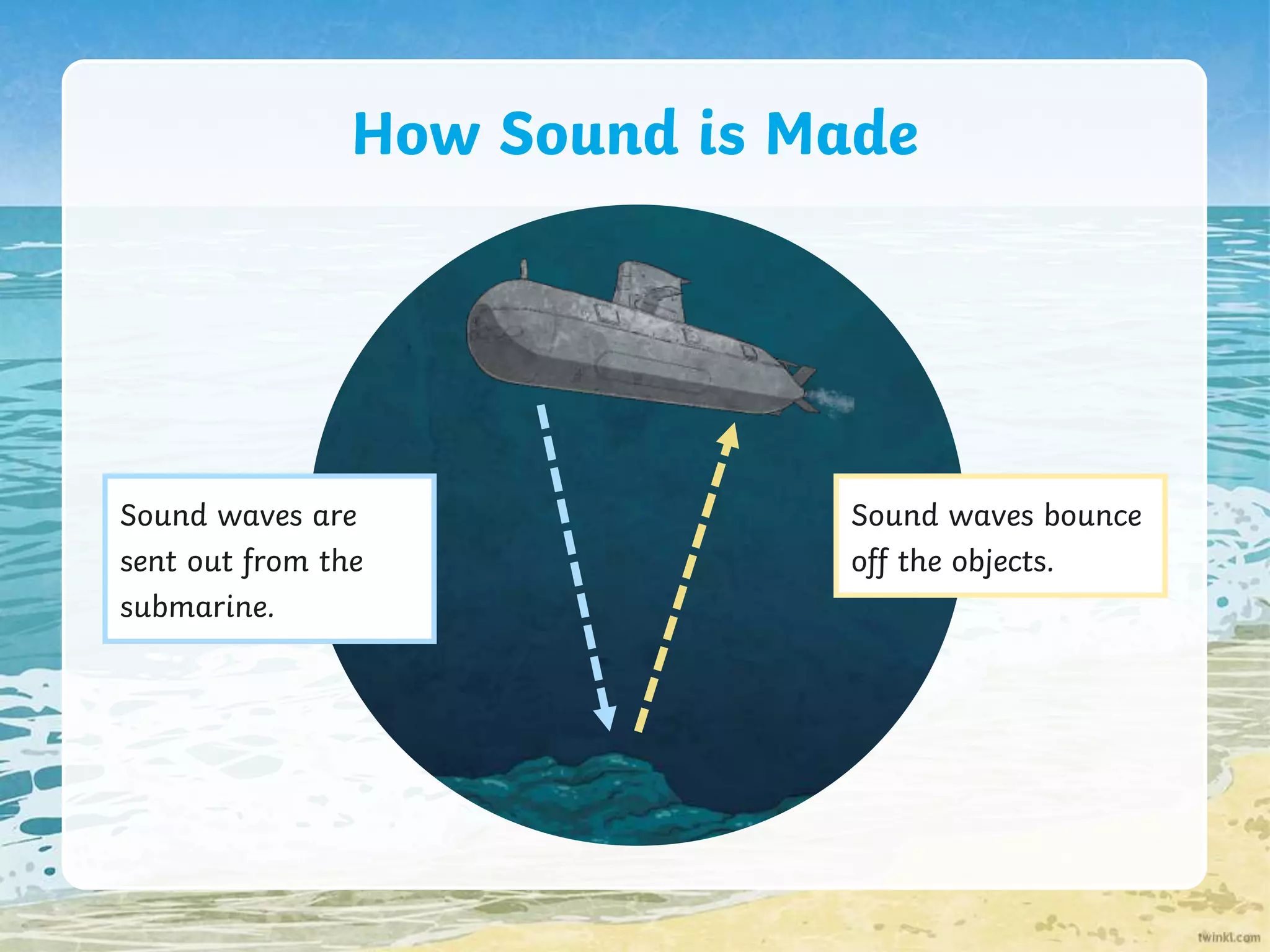
Sound waves are
sent out from the
submarine.
Sound waves bounce
off the objects.
How Sound is Made
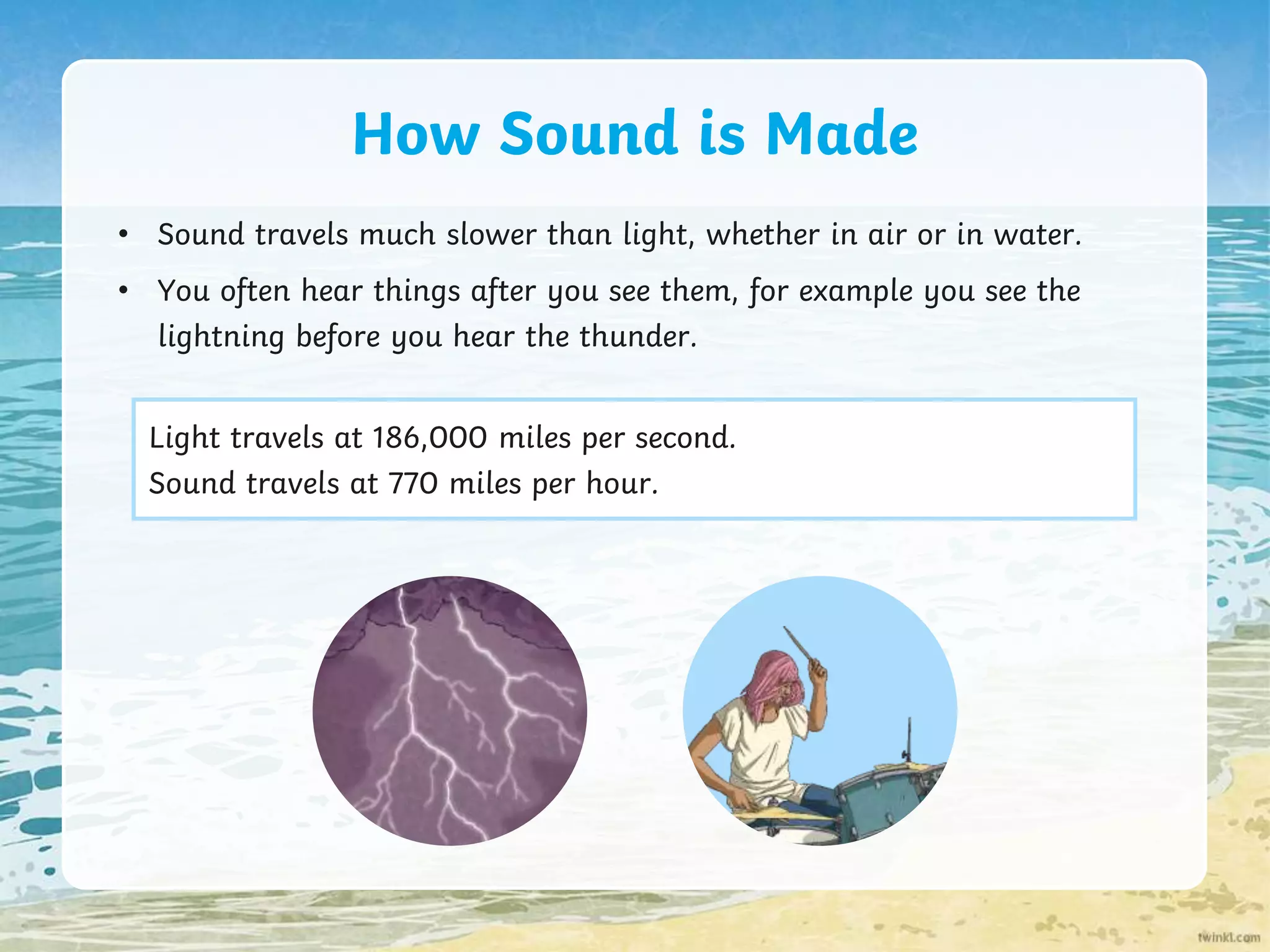
• Sound travels much slower than light, whether in air or in water.
• You often hear things after you see them, for example you see the
lightning before you hear the thunder.
Light travels at 186,000 miles per second.
Sound travels at 770 miles per hour.
How Sound is Made
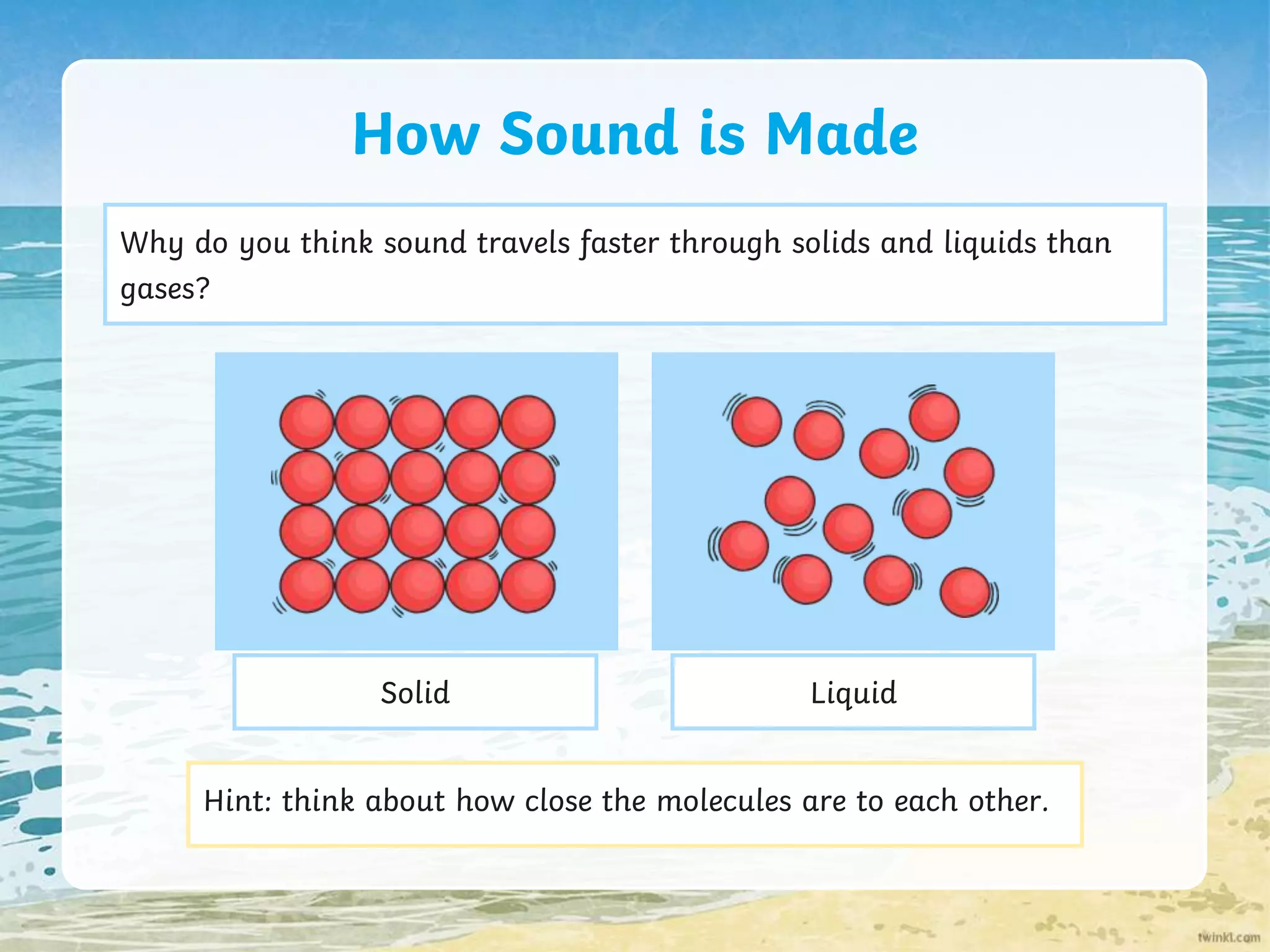
Why do you think sound travels faster through solids and liquids than
gases?
Solid Liquid
Hint: think about how close the molecules are to each other.
t2-s-220-ks2-sound-how-is-it-made-powerpoint-_ver_1_1.ppt

t2-s-220-ks2-sound-how-is-it-made-powerpoint-_ver_1_1.ppt

  • 2.
    How Sound isMade • Like light, sound travels through the air in waves. • Sound is made by air molecules vibrating. • When you clap your hands, the air around your hands shakes. This is the air molecules vibrating. Vibrating: shake quickly back and forth.
  • 3.
    How Sound isMade The vibration of the air molecules around the hands shake the molecules next to them and so on, until the air molecules in the ear are vibrating. Have you ever felt a speaker when the sound is on? It vibrates.
  • 4.
    How Sound isMade When air molecules inside the ear vibrate, they shake tiny hairs on the insides of the ears. The hairs are connected to nerves under the skin. Molecules Vibrating Communicating with the brain These nerves send messages to your brain to tell you that you heard a noise.
  • 5.
    How Sound isMade • Sound needs molecules to move. It is impossible for sound to travel in space. • Sound doesn’t have to move through air. It can travel through water or metal. • In fact, sound travels faster through water and solids than it does through air.
  • 6.
    How Sound isMade Sound waves are sent out from the submarine. Sound waves bounce off the objects.
  • 7.
    How Sound isMade • Sound travels much slower than light, whether in air or in water. • You often hear things after you see them, for example you see the lightning before you hear the thunder. Light travels at 186,000 miles per second. Sound travels at 770 miles per hour.
  • 8.
    How Sound isMade Why do you think sound travels faster through solids and liquids than gases? Solid Liquid Hint: think about how close the molecules are to each other.