







LORRAINE STEYN
@lor_krs
Systems Thinking and the Art of Simplification
Agenda
Systems Archetypes
What goes wrong?
Systems Thinking basics
How do we get it to go right?
Techniques for simplifying
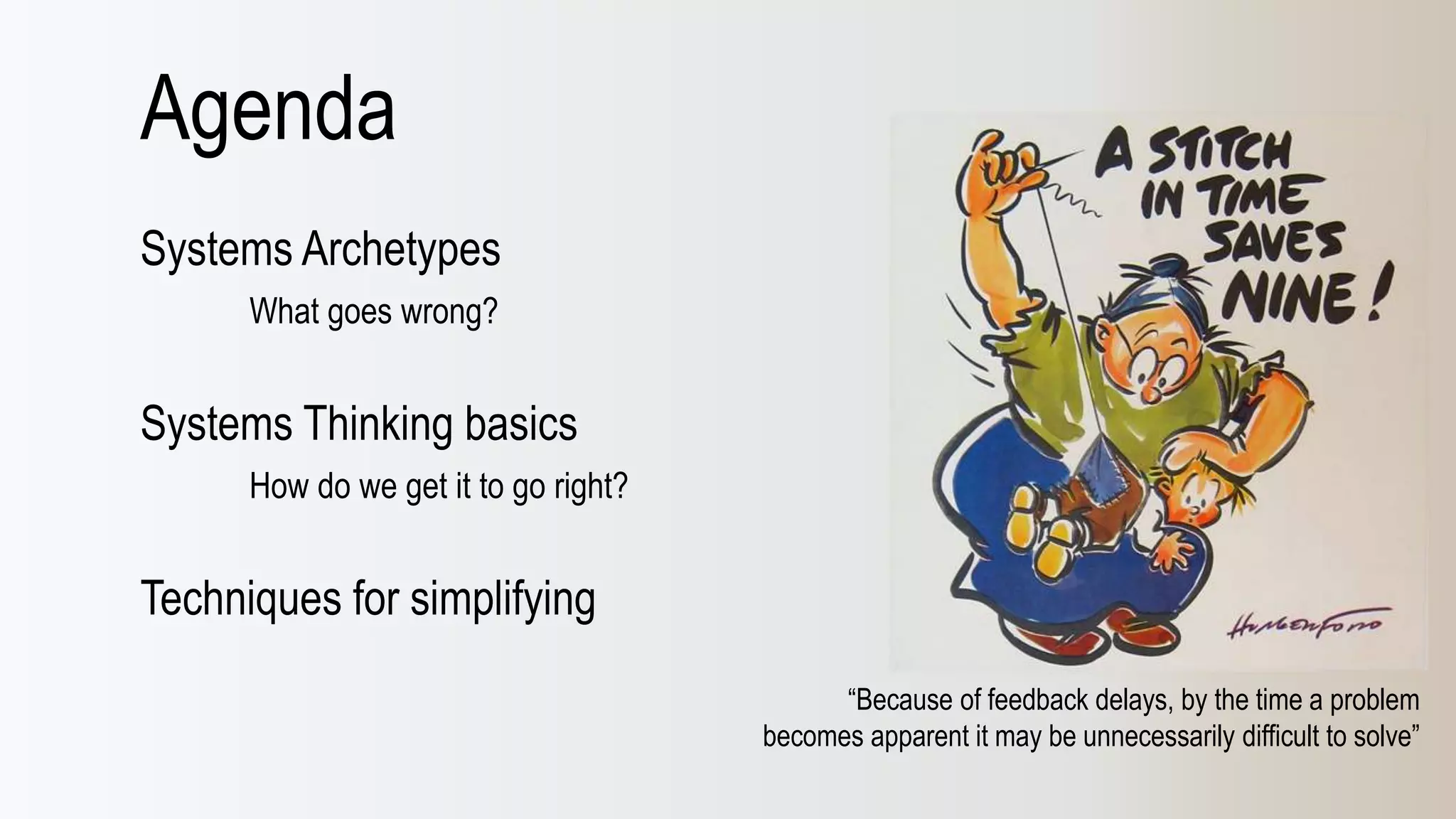
“Because of feedback delays, by the time a problem
becomes apparent it may be unnecessarily difficult to solve”
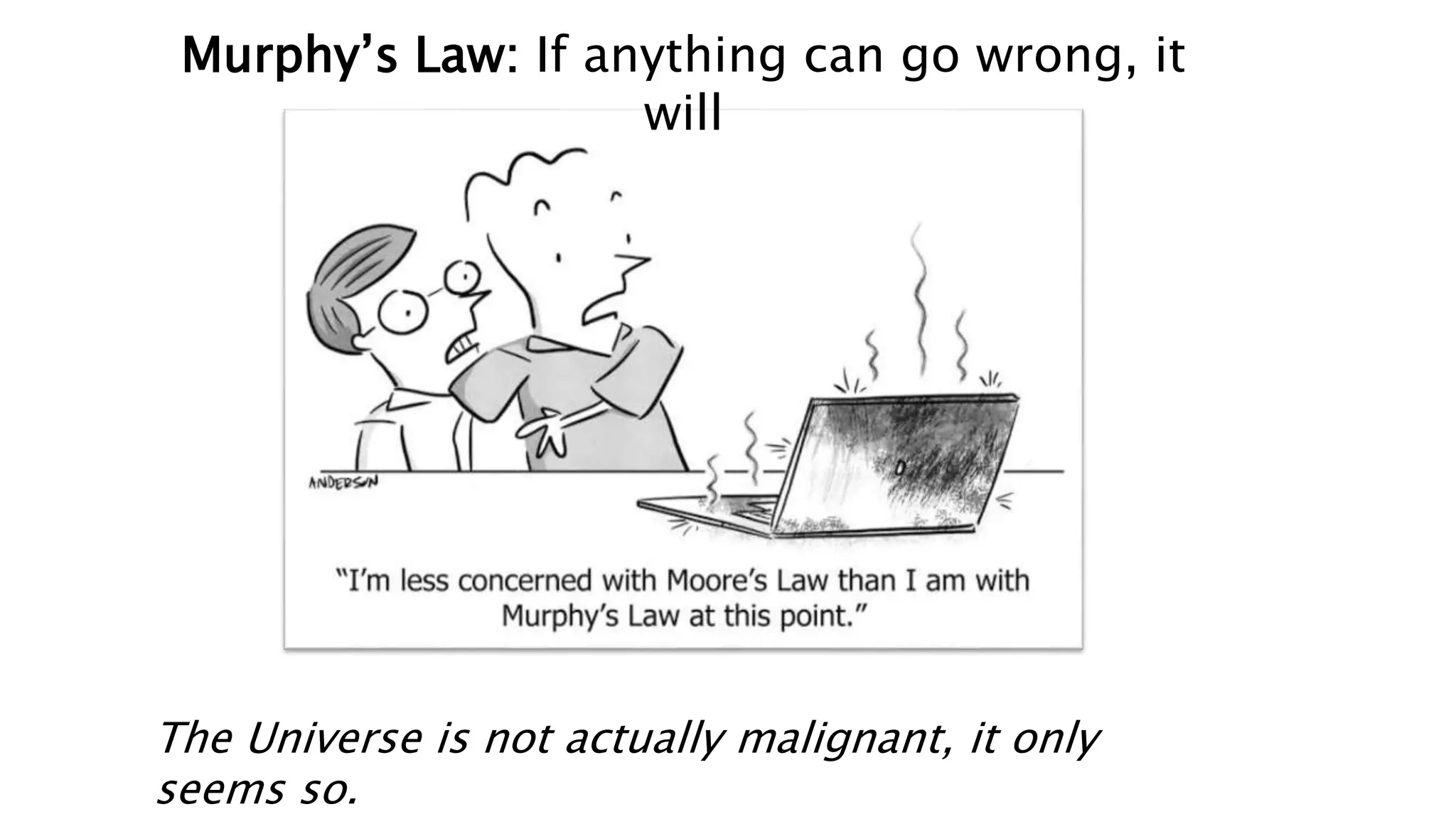
The Universe is not actually malignant, it only
seems so.
Murphy’s Law: If anything can go wrong, it
will
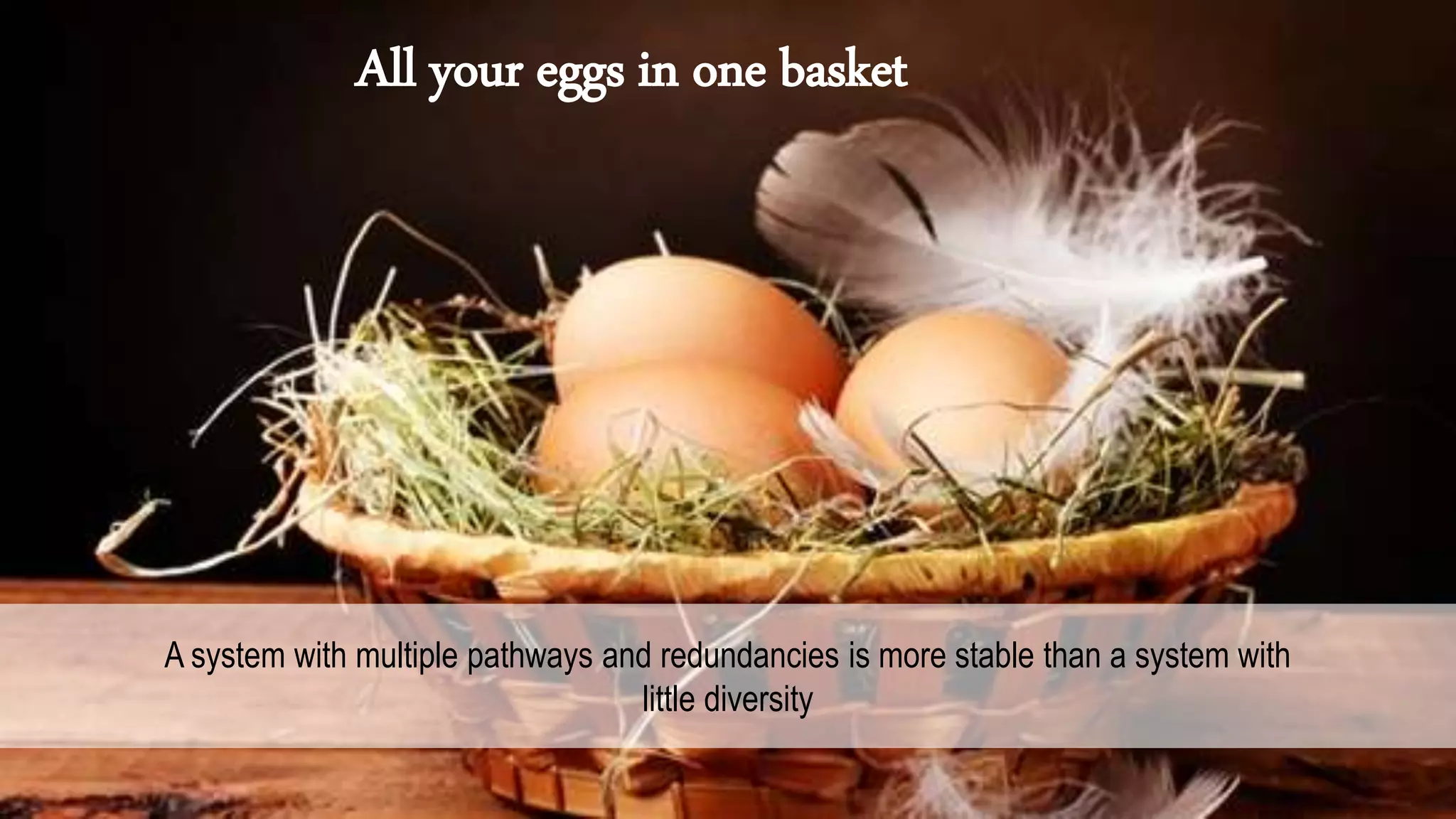
All your eggs in one basket
A system with multiple pathways and redundancies is more stable than a system with
little diversity
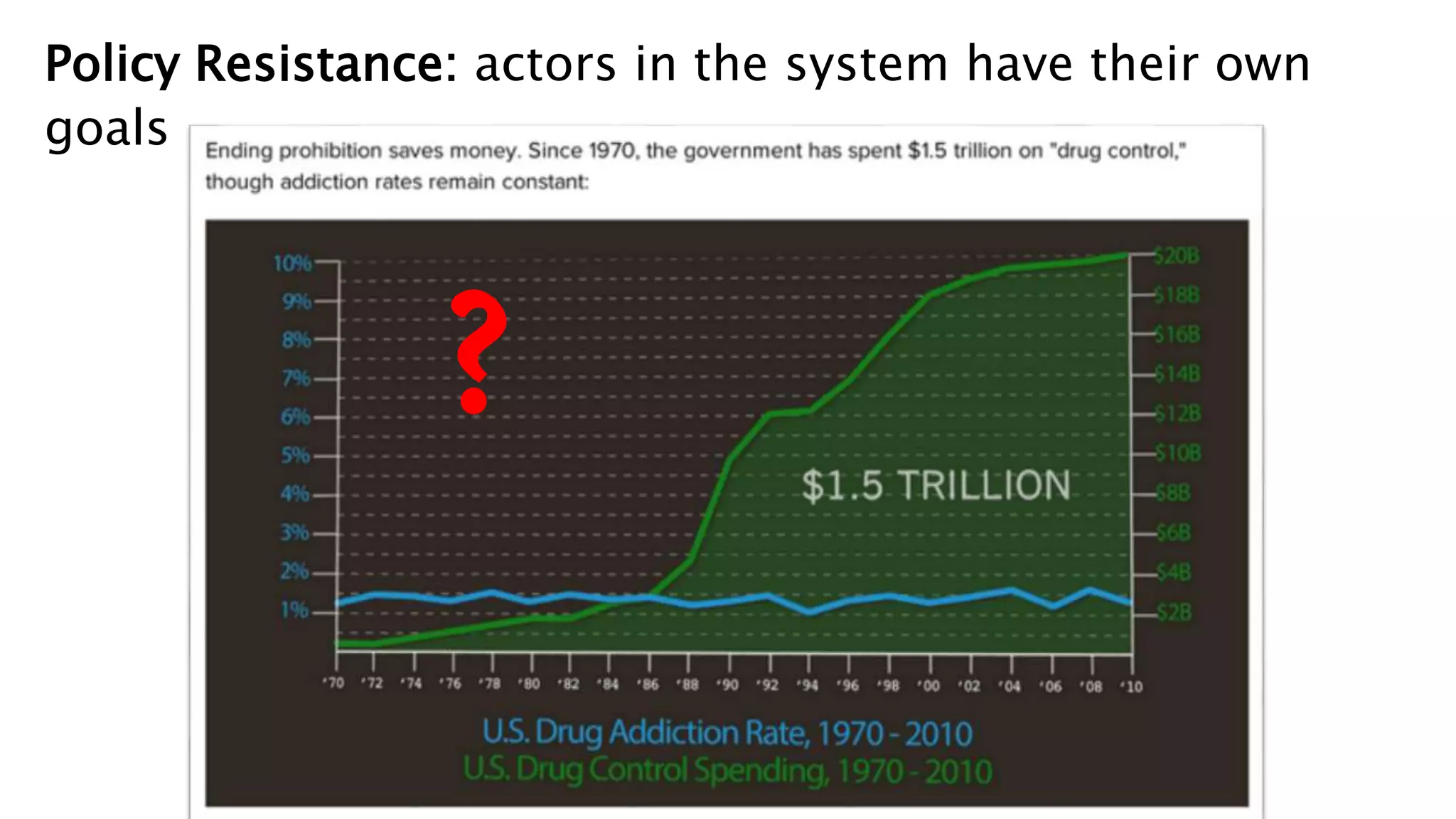
Policy Resistance: actors in the system have their own
goals
?
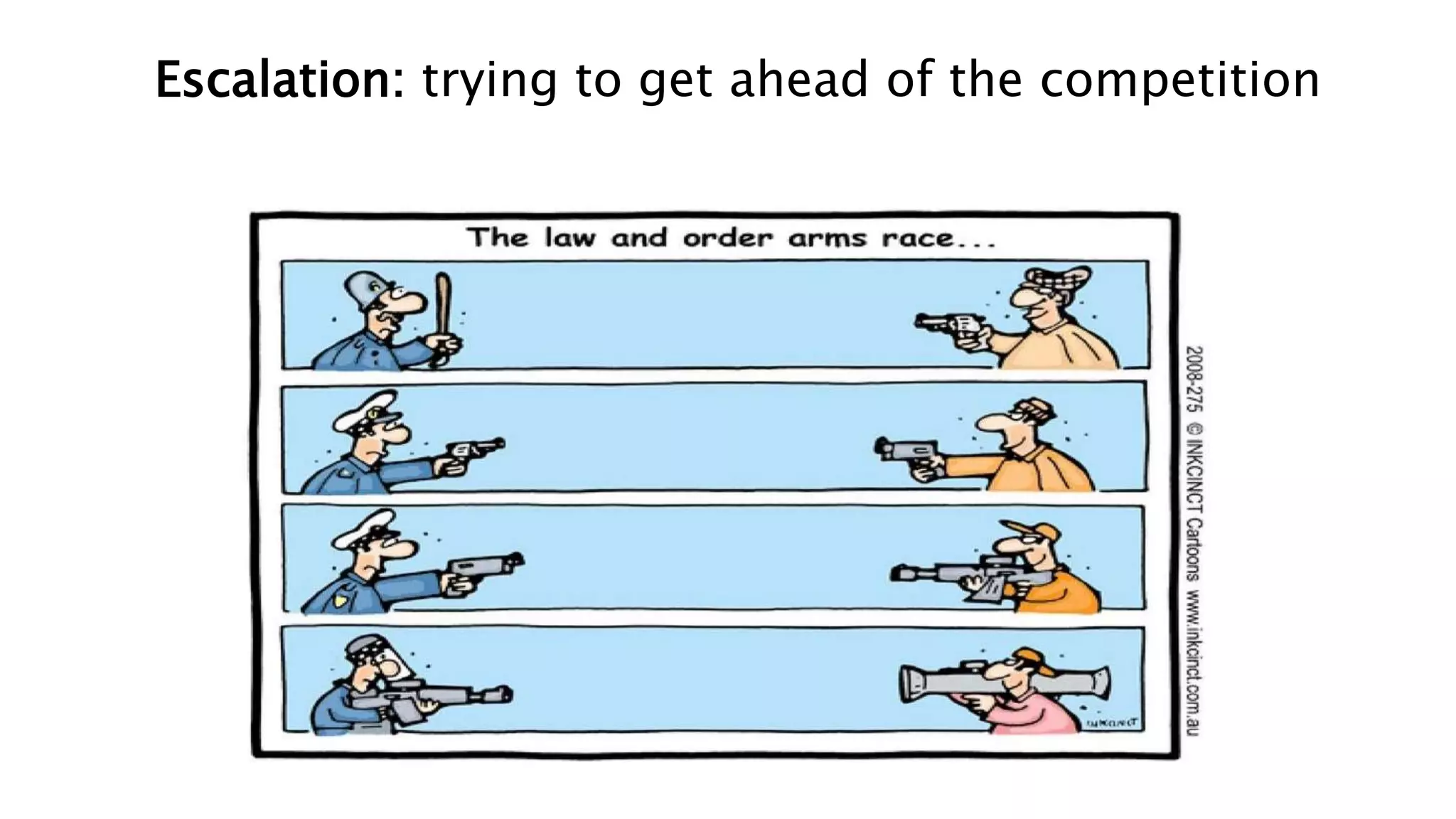
Escalation: trying to get ahead of the competition
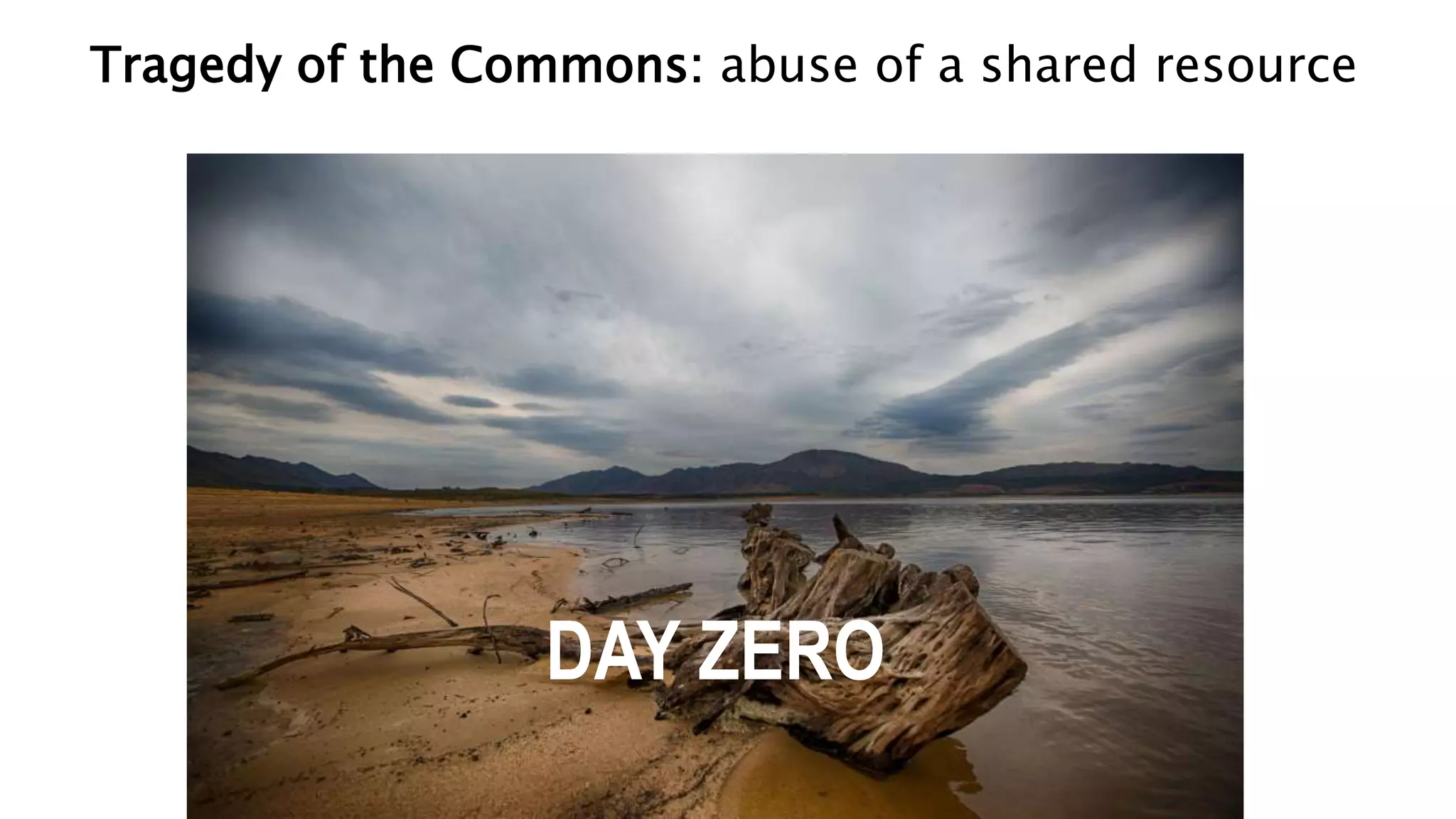
Tragedy of the Commons: abuse of a shared resource
DAY ZERO
Success to the Successful: the rich get richer
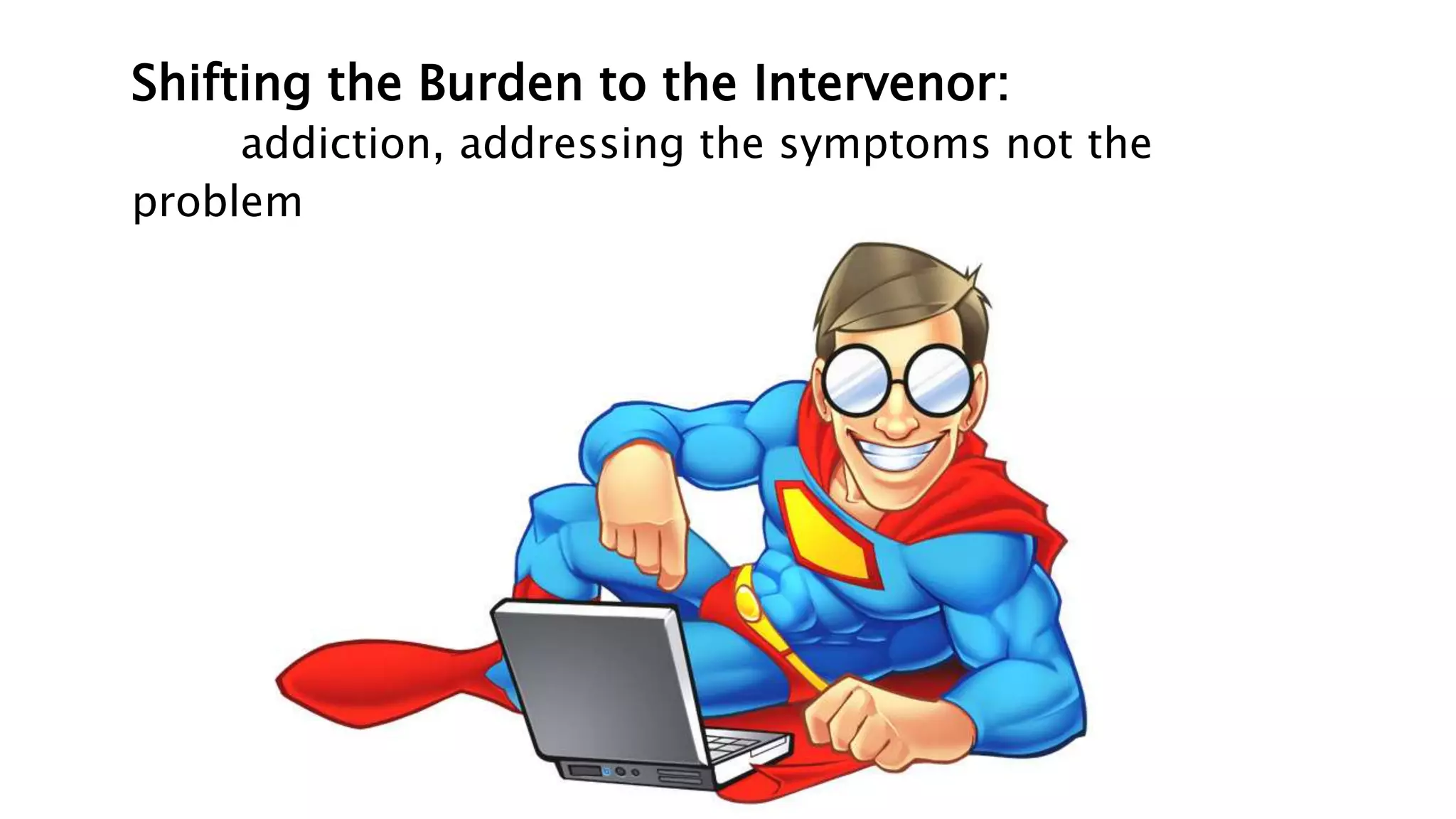
Shifting the Burden to the Intervenor:
addiction, addressing the symptoms not the
problem
Seeking the Wrong Goal: confusing effort with results
When are we supposed to stop being busy and THINK?
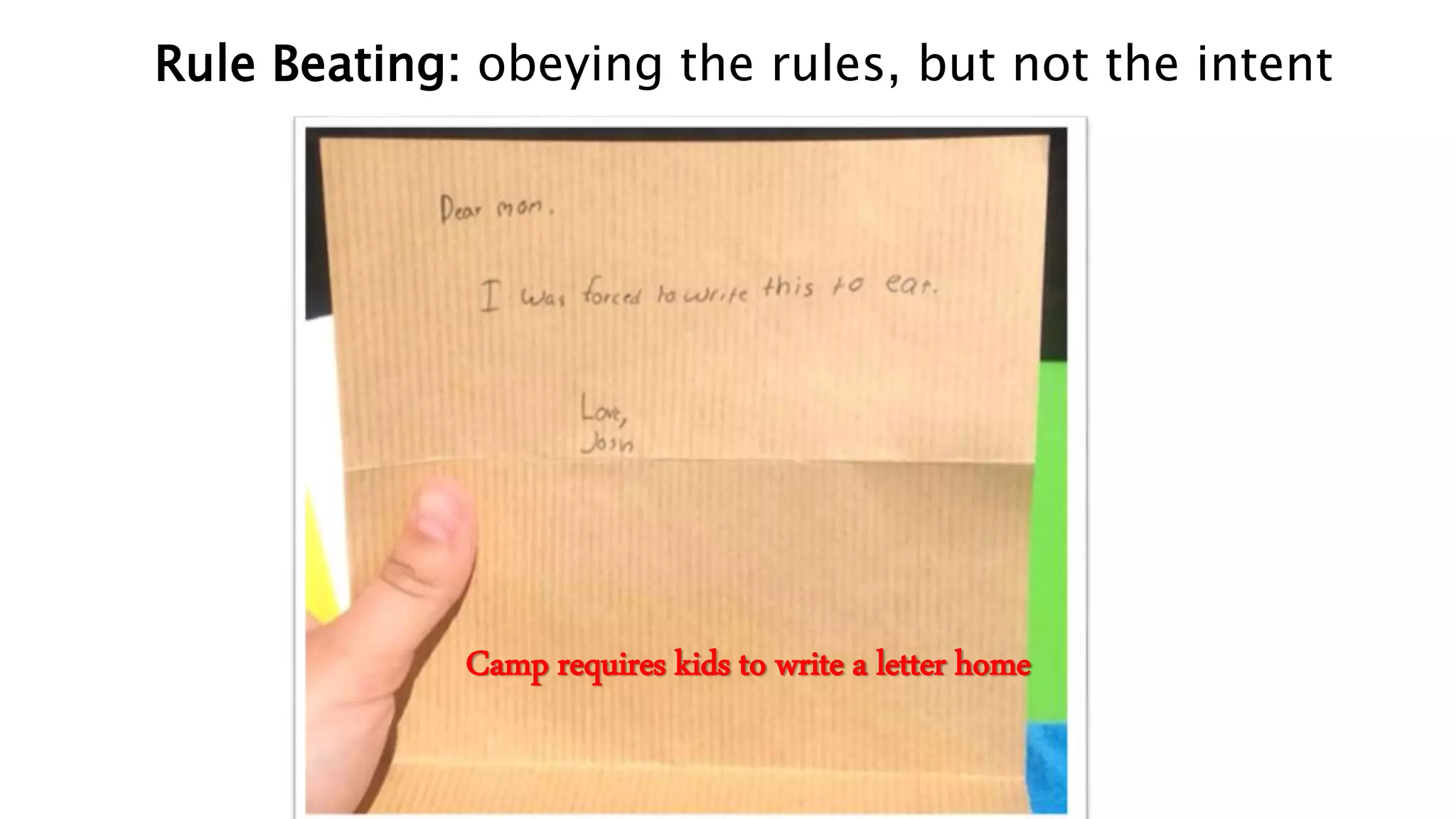
Rule Beating: obeying the rules, but not the intent
Camp requires kids to write a letter home
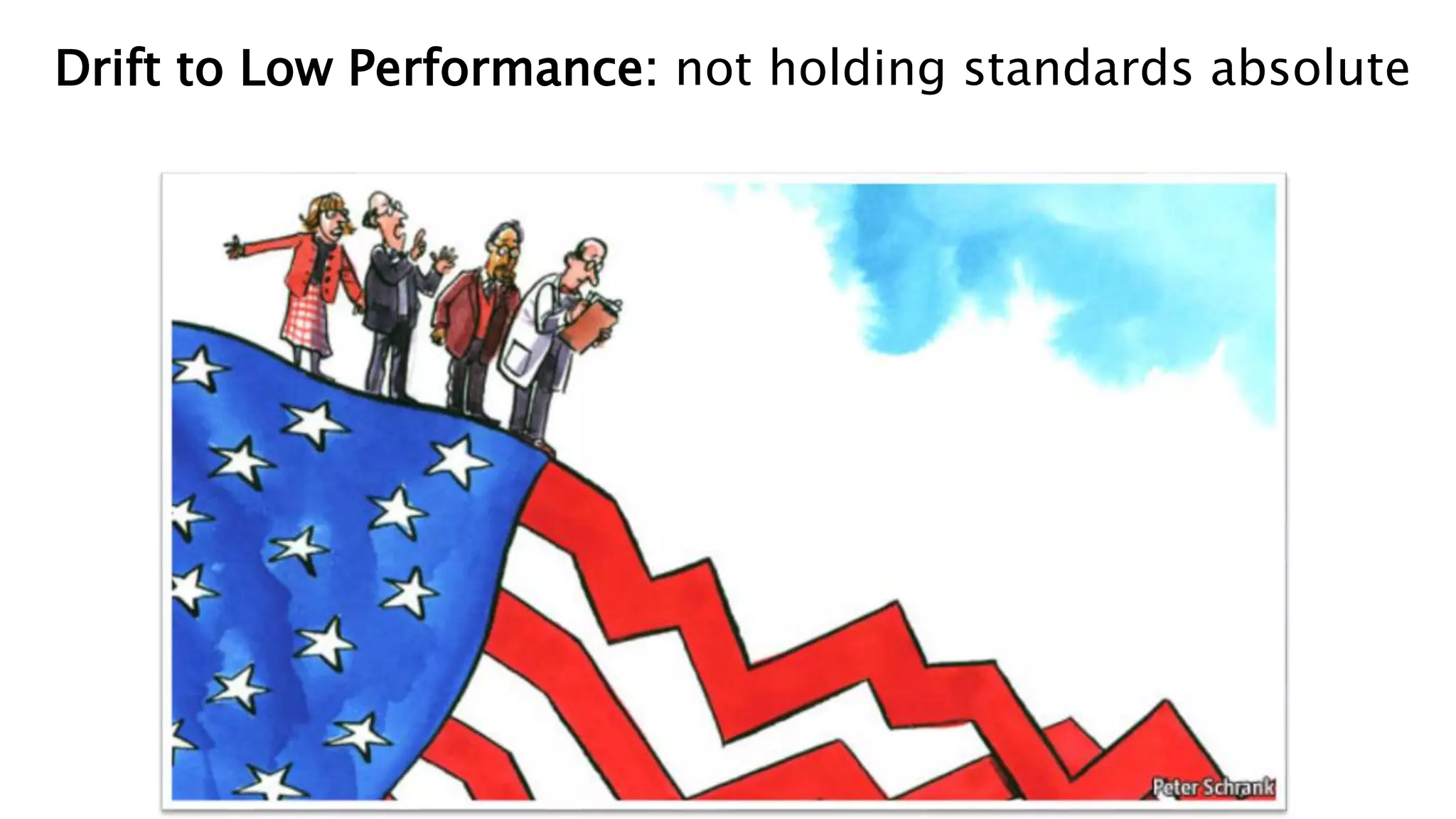
Drift to Low Performance: not holding standards absolute
What are Systems?
How do we understand and manage them better?
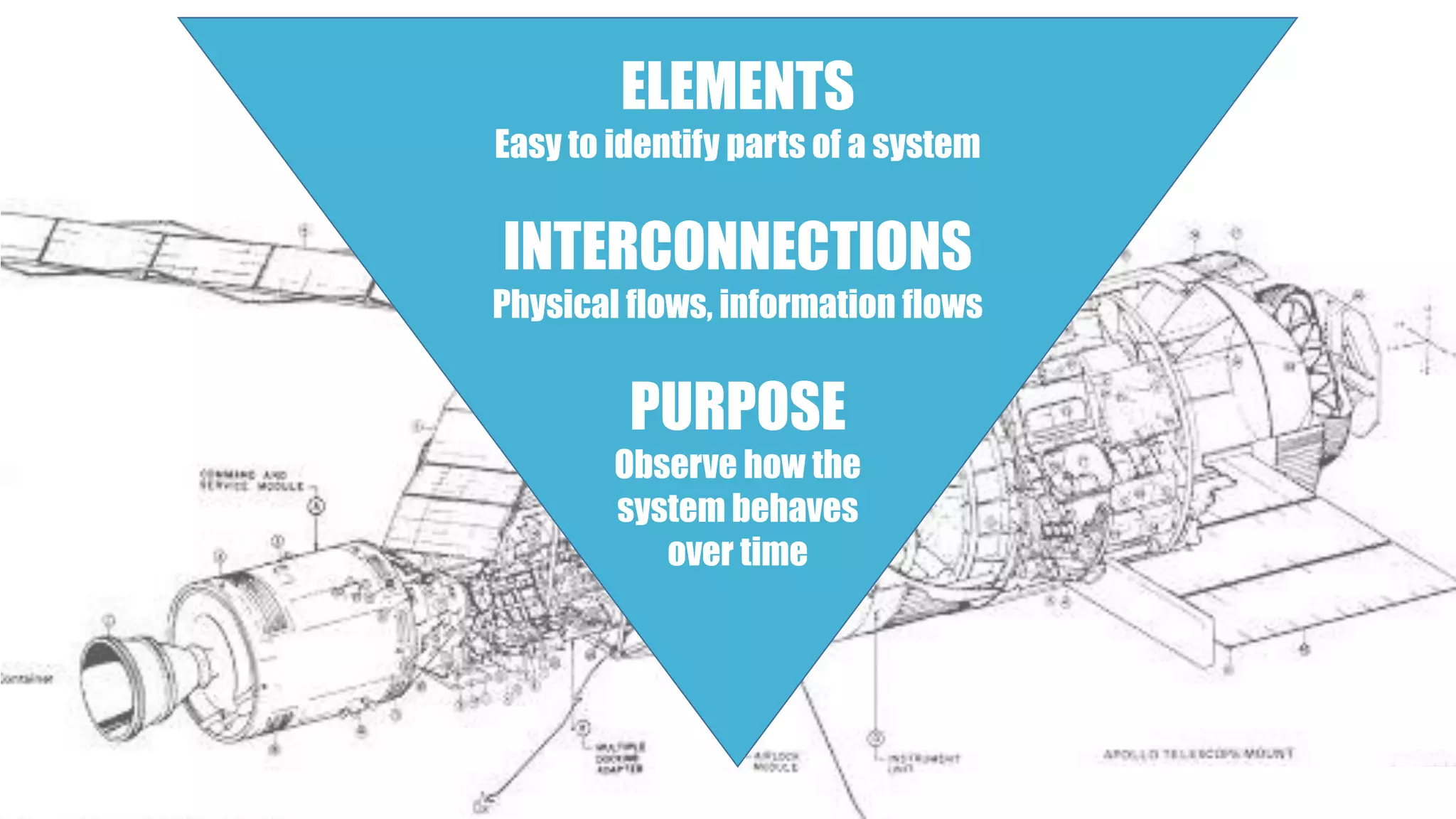
ELEMENTS
Easy to identify parts of a system
INTERCONNECTIONS
Physical flows, information flows
PURPOSE
Observe how the
system behaves
over time
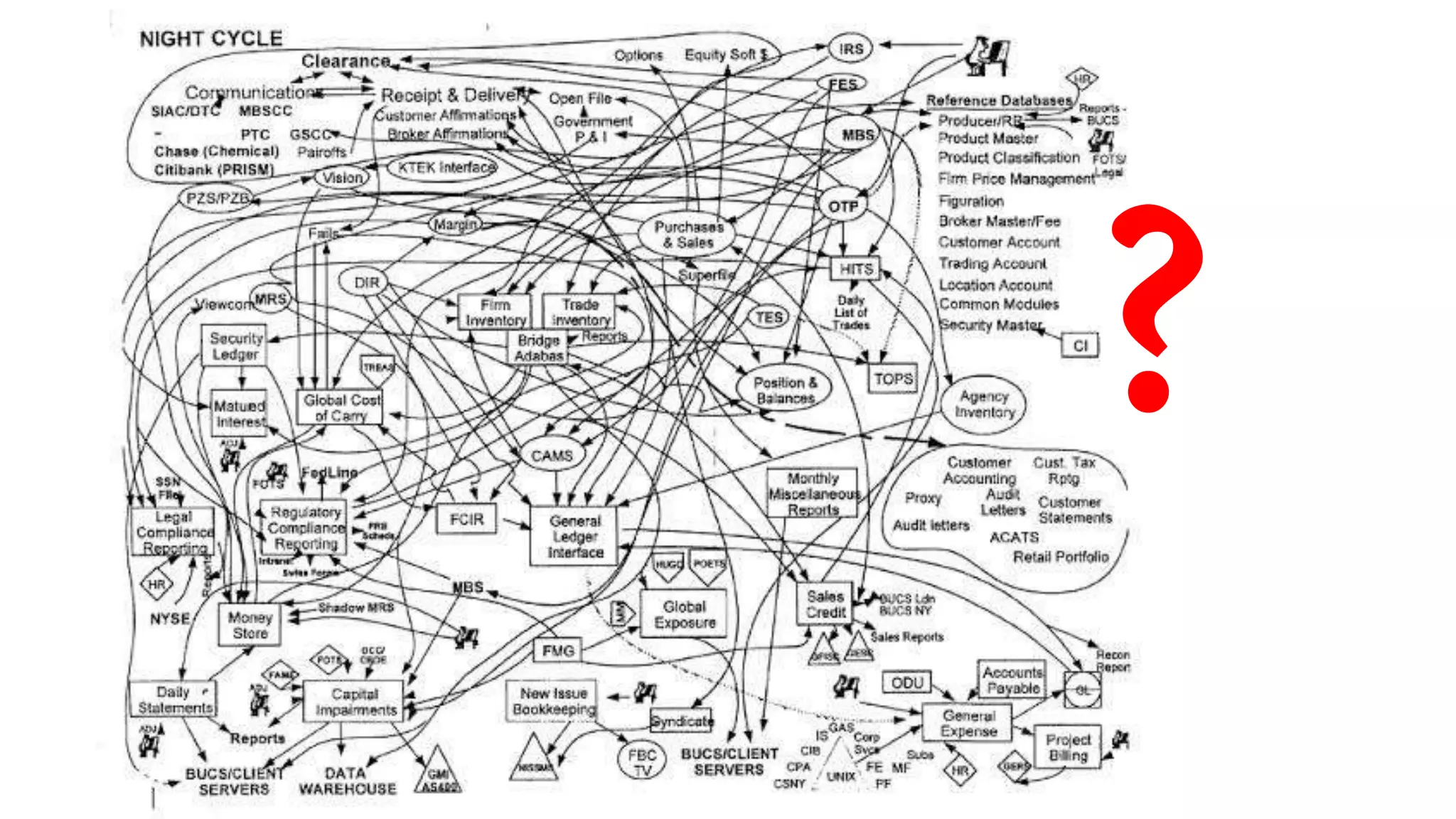
Intuitive understanding of complex systems vs rational analysis of small pieces of
a problem
a university?
What is the PURPOSE ofThe purpose of a university is to be the guardian of reason, inquiry and
philosophical openness
Students: To get a diploma so I can get a good job!Accounts Department: ??? To collect money
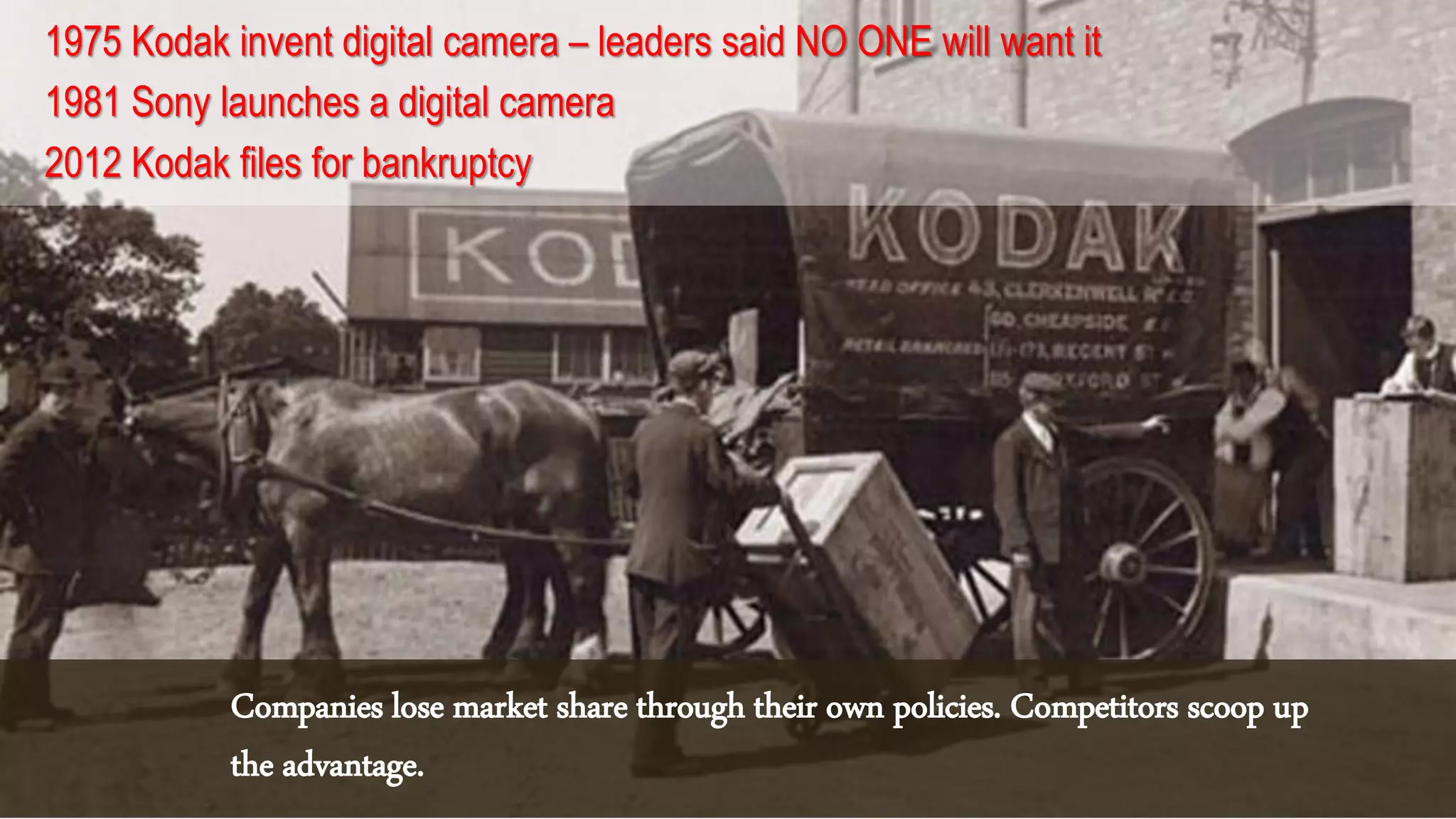
Companies lose market share through their own policies. Competitors scoop up
the advantage.
1975 Kodak invent digital camera – leaders said NO ONE will want it
1981 Sony launches a digital camera
2012 Kodak files for bankruptcy
Good News!
Our policies cause the outcomes – we can change our policies
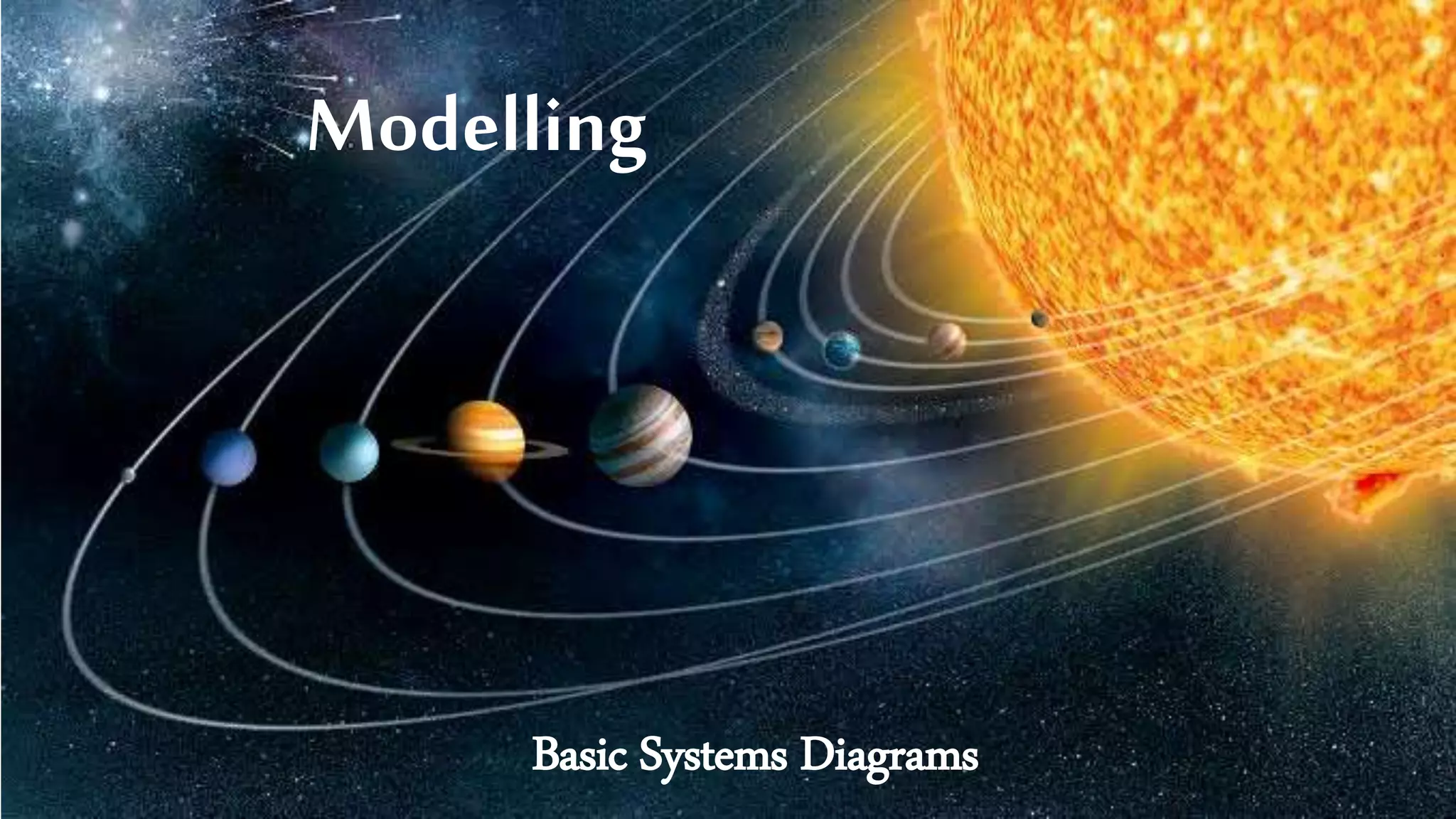
Modelling
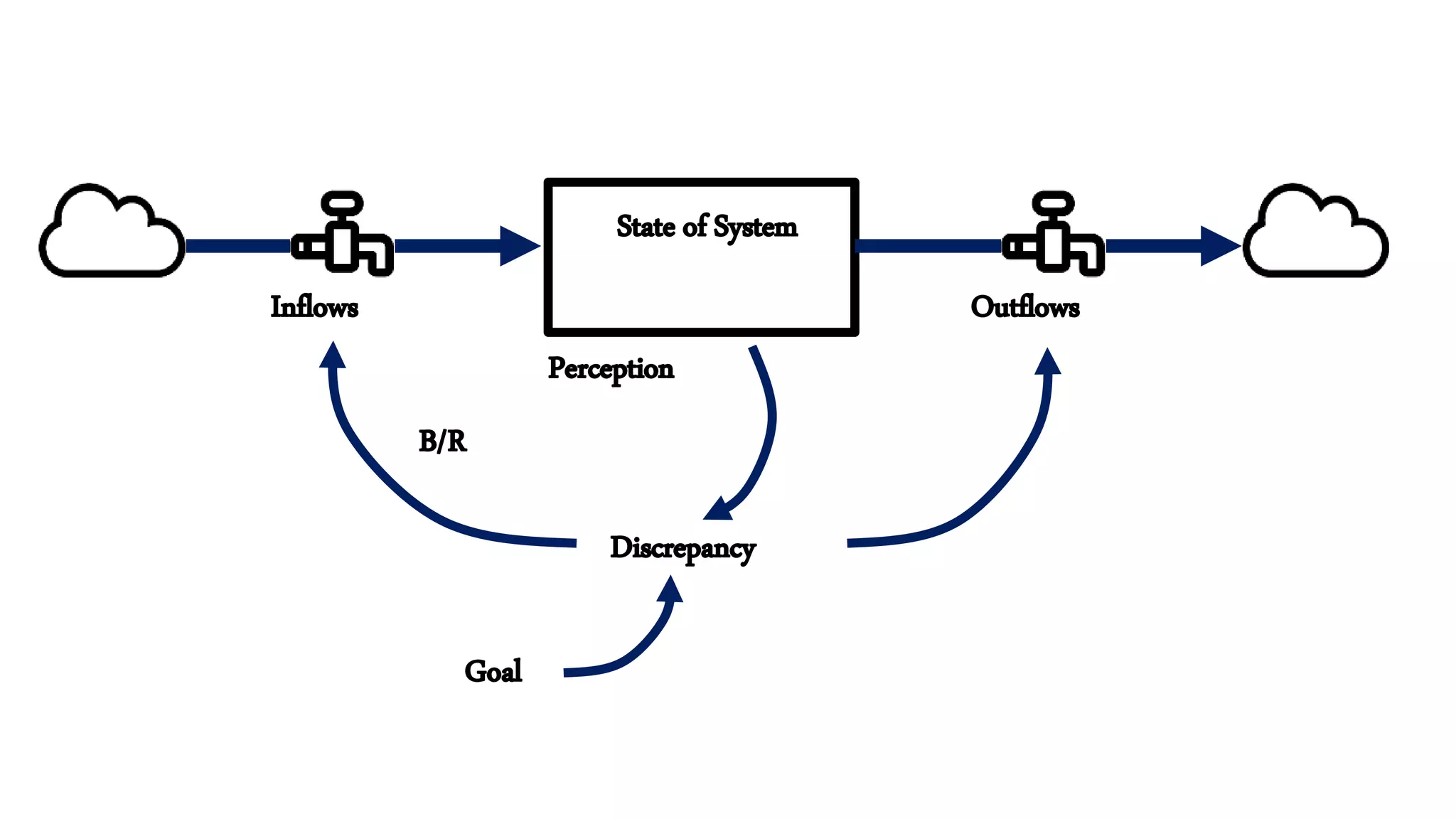
Basic Systems Diagrams
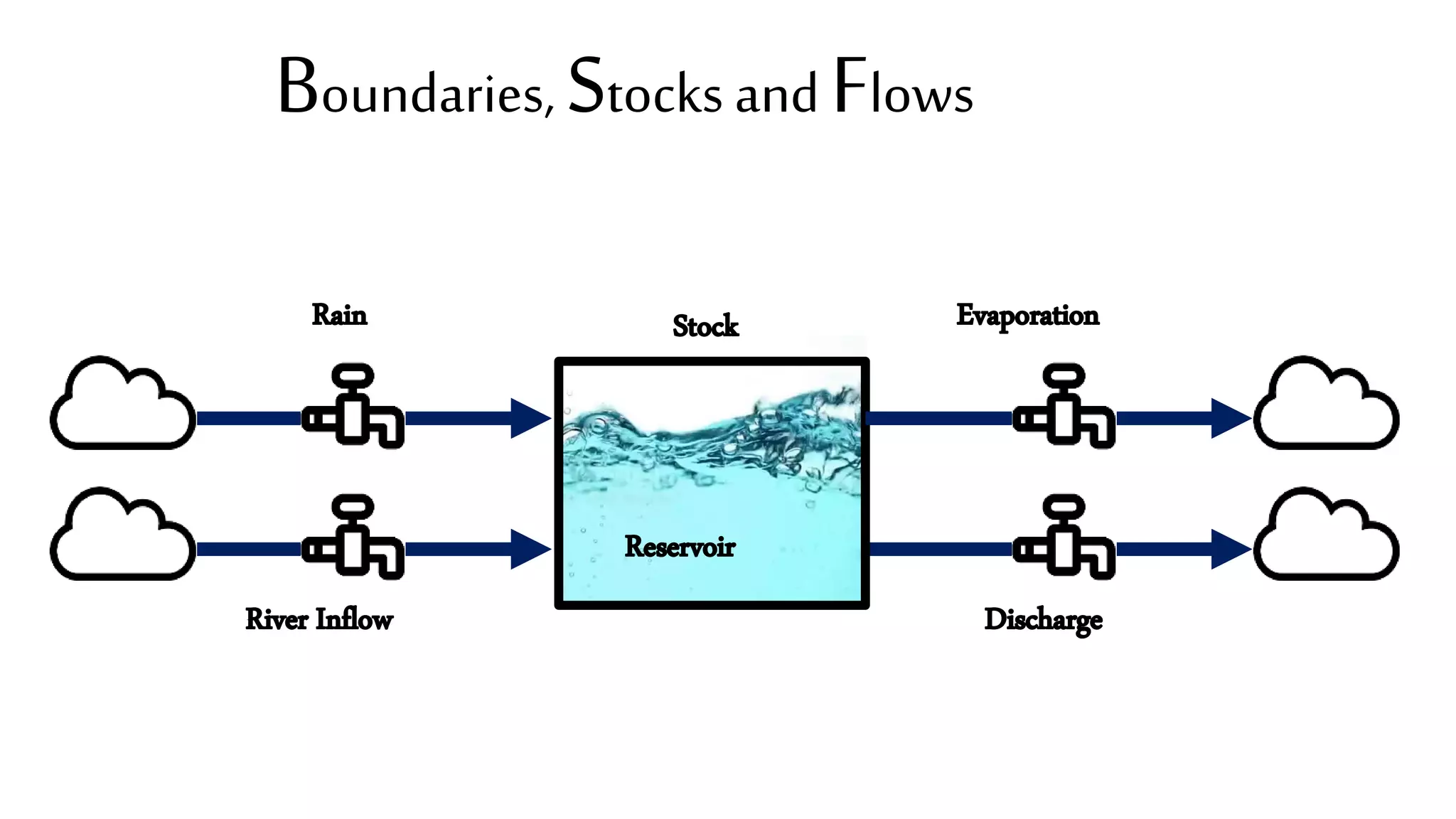
Boundaries, Stocks and Flows
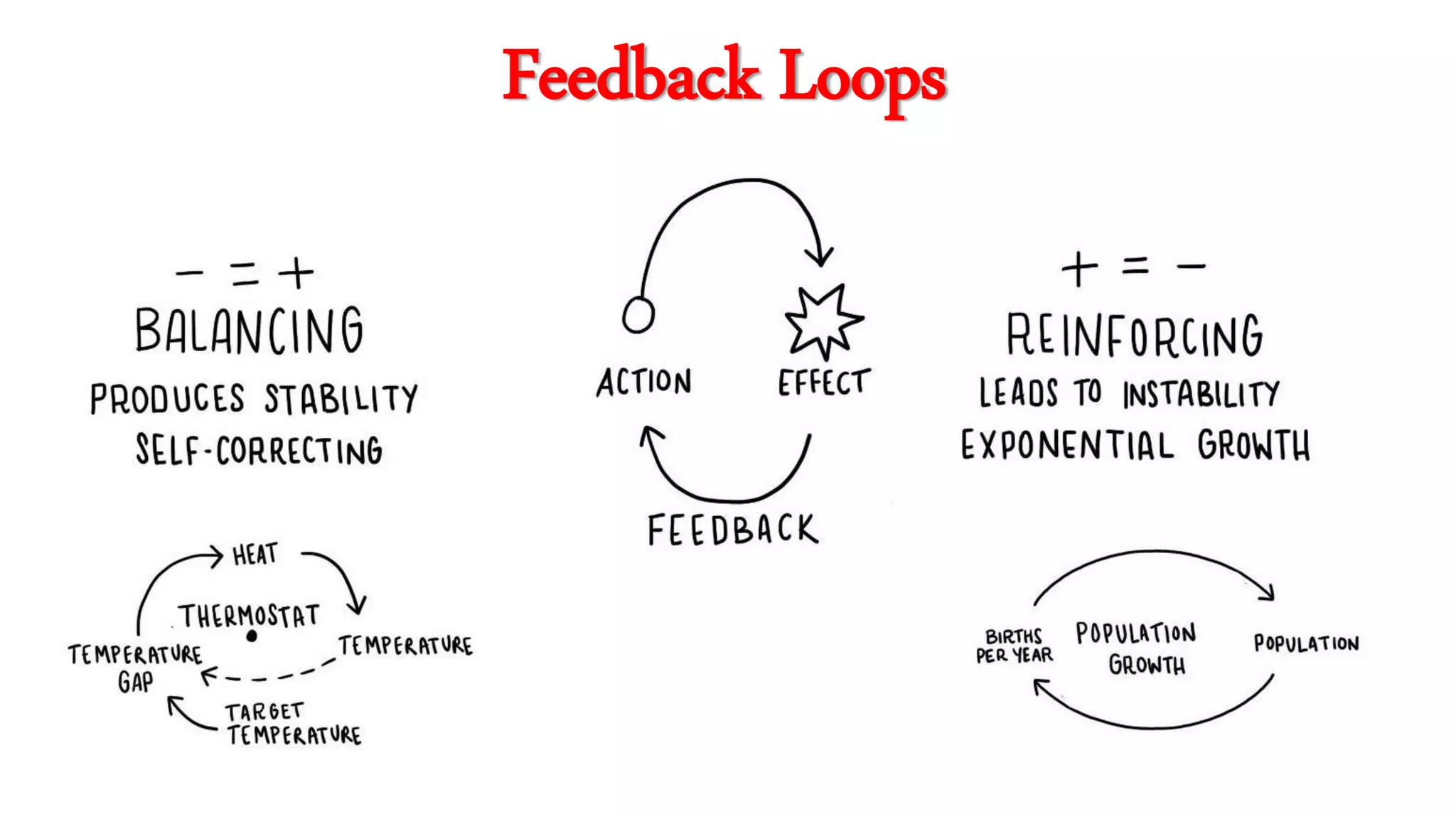
Feedback Loops
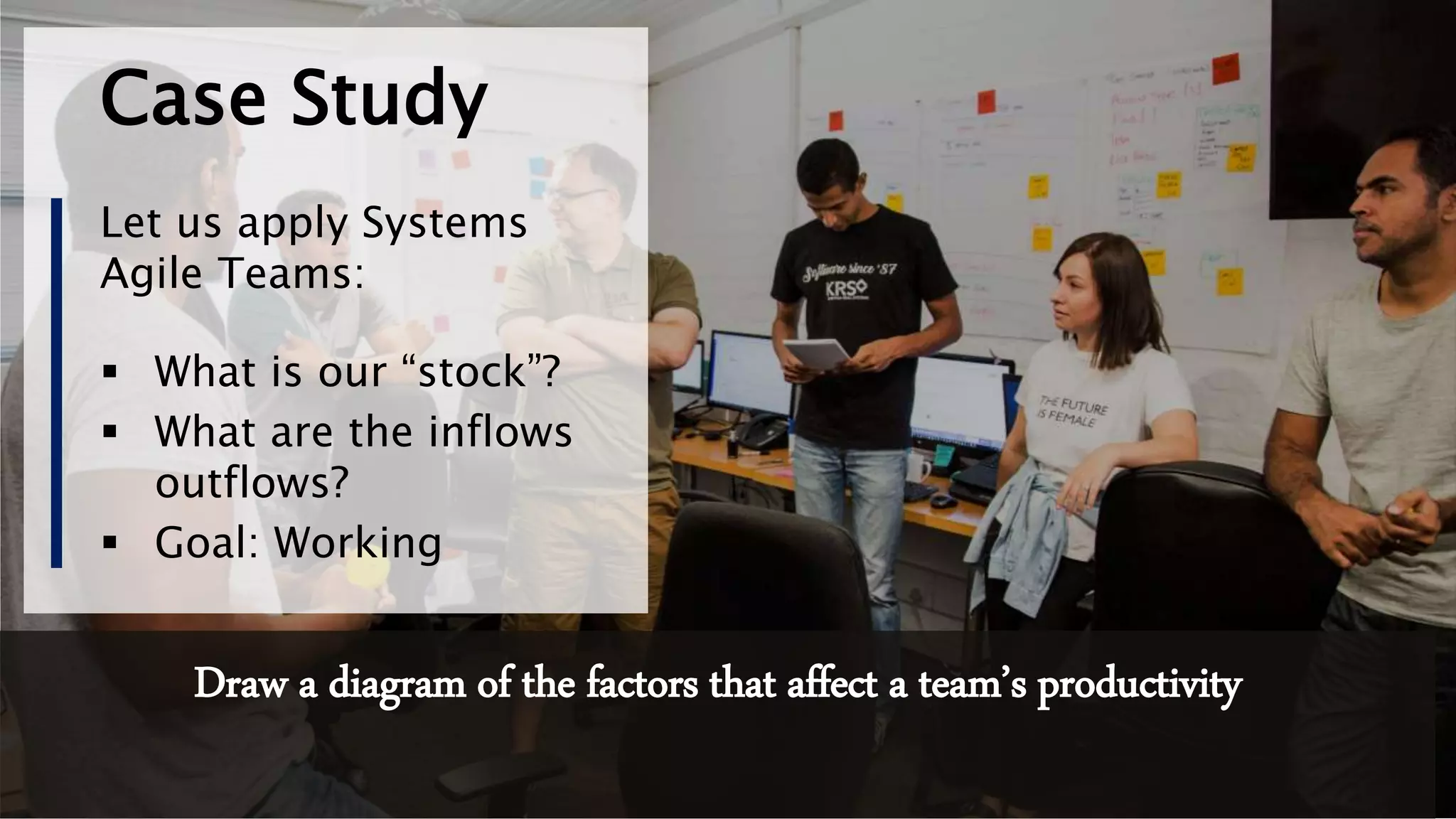
Case Study
Let us apply Systems
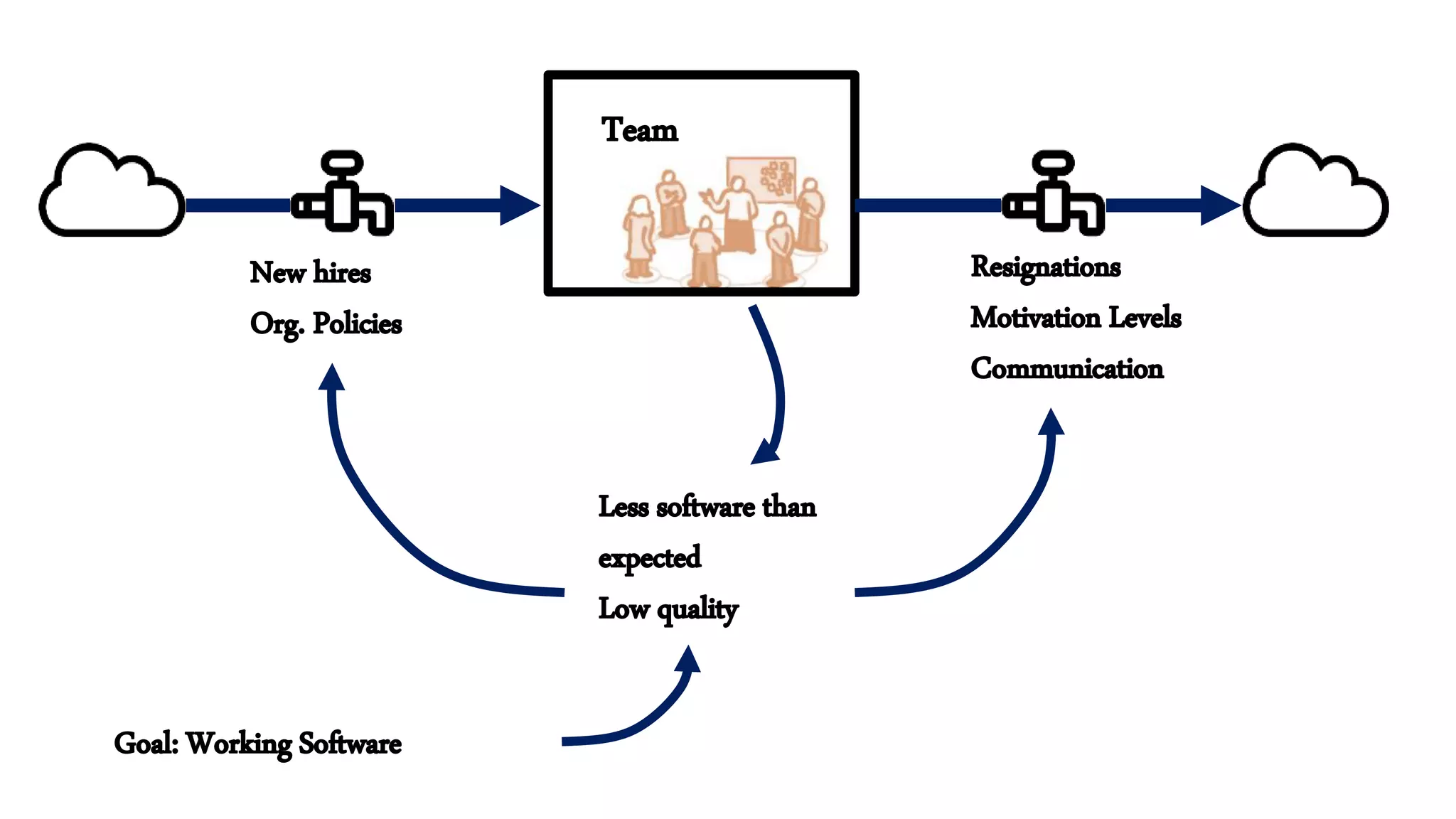
Agile Teams:
 What is our “stock”?
 What are the inflows
outflows?
 Goal: Working
Draw a diagram of the factors that affect a team’s productivity
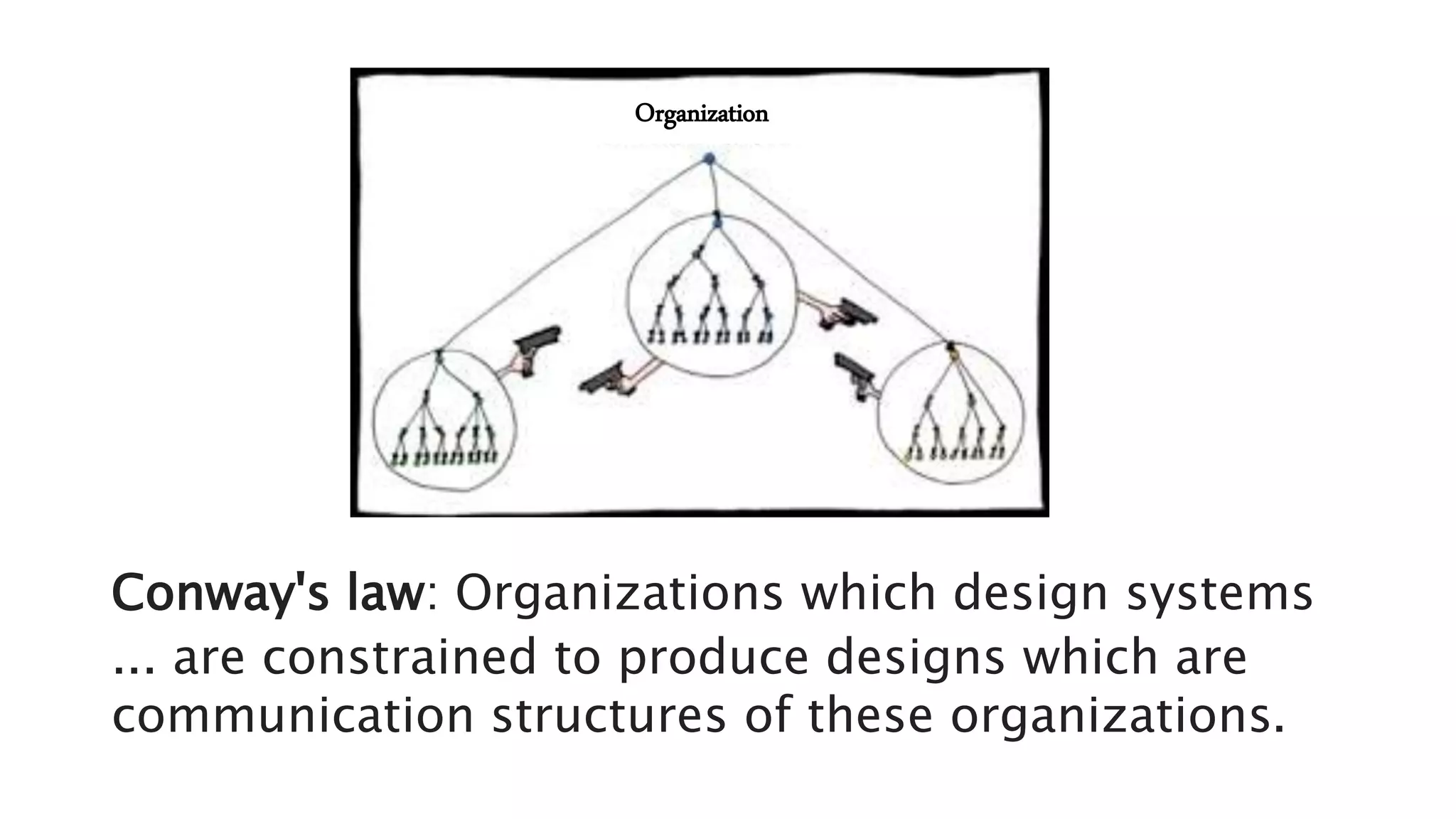
Conway's law: Organizations which design systems
... are constrained to produce designs which are
communication structures of these organizations.
Organization
The Art of Simplification
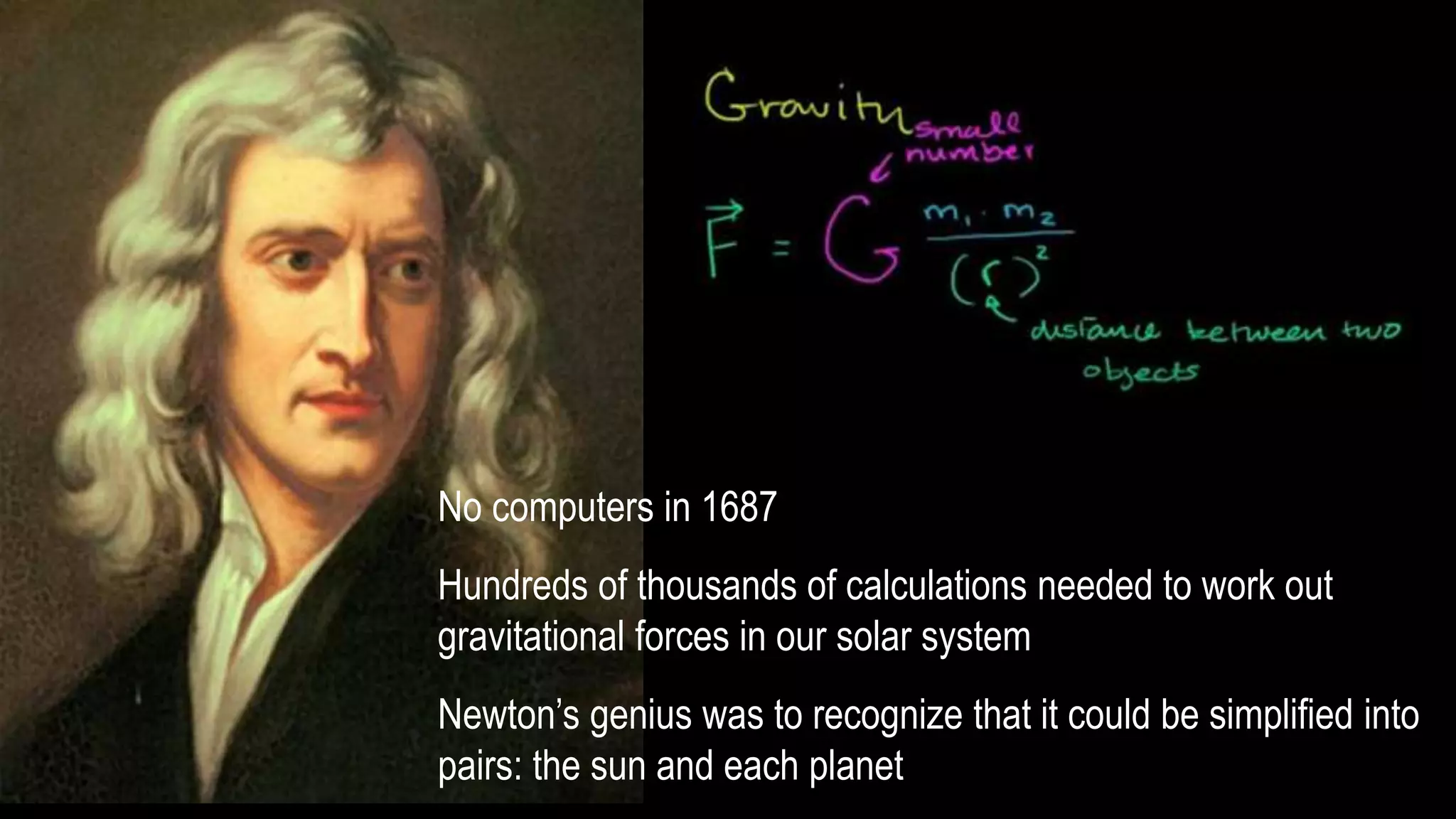
No computers in 1687
Hundreds of thousands of calculations needed to work out
gravitational forces in our solar system
Newton’s genius was to recognize that it could be simplified into
pairs: the sun and each planet
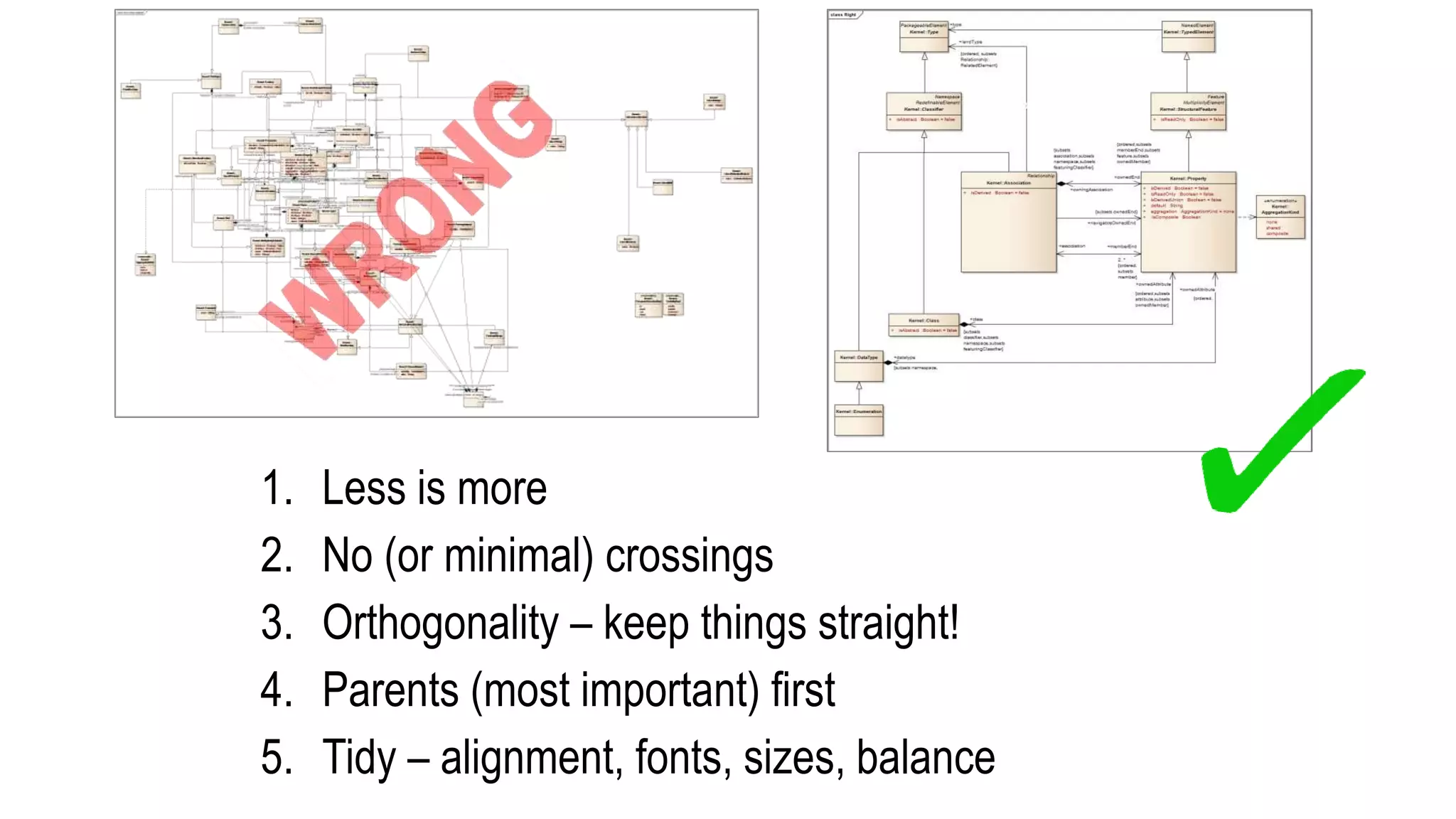
1. Less is more
2. No (or minimal) crossings
3. Orthogonality – keep things straight!
4. Parents (most important) first
5. Tidy – alignment, fonts, sizes, balance
Occam’s Razor
The simplest answer is
probably correct
Do not make more
assumptions than you
absolutely need
Pareto
80/20
By Better than Yesterday
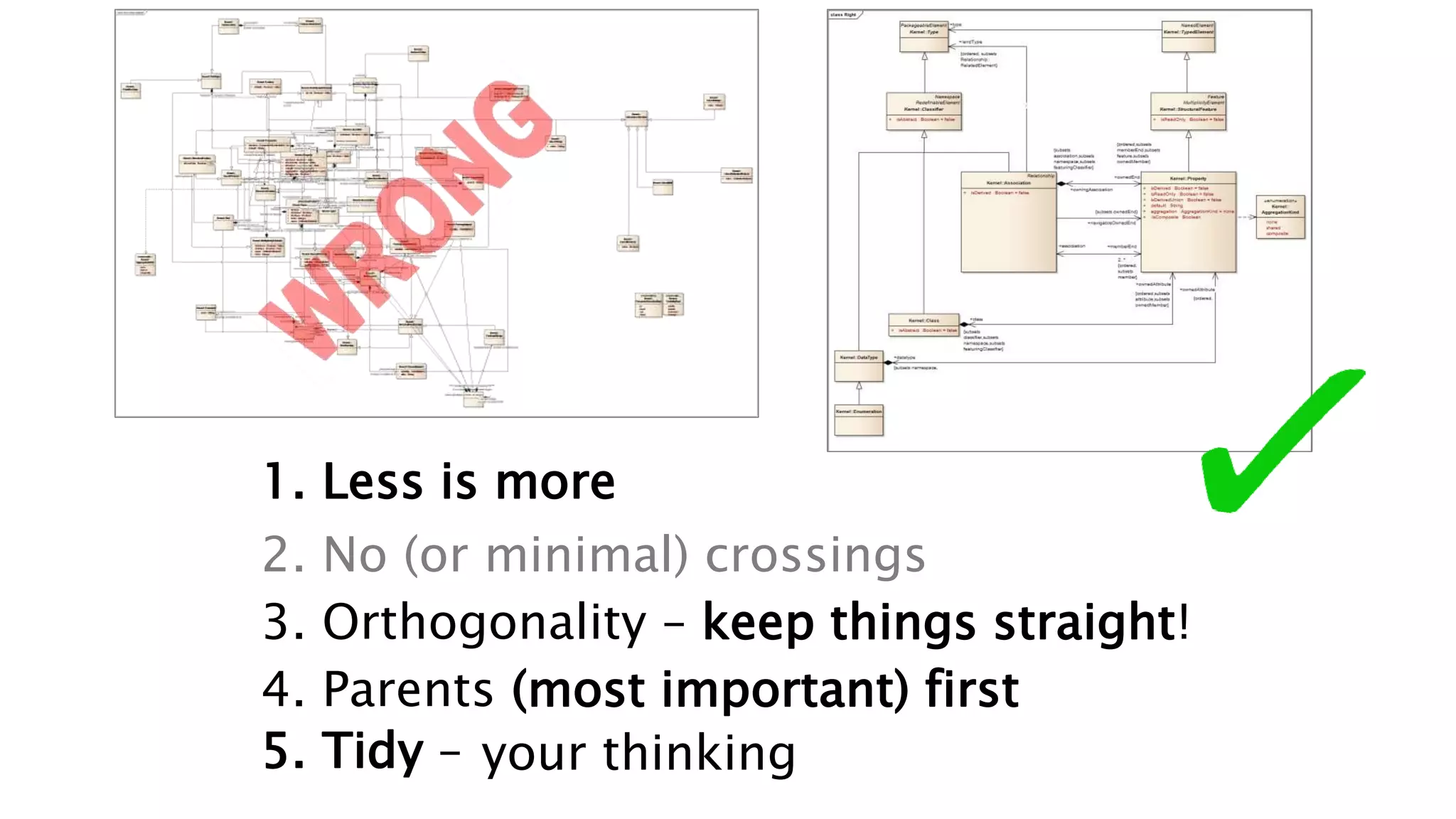
1. Less is more
2. No (or minimal) crossings
3. Orthogonality – keep things straight!
4. Parents (most important) first
5. Tidy – alignment, fonts, sizes, balanceyour thinking
 The ability to bounce back into shape after being pressed
or stretch
 Tends to have rich feedback loops
Placing a system in a straitjacket of constancy can cause
fragility to evolve
CS Holling
Resilience:
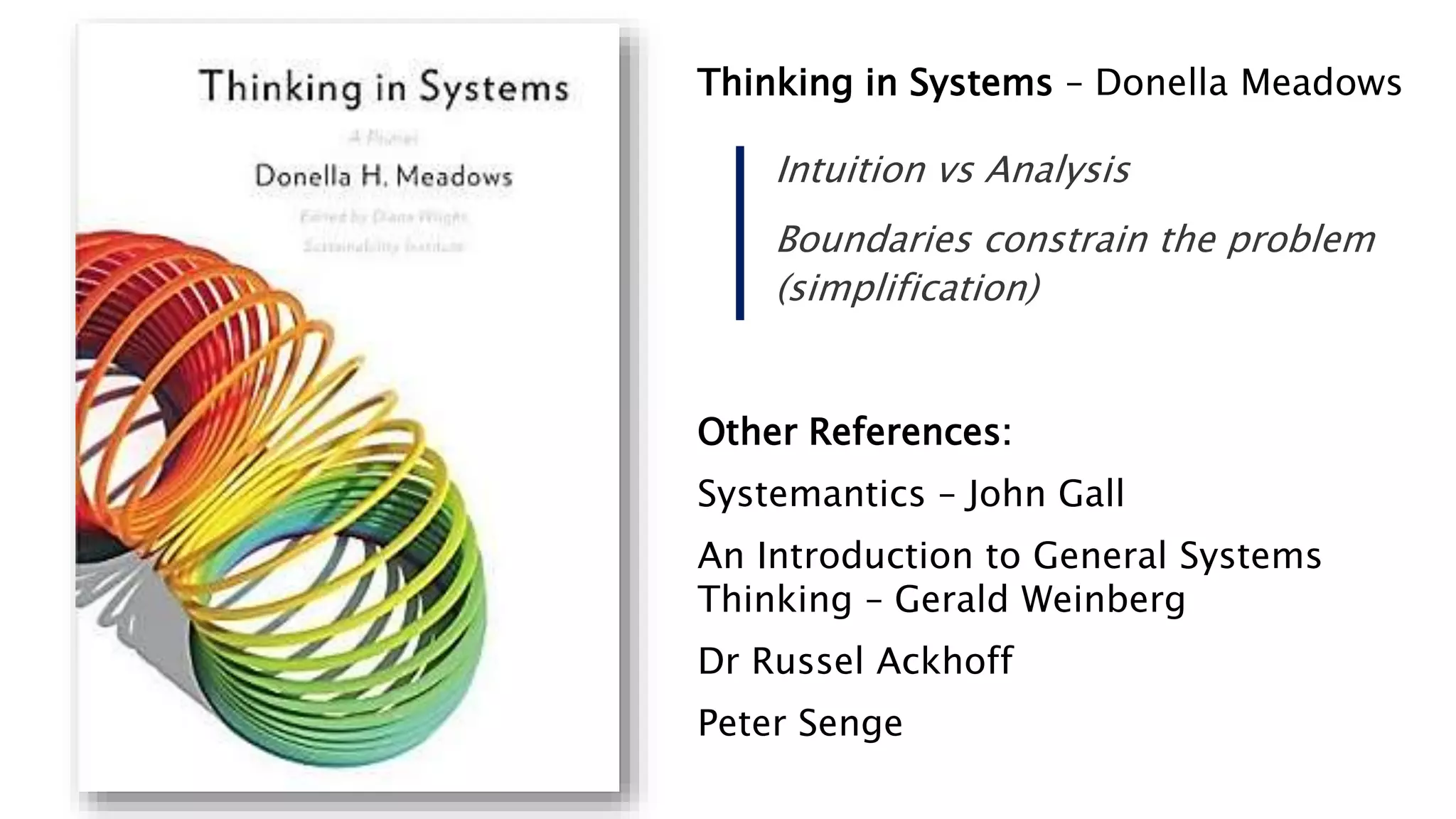
Intuition vs Analysis
Boundaries constrain the problem
(simplification)
Other References:
Systemantics – John Gall
An Introduction to General Systems
Thinking – Gerald Weinberg
Dr Russel Ackhoff
Peter Senge
Thinking in Systems – Donella Meadows
Systems always behave exactly as they are designed,
just not always as they are intended.
Be creative and courageous about systems redesign.
Lorraine Steyn @lor_krs
www.krs.co.za

Systems Thinking and the Art of Simplification

  • 1.
    LORRAINE STEYN @lor_krs Systems Thinkingand the Art of Simplification
  • 2.
    Agenda Systems Archetypes What goeswrong? Systems Thinking basics How do we get it to go right? Techniques for simplifying “Because of feedback delays, by the time a problem becomes apparent it may be unnecessarily difficult to solve”
  • 3.
    The Universe isnot actually malignant, it only seems so. Murphy’s Law: If anything can go wrong, it will
  • 4.
    All your eggsin one basket A system with multiple pathways and redundancies is more stable than a system with little diversity
  • 5.
    Policy Resistance: actorsin the system have their own goals ?
  • 6.
    Escalation: trying toget ahead of the competition
  • 7.
    Tragedy of theCommons: abuse of a shared resource DAY ZERO
  • 8.
    Success to theSuccessful: the rich get richer
  • 9.
    Shifting the Burdento the Intervenor: addiction, addressing the symptoms not the problem
  • 10.
    Seeking the WrongGoal: confusing effort with results
  • 11.
    When are wesupposed to stop being busy and THINK?
  • 12.
    Rule Beating: obeyingthe rules, but not the intent Camp requires kids to write a letter home
  • 13.
    Drift to LowPerformance: not holding standards absolute
  • 14.
    What are Systems? Howdo we understand and manage them better?
  • 15.
    ELEMENTS Easy to identifyparts of a system INTERCONNECTIONS Physical flows, information flows PURPOSE Observe how the system behaves over time
  • 16.
    Intuitive understanding ofcomplex systems vs rational analysis of small pieces of a problem
  • 17.
    a university? What isthe PURPOSE ofThe purpose of a university is to be the guardian of reason, inquiry and philosophical openness Students: To get a diploma so I can get a good job!Accounts Department: ??? To collect money
  • 20.
    Companies lose marketshare through their own policies. Competitors scoop up the advantage. 1975 Kodak invent digital camera – leaders said NO ONE will want it 1981 Sony launches a digital camera 2012 Kodak files for bankruptcy
  • 21.
    Good News! Our policiescause the outcomes – we can change our policies
  • 22.
  • 23.
  • 24.
  • 26.
    Case Study Let usapply Systems Agile Teams:  What is our “stock”?  What are the inflows outflows?  Goal: Working Draw a diagram of the factors that affect a team’s productivity
  • 28.
    Conway's law: Organizationswhich design systems ... are constrained to produce designs which are communication structures of these organizations. Organization
  • 29.
    The Art ofSimplification
  • 30.
    No computers in1687 Hundreds of thousands of calculations needed to work out gravitational forces in our solar system Newton’s genius was to recognize that it could be simplified into pairs: the sun and each planet
  • 32.
    1. Less ismore 2. No (or minimal) crossings 3. Orthogonality – keep things straight! 4. Parents (most important) first 5. Tidy – alignment, fonts, sizes, balance
  • 33.
    Occam’s Razor The simplestanswer is probably correct Do not make more assumptions than you absolutely need
  • 34.
  • 35.
    1. Less ismore 2. No (or minimal) crossings 3. Orthogonality – keep things straight! 4. Parents (most important) first 5. Tidy – alignment, fonts, sizes, balanceyour thinking
  • 36.
     The abilityto bounce back into shape after being pressed or stretch  Tends to have rich feedback loops Placing a system in a straitjacket of constancy can cause fragility to evolve CS Holling Resilience:
  • 37.
    Intuition vs Analysis Boundariesconstrain the problem (simplification) Other References: Systemantics – John Gall An Introduction to General Systems Thinking – Gerald Weinberg Dr Russel Ackhoff Peter Senge Thinking in Systems – Donella Meadows
  • 38.
    Systems always behaveexactly as they are designed, just not always as they are intended. Be creative and courageous about systems redesign. Lorraine Steyn @lor_krs www.krs.co.za

Editor's Notes

  • #2 Lor, CEO of software development company for almost 33 years, South African, .Net developer
  • #3 “Because of feedback delays within complex systems, by the time a problem becomes apparent it may be unnecessarily difficult to solve. — A stitch in time saves nine.”
  • #5 A system with multiple pathways and redundancies is more stable than a system with little diversity
  • #6 If one actor pushes the system in one direction, the others will push against them. Why does prohibition not work?
  • #7 Spiralling hospital costs as each hospital buys more expensive equipment, advertising that gets more in your face until we are dulled to the point where no message can penetrate
  • #8 happens when every user benefits from a shared resource, but does not understand the consequences of abusing the resource.
  • #9 winners are rewarded at the expense of the losers, so go on to win again and again (not a level playing field). Privilege.
  • #10 is about dependence that arises when a solution addresses the symptoms, but does nothing to solve the underlying problem. The self-maintaining capacity of the system then erodes.
  • #12 What do you see? If she was looking out the window. If your boss walked in, would ask why not working? Yet we are supposed to think?
  • #14 Excuses … Price of petrol, Snowstorms and floods, Banks are cautious about lending, International influences
  • #16 Problems are not independent of each other, but are complex systems that interact with each other
  • #17 Detailed oriented people, taught to compartmentalize solutions. We like to break problems into smaller parts
  • #18 What value was the Vision statement if everyone has their own goal?
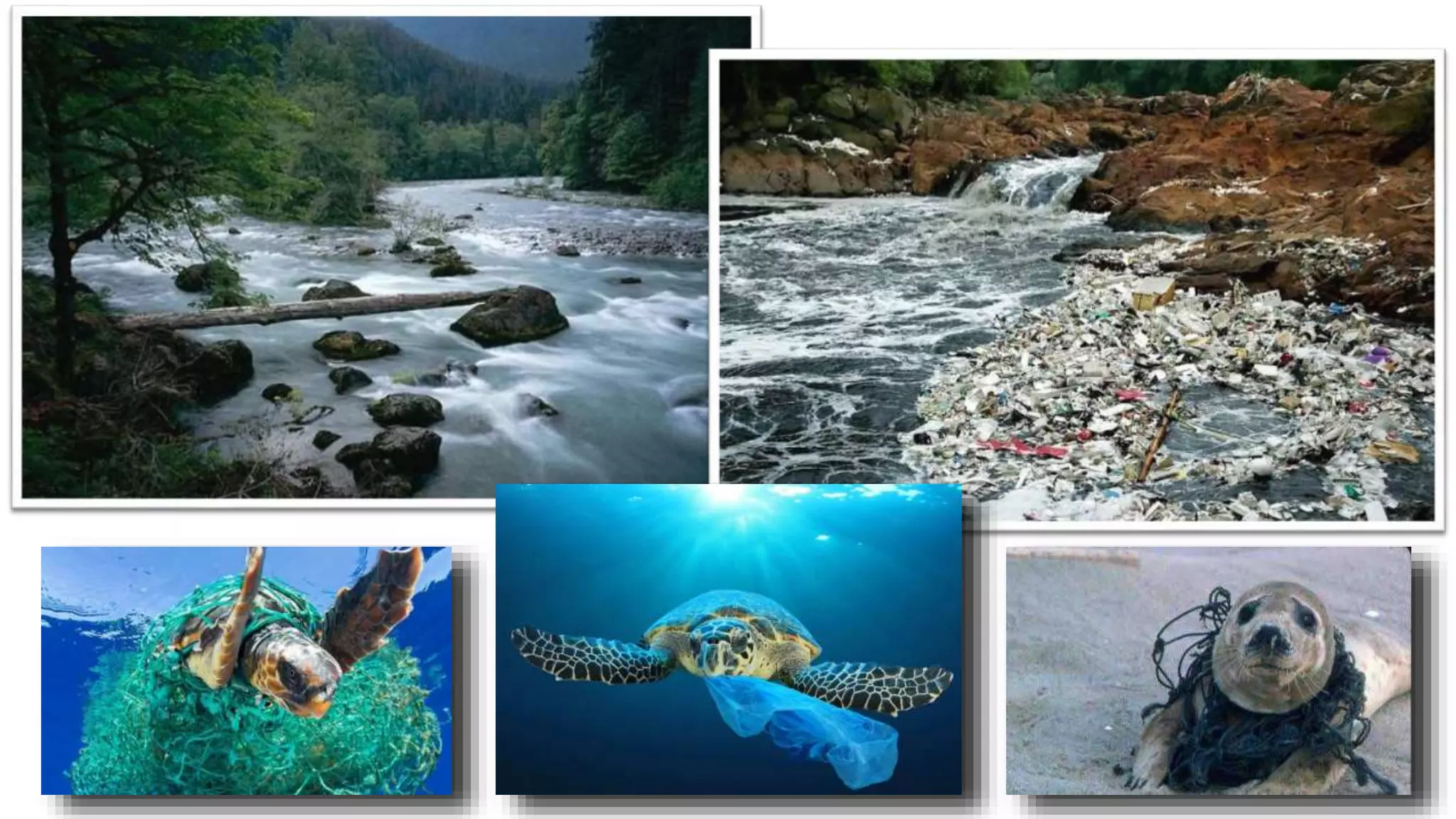
  • #19 Tortoiseshell: glasses frames, guitar picks, headbands, bracelets. Ivory: billiards balls, jewellery, piano keys. 1907 – Bakelite was a good thing
  • #20 Plastic was going to save the trees! No one thought it would destroy the earth … Single use bad, DDD has a sustainability A little more bad news, let’s talk about business rather than nature
  • #21 Failing software projects, failing businesses, are the direct result of our decisions. George Eastman
  • #23 Let’s discuss the “greatest generalization achieved by the human mind” Gerry Weinberg, General Systems Thinking
  • #25 Reinforcing loop driving growth, and a balancing loop that will eventually stop it
  • #27 Software is a social process We can design a system of fear and stress, or a system that fosters collaboration and creativity
  • #28 Policy could be work more hours, Personal issues We can design a system of fear and stress, or a system that fosters collaboration and creativity
  • #31 Let’s discuss the “greatest generalization achieved by the human mind” Gerry Weinberg, General Systems Thinking
  • #32 10 calculations, resulted in his Theory of Universal Gravitation
  • #35 No numbers, feel the shape of it. Think about a flu epidemic. If every person is as likely as the next to catch the flu, we can calculate the flu shots we need
  • #37 Like pairs, less is more. More combinations, more complexity, more probability that you are wrong.
  • #38 Focus on the 20% effort that will give you 80% results
  • #40 Unit tests are feedback loops, error handling
  • #41 Explain the slinky