Systematic fruit crops
Botanical keys and description and special topics
By Anjinayya
M.Sc (Hons) Fruit science
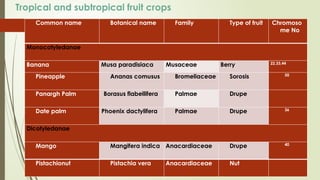
Common name Botanical name Family Type of fruit Chromoso
me No
Monocotyledanae
Banana Musa paradisiaca Musaceae Berry 22,33,44
Pineapple Ananas comusus Bromeliaceae Sorosis 50
Panargh Palm Borasus flabellifera Palmae Drupe
Date palm Phoenix dactylifera Palmae Drupe 36
Dicotyledanae
Mango Mangifera indica Anacardiaceae Drupe 40
Pistachionut Pistachia vera Anacardiaceae Nut
Tropical and subtropical fruit crops
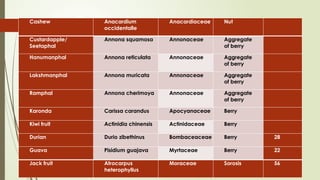
Cashew Anacardium
occidentalle
Anacardiaceae Nut
Custardapple/
Seetaphal
Annona squamosa Annonaceae Aggregate
of berry
Hanumanphal Annona reticulata Annonaceae Aggregate
of berry
Lakshmanphal Annona muricata Annonaceae Aggregate
of berry
Ramphal Annona cherimoya Annonaceae Aggregate
of berry
Karonda Carissa carandus Apocyanaceae Berry
Kiwi fruit Actinidia chinensis Actinidaceae Berry
Durian Durio zibethinus Bombaceaceae Berry 28
Guava Pisidium guajava Myrtaceae Berry 22
Jack fruit Atrocarpus
heterophyllus
Moraceae Sorosis 56
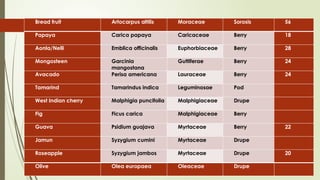
Bread fruit Artocarpus altilis Moraceae Sorosis 56
Papaya Carica papaya Caricaceae Berry 18
Aonla/Nelli Emblica officinalis Euphorbiaceae Berry 28
Mongosteen Garcinia
mangostana
Guttiferae Berry 24
Avacado Perisa americana Lauraceae Berry 24
Tamarind Tamarindus indica Leguminosae Pod
West Indian cherry Malphigia puncifolia Malphigiaceae Drupe
Fig Ficus carica Malphigiaceae Berry
Guava Psidium guajava Myrtaceae Berry 22
Jamun Syzygium cumini Myrtaceae Drupe
Roseapple Syzygium jambos Myrtaceae Drupe 20
Olive Olea europaea Oleaceae Drupe
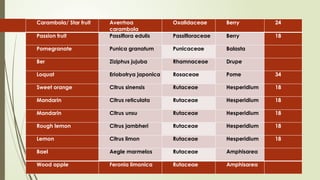
Carambola/ Star fruit Averrhoa
carambola
Oxalidaceae Berry 24
Passion fruit Passiflora edulis Passifloraceae Berry 18
Pomegranate Punica granatum Punicaceae Balasta
Ber Ziziphus jujuba Rhamnaceae Drupe
Loquat Eriobotrya japonica Rosaceae Pome 34
Sweet orange Citrus sinensis Rutaceae Hesperidium 18
Mandarin Citrus reticulata Rutaceae Hesperidium 18
Mandarin Citrus unsu Rutaceae Hesperidium 18
Rough lemon Citrus jambheri Rutaceae Hesperidium 18
Lemon Citrus limon Rutaceae Hesperidium 18
Bael Aegle marmelos Rutaceae Amphisarea
Wood apple Feronia limonica Rutaceae Amphisarea
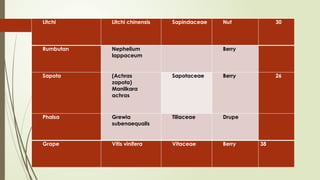
Litchi Litchi chinensis Sapindaceae Nut 30
Rumbutan Nephelium
lappaceum
Berry
Sapota (Achras
zapota)
Manilkara
achras
Sapotaceae Berry 26
Phalsa Grewia
subenaequalis
Tiliaceae Drupe
Grape Vitis vinifera Vitaceae Berry 38
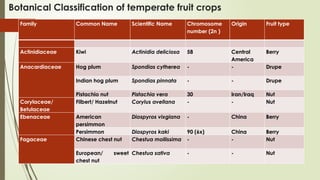
Botanical Classification of temperate fruit crops
Family Common Name Scientific Name Chromosome
number (2n )
Origin Fruit type
Actinidiaceae Kiwi Actinidia deliciosa 58 Central
America
Berry
Anacardiaceae Hog plum Spondias cytherea - - Drupe
Indian hog plum Spondias pinnata - - Drupe
Pistachio nut Pistachia vera 30 Iran/Iraq Nut
Corylaceae/
Betulaceae
Filbert/ Hazelnut Corylus avellana - - Nut
Ebenaceae American
persimmon
Diospyros vixgiana - China Berry
Persimmon Diospyros kaki 90 (6x) China Berry
Fagaceae Chinese chest nut Chestua mollissima - - Nut
European/ sweet
chest nut
Chestua sativa - - Nut
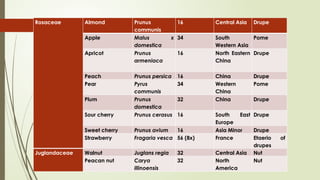
Rosaceae Almond Prunus
communis
16 Central Asia Drupe
Apple Malus x
domestica
34 South
Western Asia
Pome
Apricot Prunus
armeniaca
16 North Eastern
China
Drupe
Peach Prunus persica 16 China Drupe
Pear Pyrus
communis
34 Western
China
Pome
Plum Prunus
domestica
32 China Drupe
Sour cherry Prunus cerasus 16 South East
Europe
Drupe
Sweet cherry Prunus avium 16 Asia Minor Drupe
Strawberry Fragaria vesca 56 (8x) France Etaerio of
drupes
Juglandaceae Walnut Juglans regia 32 Central Asia Nut
Peacan nut Carya
illinoensis
32 North
America
Nut
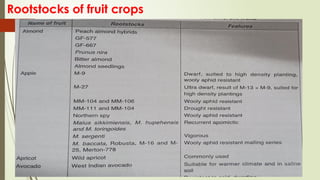
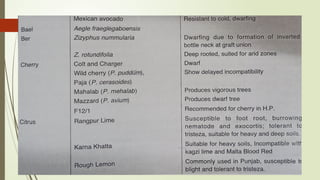
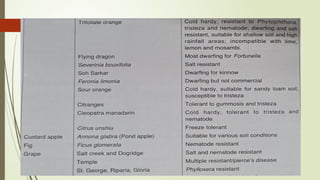
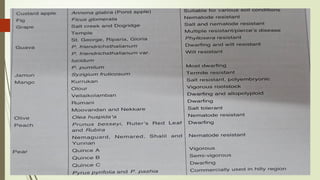
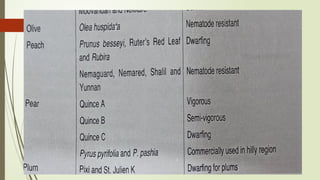
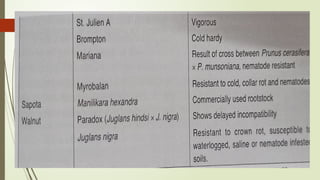
Rootstocks of fruit crops
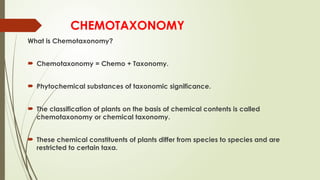
CHEMOTΑΧΟΝΟΜY
What is Chemotaxonomy?
 Chemotaxonomy = Chemo + Taxonomy.
 Phytochemical substances of taxonomic significance.
 The classification of plants on the basis of chemical contents is called
chemotaxonomy or chemical taxonomy.
 These chemical constituents of plants differ from species to species and are
restricted to certain taxa.
Among most studied families from the chemotaxonomic point of view are:
• Malvaceae,
• Ranunculaceae,
• Magnoliaceae,
• Polygonaceae, and
• Solanaceae.
Where you found ?
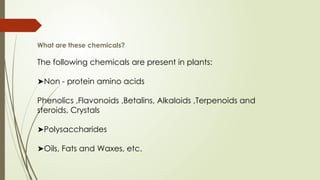
What are these chemicals?
The following chemicals are present in plants:
➤Non - protein amino acids
Phenolics ,Flavonoids ,Betalins, Alkaloids ,Terpenoids and
steroids, Crystals
➤Polysaccharides
➤Oils, Fats and Waxes, etc.
Molecular markers
Molecular markers are specific fragments of DNA that can
be identified within the whole genome.
 Molecular markers are found at specific locations of the
genome.
 They are used to 'flag' the position of a particular gene or
the inheritance of a particular character.
Molecular markers are phenotypically neutral.
Thank you

systematic fruit crops detailed Explaination .pptx

  • 1.
    Systematic fruit crops Botanicalkeys and description and special topics By Anjinayya M.Sc (Hons) Fruit science
  • 2.
    Common name Botanicalname Family Type of fruit Chromoso me No Monocotyledanae Banana Musa paradisiaca Musaceae Berry 22,33,44 Pineapple Ananas comusus Bromeliaceae Sorosis 50 Panargh Palm Borasus flabellifera Palmae Drupe Date palm Phoenix dactylifera Palmae Drupe 36 Dicotyledanae Mango Mangifera indica Anacardiaceae Drupe 40 Pistachionut Pistachia vera Anacardiaceae Nut Tropical and subtropical fruit crops
  • 3.
    Cashew Anacardium occidentalle Anacardiaceae Nut Custardapple/ Seetaphal Annonasquamosa Annonaceae Aggregate of berry Hanumanphal Annona reticulata Annonaceae Aggregate of berry Lakshmanphal Annona muricata Annonaceae Aggregate of berry Ramphal Annona cherimoya Annonaceae Aggregate of berry Karonda Carissa carandus Apocyanaceae Berry Kiwi fruit Actinidia chinensis Actinidaceae Berry Durian Durio zibethinus Bombaceaceae Berry 28 Guava Pisidium guajava Myrtaceae Berry 22 Jack fruit Atrocarpus heterophyllus Moraceae Sorosis 56
  • 4.
    Bread fruit Artocarpusaltilis Moraceae Sorosis 56 Papaya Carica papaya Caricaceae Berry 18 Aonla/Nelli Emblica officinalis Euphorbiaceae Berry 28 Mongosteen Garcinia mangostana Guttiferae Berry 24 Avacado Perisa americana Lauraceae Berry 24 Tamarind Tamarindus indica Leguminosae Pod West Indian cherry Malphigia puncifolia Malphigiaceae Drupe Fig Ficus carica Malphigiaceae Berry Guava Psidium guajava Myrtaceae Berry 22 Jamun Syzygium cumini Myrtaceae Drupe Roseapple Syzygium jambos Myrtaceae Drupe 20 Olive Olea europaea Oleaceae Drupe
  • 5.
    Carambola/ Star fruitAverrhoa carambola Oxalidaceae Berry 24 Passion fruit Passiflora edulis Passifloraceae Berry 18 Pomegranate Punica granatum Punicaceae Balasta Ber Ziziphus jujuba Rhamnaceae Drupe Loquat Eriobotrya japonica Rosaceae Pome 34 Sweet orange Citrus sinensis Rutaceae Hesperidium 18 Mandarin Citrus reticulata Rutaceae Hesperidium 18 Mandarin Citrus unsu Rutaceae Hesperidium 18 Rough lemon Citrus jambheri Rutaceae Hesperidium 18 Lemon Citrus limon Rutaceae Hesperidium 18 Bael Aegle marmelos Rutaceae Amphisarea Wood apple Feronia limonica Rutaceae Amphisarea
  • 6.
    Litchi Litchi chinensisSapindaceae Nut 30 Rumbutan Nephelium lappaceum Berry Sapota (Achras zapota) Manilkara achras Sapotaceae Berry 26 Phalsa Grewia subenaequalis Tiliaceae Drupe Grape Vitis vinifera Vitaceae Berry 38
  • 7.
    Botanical Classification oftemperate fruit crops Family Common Name Scientific Name Chromosome number (2n ) Origin Fruit type Actinidiaceae Kiwi Actinidia deliciosa 58 Central America Berry Anacardiaceae Hog plum Spondias cytherea - - Drupe Indian hog plum Spondias pinnata - - Drupe Pistachio nut Pistachia vera 30 Iran/Iraq Nut Corylaceae/ Betulaceae Filbert/ Hazelnut Corylus avellana - - Nut Ebenaceae American persimmon Diospyros vixgiana - China Berry Persimmon Diospyros kaki 90 (6x) China Berry Fagaceae Chinese chest nut Chestua mollissima - - Nut European/ sweet chest nut Chestua sativa - - Nut
  • 8.
    Rosaceae Almond Prunus communis 16Central Asia Drupe Apple Malus x domestica 34 South Western Asia Pome Apricot Prunus armeniaca 16 North Eastern China Drupe Peach Prunus persica 16 China Drupe Pear Pyrus communis 34 Western China Pome Plum Prunus domestica 32 China Drupe Sour cherry Prunus cerasus 16 South East Europe Drupe Sweet cherry Prunus avium 16 Asia Minor Drupe Strawberry Fragaria vesca 56 (8x) France Etaerio of drupes Juglandaceae Walnut Juglans regia 32 Central Asia Nut Peacan nut Carya illinoensis 32 North America Nut
  • 9.
  • 15.
    CHEMOTΑΧΟΝΟΜY What is Chemotaxonomy? Chemotaxonomy = Chemo + Taxonomy.  Phytochemical substances of taxonomic significance.  The classification of plants on the basis of chemical contents is called chemotaxonomy or chemical taxonomy.  These chemical constituents of plants differ from species to species and are restricted to certain taxa.
  • 16.
    Among most studiedfamilies from the chemotaxonomic point of view are: • Malvaceae, • Ranunculaceae, • Magnoliaceae, • Polygonaceae, and • Solanaceae. Where you found ?
  • 17.
    What are thesechemicals? The following chemicals are present in plants: ➤Non - protein amino acids Phenolics ,Flavonoids ,Betalins, Alkaloids ,Terpenoids and steroids, Crystals ➤Polysaccharides ➤Oils, Fats and Waxes, etc.
  • 18.
    Molecular markers Molecular markersare specific fragments of DNA that can be identified within the whole genome.  Molecular markers are found at specific locations of the genome.  They are used to 'flag' the position of a particular gene or the inheritance of a particular character. Molecular markers are phenotypically neutral.
  • 19.