Session introduction
• Thissession provides you with the skills necessary to take a systems thinking
approach to emerging pandemic diseases.
• Key outcomes of the sessions are the ability to:
– Describe the elements of complex problems and systems thinking
– Create and use systems mapping to deepen understanding of OH
problems
– Partner with OH team members to develop solutions to complex OH
problems using systems thinking and tools
08/11/25 2
3.
Brainstorming
• How doyou understand the term systems thinking?
• How systems thinking differs from other types of thinking? (logical
thinking? rational thinking?...)
• Why systems thinking is important in management of infectious
diseases/one health?
08/11/25 3
4.
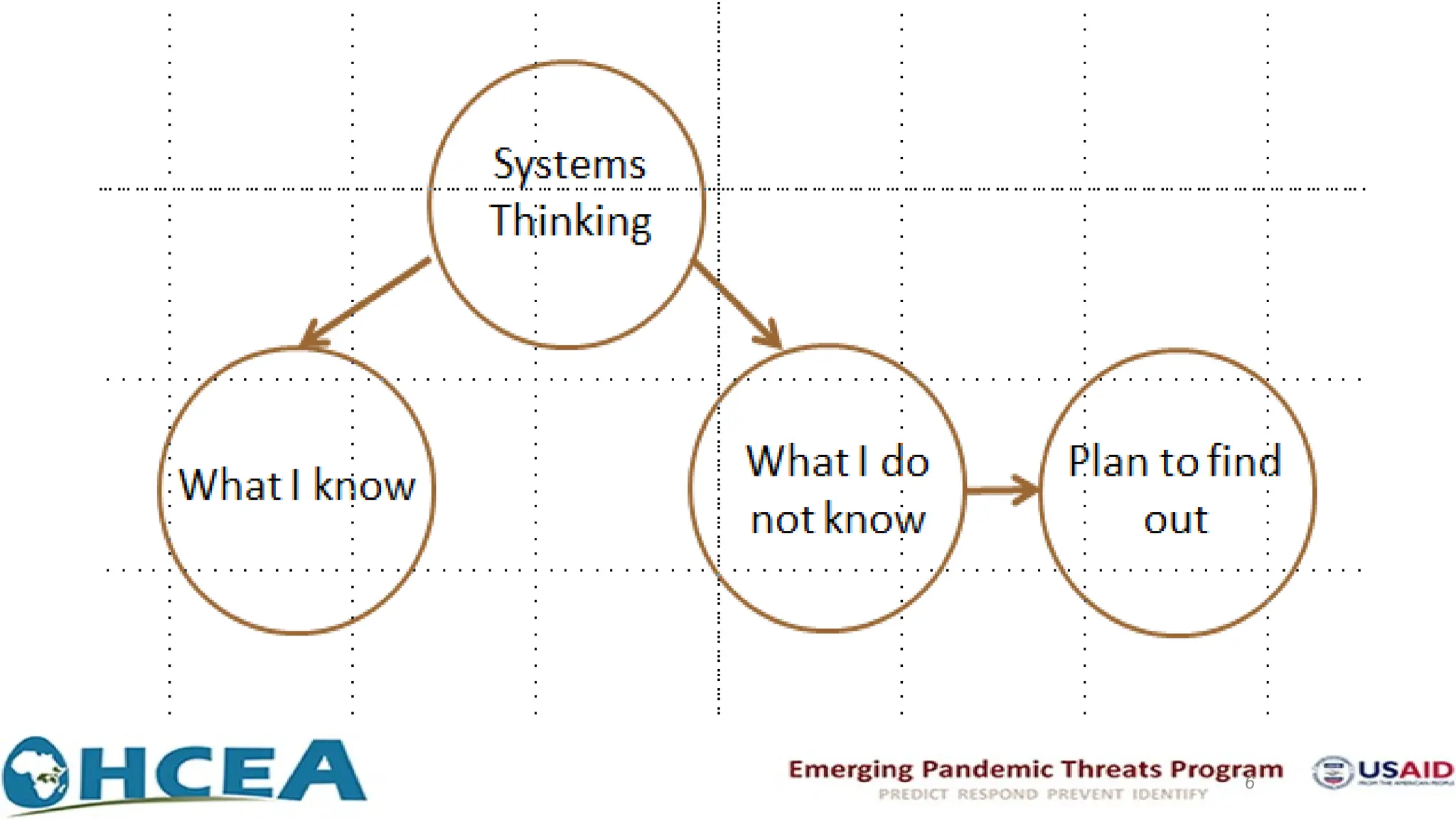
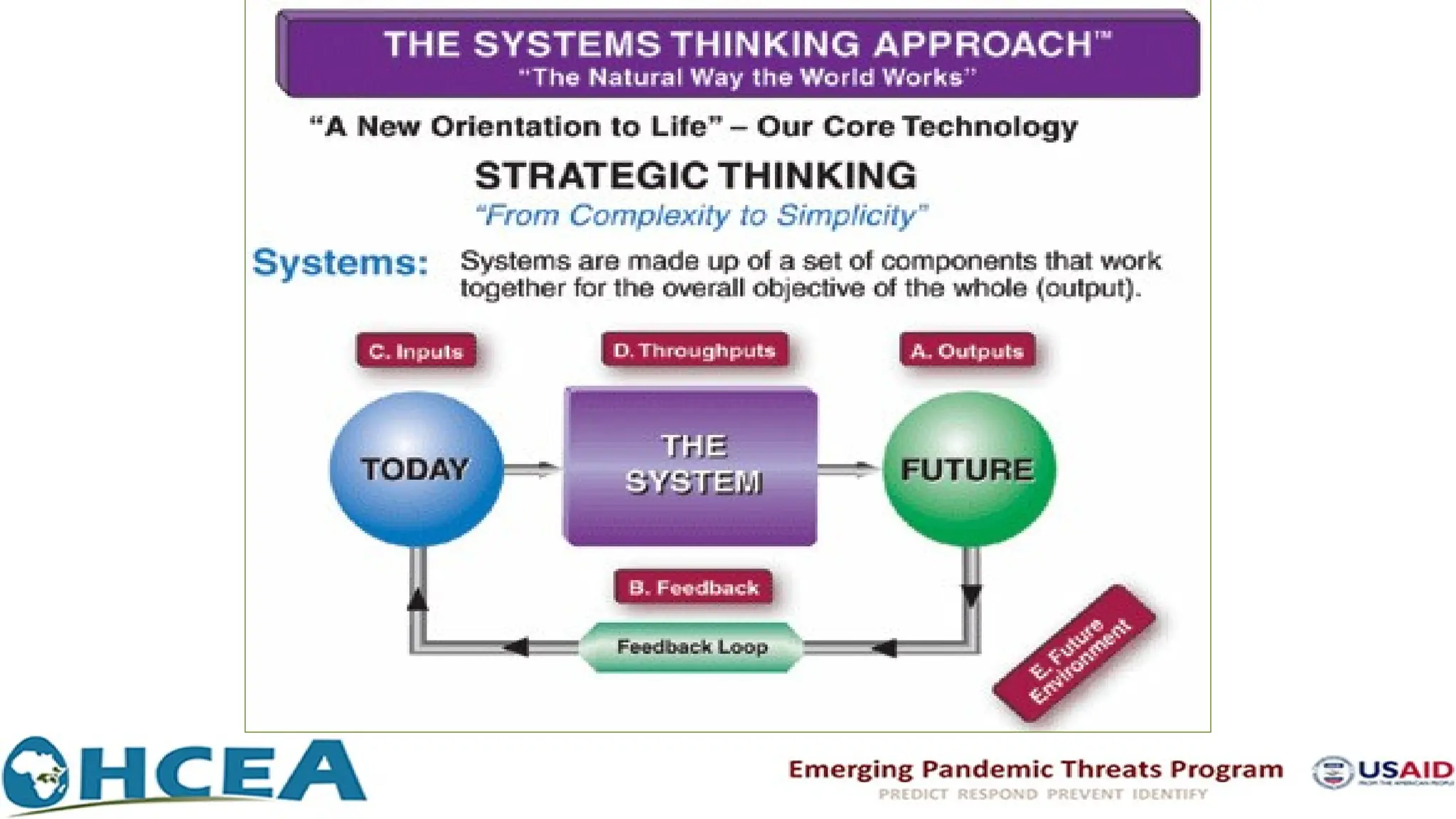
What is SystemThinking?
• A process of understanding how things which may be regarded as systems influence
one another within a complete entity or larger system.
• It is a holistic approach to analysis that focuses on the way that system’s constituent
parts interrelate and how systems work over time and within the context of larger
systems.
• When we begin to learn about a system, its complexity may be a bit overwhelming.
• A systems thinking approach allows us to begin to understand the complexity and use
it to find answers that matter.
08/11/25
4
5.
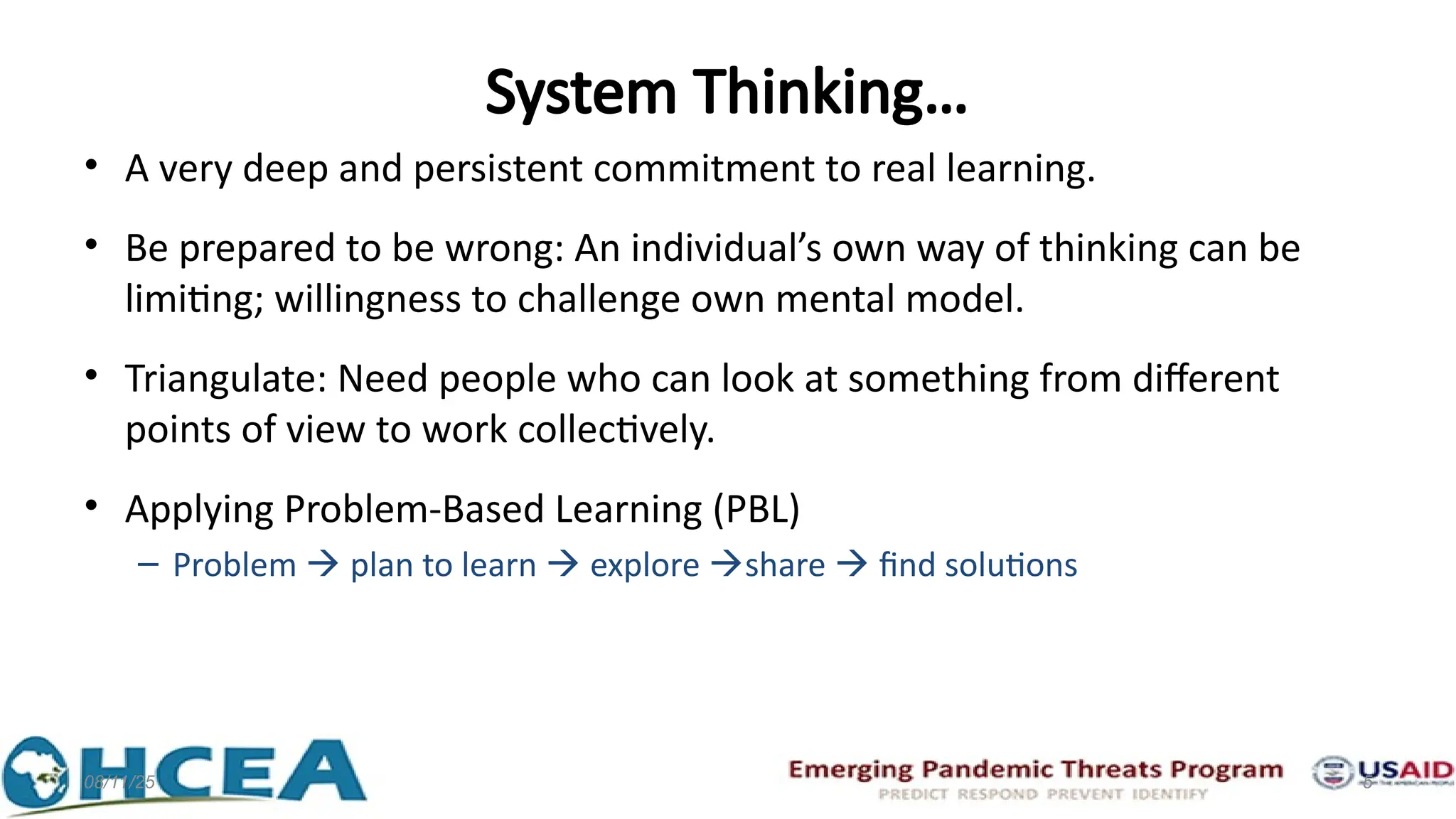
System Thinking…
• Avery deep and persistent commitment to real learning.
• Be prepared to be wrong: An individual’s own way of thinking can be
limiting; willingness to challenge own mental model.
• Triangulate: Need people who can look at something from different
points of view to work collectively.
• Applying Problem-Based Learning (PBL)
– Problem plan to learn explore share find solutions
08/11/25 5
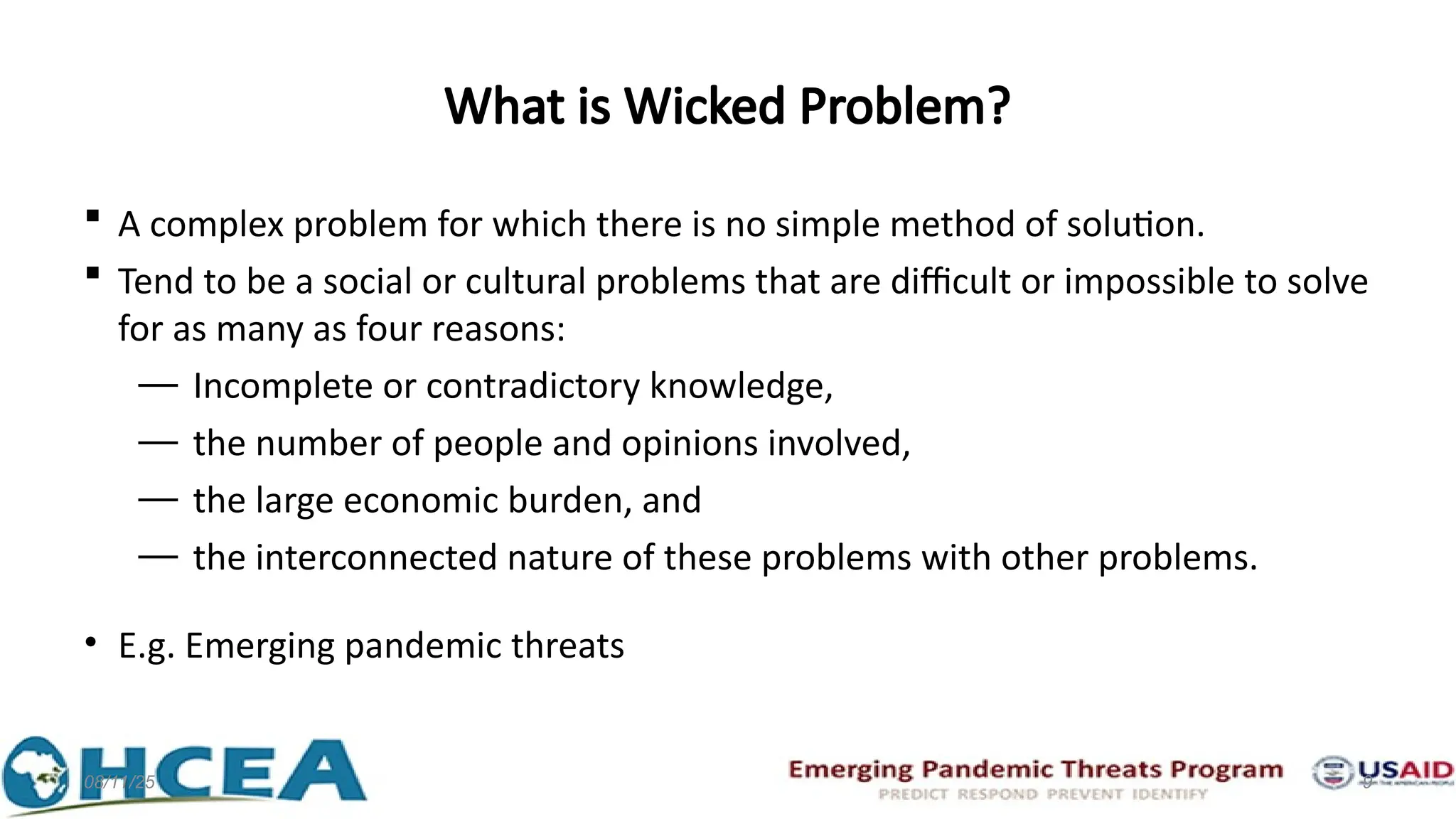
What is WickedProblem?
A complex problem for which there is no simple method of solution.
Tend to be a social or cultural problems that are difficult or impossible to solve
for as many as four reasons:
— Incomplete or contradictory knowledge,
— the number of people and opinions involved,
— the large economic burden, and
— the interconnected nature of these problems with other problems.
• E.g. Emerging pandemic threats
08/11/25 9
08/11/25 12
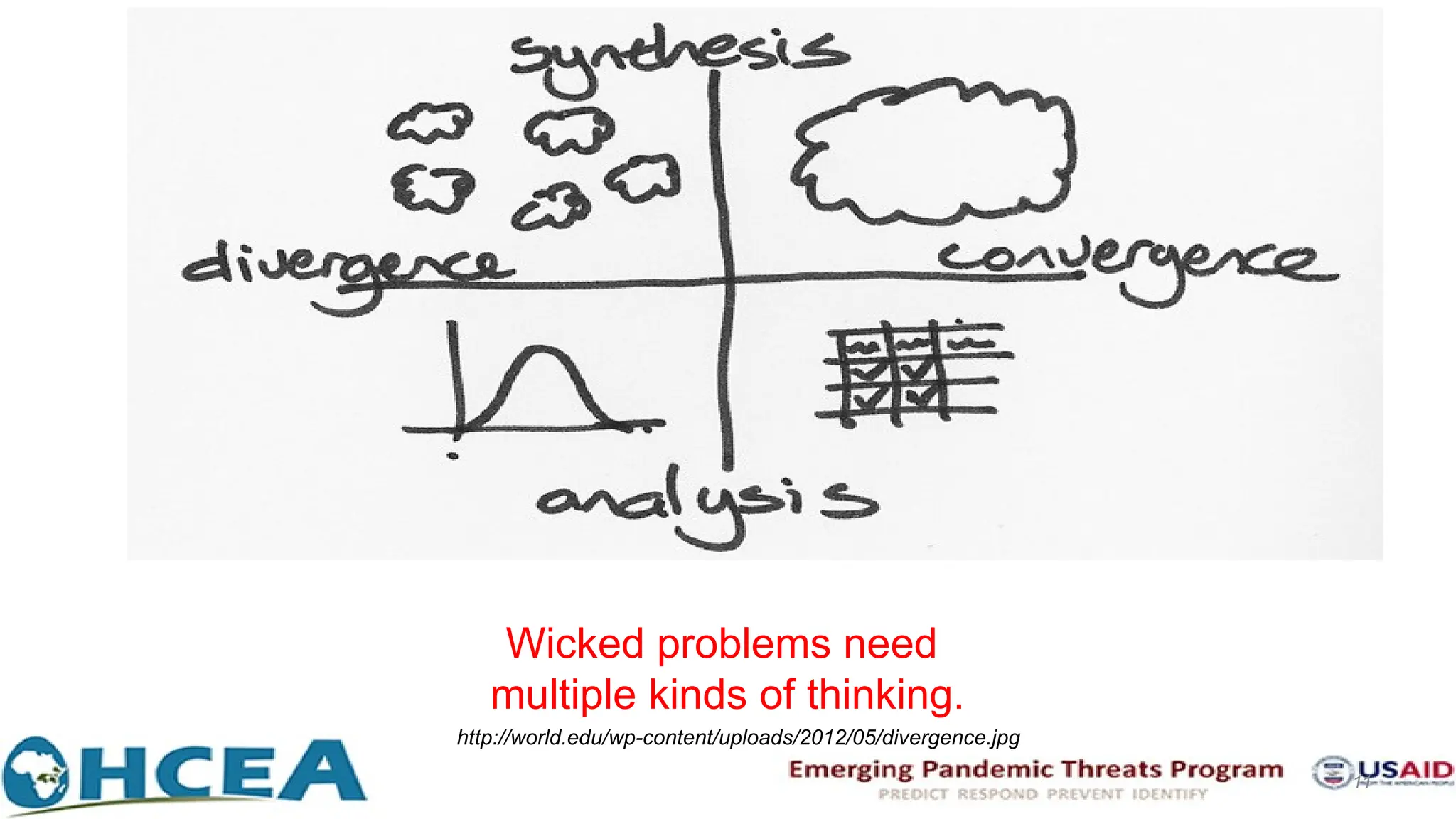
• Thereis no right way to approach a wicked problem…
rather it takes multiple ways of thinking and multiple
perspectives.
• ‘We can’t solve a problem with the same level of thinking
that created it.”
(Albert Einstein)
08/11/25 14
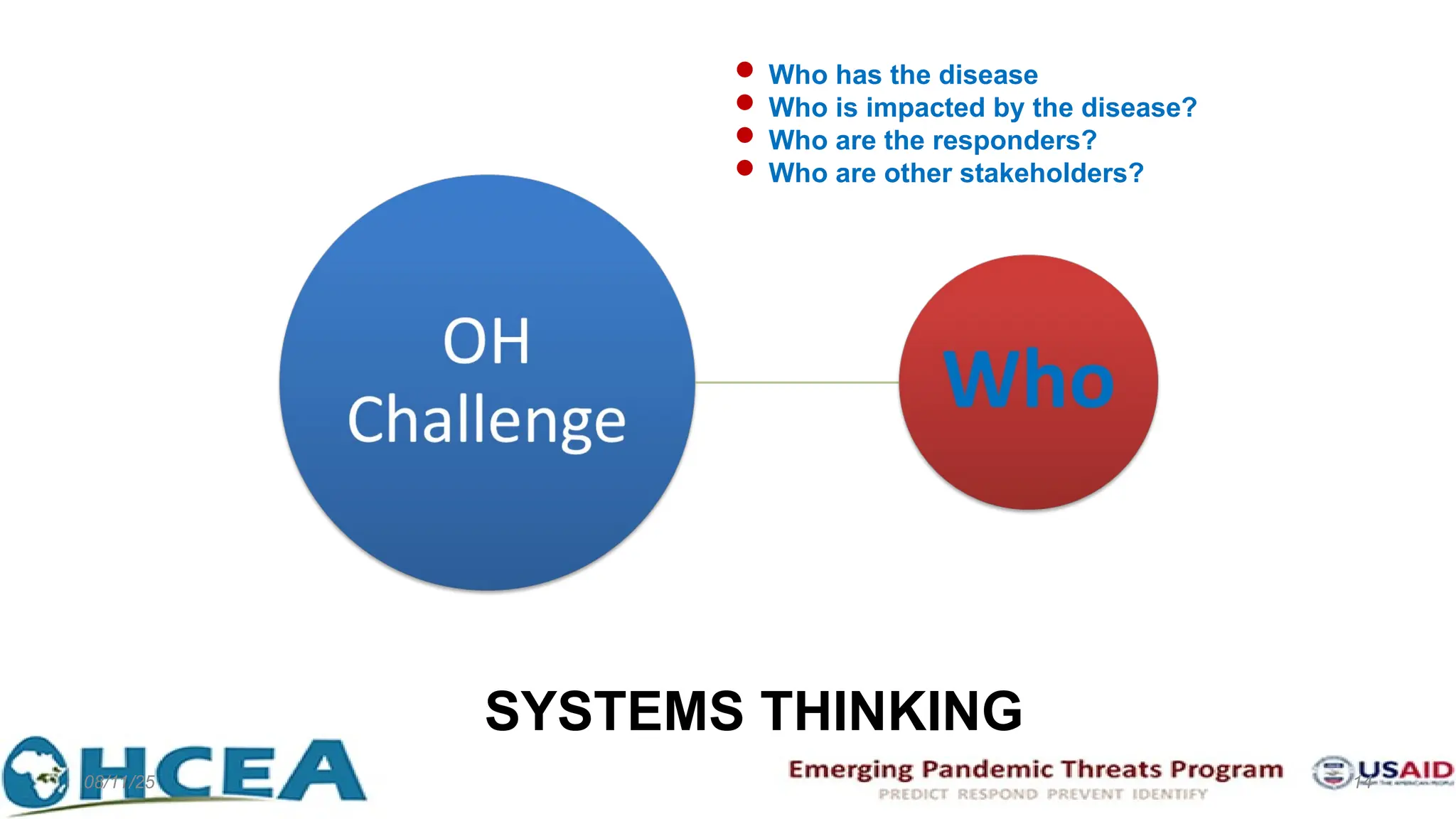
Whohas the disease
Who is impacted by the disease?
Who are the responders?
Who are other stakeholders?
SYSTEMS THINKING
15.
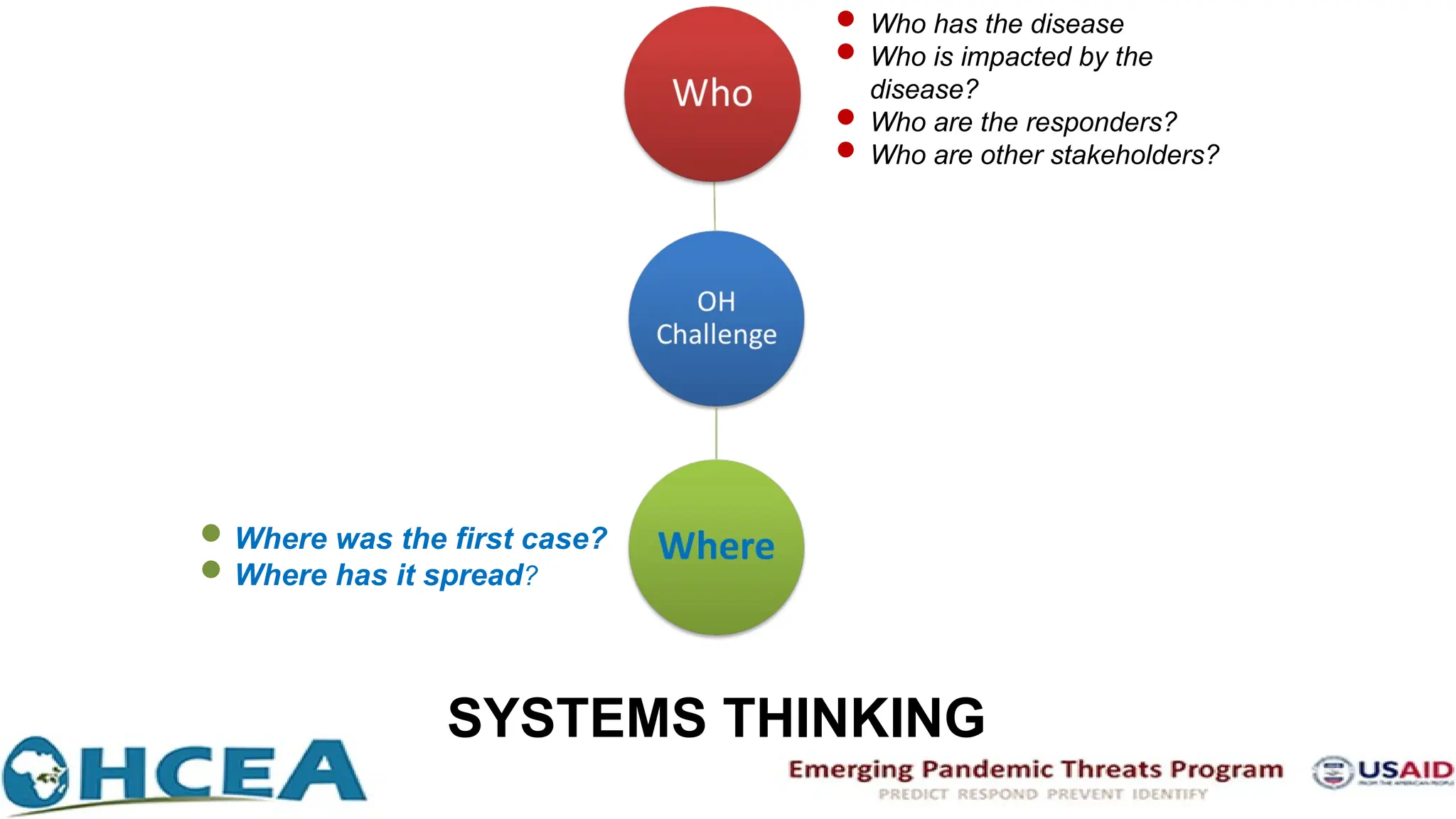
Where was thefirst case?
Where has it spread?
Who has the disease
Who is impacted by the
disease?
Who are the responders?
Who are other stakeholders?
SYSTEMS THINKING
16.
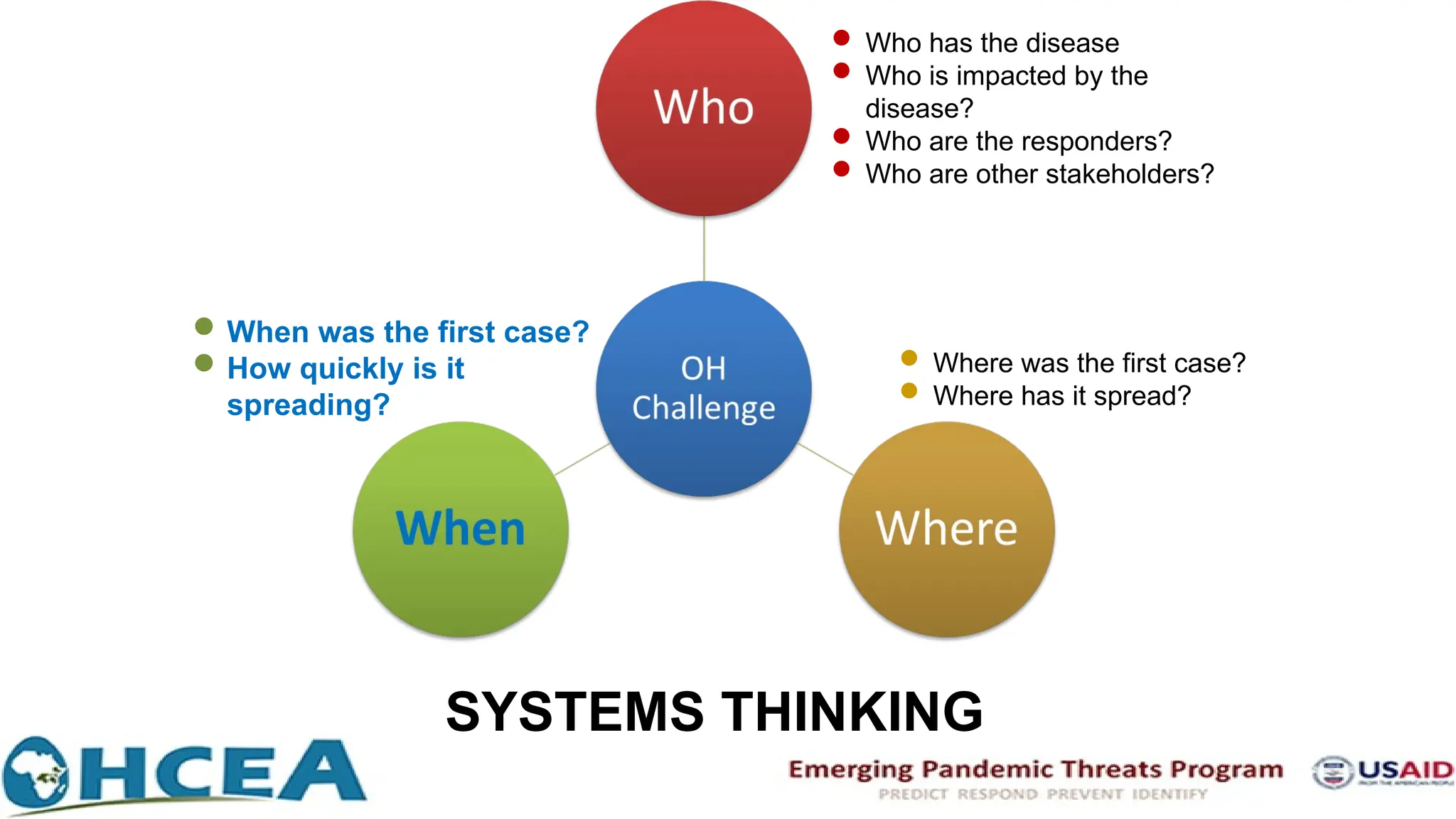
Who hasthe disease
Who is impacted by the
disease?
Who are the responders?
Who are other stakeholders?
Where was the first case?
Where has it spread?
When was the first case?
How quickly is it
spreading?
SYSTEMS THINKING
17.
08/11/25 17
Whohas the disease
Who is impacted by the
disease?
Who are the responders?
Who are other stakeholders?
Where was the first case?
Where has it spread?
When was the first case?
How quickly is it spreading?
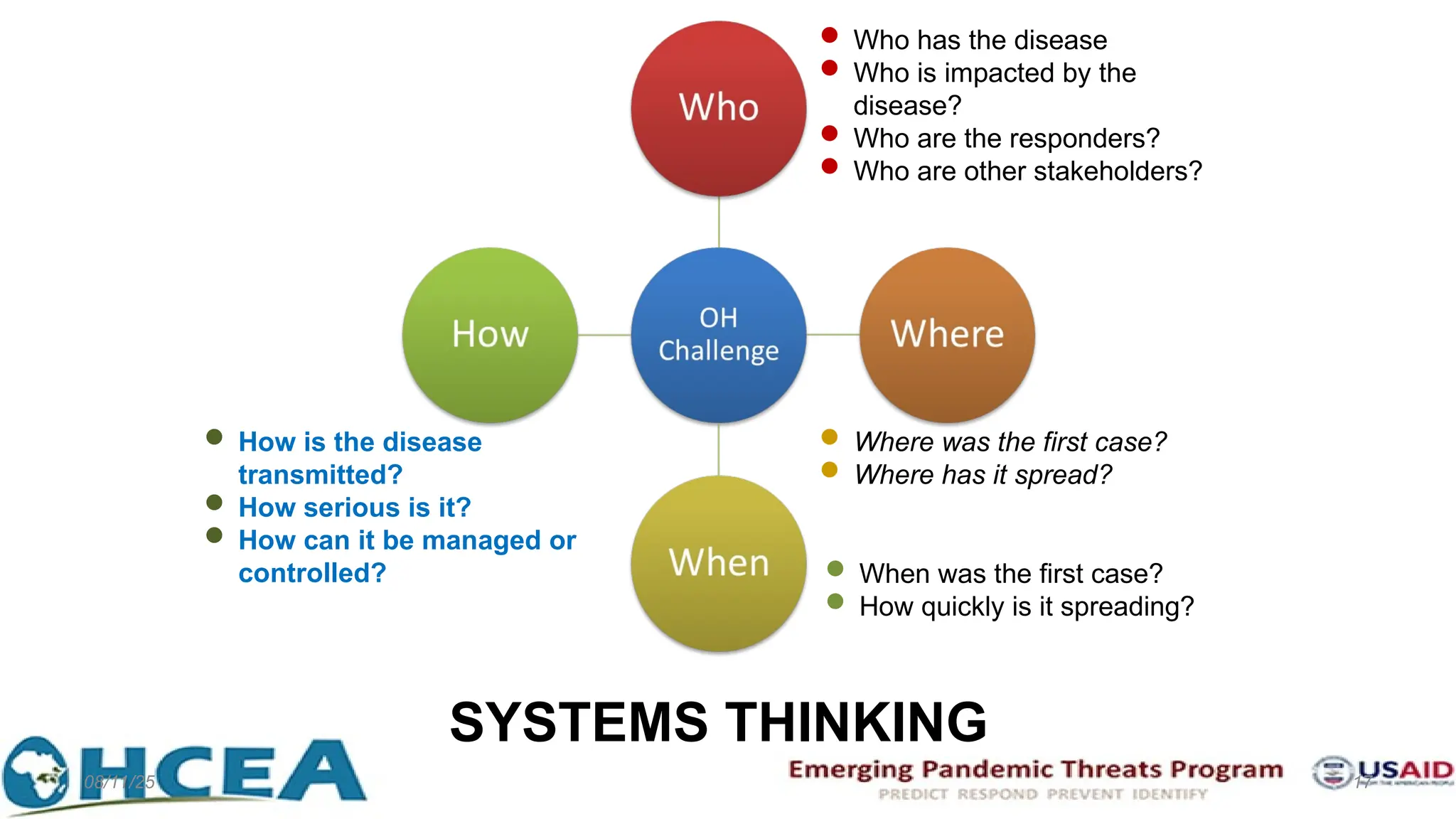
How is the disease
transmitted?
How serious is it?
How can it be managed or
controlled?
SYSTEMS THINKING
18.
Who hasthe disease
Who is impacted by the
disease?
Who are the responders?
Who are other stakeholders?
Where was the first case?
Where has it spread?
When was the
first case?
How quickly is it
spreading?
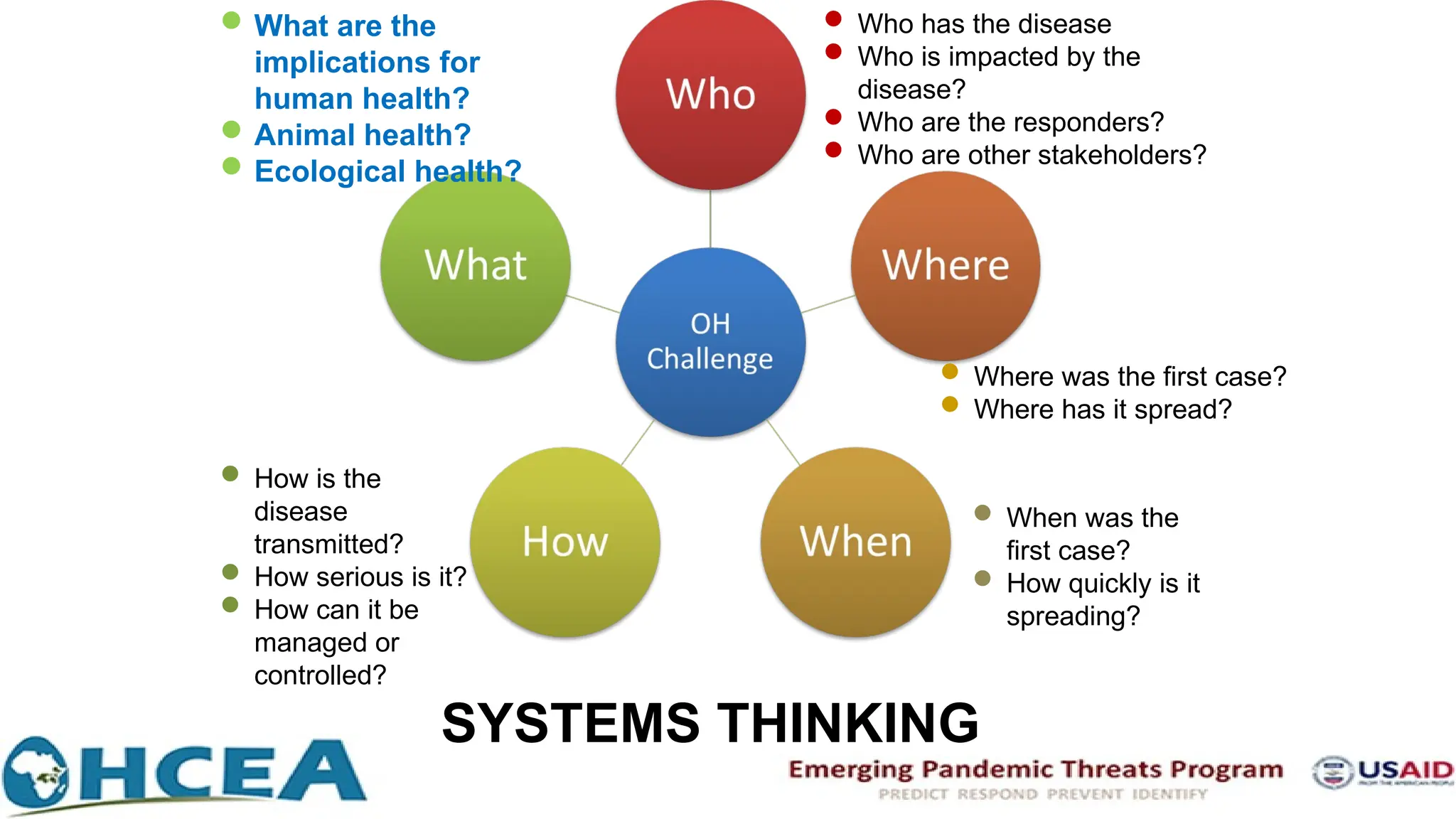
How is the
disease
transmitted?
How serious is it?
How can it be
managed or
controlled?
What are the
implications for
human health?
Animal health?
Ecological health?
SYSTEMS THINKING
19.
SYSTEMS THINKING
Whohas the disease
Who is impacted by the disease?
Who are the responders?
Who are other stakeholders?
Where was the first
case?
Where has it
spread?
When was the first
case?
How quickly is it
spreading?
How is the disease
transmitted?
How serious is it?
How can it be managed
or controlled?
What are the
implications for
human health?
Animal health?
Ecological
health?
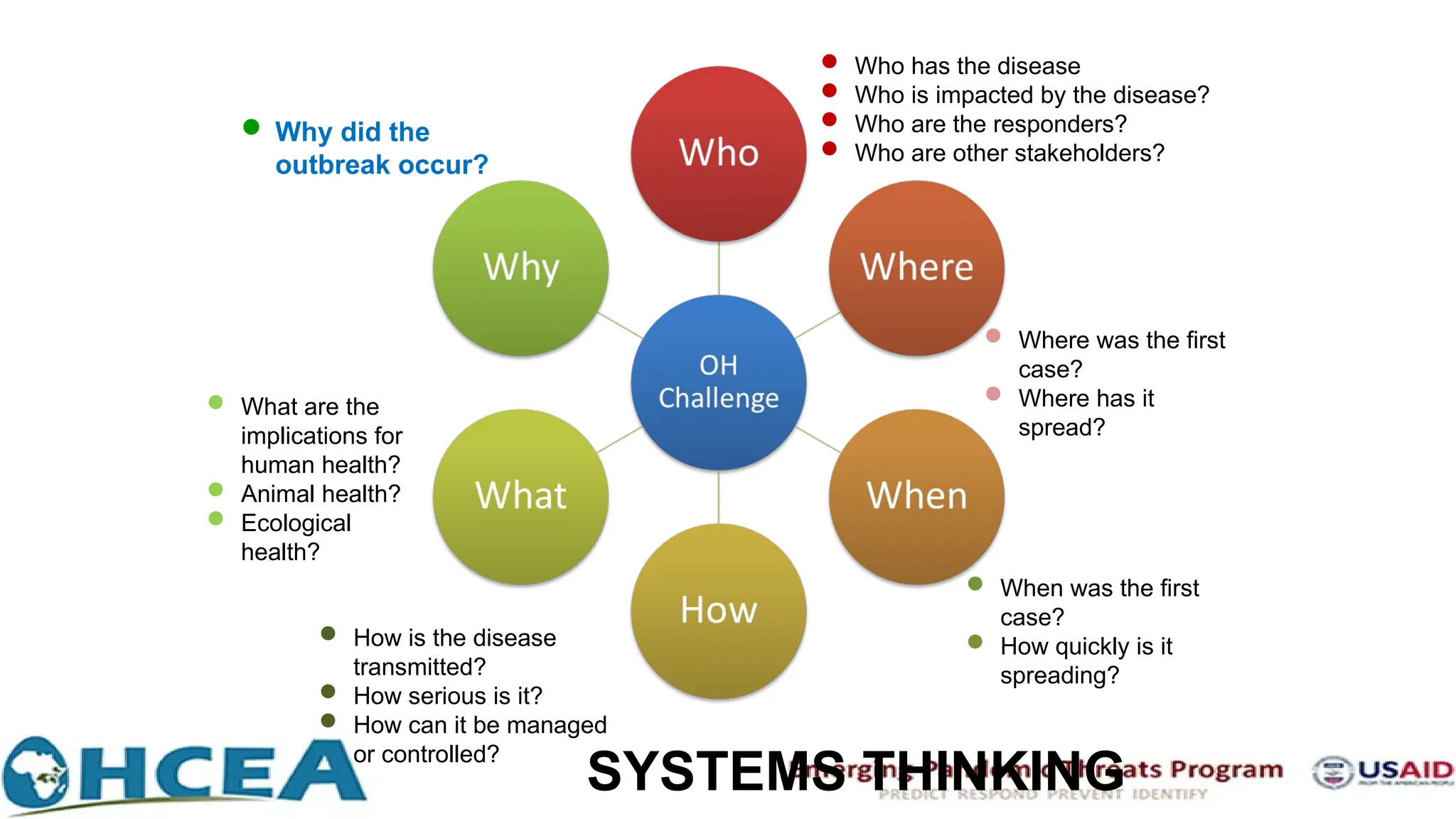
Why did the
outbreak occur?
20.
Summary
• Systems thinkingfrom a One Health perspective allows us to solve
“wicked problems” through a simplified process.
• It provides a means of analyzing the human animal environmental
interactions and the different disciplines engaged and how they
work together and as a system to solve complex health problems.
• It systematically covers the policies, processes, practices and
people, the roles each play and how they interact to function
effectively to solve public health threats.
• The OH systems thinking uses the problem defining approach to
identify and solve the problem
08/11/25 23
Editor's Notes
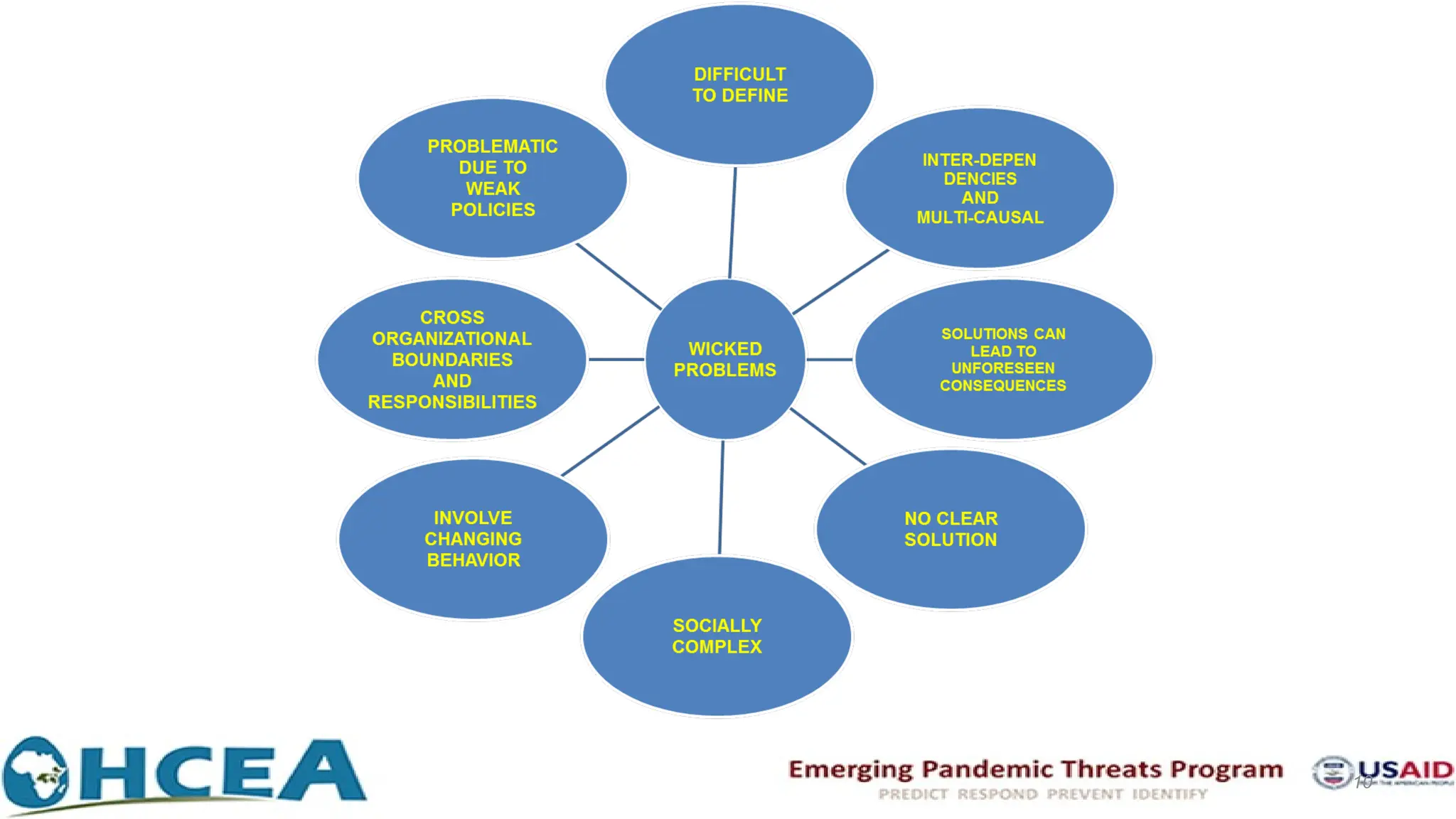
#10 Horst Rittel, one of the first to formalize a theory of wicked problems, cites ten characteristics of these complicated social issues Rittel, Horst. "Dilemmas in a General Theory of Planning." Policy Sciences, 1973: 155-169.:
Wicked problems have no definitive formulation. The problem of poverty in Texas is grossly similar but discretely different from poverty in Nairobi, so no practical characteristics describe "poverty."
It's hard, maybe impossible, to measure or claim success with wicked problems because they bleed into one another, unlike the boundaries of traditional design problems that can be articulated or defined.
Solutions to wicked problems can be only good or bad, not true or false. There is no idealized end state to arrive at, and so approaches to wicked problems should be tractable ways to improve a situation rather than solve it.
There is no template to follow when tackling a wicked problem, although history may provide a guide. Teams that approach wicked problems must literally make things up as they go along.
There is always more than one explanation for a wicked problem, with the appropriateness of the explanation depending greatly on the individual perspective of the designer.
Every wicked problem is a symptom of another problem. The interconnected quality of socio-economic political systems illustrates how, for example, a change in education will cause new behavior in nutrition.
No mitigation strategy for a wicked problem has a definitive scientific test because humans invented wicked problems and science exists to understand natural phenomena.
Offering a "solution" to a wicked problem frequently is a "one shot" design effort because a significant intervention changes the design space enough to minimize the ability for trial and error.
Every wicked problem is unique.
Designers attempting to address a wicked problem must be fully responsible for their actions.
#11 There is no right way to approach a wicked problem…rather it takes multiple ways of thinking, multiple perspectives. That is why One Health brings together a multi-disciplinary team to tackle some of the most complex health problems.
#20 Have students form teams around the challenge that interests them. If a large group of students wants to work on the same challenge, divide the group into two smaller groups. Groups of five to eight participants are optimal.
Students should use systems thinking to explore the challenge they selected. They should consider the following questions and also propose solutions to the challenge. Each team should create a poster capturing this information to present during the next class meeting.