Symptomatology of Virus
infected Plants
By; Dr. Taswar Ahsan (Microbiology & Plant Pathology)
Symptoms
• Symptoms are defined as macro or microscopic modifications in form, color, size,
physiology, anatomy as a result of any pathogenic attack
• It can be external or internal
• The most evident symptoms are present on leaves
• Although viruses can attack stem, roots
• The most common symptoms of viral diseases are the retardation in development
• This results in plant dwarfism
• Almost all viral diseases results in reduction of growth and yield of plants
Types
• On the base of localization symptoms are divided in two types
• 1.Localized
• 2.Systematic
• 1. Localized
• Certain viruses cause local infection at the point of entry and this infection is called local
infection and the symptoms are called as Localized
• 2. Systematic
• When virus effect the whole plant it is known as systematic infections and the symptoms
are known as systematic symptoms
• Asymptomatic
• Many viruses can infect certain plants without development of evident symptoms
• These viruses are known as Latent Viruses and the host is called Asymptomatic
• Masking
• Plants that develop symptoms when infected by viruses remain asymptomatic for long
period of time
• This is called Masking
External Viral Symptoms
• 1.Chlorosis
• 2.Mosaic
• 3.Molting
• 4.Vein Chlorosis & Vein Clearing
• 5.Necrosis
• 6.Ring Spot
• 7.Enation
• 8.Stunting in Growth
• 9.Pre Mature shedding of Leaves
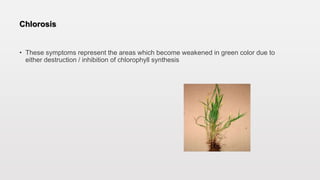
Chlorosis
• These symptoms represent the areas which become weakened in green color due to
either destruction / inhibition of chlorophyll synthesis
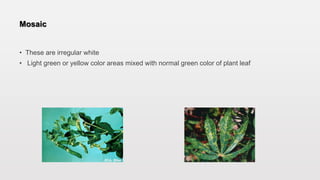
Mosaic
• These are irregular white
• Light green or yellow color areas mixed with normal green color of plant leaf
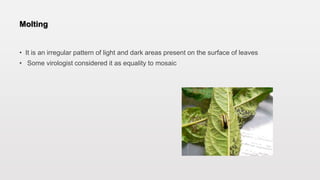
Molting
• It is an irregular pattern of light and dark areas present on the surface of leaves
• Some virologist considered it as equality to mosaic
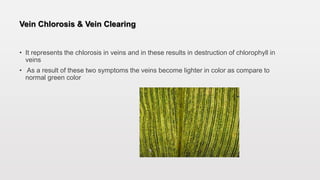
Vein Chlorosis & Vein Clearing
• It represents the chlorosis in veins and in these results in destruction of chlorophyll in
veins
• As a result of these two symptoms the veins become lighter in color as compare to
normal green color
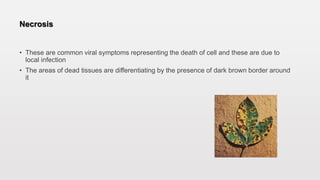
Necrosis
• These are common viral symptoms representing the death of cell and these are due to
local infection
• The areas of dead tissues are differentiating by the presence of dark brown border around
it
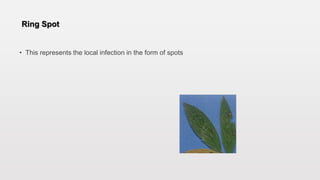
Ring Spot
• This represents the local infection in the form of spots
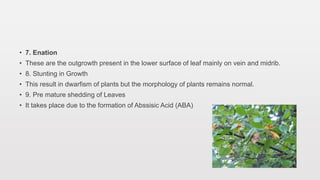
• 7. Enation
• These are the outgrowth present in the lower surface of leaf mainly on vein and midrib.
• 8. Stunting in Growth
• This result in dwarfism of plants but the morphology of plants remains normal.
• 9. Pre mature shedding of Leaves
• It takes place due to the formation of Abssisic Acid (ABA)
Internal Symptoms
• Followings are some internal symptoms
• 1.Changes in Parenchyma cell
• 2.Changes in Xylem
• 3.Changes in Phloem
• 4.Changes in Cell Organelles
• 1.Changes in Parenchyma cell
• These changes occur due to attack of mosaic viruses. Parenchyma cell become reduce in
size, intercellular spaces, reduced & cell shape disturb
• 2. Changes in Xylem
• In xylem gum like substance appears and block the xylem. This process is called
Gummosis. Sometimes bladder likes out growth are produced in xylem and block it. This
is called Tylosis
• 3. Changes in Phloem
• Changes in phloem disturb the food supply. Symptoms mostly appear in sieve elements
of phloem
• 4. Changes in Cell Organelles
• a)Increase formation of vacuole
• b)Concentration of cytoplasm disturbs
• c)Ribosome and endoplasmic reticulum become reduce in number
• d)Nuclei shape disturbs
• e)Abnormal morphology of mitochondria
• f)Cell division (mitosis & meiosis) are also affected
Symptoms

Symptoms

  • 1.
    Symptomatology of Virus infectedPlants By; Dr. Taswar Ahsan (Microbiology & Plant Pathology)
  • 2.
    Symptoms • Symptoms aredefined as macro or microscopic modifications in form, color, size, physiology, anatomy as a result of any pathogenic attack • It can be external or internal • The most evident symptoms are present on leaves • Although viruses can attack stem, roots • The most common symptoms of viral diseases are the retardation in development • This results in plant dwarfism • Almost all viral diseases results in reduction of growth and yield of plants
  • 3.
    Types • On thebase of localization symptoms are divided in two types • 1.Localized • 2.Systematic
  • 4.
    • 1. Localized •Certain viruses cause local infection at the point of entry and this infection is called local infection and the symptoms are called as Localized • 2. Systematic • When virus effect the whole plant it is known as systematic infections and the symptoms are known as systematic symptoms
  • 5.
    • Asymptomatic • Manyviruses can infect certain plants without development of evident symptoms • These viruses are known as Latent Viruses and the host is called Asymptomatic • Masking • Plants that develop symptoms when infected by viruses remain asymptomatic for long period of time • This is called Masking
  • 6.
    External Viral Symptoms •1.Chlorosis • 2.Mosaic • 3.Molting • 4.Vein Chlorosis & Vein Clearing • 5.Necrosis • 6.Ring Spot • 7.Enation • 8.Stunting in Growth • 9.Pre Mature shedding of Leaves
  • 7.
    Chlorosis • These symptomsrepresent the areas which become weakened in green color due to either destruction / inhibition of chlorophyll synthesis
  • 8.
    Mosaic • These areirregular white • Light green or yellow color areas mixed with normal green color of plant leaf
  • 9.
    Molting • It isan irregular pattern of light and dark areas present on the surface of leaves • Some virologist considered it as equality to mosaic
  • 10.
    Vein Chlorosis &Vein Clearing • It represents the chlorosis in veins and in these results in destruction of chlorophyll in veins • As a result of these two symptoms the veins become lighter in color as compare to normal green color
  • 11.
    Necrosis • These arecommon viral symptoms representing the death of cell and these are due to local infection • The areas of dead tissues are differentiating by the presence of dark brown border around it
  • 12.
    Ring Spot • Thisrepresents the local infection in the form of spots
  • 13.
    • 7. Enation •These are the outgrowth present in the lower surface of leaf mainly on vein and midrib. • 8. Stunting in Growth • This result in dwarfism of plants but the morphology of plants remains normal. • 9. Pre mature shedding of Leaves • It takes place due to the formation of Abssisic Acid (ABA)
  • 14.
    Internal Symptoms • Followingsare some internal symptoms • 1.Changes in Parenchyma cell • 2.Changes in Xylem • 3.Changes in Phloem • 4.Changes in Cell Organelles
  • 15.
    • 1.Changes inParenchyma cell • These changes occur due to attack of mosaic viruses. Parenchyma cell become reduce in size, intercellular spaces, reduced & cell shape disturb • 2. Changes in Xylem • In xylem gum like substance appears and block the xylem. This process is called Gummosis. Sometimes bladder likes out growth are produced in xylem and block it. This is called Tylosis
  • 16.
    • 3. Changesin Phloem • Changes in phloem disturb the food supply. Symptoms mostly appear in sieve elements of phloem • 4. Changes in Cell Organelles • a)Increase formation of vacuole • b)Concentration of cytoplasm disturbs • c)Ribosome and endoplasmic reticulum become reduce in number • d)Nuclei shape disturbs • e)Abnormal morphology of mitochondria • f)Cell division (mitosis & meiosis) are also affected