Surveillance in
the Workplace
Luis Medina and Rick Lizotte
Background


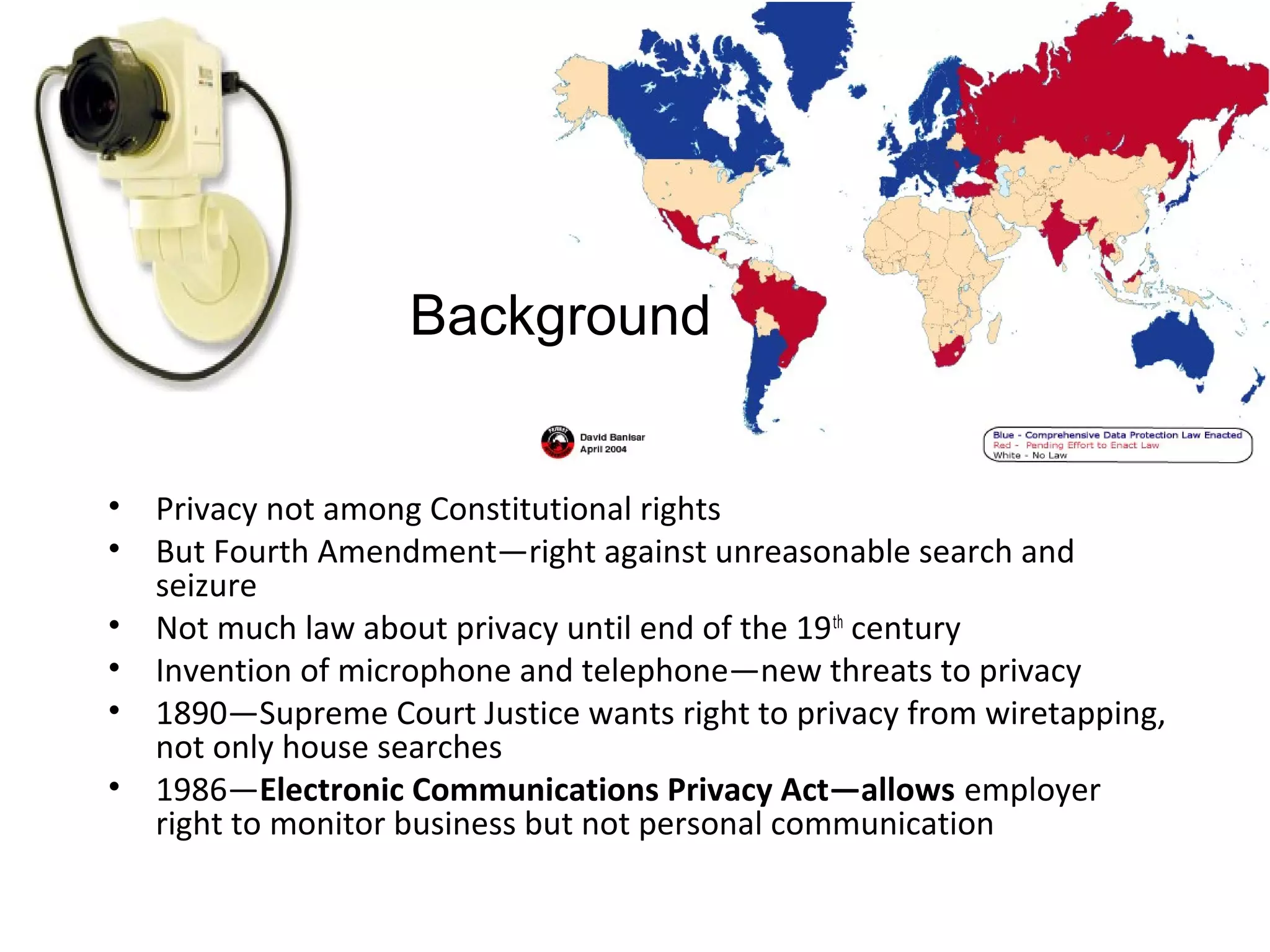
•   Privacy not among Constitutional rights
•   But Fourth Amendment—right against unreasonable search and
    seizure
•   Not much law about privacy until end of the 19 th century
•   Invention of microphone and telephone—new threats to privacy
•   1890—Supreme Court Justice wants right to privacy from wiretapping,
    not only house searches
•   1986—Electronic Communications Privacy Act—allows employer
    right to monitor business but not personal communication
Background
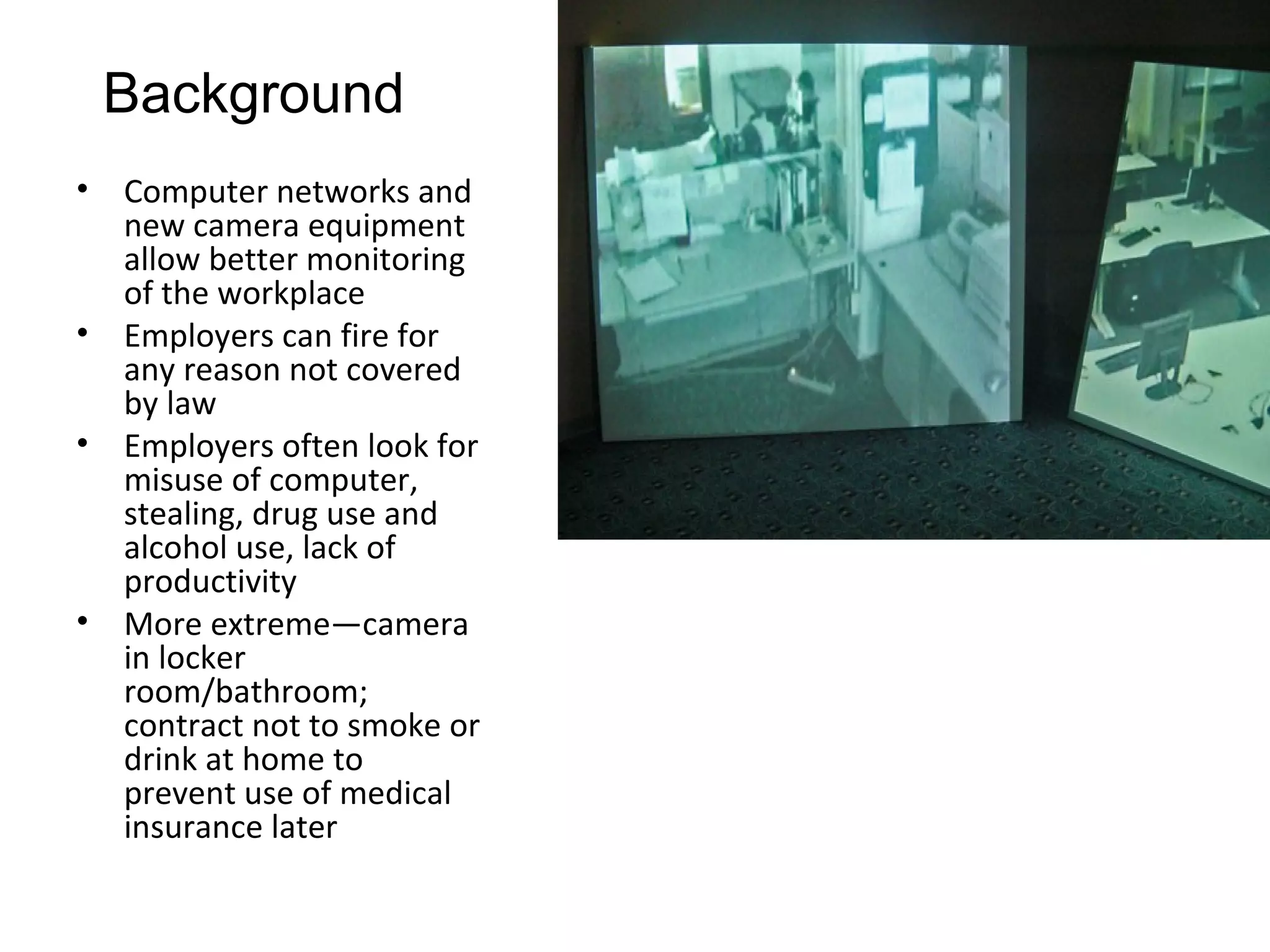
•   Computer networks and
    new camera equipment
    allow better monitoring
    of the workplace
•   Employers can fire for
    any reason not covered
    by law
•   Employers often look for
    misuse of computer,
    stealing, drug use and
    alcohol use, lack of
    productivity
•   More extreme—camera
    in locker
    room/bathroom;
    contract not to smoke or
    drink at home to
    prevent use of medical
    insurance later
Background
The Controversy

• Some people believe
  electronic surveillance is good
  for security, safety, and
  productivity.
• Others believe it is a violation
  of privacy rights and should
  not be used.

•    My opinion—use of electronic
    surveillance good if only used
    to protect employees and not
    to violate privacy.

                                     From the movie 1984
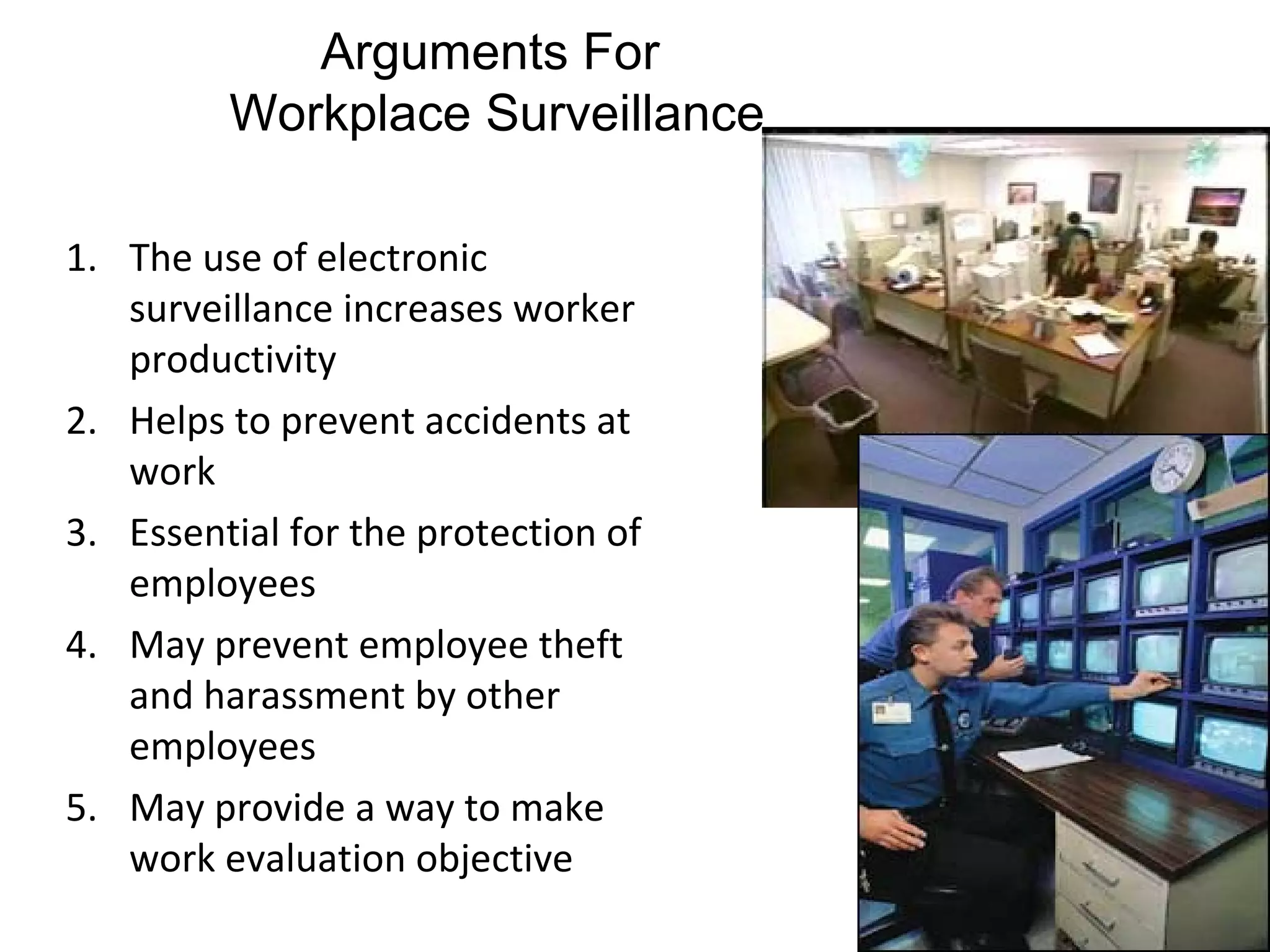
Arguments For
         Workplace Surveillance

1. The use of electronic
   surveillance increases worker
   productivity
2. Helps to prevent accidents at
   work
3. Essential for the protection of
   employees
4. May prevent employee theft
   and harassment by other
   employees
5. May provide a way to make
   work evaluation objective
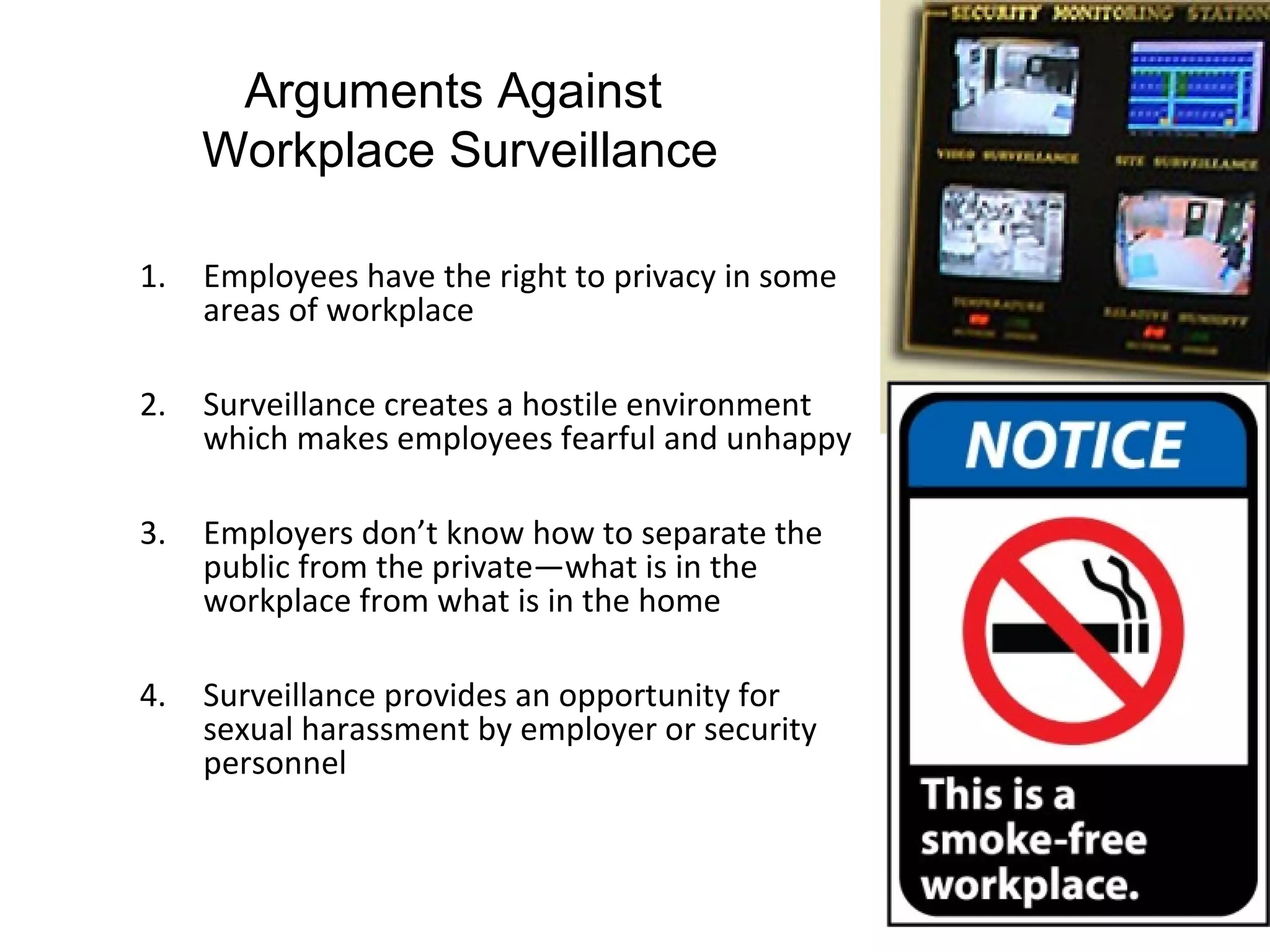
Arguments Against
     Workplace Surveillance

1.   Employees have the right to privacy in some
     areas of workplace

2.   Surveillance creates a hostile environment
     which makes employees fearful and unhappy

3.   Employers don’t know how to separate the
     public from the private—what is in the
     workplace from what is in the home

4.   Surveillance provides an opportunity for
     sexual harassment by employer or security
     personnel
My Conclusion
•   Electronic surveillance
    may be necessary to
    secure safety and
    productivity

•   However, electronic
    surveillance must never
    violate the employees’
    rights to privacy and
    cause bad feeling in the
    workplace

•   Workers need to be
    notified of surveillance

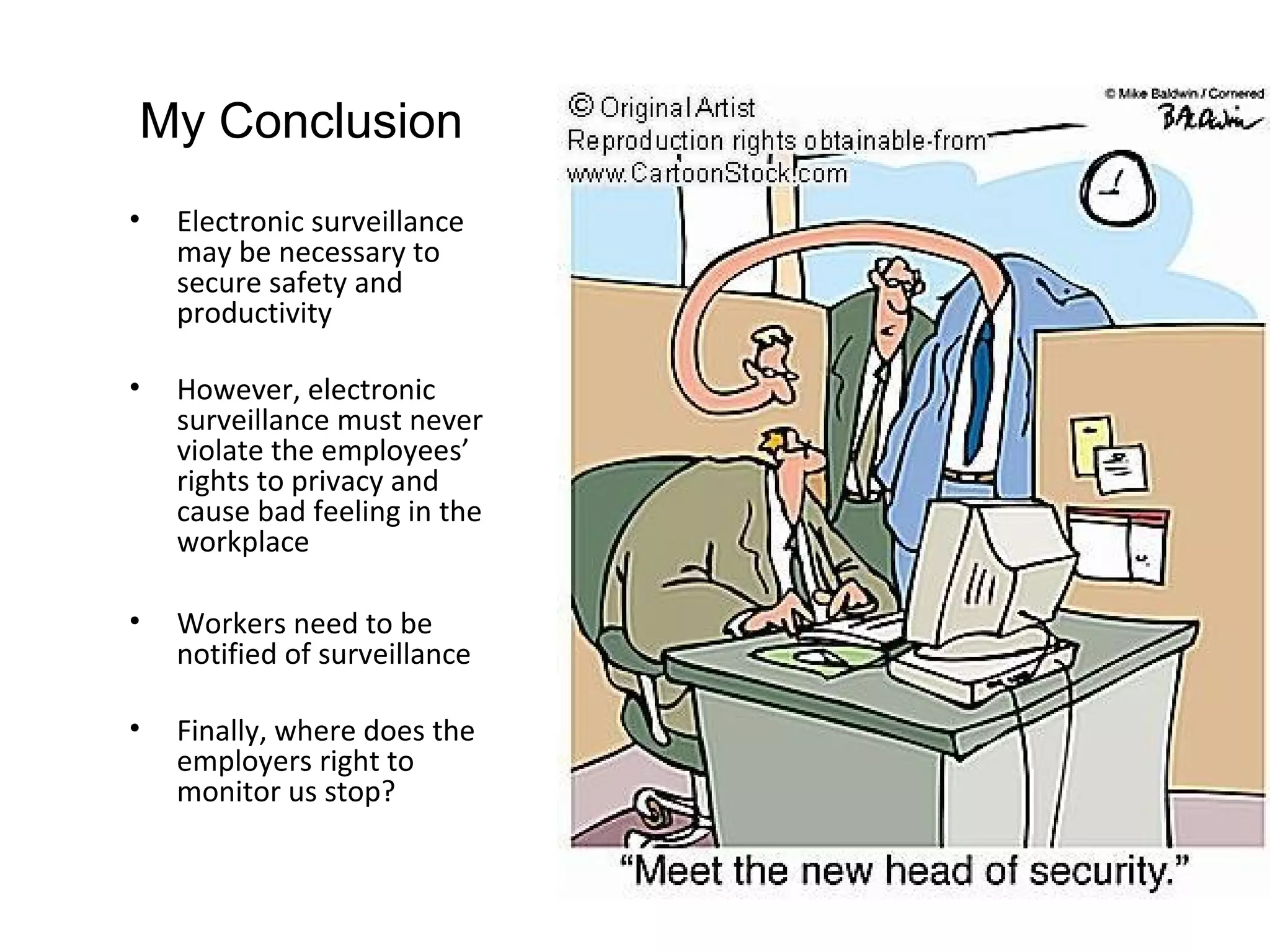
•   Finally, where does the
    employers right to
    monitor us stop?

Surveillance in the_workplace_highcontrast_ppt

  • 1.
    Surveillance in the Workplace LuisMedina and Rick Lizotte
  • 2.
    Background • Privacy not among Constitutional rights • But Fourth Amendment—right against unreasonable search and seizure • Not much law about privacy until end of the 19 th century • Invention of microphone and telephone—new threats to privacy • 1890—Supreme Court Justice wants right to privacy from wiretapping, not only house searches • 1986—Electronic Communications Privacy Act—allows employer right to monitor business but not personal communication
  • 3.
    Background • Computer networks and new camera equipment allow better monitoring of the workplace • Employers can fire for any reason not covered by law • Employers often look for misuse of computer, stealing, drug use and alcohol use, lack of productivity • More extreme—camera in locker room/bathroom; contract not to smoke or drink at home to prevent use of medical insurance later
  • 4.
  • 5.
    The Controversy • Somepeople believe electronic surveillance is good for security, safety, and productivity. • Others believe it is a violation of privacy rights and should not be used. • My opinion—use of electronic surveillance good if only used to protect employees and not to violate privacy. From the movie 1984
  • 6.
    Arguments For Workplace Surveillance 1. The use of electronic surveillance increases worker productivity 2. Helps to prevent accidents at work 3. Essential for the protection of employees 4. May prevent employee theft and harassment by other employees 5. May provide a way to make work evaluation objective
  • 7.
    Arguments Against Workplace Surveillance 1. Employees have the right to privacy in some areas of workplace 2. Surveillance creates a hostile environment which makes employees fearful and unhappy 3. Employers don’t know how to separate the public from the private—what is in the workplace from what is in the home 4. Surveillance provides an opportunity for sexual harassment by employer or security personnel
  • 8.
    My Conclusion • Electronic surveillance may be necessary to secure safety and productivity • However, electronic surveillance must never violate the employees’ rights to privacy and cause bad feeling in the workplace • Workers need to be notified of surveillance • Finally, where does the employers right to monitor us stop?