





Electronic Eavesdropping in
the Workplace
Employee Privacy Issues and E-Surveillance Practices
Timothy Dimoff, CPP, President, SACS Consulting
http://i-sight.com/resources/ce-webinar-library/
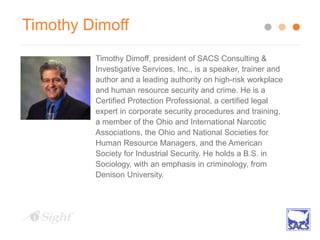
Timothy Dimoff
Timothy Dimoff, president of SACS Consulting &
Investigative Services, Inc., is a speaker, trainer and
author and a leading authority on high-risk workplace
and human resource security and crime. He is a
Certified Protection Professional, a certified legal
expert in corporate security procedures and training,
a member of the Ohio and International Narcotic
Associations, the Ohio and National Societies for
Human Resource Managers, and the American
Society for Industrial Security. He holds a B.S. in
Sociology, with an emphasis in criminology, from
Denison University.
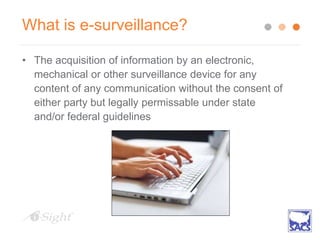
What is e-surveillance?
• The acquisition of information by an electronic,
mechanical or other surveillance device for any
content of any communication without the consent of
either party but legally permissable under state
and/or federal guidelines
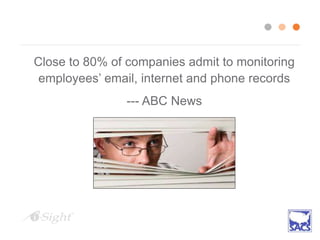
Close to 80% of companies admit to monitoring
employees’ email, internet and phone records
--- ABC News
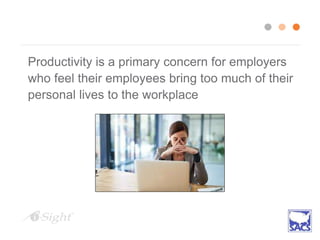
Productivity is a primary concern for employers
who feel their employees bring too much of their
personal lives to the workplace
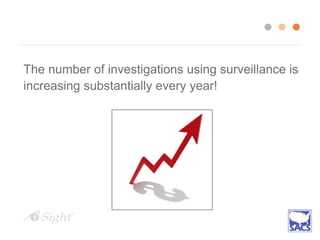
The number of investigations using surveillance is
increasing substantially every year!
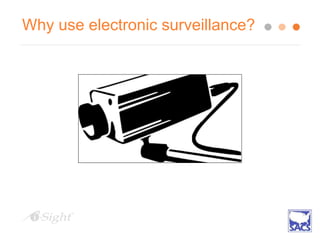
Why use electronic surveillance?
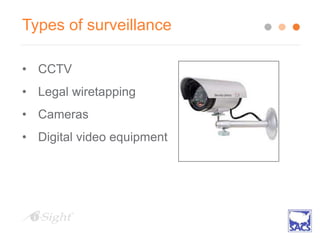
Types of surveillance
• CCTV
• Legal wiretapping
• Cameras
• Digital video equipment
There are PROs and CONs to consider
Positive use in the workplace
• Monitoring of internet usage for
appropriate work protocols
• Productivity issues
• Inappropriate places issues
• Workplace harassment, bullying,
violence, etc.
• Produce email and Web records to
defend against lawsuits
Cons
• Affect relationship between
employer and employee
• Work culture should foster trust
• Employee privacy
Consider whether the surveillance impairs trust or
affects relationships
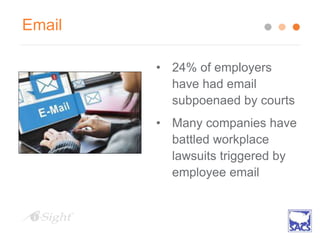
Email
• 24% of employers
have had email
subpoenaed by courts
• Many companies have
battled workplace
lawsuits triggered by
employee email
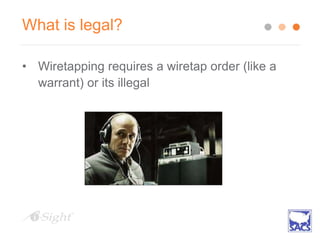
What is legal?
• Wiretapping requires a wiretap order (like a
warrant) or its illegal
Legal Issues
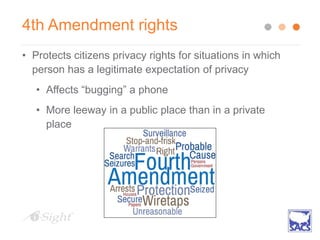
4th Amendment rights
• Protects citizens privacy rights for situations in which
person has a legitimate expectation of privacy
• Affects ā€œbuggingā€ a phone
• More leeway in a public place than in a private
place
Workplace privacy issues vs.
employee rights
• Camera/video
• Phones
• Recording devices
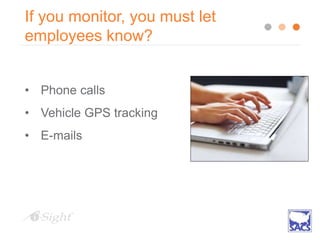
If you monitor, you must let
employees know?
• Phone calls
• Vehicle GPS tracking
• E-mails
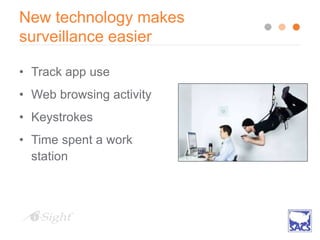
New technology makes
surveillance easier
• Track app use
• Web browsing activity
• Keystrokes
• Time spent a work
station
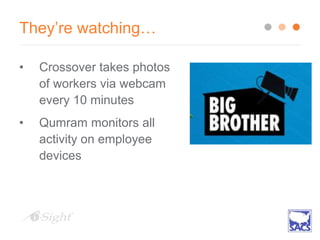
They’re watching…
• Crossover takes photos
of workers via webcam
every 10 minutes
• Qumram monitors all
activity on employee
devices
Employees have no expectation
of privacy in connection to data
stored in devices owned by the
employer
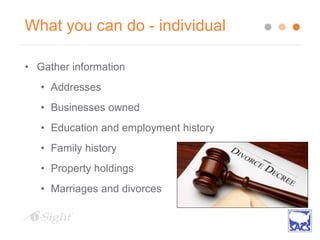
What you can do - individual
• Gather information
• Addresses
• Businesses owned
• Education and employment history
• Family history
• Property holdings
• Marriages and divorces
What a company cannot do:
Record a conversation:
• Different states – different laws
• Where one party has knowledge?
• Where both parties have knowledge?
Four privacy rule
• Intrude into private areas (e.g. a locker or desk
drawer), or dressing area
• No inquiry about sexual orientation
• Don’t disclose private facts about employee
without permission
• Don’t portray an individual in a false light (allege
criminal activity)
• Use an employees name, photo, without obtaining
the consent first
Social media?
• Hack into a ā€œprivateā€ social media or
email account v. a ā€œpublicā€ account
Background & Credit Checks
• Must obtain applicant’s or employee’s
permission
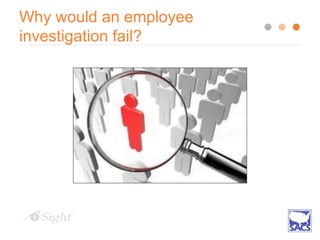
Why would an employee
investigation fail?
Common investigation mistakes
• Failure to plan
• Ignoring complaints
• Delaying investigation
• Losing objectivity
• Becoming distracted during interviews
Common investigation mistakes
• Being overly aggressive in interview
• Not conducting a thorough investigation
• Failure to reach a conclusion
• Failure to create a written report
• Failure to follow up with those involved
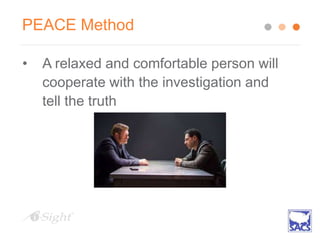
PEACE Method
• A relaxed and comfortable person will
cooperate with the investigation and
tell the truth
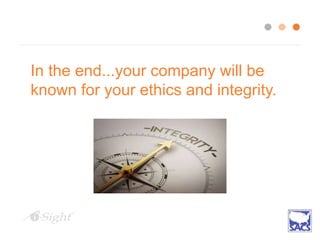
In the end...your company will be
known for your ethics and integrity.
Surveyed companies state that more
than 25% have fired employees for
ā€œmisusingā€ inappropriate email
content or internet usage
--- ABC News
Questions & Answers
?
Thank-you for participating
If you have any questions, please feel free to email them to:
Timothy Dimoff, President, SACS Consulting
tadimoff@aol.com
Websites: www.sacsconsulting.com/
www.timothydimoff.com/
Blog: http://liferage.com/
Questions about i-Sight:
Joe Gerard, Vice President Marketing and Sales
j.gerard@i-sight.com

Electronic Eavesdropping in the Workplace: Can We? Should We? What Could Possibly Go Wrong?

  • 1.
    Electronic Eavesdropping in theWorkplace Employee Privacy Issues and E-Surveillance Practices Timothy Dimoff, CPP, President, SACS Consulting
  • 9.
  • 10.
    Timothy Dimoff Timothy Dimoff,president of SACS Consulting & Investigative Services, Inc., is a speaker, trainer and author and a leading authority on high-risk workplace and human resource security and crime. He is a Certified Protection Professional, a certified legal expert in corporate security procedures and training, a member of the Ohio and International Narcotic Associations, the Ohio and National Societies for Human Resource Managers, and the American Society for Industrial Security. He holds a B.S. in Sociology, with an emphasis in criminology, from Denison University.
  • 11.
    What is e-surveillance? •The acquisition of information by an electronic, mechanical or other surveillance device for any content of any communication without the consent of either party but legally permissable under state and/or federal guidelines
  • 12.
    Close to 80%of companies admit to monitoring employees’ email, internet and phone records --- ABC News
  • 13.
    Productivity is aprimary concern for employers who feel their employees bring too much of their personal lives to the workplace
  • 14.
    The number ofinvestigations using surveillance is increasing substantially every year!
  • 15.
    Why use electronicsurveillance?
  • 16.
    Types of surveillance •CCTV • Legal wiretapping • Cameras • Digital video equipment
  • 17.
    There are PROsand CONs to consider
  • 18.
    Positive use inthe workplace • Monitoring of internet usage for appropriate work protocols • Productivity issues • Inappropriate places issues • Workplace harassment, bullying, violence, etc. • Produce email and Web records to defend against lawsuits
  • 19.
    Cons • Affect relationshipbetween employer and employee • Work culture should foster trust • Employee privacy
  • 20.
    Consider whether thesurveillance impairs trust or affects relationships
  • 21.
    Email • 24% ofemployers have had email subpoenaed by courts • Many companies have battled workplace lawsuits triggered by employee email
  • 22.
    What is legal? •Wiretapping requires a wiretap order (like a warrant) or its illegal
  • 23.
  • 24.
    4th Amendment rights •Protects citizens privacy rights for situations in which person has a legitimate expectation of privacy • Affects ā€œbuggingā€ a phone • More leeway in a public place than in a private place
  • 25.
    Workplace privacy issuesvs. employee rights • Camera/video • Phones • Recording devices
  • 26.
    If you monitor,you must let employees know? • Phone calls • Vehicle GPS tracking • E-mails
  • 27.
    New technology makes surveillanceeasier • Track app use • Web browsing activity • Keystrokes • Time spent a work station
  • 28.
    They’re watching… • Crossovertakes photos of workers via webcam every 10 minutes • Qumram monitors all activity on employee devices
  • 29.
    Employees have noexpectation of privacy in connection to data stored in devices owned by the employer
  • 30.
    What you cando - individual • Gather information • Addresses • Businesses owned • Education and employment history • Family history • Property holdings • Marriages and divorces
  • 31.
    What a companycannot do:
  • 32.
    Record a conversation: •Different states – different laws • Where one party has knowledge? • Where both parties have knowledge?
  • 33.
    Four privacy rule •Intrude into private areas (e.g. a locker or desk drawer), or dressing area • No inquiry about sexual orientation • Don’t disclose private facts about employee without permission • Don’t portray an individual in a false light (allege criminal activity) • Use an employees name, photo, without obtaining the consent first
  • 34.
    Social media? • Hackinto a ā€œprivateā€ social media or email account v. a ā€œpublicā€ account
  • 35.
    Background & CreditChecks • Must obtain applicant’s or employee’s permission
  • 36.
    Why would anemployee investigation fail?
  • 37.
    Common investigation mistakes •Failure to plan • Ignoring complaints • Delaying investigation • Losing objectivity • Becoming distracted during interviews
  • 38.
    Common investigation mistakes •Being overly aggressive in interview • Not conducting a thorough investigation • Failure to reach a conclusion • Failure to create a written report • Failure to follow up with those involved
  • 39.
    PEACE Method • Arelaxed and comfortable person will cooperate with the investigation and tell the truth
  • 40.
    In the end...yourcompany will be known for your ethics and integrity.
  • 41.
    Surveyed companies statethat more than 25% have fired employees for ā€œmisusingā€ inappropriate email content or internet usage --- ABC News
  • 42.
  • 43.
    Thank-you for participating Ifyou have any questions, please feel free to email them to: Timothy Dimoff, President, SACS Consulting tadimoff@aol.com Websites: www.sacsconsulting.com/ www.timothydimoff.com/ Blog: http://liferage.com/ Questions about i-Sight: Joe Gerard, Vice President Marketing and Sales j.gerard@i-sight.com

Editor's Notes

  • #3Ā i-Sight is the world’s premiere case management software,
  • #4Ā Work anywhere with 24-hour access on any mobile device or computer.
  • #6Ā Save your company time with our intuitive software and custom one-click reports.
  • #7Ā trusted by top brands, banks, and schools to manage HR, fraud, and compliance investigations.
  • #8Ā Use our powerful reporting tools to help you identify risks, trends, and opportunities.
  • #10Ā i-Sight is a better way to manage your investigations. Book a demo today to learn how companies are saving money and protecting their business.