Surveillance Detection
Terminal Performance Objective
 Provide you with an awareness of the
most common types of surveillance and
the proactive measures you can take to
help from becoming a target
Enabling Performance
Objectives
 Identify the methods of conducting surveillance
 Explain the attack cycle
 Discuss the difference between a hard target
and a soft target
 Explain choke points
Enabling Performance
Objectives
 Identify descriptors of people and vehicles
 Discuss surveillance detection techniques
 Describe what to do if you suspect
surveillance
 Discuss how to avoid being a target
 Explain attack recognition and response
Purpose of Surveillance
 Intelligence Services – Information
 Criminal – Financial
 Terrorist – Terror (Further Political /
Religious / Other goals)
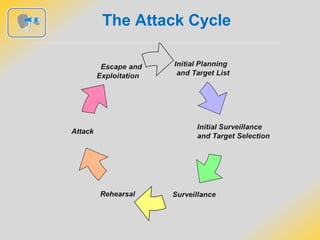
The Attack Cycle
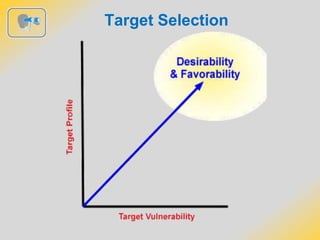
Target Selection
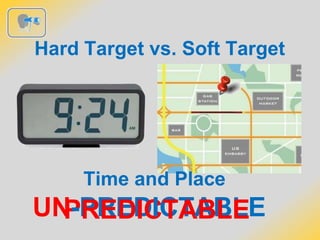
Hard Target vs. Soft Target
Time and Place
UN
P
-P
RR
EE
DD
IC
IC
TT
AA
BB
LL
EE
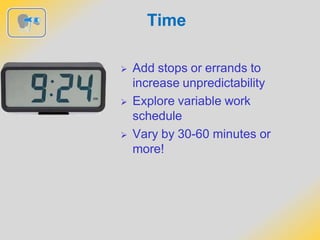
 Add stops or errands to
increase unpredictability
 Explore variable work
schedule
 Vary by 30-60 minutes or
more!
Time
Place
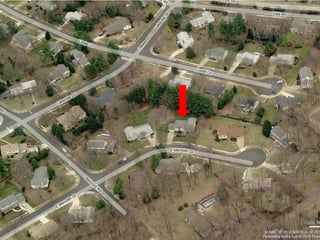
 Many attacks occur while targets in transit
 Choke Points – Areas you must pass through,
residence and work are common ones
 Ideal Attack Sites:
– Place where victim can be controlled with limited
avenues of escape
– Location is well suited for surveillance and ability
to blend in to the environment
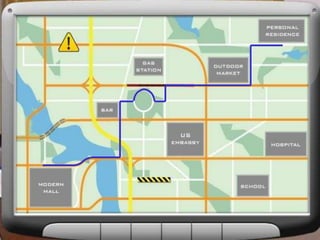
Route Analysis
 Locate frequented venues
 Map five different routes to and from
each venue
 Identify chokepoints
 Identify ideal attack sites
 Find safehavens
 Vary Randomly!
Detecting the Surveillance
 Be alert – study details, especially at
choke points
 Know what is normal / not normal
 Gather descriptive information for your
security office
Descriptors - People
 Gender
 Race
 Height – 2 inch increments
 Age – 5 year increments
 Weight – 10 pound increments
 Hair color/style, clothing, jewelry
 Distinguishing features
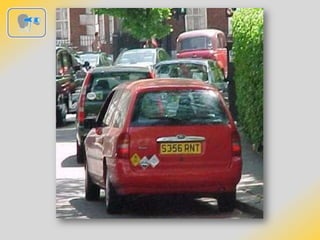
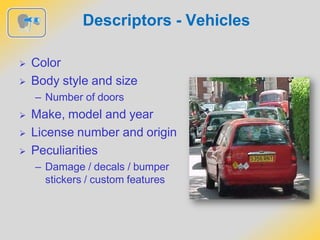
Descriptors - Vehicles
 Color
 Body style and size
– Number of doors
 Make, model and year
 License number and origin
 Peculiarities
– Damage / decals / bumper
stickers / custom features
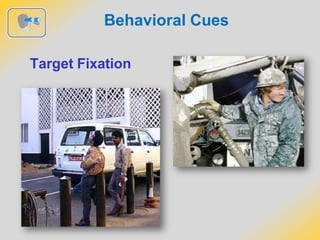
Behavioral Cues
Target Fixation
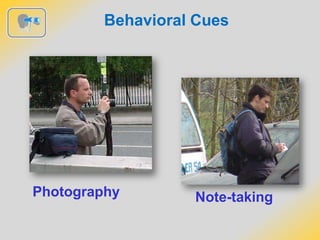
Behavioral Cues
Photography Note-taking
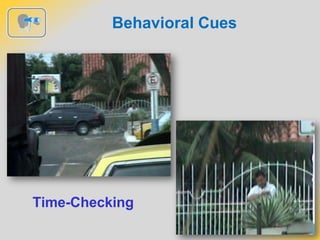
Behavioral Cues
Time-Checking
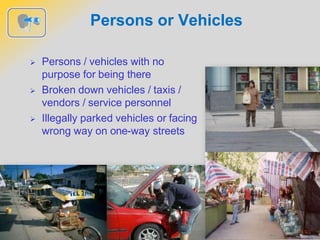
Persons or Vehicles
 Persons / vehicles with no
purpose for being there
 Broken down vehicles / taxis /
vendors / service personnel
 Illegally parked vehicles or facing
wrong way on one-way streets
Correlations
 Repeated sightings – same person or
vehicle at different locations
 Rule of Three
 Report anything suspicious – it may
correlate with something reported by
another person
If You Suspect Surveillance
 Conceal your suspicions - do not
confront
 Discreetly observe the person or vehicle
to obtain a description
 Try to confirm surveillance
 Notify your security office
Avoid Being a Target
 Maintain a low profile
 Vary your times and routes
 Be aware and alert - especially in choke
points
 Allow yourself room to maneuver
 Be prepared to react - have a plan
 Know locations of safehavens
Attack Recognition Signs
 Focus on the choke points
 Target identification signals
 Strange / unusual behavior
 Something or someone slowing or
stopping you, blocking vehicle
 Individuals approaching you rapidly
 Transition to weapons
Response to an Attack
 If you spot a potential attack ahead – do not
go there!
 Disrupt the attack!
 Create space between you and the threat
 Move quickly, do something
 Break traffic laws if necessary
 Get off of the X
 Contact your security office
Summary
 Be a hard target - Vary your times and
routes
 Conduct Route Analysis – chokepoints
and safehavens
 Surveillance is that unusual or abnormal
behavior
 Report surveillance right away
 Respond to an attack – take action

Surveillance Detection 200024.trainingpptx

  • 1.
  • 2.
    Terminal Performance Objective Provide you with an awareness of the most common types of surveillance and the proactive measures you can take to help from becoming a target
  • 3.
    Enabling Performance Objectives  Identifythe methods of conducting surveillance  Explain the attack cycle  Discuss the difference between a hard target and a soft target  Explain choke points
  • 4.
    Enabling Performance Objectives  Identifydescriptors of people and vehicles  Discuss surveillance detection techniques  Describe what to do if you suspect surveillance  Discuss how to avoid being a target  Explain attack recognition and response
  • 5.
    Purpose of Surveillance Intelligence Services – Information  Criminal – Financial  Terrorist – Terror (Further Political / Religious / Other goals)
  • 6.
  • 7.
  • 8.
    Hard Target vs.Soft Target Time and Place UN P -P RR EE DD IC IC TT AA BB LL EE
  • 9.
     Add stopsor errands to increase unpredictability  Explore variable work schedule  Vary by 30-60 minutes or more! Time
  • 10.
    Place  Many attacksoccur while targets in transit  Choke Points – Areas you must pass through, residence and work are common ones  Ideal Attack Sites: – Place where victim can be controlled with limited avenues of escape – Location is well suited for surveillance and ability to blend in to the environment
  • 11.
    Route Analysis  Locatefrequented venues  Map five different routes to and from each venue  Identify chokepoints  Identify ideal attack sites  Find safehavens  Vary Randomly!
  • 14.
    Detecting the Surveillance Be alert – study details, especially at choke points  Know what is normal / not normal  Gather descriptive information for your security office
  • 15.
    Descriptors - People Gender  Race  Height – 2 inch increments  Age – 5 year increments  Weight – 10 pound increments  Hair color/style, clothing, jewelry  Distinguishing features
  • 17.
    Descriptors - Vehicles Color  Body style and size – Number of doors  Make, model and year  License number and origin  Peculiarities – Damage / decals / bumper stickers / custom features
  • 18.
  • 19.
  • 20.
  • 21.
    Persons or Vehicles Persons / vehicles with no purpose for being there  Broken down vehicles / taxis / vendors / service personnel  Illegally parked vehicles or facing wrong way on one-way streets
  • 22.
    Correlations  Repeated sightings– same person or vehicle at different locations  Rule of Three  Report anything suspicious – it may correlate with something reported by another person
  • 23.
    If You SuspectSurveillance  Conceal your suspicions - do not confront  Discreetly observe the person or vehicle to obtain a description  Try to confirm surveillance  Notify your security office
  • 24.
    Avoid Being aTarget  Maintain a low profile  Vary your times and routes  Be aware and alert - especially in choke points  Allow yourself room to maneuver  Be prepared to react - have a plan  Know locations of safehavens
  • 25.
    Attack Recognition Signs Focus on the choke points  Target identification signals  Strange / unusual behavior  Something or someone slowing or stopping you, blocking vehicle  Individuals approaching you rapidly  Transition to weapons
  • 26.
    Response to anAttack  If you spot a potential attack ahead – do not go there!  Disrupt the attack!  Create space between you and the threat  Move quickly, do something  Break traffic laws if necessary  Get off of the X  Contact your security office
  • 27.
    Summary  Be ahard target - Vary your times and routes  Conduct Route Analysis – chokepoints and safehavens  Surveillance is that unusual or abnormal behavior  Report surveillance right away  Respond to an attack – take action