Module 2 Prevention
Safeguarding Focal Point Training
Learning Objectives
SFPs will be able to:
 Understand what information to disseminate among staff including through
staff training
 Understand how to develop relevant safeguarding messages for communities
 Support safeguarding assessments
 Liaise effectively with other SFPs to contribute to collective PSEA measures,
and coordinate with other actors to ensure appropriate referral pathways
SFP Training
Session 0: Refresher
SFP Training
Ground Rules
 Ensure you have your preferred name showing
 Please mute while others are speaking
 Please keep your video on unless you have connection issues
 Please use the chat box / or raise hand
 Only step away from your computer during assigned breaks
 Please participate as much as possible
SFP Training
Session 1: Raising Awareness
SFP Training
Raising Awareness with Staff and Communities
 Who are the different groups
[staff/communities] you want to target?
 What information do you need to share?
 How will you share the information?
 [Additional: what internal or external
resources can you draw on? For example,
training materials, communication strategies,
or any technical advisor, etc.]
SFP Training
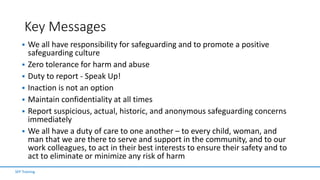
Key Messages
 We all have responsibility for safeguarding and to promote a positive
safeguarding culture
 Zero tolerance for harm and abuse
 Duty to report - Speak Up!
 Inaction is not an option
 Maintain confidentiality at all times
 Report suspicious, actual, historic, and anonymous safeguarding concerns
immediately
 We all have a duty of care to one another – to every child, woman, and
man that we are there to serve and support in the community, and to our
work colleagues, to act in their best interests to ensure their safety and to
act to eliminate or minimize any risk of harm
SFP Training
Useful Resources
 IASC 6 principles
 No Excuse for Abuse film
 Say No to Misconduct film
 Organizational code of conduct translated into local language(s)
 Resource 7: Template training agenda [or other alternative from the
organization]
SFP Training
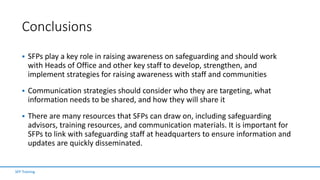
Conclusions
 SFPs play a key role in raising awareness on safeguarding and should work
with Heads of Office and other key staff to develop, strengthen, and
implement strategies for raising awareness with staff and communities
 Communication strategies should consider who they are targeting, what
information needs to be shared, and how they will share it
 There are many resources that SFPs can draw on, including safeguarding
advisors, training resources, and communication materials. It is important for
SFPs to link with safeguarding staff at headquarters to ensure information and
updates are quickly disseminated.
SFP Training
Session 2: Safeguarding Assessments
SFP Training
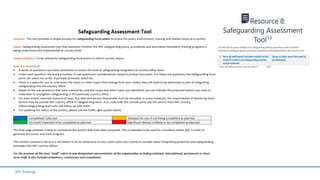
SFP Training
Conclusions
 SFPs may be involved in conducting safeguarding assessments at the
country office level, which can assess the policy environment,
training, and related issues. This can help inform country teams and
their safeguarding workplans.
 It is important to regularly review the findings of this assessment to
identify any new issues and to update mitigation strategies.
SFP Training
Session 3: Working with
Safeguarding Networks
SFP Training
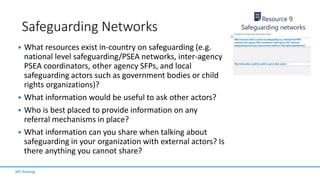
Safeguarding Networks
 What resources exist in-country on safeguarding (e.g.
national level safeguarding/PSEA networks, inter-agency
PSEA coordinators, other agency SFPs, and local
safeguarding actors such as government bodies or child
rights organizations)?
 What information would be useful to ask other actors?
 Who is best placed to provide information on any
referral mechanisms in place?
 What information can you share when talking about
safeguarding in your organization with external actors? Is
there anything you cannot share?
SFP Training
Conclusions
 In-country safeguarding networks can provide valuable information
and support to SFPs on safeguarding.
 It is important to understand what information can be shared with
others, and what should not be shared, as well as what information is
useful to gain from other actors.
 Ensure sufficient time is allocated to identifying and networking with
relevant safeguarding focal points and networks.
SFP Training
Session 4: Additional Sessions
SFP Training
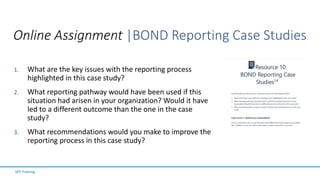
Online Assignment |BOND Reporting Case Studies
1. What are the key issues with the reporting process
highlighted in this case study?
2. What reporting pathway would have been used if this
situation had arisen in your organization? Would it have
led to a different outcome than the one in the case
study?
3. What recommendations would you make to improve the
reporting process in this case study?
SFP Training
Wrap-up
 SFPs play a critical role in raising awareness of safeguarding with staff
and may also support programs to do this with communities.
 SFPs may be involved in conducting safeguarding assessments at the
country office level, which can help inform country teams and their
safeguarding workplans.
 SFPs should liaise with Safeguarding Focal Points from other NGOs and
UN agencies in-country, and PSEA/Safeguarding networks where
established.
 It is important for country offices to be aware of and, where
appropriate, contribute to collective, inter-agency measures to prevent
and address PSEA/Safeguarding violations.
SFP Training

Security FP Training Module 2 9.2020.pptx

  • 1.
  • 2.
    Learning Objectives SFPs willbe able to:  Understand what information to disseminate among staff including through staff training  Understand how to develop relevant safeguarding messages for communities  Support safeguarding assessments  Liaise effectively with other SFPs to contribute to collective PSEA measures, and coordinate with other actors to ensure appropriate referral pathways SFP Training
  • 3.
  • 4.
    Ground Rules  Ensureyou have your preferred name showing  Please mute while others are speaking  Please keep your video on unless you have connection issues  Please use the chat box / or raise hand  Only step away from your computer during assigned breaks  Please participate as much as possible SFP Training
  • 5.
    Session 1: RaisingAwareness SFP Training
  • 6.
    Raising Awareness withStaff and Communities  Who are the different groups [staff/communities] you want to target?  What information do you need to share?  How will you share the information?  [Additional: what internal or external resources can you draw on? For example, training materials, communication strategies, or any technical advisor, etc.] SFP Training
  • 7.
    Key Messages  Weall have responsibility for safeguarding and to promote a positive safeguarding culture  Zero tolerance for harm and abuse  Duty to report - Speak Up!  Inaction is not an option  Maintain confidentiality at all times  Report suspicious, actual, historic, and anonymous safeguarding concerns immediately  We all have a duty of care to one another – to every child, woman, and man that we are there to serve and support in the community, and to our work colleagues, to act in their best interests to ensure their safety and to act to eliminate or minimize any risk of harm SFP Training
  • 8.
    Useful Resources  IASC6 principles  No Excuse for Abuse film  Say No to Misconduct film  Organizational code of conduct translated into local language(s)  Resource 7: Template training agenda [or other alternative from the organization] SFP Training
  • 9.
    Conclusions  SFPs playa key role in raising awareness on safeguarding and should work with Heads of Office and other key staff to develop, strengthen, and implement strategies for raising awareness with staff and communities  Communication strategies should consider who they are targeting, what information needs to be shared, and how they will share it  There are many resources that SFPs can draw on, including safeguarding advisors, training resources, and communication materials. It is important for SFPs to link with safeguarding staff at headquarters to ensure information and updates are quickly disseminated. SFP Training
  • 10.
    Session 2: SafeguardingAssessments SFP Training
  • 11.
  • 12.
    Conclusions  SFPs maybe involved in conducting safeguarding assessments at the country office level, which can assess the policy environment, training, and related issues. This can help inform country teams and their safeguarding workplans.  It is important to regularly review the findings of this assessment to identify any new issues and to update mitigation strategies. SFP Training
  • 13.
    Session 3: Workingwith Safeguarding Networks SFP Training
  • 14.
    Safeguarding Networks  Whatresources exist in-country on safeguarding (e.g. national level safeguarding/PSEA networks, inter-agency PSEA coordinators, other agency SFPs, and local safeguarding actors such as government bodies or child rights organizations)?  What information would be useful to ask other actors?  Who is best placed to provide information on any referral mechanisms in place?  What information can you share when talking about safeguarding in your organization with external actors? Is there anything you cannot share? SFP Training
  • 15.
    Conclusions  In-country safeguardingnetworks can provide valuable information and support to SFPs on safeguarding.  It is important to understand what information can be shared with others, and what should not be shared, as well as what information is useful to gain from other actors.  Ensure sufficient time is allocated to identifying and networking with relevant safeguarding focal points and networks. SFP Training
  • 16.
    Session 4: AdditionalSessions SFP Training
  • 17.
    Online Assignment |BONDReporting Case Studies 1. What are the key issues with the reporting process highlighted in this case study? 2. What reporting pathway would have been used if this situation had arisen in your organization? Would it have led to a different outcome than the one in the case study? 3. What recommendations would you make to improve the reporting process in this case study? SFP Training
  • 18.
    Wrap-up  SFPs playa critical role in raising awareness of safeguarding with staff and may also support programs to do this with communities.  SFPs may be involved in conducting safeguarding assessments at the country office level, which can help inform country teams and their safeguarding workplans.  SFPs should liaise with Safeguarding Focal Points from other NGOs and UN agencies in-country, and PSEA/Safeguarding networks where established.  It is important for country offices to be aware of and, where appropriate, contribute to collective, inter-agency measures to prevent and address PSEA/Safeguarding violations. SFP Training