Summer Ventilation
Basics
VENTILATION DESIGNS, VENTILATION SCHEMES, EVAPORATIVE COOLING
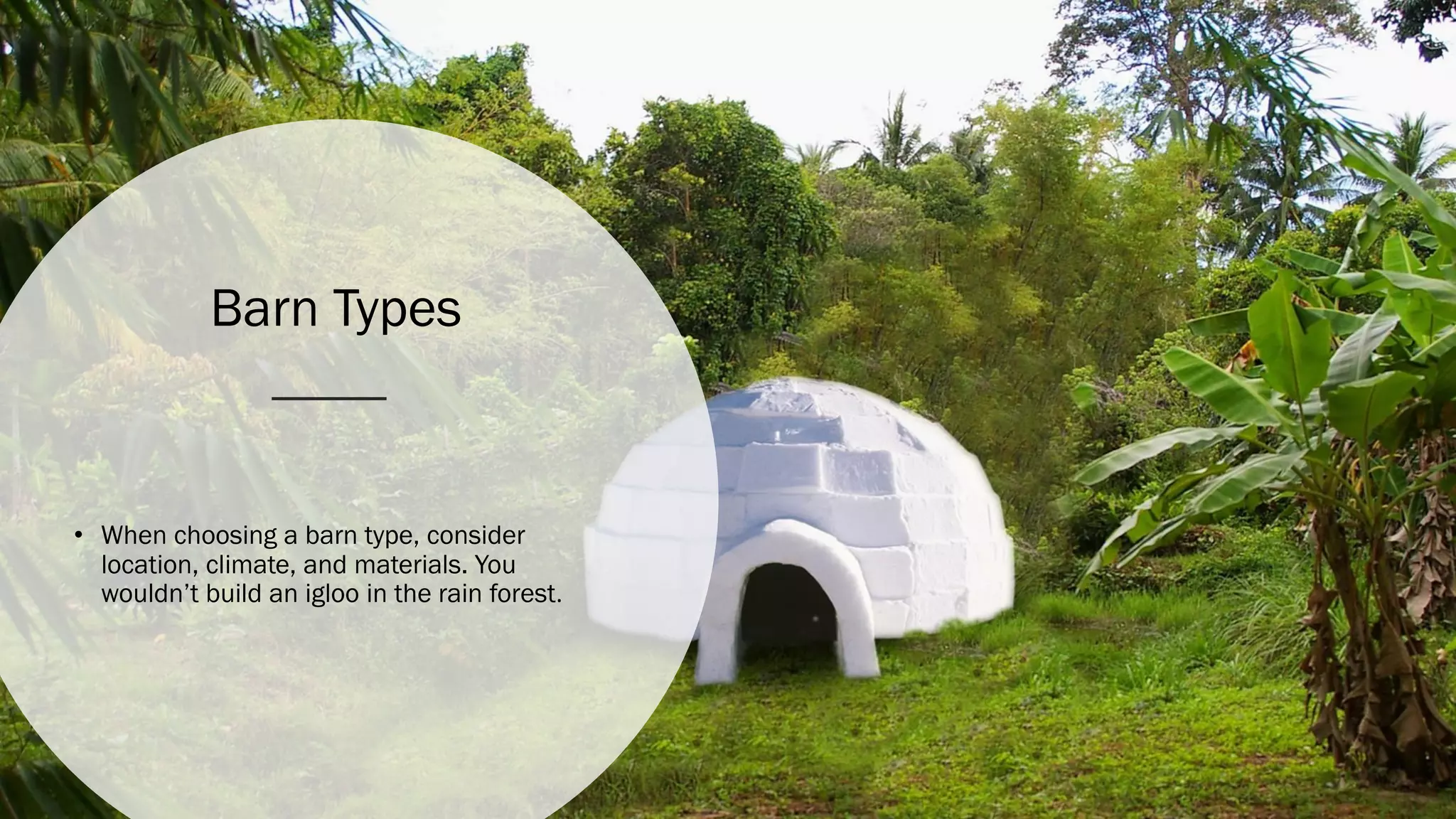
Barn Types
• When choosing a barn type, consider
location, climate, and materials. You
wouldn’t build an igloo in the rain forest.
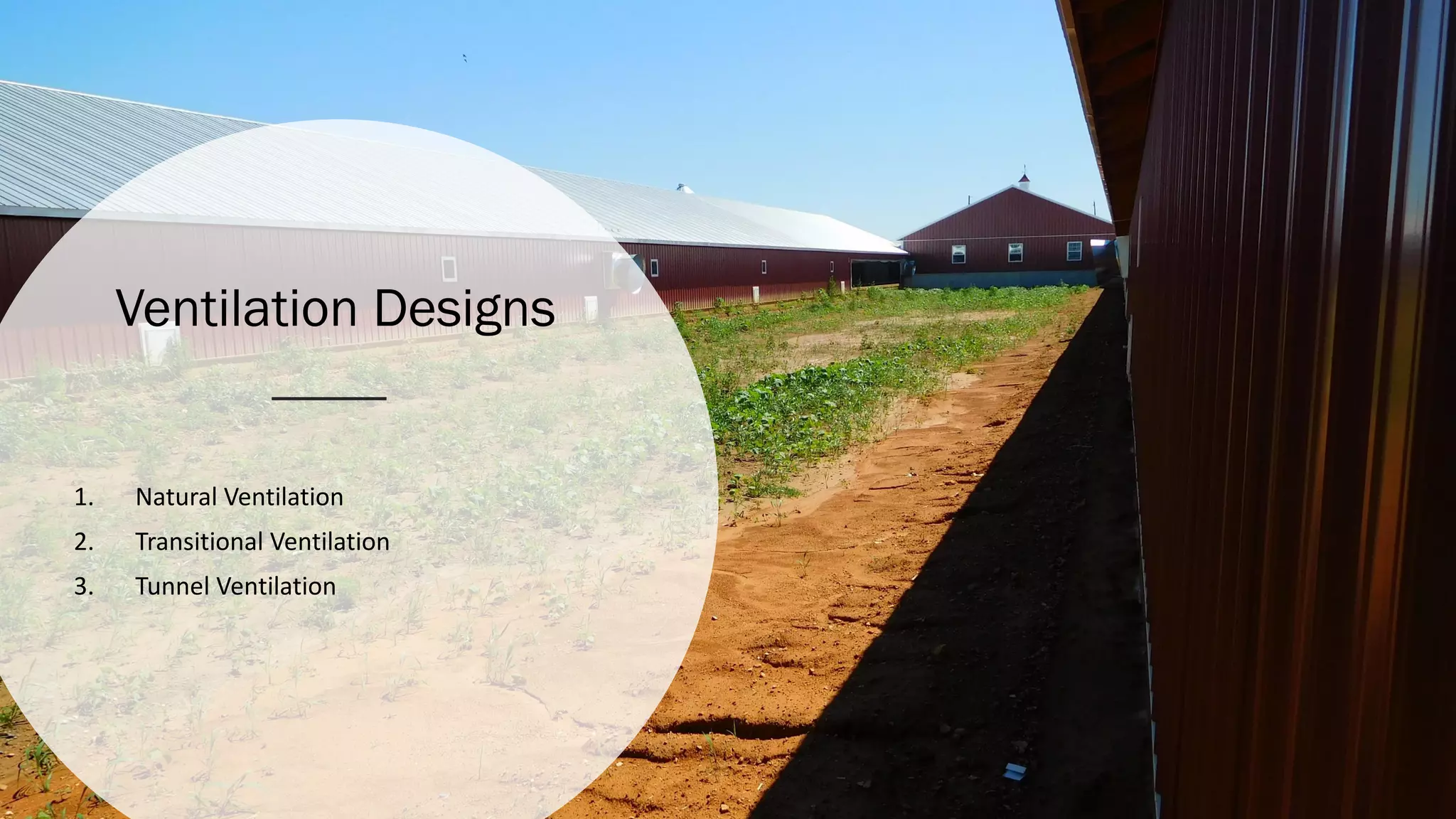
Ventilation Designs
1. Natural Ventilation
2. Transitional Ventilation
3. Tunnel Ventilation
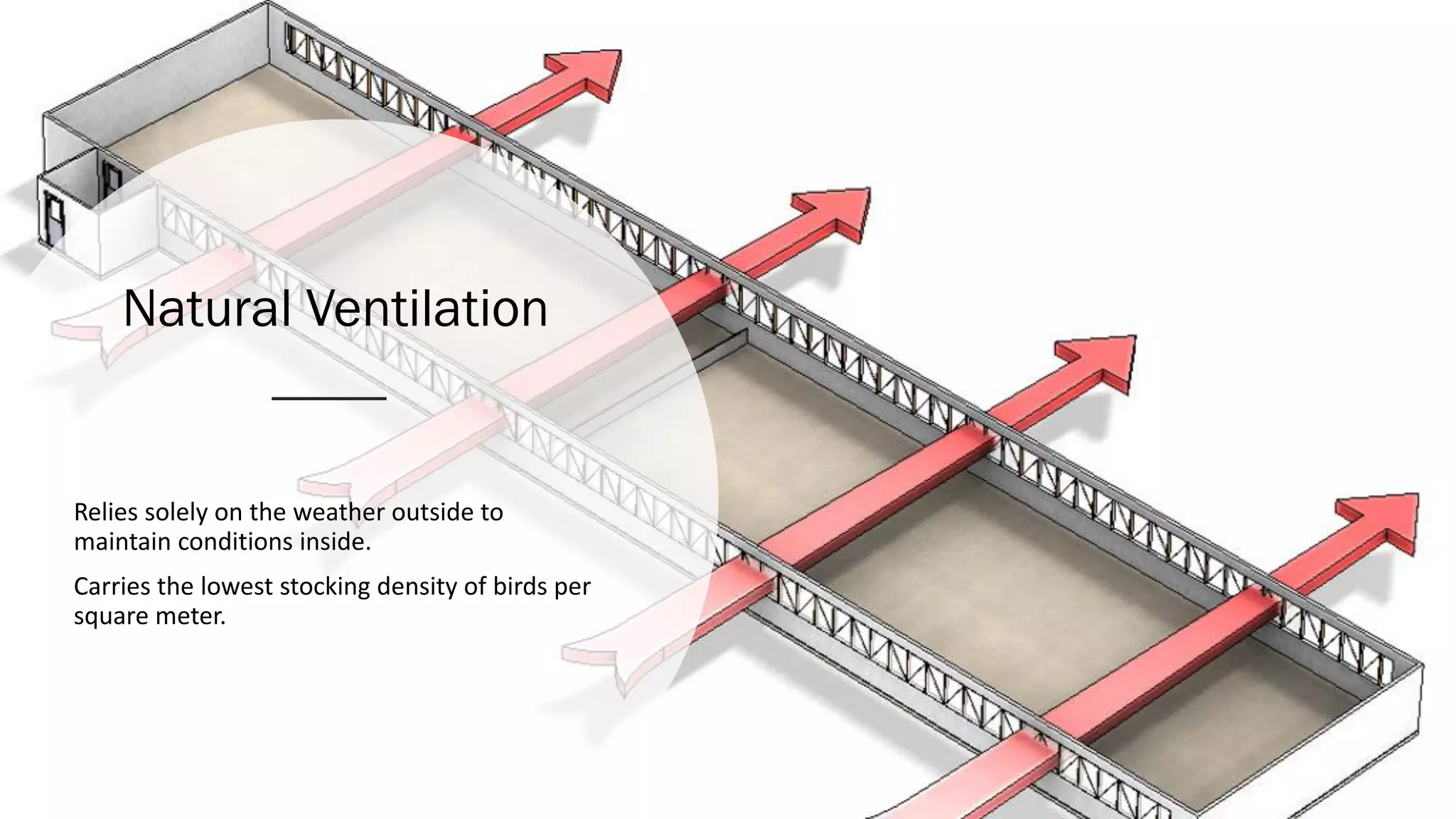
Natural Ventilation
Relies solely on the weather outside to
maintain conditions inside.
Carries the lowest stocking density of birds per
square meter.
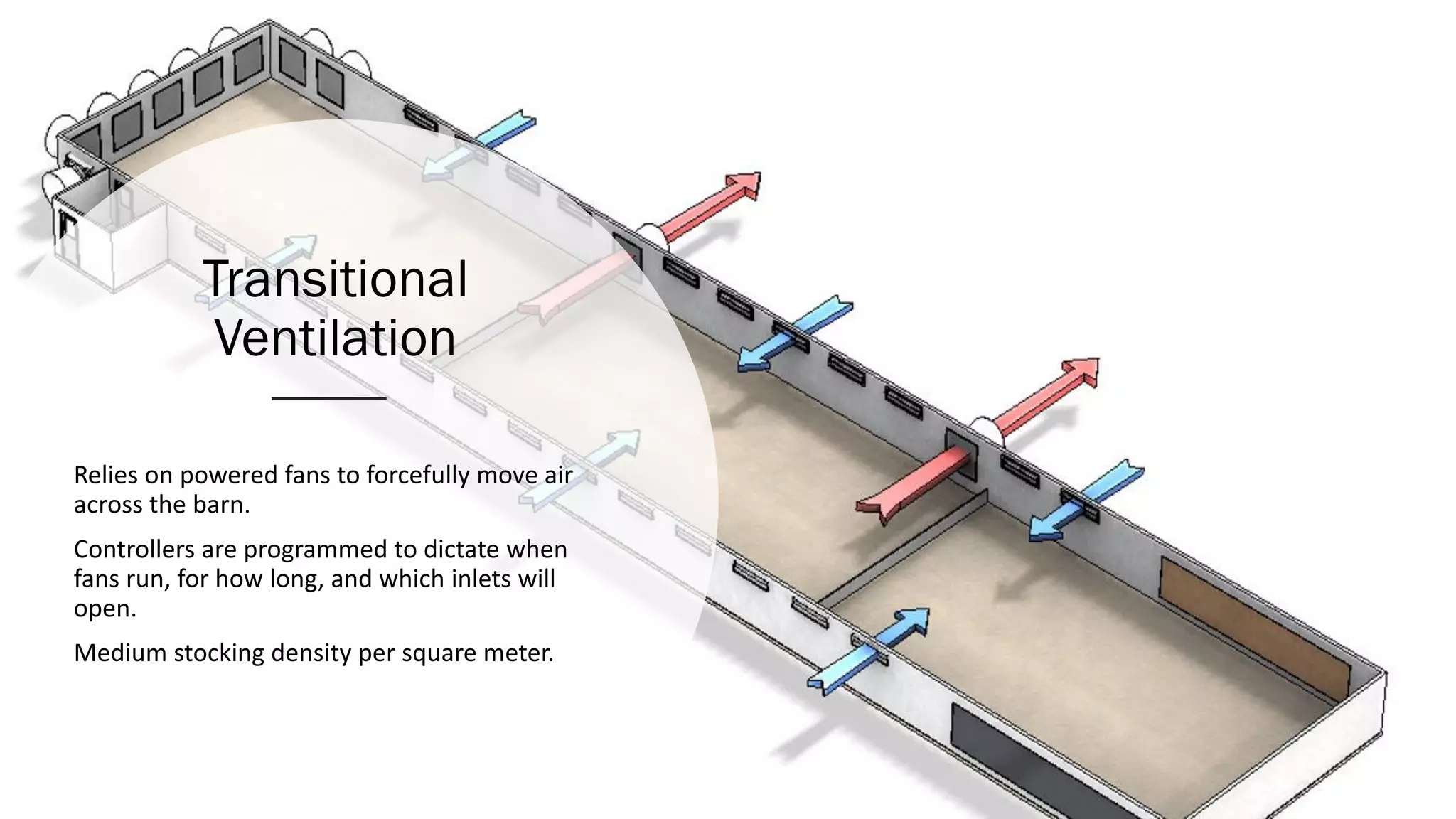
Transitional
Ventilation
Relies on powered fans to forcefully move air
across the barn.
Controllers are programmed to dictate when
fans run, for how long, and which inlets will
open.
Medium stocking density per square meter.
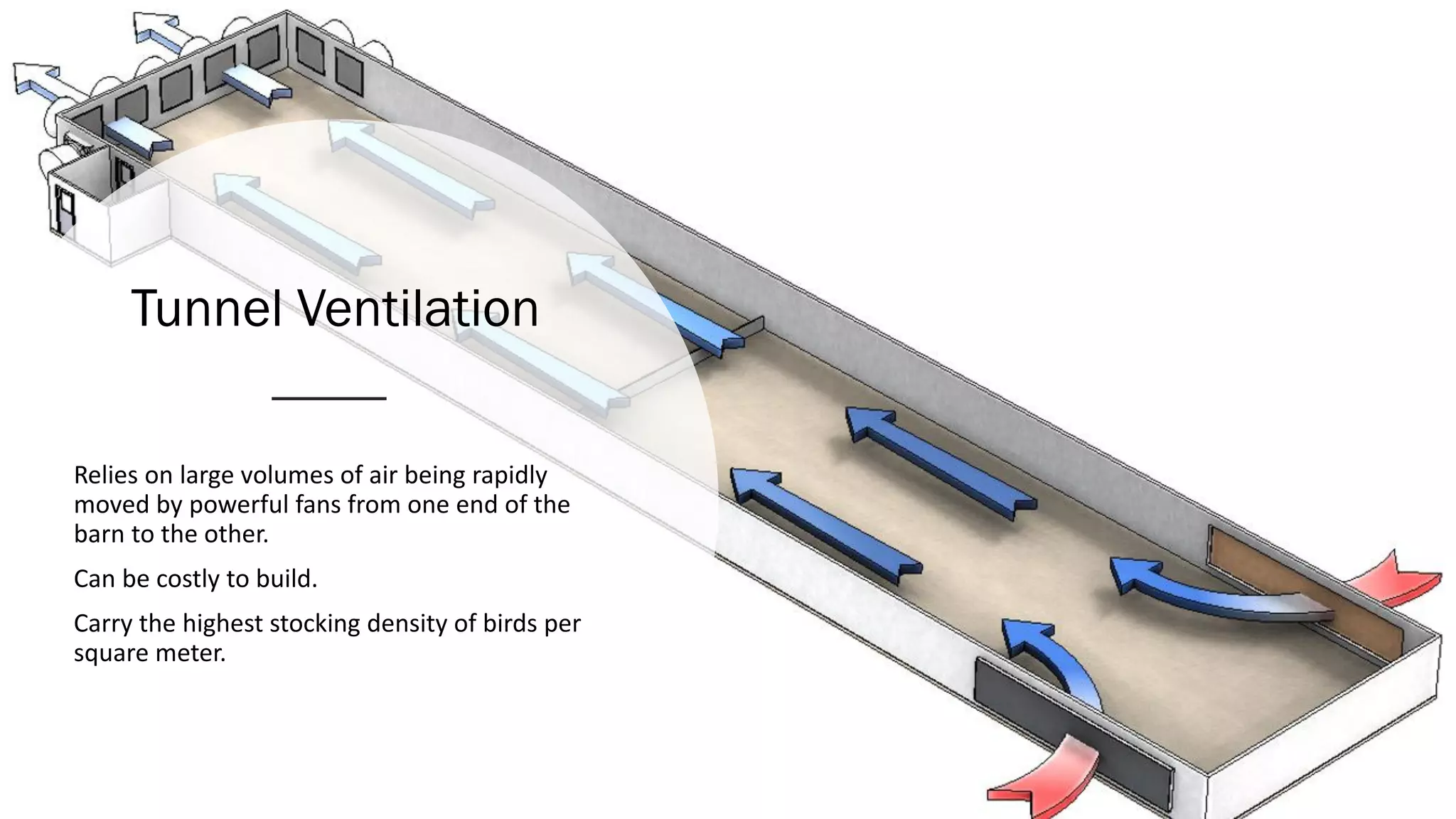
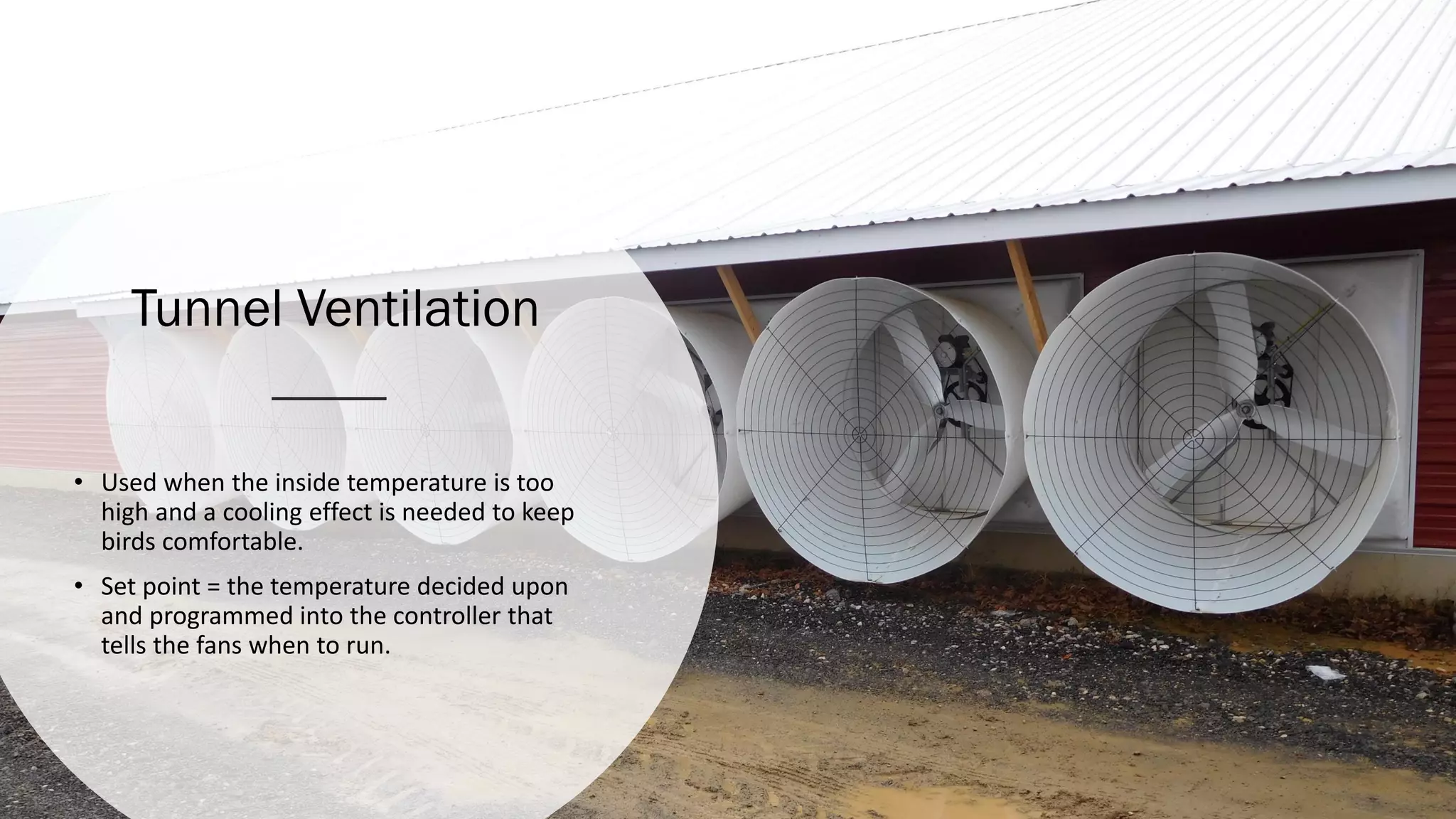
Tunnel Ventilation
Relies on large volumes of air being rapidly
moved by powerful fans from one end of the
barn to the other.
Can be costly to build.
Carry the highest stocking density of birds per
square meter.
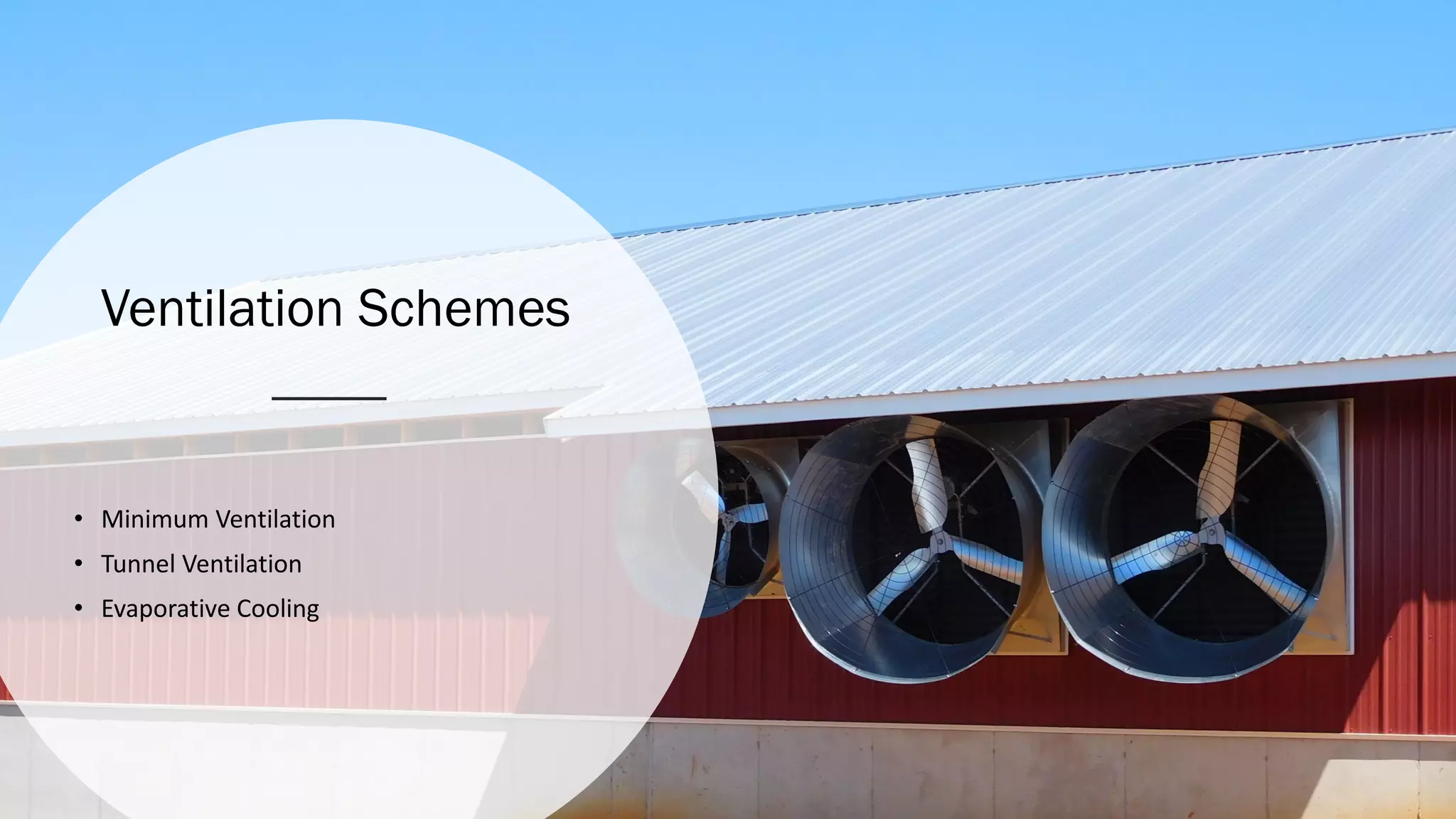
Ventilation Schemes
• Minimum Ventilation
• Tunnel Ventilation
• Evaporative Cooling
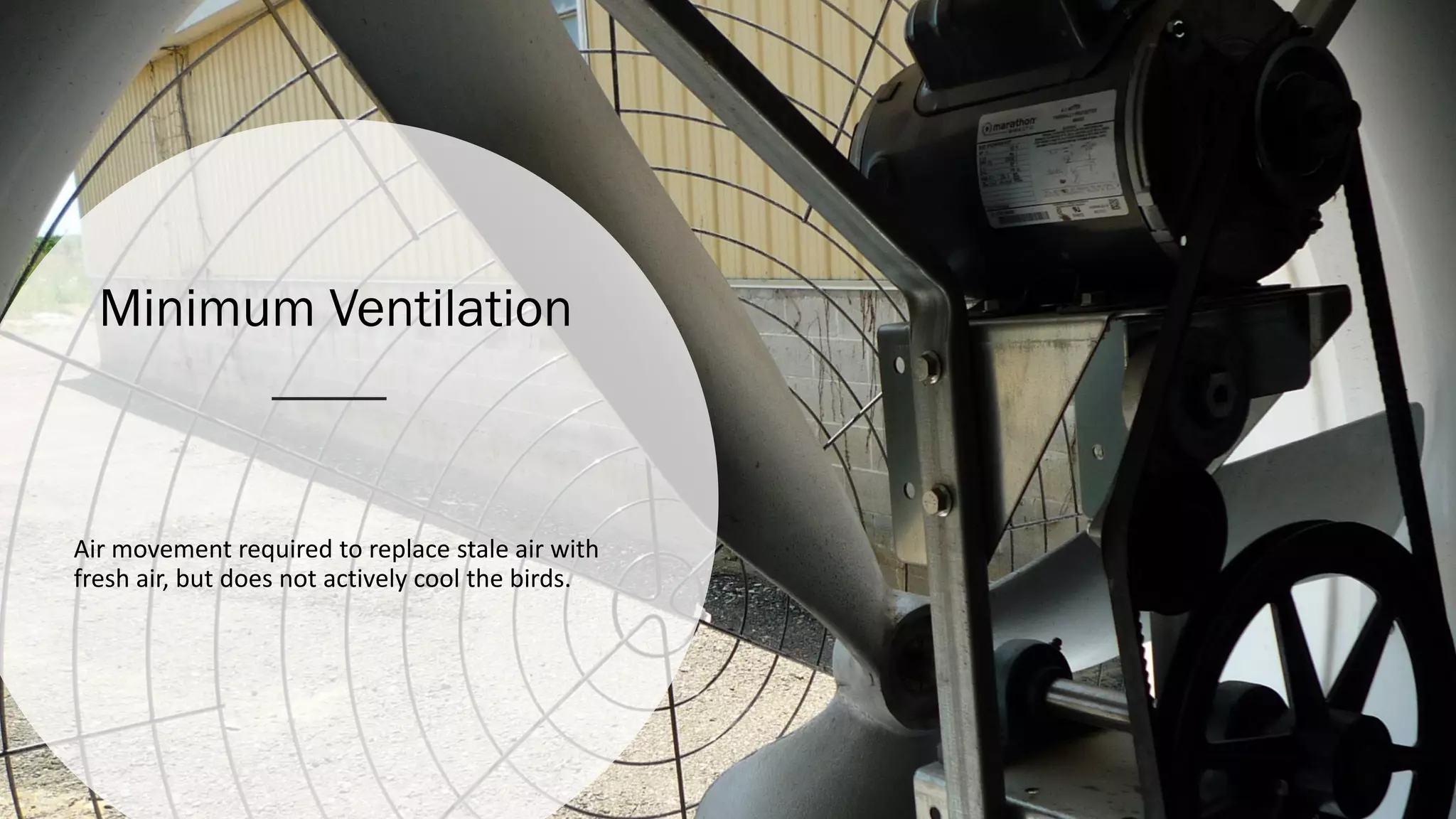
Minimum Ventilation
Air movement required to replace stale air with
fresh air, but does not actively cool the birds.
Dust and toxic gases must
be kept to a minimum for
optimal performance.
• Ammonia (NH3) < 10 ppm
• Carbon Dioxide (CO2) < 3000 ppm
• Carbon Monoxide (CO) <10 ppm
• Dust < 3 mg/m2
• Moisture (H2O) 45-65%
• Oxygen (O2) > 19.6%
Tunnel Ventilation
• Used when the inside temperature is too
high and a cooling effect is needed to keep
birds comfortable.
• Set point = the temperature decided upon
and programmed into the controller that
tells the fans when to run.
Wind Chill Effect
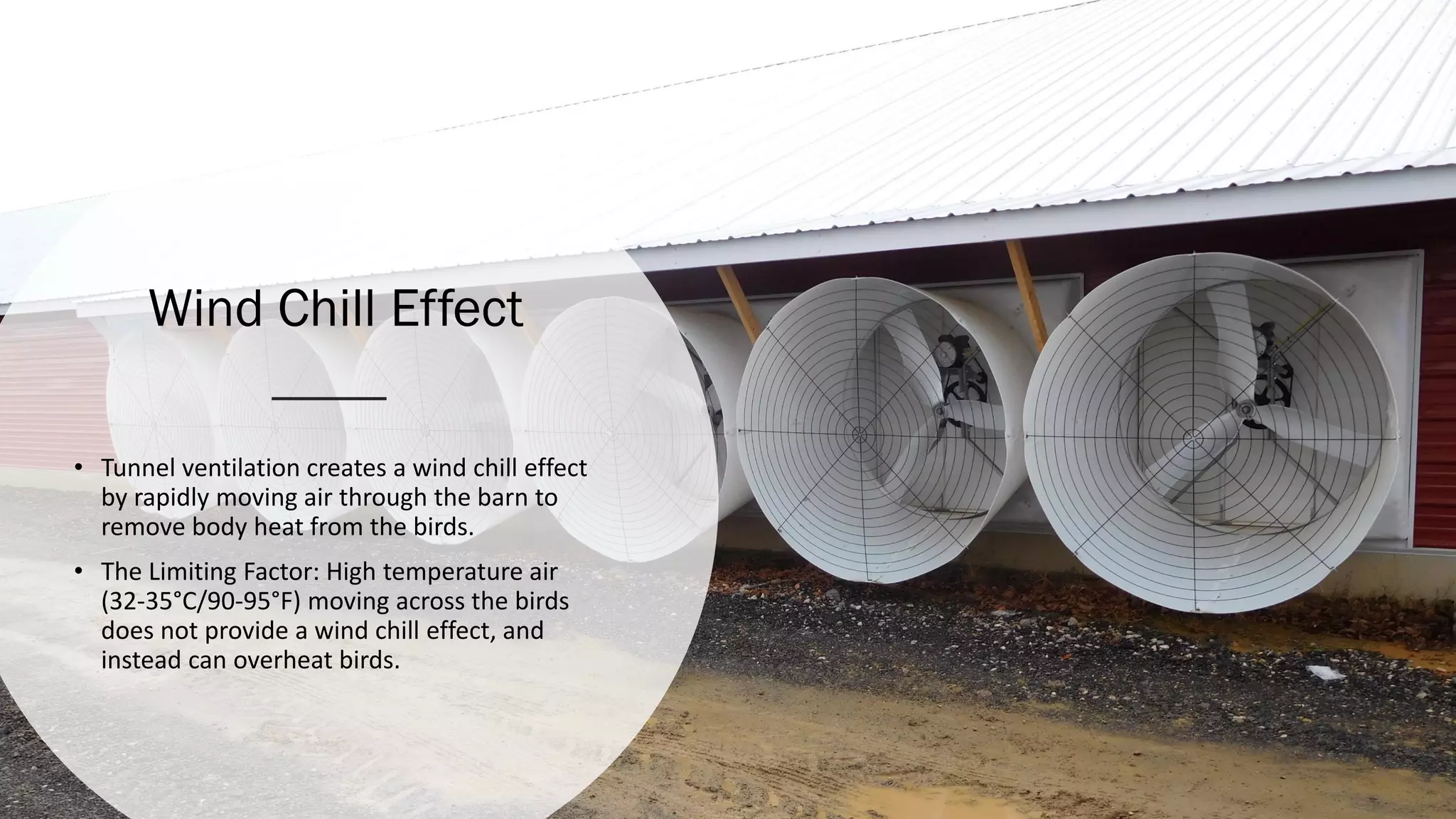
• Tunnel ventilation creates a wind chill effect
by rapidly moving air through the barn to
remove body heat from the birds.
• The Limiting Factor: High temperature air
(32-35°C/90-95°F) moving across the birds
does not provide a wind chill effect, and
instead can overheat birds.
Evaporative Cooling
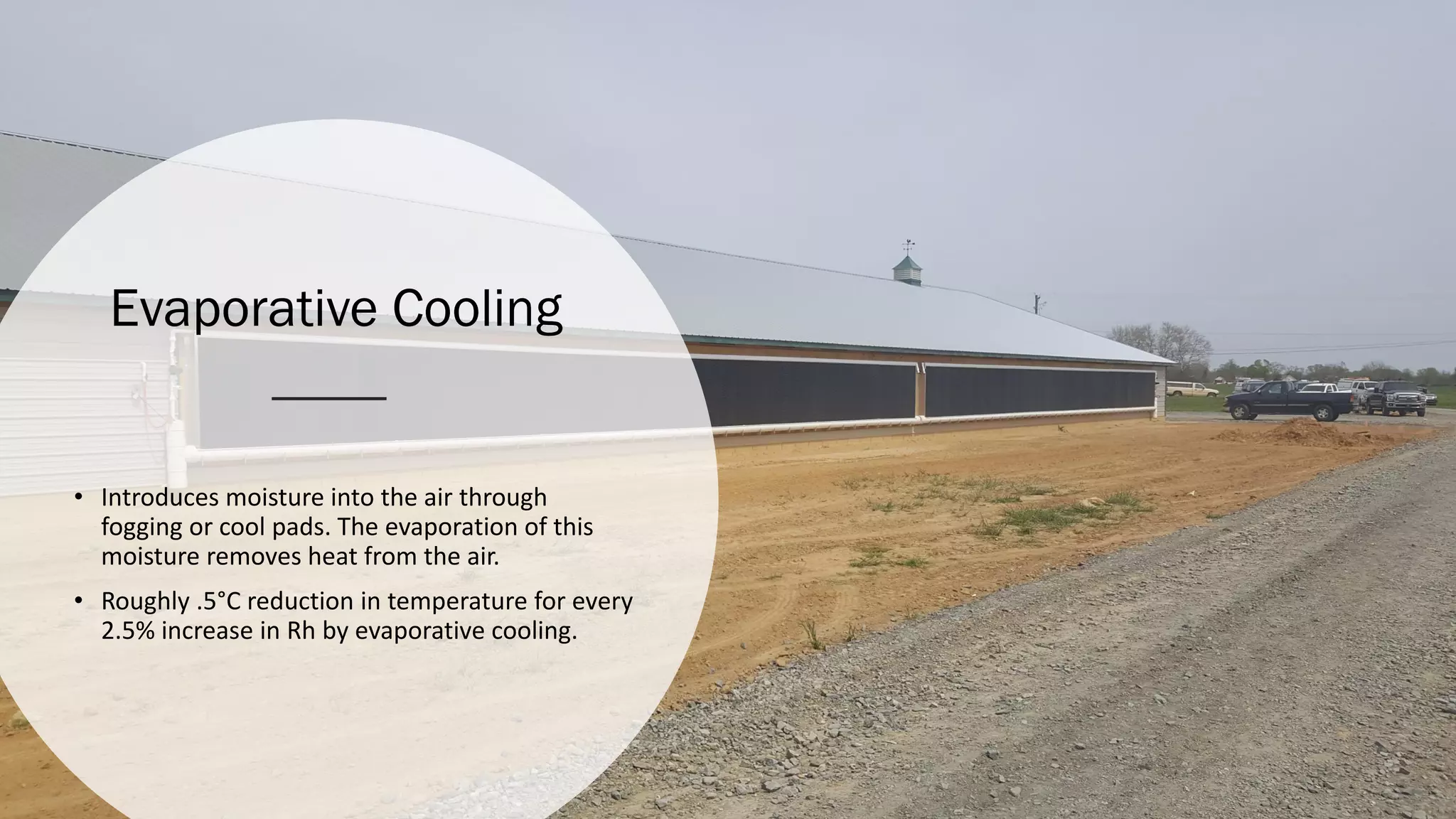
• Introduces moisture into the air through
fogging or cool pads. The evaporation of this
moisture removes heat from the air.
• Roughly .5°C reduction in temperature for every
2.5% increase in Rh by evaporative cooling.
Cooling
• When one gallon (4 liters) of water
evaporates, it removes 8700 Btu’s of heat
from the air.
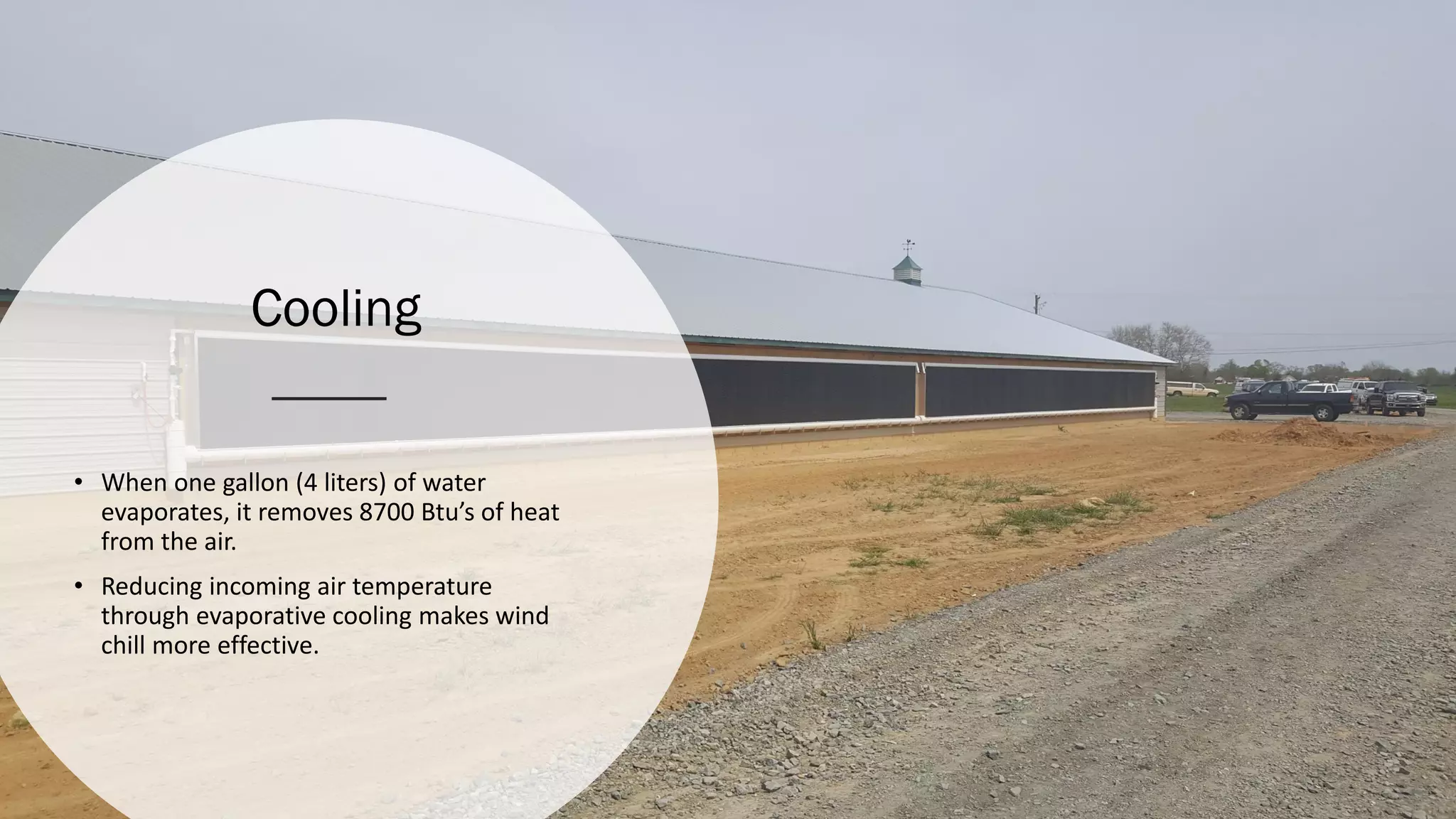
• Reducing incoming air temperature
through evaporative cooling makes wind
chill more effective.
Cooling
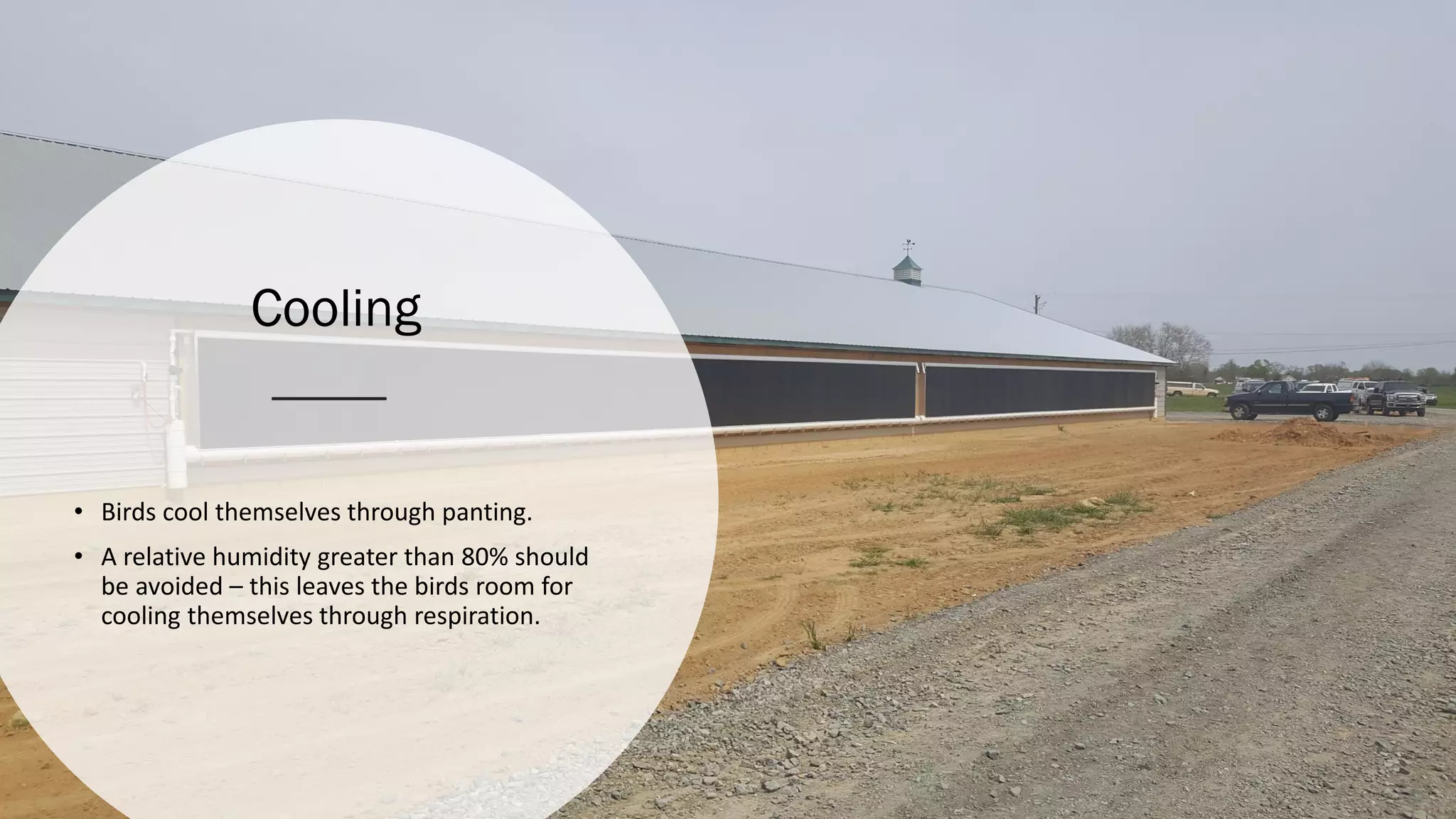
• Birds cool themselves through panting.
• A relative humidity greater than 80% should
be avoided – this leaves the birds room for
cooling themselves through respiration.
Have a
question?
• Contact us! We’d be happy to talk to you about
ventilation practices.
• 1-800-998-2526 in the US and Canada
• (+1) 419-678-8731 Internationally
• info@val-co.com
• www.val-co.com

Summer Ventilation Basics: Ventilation Design, Ventilation Schemes, Evaporative Cooling

  • 1.
    Summer Ventilation Basics VENTILATION DESIGNS,VENTILATION SCHEMES, EVAPORATIVE COOLING
  • 2.
    Barn Types • Whenchoosing a barn type, consider location, climate, and materials. You wouldn’t build an igloo in the rain forest.
  • 3.
    Ventilation Designs 1. NaturalVentilation 2. Transitional Ventilation 3. Tunnel Ventilation
  • 4.
    Natural Ventilation Relies solelyon the weather outside to maintain conditions inside. Carries the lowest stocking density of birds per square meter.
  • 5.
    Transitional Ventilation Relies on poweredfans to forcefully move air across the barn. Controllers are programmed to dictate when fans run, for how long, and which inlets will open. Medium stocking density per square meter.
  • 6.
    Tunnel Ventilation Relies onlarge volumes of air being rapidly moved by powerful fans from one end of the barn to the other. Can be costly to build. Carry the highest stocking density of birds per square meter.
  • 7.
    Ventilation Schemes • MinimumVentilation • Tunnel Ventilation • Evaporative Cooling
  • 8.
    Minimum Ventilation Air movementrequired to replace stale air with fresh air, but does not actively cool the birds.
  • 9.
    Dust and toxicgases must be kept to a minimum for optimal performance. • Ammonia (NH3) < 10 ppm • Carbon Dioxide (CO2) < 3000 ppm • Carbon Monoxide (CO) <10 ppm • Dust < 3 mg/m2 • Moisture (H2O) 45-65% • Oxygen (O2) > 19.6%
  • 10.
    Tunnel Ventilation • Usedwhen the inside temperature is too high and a cooling effect is needed to keep birds comfortable. • Set point = the temperature decided upon and programmed into the controller that tells the fans when to run.
  • 11.
    Wind Chill Effect •Tunnel ventilation creates a wind chill effect by rapidly moving air through the barn to remove body heat from the birds. • The Limiting Factor: High temperature air (32-35°C/90-95°F) moving across the birds does not provide a wind chill effect, and instead can overheat birds.
  • 12.
    Evaporative Cooling • Introducesmoisture into the air through fogging or cool pads. The evaporation of this moisture removes heat from the air. • Roughly .5°C reduction in temperature for every 2.5% increase in Rh by evaporative cooling.
  • 13.
    Cooling • When onegallon (4 liters) of water evaporates, it removes 8700 Btu’s of heat from the air. • Reducing incoming air temperature through evaporative cooling makes wind chill more effective.
  • 14.
    Cooling • Birds coolthemselves through panting. • A relative humidity greater than 80% should be avoided – this leaves the birds room for cooling themselves through respiration.
  • 15.
    Have a question? • Contactus! We’d be happy to talk to you about ventilation practices. • 1-800-998-2526 in the US and Canada • (+1) 419-678-8731 Internationally • info@val-co.com • www.val-co.com