Formative and
Summative Assessment
Methods
Explore the different assessment methods used in education and their
importance in gauging student learning and progress.
Submitted by: Baljot Kaur
PhD Management
Roll No- 23520006
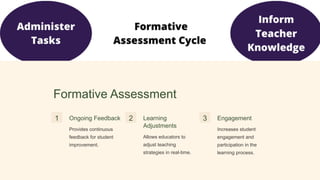
Formative Assessment
1 Ongoing Feedback
Provides continuous
feedback for student
improvement.
2 Learning
Adjustments
Allows educators to
adjust teaching
strategies in real-time.
3 Engagement
Increases student
engagement and
participation in the
learning process.
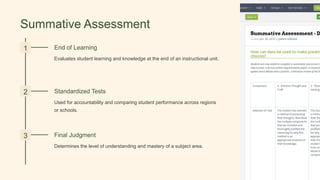
Summative Assessment
1 End of Learning
Evaluates student learning and knowledge at the end of an instructional unit.
2 Standardized Tests
Used for accountability and comparing student performance across regions
or schools.
3 Final Judgment
Determines the level of understanding and mastery of a subject area.
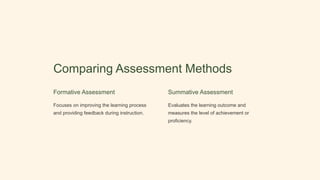
Comparing Assessment Methods
Formative Assessment
Focuses on improving the learning process
and providing feedback during instruction.
Summative Assessment
Evaluates the learning outcome and
measures the level of achievement or
proficiency.
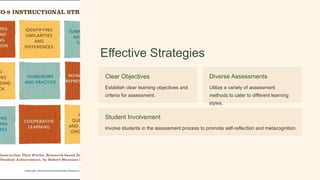
Effective Strategies
Clear Objectives
Establish clear learning objectives and
criteria for assessment.
Diverse Assessments
Utilize a variety of assessment
methods to cater to different learning
styles.
Student Involvement
Involve students in the assessment process to promote self-reflection and metacognition.
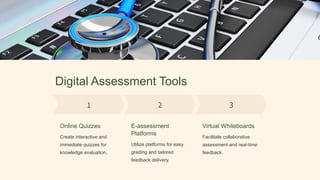
Digital Assessment Tools
Online Quizzes
Create interactive and
immediate quizzes for
knowledge evaluation.
E-assessment
Platforms
Utilize platforms for easy
grading and tailored
feedback delivery.
Virtual Whiteboards
Facilitate collaborative
assessment and real-time
feedback.
Authentic Assessment
Real-world Application
Authentic assessment tasks mirror real-world challenges and require a demonstration of skills and knowledge in
practical scenarios.
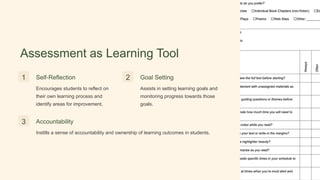
Assessment as Learning Tool
1 Self-Reflection
Encourages students to reflect on
their own learning process and
identify areas for improvement.
2 Goal Setting
Assists in setting learning goals and
monitoring progress towards those
goals.
3 Accountability
Instills a sense of accountability and ownership of learning outcomes in students.
Ethical Considerations
Ethical Principles
•Validity and Reliability
•Equity and Fairness
•Privacy and Confidentiality
THANK YOU!!!!

Summative & Formative Assessment Methods

  • 1.
    Formative and Summative Assessment Methods Explorethe different assessment methods used in education and their importance in gauging student learning and progress. Submitted by: Baljot Kaur PhD Management Roll No- 23520006
  • 2.
    Formative Assessment 1 OngoingFeedback Provides continuous feedback for student improvement. 2 Learning Adjustments Allows educators to adjust teaching strategies in real-time. 3 Engagement Increases student engagement and participation in the learning process.
  • 3.
    Summative Assessment 1 Endof Learning Evaluates student learning and knowledge at the end of an instructional unit. 2 Standardized Tests Used for accountability and comparing student performance across regions or schools. 3 Final Judgment Determines the level of understanding and mastery of a subject area.
  • 4.
    Comparing Assessment Methods FormativeAssessment Focuses on improving the learning process and providing feedback during instruction. Summative Assessment Evaluates the learning outcome and measures the level of achievement or proficiency.
  • 5.
    Effective Strategies Clear Objectives Establishclear learning objectives and criteria for assessment. Diverse Assessments Utilize a variety of assessment methods to cater to different learning styles. Student Involvement Involve students in the assessment process to promote self-reflection and metacognition.
  • 6.
    Digital Assessment Tools OnlineQuizzes Create interactive and immediate quizzes for knowledge evaluation. E-assessment Platforms Utilize platforms for easy grading and tailored feedback delivery. Virtual Whiteboards Facilitate collaborative assessment and real-time feedback.
  • 7.
    Authentic Assessment Real-world Application Authenticassessment tasks mirror real-world challenges and require a demonstration of skills and knowledge in practical scenarios.
  • 8.
    Assessment as LearningTool 1 Self-Reflection Encourages students to reflect on their own learning process and identify areas for improvement. 2 Goal Setting Assists in setting learning goals and monitoring progress towards those goals. 3 Accountability Instills a sense of accountability and ownership of learning outcomes in students.
  • 9.
    Ethical Considerations Ethical Principles •Validityand Reliability •Equity and Fairness •Privacy and Confidentiality
  • 10.