SUMMARY: HIMSS Preparation
  Briefing


                                                                                          Dr Zafar Chaudry, MD MSc MIS MBA
                                                                                                                                                   Research Director
                                                                                                                                       Healthcare Industries


This presentation, including any supporting materials, is owned by Gartner, Inc. and/or its affiliates and is for the sole use of the intended Gartner audience or other
authorized recipients. This presentation may contain information that is confidential, proprietary or otherwise legally protected, and it may not be further copied,
distributed or publicly displayed without the express written permission of Gartner, Inc. or its affiliates.
© 2012 Gartner, Inc. and/or its affiliates. All rights reserved.
Gartner delivers the technology-related
insight necessary for our clients to make
the right decisions, every day.


                     1
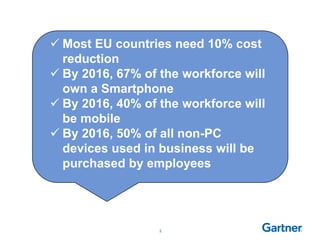
 Most EU countries need 10% cost
  reduction
 By 2016, 67% of the workforce will
  own a Smartphone
 By 2016, 40% of the workforce will
  be mobile
 By 2016, 50% of all non-PC
  devices used in business will be
  purchased by employees


                  2
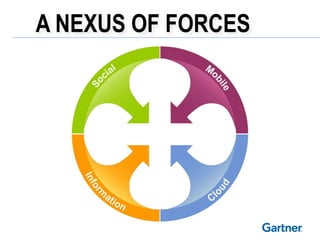
A NEXUS OF FORCES
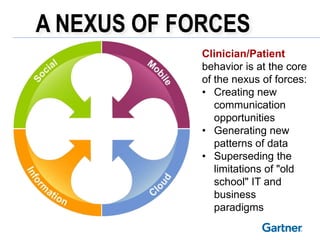
A NEXUS OF FORCES
             Clinician/Patient
             behavior is at the core
             of the nexus of forces:
             • Creating new
                communication
                opportunities
             • Generating new
                patterns of data
             • Superseding the
                limitations of "old
                school" IT and
                business
                paradigms
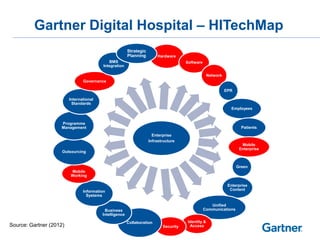
Gartner Digital Hospital – HITechMap
                                                        Strategic
                                                        Planning        Hardware
                                             BMS                                      Software
                                          Integration

                                                                                                    Network
                                Governance

                                                                                                              EPR

                         International
                          Standards
                                                                                                                Employees


                    Programme
                    Management                                                                                        Patients
                                                                      Enterprise
                                                                    Infrastructure
                                                                                                                      Mobile
                                                                                                                     Enterprise
                     Outsourcing


                                                                                                                    Green
                         Mobile
                         Working

                                                                                                               Enterprise
                                Information                                                                     Content
                                  Systems

                                                                                                    Unified
                                          Business                                               Communications
                                         Intelligence

                                                        Collaboration                  Identity &
Source: Gartner (2012)                                                     Security     Access
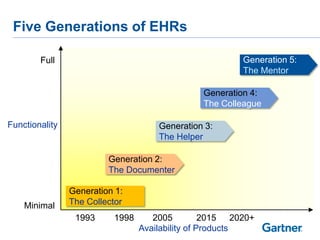
Five Generations of EHRs

        Full                                             Generation 5:
                                                         The Mentor

                                                Generation 4:
                                                The Colleague

Functionality                        Generation 3:
                                     The Helper

                         Generation 2:
                         The Documenter

                Generation 1:
    Minimal     The Collector
                 1993     1998      2005          2015 2020+
                                 Availability of Products
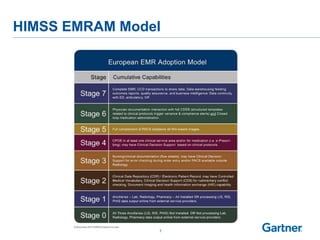
HIMSS EMRAM Model


                7

Summary HIMSS Preparation Briefing

  • 1.
    SUMMARY: HIMSS Preparation Briefing Dr Zafar Chaudry, MD MSc MIS MBA Research Director Healthcare Industries This presentation, including any supporting materials, is owned by Gartner, Inc. and/or its affiliates and is for the sole use of the intended Gartner audience or other authorized recipients. This presentation may contain information that is confidential, proprietary or otherwise legally protected, and it may not be further copied, distributed or publicly displayed without the express written permission of Gartner, Inc. or its affiliates. © 2012 Gartner, Inc. and/or its affiliates. All rights reserved.
  • 2.
    Gartner delivers thetechnology-related insight necessary for our clients to make the right decisions, every day. 1
  • 3.
     Most EUcountries need 10% cost reduction  By 2016, 67% of the workforce will own a Smartphone  By 2016, 40% of the workforce will be mobile  By 2016, 50% of all non-PC devices used in business will be purchased by employees 2
  • 4.
    A NEXUS OFFORCES
  • 5.
    A NEXUS OFFORCES Clinician/Patient behavior is at the core of the nexus of forces: • Creating new communication opportunities • Generating new patterns of data • Superseding the limitations of "old school" IT and business paradigms
  • 6.
    Gartner Digital Hospital– HITechMap Strategic Planning Hardware BMS Software Integration Network Governance EPR International Standards Employees Programme Management Patients Enterprise Infrastructure Mobile Enterprise Outsourcing Green Mobile Working Enterprise Information Content Systems Unified Business Communications Intelligence Collaboration Identity & Source: Gartner (2012) Security Access
  • 7.
    Five Generations ofEHRs Full Generation 5: The Mentor Generation 4: The Colleague Functionality Generation 3: The Helper Generation 2: The Documenter Generation 1: Minimal The Collector 1993 1998 2005 2015 2020+ Availability of Products
  • 8.

Editor's Notes

  • #5 The convergence of these forces is on a different order of "disruption magnitude"People have created a convergence:It results from their behaviorIt is an outcome of consumerization and democratization of ITBecause technology is now good enough (and ubiquitous)
  • #8 The Gartner enterprise EHR generation model has created metrics for core EHR capabilities that enable easier comparisons of vendor offerings, as well as enable HDOs to set internal expectations more accurately. Our vision is that EHR offerings will evolve through five generations, transforming from very simple systems that provide results reporting into very complex, fully integrated systems focused on the tasks directly related to promoting wellness and providing medical care for individuals across the entire healthcare continuum, within a single healthcare enterprise.In determining the generations of EHRs, Gartner evaluated each of the eight core capabilities of an EHR and determined the progression of functionality expected. To create the generations, we then divided that functionality into five reasonable, incremental steps, but also considered the synergy of each set of functions. A given EHR product may have some increased functionality in certain areas, but to be considered an n-generation product, it must at least have all of the basic capabilities listed for that generation. In addition, each subsequent generation must have all of the capabilities of previous generations.Generation 3 products have been available since 2005, but Generation 4 products are not expected before 2015.