Overview
on
SUICIDE
and its
manageme
nt
DR.MURUGAVEL
II yr D.P.M
Institute of mental health
OUTLINE
 History
 Definition and types
 Epidemiology
 Risk factors
 Etiology
 Suicidal risk assessment
 Management
 Prevention
 Survivors of suicide
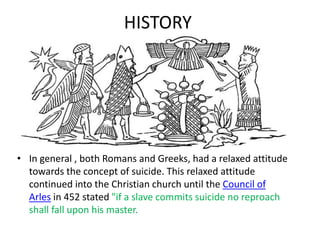
HISTORY
• In general , both Romans and Greeks, had a relaxed attitude
towards the concept of suicide. This relaxed attitude
continued into the Christian church until the Council of
Arles in 452 stated "if a slave commits suicide no reproach
shall fall upon his master.
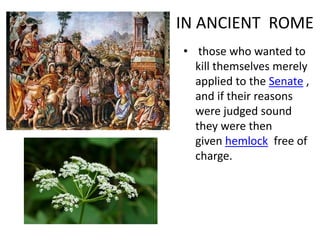
IN ANCIENT ROME
• those who wanted to
kill themselves merely
applied to the Senate ,
and if their reasons
were judged sound
they were then
given hemlock free of
charge.
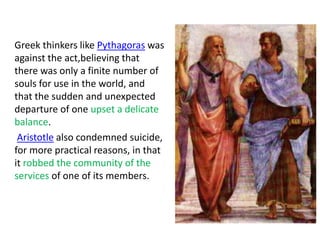
Greek thinkers like Pythagoras was
against the act,believing that
there was only a finite number of
souls for use in the world, and
that the sudden and unexpected
departure of one upset a delicate
balance.
Aristotle also condemned suicide,
for more practical reasons, in that
it robbed the community of the
services of one of its members.
SUICIDES IN TAMIL LITERATURE
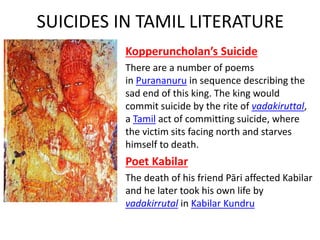
Kopperuncholan’s Suicide
There are a number of poems
in Purananuru in sequence describing the
sad end of this king. The king would
commit suicide by the rite of vadakiruttal,
a Tamil act of committing suicide, where
the victim sits facing north and starves
himself to death.
Poet Kabilar
The death of his friend Pāri affected Kabilar
and he later took his own life by
vadakirrutal in Kabilar Kundru
CYBER SUICIDE
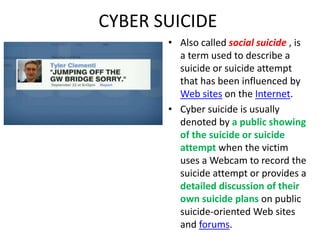
• Also called social suicide , is
a term used to describe a
suicide or suicide attempt
that has been influenced by
Web sites on the Internet.
• Cyber suicide is usually
denoted by a public showing
of the suicide or suicide
attempt when the victim
uses a Webcam to record the
suicide attempt or provides a
detailed discussion of their
own suicide plans on public
suicide-oriented Web sites
and forums.
DEFINITION & TYPES
• Suicide is derived from the Latin word for “self-
murder”
• It is a fatal act that represents the person's wish
to die.
• Lost in the definition are intentional
misclassifications of the cause of death,
 accidents of undetermined cause
 chronic suicides (eg.death through alcohol and other
substance abuse and consciously poor adherence to medical
regimens for addiction, obesity, and hypertension.)
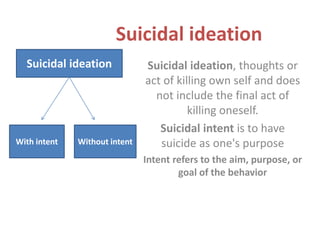
Suicidal ideation
Suicidal ideation, thoughts or
act of killing own self and does
not include the final act of
killing oneself.
Suicidal intent is to have
suicide as one's purpose
Intent refers to the aim, purpose, or
goal of the behavior
Suicidal ideation
With intent Without intent
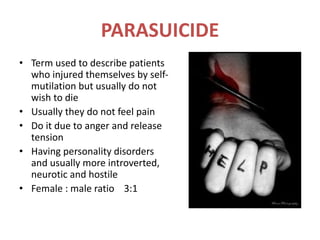
PARASUICIDE
• Term used to describe patients
who injured themselves by self-
mutilation but usually do not
wish to die
• Usually they do not feel pain
• Do it due to anger and release
tension
• Having personality disorders
and usually more introverted,
neurotic and hostile
• Female : male ratio 3:1
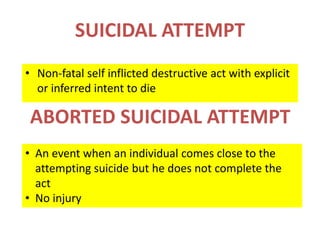
SUICIDAL ATTEMPT
• Non-fatal self inflicted destructive act with explicit
or inferred intent to die
• An event when an individual comes close to the
attempting suicide but he does not complete the
act
• No injury
ABORTED SUICIDAL ATTEMPT
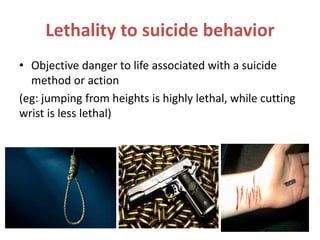
Lethality to suicide behavior
• Objective danger to life associated with a suicide
method or action
(eg: jumping from heights is highly lethal, while cutting
wrist is less lethal)
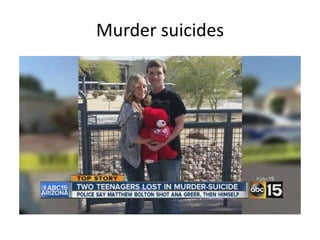
Murder suicides
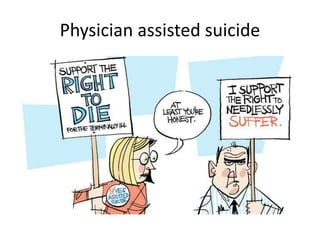
Physician assisted suicide
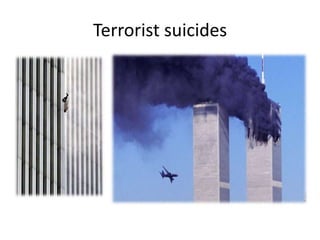
Terrorist suicides
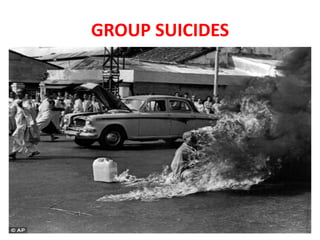
GROUP SUICIDES
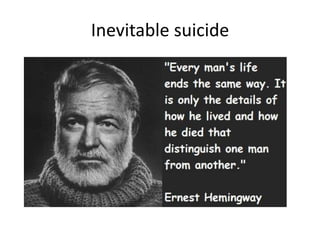
Inevitable suicide
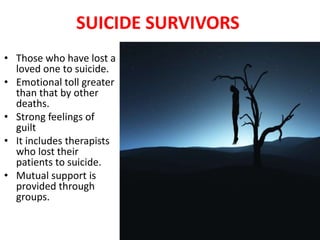
SUICIDE SURVIVORS
• Those who have lost a
loved one to suicide.
• Emotional toll greater
than that by other
deaths.
• Strong feelings of
guilt
• It includes therapists
who lost their
patients to suicide.
• Mutual support is
provided through
groups.
EPIDEMIOLOGY
 According to a WHO report published in 2012
“one person commits suicide every 40 seconds globally”.
More than 800,000 people die by suicide every year
 Most suicides in the world occur in the South-East Asia
Region with India accounting for the highest estimated
number of suicides overall in 2012.
 75 per cent of suicides occur in low- and middle-income
countries.
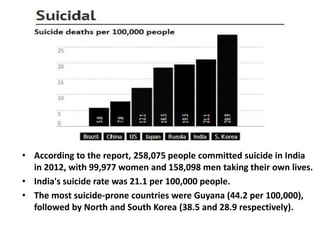
• According to the report, 258,075 people committed suicide in India
in 2012, with 99,977 women and 158,098 men taking their own lives.
• India's suicide rate was 21.1 per 100,000 people.
• The most suicide-prone countries were Guyana (44.2 per 100,000),
followed by North and South Korea (38.5 and 28.9 respectively).
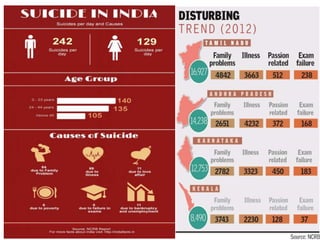
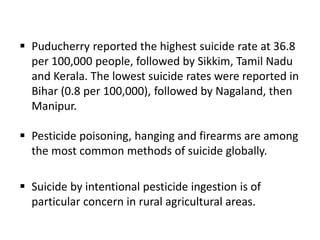
 Puducherry reported the highest suicide rate at 36.8
per 100,000 people, followed by Sikkim, Tamil Nadu
and Kerala. The lowest suicide rates were reported in
Bihar (0.8 per 100,000), followed by Nagaland, then
Manipur.
 Pesticide poisoning, hanging and firearms are among
the most common methods of suicide globally.
 Suicide by intentional pesticide ingestion is of
particular concern in rural agricultural areas.
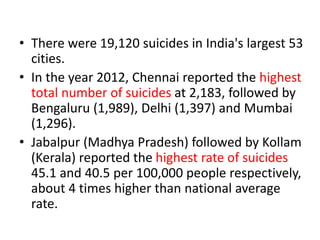
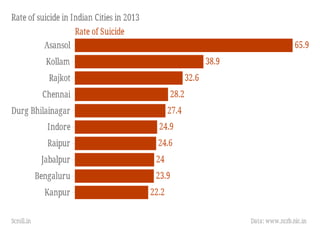
• There were 19,120 suicides in India's largest 53
cities.
• In the year 2012, Chennai reported the highest
total number of suicides at 2,183, followed by
Bengaluru (1,989), Delhi (1,397) and Mumbai
(1,296).
• Jabalpur (Madhya Pradesh) followed by Kollam
(Kerala) reported the highest rate of suicides
45.1 and 40.5 per 100,000 people respectively,
about 4 times higher than national average
rate.
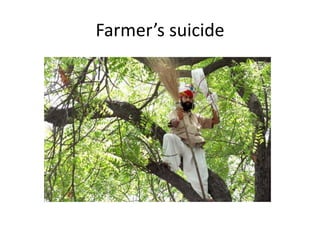
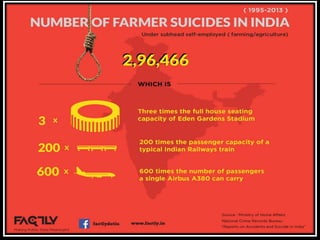
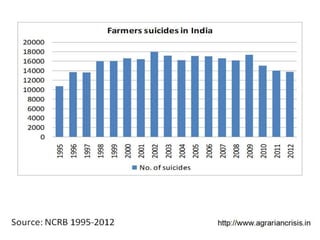
Farmer’s suicide
Risk factors
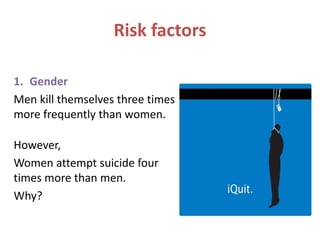
1. Gender
Men kill themselves three times
more frequently than women.
However,
Women attempt suicide four
times more than men.
Why?
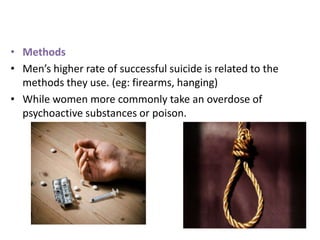
• Methods
• Men’s higher rate of successful suicide is related to the
methods they use. (eg: firearms, hanging)
• While women more commonly take an overdose of
psychoactive substances or poison.
2.Age
 Rare before puberty
 In Men peaks after 45, women after 55 yrs.
 Significance of mid life crises
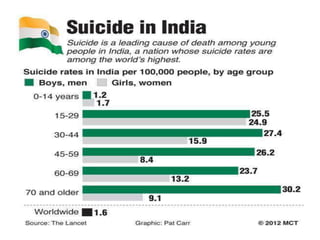
 Rates are rising among young
 Currently 3 rd leading cause of death in 15-24 yrs
age group.
3.Ethnicity
 Suicide rates among white are 2 to 3 times higher
than in afro americans.
 Suicides are higher in immigrants than those in the
native born population.
4.Religion
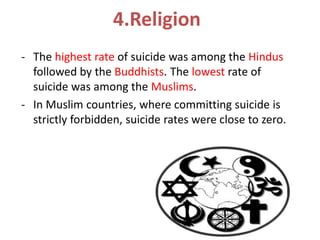
- The highest rate of suicide was among the Hindus
followed by the Buddhists. The lowest rate of
suicide was among the Muslims.
- In Muslim countries, where committing suicide is
strictly forbidden, suicide rates were close to zero.
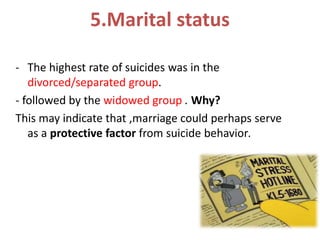
5.Marital status
- The highest rate of suicides was in the
divorced/separated group.
- followed by the widowed group . Why?
This may indicate that ,marriage could perhaps serve
as a protective factor from suicide behavior.
6.Occupation
• Common among doctors, artists, mechanics ,
lawyers, insurance agents
• Greatest risk for psychiatrists, followed by
opthalmologists , anesthesists.
• Common method of suicide is substance
overdose.
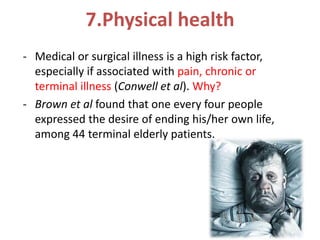
7.Physical health
- Medical or surgical illness is a high risk factor,
especially if associated with pain, chronic or
terminal illness (Conwell et al). Why?
- Brown et al found that one every four people
expressed the desire of ending his/her own life,
among 44 terminal elderly patients.
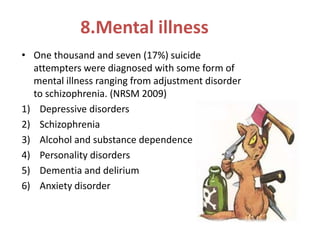
8.Mental illness
• One thousand and seven (17%) suicide
attempters were diagnosed with some form of
mental illness ranging from adjustment disorder
to schizophrenia. (NRSM 2009)
1) Depressive disorders
2) Schizophrenia
3) Alcohol and substance dependence
4) Personality disorders
5) Dementia and delirium
6) Anxiety disorder
9.Psychiatric patients
• Inpatients > outpatients
• Highest risk during first week of admission and
during first 3 months of discharge.
• Risk normalises after 3-5 weeks of IP stay.
• Time period of commiting suicide associated
with times of staff rotation(esp.residents).
• Also with ideological change on the ward,
staff disorganization and demoralization.
Others
• Previous suicide attempts
• Unemployment
• Sense of hopelessness
• Access to lethal agents or firearms
• Fantasies of reunion with deceased
loves ones
• History of childhood or physical abuse
• History of impulsive or aggressive
behaviour
• Nizam et al 1995 , for example, found that 74%
of the suicide attempters in his study did not
know how to access counseling services even
when 53% of them have heard about such
services from the media.
• Zuraida et al 2000 focused on poor social
network as a risk factor for suicidal behavior,
emphasizing the importance of evaluating a
patient’s social support system as part of the
management plan for suicide attempter
• Meanwhile, Ainsah et al 2008 studied the
relationship between the menstrual cycles and
deliberate self-harm.
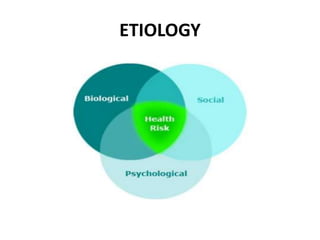
ETIOLOGY
SOCIOLOGICAL FACTORS
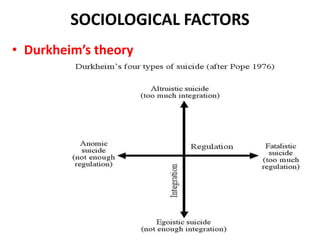
• Durkheim’s theory
PSYCHOLOGICAL THEORIES
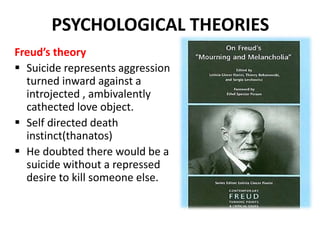
Freud’s theory
 Suicide represents aggression
turned inward against a
introjected , ambivalently
cathected love object.
 Self directed death
instinct(thanatos)
 He doubted there would be a
suicide without a repressed
desire to kill someone else.
Menninger’s theory
Inverted homicide or
used as a excuse for
punishment.
3 components of hostility
 The wish to kill
 The wish to be killed
 The wish to die
 Recent theories based on suicidal patients
fantasies about what would happen and what the
consequences would be if they commit suicide.
 A study by Aaron beck showed that Hopelessness is
one of the accurate indicators of long term suicidal
risk.
BIOLOGICAL THEORIES
 Low concentration of 5 HIAA, a metabolite of
serotonin in Cerebro spinal fluid of suicide victims.
 Hypothalamo Pituitary axis dysregulation in suicide
victims and in those who attempt suicide.
 These patients show impaired cortisol suppression
on dexamethasone injection.
GENETIC FACTORS
 Monozygotic twins have significantly higher
concordance for suicide compared to dizygotic twins.
 Danish american adoption studies also show
increased suicidal attempts in relatives of suicide
victims compared to controls.
 Tryptophan hydroxylase(TPH) enzyme has been
implicated especially LL genotype,reduced capacity
to hydroxylate tryptophan,thereby low CSF turnover
of serotonin.
MANAGEMENT OF ATTEMPTED
SUICIDE
• Evaluation of the suicidal attempt, intent
• Assessment of suicidal risks
• Psychosocial treatments
• Pharmacotherapy
FACTORS TO BE EVALUATED
 Life events that preceded the attempt.
 Motives for the act
 Problems faced by the patient
 Psychiatric disorder
 Personality disorder
 Substance abuse
 Family history
 Previous suicidal attempts
FACTORS SUGGESTING HIGH
SUICIDAL INTENT
 Act carried out in isolation
 Act timed so that intervention is unlikely
 Precautions taken to avoid discovery
 Preperations made in anticipation of death
 Communicating intent to others before
 Leaving a suicidal note
 Subsequent admission of suicidal intent
Suicide risk scale (sad persons)
• Sex – Men 3x> women (although women attempt suicide 4x more)
• Age – greater risk among 19 years or younger, and 45 years or older
• Depressed – 30x more than non-depressed (depression and hopelessness – close
tie to suicide)
• Previous Attempters – 64x that of general population
• Ethanol Abuser – about 15% of alcoholics commit suicide
• Rational Thinking Loss – Psychosis (“I heard a voice saying I should kill myself”),
mania, depression
• Social Support Lacking – recent loss of support (deaths, divorce, break-
ups, etc)
• Organized Plan – having a method in mind creates more risk
• No spouse – single, divorced, widowed or separated
• Sickness – terminal illnesses carry 20x chance for suicide
1) Paterson, W, Dohn, H , Bird, J, Paterson, G. Psychsomatics, 1983, 24, 343349
2) Juhnke, G.E. “SAD PERSONS scale review.” Measurement & Evaluation in
Counseling & Development, 1994, 27, 325328
3) Juhnke, G.E. (“The adapted SAD PERSONS: As assessment scale designed for use
with children” Elementary School Guidance & Counesling, 1996, 252258
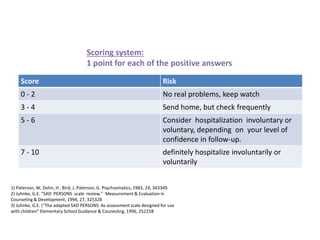
Score Risk
0 - 2 No real problems, keep watch
3 - 4 Send home, but check frequently
5 - 6 Consider hospitalization involuntary or
voluntary, depending on your level of
confidence in follow-up.
7 - 10 definitely hospitalize involuntarily or
voluntarily
Scoring system:
1 point for each of the positive answers
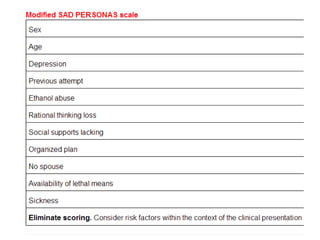
• SAD PERSONS can be modified to “SAD PERSONAS”, with the
second ‘A’ representing “Availability of lethal means”.
• This modification reminds the clinician to ask about lethal
means when assessing suicidality.
• If lethal means are available, the clinician can then take
whatever action is reasonably indicated to reduce the
likelihood of a suicide.
• Eliminate scoring (William H. Campbell, Current Psychiatry Interactive Journal, Revised
‘SAD PERSONS’ helps assess suicide risk, Vol. 3, No. 3 / March 2004)
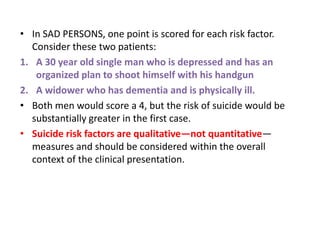
• In SAD PERSONS, one point is scored for each risk factor.
Consider these two patients:
1. A 30 year old single man who is depressed and has an
organized plan to shoot himself with his handgun
2. A widower who has dementia and is physically ill.
• Both men would score a 4, but the risk of suicide would be
substantially greater in the first case.
• Suicide risk factors are qualitative—not quantitative—
measures and should be considered within the overall
context of the clinical presentation.
PSYCHO SOCIAL TREATMENTS
• Problem solving
• Psychotherapy
Eg.Dialectical behavioural therapy useful in borderline personality
disorder.
• Family therapy
• Community outreach
Home visits , telephone calls , post cards
• Provision of emergency cards
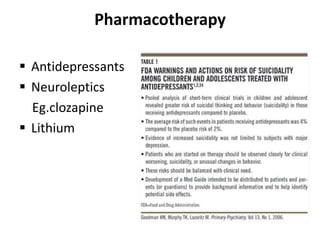
Pharmacotherapy
 Antidepressants
 Neuroleptics
Eg.clozapine
 Lithium
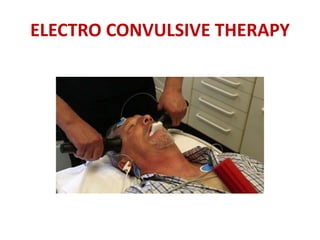
ELECTRO CONVULSIVE THERAPY
Prevention of suicide &
attempted suicide
• Population strategies
• High risk strategies
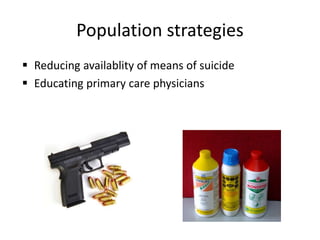
Population strategies
 Reducing availablity of means of suicide
 Educating primary care physicians
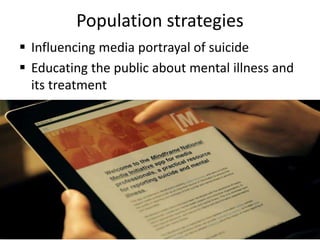
Population strategies
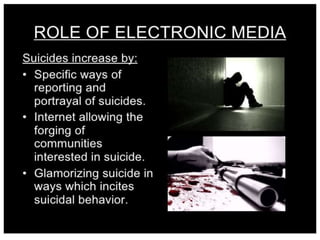
 Influencing media portrayal of suicide
 Educating the public about mental illness and
its treatment
Population strategies
 Educational approaches in schools
 Befriending agencies & telephone helplines
Population strategies
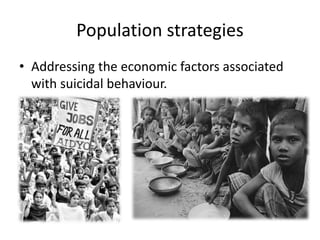
• Addressing the economic factors associated
with suicidal behaviour.
High risk strategies
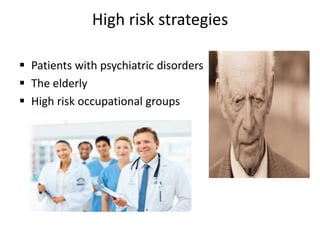
 Patients with psychiatric disorders
 The elderly
 High risk occupational groups
High risk strategies
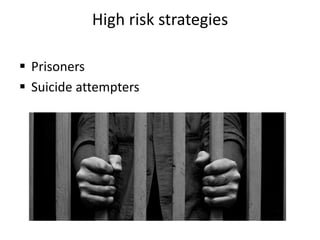
 Prisoners
 Suicide attempters
SUMMARY
 EACH SUICIDAL ATTEMPT
IS A CRY FOR HELP
 VARIOUS FACTORS ARE
INVOLVED IN A SUICIDE
 EARLY INTERVENTIONS
CAN PREVENT MAJOR
HARM
 IT IS A MAJOR PUBLIC
HEALTH PROBLEM
 NEED FOR A NATIONAL
POLICY TO PREVENT
SUICIDES
Suicide

Suicide

  • 1.
  • 2.
    OUTLINE  History  Definitionand types  Epidemiology  Risk factors  Etiology  Suicidal risk assessment  Management  Prevention  Survivors of suicide
  • 3.
    HISTORY • In general, both Romans and Greeks, had a relaxed attitude towards the concept of suicide. This relaxed attitude continued into the Christian church until the Council of Arles in 452 stated "if a slave commits suicide no reproach shall fall upon his master.
  • 4.
    IN ANCIENT ROME •those who wanted to kill themselves merely applied to the Senate , and if their reasons were judged sound they were then given hemlock free of charge.
  • 5.
    Greek thinkers likePythagoras was against the act,believing that there was only a finite number of souls for use in the world, and that the sudden and unexpected departure of one upset a delicate balance. Aristotle also condemned suicide, for more practical reasons, in that it robbed the community of the services of one of its members.
  • 6.
    SUICIDES IN TAMILLITERATURE Kopperuncholan’s Suicide There are a number of poems in Purananuru in sequence describing the sad end of this king. The king would commit suicide by the rite of vadakiruttal, a Tamil act of committing suicide, where the victim sits facing north and starves himself to death. Poet Kabilar The death of his friend Pāri affected Kabilar and he later took his own life by vadakirrutal in Kabilar Kundru
  • 8.
    CYBER SUICIDE • Alsocalled social suicide , is a term used to describe a suicide or suicide attempt that has been influenced by Web sites on the Internet. • Cyber suicide is usually denoted by a public showing of the suicide or suicide attempt when the victim uses a Webcam to record the suicide attempt or provides a detailed discussion of their own suicide plans on public suicide-oriented Web sites and forums.
  • 9.
    DEFINITION & TYPES •Suicide is derived from the Latin word for “self- murder” • It is a fatal act that represents the person's wish to die. • Lost in the definition are intentional misclassifications of the cause of death,  accidents of undetermined cause  chronic suicides (eg.death through alcohol and other substance abuse and consciously poor adherence to medical regimens for addiction, obesity, and hypertension.)
  • 10.
    Suicidal ideation Suicidal ideation,thoughts or act of killing own self and does not include the final act of killing oneself. Suicidal intent is to have suicide as one's purpose Intent refers to the aim, purpose, or goal of the behavior Suicidal ideation With intent Without intent
  • 11.
    PARASUICIDE • Term usedto describe patients who injured themselves by self- mutilation but usually do not wish to die • Usually they do not feel pain • Do it due to anger and release tension • Having personality disorders and usually more introverted, neurotic and hostile • Female : male ratio 3:1
  • 12.
    SUICIDAL ATTEMPT • Non-fatalself inflicted destructive act with explicit or inferred intent to die • An event when an individual comes close to the attempting suicide but he does not complete the act • No injury ABORTED SUICIDAL ATTEMPT
  • 13.
    Lethality to suicidebehavior • Objective danger to life associated with a suicide method or action (eg: jumping from heights is highly lethal, while cutting wrist is less lethal)
  • 14.
  • 15.
  • 16.
  • 17.
  • 18.
  • 19.
    SUICIDE SURVIVORS • Thosewho have lost a loved one to suicide. • Emotional toll greater than that by other deaths. • Strong feelings of guilt • It includes therapists who lost their patients to suicide. • Mutual support is provided through groups.
  • 20.
    EPIDEMIOLOGY  According toa WHO report published in 2012 “one person commits suicide every 40 seconds globally”. More than 800,000 people die by suicide every year  Most suicides in the world occur in the South-East Asia Region with India accounting for the highest estimated number of suicides overall in 2012.  75 per cent of suicides occur in low- and middle-income countries.
  • 21.
    • According tothe report, 258,075 people committed suicide in India in 2012, with 99,977 women and 158,098 men taking their own lives. • India's suicide rate was 21.1 per 100,000 people. • The most suicide-prone countries were Guyana (44.2 per 100,000), followed by North and South Korea (38.5 and 28.9 respectively).
  • 24.
     Puducherry reportedthe highest suicide rate at 36.8 per 100,000 people, followed by Sikkim, Tamil Nadu and Kerala. The lowest suicide rates were reported in Bihar (0.8 per 100,000), followed by Nagaland, then Manipur.  Pesticide poisoning, hanging and firearms are among the most common methods of suicide globally.  Suicide by intentional pesticide ingestion is of particular concern in rural agricultural areas.
  • 25.
    • There were19,120 suicides in India's largest 53 cities. • In the year 2012, Chennai reported the highest total number of suicides at 2,183, followed by Bengaluru (1,989), Delhi (1,397) and Mumbai (1,296). • Jabalpur (Madhya Pradesh) followed by Kollam (Kerala) reported the highest rate of suicides 45.1 and 40.5 per 100,000 people respectively, about 4 times higher than national average rate.
  • 27.
  • 31.
    Risk factors 1. Gender Menkill themselves three times more frequently than women. However, Women attempt suicide four times more than men. Why?
  • 32.
    • Methods • Men’shigher rate of successful suicide is related to the methods they use. (eg: firearms, hanging) • While women more commonly take an overdose of psychoactive substances or poison.
  • 33.
    2.Age  Rare beforepuberty  In Men peaks after 45, women after 55 yrs.  Significance of mid life crises  Rates are rising among young  Currently 3 rd leading cause of death in 15-24 yrs age group.
  • 34.
    3.Ethnicity  Suicide ratesamong white are 2 to 3 times higher than in afro americans.  Suicides are higher in immigrants than those in the native born population.
  • 35.
    4.Religion - The highestrate of suicide was among the Hindus followed by the Buddhists. The lowest rate of suicide was among the Muslims. - In Muslim countries, where committing suicide is strictly forbidden, suicide rates were close to zero.
  • 36.
    5.Marital status - Thehighest rate of suicides was in the divorced/separated group. - followed by the widowed group . Why? This may indicate that ,marriage could perhaps serve as a protective factor from suicide behavior.
  • 37.
    6.Occupation • Common amongdoctors, artists, mechanics , lawyers, insurance agents • Greatest risk for psychiatrists, followed by opthalmologists , anesthesists. • Common method of suicide is substance overdose.
  • 38.
    7.Physical health - Medicalor surgical illness is a high risk factor, especially if associated with pain, chronic or terminal illness (Conwell et al). Why? - Brown et al found that one every four people expressed the desire of ending his/her own life, among 44 terminal elderly patients.
  • 39.
    8.Mental illness • Onethousand and seven (17%) suicide attempters were diagnosed with some form of mental illness ranging from adjustment disorder to schizophrenia. (NRSM 2009) 1) Depressive disorders 2) Schizophrenia 3) Alcohol and substance dependence 4) Personality disorders 5) Dementia and delirium 6) Anxiety disorder
  • 40.
    9.Psychiatric patients • Inpatients> outpatients • Highest risk during first week of admission and during first 3 months of discharge. • Risk normalises after 3-5 weeks of IP stay. • Time period of commiting suicide associated with times of staff rotation(esp.residents). • Also with ideological change on the ward, staff disorganization and demoralization.
  • 41.
    Others • Previous suicideattempts • Unemployment • Sense of hopelessness • Access to lethal agents or firearms • Fantasies of reunion with deceased loves ones • History of childhood or physical abuse • History of impulsive or aggressive behaviour
  • 42.
    • Nizam etal 1995 , for example, found that 74% of the suicide attempters in his study did not know how to access counseling services even when 53% of them have heard about such services from the media. • Zuraida et al 2000 focused on poor social network as a risk factor for suicidal behavior, emphasizing the importance of evaluating a patient’s social support system as part of the management plan for suicide attempter • Meanwhile, Ainsah et al 2008 studied the relationship between the menstrual cycles and deliberate self-harm.
  • 43.
  • 44.
  • 45.
    PSYCHOLOGICAL THEORIES Freud’s theory Suicide represents aggression turned inward against a introjected , ambivalently cathected love object.  Self directed death instinct(thanatos)  He doubted there would be a suicide without a repressed desire to kill someone else.
  • 46.
    Menninger’s theory Inverted homicideor used as a excuse for punishment. 3 components of hostility  The wish to kill  The wish to be killed  The wish to die
  • 47.
     Recent theoriesbased on suicidal patients fantasies about what would happen and what the consequences would be if they commit suicide.  A study by Aaron beck showed that Hopelessness is one of the accurate indicators of long term suicidal risk.
  • 48.
    BIOLOGICAL THEORIES  Lowconcentration of 5 HIAA, a metabolite of serotonin in Cerebro spinal fluid of suicide victims.  Hypothalamo Pituitary axis dysregulation in suicide victims and in those who attempt suicide.  These patients show impaired cortisol suppression on dexamethasone injection.
  • 49.
    GENETIC FACTORS  Monozygotictwins have significantly higher concordance for suicide compared to dizygotic twins.  Danish american adoption studies also show increased suicidal attempts in relatives of suicide victims compared to controls.  Tryptophan hydroxylase(TPH) enzyme has been implicated especially LL genotype,reduced capacity to hydroxylate tryptophan,thereby low CSF turnover of serotonin.
  • 50.
    MANAGEMENT OF ATTEMPTED SUICIDE •Evaluation of the suicidal attempt, intent • Assessment of suicidal risks • Psychosocial treatments • Pharmacotherapy
  • 51.
    FACTORS TO BEEVALUATED  Life events that preceded the attempt.  Motives for the act  Problems faced by the patient  Psychiatric disorder  Personality disorder  Substance abuse  Family history  Previous suicidal attempts
  • 52.
    FACTORS SUGGESTING HIGH SUICIDALINTENT  Act carried out in isolation  Act timed so that intervention is unlikely  Precautions taken to avoid discovery  Preperations made in anticipation of death  Communicating intent to others before  Leaving a suicidal note  Subsequent admission of suicidal intent
  • 53.
    Suicide risk scale(sad persons) • Sex – Men 3x> women (although women attempt suicide 4x more) • Age – greater risk among 19 years or younger, and 45 years or older • Depressed – 30x more than non-depressed (depression and hopelessness – close tie to suicide) • Previous Attempters – 64x that of general population • Ethanol Abuser – about 15% of alcoholics commit suicide • Rational Thinking Loss – Psychosis (“I heard a voice saying I should kill myself”), mania, depression • Social Support Lacking – recent loss of support (deaths, divorce, break- ups, etc) • Organized Plan – having a method in mind creates more risk • No spouse – single, divorced, widowed or separated • Sickness – terminal illnesses carry 20x chance for suicide
  • 54.
    1) Paterson, W,Dohn, H , Bird, J, Paterson, G. Psychsomatics, 1983, 24, 343349 2) Juhnke, G.E. “SAD PERSONS scale review.” Measurement & Evaluation in Counseling & Development, 1994, 27, 325328 3) Juhnke, G.E. (“The adapted SAD PERSONS: As assessment scale designed for use with children” Elementary School Guidance & Counesling, 1996, 252258 Score Risk 0 - 2 No real problems, keep watch 3 - 4 Send home, but check frequently 5 - 6 Consider hospitalization involuntary or voluntary, depending on your level of confidence in follow-up. 7 - 10 definitely hospitalize involuntarily or voluntarily Scoring system: 1 point for each of the positive answers
  • 55.
    • SAD PERSONScan be modified to “SAD PERSONAS”, with the second ‘A’ representing “Availability of lethal means”. • This modification reminds the clinician to ask about lethal means when assessing suicidality. • If lethal means are available, the clinician can then take whatever action is reasonably indicated to reduce the likelihood of a suicide. • Eliminate scoring (William H. Campbell, Current Psychiatry Interactive Journal, Revised ‘SAD PERSONS’ helps assess suicide risk, Vol. 3, No. 3 / March 2004)
  • 56.
    • In SADPERSONS, one point is scored for each risk factor. Consider these two patients: 1. A 30 year old single man who is depressed and has an organized plan to shoot himself with his handgun 2. A widower who has dementia and is physically ill. • Both men would score a 4, but the risk of suicide would be substantially greater in the first case. • Suicide risk factors are qualitative—not quantitative— measures and should be considered within the overall context of the clinical presentation.
  • 58.
    PSYCHO SOCIAL TREATMENTS •Problem solving • Psychotherapy Eg.Dialectical behavioural therapy useful in borderline personality disorder. • Family therapy • Community outreach Home visits , telephone calls , post cards • Provision of emergency cards
  • 59.
  • 60.
  • 61.
    Prevention of suicide& attempted suicide • Population strategies • High risk strategies
  • 62.
    Population strategies  Reducingavailablity of means of suicide  Educating primary care physicians
  • 63.
    Population strategies  Influencingmedia portrayal of suicide  Educating the public about mental illness and its treatment
  • 65.
    Population strategies  Educationalapproaches in schools  Befriending agencies & telephone helplines
  • 66.
    Population strategies • Addressingthe economic factors associated with suicidal behaviour.
  • 67.
    High risk strategies Patients with psychiatric disorders  The elderly  High risk occupational groups
  • 68.
    High risk strategies Prisoners  Suicide attempters
  • 69.
    SUMMARY  EACH SUICIDALATTEMPT IS A CRY FOR HELP  VARIOUS FACTORS ARE INVOLVED IN A SUICIDE  EARLY INTERVENTIONS CAN PREVENT MAJOR HARM  IT IS A MAJOR PUBLIC HEALTH PROBLEM  NEED FOR A NATIONAL POLICY TO PREVENT SUICIDES