Suicide
Dr Imthiaz Hoosen
Psychiatrist
Introduction
• Suicidal behaviour is a complex phenomenon
across all age groups
• Aetiology is multifactorial and multidimensional
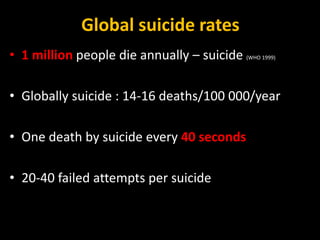
Global suicide rates
• 1 million people die annually – suicide (WHO 1999)
• Globally suicide : 14-16 deaths/100 000/year
• One death by suicide every 40 seconds
• 20-40 failed attempts per suicide
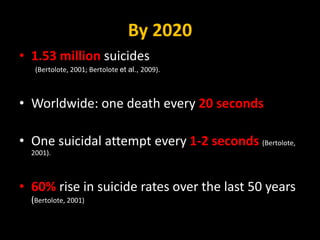
By 2020
• 1.53 million suicides
(Bertolote, 2001; Bertolote et al., 2009).
• Worldwide: one death every 20 seconds
• One suicidal attempt every 1-2 seconds (Bertolote,
2001).
• 60% rise in suicide rates over the last 50 years
(Bertolote, 2001)
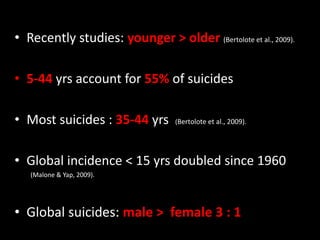
• Recently studies: younger > older (Bertolote et al., 2009).
• 5-44 yrs account for 55% of suicides
• Most suicides : 35-44 yrs (Bertolote et al., 2009).
• Global incidence < 15 yrs doubled since 1960
(Malone & Yap, 2009).
• Global suicides: male > female 3 : 1
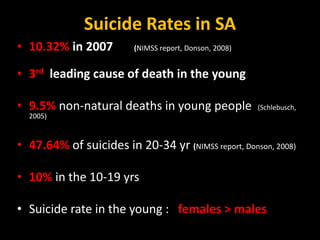
Suicide Rates in SA
• 10.32% in 2007 (NIMSS report, Donson, 2008)
• 3rd leading cause of death in the young
• 9.5% non-natural deaths in young people (Schlebusch,
2005)
• 47.64% of suicides in 20-34 yr (NIMSS report, Donson, 2008)
• 10% in the 10-19 yrs
• Suicide rate in the young : females > males
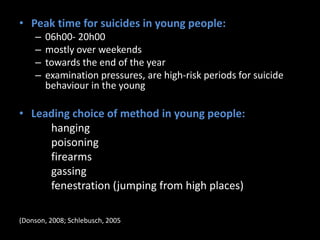
• Peak time for suicides in young people:
– 06h00- 20h00
– mostly over weekends
– towards the end of the year
– examination pressures, are high-risk periods for suicide
behaviour in the young
• Leading choice of method in young people:
hanging
poisoning
firearms
gassing
fenestration (jumping from high places)
(Donson, 2008; Schlebusch, 2005).
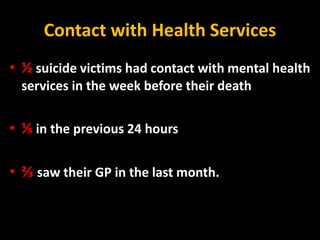
Contact with Health Services
• ½ suicide victims had contact with mental health
services in the week before their death
• ⅕ in the previous 24 hours
• ⅔ saw their GP in the last month.
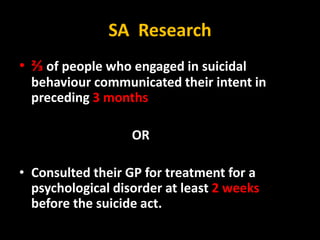
SA Research
• ⅔ of people who engaged in suicidal
behaviour communicated their intent in
preceding 3 months
OR
• Consulted their GP for treatment for a
psychological disorder at least 2 weeks
before the suicide act.
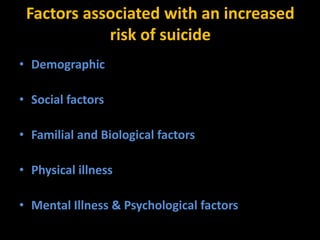
Factors associated with an increased
risk of suicide
• Demographic
• Social factors
• Familial and Biological factors
• Physical illness
• Mental Illness & Psychological factors
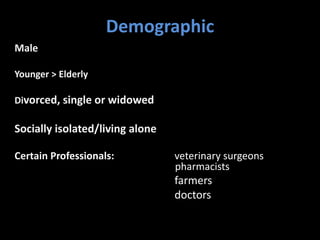
Demographic
Male
Younger > Elderly
Divorced, single or widowed
Socially isolated/living alone
Certain Professionals: veterinary surgeons
pharmacists
farmers
doctors
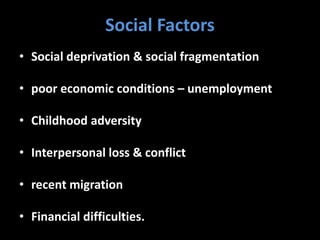
Social Factors
• Social deprivation & social fragmentation
• poor economic conditions – unemployment
• Childhood adversity
• Interpersonal loss & conflict
• recent migration
• Financial difficulties.
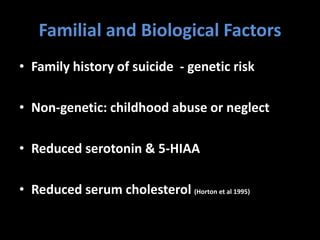
Familial and Biological Factors
• Family history of suicide - genetic risk
• Non-genetic: childhood abuse or neglect
• Reduced serotonin & 5-HIAA
• Reduced serum cholesterol (Horton et al 1995)
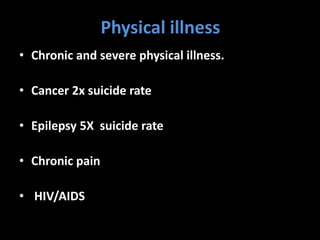
Physical illness
• Chronic and severe physical illness.
• Cancer 2x suicide rate
• Epilepsy 5X suicide rate
• Chronic pain
• HIV/AIDS
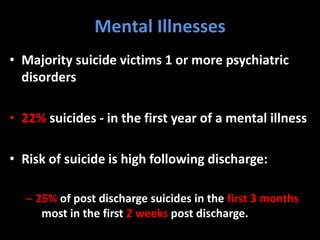
Mental Illnesses
• Majority suicide victims 1 or more psychiatric
disorders
• 22% suicides - in the first year of a mental illness
• Risk of suicide is high following discharge:
– 25% of post discharge suicides in the first 3 months
most in the first 2 weeks post discharge.
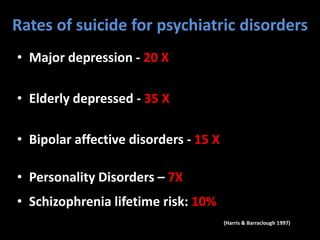
Rates of suicide for psychiatric disorders
• Major depression - 20 X
• Elderly depressed - 35 X
• Bipolar affective disorders - 15 X
• Personality Disorders – 7X
• Schizophrenia lifetime risk: 10%
(Harris & Barraclough 1997)
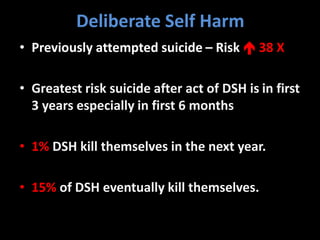
Deliberate Self Harm
• Previously attempted suicide – Risk  38 X
• Greatest risk suicide after act of DSH is in first
3 years especially in first 6 months
• 1% DSH kill themselves in the next year.
• 15% of DSH eventually kill themselves.
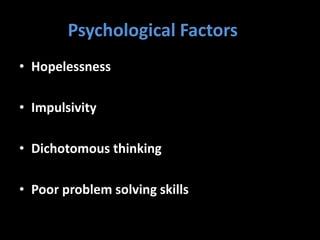
Psychological Factors P
• Hopelessness
• Impulsivity
• Dichotomous thinking
• Poor problem solving skills
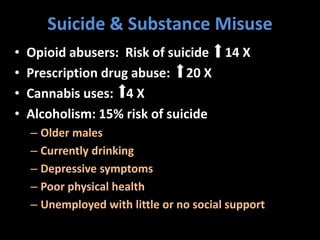
Suicide & Substance Misuse
• Opioid abusers: Risk of suicide 14 X
• Prescription drug abuse: 20 X
• Cannabis uses: 4 X
• Alcoholism: 15% risk of suicide
– Older males
– Currently drinking
– Depressive symptoms
– Poor physical health
– Unemployed with little or no social support
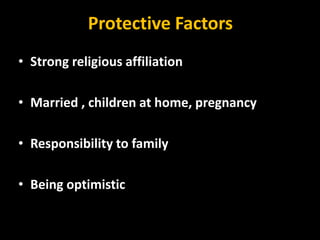
Protective Factors
• Strong religious affiliation
• Married , children at home, pregnancy
• Responsibility to family
• Being optimistic
• Fear of suicide
• Fear of social disapproval
• Moral objection to suicide
• Coping beliefs & positive coping skills
• Good social support
Predicting Suicides
• We cannot predict who will commit suicide.
• Determine individual’s overall level of risk by:
– identify the risk factors for suicide
– the protective factors
– likelihood of attempting suicide in the near future.
• Devise a treatment plan
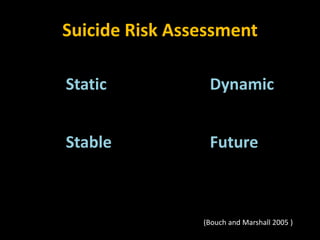
Suicide Risk Assessment
Static Dynamic
Stable Future
(Bouch and Marshall 2005 )
• Static factors
– Fixed
– Historical and demographic risk factors
e.g. previous history of suicide attempts
family history of suicide
male
• Stable risk factors:
– may endure for many years
e.g. personality disorders
• (Bouch and Marshall 2005)
Dynamic risk factors
– present at particular times
– influenced by internal and external factors
– fluctuate in duration and intensity
e.g. Compliance ; hopelessness and suicidal ideation
Future risk factors
– could be anticipated
– arise from a change in circumstances
e.g. Gaining access to a preferred method of suicide
future contact with services
future response to treatment
future exposure to stress.
Management of a Suicidal Patient
Do not do the following:
Management of a suicidal patient
• Ensure patient is safe and medically fit
• Interview: tactful and sensitive
• Establish a rappore
• Gain the patient’s trust
• Collateral information
• Review previous records
• Previous psychiatric Hx & Hx DSH
• Physical examination and Investigations
• Physical health: - chronic painful conditions
What to focus on in the interview
• Triggers & motives for suicide (psycho-social stressors)
• DSH - impulsive or planned
– What were the thoughts prior, during and after the act
– patient’s belief about the lethality of the method used.
• Current mental state
– symptoms of mental illness
– hopelessness & helplessness
– Psychosis e.g: command hallucinations
– current suicidal ideation, intent and plans.
– Homicidal intent.
A high degree of suicide intent
• The act was planned and prepared
• Precautions were taken not to be found
• A dangerous method was used
• Did not seek help after the act
• Left a will or suicide note or put affairs in order.
Increased risk is also associated with:
• Recentcy of the previous attempt
• >1 previous attempt
• Marked hopelessness
• Social isolation
• Alcohol or drug dependency
• Hx psychiatric illness - depression or schizophrenia
Highest risk of suicide occurs
• The presence of suicidal thoughts
• The means to commit suicide
• The opportunity.
Short Term Management
• Risk assessment  management plan.
• Ensure the patient’s safety & alleviate distress
• The risk can be reduced by:
– removing the means
– reducing the opportunity
– treating any associated illnesses
• If the patient is high risk  admit to
hospital.
• If patient refuses  admit as an involuntary
patient under the Mental Health Care Act.
Outpatient Treatment
patient is less risky
good social support
Carers can provide the appropriate level of supervision
They can obtain help in case of an emergency
• Seen frequently - first follow up within the first week
• Regular reviews of the suicidal risk and mental state.
• Prescribing medication: fewer side effects
less dangerous in an overdose
smaller quantities
Instilling Hope
• Identify positive reasons for remaining alive
• Guide the patient to a more positive view of
the future
Conclusion
• Suicide is a significant public health problem
• Risk factors are multifactorial & multidimensional
• High index of suspicion
• Early recognition is important to prevent suicides
Dr I. Hoosen
Rondebosch Medical Centre -
First floor
Summit Sessional Rooms
Office : 021 6852635
Cell: 0745336845
Email: hoosen100@gmail.com

Suicide

  • 1.
  • 3.
    Introduction • Suicidal behaviouris a complex phenomenon across all age groups • Aetiology is multifactorial and multidimensional
  • 4.
    Global suicide rates •1 million people die annually – suicide (WHO 1999) • Globally suicide : 14-16 deaths/100 000/year • One death by suicide every 40 seconds • 20-40 failed attempts per suicide
  • 5.
    By 2020 • 1.53million suicides (Bertolote, 2001; Bertolote et al., 2009). • Worldwide: one death every 20 seconds • One suicidal attempt every 1-2 seconds (Bertolote, 2001). • 60% rise in suicide rates over the last 50 years (Bertolote, 2001)
  • 6.
    • Recently studies:younger > older (Bertolote et al., 2009). • 5-44 yrs account for 55% of suicides • Most suicides : 35-44 yrs (Bertolote et al., 2009). • Global incidence < 15 yrs doubled since 1960 (Malone & Yap, 2009). • Global suicides: male > female 3 : 1
  • 7.
    Suicide Rates inSA • 10.32% in 2007 (NIMSS report, Donson, 2008) • 3rd leading cause of death in the young • 9.5% non-natural deaths in young people (Schlebusch, 2005) • 47.64% of suicides in 20-34 yr (NIMSS report, Donson, 2008) • 10% in the 10-19 yrs • Suicide rate in the young : females > males
  • 8.
    • Peak timefor suicides in young people: – 06h00- 20h00 – mostly over weekends – towards the end of the year – examination pressures, are high-risk periods for suicide behaviour in the young • Leading choice of method in young people: hanging poisoning firearms gassing fenestration (jumping from high places) (Donson, 2008; Schlebusch, 2005).
  • 9.
    Contact with HealthServices • ½ suicide victims had contact with mental health services in the week before their death • ⅕ in the previous 24 hours • ⅔ saw their GP in the last month.
  • 10.
    SA Research • ⅔of people who engaged in suicidal behaviour communicated their intent in preceding 3 months OR • Consulted their GP for treatment for a psychological disorder at least 2 weeks before the suicide act.
  • 11.
    Factors associated withan increased risk of suicide • Demographic • Social factors • Familial and Biological factors • Physical illness • Mental Illness & Psychological factors
  • 12.
    Demographic Male Younger > Elderly Divorced,single or widowed Socially isolated/living alone Certain Professionals: veterinary surgeons pharmacists farmers doctors
  • 13.
    Social Factors • Socialdeprivation & social fragmentation • poor economic conditions – unemployment • Childhood adversity • Interpersonal loss & conflict • recent migration • Financial difficulties.
  • 14.
    Familial and BiologicalFactors • Family history of suicide - genetic risk • Non-genetic: childhood abuse or neglect • Reduced serotonin & 5-HIAA • Reduced serum cholesterol (Horton et al 1995)
  • 15.
    Physical illness • Chronicand severe physical illness. • Cancer 2x suicide rate • Epilepsy 5X suicide rate • Chronic pain • HIV/AIDS
  • 16.
    Mental Illnesses • Majoritysuicide victims 1 or more psychiatric disorders • 22% suicides - in the first year of a mental illness • Risk of suicide is high following discharge: – 25% of post discharge suicides in the first 3 months most in the first 2 weeks post discharge.
  • 17.
    Rates of suicidefor psychiatric disorders • Major depression - 20 X • Elderly depressed - 35 X • Bipolar affective disorders - 15 X • Personality Disorders – 7X • Schizophrenia lifetime risk: 10% (Harris & Barraclough 1997)
  • 18.
    Deliberate Self Harm •Previously attempted suicide – Risk  38 X • Greatest risk suicide after act of DSH is in first 3 years especially in first 6 months • 1% DSH kill themselves in the next year. • 15% of DSH eventually kill themselves.
  • 19.
    Psychological Factors P •Hopelessness • Impulsivity • Dichotomous thinking • Poor problem solving skills
  • 20.
    Suicide & SubstanceMisuse • Opioid abusers: Risk of suicide 14 X • Prescription drug abuse: 20 X • Cannabis uses: 4 X • Alcoholism: 15% risk of suicide – Older males – Currently drinking – Depressive symptoms – Poor physical health – Unemployed with little or no social support
  • 21.
    Protective Factors • Strongreligious affiliation • Married , children at home, pregnancy • Responsibility to family • Being optimistic
  • 22.
    • Fear ofsuicide • Fear of social disapproval • Moral objection to suicide • Coping beliefs & positive coping skills • Good social support
  • 23.
    Predicting Suicides • Wecannot predict who will commit suicide. • Determine individual’s overall level of risk by: – identify the risk factors for suicide – the protective factors – likelihood of attempting suicide in the near future. • Devise a treatment plan
  • 24.
    Suicide Risk Assessment StaticDynamic Stable Future (Bouch and Marshall 2005 )
  • 25.
    • Static factors –Fixed – Historical and demographic risk factors e.g. previous history of suicide attempts family history of suicide male • Stable risk factors: – may endure for many years e.g. personality disorders • (Bouch and Marshall 2005)
  • 26.
    Dynamic risk factors –present at particular times – influenced by internal and external factors – fluctuate in duration and intensity e.g. Compliance ; hopelessness and suicidal ideation Future risk factors – could be anticipated – arise from a change in circumstances e.g. Gaining access to a preferred method of suicide future contact with services future response to treatment future exposure to stress.
  • 27.
    Management of aSuicidal Patient Do not do the following:
  • 28.
    Management of asuicidal patient • Ensure patient is safe and medically fit • Interview: tactful and sensitive • Establish a rappore • Gain the patient’s trust
  • 29.
    • Collateral information •Review previous records • Previous psychiatric Hx & Hx DSH • Physical examination and Investigations • Physical health: - chronic painful conditions
  • 30.
    What to focuson in the interview • Triggers & motives for suicide (psycho-social stressors) • DSH - impulsive or planned – What were the thoughts prior, during and after the act – patient’s belief about the lethality of the method used. • Current mental state – symptoms of mental illness – hopelessness & helplessness – Psychosis e.g: command hallucinations – current suicidal ideation, intent and plans. – Homicidal intent.
  • 31.
    A high degreeof suicide intent • The act was planned and prepared • Precautions were taken not to be found • A dangerous method was used • Did not seek help after the act • Left a will or suicide note or put affairs in order.
  • 32.
    Increased risk isalso associated with: • Recentcy of the previous attempt • >1 previous attempt • Marked hopelessness • Social isolation • Alcohol or drug dependency • Hx psychiatric illness - depression or schizophrenia
  • 33.
    Highest risk ofsuicide occurs • The presence of suicidal thoughts • The means to commit suicide • The opportunity.
  • 34.
    Short Term Management •Risk assessment  management plan. • Ensure the patient’s safety & alleviate distress • The risk can be reduced by: – removing the means – reducing the opportunity – treating any associated illnesses
  • 35.
    • If thepatient is high risk  admit to hospital. • If patient refuses  admit as an involuntary patient under the Mental Health Care Act.
  • 36.
    Outpatient Treatment patient isless risky good social support Carers can provide the appropriate level of supervision They can obtain help in case of an emergency • Seen frequently - first follow up within the first week • Regular reviews of the suicidal risk and mental state. • Prescribing medication: fewer side effects less dangerous in an overdose smaller quantities
  • 37.
    Instilling Hope • Identifypositive reasons for remaining alive • Guide the patient to a more positive view of the future
  • 38.
    Conclusion • Suicide isa significant public health problem • Risk factors are multifactorial & multidimensional • High index of suspicion • Early recognition is important to prevent suicides
  • 39.
    Dr I. Hoosen RondeboschMedical Centre - First floor Summit Sessional Rooms Office : 021 6852635 Cell: 0745336845 Email: hoosen100@gmail.com