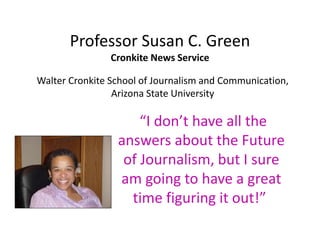
Professor Susan C. Green
Cronkite News Service
“I don’t have all the
answers about the Future
of Journalism, but I sure
am going to have a great
time figuring it out!”
Walter Cronkite School of Journalism and Communication,
Arizona State University
Philo T. Farnsworth, Father of Television
1906 - 1971
Change is inevitable,
suffering is optional.
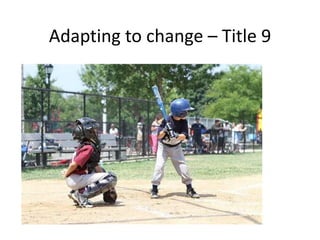
Adapting to change – Title 9
Students perspective
“It was while
making
newspaper
deliveries,
trying to miss
the bushes and
hit the porch,
that I first
learned the
importance of
accuracy in
journalism.”
- Charles Osgood
Principles of JOURNALISM
Word cloud by REPORTR.NET using 9 principles in journalism, Project for Excellence in Journalism
Linda
Ellerbee
• “We are heading in a lot of dangerous ways.
The Chinese character for danger is also for
opportunity, so it's not necessarily bad. It's
just that as journalists, I believe we have to
pay particular attention here.”
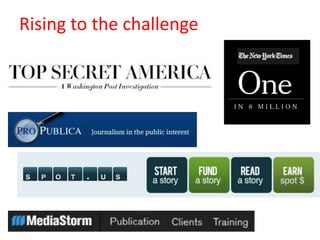
Rising to the challenge
MediaStorm.com
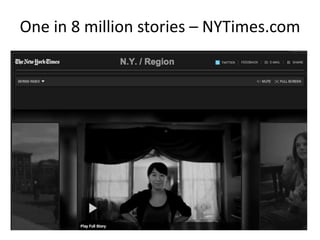
One in 8 million stories – NYTimes.com
Database of
doctors who
receive money
from drug
companies.
ProPublica is an independent,
non-profit newsroom that
produces investigative
journalism in the public interest.
Spot.Us is a nonprofit project to pioneer
“community powered reporting.” Through
Spot.Us, the public can commission and
participate with journalists to do reporting
on important and perhaps overlooked
topics.
It’s all about the
wrapping
Diane Sawyer on our future
Exciting times
“The students here today, I'm almost jealous of them.
They're getting to invent their own careers. I wish I were
their age and starting off because the opportunities now
to literally create something new or recreate something
of great value to society, to our communities and our
families, it's never been as open as it is now. Some of
them are going to invent the future and I can't wait to see
what they do.”
Dan Gillmor, Director, Knight Center for Digital Media
Entrepreneurship, ASU, April 29, 2009 indyweek.com
The Future of Journalism

The Future of Journalism

  • 1.
    Professor Susan C.Green Cronkite News Service “I don’t have all the answers about the Future of Journalism, but I sure am going to have a great time figuring it out!” Walter Cronkite School of Journalism and Communication, Arizona State University
  • 2.
    Philo T. Farnsworth,Father of Television 1906 - 1971
  • 3.
  • 4.
    Adapting to change– Title 9
  • 5.
  • 6.
    “It was while making newspaper deliveries, tryingto miss the bushes and hit the porch, that I first learned the importance of accuracy in journalism.” - Charles Osgood
  • 7.
    Principles of JOURNALISM Wordcloud by REPORTR.NET using 9 principles in journalism, Project for Excellence in Journalism
  • 8.
    Linda Ellerbee • “We areheading in a lot of dangerous ways. The Chinese character for danger is also for opportunity, so it's not necessarily bad. It's just that as journalists, I believe we have to pay particular attention here.”
  • 9.
    Rising to thechallenge
  • 10.
  • 11.
    One in 8million stories – NYTimes.com
  • 13.
    Database of doctors who receivemoney from drug companies. ProPublica is an independent, non-profit newsroom that produces investigative journalism in the public interest.
  • 14.
    Spot.Us is anonprofit project to pioneer “community powered reporting.” Through Spot.Us, the public can commission and participate with journalists to do reporting on important and perhaps overlooked topics.
  • 15.
    It’s all aboutthe wrapping
  • 16.
    Diane Sawyer onour future
  • 17.
    Exciting times “The studentshere today, I'm almost jealous of them. They're getting to invent their own careers. I wish I were their age and starting off because the opportunities now to literally create something new or recreate something of great value to society, to our communities and our families, it's never been as open as it is now. Some of them are going to invent the future and I can't wait to see what they do.” Dan Gillmor, Director, Knight Center for Digital Media Entrepreneurship, ASU, April 29, 2009 indyweek.com

Editor's Notes

  • #3 It is more accurate to say that at the age of 14, he dreamed of using a lens to direct light into a glass camera tube, where it could be analyzed in a magnetically deflected beam of electrons, dissected and transmitted one line at a time in a continuous stream. In 1927, at the age of 21, he produced the first television transmission.
  • #4 Embracing change. Students