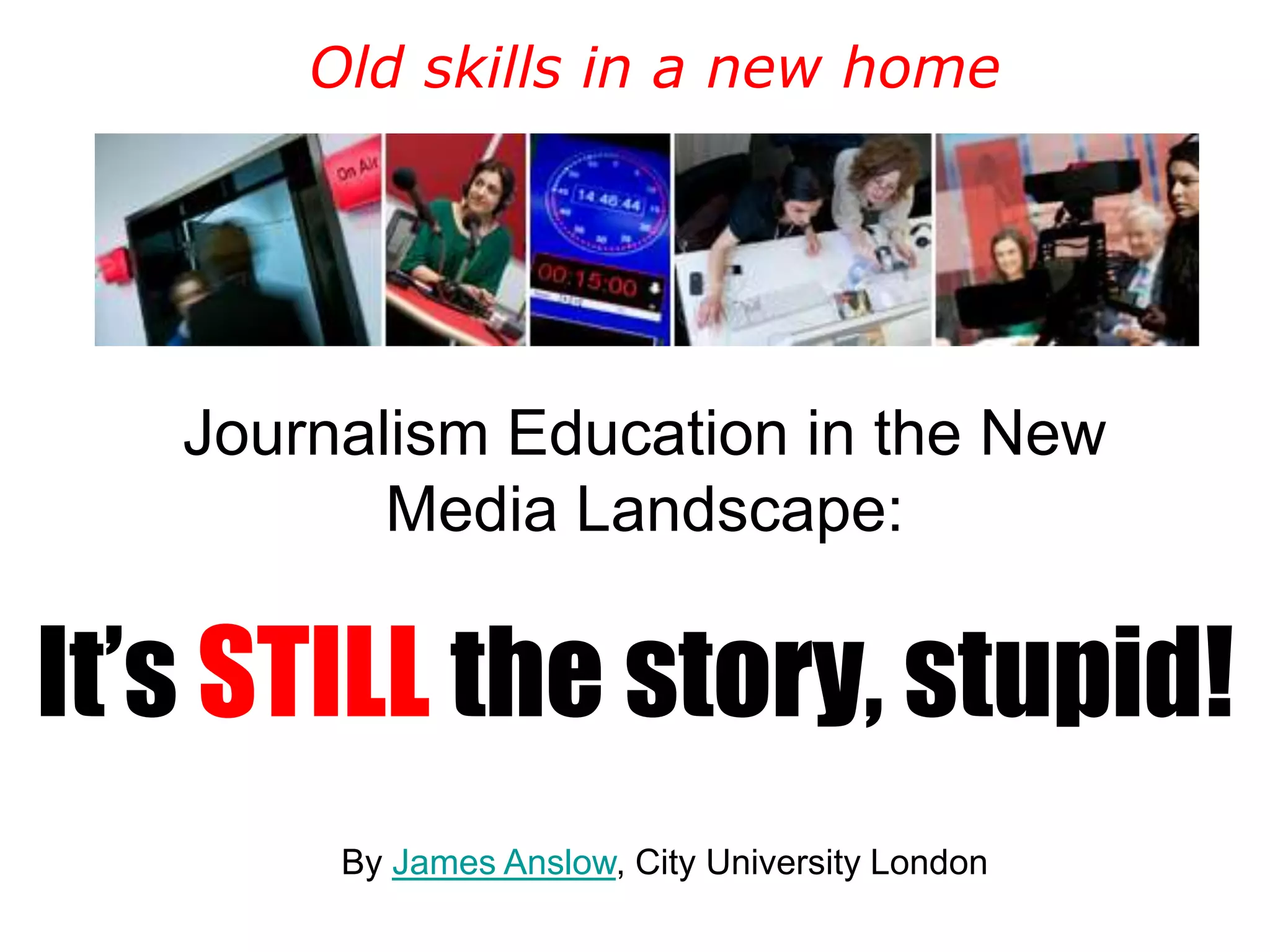
Old skills in a new home


   Journalism Education in the New
          Media Landscape:

It’s STILL the story, stupid!
        By James Anslow, City University London
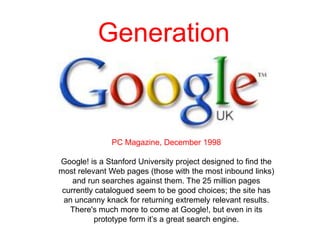
Generation


               PC Magazine, December 1998

Google! is a Stanford University project designed to find the
most relevant Web pages (those with the most inbound links)
    and run searches against them. The 25 million pages
 currently catalogued seem to be good choices; the site has
 an uncanny knack for returning extremely relevant results.
   There's much more to come at Google!, but even in its
          prototype form it’s a great search engine.
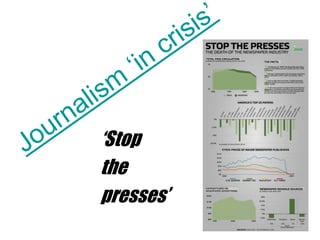
‘Stop
the
presses’
Replacing newspapers

So we don’t need another different kind of
institution…We need a class of institutions or
models, whether they’re endowments or crowdsourced
or what have you…There will not be anything that
replaces newspapers, because if you could write the list
of stuff you needed and organizational characteristics
and it looked like newspapers, newspapers would be
able to fill that role, right? It is really a shift from one
class of institutions to the ecosystem as a whole.

                               Clay Shirky 2009
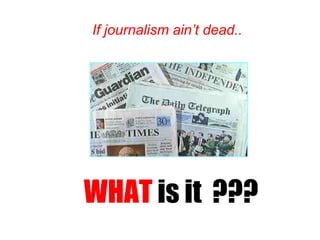
If journalism ain’t dead..


WHAT is it ???
Bloggers like Guido Fawkes
Showbiz blogs like TMZ
Start-ups like Daily Beast
And the must-read Huffington Post
DIY UK hyperlocals like SE1
Edgy news like The Latest
Big-business hyperlocals
Local papers
Nationals
Internationals
So what   SHOULD we teach?


  Ask the family!
10 Rules of New Journalism
•   THERE ARE NO RULES: Or if there are, nobody knows them yet. And if they think they do, it’s too
    late..they’ve changed. We’re all feeling our way and it’s best to be honest about it. But there are useful
    guidelines.

•   TINA: There Is No Alternative. But one size doesn’t fit all. There are many models.

•   MOBILE not static. iPhones not laptops. Journalists have always understood updating.

•   LINK IT! Add hyperlinking to your newswriting habit.

•   COME-ON! That’s what print journalists used to call the conversation with their readers. Now it’s centre stage.

•   LO-TEC not hi-tec. Flips not film cameras, YouTube not DVDs, WordPress not code. Don’t be a slave to
    software. Use what you have, what works. Self publish. Do It Yourself. No one without a public blog can
    convincingly claim to be an active journalist.

•   MEDIUM CARE: Choose the right one. Cross platform not multimedia

•   OLD SKOOL RULES: It’s still the story stupid. And the consumer reads the WORDS. But now they are aided
    by sound and vision when appropriate. But it’s NOT broadcast journalism..and web text takes twice as long to
    read as print. So keep your chunks bite-sized, intros tight, key words high..one thought, one sentence, one
    par..just like your grandaddy taught you.

•   WORLD WILD WEST it isn’t. The Law still applies. So do Ethics and Copyright.

•   KEEP UP! Stay on top of developments throughout new media. Keep your blog updated and your bookmarks
    fresh.
How   SHOULD we teach it?
 Show ’em how to tell the story
Words Images Video


•Procure
•Present
•Produce
Teaching tips

• Just DO it! Hands learn faster than heads
• Emphasise networking and CONTACTS
• News is people and people TALK. New quotes
  beat churnalism every time
• They MUST keep blogs and sites up to date
• Immerse the students in New Media landscape
• Keep module descriptions as unspecific as
  possible and ready for instant change
• Stay ahead of the game and maintain global
  academic and professional networks
Conclusion

Journalism is alive and
well and living
online…and in more
need of effective
teaching than ever

Googleprez1

  • 1.
    Old skills ina new home Journalism Education in the New Media Landscape: It’s STILL the story, stupid! By James Anslow, City University London
  • 2.
    Generation PC Magazine, December 1998 Google! is a Stanford University project designed to find the most relevant Web pages (those with the most inbound links) and run searches against them. The 25 million pages currently catalogued seem to be good choices; the site has an uncanny knack for returning extremely relevant results. There's much more to come at Google!, but even in its prototype form it’s a great search engine.
  • 3.
  • 4.
    Replacing newspapers So wedon’t need another different kind of institution…We need a class of institutions or models, whether they’re endowments or crowdsourced or what have you…There will not be anything that replaces newspapers, because if you could write the list of stuff you needed and organizational characteristics and it looked like newspapers, newspapers would be able to fill that role, right? It is really a shift from one class of institutions to the ecosystem as a whole. Clay Shirky 2009
  • 5.
    If journalism ain’tdead.. WHAT is it ???
  • 6.
    Bloggers like GuidoFawkes Showbiz blogs like TMZ Start-ups like Daily Beast And the must-read Huffington Post DIY UK hyperlocals like SE1 Edgy news like The Latest Big-business hyperlocals Local papers Nationals Internationals
  • 7.
    So what SHOULD we teach? Ask the family!
  • 8.
    10 Rules ofNew Journalism • THERE ARE NO RULES: Or if there are, nobody knows them yet. And if they think they do, it’s too late..they’ve changed. We’re all feeling our way and it’s best to be honest about it. But there are useful guidelines. • TINA: There Is No Alternative. But one size doesn’t fit all. There are many models. • MOBILE not static. iPhones not laptops. Journalists have always understood updating. • LINK IT! Add hyperlinking to your newswriting habit. • COME-ON! That’s what print journalists used to call the conversation with their readers. Now it’s centre stage. • LO-TEC not hi-tec. Flips not film cameras, YouTube not DVDs, WordPress not code. Don’t be a slave to software. Use what you have, what works. Self publish. Do It Yourself. No one without a public blog can convincingly claim to be an active journalist. • MEDIUM CARE: Choose the right one. Cross platform not multimedia • OLD SKOOL RULES: It’s still the story stupid. And the consumer reads the WORDS. But now they are aided by sound and vision when appropriate. But it’s NOT broadcast journalism..and web text takes twice as long to read as print. So keep your chunks bite-sized, intros tight, key words high..one thought, one sentence, one par..just like your grandaddy taught you. • WORLD WILD WEST it isn’t. The Law still applies. So do Ethics and Copyright. • KEEP UP! Stay on top of developments throughout new media. Keep your blog updated and your bookmarks fresh.
  • 9.
    How SHOULD we teach it? Show ’em how to tell the story
  • 10.
  • 11.
    Teaching tips • JustDO it! Hands learn faster than heads • Emphasise networking and CONTACTS • News is people and people TALK. New quotes beat churnalism every time • They MUST keep blogs and sites up to date • Immerse the students in New Media landscape • Keep module descriptions as unspecific as possible and ready for instant change • Stay ahead of the game and maintain global academic and professional networks
  • 12.
    Conclusion Journalism is aliveand well and living online…and in more need of effective teaching than ever