Submarines
BY
N.ASHOK VARDHAN RAJU
14C51A0355
What is SUBMARINE
 A submarine is a watercraft capable of independent operation underwater,
usually built for warfare and armed with torpedoes or guided missiles. The
term most commonly refers to a large, crewed vessel
 Unlike a ship, a submarine can control its buoyancy, thus allowing it to sink
and surface at will.
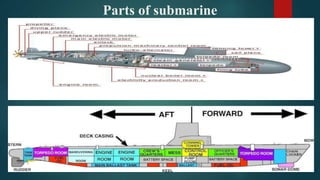
Parts of submarine
Pressure hull
 Has inner and outer hulls
 Ballast tanks are in between two hulls
 Withstand high pressure
 Shock loads
 Longitudinal compressive stresses
 Made from tough steel or titanium
Ballast tanks
 There control buoyancy
 When Diving they are filled with water and air in it is
vented
 When submerging Compressed air is filled into tank and
air is flooded out
 To keep the submarine at any desired depth Equal
proportions of water and air is maintained in the tank
Operations
Diving
Surfacing
Steering
Diving
 As the submarine dives, the ballast tanks
are flooded with water and the air in the
ballast tanks is vented from the submarine
until its overall density is greater than the
surrounding water and the submarine
begins to sink (negative buoyancy).
 In addition, the submarine has movable
sets of short "wings" called hydroplanes on
the stern (back) that help to control the
angle of the dive.
Surfacing
 When the submarine is on the surface, the ballast tanks
are filled with air and the submarine's overall density is
less than that of the surrounding water (positive
buoyancy)
 A supply of compressed air is maintained aboard the
submarine in air flasks for life support and for use with
the ballast tanks.
 To keep the submarine level at any set depth, the
submarine maintains a balance of air and water in the
trim tanks so that its overall density is equal to the
surrounding water (neutral buoyancy).
Steering
 The submarine can steer in the water by using the tail rudder to turn
starboard (right) or port (left) and the hydroplanes to control the fore-
aft angle of the submarine.
 In addition, some submarines are equipped with a retractable
secondary propulsion motor that can swivel 360 degrees.
Propulsion systems
 Diesel – electric engines
 Nuclear Reactors
Diesel – electric engines
 The diesel engine operates normally when the sub is near the surface but it doesn't drive the
sub's propellers directly. Instead, it powers an electricity generator that charges up huge
batteries.
 These drive an electric motor that, in turn, powers the propellers. Once the diesel engine has
fully charged the batteries, the sub can switch off its engine and go underwater, where it
relies entirely on battery power.
 Early military submarines used breathing tubes called snorkels to feed air to their engines
from the air above the sea, but that meant they had to operate very near the surface where
they were vulnerable to attack from airplanes.
Nuclear engines
 Most large military submarines are now nuclear-powered.
 Like nuclear power plants, they have small nuclear reactors and, since they need no air to
operate.
 they can generate power to drive the electric motors and propellers whether they are on the
surface or deep underwater.
Nuclear propulsion system
Life Support systems
 Maintaining the air quality
 Maintaining a fresh water supply
 Maintaining temperature
Maintaining the Air Quality
 The air we breathe is made up of four gases: nitrogen, oxygen, argon,
and carbon dioxide.
 Oxygen is produced by electrolysis.
 Machines called scrubbers use soda lime to trap carbon dioxide.
 Dehumidifiers remove the moisture from exhaled air.
Most ships have special equipment that can remove the salts from seawater to turn
it into fresh drinking water. This process is called Distillation.
Some submarines can produce up to 40,000 gallons of fresh water per day.
It is used for everything from cooling electronic equipment to cooking and
showering
MANTAINING OF FRESH WATER SUPPLY
Maintaining Temperature
 The metal of the submarine conducts internal heat to the surrounding water.
So, submarines must be Electrically heated to maintain a comfortable
temperature for the crew.
 The electrical power for the heaters comes from the nuclear reactor, diesel
engine, or batteries (emergency).
Navigation
 Submarines are equipped with navigational charts and sophisticated
navigational equipment.
 When on the surface, a sophisticated global positioning system (GPS)
accurately determines latitude and longitude, but this system cannot work
when the submarine is submerged.
 Underwater, the submarine uses inertial guidance systems (electric,
mechanical) that keep track of the ship's motion from a fixed starting point
by using gyroscopes.
Periscope
 Seeing tubes that can be pushed up through the Tower.
 Useful when the submarine is near the surface or on the surface.
 Useless under water.
Sonar
 To locate a target, a submarine uses active and passive SONAR (Sound
Navigation And Ranging).
 Two types
 Active sonar
 Passive sonar
Torpedo
 The modern torpedo is a self-propelled weapon with
an explosive warhead, launched above or below the
water surface, propelled underwater towards a target,
and designed to detonate either on contact with its
target or in proximity to it.
Submarines

Submarines

  • 1.
  • 2.
    What is SUBMARINE A submarine is a watercraft capable of independent operation underwater, usually built for warfare and armed with torpedoes or guided missiles. The term most commonly refers to a large, crewed vessel  Unlike a ship, a submarine can control its buoyancy, thus allowing it to sink and surface at will.
  • 3.
  • 4.
    Pressure hull  Hasinner and outer hulls  Ballast tanks are in between two hulls  Withstand high pressure  Shock loads  Longitudinal compressive stresses  Made from tough steel or titanium
  • 5.
    Ballast tanks  Therecontrol buoyancy  When Diving they are filled with water and air in it is vented  When submerging Compressed air is filled into tank and air is flooded out  To keep the submarine at any desired depth Equal proportions of water and air is maintained in the tank
  • 6.
  • 7.
    Diving  As thesubmarine dives, the ballast tanks are flooded with water and the air in the ballast tanks is vented from the submarine until its overall density is greater than the surrounding water and the submarine begins to sink (negative buoyancy).  In addition, the submarine has movable sets of short "wings" called hydroplanes on the stern (back) that help to control the angle of the dive.
  • 8.
    Surfacing  When thesubmarine is on the surface, the ballast tanks are filled with air and the submarine's overall density is less than that of the surrounding water (positive buoyancy)  A supply of compressed air is maintained aboard the submarine in air flasks for life support and for use with the ballast tanks.  To keep the submarine level at any set depth, the submarine maintains a balance of air and water in the trim tanks so that its overall density is equal to the surrounding water (neutral buoyancy).
  • 9.
    Steering  The submarinecan steer in the water by using the tail rudder to turn starboard (right) or port (left) and the hydroplanes to control the fore- aft angle of the submarine.  In addition, some submarines are equipped with a retractable secondary propulsion motor that can swivel 360 degrees.
  • 10.
    Propulsion systems  Diesel– electric engines  Nuclear Reactors
  • 11.
    Diesel – electricengines  The diesel engine operates normally when the sub is near the surface but it doesn't drive the sub's propellers directly. Instead, it powers an electricity generator that charges up huge batteries.  These drive an electric motor that, in turn, powers the propellers. Once the diesel engine has fully charged the batteries, the sub can switch off its engine and go underwater, where it relies entirely on battery power.  Early military submarines used breathing tubes called snorkels to feed air to their engines from the air above the sea, but that meant they had to operate very near the surface where they were vulnerable to attack from airplanes.
  • 12.
    Nuclear engines  Mostlarge military submarines are now nuclear-powered.  Like nuclear power plants, they have small nuclear reactors and, since they need no air to operate.  they can generate power to drive the electric motors and propellers whether they are on the surface or deep underwater.
  • 13.
  • 14.
    Life Support systems Maintaining the air quality  Maintaining a fresh water supply  Maintaining temperature
  • 15.
    Maintaining the AirQuality  The air we breathe is made up of four gases: nitrogen, oxygen, argon, and carbon dioxide.  Oxygen is produced by electrolysis.  Machines called scrubbers use soda lime to trap carbon dioxide.  Dehumidifiers remove the moisture from exhaled air.
  • 16.
    Most ships havespecial equipment that can remove the salts from seawater to turn it into fresh drinking water. This process is called Distillation. Some submarines can produce up to 40,000 gallons of fresh water per day. It is used for everything from cooling electronic equipment to cooking and showering MANTAINING OF FRESH WATER SUPPLY
  • 17.
    Maintaining Temperature  Themetal of the submarine conducts internal heat to the surrounding water. So, submarines must be Electrically heated to maintain a comfortable temperature for the crew.  The electrical power for the heaters comes from the nuclear reactor, diesel engine, or batteries (emergency).
  • 18.
    Navigation  Submarines areequipped with navigational charts and sophisticated navigational equipment.  When on the surface, a sophisticated global positioning system (GPS) accurately determines latitude and longitude, but this system cannot work when the submarine is submerged.  Underwater, the submarine uses inertial guidance systems (electric, mechanical) that keep track of the ship's motion from a fixed starting point by using gyroscopes.
  • 19.
    Periscope  Seeing tubesthat can be pushed up through the Tower.  Useful when the submarine is near the surface or on the surface.  Useless under water.
  • 20.
    Sonar  To locatea target, a submarine uses active and passive SONAR (Sound Navigation And Ranging).  Two types  Active sonar  Passive sonar
  • 21.
    Torpedo  The moderntorpedo is a self-propelled weapon with an explosive warhead, launched above or below the water surface, propelled underwater towards a target, and designed to detonate either on contact with its target or in proximity to it.

Editor's Notes