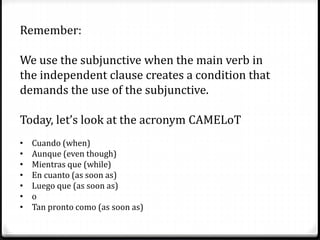
Remember:
We use the subjunctive when the main verb in
the independent clause creates a condition that
demands the use of the subjunctive.
Today, let’s look at the acronym CAMELoT
• Cuando (when)
• Aunque (even though)
• Mientras que (while)
• En cuanto (as soon as)
• Luego que (as soon as)
• o
• Tan pronto como (as soon as)
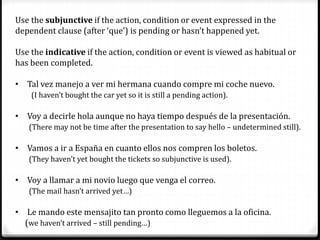
Use the subjunctive if the action, condition or event expressed in the
dependent clause (after ‘que’) is pending or hasn’t happened yet.
Use the indicative if the action, condition or event is viewed as habitual or
has been completed.
• Tal vez manejo a ver mi hermana cuando compre mi coche nuevo.
(I haven’t bought the car yet so it is still a pending action).
• Voy a decirle hola aunque no haya tiempo después de la presentación.
(There may not be time after the presentation to say hello – undetermined still).
• Vamos a ir a España en cuanto ellos nos compren los boletos.
(They haven’t yet bought the tickets so subjunctive is used).
• Voy a llamar a mi novio luego que venga el correo.
(The mail hasn’t arrived yet…)
• Le mando este mensajito tan pronto como lleguemos a la oficina.
(we haven’t arrived – still pending…)

Subjunctive adverb clauses camelot

  • 2.
    Remember: We use thesubjunctive when the main verb in the independent clause creates a condition that demands the use of the subjunctive. Today, let’s look at the acronym CAMELoT • Cuando (when) • Aunque (even though) • Mientras que (while) • En cuanto (as soon as) • Luego que (as soon as) • o • Tan pronto como (as soon as)
  • 3.
    Use the subjunctiveif the action, condition or event expressed in the dependent clause (after ‘que’) is pending or hasn’t happened yet. Use the indicative if the action, condition or event is viewed as habitual or has been completed. • Tal vez manejo a ver mi hermana cuando compre mi coche nuevo. (I haven’t bought the car yet so it is still a pending action). • Voy a decirle hola aunque no haya tiempo después de la presentación. (There may not be time after the presentation to say hello – undetermined still). • Vamos a ir a España en cuanto ellos nos compren los boletos. (They haven’t yet bought the tickets so subjunctive is used). • Voy a llamar a mi novio luego que venga el correo. (The mail hasn’t arrived yet…) • Le mando este mensajito tan pronto como lleguemos a la oficina. (we haven’t arrived – still pending…)