Subject Content Knowledge for Teachers
•Presented by: Mudassar Ahmed
•CPD Training Presentation
•Date: 31-07-2024
Mail: mudassarahmed854@gmail.com
Photo by Leonardo Toshiro Okubo on Unsplash
Objectives
•Understand the importance of subject content
knowledge in teaching effectiveness
•Identify strategies to enhance subject
knowledge
•Explore resources and tools for continuous
learning
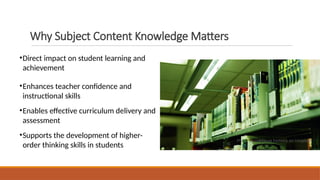
Why Subject Content Knowledge Matters
•Direct impact on student learning and
achievement
•Enhances teacher confidence and
instructional skills
•Enables effective curriculum delivery and
assessment
•Supports the development of higher-
order thinking skills in students
Photo by Henrique Ferreira on Unsplash
Student Outcomes
•Increased student engagement
•Higher academic performance
•Improved critical thinking and
problem-solving skills
Challenges in Maintaining Content Knowledge
•Rapid changes in curriculum and
educational standards
•Teachers Shortage
•Limited access to quality professional
development resources
•Balancing teaching responsibilities with
personal learning
Photo by Digitawise Agency on Unsplash
Identifying Knowledge Gaps
•Conduct self-assessments and peer
evaluations
•Use student performance data to
identify areas of weakness
•Seek feedback from colleagues and
students
•Stay updated with changes in the
subject field
Photo by Mari Helin on Unsplash
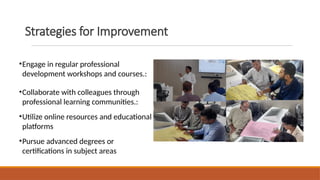
Strategies for Improvement
•Engage in regular professional
development workshops and courses.:
•Collaborate with colleagues through
professional learning communities.:
•Utilize online resources and educational
platforms
•Pursue advanced degrees or
certifications in subject areas
Technology as a Tool for Growth
•Online courses and webinars
•Educational apps and software
•Virtual reality and simulations for
immersive learning experiences
•Social media networks
Photo by Animesh Bhattarai on Unsplash
Online Resources
•Overview of reputable educational
websites
•Use of MOOCs for in-depth subject
learning
•Accessing free and paid resources
effectively
What are MOOCs?
Academic Journals
•Importance of staying current with
research
•How to access and read academic
papers
•Incorporating research findings into
teaching practices
Photo by Claudia Wolff on Unsplash
Advanced Degrees
•Benefits of pursuing higher education
•Balancing study with teaching
responsibilities
•Success stories from teachers who
pursued advanced degrees
Photo by Baim Hanif on Unsplash
Crafting Your Action Plan
•Assess current knowledge and identify
gaps
•Set specific, measurable goals for
improvement
•Identify resources and support needed
to achieve goals
•Monitor progress and adjust the plan as
needed
Photo by Adolfo Félix on Unsplash
Peer Review
Importance of Peer Feedback
•Reflective Practice: Identifies strengths
and areas for improvement.
•Collaborative Learning: Fosters mutual
support and shared expertise.
Peer Review (Cont..)
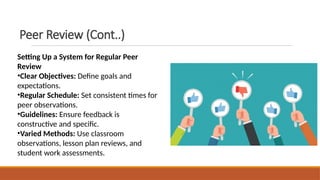
Setting Up a System for Regular Peer
Review
•Clear Objectives: Define goals and
expectations.
•Regular Schedule: Set consistent times for
peer observations.
•Guidelines: Ensure feedback is
constructive and specific.
•Varied Methods: Use classroom
observations, lesson plan reviews, and
student work assessments.
Peer Review (Cont..)
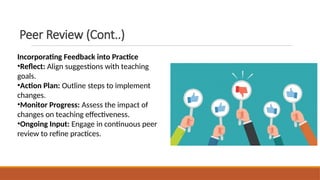
Incorporating Feedback into Practice
•Reflect: Align suggestions with teaching
goals.
•Action Plan: Outline steps to implement
changes.
•Monitor Progress: Assess the impact of
changes on teaching effectiveness.
•Ongoing Input: Engage in continuous peer
review to refine practices.
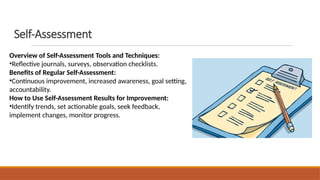
Self-Assessment
Overview of Self-Assessment Tools and Techniques:
•Reflective journals, surveys, observation checklists.
Benefits of Regular Self-Assessment:
•Continuous improvement, increased awareness, goal setting,
accountability.
How to Use Self-Assessment Results for Improvement:
•Identify trends, set actionable goals, seek feedback,
implement changes, monitor progress.
Reflective Practice
Importance of Reflection in Teaching:
•Enhances self-awareness and professional growth.

•Promotes continuous improvement.
Techniques for Reflective Practice:
•Keep a teaching journal.
•Peer observations.
•Self-assessment and feedback sessions.
Using Reflection to Drive Professional
Development:
•Set goals based on reflections.
•Develop action plans.
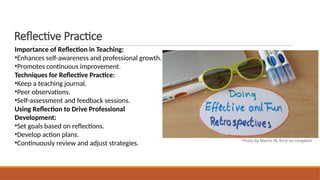
•Continuously review and adjust strategies. Photo by Martin W. Kirst on Unsplash
Thank You
19

Subject Content Knowledge Subject Content Knowledge

  • 1.
    Subject Content Knowledgefor Teachers •Presented by: Mudassar Ahmed •CPD Training Presentation •Date: 31-07-2024 Mail: mudassarahmed854@gmail.com Photo by Leonardo Toshiro Okubo on Unsplash
  • 2.
    Objectives •Understand the importanceof subject content knowledge in teaching effectiveness •Identify strategies to enhance subject knowledge •Explore resources and tools for continuous learning
  • 3.
    Why Subject ContentKnowledge Matters •Direct impact on student learning and achievement •Enhances teacher confidence and instructional skills •Enables effective curriculum delivery and assessment •Supports the development of higher- order thinking skills in students Photo by Henrique Ferreira on Unsplash
  • 4.
    Student Outcomes •Increased studentengagement •Higher academic performance •Improved critical thinking and problem-solving skills
  • 5.
    Challenges in MaintainingContent Knowledge •Rapid changes in curriculum and educational standards •Teachers Shortage •Limited access to quality professional development resources •Balancing teaching responsibilities with personal learning Photo by Digitawise Agency on Unsplash
  • 6.
    Identifying Knowledge Gaps •Conductself-assessments and peer evaluations •Use student performance data to identify areas of weakness •Seek feedback from colleagues and students •Stay updated with changes in the subject field Photo by Mari Helin on Unsplash
  • 7.
    Strategies for Improvement •Engagein regular professional development workshops and courses.: •Collaborate with colleagues through professional learning communities.: •Utilize online resources and educational platforms •Pursue advanced degrees or certifications in subject areas
  • 8.
    Technology as aTool for Growth •Online courses and webinars •Educational apps and software •Virtual reality and simulations for immersive learning experiences •Social media networks Photo by Animesh Bhattarai on Unsplash
  • 9.
    Online Resources •Overview ofreputable educational websites •Use of MOOCs for in-depth subject learning •Accessing free and paid resources effectively
  • 10.
  • 11.
    Academic Journals •Importance ofstaying current with research •How to access and read academic papers •Incorporating research findings into teaching practices Photo by Claudia Wolff on Unsplash
  • 12.
    Advanced Degrees •Benefits ofpursuing higher education •Balancing study with teaching responsibilities •Success stories from teachers who pursued advanced degrees Photo by Baim Hanif on Unsplash
  • 13.
    Crafting Your ActionPlan •Assess current knowledge and identify gaps •Set specific, measurable goals for improvement •Identify resources and support needed to achieve goals •Monitor progress and adjust the plan as needed Photo by Adolfo Félix on Unsplash
  • 14.
    Peer Review Importance ofPeer Feedback •Reflective Practice: Identifies strengths and areas for improvement. •Collaborative Learning: Fosters mutual support and shared expertise.
  • 15.
    Peer Review (Cont..) SettingUp a System for Regular Peer Review •Clear Objectives: Define goals and expectations. •Regular Schedule: Set consistent times for peer observations. •Guidelines: Ensure feedback is constructive and specific. •Varied Methods: Use classroom observations, lesson plan reviews, and student work assessments.
  • 16.
    Peer Review (Cont..) IncorporatingFeedback into Practice •Reflect: Align suggestions with teaching goals. •Action Plan: Outline steps to implement changes. •Monitor Progress: Assess the impact of changes on teaching effectiveness. •Ongoing Input: Engage in continuous peer review to refine practices.
  • 17.
    Self-Assessment Overview of Self-AssessmentTools and Techniques: •Reflective journals, surveys, observation checklists. Benefits of Regular Self-Assessment: •Continuous improvement, increased awareness, goal setting, accountability. How to Use Self-Assessment Results for Improvement: •Identify trends, set actionable goals, seek feedback, implement changes, monitor progress.
  • 18.
    Reflective Practice Importance ofReflection in Teaching: •Enhances self-awareness and professional growth. •Promotes continuous improvement. Techniques for Reflective Practice: •Keep a teaching journal. •Peer observations. •Self-assessment and feedback sessions. Using Reflection to Drive Professional Development: •Set goals based on reflections. •Develop action plans. •Continuously review and adjust strategies. Photo by Martin W. Kirst on Unsplash
  • 19.