 Guided by:- Prof. Chintan Shinde
 Topic:- STRESS MANAGAMENT
Name :- Jay Ghinaiya (21)
Parth Dankhara (22)
Kishan Tejani (23)
Sarthak Gujarati (25)
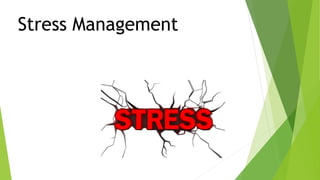
Stress Management
Stress Management
The source of stress can be triggered from:
 Environment; bad weather conditions, pollen,
traffic
 Social; work, school, friends, finances
 Physiological; body changes, inadequate sleep,
illness
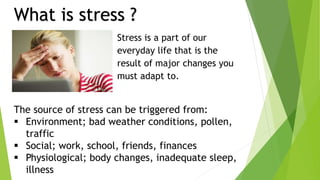
Stress is a part of our
everyday life that is the
result of major changes you
must adapt to.
What is stress ?
Reaction to stress
The normal physical reaction to stress when you feel
threatened or upset, triggers your fight response.
When you perceive a threat, your nervous system
responds by releasing a flood of stress hormones. These
hormones arouse the body for emergency action.
How do you respond to stress
Good Stress helps you stay focused, energetic, and
alert by helping you rise to meet challenges;
presentation at work or sharpens your
concentration when you’re attempting to complete
work projects.
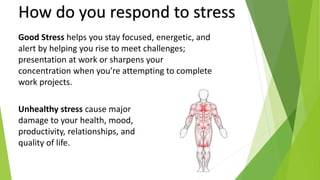
Unhealthy stress cause major
damage to your health, mood,
productivity, relationships, and
quality of life.
Causes
Stress Awareness
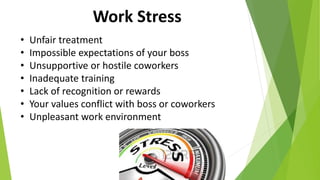
Work Stress
• Unfair treatment
• Impossible expectations of your boss
• Unsupportive or hostile coworkers
• Inadequate training
• Lack of recognition or rewards
• Your values conflict with boss or coworkers
• Unpleasant work environment
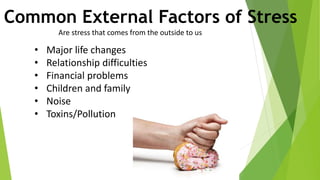
Common External Factors of Stress
• Major life changes
• Relationship difficulties
• Financial problems
• Children and family
• Noise
• Toxins/Pollution
Are stress that comes from the outside to us
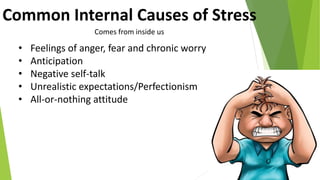
• Feelings of anger, fear and chronic worry
• Anticipation
• Negative self-talk
• Unrealistic expectations/Perfectionism
• All-or-nothing attitude
Common Internal Causes of Stress
Comes from inside us
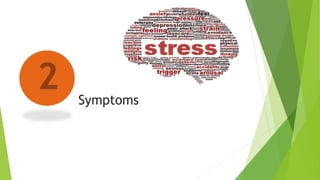
Symptoms
Emotional
•Moodiness
•Irritability or short temper
•Feeling overwhelmed
•Sense of loneliness and isolation
•Depression or general unhappiness
Physical
•Aches and pains
•Diarrhea or constipation
•Nausea, dizziness
•Chest pain, rapid
heartbeat
•Frequent colds
Behavioral
•Eating more or less
•Sleeping too much or too little
•Using alcohol, cigarettes, or drugs to relax
•Nervous habits
Tips to get free from stress
• Listen to music.
• Laugh it off.
• Drink tea.
• Be calm.
• Exercise yoga.
Conclusion
• Be pro-active and take charge.
• Tools and techniques available to handle
stress.
• Stress should be moderate.
• To avoid stress daily exercise is necessary.
• Keep your side aside from stress causing
environment.
Bibliography
• http://www.medicalnewstoday.com/articles/145855.php
• https://en.wikipedia.org/wiki/Stress(biology)
• https://books.google.co.in/books
Subject: Communication Skills. Topic-Stress.

Subject: Communication Skills. Topic-Stress.

  • 1.
     Guided by:-Prof. Chintan Shinde  Topic:- STRESS MANAGAMENT Name :- Jay Ghinaiya (21) Parth Dankhara (22) Kishan Tejani (23) Sarthak Gujarati (25)
  • 2.
  • 3.
    The source ofstress can be triggered from:  Environment; bad weather conditions, pollen, traffic  Social; work, school, friends, finances  Physiological; body changes, inadequate sleep, illness Stress is a part of our everyday life that is the result of major changes you must adapt to. What is stress ?
  • 4.
    Reaction to stress Thenormal physical reaction to stress when you feel threatened or upset, triggers your fight response. When you perceive a threat, your nervous system responds by releasing a flood of stress hormones. These hormones arouse the body for emergency action.
  • 5.
    How do yourespond to stress Good Stress helps you stay focused, energetic, and alert by helping you rise to meet challenges; presentation at work or sharpens your concentration when you’re attempting to complete work projects. Unhealthy stress cause major damage to your health, mood, productivity, relationships, and quality of life.
  • 6.
  • 7.
    Work Stress • Unfairtreatment • Impossible expectations of your boss • Unsupportive or hostile coworkers • Inadequate training • Lack of recognition or rewards • Your values conflict with boss or coworkers • Unpleasant work environment
  • 8.
    Common External Factorsof Stress • Major life changes • Relationship difficulties • Financial problems • Children and family • Noise • Toxins/Pollution Are stress that comes from the outside to us
  • 9.
    • Feelings ofanger, fear and chronic worry • Anticipation • Negative self-talk • Unrealistic expectations/Perfectionism • All-or-nothing attitude Common Internal Causes of Stress Comes from inside us
  • 10.
  • 11.
    Emotional •Moodiness •Irritability or shorttemper •Feeling overwhelmed •Sense of loneliness and isolation •Depression or general unhappiness
  • 12.
    Physical •Aches and pains •Diarrheaor constipation •Nausea, dizziness •Chest pain, rapid heartbeat •Frequent colds
  • 13.
    Behavioral •Eating more orless •Sleeping too much or too little •Using alcohol, cigarettes, or drugs to relax •Nervous habits
  • 14.
    Tips to getfree from stress • Listen to music. • Laugh it off. • Drink tea. • Be calm. • Exercise yoga.
  • 15.
    Conclusion • Be pro-activeand take charge. • Tools and techniques available to handle stress. • Stress should be moderate. • To avoid stress daily exercise is necessary. • Keep your side aside from stress causing environment.
  • 16.