Subject and ways of presenting art
Art subject
Refers to what the work represents. It could be a
person, an object, a scene or an event. Some artworks
have subject others do not.
Representational or objective arts
Non- Representational or non - objective arts
Non objective arts
 Do not present descriptions, stories or references to
identifiable objects of symbols.
 They appeal directly to the senses primarily because of
the organization of their expressive elements.
 Most contemporary painters and sculptors have opted
for non-objective art. They have shifted their attention
to the work of as an object in itself, an exciting
combination of shapes and colors that fulfills the
aesthetic need without having to represent an image
or tell a story.
objective arts
 Artist of objective art can choose any object that
inspires them for their art. Their choices are virtually
unlimited. Some may focus on different objects of the
same theme while others may work on whatever
inspire them at the moment.
Sources of subject
 Art is human expressions and the artists’ choice of
subject are clues to their inner world which tells
viewers how their art should be interpreted.
 All artist are individuals with unique personalities and
unique experience.
Sources of artist inspiration
 NATURE
 PEOPLE
 HISTORY
 LEGENDS
 RELIGION
 Mythology
 Dreams and fantasy
 technology
Ways of presenting the subject
 Naturalism
 Realism
 ABSTRACTION(Distortion, Elongation, Mangling, cubism)
 SYMBOLISM
 FAUVISM
 DADAISM
 FUTURISM
 SURREALISM
 EXPRESSIONALISM
NATURE
MOST POPULAR SOURCE OF OBJECTIVE ART.
Mountains
Trees
Animals
Landscapes
Seascapes
cloudscapes
people
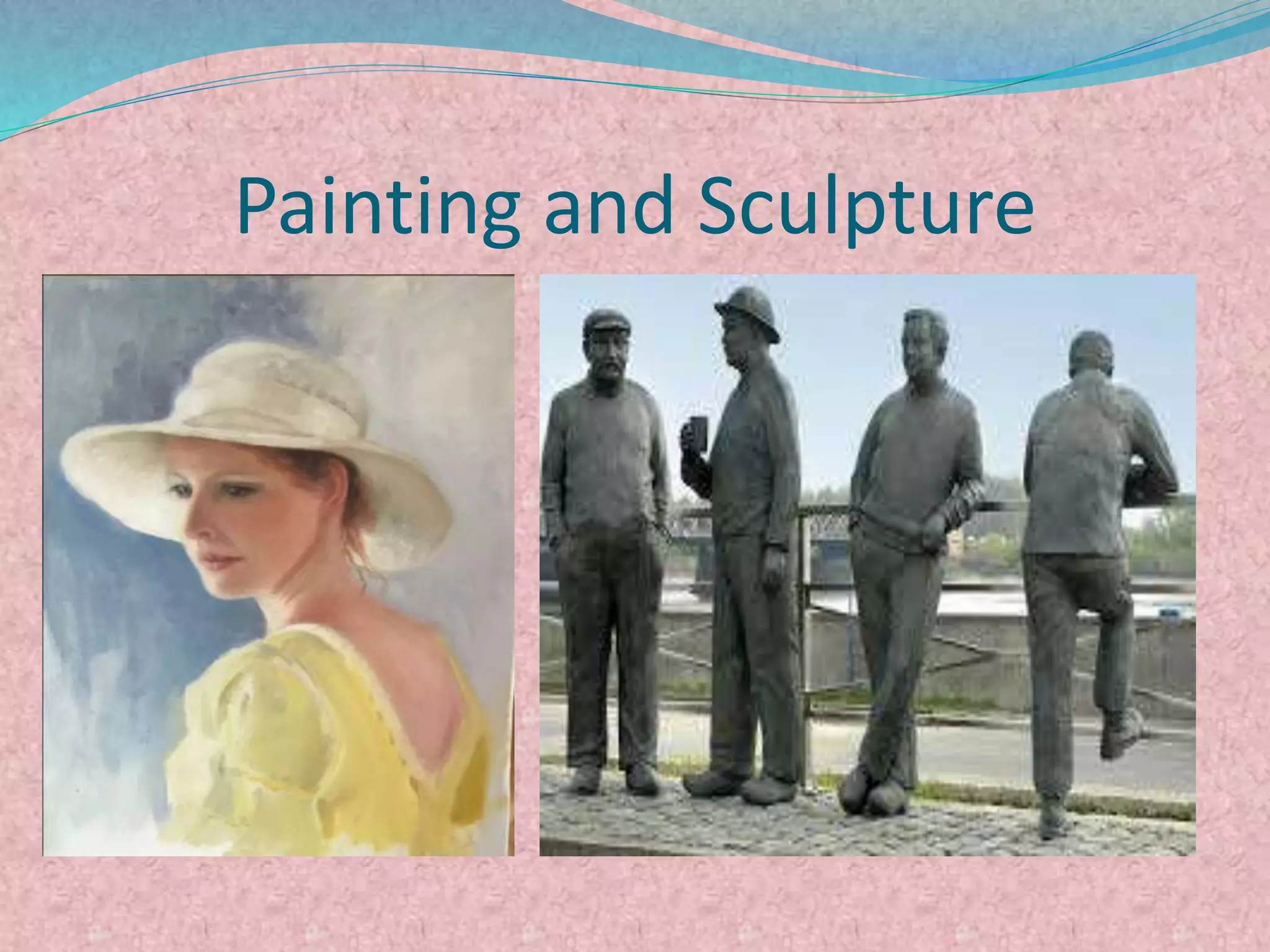
Human subjects, whether real or imagined,
are the most interesting. How people are
depicted can offer clues to the artists’
thoughts, moods, and the genre the art work
is presenting. Works can range from a single
subject to a group. They can be in perpetual
pose or performing tasks of everyday life.
Painting and Sculpture
history
 Historical art works depict real events which
are verifiable facts that occurred in the past.
The purpose of such works are either to
commemorate events or to teach history to
the viewers.
Painting and Sculpture
legends
Artworks based on legends present to
viewers of the art something tangible
even when unverified. Art brings ‘life’
to these stories.
Pictures and Paintings
religion
 These artworks are based on the sacred texts:
 The holy bible of Christianity.
 The Quran of Islam.
 And the Torah of Judaism.
 Many artworks used the beautiful stories in these
sacred texts to convey their beliefs.
 It was said that art is the handmaid of religion.
Paintings and Sculpture
mythology
 Artworks can also be based on the stories of gods and
goddesses of Ancient Greece, Rome, Celts, Norse and
the Egyptians. These are depicted in human or animal
forms and present humanlike behavior.
Gods and Goddesses
Dreams and fantasy
 The intrigue of the unconscious also inspires artist to
present it through art for others to see, relate and
interpret. Artist believe that the content of the
unconscious should be shared for others
Examples
technology
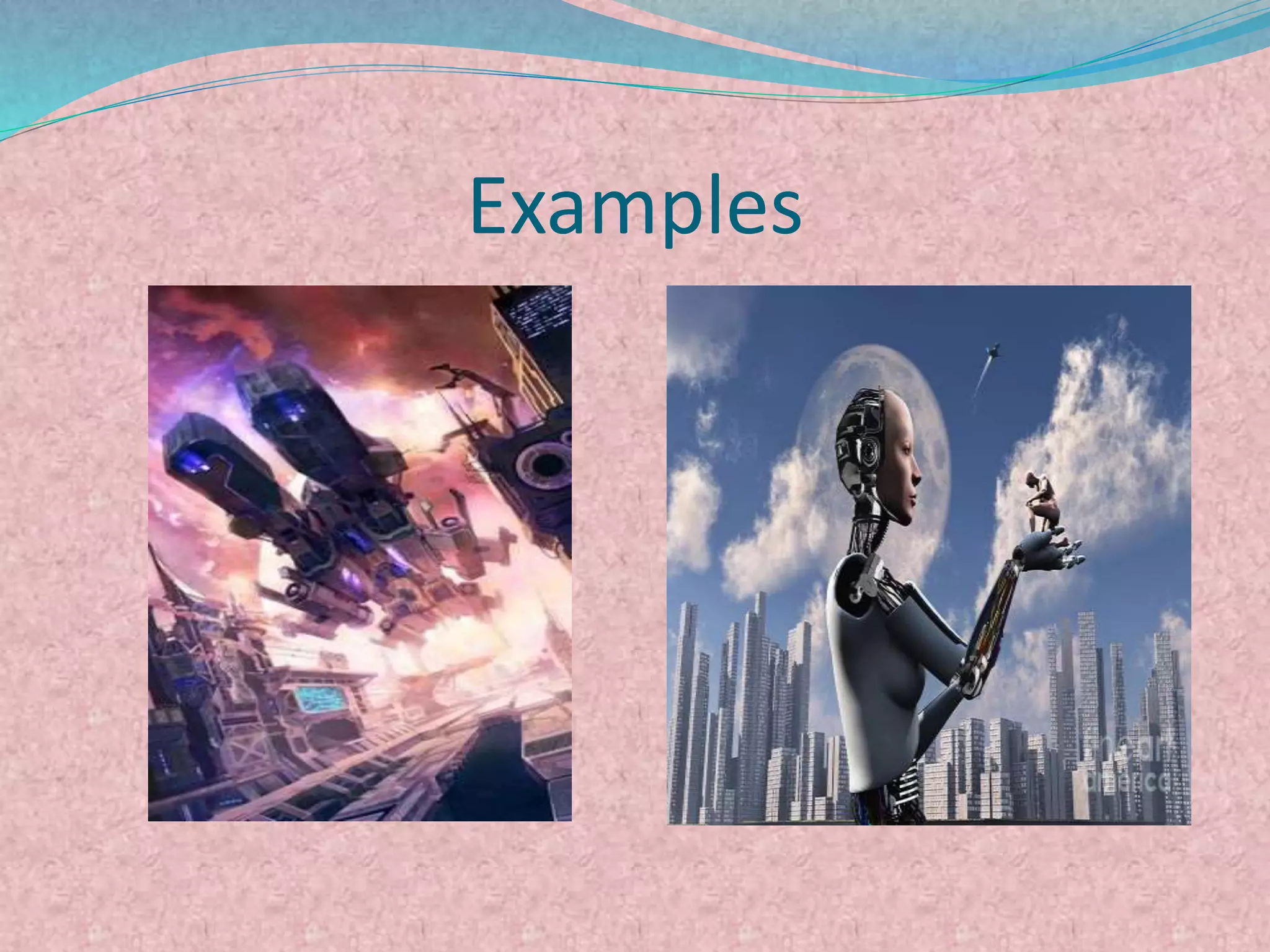
 The modern era with its tall buildings and amazing
machines are also subject matter for the artist.
Cityscapes, airplanes, cars, ships, motorcycles, and
robotic technology are objects of interest.
Examples
Ways of presenting subject
 The artists after setting their minds on their inspiration
or source of subject the decide on how it is to be
presented as an art form. Their choice of presentation
may be just like how the masters do it or they may
experiment and develop their own style to best convey to
their viewers the message that they wanted to impart.
naturalism
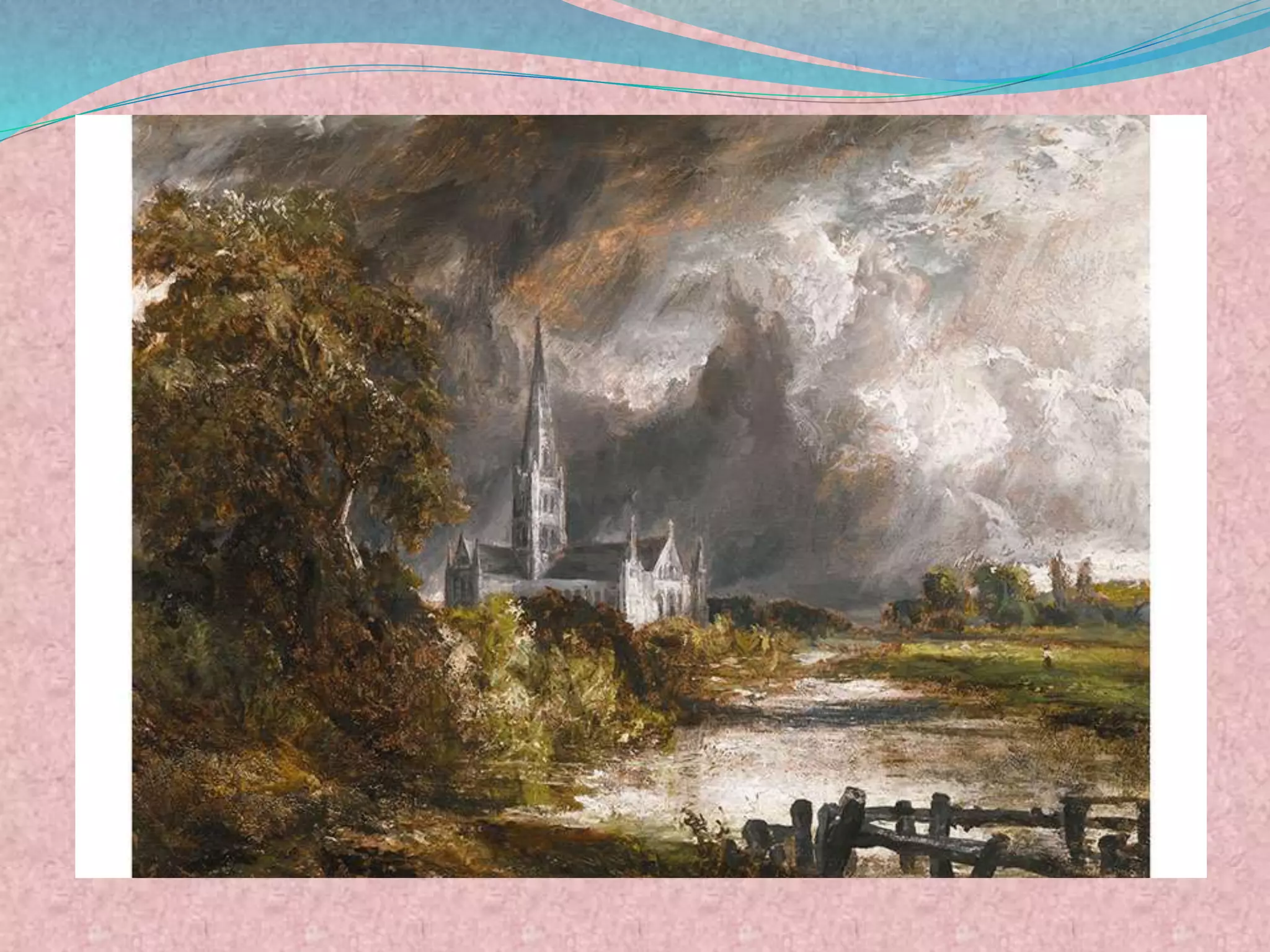
 refer to any artwork which attempts to render the
reality of its subject-matter without concern for the
constraints of convention, or for notions of the
'beautiful’. It has also been used to refer to a movement
within painting - initially seen to be based in France,
but whose origins and legacies were latterly found to
extend all over the world - which attempted to depict
the human subject in its formative relationships with
natural habitats and social milieus, with a visual
accuracy approaching that of photography
Naturalism
realism
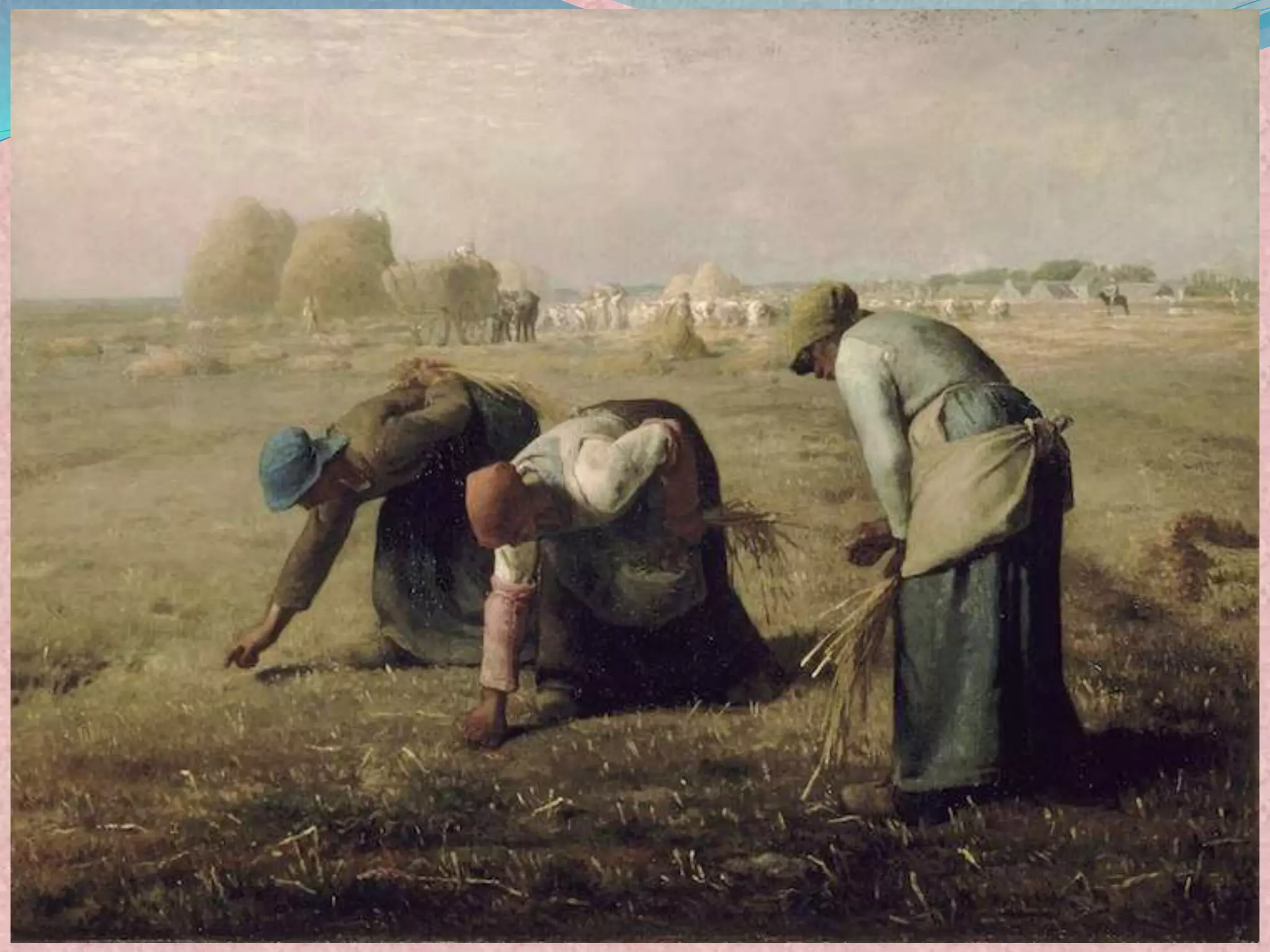
 This depicts the artist attempt of portraying the
subject as it is, Realist try to be as objective as possible
in their presentation. A work of art is realistic when
the presentation and organization of details in the
work seem so real, just like a photograph. Realism is
the most popular way of presenting art subject
Realism
abstraction
 Abstract means “ to move away or to separate from.”
Abstraction as subject presentation moves away from
reality, from presenting the subject as it really is. It
involves the process of simplifying or reorganizing
characteristics and elements of the work to adhere the
artists level of artistic expression. The artist usually
selects and renders the subject with its shape, and
colored altered.
Abstraction
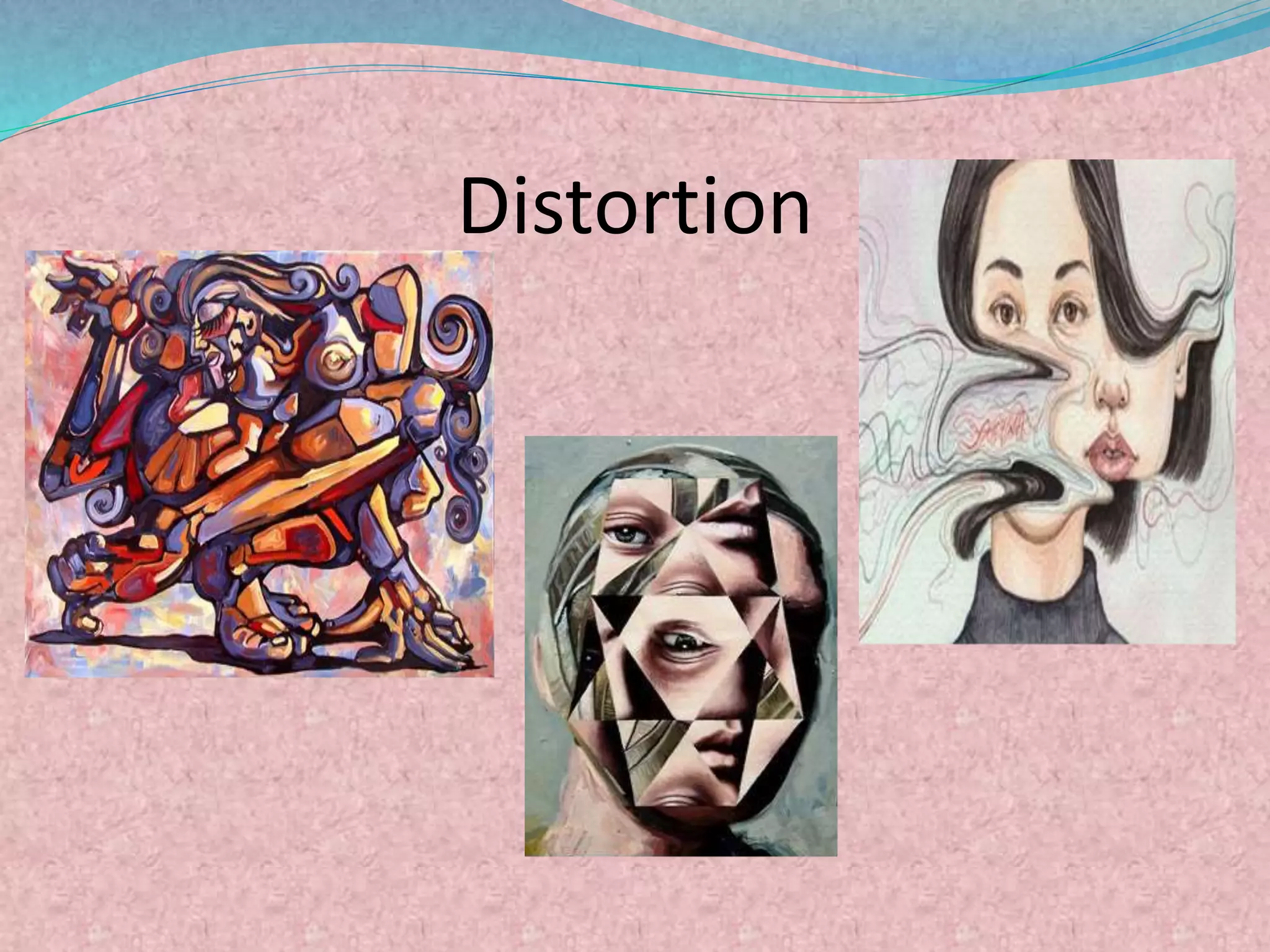
distortion
 This form of abstraction results when the figures have
been so arranged that its proportions differ
significantly from reality. This is manifested when the
subject is misshapen or twisted out. This is done to
dramatize the shape of a figure or to create a dramatic/
emotional effect.
Distortion
elongation
 In this type of abstraction, the subject is stretched
vertically and/ or some parts lengthened to give the
impression of thinness.
Elongation
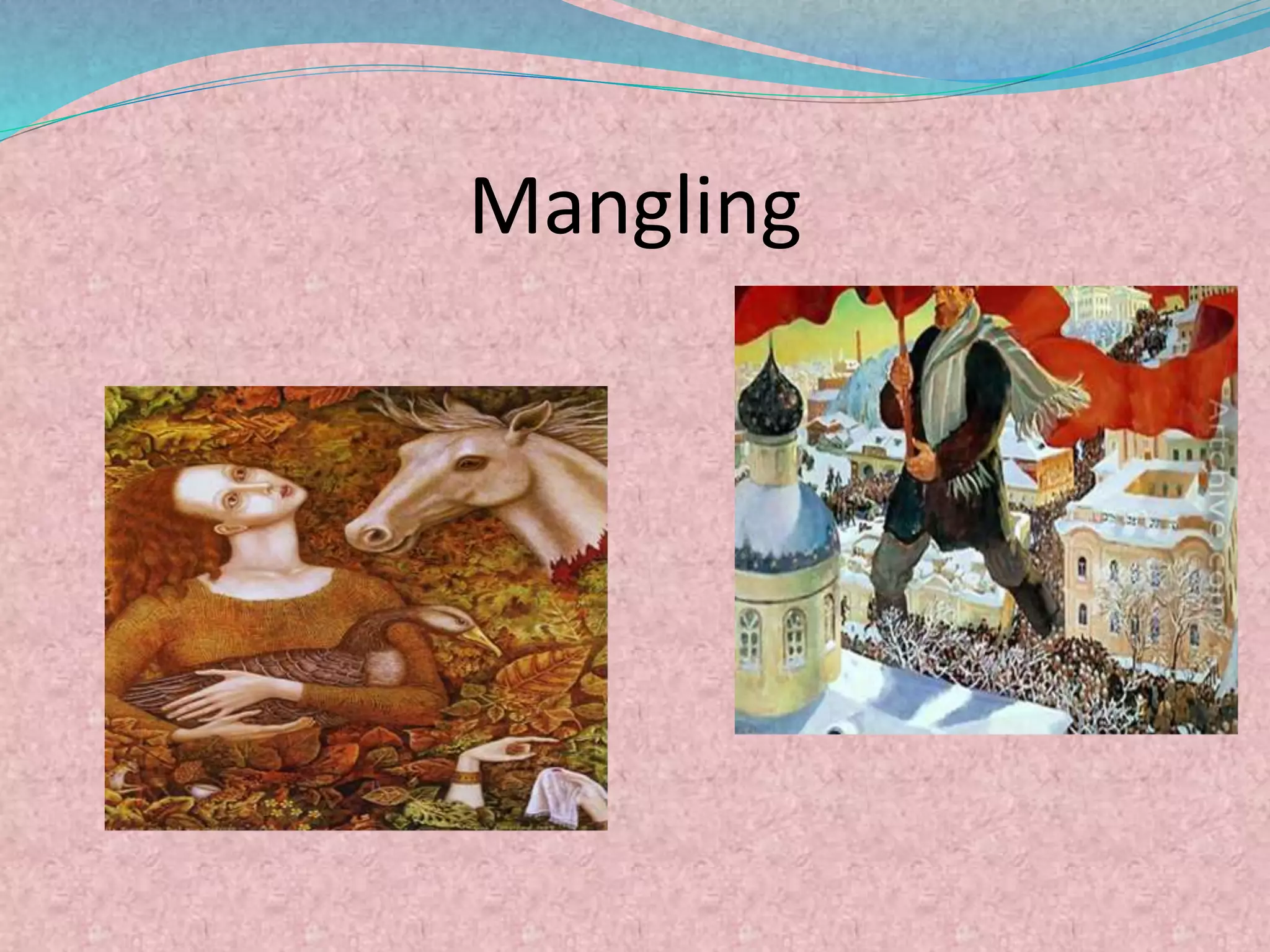
mangling
 This may not be so common in paintings but may be
popular in other art forms (sculpture, theatre, and
film). Artist show subject as cut, lacerated, mutilated
or hacked with repeated blows.
Mangling
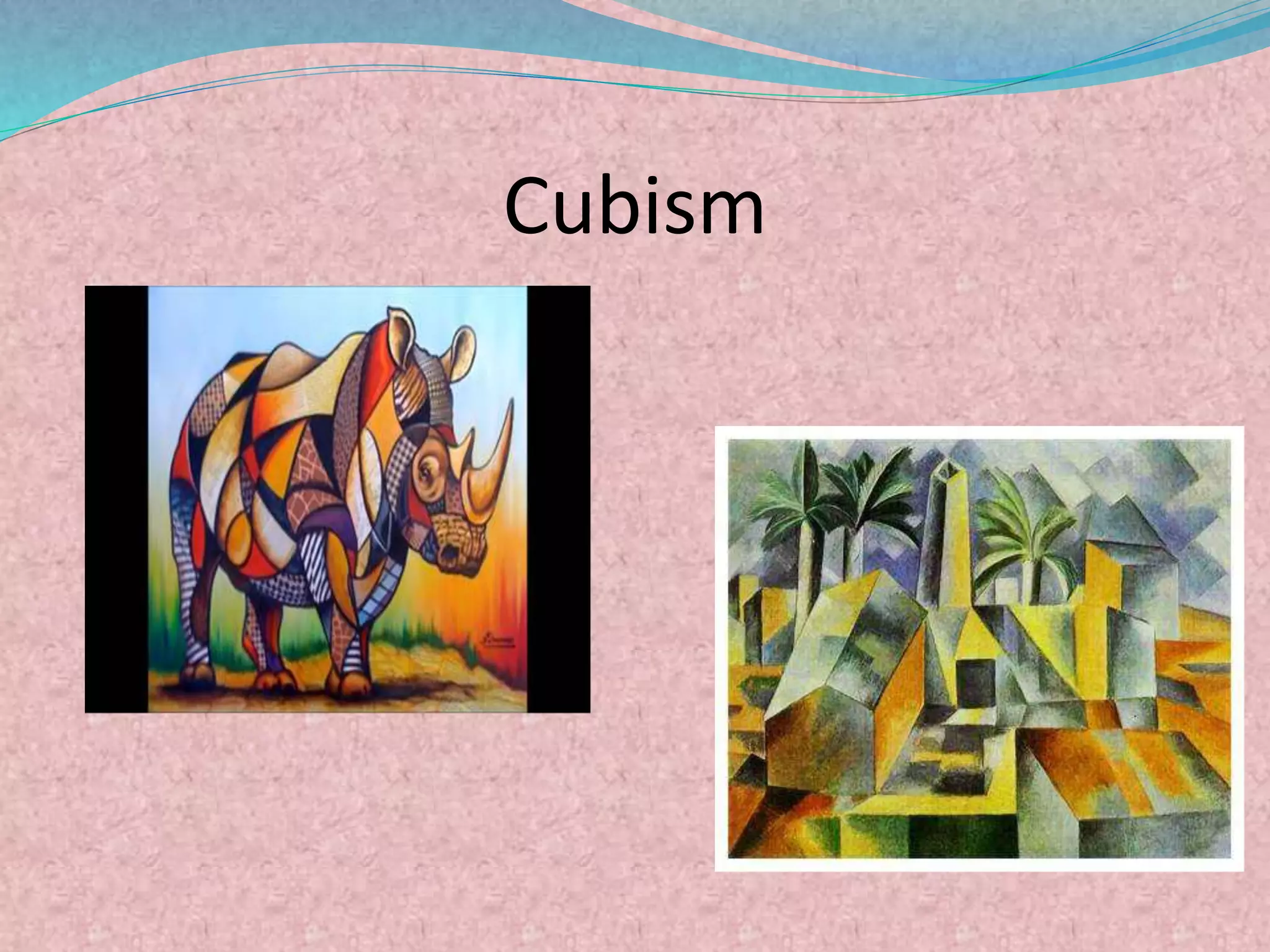
cubism
 Abstract form is presented through the use of figures:
a cone, cylinder, sphere, triangle, cube and circle in
place of real pictorial elements. The Cubist want to
show forms in their basic geometrical shapes.
Cubism
symbolism
 A symbol is defined as visible such as an idea or
quality. Symbols in art draws the viewers attention to
what other message the artist may be trying to convey
aside from what is obviously observed. This adds a
mysterious quality to the artwork that invites viewers
to uncover. The key to deciphering symbolic art
involves studying the background and personality of
the artist and his relationship to the societal period
that inspired the symbolism ingrained in his art. What
makes Da Vinci’s Mona Lisa, the most popular
painting in the world?
Symbolism
fauvism
 This subject presentation began in France, and was the
first organized movement in painting of the 1900’s.
Henri Matisse was the leader of this group. Fauvism
literally means wild beasts.
 a group of early 20th-century modern artists whose
works emphasized painterly qualities and strong color
over the representational or realistic values retained
Fauvism
dadaism
 Dada is French for hobby horse. This is an art
movement that doesn’t follow the traditions and
principles in art. It is a revolt against tradition and
aims to show the wickedness of society. Dadaists tried
to shock and provoked the public with outrageous
pieces of writing, poetry recitals and art exhibits.
Dadaism
futurism
 This is art movement began in Italy. Artist of this
movement wanted their works to capture the speed
and force of the modern industrial society. Their
paintings and sculptures highlight the technologies of
modern life.
Futurism
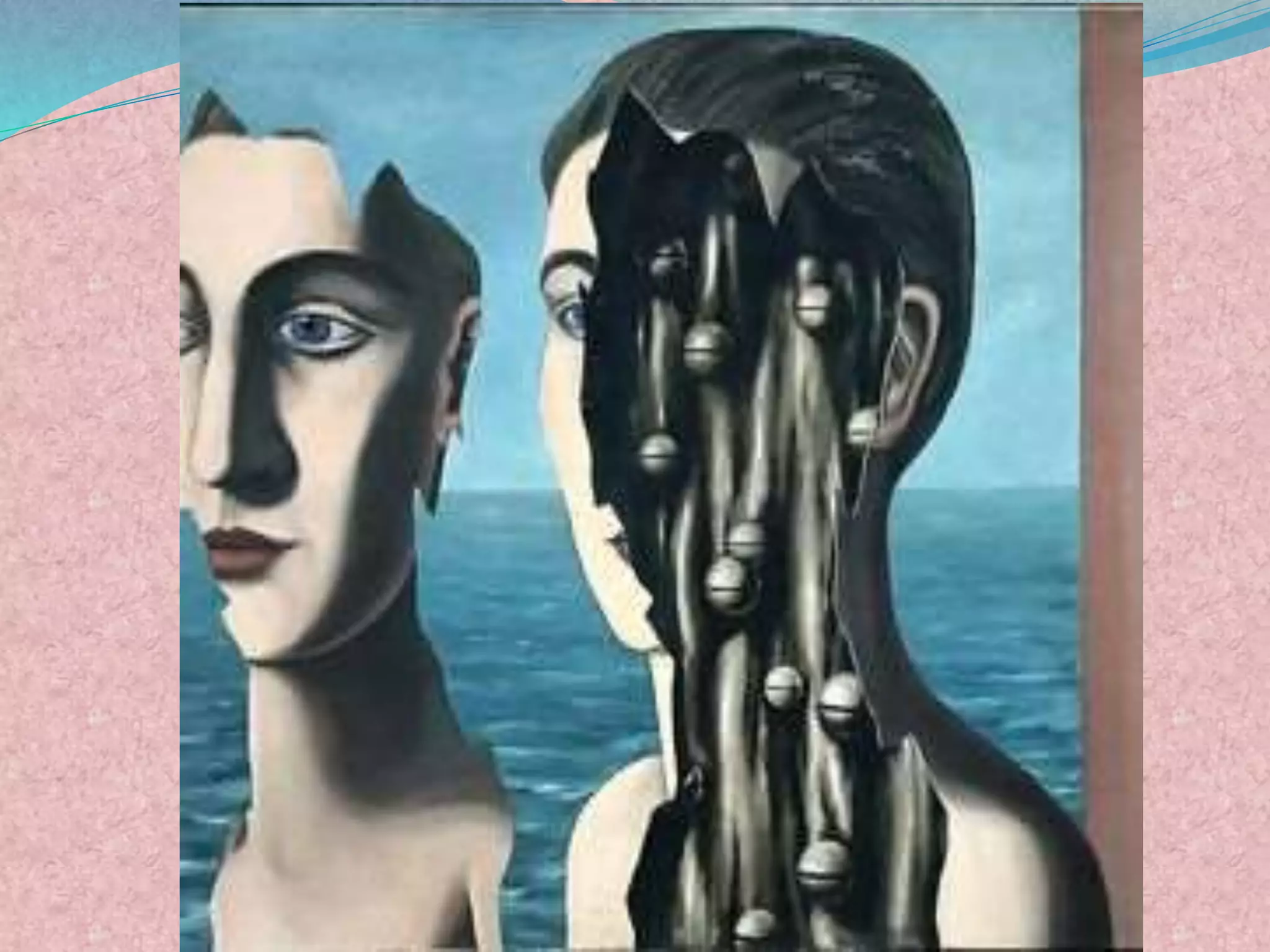
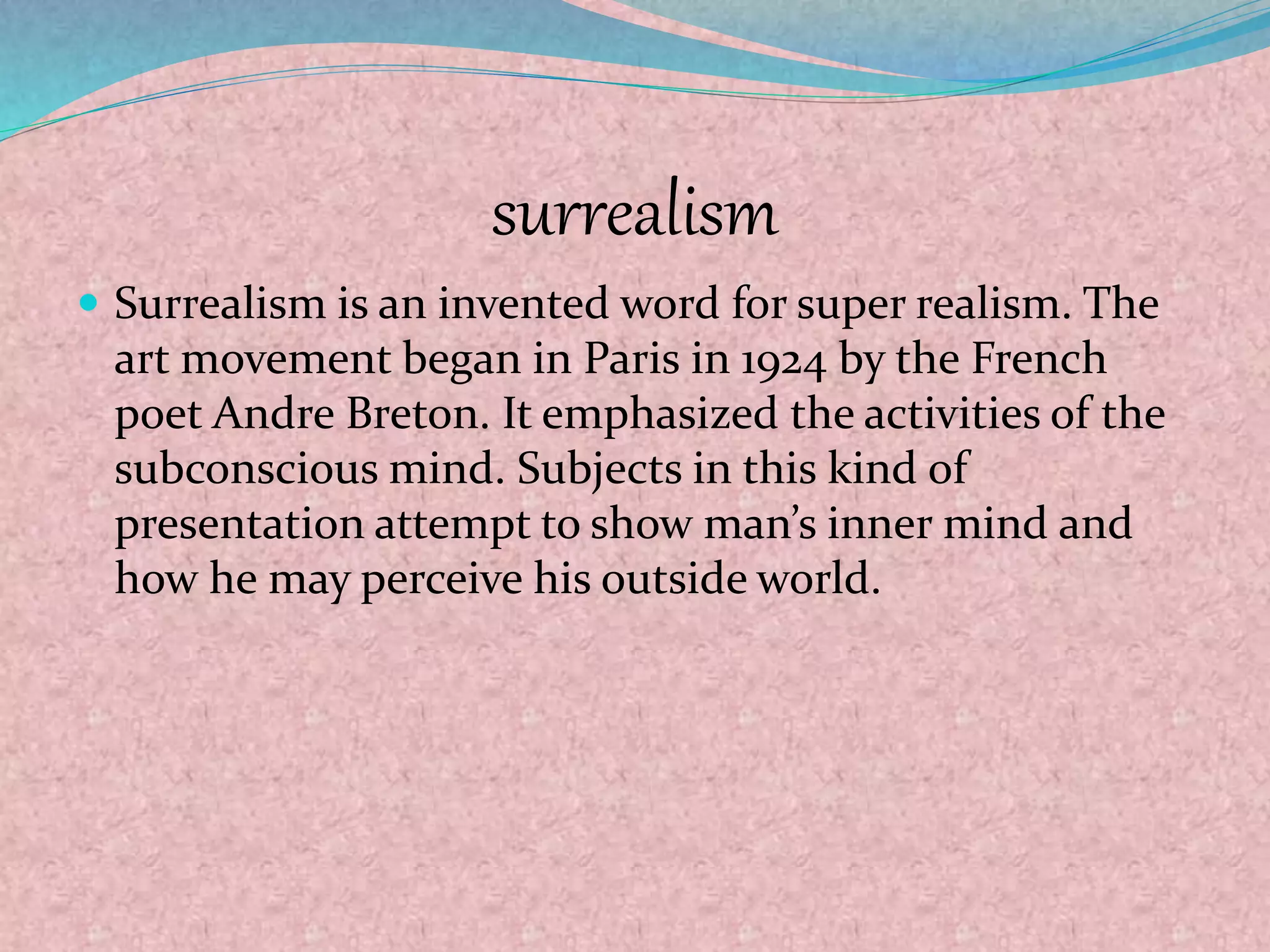
surrealism
 Surrealism is an invented word for super realism. The
art movement began in Paris in 1924 by the French
poet Andre Breton. It emphasized the activities of the
subconscious mind. Subjects in this kind of
presentation attempt to show man’s inner mind and
how he may perceive his outside world.
Surrealism
expressionism
 This art movement occurred during the first decade of
20th century in Germany where this art style was
introduced. Expressionists believe that man needs
spiritual rebirth for him to correct the defects that ruin
the society. This style of art depicts the emotions
aroused by objects and events. Subjects presented
involve chaos, sadness, tragedy and defeat.
Expressionism

Subject and ways of presenting art

  • 1.
    Subject and waysof presenting art
  • 2.
    Art subject Refers towhat the work represents. It could be a person, an object, a scene or an event. Some artworks have subject others do not. Representational or objective arts Non- Representational or non - objective arts
  • 3.
    Non objective arts Do not present descriptions, stories or references to identifiable objects of symbols.  They appeal directly to the senses primarily because of the organization of their expressive elements.  Most contemporary painters and sculptors have opted for non-objective art. They have shifted their attention to the work of as an object in itself, an exciting combination of shapes and colors that fulfills the aesthetic need without having to represent an image or tell a story.
  • 4.
    objective arts  Artistof objective art can choose any object that inspires them for their art. Their choices are virtually unlimited. Some may focus on different objects of the same theme while others may work on whatever inspire them at the moment.
  • 5.
    Sources of subject Art is human expressions and the artists’ choice of subject are clues to their inner world which tells viewers how their art should be interpreted.  All artist are individuals with unique personalities and unique experience.
  • 6.
    Sources of artistinspiration  NATURE  PEOPLE  HISTORY  LEGENDS  RELIGION  Mythology  Dreams and fantasy  technology
  • 7.
    Ways of presentingthe subject  Naturalism  Realism  ABSTRACTION(Distortion, Elongation, Mangling, cubism)  SYMBOLISM  FAUVISM  DADAISM  FUTURISM  SURREALISM  EXPRESSIONALISM
  • 8.
    NATURE MOST POPULAR SOURCEOF OBJECTIVE ART. Mountains Trees Animals Landscapes Seascapes cloudscapes
  • 10.
    people Human subjects, whetherreal or imagined, are the most interesting. How people are depicted can offer clues to the artists’ thoughts, moods, and the genre the art work is presenting. Works can range from a single subject to a group. They can be in perpetual pose or performing tasks of everyday life.
  • 11.
  • 12.
    history  Historical artworks depict real events which are verifiable facts that occurred in the past. The purpose of such works are either to commemorate events or to teach history to the viewers.
  • 13.
  • 14.
    legends Artworks based onlegends present to viewers of the art something tangible even when unverified. Art brings ‘life’ to these stories.
  • 15.
  • 16.
    religion  These artworksare based on the sacred texts:  The holy bible of Christianity.  The Quran of Islam.  And the Torah of Judaism.  Many artworks used the beautiful stories in these sacred texts to convey their beliefs.  It was said that art is the handmaid of religion.
  • 17.
  • 18.
    mythology  Artworks canalso be based on the stories of gods and goddesses of Ancient Greece, Rome, Celts, Norse and the Egyptians. These are depicted in human or animal forms and present humanlike behavior.
  • 19.
  • 21.
    Dreams and fantasy The intrigue of the unconscious also inspires artist to present it through art for others to see, relate and interpret. Artist believe that the content of the unconscious should be shared for others
  • 22.
  • 23.
    technology  The modernera with its tall buildings and amazing machines are also subject matter for the artist. Cityscapes, airplanes, cars, ships, motorcycles, and robotic technology are objects of interest.
  • 24.
  • 25.
    Ways of presentingsubject  The artists after setting their minds on their inspiration or source of subject the decide on how it is to be presented as an art form. Their choice of presentation may be just like how the masters do it or they may experiment and develop their own style to best convey to their viewers the message that they wanted to impart.
  • 26.
    naturalism  refer toany artwork which attempts to render the reality of its subject-matter without concern for the constraints of convention, or for notions of the 'beautiful’. It has also been used to refer to a movement within painting - initially seen to be based in France, but whose origins and legacies were latterly found to extend all over the world - which attempted to depict the human subject in its formative relationships with natural habitats and social milieus, with a visual accuracy approaching that of photography
  • 27.
  • 29.
    realism  This depictsthe artist attempt of portraying the subject as it is, Realist try to be as objective as possible in their presentation. A work of art is realistic when the presentation and organization of details in the work seem so real, just like a photograph. Realism is the most popular way of presenting art subject
  • 30.
  • 32.
    abstraction  Abstract means“ to move away or to separate from.” Abstraction as subject presentation moves away from reality, from presenting the subject as it really is. It involves the process of simplifying or reorganizing characteristics and elements of the work to adhere the artists level of artistic expression. The artist usually selects and renders the subject with its shape, and colored altered.
  • 33.
  • 35.
    distortion  This formof abstraction results when the figures have been so arranged that its proportions differ significantly from reality. This is manifested when the subject is misshapen or twisted out. This is done to dramatize the shape of a figure or to create a dramatic/ emotional effect.
  • 36.
  • 38.
    elongation  In thistype of abstraction, the subject is stretched vertically and/ or some parts lengthened to give the impression of thinness.
  • 39.
  • 41.
    mangling  This maynot be so common in paintings but may be popular in other art forms (sculpture, theatre, and film). Artist show subject as cut, lacerated, mutilated or hacked with repeated blows.
  • 42.
  • 44.
    cubism  Abstract formis presented through the use of figures: a cone, cylinder, sphere, triangle, cube and circle in place of real pictorial elements. The Cubist want to show forms in their basic geometrical shapes.
  • 45.
  • 47.
    symbolism  A symbolis defined as visible such as an idea or quality. Symbols in art draws the viewers attention to what other message the artist may be trying to convey aside from what is obviously observed. This adds a mysterious quality to the artwork that invites viewers to uncover. The key to deciphering symbolic art involves studying the background and personality of the artist and his relationship to the societal period that inspired the symbolism ingrained in his art. What makes Da Vinci’s Mona Lisa, the most popular painting in the world?
  • 48.
  • 50.
    fauvism  This subjectpresentation began in France, and was the first organized movement in painting of the 1900’s. Henri Matisse was the leader of this group. Fauvism literally means wild beasts.  a group of early 20th-century modern artists whose works emphasized painterly qualities and strong color over the representational or realistic values retained
  • 51.
  • 53.
    dadaism  Dada isFrench for hobby horse. This is an art movement that doesn’t follow the traditions and principles in art. It is a revolt against tradition and aims to show the wickedness of society. Dadaists tried to shock and provoked the public with outrageous pieces of writing, poetry recitals and art exhibits.
  • 54.
  • 56.
    futurism  This isart movement began in Italy. Artist of this movement wanted their works to capture the speed and force of the modern industrial society. Their paintings and sculptures highlight the technologies of modern life.
  • 57.
  • 58.
    surrealism  Surrealism isan invented word for super realism. The art movement began in Paris in 1924 by the French poet Andre Breton. It emphasized the activities of the subconscious mind. Subjects in this kind of presentation attempt to show man’s inner mind and how he may perceive his outside world.
  • 59.
  • 60.
    expressionism  This artmovement occurred during the first decade of 20th century in Germany where this art style was introduced. Expressionists believe that man needs spiritual rebirth for him to correct the defects that ruin the society. This style of art depicts the emotions aroused by objects and events. Subjects presented involve chaos, sadness, tragedy and defeat.
  • 61.