Study Readiness Training for
Internationally Educated and
   Trained Dentists (IETDs)
Who are we? Where are we from?

 • Brazil            • Pakistan
 • China             • Peru
 • Colombia          • Philippines
 • India             • Russia
 • Iran              • UK
 • Mexico            • Ukraine
 • Bolivia           • Venezuela
Why are we here?

 • Expectations about the training?
 • Assumptions about learning & teaching?
 • Professional & personal goals?
 • Current learning conditions?
Study Readiness Training Goal
 IETDs will be able to monitor their learning by using
 effective and efficient study skills when preparing for their
 professional accreditation exams:

           Assessment of Fundamental Knowledge
           Clinical Skills
           Clinical Judgement
           Written Exam
           OSCE
           Ethics & Jurisprudence Examination
Jigsaw Puzzle


http://www.jigzone.com/puzzles/69055D57CED5
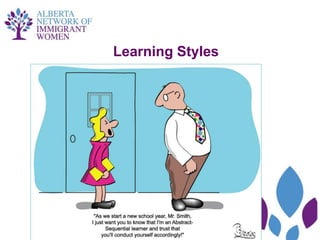
Learning Styles
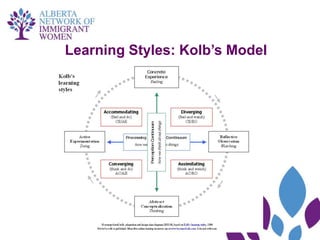
Learning Styles: Kolb’s Model
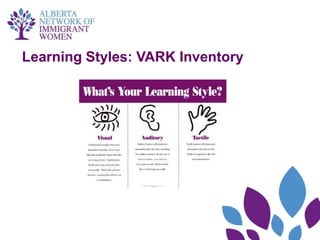
Learning Styles: VARK Inventory
AFK Exam
AFK Exam
• What’s the educational purpose of the exam?
• What contents will you be tested on?
• What type of exam of exam is it?
• How many questions does it include?
• How your score will be calculated?
AFK Exam

• Who writes the exam questions?
• What are the requirements to apply for it?
• How much does it cost?
• When and how often can you take it?
• What content areas does it assess?
AFK Exam

• What reference texts do I have to revise?
• How can I succeed in taking the exam?
• What are my strengths to prepare for it?
• What personal barriers do I have to overcome
  to pass it successfully?
• To what extent am I committed to achieve my
  professional accreditation?
AFK Exam

• Standardized test created by the NDBE to
  measure dentist professional competencies
  (knowledge, skills & professional behaviour)

• It measures what intends to measure,i.e.
  dentist professional competencies (Validity)
  consistently (Reliability)
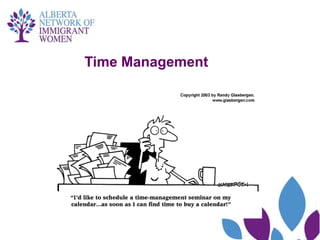
Time Management
Time Management Strategies

• Use a personal planning system
• Set mid and long term goals
• Plan forward and backward
• Prioritize your tasks
• Break down tasks into smaller ones
Time Management Strategies

• Defend your calendar
• Study at the same time everyday
• Have a 15-minute break every 90 minutes
• Celebrate your achievements
• Use your peak times wisely
• Overcome procastination
Active Reading Strategies
Effective Reading

• Preview the text and think about your reading purpose
• Go over the text quickly to get a general idea
• Outline the text
• Reread again and create mind maps
• Make annotations in the margins
• Take notes of main ideas
• Summarize the text in your own words
SQ3R Method of Study Reading

• Survey: Read quickly to get the gist
• Question: Write questions you would like to find answers for
• Read: Read once without taking notes to find answers to
        your questions. Read again to make notes
• Recall: Make outlines of what you remember
• Review: Answer your questions from your notes and review
          them periodically
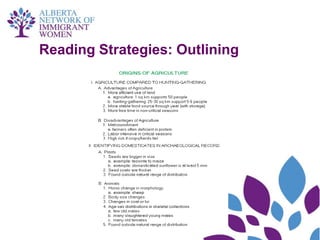
Reading Strategies: Outlining
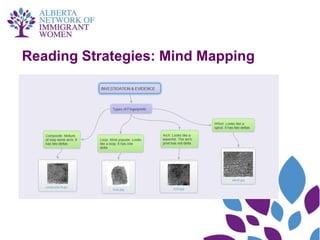
Reading Strategies: Mind Mapping
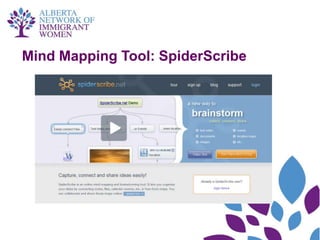
Mind Mapping Tool: SpiderScribe
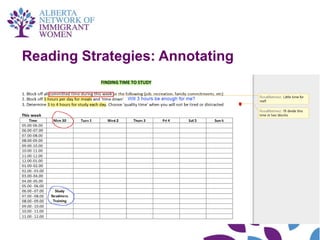
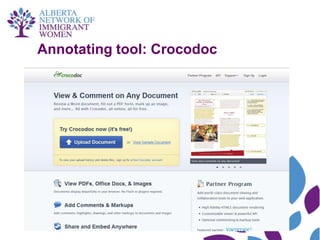
Reading Strategies: Annotating
Annotating tool: Crocodoc
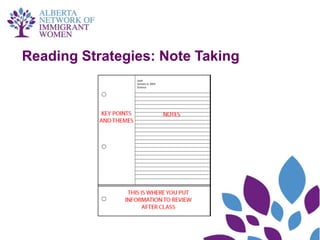
Reading Strategies: Note Taking
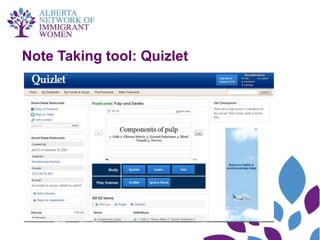
Note Taking tool: Quizlet
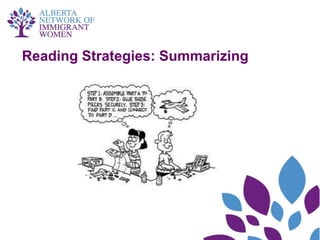
Reading Strategies: Summarizing
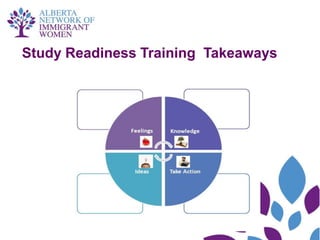
Study Readiness Training Takeaways
Study readiness training

Study readiness training

  • 2.
    Study Readiness Trainingfor Internationally Educated and Trained Dentists (IETDs)
  • 3.
    Who are we?Where are we from? • Brazil • Pakistan • China • Peru • Colombia • Philippines • India • Russia • Iran • UK • Mexico • Ukraine • Bolivia • Venezuela
  • 4.
    Why are wehere? • Expectations about the training? • Assumptions about learning & teaching? • Professional & personal goals? • Current learning conditions?
  • 5.
    Study Readiness TrainingGoal IETDs will be able to monitor their learning by using effective and efficient study skills when preparing for their professional accreditation exams: Assessment of Fundamental Knowledge Clinical Skills Clinical Judgement Written Exam OSCE Ethics & Jurisprudence Examination
  • 6.
  • 7.
  • 8.
  • 9.
  • 10.
  • 11.
    AFK Exam • What’sthe educational purpose of the exam? • What contents will you be tested on? • What type of exam of exam is it? • How many questions does it include? • How your score will be calculated?
  • 12.
    AFK Exam • Whowrites the exam questions? • What are the requirements to apply for it? • How much does it cost? • When and how often can you take it? • What content areas does it assess?
  • 13.
    AFK Exam • Whatreference texts do I have to revise? • How can I succeed in taking the exam? • What are my strengths to prepare for it? • What personal barriers do I have to overcome to pass it successfully? • To what extent am I committed to achieve my professional accreditation?
  • 14.
    AFK Exam • Standardizedtest created by the NDBE to measure dentist professional competencies (knowledge, skills & professional behaviour) • It measures what intends to measure,i.e. dentist professional competencies (Validity) consistently (Reliability)
  • 15.
  • 16.
    Time Management Strategies •Use a personal planning system • Set mid and long term goals • Plan forward and backward • Prioritize your tasks • Break down tasks into smaller ones
  • 17.
    Time Management Strategies •Defend your calendar • Study at the same time everyday • Have a 15-minute break every 90 minutes • Celebrate your achievements • Use your peak times wisely • Overcome procastination
  • 18.
  • 19.
    Effective Reading • Previewthe text and think about your reading purpose • Go over the text quickly to get a general idea • Outline the text • Reread again and create mind maps • Make annotations in the margins • Take notes of main ideas • Summarize the text in your own words
  • 20.
    SQ3R Method ofStudy Reading • Survey: Read quickly to get the gist • Question: Write questions you would like to find answers for • Read: Read once without taking notes to find answers to your questions. Read again to make notes • Recall: Make outlines of what you remember • Review: Answer your questions from your notes and review them periodically
  • 21.
  • 22.
  • 23.
    Mind Mapping Tool:SpiderScribe
  • 24.
  • 25.
  • 26.
  • 27.
  • 28.
  • 29.