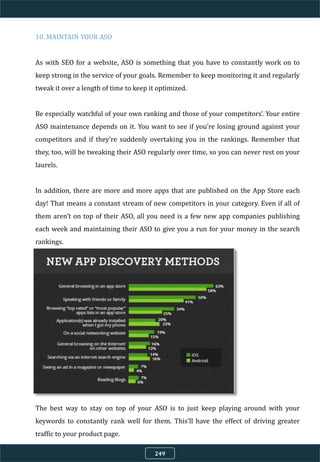
Digital Marketing Overview
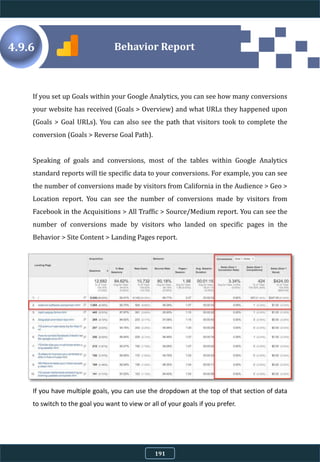
Google Ads
Social Media Marketing
Email Marketing
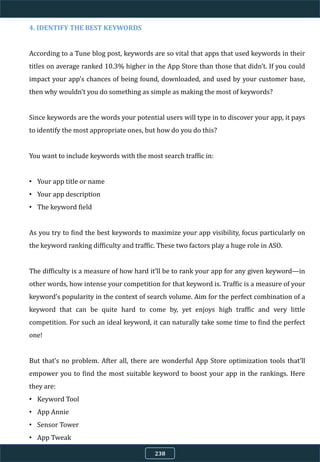
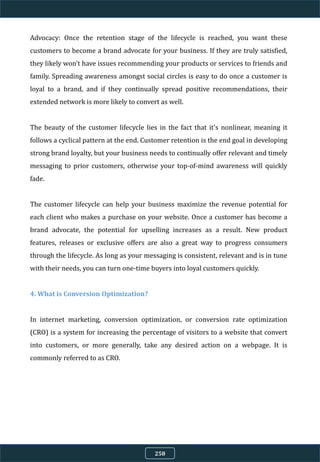
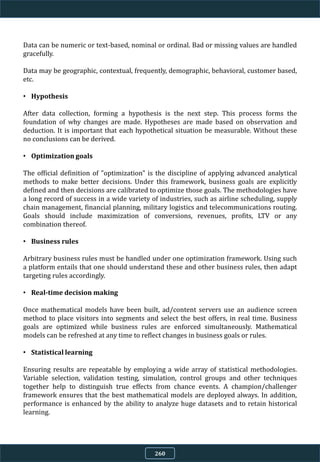
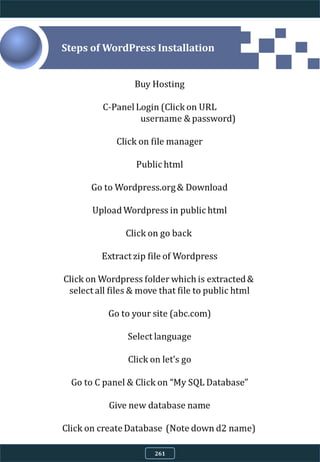
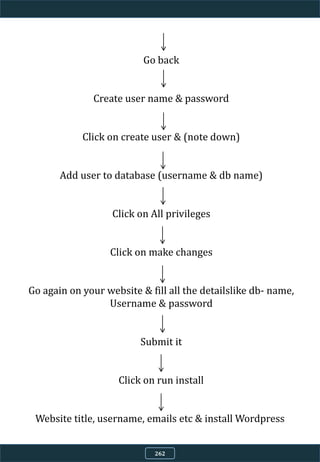
Google Analytics
Search Engine Optimization
Google AdSense
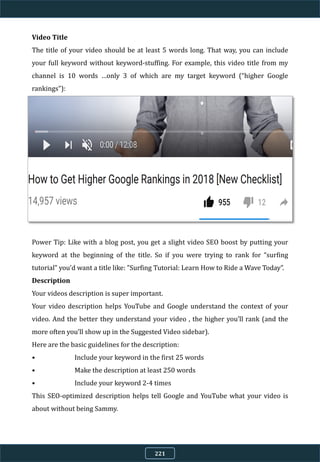
YouTube SEO
Affiliate Marketing
App Store Optimization
ASO Strategy
001
TableofContent
005
070
109
161
171
202
208
223
225
230
Growth Hacking 253
Interview Questions 263
DIGITAL
MARKETING
001
Content
Ch. No. Unit Name Page No.
Digital Marketing 003
Google Layout 005
Introduction to Marketing
Marketing is the study and management of exchange relationships. The American
Marketing Association has defined marketing as "the activity, set of institutions,
and processes for creating, communicating, delivering, and exchanging offerings
that have value for customers, clients, partners, and society at large."
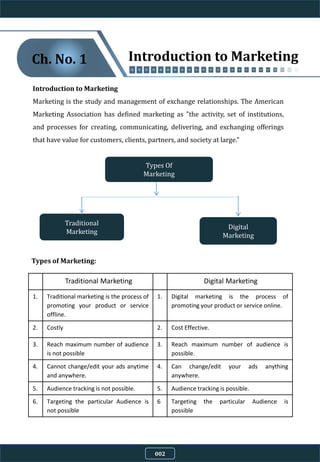
Traditional Marketing Digital Marketing
1. Traditional marketing is the process of
promoting your product or service
offline.
1. Digital marketing is the process of
promoting your product or service online.
2. Costly 2. Cost Effective.
3. Reach maximum number of audience
is not possible
3. Reach maximum number of audience is
possible.
4. Cannot change/edit your ads anytime
and anywhere.
4. Can change/edit your ads anything
anywhere.
5. Audience tracking is not possible. 5. Audience tracking is possible.
6. Targeting the particular Audience is
not possible
6 Targeting the particular Audience is
possible
Types of Marketing:
Types Of
Marketing
Traditional
Marketing
Digital
Marketing
Introduction to MarketingCh. No. 1
002
1.1 Digital Marketing
Digital marketing (also known as data-driven marketing) is an umbrella term for the
marketing of products or services using digital technologies, mainly on the Internet, but
also including mobile phones, display advertising and any other digital medium.
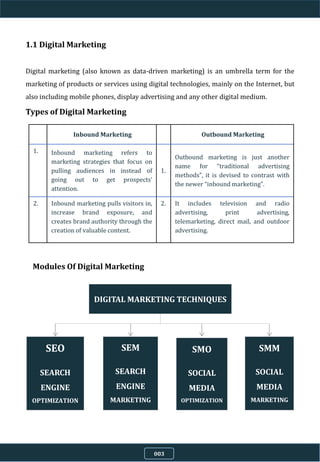
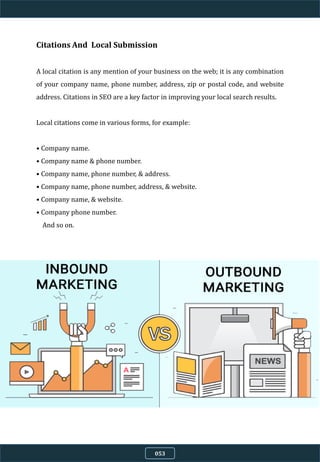
Inbound Marketing Outbound Marketing
1. Inbound marketing refers to
marketing strategies that focus on
pulling audiences in instead of
going out to get prospects’
attention.
1.
Outbound marketing is just another
name for “traditional advertising
methods”, it is devised to contrast with
the newer “inbound marketing”.
2. Inbound marketing pulls visitors in,
increase brand exposure, and
creates brand authority through the
creation of valuable content.
2. It includes television and radio
advertising, print advertising,
telemarketing, direct mail, and outdoor
advertising.
Types of Digital Marketing
Modules Of Digital Marketing
DIGITAL MARKETING TECHNIQUES
SEO
SEARCH
ENGINE
OPTIMIZATION
SEM
SEARCH
ENGINE
MARKETING
SMO
SOCIAL
MEDIA
OPTIMIZATION
SMM
SOCIAL
MEDIA
MARKETING
003
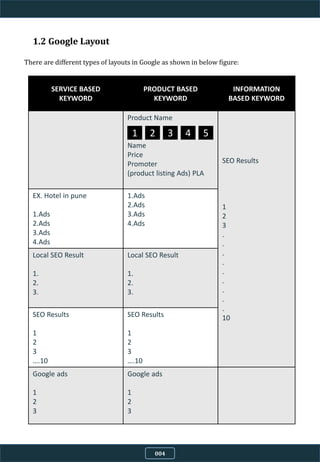
1.2 Google Layout
There are different types of layouts in Google as shown in below figure:
SERVICE BASED
KEYWORD
PRODUCT BASED
KEYWORD
INFORMATION
BASED KEYWORD
Product Name
Name
Price
Promoter
(product listing Ads) PLA
SEO Results
1
2
3
.
.
.
.
.
.
.
.
.
10
EX. Hotel in pune
1.Ads
2.Ads
3.Ads
4.Ads
1.Ads
2.Ads
3.Ads
4.Ads
Local SEO Result
1.
2.
3.
Local SEO Result
1.
2.
3.
SEO Results
1
2
3
….10
SEO Results
1
2
3
….10
Google ads
1
2
3
Google ads
1
2
3
1 2 53 4
004
Search Engine
Optimization
005
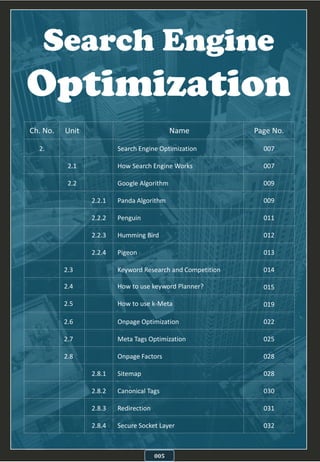
Ch. No. Unit Name Page No.
2. Search Engine Optimization 007
2.1 How Search Engine Works 007
2.2 Google Algorithm 009
2.2.1 Panda Algorithm 009
2.2.2 Penguin 011
2.2.3 Humming Bird 012
2.2.4 Pigeon 013
2.3 Keyword Research and Competition 014
2.4 How to use keyword Planner? 015
2.5 How to use k-Meta 019
2.6 Onpage Optimization 022
2.7 Meta Tags Optimization 025
2.8 Onpage Factors 028
2.8.1 Sitemap 028
2.8.2 Canonical Tags 030
2.8.3 Redirection 031
2.8.4 Secure Socket Layer 032
Content
006
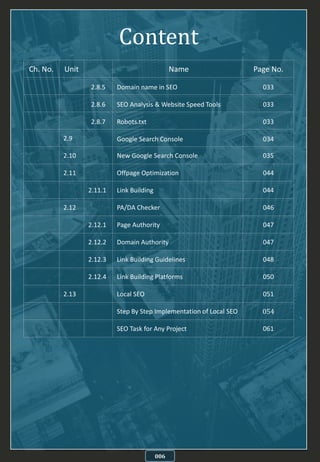
Ch. No. Unit Name Page No.
2.8.5 Domain name in SEO 033
2.8.6 SEO Analysis & Website Speed Tools 033
2.8.7 Robots.txt 033
2.9 Google Search Console 034
2.10 New Google Search Console 035
2.11 Offpage Optimization 044
2.11.1 Link Building 044
2.12 PA/DA Checker 046
2.12.1 Page Authority 047
2.12.2 Domain Authority 047
2.12.3 Link Building Guidelines 048
2.12.4 Link Building Platforms 050
2.13 Local SEO 051
Step By Step Implementation of Local SEO 054
SEO Task for Any Project 061
Search Engine Optimization (SEO) is the activity of optimizing web pages or whole
sites in order to make them search engine friendly, thus getting higher positions in
search results.
SEO techniques are classified into two broad categories:
• White Hat SEO - white hat SEO refers to the usage of optimization strategies,
techniques and tactics that focus on a human audience opposed to search engines
and completely follows search engine rules and policies
• Black Hat SEO - Techniques that search engines do not approve and attempt to
minimize the effect of these techniques are also known as spamdexing.
• Gray Hat SEO – Gray Hat SEO refers to tactics and strategies that straddle the line
between ethical online marketing tactics and the unethical.
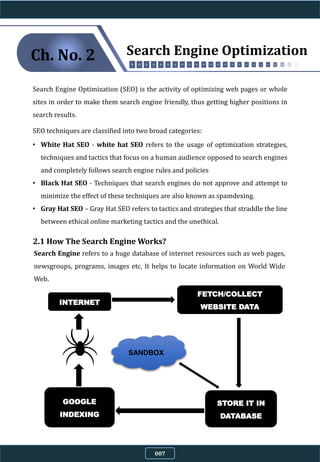
2.1 How The Search Engine Works?
Search Engine refers to a huge database of internet resources such as web pages,
newsgroups, programs, images etc. It helps to locate information on World Wide
Web.
STORE IT IN
DATABASE
INTERNET
GOOGLE
INDEXING
FETCH/COLLECT
WEBSITE DATA
SANDBOX
Search Engine OptimizationCh. No. 2
007
Web crawler
It is also known as spider or Google bots. It is a software component that traverses
the web to gather information.
Search Engine Working
Web crawler, database and the search interface are the major component of a search
engine that actually makes search engine to work. Search engines make use of
Boolean expression AND, OR, NOT to restrict and widen the results of a search.
Following are the steps that are performed by the search engine:
The search engine looks for the keyword in the index for predefined database
instead of going directly to the web to search for the keyword.
It then uses software to search for the information in the database. This software
component is known as web crawler.
Once web crawler finds the pages, the search engine then shows the relevant web
pages as a result. These retrieved web pages generally include title of page, size of
text portion, first several sentences etc.
These search criteria may vary from one search engine to the other. The retrieved
information is ranked according to various factors such as frequency of keywords,
relevancy of information, links etc.
008
2.2 Google Algorithm
2.2.1 Panda
It’s all related with “quality content” in
your website.
Quality Content:
• Your content must be unique.
• User friendly/ user engaging.
• No Keyword Stuffing
• Keyword density must be 2-3 % only.
Google Panda takes the quality of a site’s content into account when ranking sites in
the search results. For sites that have lower quality content, they would likely find
themselves negatively impacted by Panda. As a result, this causes higher quality
content to surface higher in the search results, meaning higher quality content are
often rewarded with higher rankings, while low-quality content drops.
When Panda originally launched, many saw it as a way for Google to target content
farms specifically, which were becoming a major problem in the search results with
their extremely low-quality content that tended to rank due to sheer volume. These
sites were publishing a fantastic amount of low-quality content very quickly on topics
with very little knowledge or research, and it was very obvious to a searcher who
landed on one of those pages.
Google has now evolved Panda to be part of the core algorithm. Previously, we had a
known Panda update date, making it easier to identify when a site was hit or had
recovered from Panda. Now it is part of a slow rolling update, lasting months per
cycle. As a result, it is hard to know whether a site is negatively impacted by Panda or
not, other than doing a content audit and identifying factors that sites hit by Panda
tend to have.
009
Do not remove your user-generated content, whether it is forums, blog comments or
article contributions, simply because you heard it is “bad” or marketed as a “Panda
proof” solution. Look at it from a quality perspective instead. There are many highly
ranking sites with user-generated content, such as Stack Overflow, and many sites
would lose significant traffic and rankings simply because they removed that type of
content. Even comments made on a blog post can cause it to rank and even get a
featured snippet.
Technical SEO
Technical SEO also does not play any role in Panda. Panda looks just at the content, not
things like whether you are using H1 tags or how quickly your page loads for users.
That said, technical SEO can be a very important part of SEO and ranking in general, so
it should not be ignored. But it does not have any direct impact on Panda specifically.
Determining Quality
If you are struggling to determine whether a particular piece of content is considered
quality or not, there is one surefire way to confirm. Look in Search Analytics or your
site’s analytics program such as Google Analytics and look at the individual page. If
Google is ranking a page and sending it traffic, then clearly it is viewing it as quality
enough to show high enough in the search results that people are landing there from
those Google’s search results.
Panda Prevention
How to prevent Google Panda from negatively impacting your site is pretty simple.
Create high-quality, unique content that answers the question searchers are asking.
Reading content out loud is a great way to tell if content is high-quality or not. When
content is read aloud, suddenly things like over usage of repetitive keywords,
grammatical errors, and other signals that the content is less than quality will stand
out. Read it out yourself and edit as you go, or ask someone else to read it so you can
flag what should be changed.
010
011
2.2.2 Penguin
It’s all related to “Quality links” in your websites (Real time algorithm).
Quality Links :
• High authority site Link
• Relevant link building
Avoid:
• Paid link building
• Spam link building
• Irrelevant link building
The second major Google algorithm is Penguin. Penguin deals solely with link quality
and nothing else. Sites that have purchased links or have acquired low-quality links
through places such as low-quality directories, blog spam, or link badges and info
graphics could find their sites no longer ranking for search terms.
Who Should Worry about Penguin?
Most sites do not need to worry about Penguin unless they have done some sketchy
link building in the past or have hired an SEO who might have engaged in those
tactics. Even if the site owner was not aware of what an SEO was doing, the owner is
still ultimately responsible for those links. That is why site owners should always
research an SEO or SEO agency before hiring.
If you have done link building in the past while tactics were accepted, but which are
now against Google’s webmaster guidelines, you could be impacted by Penguin. For
example, guest blogging was fine years ago, but is not a great way to build links now
unless you are choosing your sites well. Likewise, asking site visitors or members to
post badges that linked to your site was also fine previously, but will now definitely
result in Penguin or a link manual action.
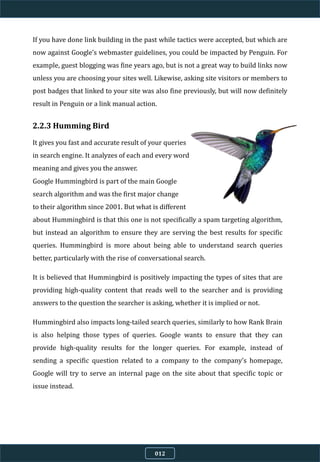
2.2.3 Humming Bird
It gives you fast and accurate result of your queries
in search engine. It analyzes of each and every word
meaning and gives you the answer.
Google Hummingbird is part of the main Google
search algorithm and was the first major change
to their algorithm since 2001. But what is different
about Hummingbird is that this one is not specifically a spam targeting algorithm,
but instead an algorithm to ensure they are serving the best results for specific
queries. Hummingbird is more about being able to understand search queries
better, particularly with the rise of conversational search.
It is believed that Hummingbird is positively impacting the types of sites that are
providing high-quality content that reads well to the searcher and is providing
answers to the question the searcher is asking, whether it is implied or not.
Hummingbird also impacts long-tailed search queries, similarly to how Rank Brain
is also helping those types of queries. Google wants to ensure that they can
provide high-quality results for the longer queries. For example, instead of
sending a specific question related to a company to the company’s homepage,
Google will try to serve an internal page on the site about that specific topic or
issue instead.
012
2.2.4 Pigeon
Launched on July 24, 2014 for U.S. English results, the
“Pigeon Update” is a new algorithm to provide more
useful, relevant and accurate local search results that
are tied more closely to traditional web search ranking
signals. Google stated that this new algorithm improves
their distance and location ranking parameters.
Hummingbird cannot be optimized for, outside of optimizing for the rise of
conversational search. Longer search queries, such as what we see with voice
search, and the types of queries that searchers tend to do on mobile are often
highlighted with a conversational search. And optimizing for conversational
search is easier than it sounds. Make sure your content is highly readable and
can answer those longer tail queries as well as shorter tail ones.
013
A keyword is a term that is used to match with the query a person enters into a
search engine to find specific information. Most people enter search phrases that
consist of two to five words. Such phrases may be called search phrases/ keyword
phrases/ query phrases, or just keywords. Good keyword phrases are specific and
descriptive.
Types of keyword in SEO:
1. Short tail keyword: 2,3 words per Keyword
For Ex. 1. Hotel in pune
2. Samsung mobile phone
2. Long tail keyword: 3,4 and more
For Ex. 1. Best veg-non veg hotel in pune
2.Samsung mobile phones under 10000 rupees
Best Places to Put Keywords
Here is a list of places where you should try to use your main keywords.
• Keywords in the <title> tag(s).
• Keywords in the <meta name="description">.
• Keywords in <h1> or other headline tags.
• Keywords in alt tags.
• Keywords in the URL or website address.
Keyword Research and competition2.3
014
Tools :
1. Keyword planner (for keyword research)
2. Spyfu and k-meta (for competitor keyword research tool)
3. SEMrush
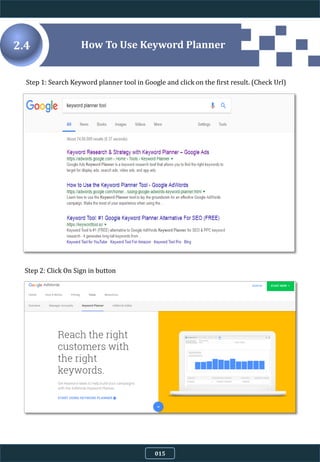
How To Use Keyword Planner
Step 1: Search Keyword planner tool in Google and click on the first result. (Check Url)
Step 2: Click On Sign in button
2.4
015
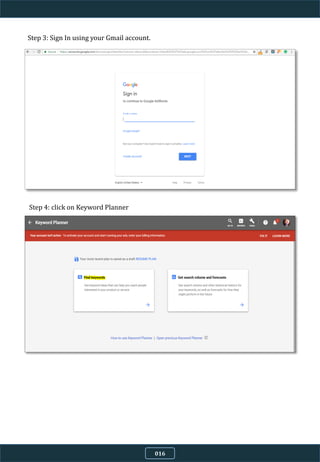
Step 4: click on Keyword Planner
Step 3: Sign In using your Gmail account.
016
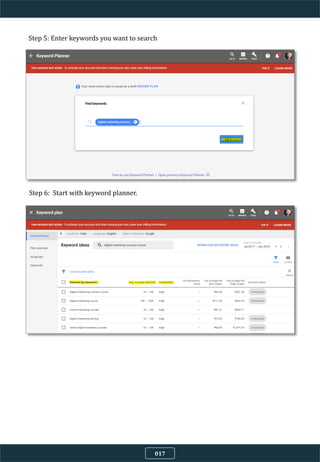
Step 6: Start with keyword planner.
Step 5: Enter keywords you want to search
017
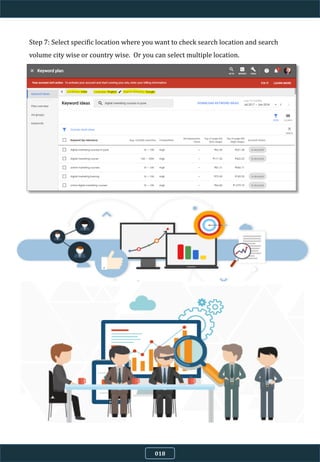
Step 7: Select specific location where you want to check search location and search
volume city wise or country wise. Or you can select multiple location.
018
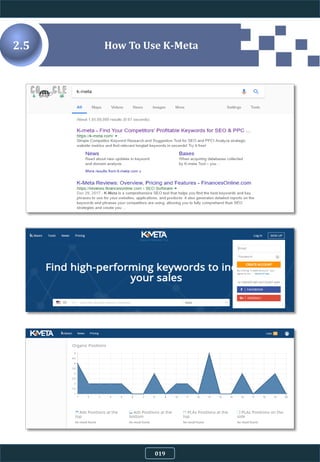
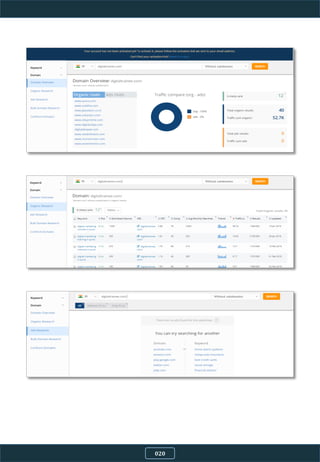
How To Use K-Meta2.5
019
020
021
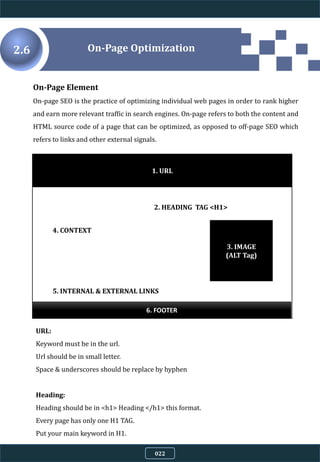
On-Page Element
On-page SEO is the practice of optimizing individual web pages in order to rank higher
and earn more relevant traffic in search engines. On-page refers to both the content and
HTML source code of a page that can be optimized, as opposed to off-page SEO which
refers to links and other external signals.
1. URL
2. HEADING TAG <H1>
3. IMAGE
(ALT Tag)
4. CONTEXT
5. INTERNAL & EXTERNAL LINKS
6. FOOTER
URL:
Keyword must be in the url.
Url should be in small letter.
Space & underscores should be replace by hyphen
Heading:
Heading should be in <h1> Heading </h1> this format.
Every page has only one H1 TAG.
Put your main keyword in H1.
On-Page Optimization2.6
022
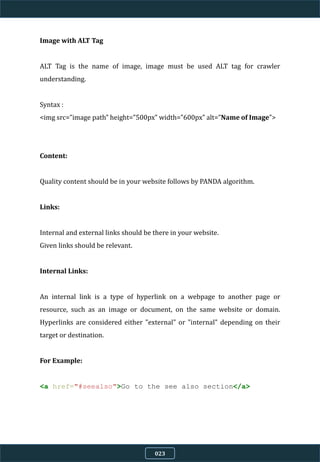
Image with ALT Tag
ALT Tag is the name of image, image must be used ALT tag for crawler
understanding.
Syntax :
<img src=”image path” height=”500px” width=”600px” alt=”Name of Image”>
Content:
Quality content should be in your website follows by PANDA algorithm.
Links:
Internal and external links should be there in your website.
Given links should be relevant.
Internal Links:
An internal link is a type of hyperlink on a webpage to another page or
resource, such as an image or document, on the same website or domain.
Hyperlinks are considered either "external" or "internal" depending on their
target or destination.
For Example:
<a href="#seealso">Go to the see also section</a>
023
External Links;
External Links are hyperlinks that point at (target) any domain other than the
domain the link exists on (source).
In layman's terms, if another website links to you, this is considered an external
link to your site. Similarly, if you link out to another website, this is also
considered an external link.
Code Sample
<a href="http://www.external-domain.com/">Link Anchor Text</a>
Footer:
• Footer is also an important part of your website for better understanding for
crawler.
• It is also an important part for on page factors.
024
2.7
Meta Title :
HTML meta tags are officially page data tags that lie between the open and closing
head tags in the HTML code of a document.
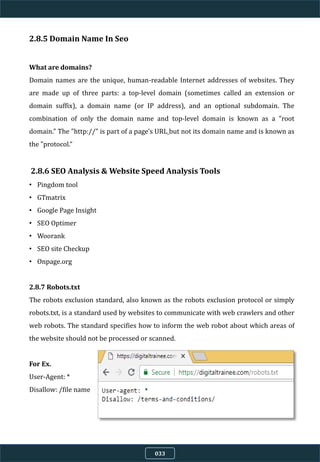
The text in these tags is not displayed, but passable and tells the browsers (or other
web services) specific information about the page. Simply, it “explains” the page so a
browser can understand it.
Here’s a code example of meta tags:
<head>
<title>Your Meta Title </title>
<meta name="description" content="Awesome Description Here">
</head>
Meta Description:
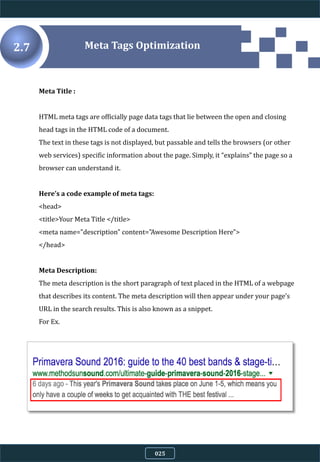
The meta description is the short paragraph of text placed in the HTML of a webpage
that describes its content. The meta description will then appear under your page’s
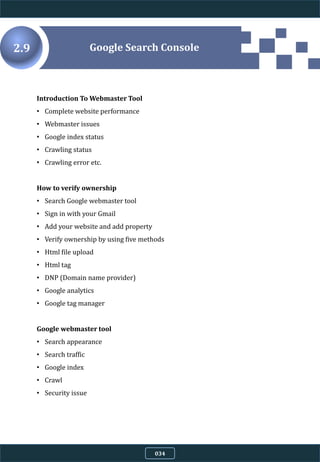
URL in the search results. This is also known as a snippet.
For Ex.
Meta Tags Optimization
025
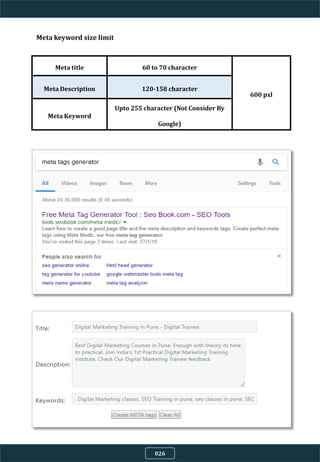
Meta keyword size limit
Meta title 60 to 70 character
600 pxl
Meta Description 120-158 character
Meta Keyword
Upto 255 character (Not Consider By
Google)
026
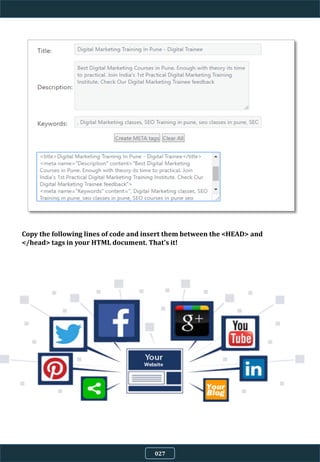
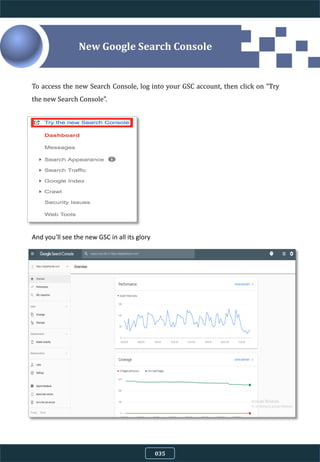
Copy the following lines of code and insert them between the <HEAD> and
</head> tags in your HTML document. That's it!
027
On-Page Factors
A site map (or sitemap) is a list of pages of a web site. Sitemaps used during the
planning of a Web site by its designers. Human-visible listings, typically
hierarchical, of the pages on a site. Structured listings intended for web crawlers
such as search engines.
• XML sitemap:
A XML(extensible markup language) sitemap protocol is specifically
intended for search engine spiders. At its root, XML is a file that includes all the
behind the scenes activity on a web site. Not just the site’s main URL, but all the
URLs within the site along with the associated metadata. This can include when the
URL was last updated, how important it is, the average frequency changes occur,
the URLs relation to the rest of the site, etc.
• HTML sitemap:
HTML(hypertext markup language) is just a general overview of the site,
just the pages and info a user needs to be concerned with. If you’re on a web site
and you’re looking for the shopping cart or the ‘Contact Us’ page and can’t find it,
you’d go to the sitemap and easily find it there. While this is geared towards the
user, it can also help your search engine ranking because your site is user-friendly
and catering to the site visitor.
Tool:
1. Sitemap generator
2.8.1. Sitemap
2.8
028
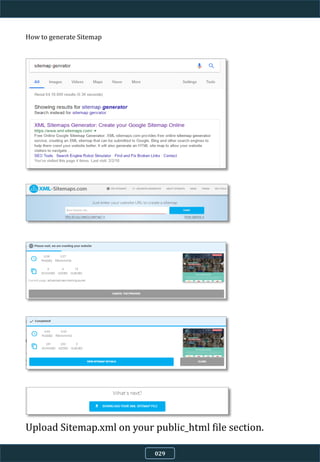
How to generate Sitemap
029
Upload Sitemap.xml on your public_html file section.
2.8.2 Canonical tags
The canonical tag is a page level meta tag that is placed in the HTML header of a
webpage. It tells the search engines which URL is the canonical version of the page
being displayed. It's purpose is to keep duplicate content out of the search engine
index while consolidating your page’s strength into one ‘canonical’ page.
Example:
Multiple Url pointing to same content caused Duplicate issues. For ex.
Following three url having same content to solve this issue we use canonical tag
• www.digitaltrainee.com/Index
• http://www.digitaltrainee.com
• digitaltrainee.com
So in this case we write following code in our head section to the crawler
understanding that this different url indicating the same page.
<Link rel= “Canonical” href=http://www.digitaltrainee.com”/>
Finalize the url to understand Google crawler that the my actual website name
is “http://www.digitaltrainee.com”.
030
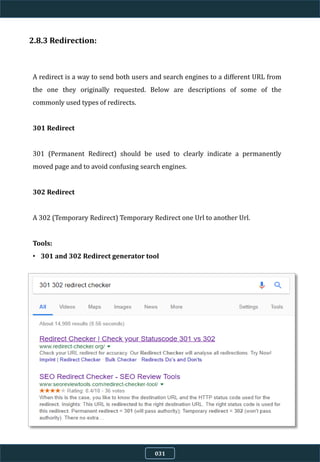
2.8.3 Redirection:
A redirect is a way to send both users and search engines to a different URL from
the one they originally requested. Below are descriptions of some of the
commonly used types of redirects.
301 Redirect
301 (Permanent Redirect) should be used to clearly indicate a permanently
moved page and to avoid confusing search engines.
302 Redirect
A 302 (Temporary Redirect) Temporary Redirect one Url to another Url.
Tools:
• 301 and 302 Redirect generator tool
031
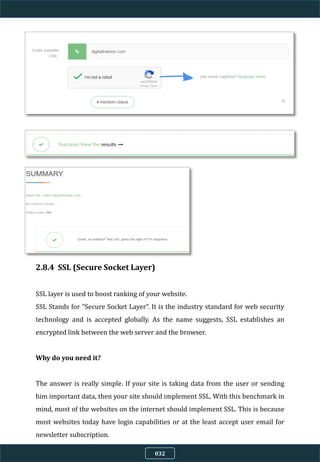
2.8.4 SSL (Secure Socket Layer)
SSL layer is used to boost ranking of your website.
SSL Stands for “Secure Socket Layer”. It is the industry standard for web security
technology and is accepted globally. As the name suggests, SSL establishes an
encrypted link between the web server and the browser.
Why do you need it?
The answer is really simple. If your site is taking data from the user or sending
him important data, then your site should implement SSL. With this benchmark in
mind, most of the websites on the internet should implement SSL. This is because
most websites today have login capabilities or at the least accept user email for
newsletter subscription.
032
2.8.5 Domain Name In Seo
What are domains?
Domain names are the unique, human-readable Internet addresses of websites. They
are made up of three parts: a top-level domain (sometimes called an extension or
domain suffix), a domain name (or IP address), and an optional subdomain. The
combination of only the domain name and top-level domain is known as a "root
domain." The "http://" is part of a page's URL but not its domain name and is known as
the "protocol.“
2.8.6 SEO Analysis & Website Speed Analysis Tools
• Pingdom tool
• GTmatrix
• Google Page Insight
• SEO Optimer
• Woorank
• SEO site Checkup
• Onpage.org
2.8.7 Robots.txt
The robots exclusion standard, also known as the robots exclusion protocol or simply
robots.txt, is a standard used by websites to communicate with web crawlers and other
web robots. The standard specifies how to inform the web robot about which areas of
the website should not be processed or scanned.
For Ex.
User-Agent: *
Disallow: /file name
033
Introduction To Webmaster Tool
• Complete website performance
• Webmaster issues
• Google index status
• Crawling status
• Crawling error etc.
How to verify ownership
• Search Google webmaster tool
• Sign in with your Gmail
• Add your website and add property
• Verify ownership by using five methods
• Html file upload
• Html tag
• DNP (Domain name provider)
• Google analytics
• Google tag manager
Google webmaster tool
• Search appearance
• Search traffic
• Google index
• Crawl
• Security issue
Google Search Console2.9
034
To access the new Search Console, log into your GSC account, then click on “Try
the new Search Console”.
And you’ll see the new GSC in all its glory
New Google Search Console
035
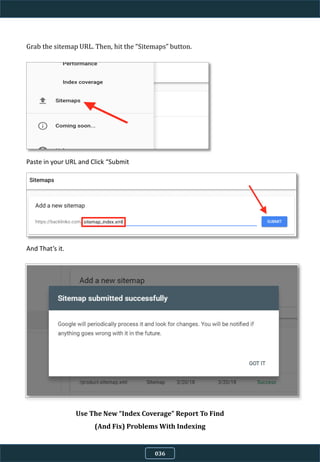
Grab the sitemap URL. Then, hit the “Sitemaps” button.
Paste in your URL and Click “Submit
And That’s it.
Use The New “Index Coverage” Report To Find
(And Fix) Problems With Indexing
036
If everything on your website is setup right, Google will:
a) Find your page and
b) Quickly add it to their index
But sometimes, things go wrong.
Things you NEED to fix if you want Google to index all of your pages.
And that’s where the Index Coverage report comes in.
037
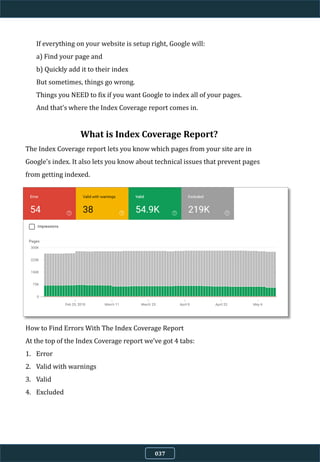
What is Index Coverage Report?
The Index Coverage report lets you know which pages from your site are in
Google’s index. It also lets you know about technical issues that prevent pages
from getting indexed.
How to Find Errors With The Index Coverage Report
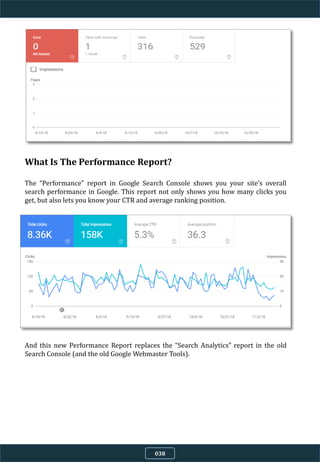
At the top of the Index Coverage report we’ve got 4 tabs:
1. Error
2. Valid with warnings
3. Valid
4. Excluded
038
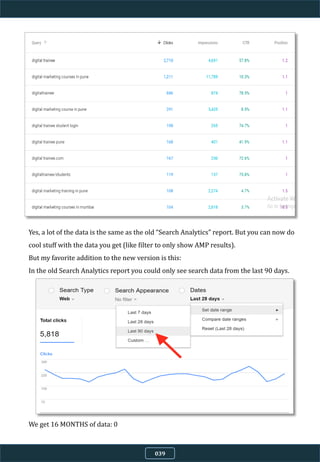
What Is The Performance Report?
The “Performance” report in Google Search Console shows you your site’s overall
search performance in Google. This report not only shows you how many clicks you
get, but also lets you know your CTR and average ranking position.
And this new Performance Report replaces the “Search Analytics” report in the old
Search Console (and the old Google Webmaster Tools).
039
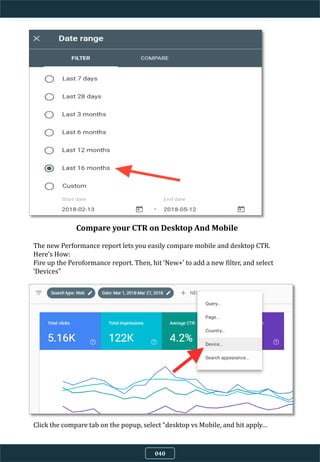
Yes, a lot of the data is the same as the old “Search Analytics” report. But you can now do
cool stuff with the data you get (like filter to only show AMP results).
But my favorite addition to the new version is this:
In the old Search Analytics report you could only see search data from the last 90 days.
We get 16 MONTHS of data: 0
040
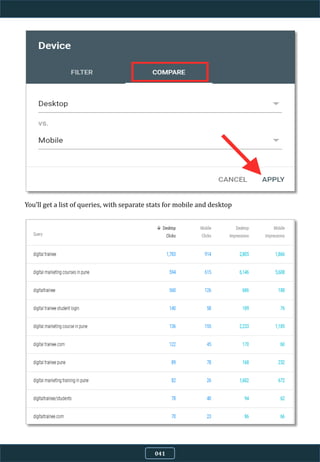
Compare your CTR on Desktop And Mobile
The new Performance report lets you easily compare mobile and desktop CTR.
Here’s How:
Fire up the Peroformance report. Then, hit ‘New+’ to add a new filter, and select
‘Devices”
Click the compare tab on the popup, select “desktop vs Mobile, and hit apply…
041
You’ll get a list of queries, with separate stats for mobile and desktop
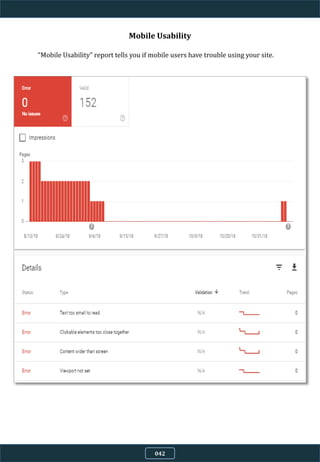
Mobile Usability
“Mobile Usability” report tells you if mobile users have trouble using your site.
042
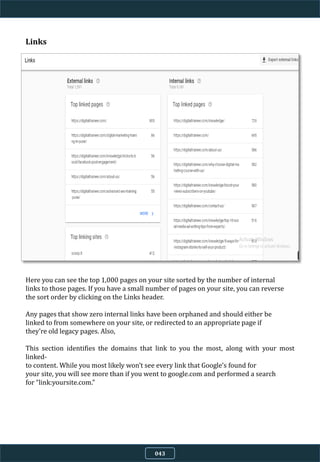
Links
Here you can see the top 1,000 pages on your site sorted by the number of internal
links to those pages. If you have a small number of pages on your site, you can reverse
the sort order by clicking on the Links header.
Any pages that show zero internal links have been orphaned and should either be
linked to from somewhere on your site, or redirected to an appropriate page if
they’re old legacy pages. Also,
This section identifies the domains that link to you the most, along with your most
linked-
to content. While you most likely won’t see every link that Google’s found for
your site, you will see more than if you went to google.com and performed a search
for “link:yoursite.com.”
043
2.11
2.11.1 Link Building
"In general, webmasters can improve the rank of their sites by increasing the number
of high-quality sites that link to their pages.“
Link building is the SEO practice of obtaining links from external websites to your own
to improve both direct referrals (i.e., people clicking on the links), and search engine
ranking. Link building is all about increasing your site link popularity.
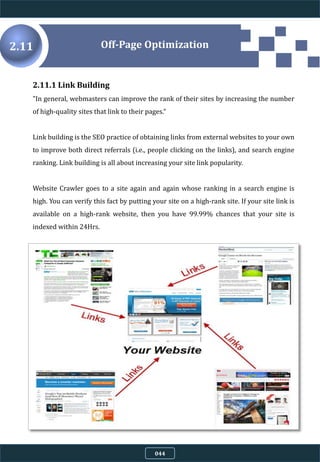
Website Crawler goes to a site again and again whose ranking in a search engine is
high. You can verify this fact by putting your site on a high-rank site. If your site link is
available on a high-rank website, then you have 99.99% chances that your site is
indexed within 24Hrs.
Off-Page Optimization
044
Do Follow Versus No follow
• Do Follow
Dofollow Link is a hyperlink that is able to tell all search engines to pass along its
page to an outbound link.
Example of Nofollow Link:
<a href=”http://www.google.com/” rel=”nofollow”>Google</a>
• No Follow
Nofollow Link is exactly the opposite. It is a hyperlink that removes the ability to
pass on its page rank status to other site.
Example of Dofollow Link:
<a href=”http://www.google.com/”>Google</a>
045
2.12.1 Page Authority
What is Page Authority?
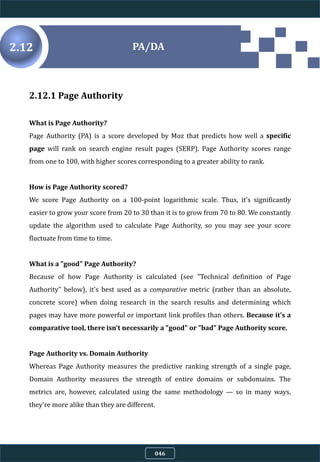
Page Authority (PA) is a score developed by Moz that predicts how well a specific
page will rank on search engine result pages (SERP). Page Authority scores range
from one to 100, with higher scores corresponding to a greater ability to rank.
How is Page Authority scored?
We score Page Authority on a 100-point logarithmic scale. Thus, it's significantly
easier to grow your score from 20 to 30 than it is to grow from 70 to 80. We constantly
update the algorithm used to calculate Page Authority, so you may see your score
fluctuate from time to time.
What is a "good" Page Authority?
Because of how Page Authority is calculated (see "Technical definition of Page
Authority" below), it's best used as a comparative metric (rather than an absolute,
concrete score) when doing research in the search results and determining which
pages may have more powerful or important link profiles than others. Because it's a
comparative tool, there isn't necessarily a "good" or "bad" Page Authority score.
Page Authority vs. Domain Authority
Whereas Page Authority measures the predictive ranking strength of a single page,
Domain Authority measures the strength of entire domains or subdomains. The
metrics are, however, calculated using the same methodology — so in many ways,
they're more alike than they are different.
PA/DA2.12
046
2.12.2 What is domain Authority?
Domain authority is a measure of the power of a domain name and is
one of many search engine ranking factors. Domain authority is based
on three factors: Domain Age, Popularity, and Size.
SEO gurus Moz can be credited with the metric known as DA or domain
authority. Moz’s own search algorithm gauges the quality of any given
site based on a huge complex combination of factors including onsite
and offsite, taking into account things such as diversity of Back linking
domains to come up with a score between 0 and 100. A brand new site,
for example, will have 0 whereas a very high authority site might have
80/100. Domain Authority gives those working in the field of online
marketing a useful metric by which to consider the apparent quality of
any site.
Where can you Find Domain Authority?
Domain Authority metrics are incorporated into dozens of SEO and
online marketing platforms across the web.
Tools:
1. PA/DA Checker
047
Simple link building tips
1. Ask for backlinks
2. Build relationships
4. Start a blog
5. List your site in trustworthy sites
6. Write a good guest post
7. Discover competitors' common backlinks
8. Get an indirect backlink from your competitor
9. Recover your dead backlinks
2.12.3 Link Building Guidelines
Any links intended to manipulate PageRank or a site's ranking in Google search
results may be considered part of a link scheme and a violation of
Google’s Webmaster Guidelines. This includes any behavior that manipulates links
to your site or outgoing links from your site.
The following are examples of link schemes which can negatively impact a site's
ranking in search results:
• Buying or selling links that pass PageRank. This includes exchanging money for
links, or posts that contain links; exchanging goods or services for links; or
sending someone a “free” product in exchange for them writing about it and
including a link
• Excessive link exchanges ("Link to me and I'll link to you") or partner pages
exclusively for the sake of cross-linking
• Large-scale article marketing or guest posting campaigns with keyword-rich
anchor text links
• Using automated programs or services to create links to your site
048
Additionally, creating links that weren’t editorially placed or vouched for by the
site’s owner on a page, otherwise known as unnatural links, can be considered a
violation of our guidelines. Here are a few common examples of unnatural links that
may violate our guidelines:
• Text advertisements that pass PageRank
• Advertorials or native advertising where payment is received for articles that
include links that pass PageRank
• Links with optimized anchor text in articles or press releases distributed on
other sites.
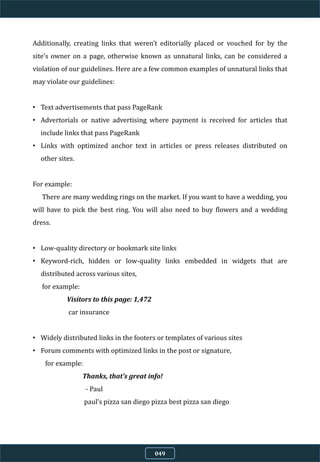
For example:
There are many wedding rings on the market. If you want to have a wedding, you
will have to pick the best ring. You will also need to buy flowers and a wedding
dress.
• Low-quality directory or bookmark site links
• Keyword-rich, hidden or low-quality links embedded in widgets that are
distributed across various sites,
for example:
Visitors to this page: 1,472
car insurance
• Widely distributed links in the footers or templates of various sites
• Forum comments with optimized links in the post or signature,
for example:
Thanks, that’s great info!
- Paul
paul’s pizza san diego pizza best pizza san diego
049
2.12.4 Link Building Activity Platforms :
• Social Bookmarking
• Document Sharing
1. PPT Submission
2. PDF submission
• Image Sharing
1. Info graphic Submission
• Video Sharing
• Article Submission
• Press Release Submission
• Business Listing
• Classified Ad Submission
• Guest Posting
• Forum Posting
• Blog Commenting
• Q & A Submission
050
2.13
Importance Of Local Seo
Local SEO is an effective way to market your business online. It helps businesses
promote their products and services to local customers at the exact time they’re
looking for a local business. Local SEO uses a variety of strategies.
Getting your site ranked on search engines like Google, business directories such as
Yelp, Super pages, Foursquare, Yellow book, Google My Business listing, Bing Places
for Business page, localized content on your website, online reviews and other
strategies.
Millions of customers use local search every day to find the best local businesses in
their area. You can help increase your chances of getting found by these potential
customers through Local SEO.
Submission To Google My Business
Adding or Claiming Your Business on Google My Business
• Go to Google My Business. Click “Get on Google”
• Enter Your Business Name and Address in the Search Box.
• Select or Add Your Business. Click on your business listing if it appears among the
suggested matches.
• Verify Your Business.
• Confirm your Business.
Local SEO
051
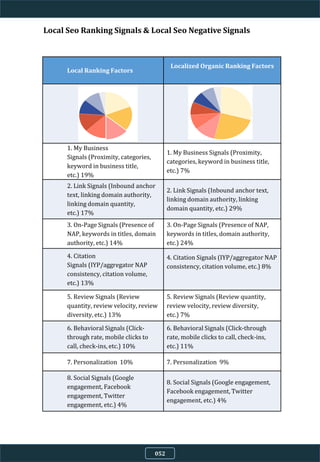
Local Seo Ranking Signals & Local Seo Negative Signals
Local Ranking Factors
Localized Organic Ranking Factors
1. My Business
Signals (Proximity, categories,
keyword in business title,
etc.) 19%
1. My Business Signals (Proximity,
categories, keyword in business title,
etc.) 7%
2. Link Signals (Inbound anchor
text, linking domain authority,
linking domain quantity,
etc.) 17%
2. Link Signals (Inbound anchor text,
linking domain authority, linking
domain quantity, etc.) 29%
3. On-Page Signals (Presence of
NAP, keywords in titles, domain
authority, etc.) 14%
3. On-Page Signals (Presence of NAP,
keywords in titles, domain authority,
etc.) 24%
4. Citation
Signals (IYP/aggregator NAP
consistency, citation volume,
etc.) 13%
4. Citation Signals (IYP/aggregator NAP
consistency, citation volume, etc.) 8%
5. Review Signals (Review
quantity, review velocity, review
diversity, etc.) 13%
5. Review Signals (Review quantity,
review velocity, review diversity,
etc.) 7%
6. Behavioral Signals (Click-
through rate, mobile clicks to
call, check-ins, etc.) 10%
6. Behavioral Signals (Click-through
rate, mobile clicks to call, check-ins,
etc.) 11%
7. Personalization 10% 7. Personalization 9%
8. Social Signals (Google
engagement, Facebook
engagement, Twitter
engagement, etc.) 4%
8. Social Signals (Google engagement,
Facebook engagement, Twitter
engagement, etc.) 4%
052
Citations And Local Submission
A local citation is any mention of your business on the web; it is any combination
of your company name, phone number, address, zip or postal code, and website
address. Citations in SEO are a key factor in improving your local search results.
Local citations come in various forms, for example:
• Company name.
• Company name & phone number.
• Company name, phone number, & address.
• Company name, phone number, address, & website.
• Company name, & website.
• Company phone number.
And so on.
053
4.9.8
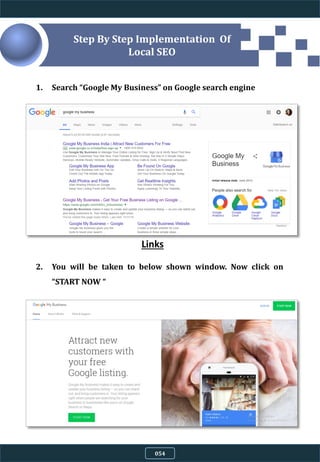
1. Search “Google My Business” on Google search engine
2. You will be taken to below shown window. Now click on
“START NOW “
Links
Step By Step Implementation Of
Local SEO
054
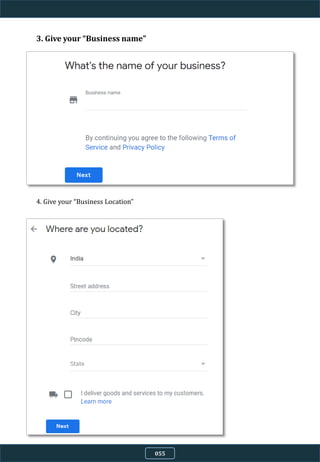
3. Give your “Business name”
4. Give your “Business Location”
055
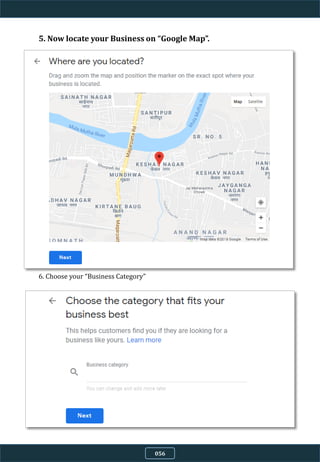
5. Now locate your Business on “Google Map”.
6. Choose your “Business Category”
056
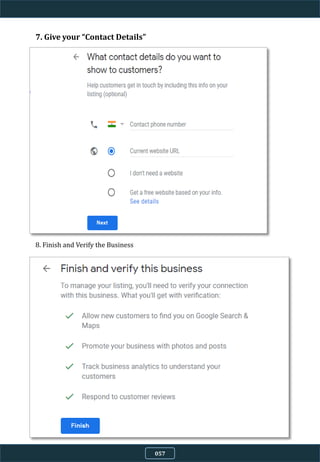
7. Give your “Contact Details”
8. Finish and Verify the Business
057
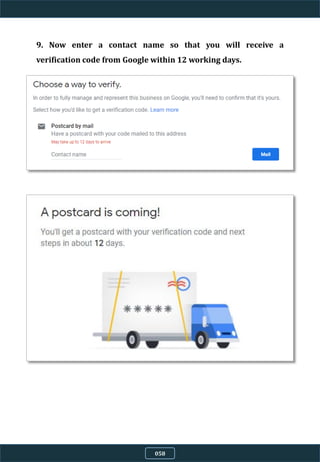
9. Now enter a contact name so that you will receive a
verification code from Google within 12 working days.
058
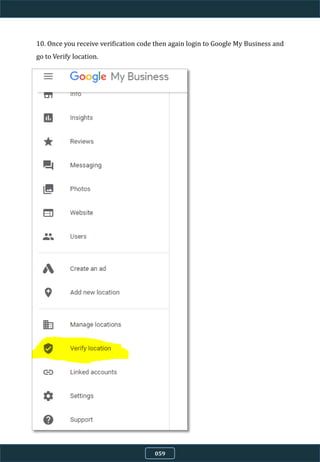
10. Once you receive verification code then again login to Google My Business and
go to Verify location.
059
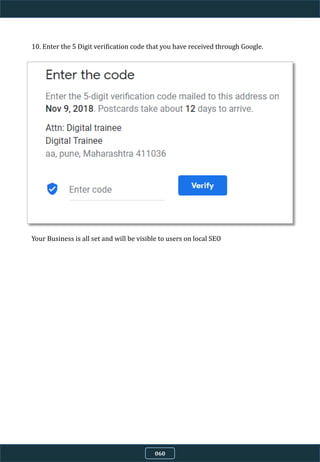
10. Enter the 5 Digit verification code that you have received through Google.
Your Business is all set and will be visible to users on local SEO
060
Seo Task For
Any Projects
061
1. KEYWORDS RESEARCH AND SELECTION
Well-researched keywords are the foundation of any successful SEO campaign.
Moreover, choosing your keywords wisely is half the battle won in accelerating your
website to the top of Search Engines. Our Experts, will use a combination of keyword
tools and compile a list of well-targeted terms and phrases that best describe your
business, to help you choose your most important keywords for effective optimization.
2. COMPETITOR ANALYSIS
Know who you are losing your audience to and why! We will provide you a complete
report on how your competitors (those that rank for your chosen keywords) are faring
on the search engines, and why they are ranking better than you. Based on these
findings, our experts will devise an effective SEO strategy for your website so that you
can outrank your competition over time.
3. TITLE AND METATAGS
Search spiders crawl and display the contents of the Title and Meta tags of your
website in return for a related search query. Hence, these tags serve a two-pronged
strategy:
• Wise use of the correct keywords in these tags will earn the favor of search
engines.
• The contents of these tags are displayed to users and are thus important to
convey a crisp and compelling message to encourage click to your website.
We will optimize these tags in a manner that will satisfy both the above goals, and help
you garner greater traffic from the search engines.
Seo Task For Any Projects
062
4. HTML CODE CLEANUP AND OPTIMIZATION
We will ensure an error-free html code so that your website functions smoothly with
impeccable internal linking and optimum structuring. This goes a long way in helping
the search spiders crawl your website effectively.
5. IMAGE AND HYPERLINK OPTIMIZATION
While search spiders are blind to images, they can pick up the Alt text attached to
pictures on your website. Hence, in order to appeal to the spiders, all images and
internal links will be renamed to include your crucial keywords to ensure better
indexing.
6. CUSTOMIZED 404 PAGES
While users may encounter a “Not Found” 404 error page due to outdated links, mis-
spelt URLs, or dysfunctional internal links. We will ensure that their experience of your
website is nevertheless maintained by customizing your error pages to display
appropriate content and thus avoiding driving away valuable visitors.
7. ROBOTS.TXT OPTIMIZATION
Our experts can guide the crawling of search spiders by creating a robots.txt file which
explicitly allows or disallows crawling and indexing of certain pages on your website
that may be under construction, have sensitive data, or are not meant for public display.
8. SEARCH ENGINE FRIENDLY URL CREATION
URLs of all web pages and articles will be well-defined and optimized with strategic
keywords to appeal to search engines by better matching users’ search terms. This not
only increases the relevancy of your website to a particular search term, but also helps
route traffic directly to Webpages that best serves users’ needs, thereby boosting sales.
063
9. WEBSITE COPY OPTIMIZATION
Better rankings are a function of better content. Our experts will optimize the
content of your website, in order to place your keywords strategically and
highlight them through the use of heading tags and strong tags.
10.GOOGLE, YAHOO! AND BING SITEMAP CREATION
To ensure better ‘index ability’ of your website, our experts will create a search
engine friendly sitemap. These sitemaps explain the structure of your website and
will ensure that no relevant page misses the attention of the search bots.
11.BUILDING BACKLINKS (across 6 months)
Search Engines recognize quality and attach a relevance score to your website on
the basis of the number of incoming links from other related web portals. Hence,
every backlink acts as a vote to the relevancy of your website to a particular
search term. Our experts will build these valuable backlinks from similar-themed
and high quality websites to ensure that you raise on the search engines through
an increasing number of incoming votes.
12.MANUAL SUBMISSIONS TO FREE WEB DIRECTORIES (across 6 months)
Search bots crawl web directories to find websites matching a search term. Our
experts will manually submit your website to hundreds of these directories,
which will not only serve as a backlink, but will also ensure better index ability by
search spiders. These submissions will include your most important keywords
and thus further your SEO objectives.
064
13. MANUAL SUBMISSIONS TO PREMIUM PAID DIRECTORIES
Our experts will also hand-submit your website to premium paid directories like
Yahoo! and Business.com that count as valuable sources for search bots to find
relevant, high quality websites.
14.ARTICLE WRITING AND SUBMISSIONS (across 6 months)
Our copywriters will write keyword-rich articles that carry valuable information
about your business and submit them to hundreds of article directories every month.
Each submission will carry your URL and thus link back to your website. This not only
contributes in building your link base, but also serves as a source of meaningful traffic
to your website.
15.PRESS RELEASE WRITING AND SUBMISSIONS (across 6 months)
Frequent touch points with your audience go a long way in fostering brand value and
generating brand recall. Keep your audience abreast with the latest happenings in
your company through Press Releases written by our in-house writers. Well optimized
Press Releases not only help you grab search engine prominence, but also act as
backlinks.
16. CREATING SOCIAL MEDIA PROFILES (across 6 months)
With social networking sites such as Facebook and Twitter, becoming the hub of all
internet activity, creating Social Media profiles helps you connect with your target
audience through popular and well-visited media. Also, with changes in search
algorithms, Twitter and Facebook feeds are prominently displayed in return for search
queries. Our experts will create your profiles on the most popular portals to afford you
valuable Google real estate.
065
17. SOCIAL BOOKMARKING (across 6 months)
Our Experts will bookmark your web pages with popular sites like Digg,
StumbleUpon, del.icio.us etc. and tag them with relevant keywords in order to up
your popularity quotient. As search bots increasingly pull out well-viewed and
favorite webpage’s from these sites, it helps garner backlinks, gain better visibility
and attract more traffic.
18. FORUM/BLOG COMMENTS (across 6 months)
Our experts will comment on related blogs and appropriate threads on forums, to
generate awareness about your company and how it addresses the needs of the
readers. Moreover, each comment will include your web address and link back to
your website, hence not only bringing more qualified traffic straight away, but also
boosting your ranking on the search engines through an increasing number of
backlinks.
19. PRESENTATION SUBMISSIONS (across 6 months)
Our team will submit your company presentations to popular slide sharing
networks to increase your company mentions across the internet and project you as
an authority in your business.
20. VIDEO SUBMISSIONS (across 6 months)
Videos have become an integral part of search results, featuring third or fourth on
Google results (SERPs). Hence, to capitalize on the changes in the Google algorithm,
our experts will submit your videos to key video-sharing sites so that they are
pulled out and displayed every time a relevant search term is entered. Thus you
garner valuable backlinks and attract instant, quality traffic.
066
21. PHOTO SHARING (across 6 months)
With changes in the Google landscape, images have become a natural part of first
page Google results. Our experts will submit your photos every month to make
sure that they are included in every popular photo-sharing portal, thus ensuring
that your company is referenced at a prominent spot on search engines.
22. REPUTATION OPTIMIZATION
Negative comments cropping up on the first page of search results can drive away
valuable traffic and harm your brand. Our experts will help protect your
reputation by pushing negative information about your company lower down in
search results, thus
ensuring that your reputation is insulated from negative publicity and not
tarnished by ill-meaning competitors or frivolous complaints.
23. LOCAL SEARCH ENGINE SUBMISSION
Our experts can effectively optimize your website to help you gain prominence on
local search engines and thus establish you as a top quality and much-favoured
provider of your products and services in your town or vicinity.
067
24. Schema INTEGRATION
Schema Code is a micro format meant for easy display of contact details of people,
companies and places, so that any parsing tool can extract these details easily and
showcase them on search engines, especially the local ones. Google Listings and
Google maps use these as a source to pick up contact details and display them
prominently on search engines.
25. UPDATING PAGES FOR LOCAL SEARCH
Our experts will improve your local rankings by infusing relevant local keywords
in your website copy, internal links, titles, headings etc. so that you feature in top
spots of local search engines.
26. GOOGLE ANALYTICS SET UP AND INTEGRATION
With the main purpose of SEO being to attract greater and better quality traffic to
your website, our experts will integrate Google Analytics and help you track your
best performing keywords, main sources of traffic and the increase in visitors to
your website.
27. GOOGLE ANALYTICS FUNNEL CREATION AND GOAL SETTING
Our experts will put in place advanced analytics settings that will help you
monitor how many visitors that came through search engines and other
websites, converted to a sale by purchasing one or more of your products.
Consequently, this will help you measure your ROI and calculate your profits. As
your SEO strategy begins to take effect, your cost per customer acquisition will
gradually decline with the same monthly investment, thus making our services
more cost effective over time.
068
28. GOOGLE WEBMASTER TOOLS SET UP AND MONITORING
Setting up Webmaster Tools is a best practice prescribed by Google and Bing. It
affords better visibility on the search engines and allows monitoring of
incoming links as well as facilitates quick diagnosis of any problems.
29. SEARCH ENGINE RANKING REPORT
30. DIRECTORY SUBMISSION REPORT
31. ARTICLE AND PRESS RELEASE SUBMISSION REPORT
32. LINK-BUILDING REPORT
33. TRAFFIC REPORT
31. ACTIVITY REPORT
069
Google Ads
070
Ch. No. Unit Name Page No.
3. Google Ads 071
3.1 Basic Parameters 070
3.1.1 Cost Per Click (CPC) 071
3.1.2 Cost Per Thousand Impression (CPM) 071
3.1.3 Cost Per Acquisition(CPA) 071
3.1.4 Click Through Rate (CTR) 072
3.1.5 Conversion Rate (CR) 072
3.1.6 Return On Investment (ROI) 072
3.1.7 Quality Score 073
3.2 Search Campaign 076
3.3 Display Campaign 084
3.4 Video Campaign 090
3.5 Universal Campaign 101
3.6 Shopping Campaign 103
3.7 Remarketing 107
3.8 Conversion 107
Shopping Campaign Videos 108
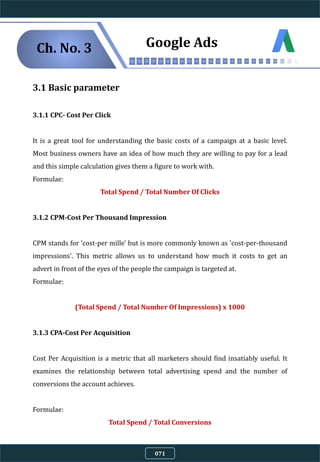
3.1 Basic parameter
3.1.1 CPC- Cost Per Click
It is a great tool for understanding the basic costs of a campaign at a basic level.
Most business owners have an idea of how much they are willing to pay for a lead
and this simple calculation gives them a figure to work with.
Formulae:
Total Spend / Total Number Of Clicks
3.1.2 CPM-Cost Per Thousand Impression
CPM stands for 'cost-per mille' but is more commonly known as 'cost-per-thousand
impressions'. This metric allows us to understand how much it costs to get an
advert in front of the eyes of the people the campaign is targeted at.
Formulae:
(Total Spend / Total Number Of Impressions) x 1000
3.1.3 CPA-Cost Per Acquisition
Cost Per Acquisition is a metric that all marketers should find insatiably useful. It
examines the relationship between total advertising spend and the number of
conversions the account achieves.
Formulae:
Total Spend / Total Conversions
Ch. No. 3 Google Ads
071
3.1.4 CTR-Click Through Rate
A simple but hugely important calculation, 'click-through rate' allows us to understand
licking on an advert in relation to how many times it is being shown.
Formulae:
Total Clicks / Total Impressions
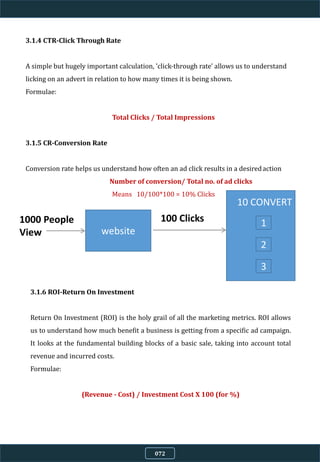
3.1.5 CR-Conversion Rate
Conversion rate helps us understand how often an ad click results in a desiredaction
Number of conversion/ Total no. of ad clicks
Means 10/100*100 = 10% Clicks
1000 People
View website
1
2
3
10 CONVERT
100 Clicks
3.1.6 ROI-Return On Investment
Return On Investment (ROI) is the holy grail of all the marketing metrics. ROI allows
us to understand how much benefit a business is getting from a specific ad campaign.
It looks at the fundamental building blocks of a basic sale, taking into account total
revenue and incurred costs.
Formulae:
(Revenue - Cost) / Investment Cost X 100 (for %)
072
3.1.7. QS-Quality Score
Quality score is always be 1 to 10 score. This is very important in paid
marketing.
Parameter for Good quality Score;
• Quality of your landing page
• Keyword relevancy in Ad copy.
• Past CTR must be high.
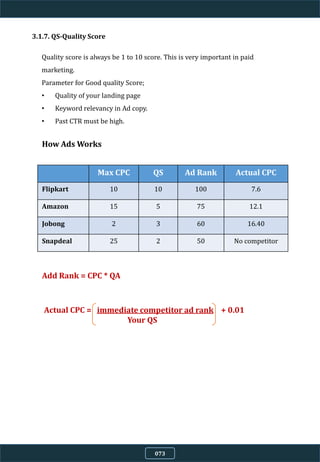
How Ads Works
Max CPC QS Ad Rank Actual CPC
Flipkart 10 10 100 7.6
Amazon 15 5 75 12.1
Jobong 2 3 60 16.40
Snapdeal 25 2 50 No competitor
Add Rank = CPC * QA
Actual CPC = immediate competitor ad rank + 0.01
Your QS
073
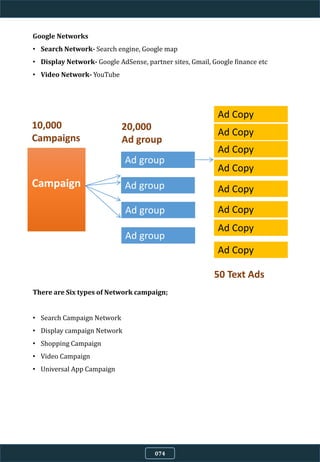
Google Networks
• Search Network- Search engine, Google map
• Display Network- Google AdSense, partner sites, Gmail, Google finance etc
• Video Network- YouTube
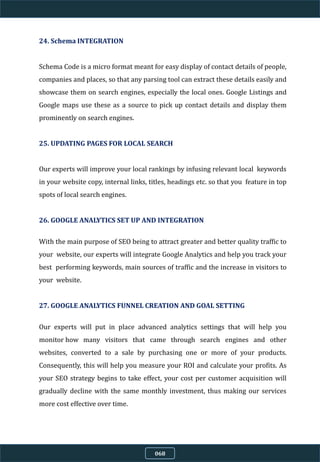
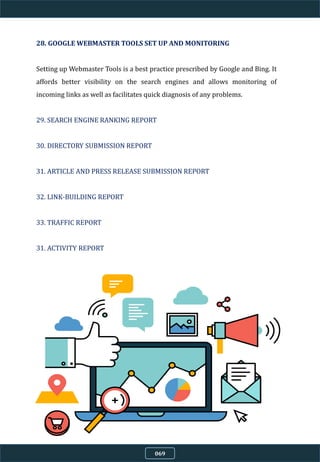
There are Six types of Network campaign;
• Search Campaign Network
• Display campaign Network
• Shopping Campaign
• Video Campaign
• Universal App Campaign
Campaign
Ad group
Ad Copy
Ad group
Ad group
Ad group
Ad Copy
Ad Copy
Ad Copy
Ad Copy
Ad Copy
Ad Copy
Ad Copy
10,000
Campaigns
20,000
Ad group
50 Text Ads
074
Different types of ad copy:
• Text ad
• Dynamic ads
• Mobile app install
• Mobile app engagement
There are two types of bidding:
• Automated
This is the easiest way to bid. Set a daily budget and let Ads adjust your CPC bids
to bring you the most clicks possible within that budget.
• Manual
Take full control of your CPC bids. Manual bidding lets you set bids at the ad group
level, or for individual keywords or ad placements, so you know you're bidding just
what you want for the clicks that mean the most to you.
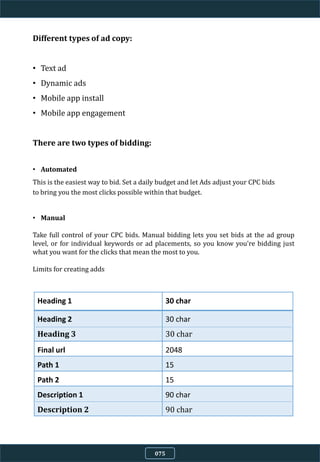
Limits for creating adds
Heading 1 30 char
Heading 2
Heading 3
30 char
30 char
Final url 2048
Path 1 15
Path 2 15
Description 1
Description 2
90 char
90 char
075
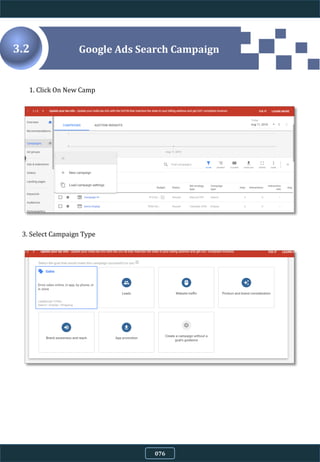
3.2
1. Click On New Camp
3. Select Campaign Type
Google Ads Search Campaign
076
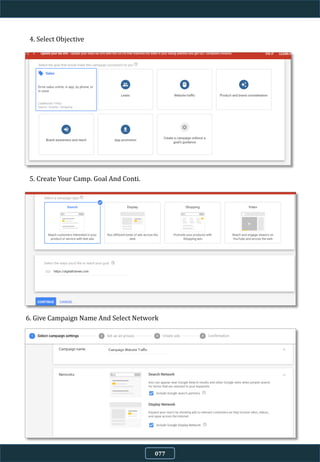
4. Select Objective
5. Create Your Camp. Goal And Conti.
6. Give Campaign Name And Select Network
077
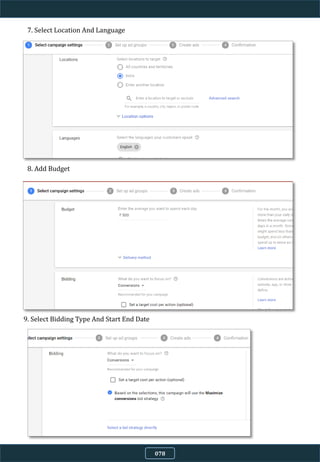
7. Select Location And Language
8. Add Budget
9. Select Bidding Type And Start End Date
078
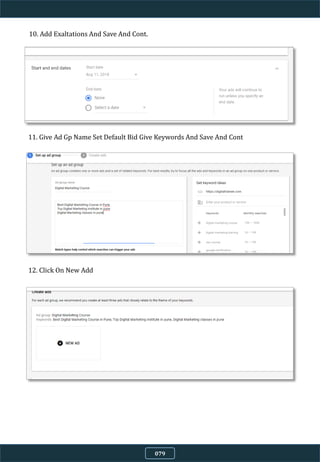
10. Add Exaltations And Save And Cont.
11. Give Ad Gp Name Set Default Bid Give Keywords And Save And Cont
12. Click On New Add
079
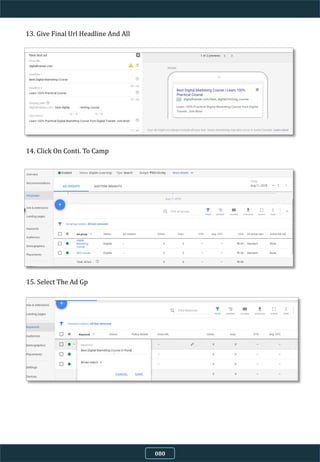
13. Give Final Url Headline And All
14. Click On Conti. To Camp
15. Select The Ad Gp
080
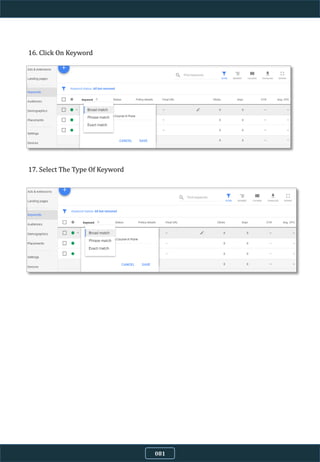
16. Click On Keyword
17. Select The Type Of Keyword
081
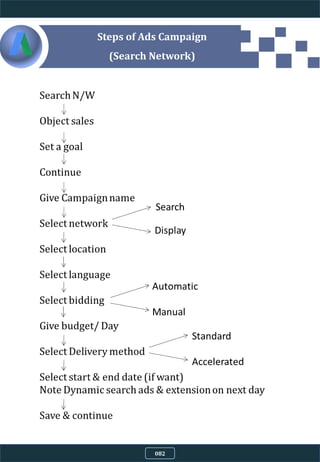
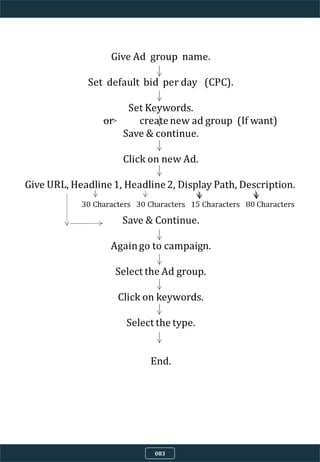
Steps of Ads Campaign
(Search Network)
082
083
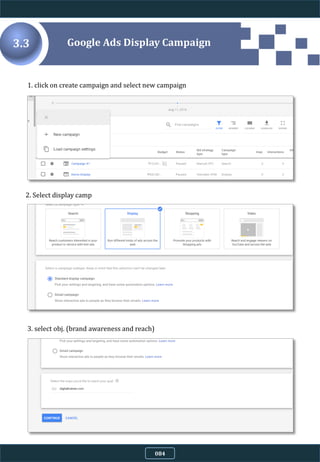
1. click on create campaign and select new campaign
2. Select display camp
3. select obj. (brand awareness and reach)
Google Ads Display Campaign3.3
084
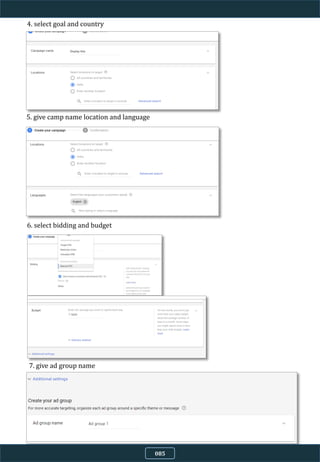
4. select goal and country
5. give camp name location and language
6. select bidding and budget
7. give ad group name
085
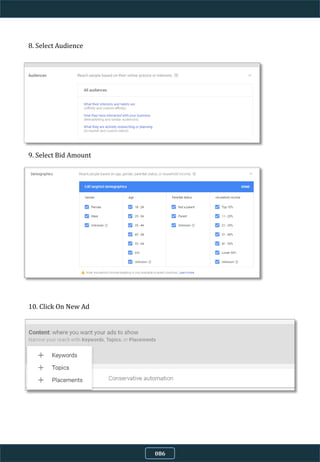
8. Select Audience
9. Select Bid Amount
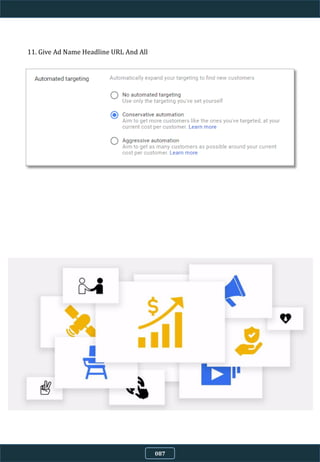
10. Click On New Ad
086
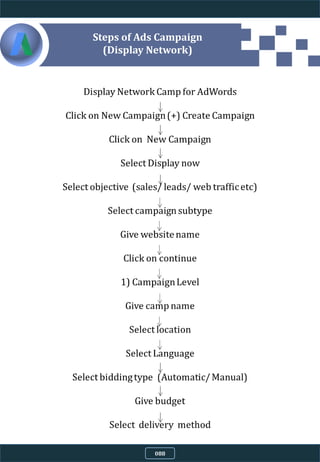
11. Give Ad Name Headline URL And All
087
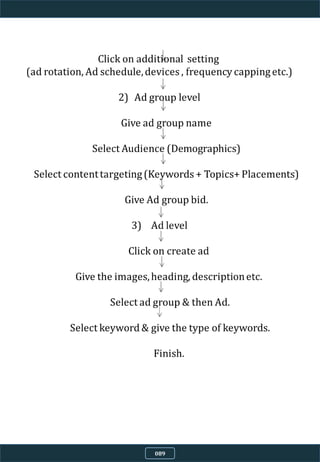
Steps of Ads Campaign
(Display Network)
088
089
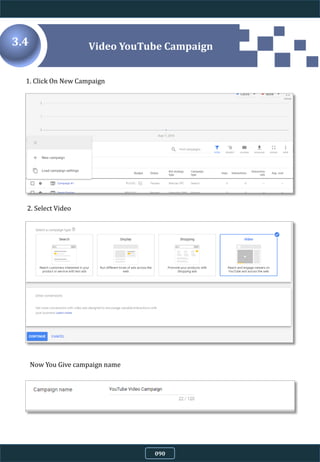
3.4
1. Click On New Campaign
2. Select Video
Video YouTube Campaign
Now You Give campaign name
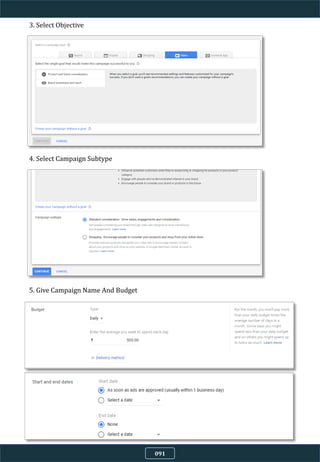
090
3. Select Objective
4. Select Campaign Subtype
5. Give Campaign Name And Budget
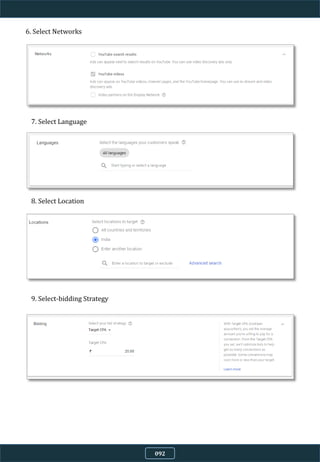
091
6. Select Networks
7. Select Language
8. Select Location
9. Select-bidding Strategy
092
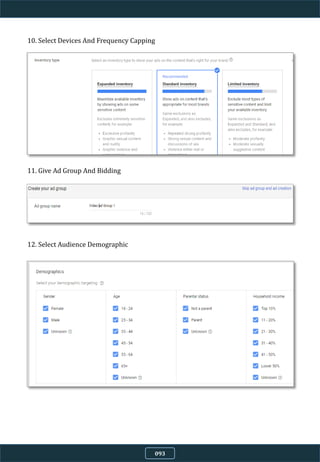
10. Select Devices And Frequency Capping
11. Give Ad Group And Bidding
12. Select Audience Demographic
093
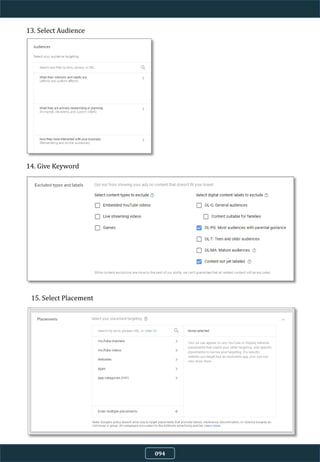
13. Select Audience
14. Give Keyword
15. Select Placement
094
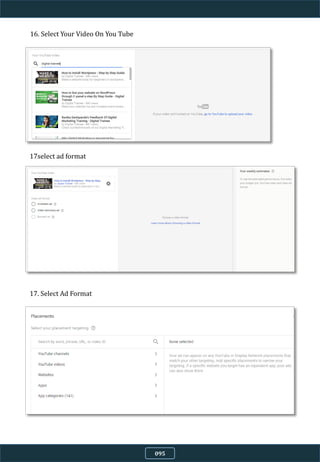
16. Select Your Video On You Tube
17select ad format
17. Select Ad Format
095
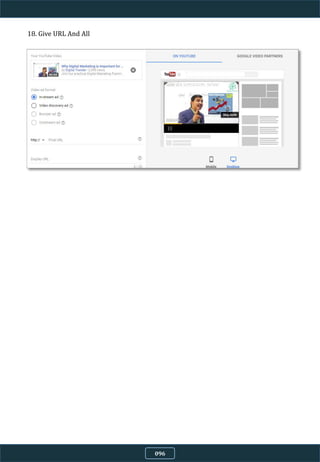
18. Give URL And All
096
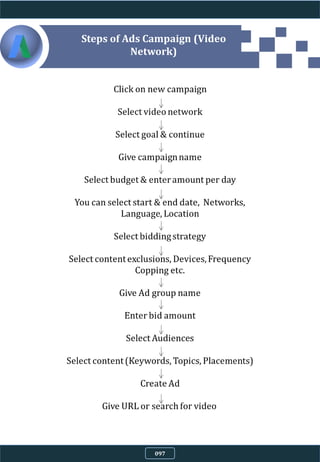
Steps of Ads Campaign (Video
Network)
097
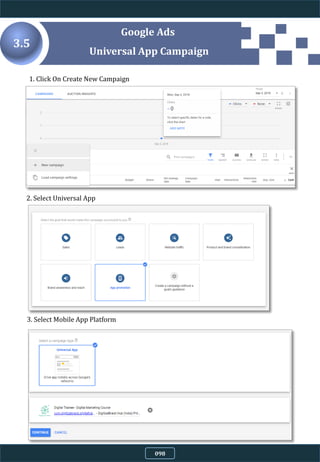
1. Click On Create New Campaign
2. Select Universal App
3.5
3. Select Mobile App Platform
Google Ads
Universal App Campaign
098
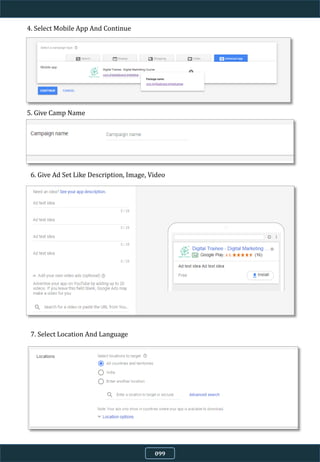
4. Select Mobile App And Continue
5. Give Camp Name
6. Give Ad Set Like Description, Image, Video
7. Select Location And Language
099
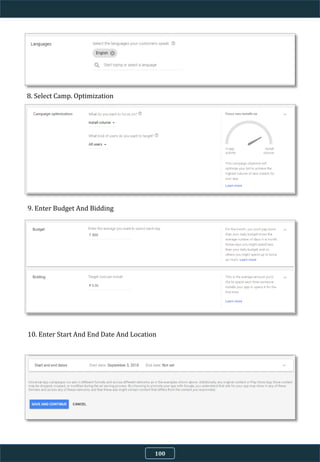
8. Select Camp. Optimization
9. Enter Budget And Bidding
10. Enter Start And End Date And Location
100
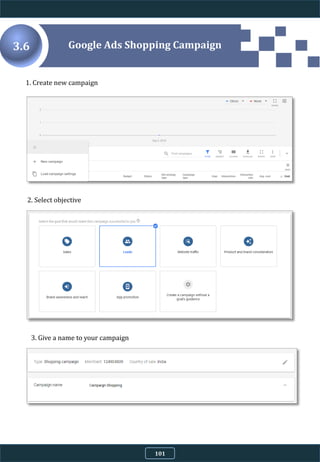
Google Ads Shopping Campaign3.6
1. Create new campaign
2. Select objective
3. Give a name to your campaign
101
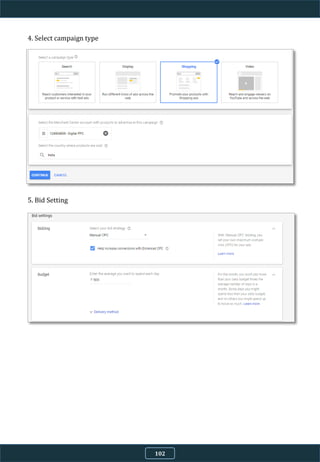
4. Select campaign type
5. Bid Setting
102
Google Ads Shopping Campaign
1) If you want to create a shopping campaign then first you have
To create an account on ‘Google Merchant’.
• Google Merchant is a warehouse in which all of your products
Are saved.
2) So, First you have to create Google Merchant account which
Include following two steps
i. Create your account
ii. Verify & claim your site
To create your merchant account type google.com/ merchants
Fill all the information like business country , name of store,
website name, contact details etc.
Note: Your store name will be displayed on Google. i.e. in front of your
Product so be sure it matches the name on your website.
Note: There is an email address option in contact details & it is
Tied to your site verification.
Note: When you enter the website name enter the prefix http/https
Otherwise, you get the error message later on.
• Click on continue
• Accept the terms & condition
• Click on Finish
103
3) Verify & Claim
In Google Merchant dashboard, Click on business information
In Business info click on website
There are some option to verify an account select one option
& click on confirm successful upload by visiting
Click on verified & click on verify & claim unclaimed to claim
your website.
This is how you successfully create Google merchant account.
Now you have to add the products.
i) Set up your data feed
ii) Add products.
i) Set up your data feed:-
Google spreadsheet to upload your product info everything
will get submitted to merchant center automatically.
Again in Google merchants dashboard click on ‘Product’
Click on the plus data feed button.
Select the country & make sure you pick the correct language.
Click on continue.
4) Then you have 4 options.
• Google sheets – update your product in Google sheet &
automatically update
• Schedule fetch – Fetch the data from website & update
automatically.
• Upload
• Content API
104
Click on continue.
Click on save.
ii) Add Products:-
Select the spreadsheet which appear in your dashboard
feed section.
Note:- Don’t change the column headers otherwise your
feed will get rejected.
For eg. Columns like price , availability, condition etc.
105
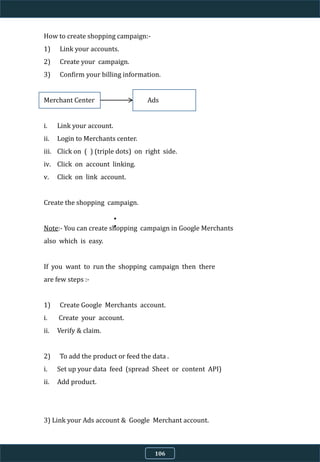
How to create shopping campaign:-
1) Link your accounts.
2) Create your campaign.
3) Confirm your billing information.
Merchant Center Ads
i. Link your account.
ii. Login to Merchants center.
iii. Click on ( ) (triple dots) on right side.
iv. Click on account linking.
v. Click on link account.
Create the shopping campaign.
Note:- You can create shopping campaign in Google Merchants
also which is easy.
If you want to run the shopping campaign then there
are few steps :-
1) Create Google Merchants account.
i. Create your account.
ii. Verify & claim.
2) To add the product or feed the data .
i. Set up your data feed (spread Sheet or content API)
ii. Add product.
3) Link your Ads account & Google Merchant account.
4) Run the shopping campaign.
106
3.7 Remarketing :
Remarketing is a clever way to connect with visitors to your website who may not have
made an immediate purchase or enquiry. It allows you to position targeted ads in front of
a defined audience that had previously visited your website - as they browse elsewhere
around the internet.
3.8 Conversion
Conversion tracking is a powerful tool in Ads that lets you identify how well your
ad campaign is generating leads, sales, downloads, email sign-ups, and other key
actions for your business.
The last page visit is known as conversion
Types of conversion
• Website [ track, purchase, form submission etc.]
• App [track, app, download]
• Phone calls [ track calls ]
107
1) Guide to Google Shopping : Set up your Merchant Center account
2) Guide to Google Shopping: Upload your products with a data feed :
108
Social Media
MARKETING
109
Ch. No. Unit Name Page No.
4. Social Media Marketing 110
4.1 Social Media Optimization 112
4.2 Facebook Marketing 115
4.3 Facebook Advertising 117
4.4 Facebook Campaign Step By Step 119
4.5 Twitter Marketing 131
4.5.1 Twitter Paid Campaign 137
4.6 LinkedIn Marketing 143
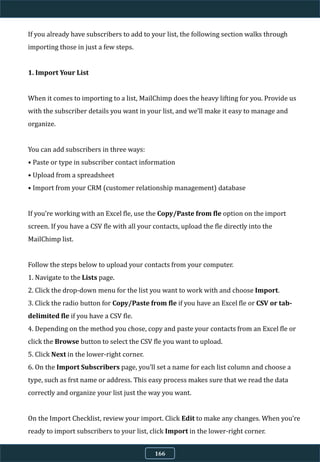
4.7 Email Marketing 161
Introduction to social media marketing
Social Media Marketing
Social Media is a platform that lets us participate in social networking. We can share
our posts on various social media platforms to improve business visibility. Today it
is the best source for news updates, marketing, education, and Entertainment.
Importance of Social Media
The importance of social media is unbeatable. It is a powerful channel of marketing
Business owners can improve search rankings, leads, sales, and traffic using search
media. This can be done at reduced marketing expenses. Besides business, it is a
cool platform to connect with friends and dear ones.
A game changer for any business it provides us the flexibility to communicate at
both personal as well as business levels. Business owners can improve search
rankings, leads, sales, and traffic using search media. This can be done at reduced
marketing expenses. Besides business, it is a cool platform to connect with friends
and dear ones.
Social Media MarketingCh. No. 4
110
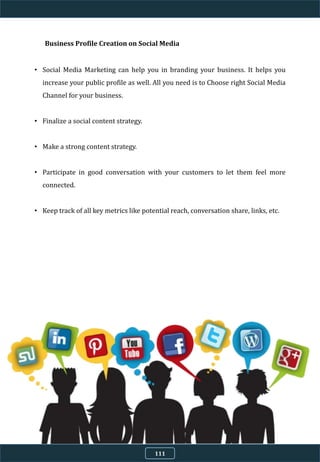
Business Profile Creation on Social Media
• Social Media Marketing can help you in branding your business. It helps you
increase your public profile as well. All you need is to Choose right Social Media
Channel for your business.
• Finalize a social content strategy.
• Make a strong content strategy.
• Participate in good conversation with your customers to let them feel more
connected.
• Keep track of all key metrics like potential reach, conversation share, links, etc.
111
4.1
SMO Strategy for Business
A wisely implemented Social Media Optimization (SMO) strategy can give a great
boost to your business. To draw maximum benefit out of Social Media, you need to
set clear and well-defined business goals and objectives.
The following points are the backbone of any well-laid SMO strategy:
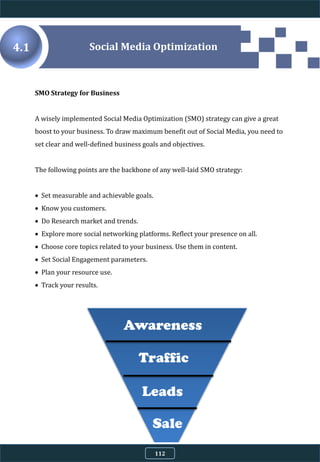
 Set measurable and achievable goals.
 Know you customers.
 Do Research market and trends.
 Explore more social networking platforms. Reflect your presence on all.
 Choose core topics related to your business. Use them in content.
 Set Social Engagement parameters.
 Plan your resource use.
 Track your results.
Social Media Optimization
112
Ad formats
SMO –Key Concepts
 Aim for building reputation by depicting yourself as a trusted source or business.
 Encourage more engagement and sharing.
 Be an authorized name in your industry.
 Gear up originality.
 Keep it social.
 Master over your media platforms.
 Optimize every single point that hinders your efforts.
Business Profile Creation
Create an impactful Business profile. Add a well-defined persona and proficiency
statement of your business.
 Study competitors’ business profile, Analyze their strong points, and add them to
yours.
 Add prominent features of your business that makes it stand out among others.
 Include the milestones achieved by your company.
 Add address and other details.
 Include data and statistics.
 List your renowned vendors.
 Add some keywords to it to get noticed by the web crawler.
Brand Awareness
Brand awareness is a degree to which your brand name is known. Brand name
solidifies customers’ trust. So, it is important that your brand name overshadows
your products. Promoting the brand name helps your business grow and get over
obsolete business state. Social Media Marketing can help you in branding your
business. It helps you
113
Increase your public profile as well. All you need is to
 Choose right Social Media Channel for your business.
 Finalize a social content strategy.
 Make a strong content strategy.
 Participate in good conversation with your customers to let them feel more
connected.
 Keep track of all key metrics like potential reach, conversation share, links ,etc.
Social Media Marketing At Marketing Land
Marketing Land is the sister site to Search Engine Land that covers all facets of
internet marketing, including these popular topics within social media marketing:
• Facebook
• Instagram
• Twitter
• Pinterest
• LinkedIn
• Google+
114
Introduction to Facebook marketing
Facebook is a social networking service provider. It lets you invite and connect
with friends, send messages and pictures, like and comment or share them.
Facebook has seen outstanding growth since its inception and is poised to
maintain its dominance in social networking.
How to Create a Fan Page?
A Facebook fan page is an amazing way to promote your business, build awareness
for a cause, and gather support for your brand. If you would like to create a fan
page, follow these easy steps:
• Log in to your Facebook account.
• Click on the settings on the top right-hand corner of your page.
• Click on create page.
• Click on the type of page you would like to create.
• Fill in all the information required.
• Click on "get started".
• Upload a profile picture and click on save photo.
• Complete the 'about' section and click 'save info'.
• Now decide whether you want to enable ads or skip (it will be payable if you
enable).
4.2 Facebook Marketing
115
Facebook Profiles
Facebook Profiles are for people and they are generally meant for personal use only. A
Facebook profile is an account that is allocated against an individual, who can use it to
network with friends and colleagues, and share information with them. It is designed to
be a unique profile on the Facebook network for that one individual, and it is not meant
to be used to represent a company, an organization, or a fictional character.
Facebook Places
Facebook Places enable people to provide real-time update of where they are and
what they are doing when they are on the move. It also enables its users to take
advantage of unexpected coincidences such as discovering that they are at some
concert as their friends. Users can check in when they arrive at a location, and see
whether their friends are nearby. The best part about Facebook places is that it will
more or less maintain itself once it has been created. Facebook users do have the
ability to 'like' the Facebook places as well, so encourage visitors to press the 'like'
button after they check in.
Facebook Groups
Facebook Groups are the places for small group communication where users can
share their common interests and express their opinion. Groups allow people to come
together around a common cause. Groups are for discussing issues and
share related content. When we create a group, we can decide whether to make it
publicly available for anyone to join, require administrator approval for members to
join, or keep it private and by invitation only. Groups range widely – from light-
hearted themes to organizing activities to serious topics such as politics and world
events.
Grow Your Business with Facebook
Facebook is fast becoming a powerhouse of marketing activity due to the sheer
number of engaging users on the site and the simplicity of connecting with them
directly.
116
What are Adverts?
Adverts on Facebook are unique. They are shown to specific groups of highly engaged
people. If your adverts have a great creative content and are well targeted, they get
more likes, comments, and shares. When we boost our page posts or expand the
audience for the adverts, more people will see them when they visit Facebook.
Facebook ads allow us to promote our business, get more fans to our business page,
and drive more leads for our sales team. Facebook ads allow us to advertise a website
or content that we manage on Facebook (like a group, page, or event)
To create an ad, go to: http://www.facebook.com/advertising And click "create an ad".
How to Create a Campaign?
With targeted ads, stories, and wall posts, a successful campaign can be a powerful tool
in our advertising arsenal. When running a Facebook campaign, we can draw on several
Facebook components such as wall posts, Facebook ads, sponsored marketing, unique
page tabs, etc. We can break down reports by campaign and also easily start/stop all ad
sets within that campaign.
Campaigns correspond to each of our advertising objectives, like building brand
awareness or driving web traffic. They are designed to help optimize and measure our
results for each objective across multiple ad sites and ads. Each campaign can feature
multiple ad sets, each of which has its own budget and schedule. We can also organize
each ad set to represent a particular audience segment, for example, we can have an ad
set for people who live near our store. This will help us control the amount we spend on
each audience, decide when they will see our ads, and measure their response. Within
each ad set, we can have multiple ads, each of which can feature a different set of
images, links, videos, or text.
Facebook Advertising4.3
117
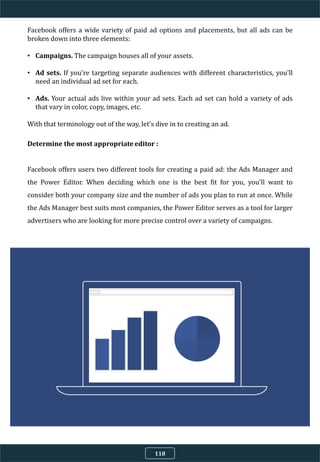
Facebook offers a wide variety of paid ad options and placements, but all ads can be
broken down into three elements:
• Campaigns. The campaign houses all of your assets.
• Ad sets. If you're targeting separate audiences with different characteristics, you'll
need an individual ad set for each.
• Ads. Your actual ads live within your ad sets. Each ad set can hold a variety of ads
that vary in color, copy, images, etc.
With that terminology out of the way, let's dive in to creating an ad.
Determine the most appropriate editor :
Facebook offers users two different tools for creating a paid ad: the Ads Manager and
the Power Editor. When deciding which one is the best fit for you, you'll want to
consider both your company size and the number of ads you plan to run at once. While
the Ads Manager best suits most companies, the Power Editor serves as a tool for larger
advertisers who are looking for more precise control over a variety of campaigns.
118
New Step By Step Procedure For
Facebook campaign
4.4
119
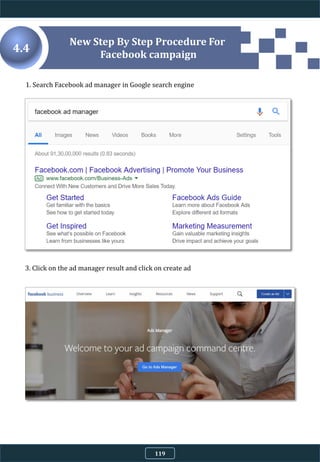
1. Search Facebook ad manager in Google search engine
3. Click on the ad manager result and click on create ad
120
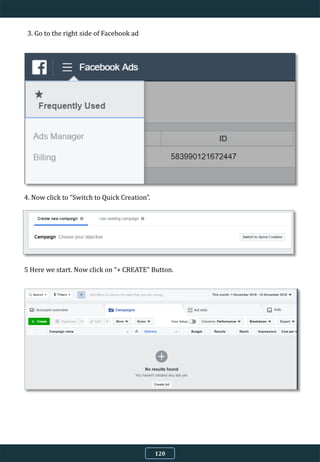
3. Go to the right side of Facebook ad
4. Now click to “Switch to Quick Creation”.
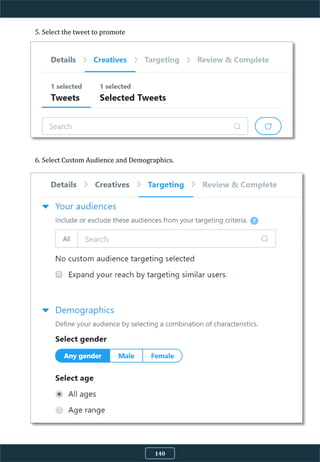
5 Here we start. Now click on “+ CREATE” Button.
121
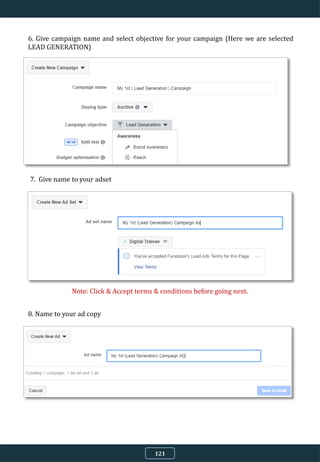
Note: Click & Accept terms & conditions before going next.
6. Give campaign name and select objective for your campaign (Here we are selected
LEAD GENERATION)
7. Give name to your adset
8. Name to your ad copy
122
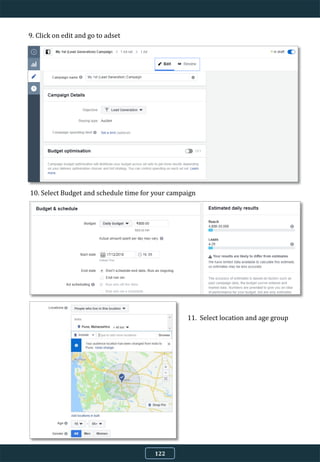
9. Click on edit and go to adset
10. Select Budget and schedule time for your campaign
11. Select location and age group
123
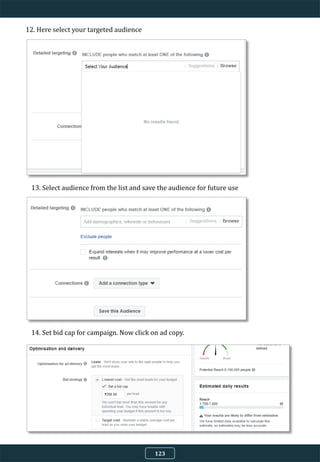
12. Here select your targeted audience
13. Select audience from the list and save the audience for future use
14. Set bid cap for campaign. Now click on ad copy.
124
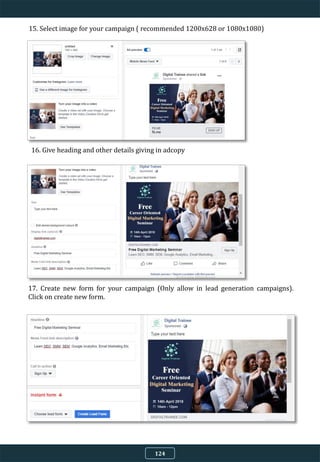
15. Select image for your campaign ( recommended 1200x628 or 1080x1080)
16. Give heading and other details giving in adcopy
17. Create new form for your campaign (Only allow in lead generation campaigns).
Click on create new form.
125
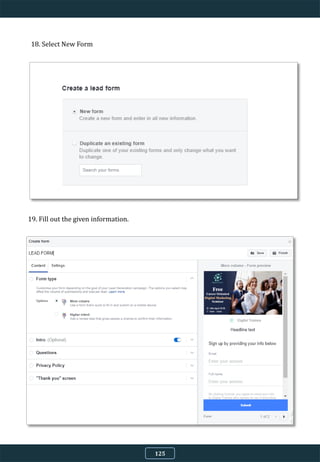
18. Select New Form
19. Fill out the given information.
126
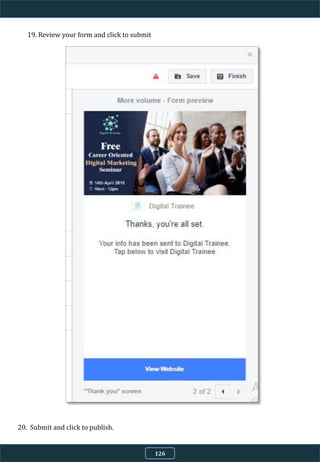
19. Review your form and click to submit
20. Submit and click to publish.
4.9.8
Step By Step Process of
Ads Manager
*Steps of Ad Manager
-Search on Google “Ad Manager”
-Click on First Link.
-Click on ‘Create an ad’.
-Login with your Facebook account.
127
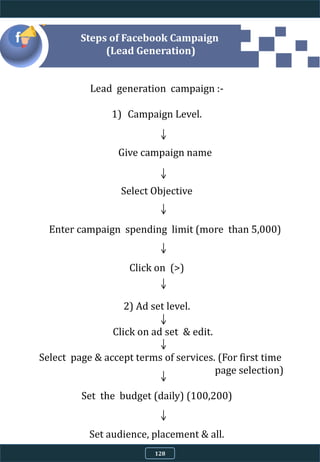
4.9.8 Steps of Facebook Campaign
(Lead Generation)
Lead generation campaign :-
1) Campaign Level.
Give campaign name
Select Objective
Enter campaign spending limit (more than 5,000)
Click on (>)
2) Ad set level.
Click on ad set & edit.
Select page & accept terms of services. (For first time
page selection)
Set the budget (daily) (100,200)
Set audience, placement & all.
128
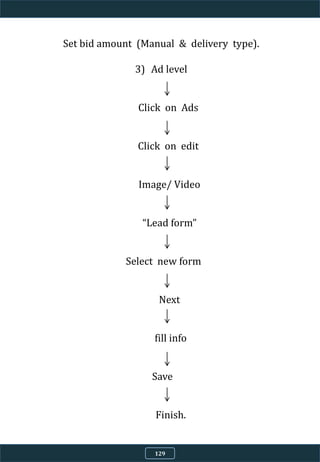
Set bid amount (Manual & delivery type).
3) Ad level
Click on Ads
Click on edit
Image/ Video
“Lead form”
Select new form
Next
fill info
Save
Finish.
129
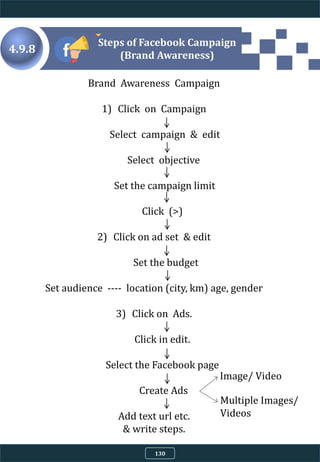
Steps of Facebook Campaign
(Brand Awareness)
Brand Awareness Campaign
1) Click on Campaign
Select campaign & edit
Select objective
Set the campaign limit
Click (>)
2) Click on ad set & edit
Set the budget
Set audience ---- location (city, km) age, gender
3) Click on Ads.
Click in edit.
Select the Facebook page
Create Ads
Add text url etc.
& write steps.
4.9.8
Image/ Video
Multiple Images/
Videos
130
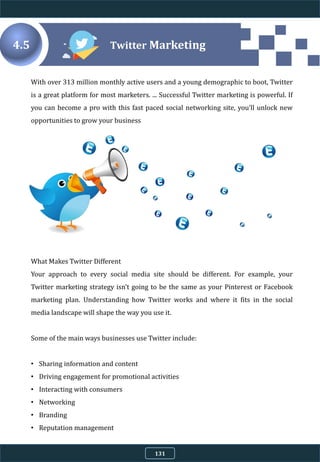
4.5 Twitter Marketing
With over 313 million monthly active users and a young demographic to boot, Twitter
is a great platform for most marketers. ... Successful Twitter marketing is powerful. If
you can become a pro with this fast paced social networking site, you'll unlock new
opportunities to grow your business
What Makes Twitter Different
Your approach to every social media site should be different. For example, your
Twitter marketing strategy isn’t going to be the same as your Pinterest or Facebook
marketing plan. Understanding how Twitter works and where it fits in the social
media landscape will shape the way you use it.
Some of the main ways businesses use Twitter include:
• Sharing information and content
• Driving engagement for promotional activities
• Interacting with consumers
• Networking
• Branding
• Reputation management
131
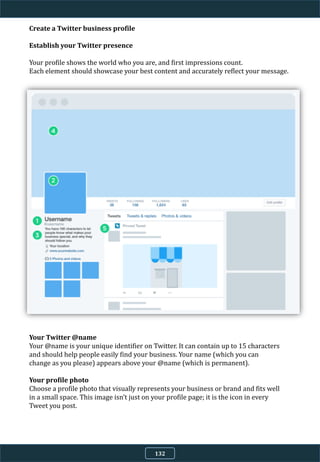
Create a Twitter business profile
Establish your Twitter presence
Your profile shows the world who you are, and first impressions count.
Each element should showcase your best content and accurately reflect your message.
Your Twitter @name
Your @name is your unique identifier on Twitter. It can contain up to 15 characters
and should help people easily find your business. Your name (which you can
change as you please) appears above your @name (which is permanent).
Your profile photo
Choose a profile photo that visually represents your business or brand and fits well
in a small space. This image isn’t just on your profile page; it is the icon in every
Tweet you post.
132
Your bio
You have 160 characters to let people know what makes your account special, and why they
should follow you. Include useful information, such as what you tend to Tweet about, your
location or business hours, and a link to your website. Use a unique link, so you can track
visitors to your site from Twitter.
Your header image
Consider this your billboard. You can use event photos, feature products, use a graphic with
text, or highlight your work and team. Swap out this image periodically to spotlight
promotions, events, product news, or just keep things fresh.
Your pinned Tweet
Keep an important Tweet at the top of your timeline by pinning it there. Click on the “more”
option on the Tweet you want to pin and select “Pin to your profile page.” Use this feature to
make sure visitors to your profile can’t miss your biggest, latest news.
Twitter profile specifications
The recommended image size for your profile pic is 400x400 pixels; the image will be
resized to fit.
The recommended size for a Twitter header image is 1500x500 pixels. On mobile, it’ll be
cropped to a 2:1 aspect ratio.
Use a GIF or PNG file for vector-based and line art images.
For photos, upload a JPG or PNG file.
2. Create your Twitter content strategy
Compelling content will help you attract new followers and keep them engaged over time.
Keep it short
A concise Tweet makes an impact. Keep each Tweet focused on one specific message rather
than trying to communicate multiple things. You can include a link to a blog post or website
if you have a longer message to convey.
133
Use visuals in your Tweets
Adding a bold image, video, or GIF to your Tweets adds a touch of personality, and leads to
higher Tweet engagement rates. In fact, people are three times more likely to engage with
Tweets that contain videos and photos.* Can’t decide which photo to use? You can attach up
to four photos to a single Tweet.
Incorporate relevant hashtags
Hashtags are a powerful tool that allow you to expand your reach and tap into relevant
conversations. Focus on keywords that are relevant to your business. Best practices
recommend using no more than two hashtags per Tweet.
134
3. The value of a follower
When someone follows you on Twitter, they not only opt in to see your Tweets — they also
take actions that provide value to your business.
In fact, the findings from our ”Small Business Customer Insights Study” (2016) show that
followers feel more positively about your business, help you expand your reach, and
increase sales.
Ready to build a community of engaged and valuable Twitter followers?
Here are five steps to get started:
Promote your username everywhere! Add a follow button to your website, include a link to
your Twitter profile in your email signature, and promote it on offline collateral such as
business cards, or store signage.
Tap into your existing customer base. Upload your email contacts and let your customers
know you’re ready to have a conversation by following them on Twitter.
Search keywords and hashtags that relate to your industry and audience. Use them to enter
into conversations and get noticed, and follow influencers who can help spread the word
about your business.
Bring your offline advocates online. Ask your employees to follow you and Retweet your
content. If you partner with other businesses, arrange to promote each other’s handles.
Ask for Retweets. When someone Retweets your content, they’re sharing your business
with their networks and your reach grows exponentially. Be direct, and ask your followers
for their support. Try an incentive: You can offer to release an exclusive coupon code or
offer if a Tweet reaches a certain number of Retweets.135
1) select objective
2) clcik on return to original campaign form
136
1. Select Country and Time Zone
2. Select objective part 1
Twitter Marketing Campaigns
137
4.5.1
4.9.8 Steps of Twitter Campaign
Ads.twitter.com
1. Click on create campaign
Select Objectives (website clicks)
Return to original campaign form
Give campaign name
2. Select Audience
• Location
• Gender
• Age
Lang, Device, Platforms, etc.
Select Audience Advance
• Keyword based
• Followers based
• Internet based
3. Set Budget
4. Create Creative
5. Finish
138
3. Enter Campaign Name, Funding Source and Budget Details
4. Create AD group Name, Schedule Bid type and Optimization Preference
139
5. Select the tweet to promote
6. Select Custom Audience and Demographics.
140
7. Select language location technology.
8. Select Audience Features and Keywords
141
8. Select retargeting Options.
9. Review and Complete
142
4.6
LinkedIn is a business-oriented social networking site launched in 2003. It has 300+
million users across the world. It is available in 20 languages. It allows users to create
and customize profiles and connect with people having similar interest areas.
Presently, it is the largest platform for social networking, assisting people with job
opportunities. Jobseekers can connect and follow hiring managers and can update their
profiles in a defined fashion to get easily discovered.
One can follow a company, get notifications, bookmark jobs, like and comment other’s
posts, and invite others on LinkedIn. The best part of LinkedIn is that you can see your
recent visitors and endorse others’ skills.
LinkedIn is a professional networking platform and it has all the features of a great
marketing opportunity provider. Here you interact with people who mean business.
To market through LinkedIn, you need to do the following:
Build a robust business page that displays your products and services in a compelling
format.
• Invite clients and vendors to follow and recommend your page.
• Launch a group that is related to your business. It can attract significant traffic.
• Reach your audience through targeted advertising.
• LinkedIn is a powerful social media tool. You just need to follow its policies and best
practices.
LinkedIn Marketing
143
How to Run LinkedIn Ad Campaigns
1. Go to business. LinkedIn .com & Click on View Market solution
2. Add Account & Create new Account
3) Select Objective – Lead Generation Here
144
4) Give Campaign Name And Select Sub Objective
5) Create Audience For Your Campaign
145
6) Create Ad format – select ad type and associate company page using which you want
to run your ad.
7) Select Budget for your campaign
146
8)Create conversion tracking for your campaign – ( Its optional )
9) Save & Exit
147
10) Give thank you note and link to your website and say save
11) Now click to create new ad
148
12) select audience and say next
13) Click to create new form
149
12 Form
150
13. Click save and back to ad manager and click create.
151
3) Establish the Ad's Media and Format
Once you establish the basic parameters for your ad, you'll be prompted to start
building it. Decide where you want visitors to be directed when they click on your
ad -- either to a specific LinkedIn page, or to a website. You'll want to create the copy
for your ad, pair it with an image, and preview the different layout options. Of
course, there are a few guidelines around the copy that we would suggest.
Ad Headline
The headline of your ad cannot be more than 25 characters.
Ad Body
The body of a LinkedIn ad can be up to 75 characters long. The copy should be
relevant both to the person viewing the ad, and the offer or page to which you're
sending them.
For best results, create a different ad for each of your buyer personas, and tweak the
copy accordingly. For example, when promoting a book to college professors,
leading the title with the words, "College Professor's Guide to" may generate a
higher CTR than generic, un-targeted copy.
Call-to-Action (CTA)
Having an actionable CTA within your ad copy will also help you improve your ad's
click through rate. Consider asking people to "Download your eBook now," or "Click
now for free samples," instead of writing copy that's devoid of actionable next steps.
152
Value
Incorporate your value proposition into your ad copy -- that can make people more
likely to click on your ad. By boasting something like, "20% off your first purchase," or
"Clearance sale ends today, shop now," you're sending a clear signal of what someone
will specifically gain when he or she clicks your ad.
Testing
Don't be afraid to test your ad copy, either. You can create multiple variations of your ad
in each campaign, which allow you to test different images and copy within ads, to find
what works best for your audience.
153
4) Target Your Ad
Targeting who sees your ad can help increase conversions -- the more specific and
relevant it is to your audience, the more clicks it's likely to get. LinkedIn allows you to
target according to a few different categories, which we've outlined below. Even better?
This process is the same for both text ads and sponsored content.
Location
You must select at least one location for your ads. Depending on your business, more
specific targeting may be helpful. You can select a location as broad as North America, or
as specific as the San Francisco Bay Area.
You can also tailor your ad copy to specific locations.
154
Gender and Age
If your audience is heavily skewed toward one gender and/or age group, target your
ad toward them.
Once you establish your ad targeting criteria, you can save it as a template for future
campaigns.
5) Choose Your Bidding Options
After selecting your targeting options, you can set up the bidding options that work
best for you. The two options you have for any pay-per-click advertising are:
Cost Per Click (CPC). You'll be charged each time someone clicks on your ad.
LinkedIn will suggest a bid range depending on your budget and the competition for
your ads -- the more advertisers bidding on a similar campaign, the higher your bid
will need to be. This bid is the maximum you will be charged. If the current rate is
lower than your max bid, you will only be charged the current rate.
Pay Per 1,000 Impressions (CPM). You will be charged a certain amount each time
your ad is viewed by 1,000 people on LinkedIn.
155
Deciding on the best maximum bid can be tricky. When deciding between CPC and CPM,
think about your end goal. Are you trying to get as many people as possible to see your
ad to help with something like a branding campaign? If so, CPM might be your best
option.
6) Set a Daily Budget
Set a daily budget for what works best for your company's marketing spending. Before
investing a lot into one campaign, test and measure the success of each campaign and
ad variation. You don't want to put thousands of dollars, for example, into an ad that
doesn't end up resonating with your target audience.
156
LinkedIn Ad Reporting
Congratulations -- you've launched your LinkedIn Ad campaign. Now, you can track your
progress in the Campaign Manager dashboard, where you'll see various charts that
measure things like clicks, expenditures, and CTR, over certain periods of time. You can
also keep track of conversions in the graphs toward the bottom of the dashboard.
If Your Campaigns Are Under-Performing
There are things you can do to optimize campaigns that aren't performing as well as
you'd hope, especially if you have multiple ads. Look at the CTR of each one -- is one
out-performing the other(s)? If so, you may want to pause the less successful
campaign.
157
Post-Click Reporting
Once your ads are running and people begin clicking on them, it's time to determine if
they're actually driving qualified traffic to your website. That isn't something LinkedIn
can tell you -- you need to do some closed-loop reporting on these campaigns to get
more details on the makeup of this traffic.
How can you figure that out? It's all about "gated" offers and forms -- when someone
clicks on your ad and lands on your website, putting the content you are offering
behind a form will help you collect the data that qualifies that person as a good lead, or
not. Connect that lead capture form to your customer relationship management (CRM)
software, so that once the information is imported, your sales team can act upon them.
But pay close attention to your ad campaigns, alongside the landing page form data in
your CRM. Is the traffic to your website generated by LinkedIn ads qualified? Is it
generating customers? If not, you might need to further optimize your campaigns.
For example, if your LinkedIn ads are targeting people in companies sized 1-10, but you
find that the majority of your closed deals are from leads with companies sized 100-
200 -- stop targeting those smaller companies on LinkedIn.
The targeting options we covered above allow you to change any of your criteria, so use
it to your advantage. With the right amount of patience and strategy, LinkedIn Ads can
be a huge factor in your brand's success.
158
Steps of LinkedIn Campaign
Business . Linkedin.com
Marketing Solution (Select hire/ Market/ etc)
Click on Create Ad
Select Account
Select Objective
Create Ad (Must Submit URL)
Audience Selection
Budget Selection
Set Bid
Payment Done
Campaign Manager
New Campaign
159
Sponsored Content
Text Ad Can create up to 100 ads variation
Sponsored.in mail
Audience :- Company name
Company Industry
Company Size
Job Title
Job Function
For Dynamic & Display Ad, we need to contact
LinkedIn Sales team.
Website clicks
Lead Generation
Website click
Lead Generation
160
Email
MARKETING
161
4.7
1. Create and Import Your List
Ceate your List
takes just a few minutes to set up a list in your MailChimp account. Provide us with a
few details, add your subscribers, and we’ll get everything organized for you. Follow the
steps below, and you’ll send a campaign to your subscribers in no time.
Email Marketing
162
3. Click the Create List button from the options that appear
4. Type the list details with your information or your client’s information and
preferences in the provided Felds.
163
5. Click the Save button.
164
6. You’ll see a notification that your list was created and a set of links to your next steps.
7. MailChimp’s signup forms help you quickly connect with people who may want to
hear from you. When you create a list, we automatically generate a signup form for that list.
Share the form on your website, Facebook, or anywhere else you have an online Presence,
so subscribers can easily sign up for your newsletter.
165
If you already have subscribers to add to your list, the following section walks through
importing those in just a few steps.
1. Import Your List
When it comes to importing to a list, MailChimp does the heavy lifting for you. Provide us
with the subscriber details you want in your list, and we’ll make it easy to manage and
organize.
You can add subscribers in three ways:
• Paste or type in subscriber contact information
• Upload from a spreadsheet
• Import from your CRM (customer relationship management) database
If you’re working with an Excel fle, use the Copy/Paste from fle option on the import
screen. If you have a CSV fle with all your contacts, upload the fle directly into the
MailChimp list.
Follow the steps below to upload your contacts from your computer.
1. Navigate to the Lists page.
2. Click the drop-down menu for the list you want to work with and choose Import.
3. Click the radio button for Copy/Paste from fle if you have an Excel fle or CSV or tab-
delimited fle if you have a CSV fle.
4. Depending on the method you chose, copy and paste your contacts from an Excel fle or
click the Browse button to select the CSV fle you want to upload.
5. Click Next in the lower-right corner.
6. On the Import Subscribers page, you’ll set a name for each list column and choose a
type, such as frst name or address. This easy process makes sure that we read the data
correctly and organize your list just the way you want.
On the Import Checklist, review your import. Click Edit to make any changes. When you’re
ready to import subscribers to your list, click Import in the lower-right corner.
166
2. Create Your Campaign
MailChimp’s Campaign Builder takes all the guesswork out of creating and sending an
email campaign. Select a campaign type, add recipients, choose a template, add content,
and send your creation out into the world. To create a campaign, navigate to the
Campaigns page, and then select Create Campaign in the upper-right corner of the
page. To start ,we recommend that you choose a Regular Campaign. Below is the
Progress Bar, which allows you to navigate through the steps of the Campaign Builder.
167
3. Design Your Campaign
To start, we recommend choosing a drag and drop option from our Themes templates.
We teamed up with some of the most talented designers on the web to bring you
beautiful templates that are simple to use. You don’t have to know anything about
design or programming to get started. Pick one of our predesigned Themes, plug in
your content, and you’ve got a campaign. After you’ve picked out your template, you can
add in your content, stylize the design, and more. When your campaign is ready to
send, head over to the Confirm step, click Send, and wait for reporting data to roll in.
168
3. Reports
MailChimp’s reports analyze clicks, opens, and more. We provide an easy to-read
overview of the reporting data you care about most. To view a campaign report,
navigate to the reports page and select the campaign you want to view. Below is an
overview of the Reporting information.
In addition to the Overview, we give options to drill down into more detailed reporting
data so you can get an idea of how subscribers engaged with your email campaign.
4. More Resources
You’ll find a number of resources available to you on the MailChimp site as you learn
more about email marketing, including our video resources, a glossary of terms, and
our searchable Knowledge Base of how-to and troubleshooting articles.
5. More Advanced Features
After you’re comfortable with the basics, MailChimp offers a number of
advanced tools to take your email marketing plan to the next level. Here
are a few of those options.
Automation Send automatic emails based on event triggers Getting Started With
Automation
RSS- Driven Campaigns: Automatically send campaigns of your blog posts as your RSS
feed is with new post.
A/B testing campaign
Test different variations of your campaign to see which performs best
Getting Started with A/B Testing Campaigns
169
Advanced Tracking
Additional in-depth tracking options to add to your campaigns Additional Tracking
Option for campaign.
Custom Templates
Create your own HTML templates from scratch, and include our template language to
allow the template to be edited within MailChimp Create a Custom Template
Custom Forms
Customize your list forms and response emails from scratch Advanced Form
customization
206
Google
Analytics
171
Ch. No. Unit Name Page No.
4.9 Google Analytics 172
4.9.1 Audience 117
4.9.2 Acquisition 183
4.9.3 Behavior 187
4.9.4 Conversion 188
4.9.5 Audience Report 190
4.9.6 Behavior Report 191
4.9.7 Traffic Report 192
4.9.8 Conversion Tracking 194
4.9
The Complete Guide To Google Analytics
How to install and setup Google Analytics the smart way
If you have already installed Google Analytics, skip this part. This first part will teach
you how to install Google analytics properly on your website. But even if you've
installed Google analytics before there are still some tips here that will be valuable
for anyone who uses it.
1. Use a Google account to create your Google analytics account.
2. Setup an account name. I usually use the domain name or business name on the
account name.
3. Setup a website name. I just use the domain name here.
4. Then enter your website URL. If you have SSL or a secure site, make sure you use
https://
5. Choose your industry category.
6. Then choose your time zone.
7. Data sharing settings. I just leave this setting on default. (optional)
Google Analytics
172
8. Grab the Google analytics tracking code and add it on your website.
In order to connect your new Google analytics account with your website, you
need to add the Google Analytics tracking script to your website's header. This
requires a little bit of technical and coding skills, so if you don't have a developer,
you might need to research how to add this code on your website.
Another alternative in installing Google Analytics is by using some plugins to
install and connect it for you. Some platforms like WordPress have Free plugins
that will install Google Analytics on your website in just a few clicks
Lastly, you could also use Google Tag Manager to install Google analytics on your
website easily. Here's how a Google Analytics Tracking code looks like:
<script>
(function(i,s,o,g,r,a,m){i['GoogleAnalyticsObject']=r;i[r]=i[r]||function(){
(i[r].q=i[r].q||[]).push(arguments)},i[r].l=1*new Date();a=s.createElement(o),
m=s.getElementsByTagName(o)[0];a.async=1;a.src=g;m.parentNode.insertBefor
e(a,m) })(window,document,'script','https://www.google-
analytics.com/analytics.js','ga'); ga('create', 'UA-XXXXXXXX-X', 'auto'); ga('send',
'pageview');
</script>
173
Google Analytics: What does it consist of?
If you skipped the previous part, stop here. I'd like you to log into your Google analytics
account and follow me along as I dive into detail in each section of Google Analytics.
Home section
Now browse to the left tab of your Google Analytics account. Let's start with the Home
Section. The home section is a new dashboard that Google has introduced into Google
analytics recently. In this dashboard, you can quickly have a bird's eye overview of how
your website is doing.
It shows how many users have visited your website in the past 7 days, your revenue (if
ecommerce tracking is configured), the conversion rate for your goals and how many
sessions were recorded.
Sessions are higher than users because some users might have multiple sessions
(instances where they've visited your website.
Customization section
In the customizations tabs, you'll find the dashboards, custom reports, saved reports and
custom alerts. Aside from the Home dashboard that I've shown you, you could create your
own custom dashboard that can be used to quickly check for different metrics without
having to spend a lot of time finding it on analytics.
174
175
If you want to be notified via email or SMS for any significant changes in your traffic or stats,
you can create a custom alert.
Real-Time section
This section shows you real time stats of your website's visitor. (There's a delay of a few minutes)
but it's very useful to check if Google analytics is working on your website.
The real time tab can help you get more granular in your analysis by segmenting by location,
traffic sources, content, events, and goals.
176
4.9.1
In the audience overview tab, you can get a quick insight about the people visiting your
website. This will help you understand their interests, demographic profiles and how they
behave on your website.
A session is a group of user interactions with your website that take place within a given
time frame. That time frame is usually after 30 minutes of inactivity or after midnight. A
user can have multiple sessions, and one of the best ways to explain this difference is by an
example. For example, John visited your website and left a page open for about 31 minutes
because he took a break. When he continues that session after 31 minutes, it will then be
counted as 2 sessions even though a page has been left open and the 30 mins timer will
then be reset.
For the other site metrics, I also look at the bounce rates of particular pages on my website.
A 70% bounce rate means that out of 10 visitors, 7 of your visitors are just bouncing off
your site. Optimizing and improving your website's bounce rates should be one of the parts
of Conversion Rate Optimization strategies to increase conversions
on your site
For pages per visit, the more pages that are being visited by your users, the better it is.
Ideally, that means that people are reading more of your content.
Audience
177
Would you like to know the age and gender of your website visitors? Thedemographics
tab holds that information.
Interests Tab is where the audience tab gets more interesting. You can use this data if
you're going to create advertising displays, banners and targeting for your ads.
If you're looking for buyers, look into the affinity and in-market segments to identify
which segments are getting conversions. You can also use the data that you've discovered
in interests to create your Google Ads Display marketing campaign.
178
Want to know what language and location are your visitors coming from? Use the Geo
Tab to find that out.
Don't ignore the Behavior section as this is crucial to understanding how your website
visitors are 'behaving' on your website.
New vs. Returning Visitors — you'll want more people to return back to your website.
When people return to your website, they'll usually convert higher because they are
already familiar with your brand and website. Some of the strategies that will help bring
more people back to your website is by sending out emails to your newsletter
subscribers.
179
Frequency and Recency — by looking at the number of sessions on your website, you'll
know how many sessions are being regenerated by repeat visits on your website.
Want to know if your readers are digging your content? Are they spending enough time on
your website or are they bouncing off? Engagement Tab will show you the approximate
session duration of most of your visitors. If it's usually less than 10 seconds, then you'll
want to check why people are mostly bouncing off your website.
Technology Tab is a tab that I didn't use a lot. It showcases the browsers that your website
visitors are using. Unless you need to optimize for a particular website browser, then you
probably won't be using the technology tab soon.
Mobile Tab: In 2015, Google announced that mobile standard to surpass desktop in terms
of "in the moment" searches. Searches like "I want to know", "I want to buy", "I want to
go". This tab will show you if your website is getting more mobile traffic than desktop
traffic just like what this website shows.
180
So what do you do when this happens? First, make sure that your website is mobile
friendly and that it loads quickly. Google even released a website to test if your website is
optimized and mobile friendly. Just enter your website here to test it out.
Another analysis you could do on the mobile section is to check which mobile devices
dominates your website traffic. In this example, it clearly shows that almost half of the
mobile visits are coming from an Apple iPhone device, yet conversion on this device is
almost half of an Apple iPad.
My solution for this would be to make sure that the website loads and is optimized
properly for an iPhone device.
Sometimes, you'll want to use custom variables and user defined metrics and you'll be
able to analyze them in Custom Tab.
181
Benchmarking Tab is a new and interesting feature of Google Analytics because it uses
other site data to compare your site's metric with other websites that are part of the
network for benchmarking. (You may have remembered checking an option to be
included in this benchmarking process anonymously when you first setup Google
analytics).
You can benchmark against the different sources of traffic for your site by channel. You
can also benchmark by location and devices and see how your website performs over
others in the same industry.
182
4.9.2
This section talks about how your website is "acquiring" traffic from different channels.
This is a screenshot of the overview section and you'll be able to immediately see what is
your top channel visually in the form of a pie graph. For this example, it clearly shows that
79.2% is coming from organic or free traffic from the search engines.
In the All traffic tab, you'll be able to check different metrics on how you acquired your
customer. There are many ways to use this section. One of them is by changing the Primary
dimensions and Secondary dimensions to find what you are looking for. Let's say I wanted
to know which "landing pages" are getting the most traffic, I'll change the primary
dimension to "landing page," and then I'll see which pages have the highest session visits.
Acquisition
183
Google Ads tab: If you're running Ads, you'll want to connect Google analytics and Google
Ads together because you'll be able to leverage the advance tracking features of Analytics
into your Ads campaigns.
Search Console is one of my favorite sections in Google Analytics. But in order for this to
work, you'll need to connect your Google Webmaster Search Console with Google
Analytics. Most SEO optimizations for your website can be done and fixed within Google
Search Console.
184
Take note that the search console section only provides information about your Google
organic traffic. Bing has a similar search console (that you need to setup separately)
called Bing Webmaster Tools if you want to check the search metrics of your site on the
Bing network.
In Social tab, you could check how your website acquired visits from social networks and
how it performed (goal conversions). The Network referral provides you with more
information about the exact social networks like YouTube, Facebook, etc that drove
traffic to your site.
If you're using Google Analytics builder or Google Ads, you'll find those campaigns at
Campaigns tab. I usually use Google Analytics builder to tag specific email campaigns. By
doing this, I could measure the performance of my email campaigns using Google
Analytics and start measuring bounce rates, pages/sessions, etc.
185
186
4.9.3
Do you want to know how people are engaging on your website? You'll be able to find
these metrics on the Behavior Section of Google Analytics. Site content helps you identify
the metrics on content pages on your website. Site speed shows the loading speed of
your site and existing pages. The events tab is what I use to track clicks and other
engagement metrics on my website. If I want to track video views on my website, I could
setup event tracking and that would show here.
If you're a Google Adsense Publisher and you've connected your Analytics with Adsense,
you'll be able to view Adsense metrics right inside Google Analytics. And lastly, you'll be
able to run A/B split-testing campaigns using Google Optimize, and those results will be
published in the experiments tab.
Behavior
187
For me personally, the most important section of Google Analytics is the conversion
section. This is where you could actually put a dollar value and measure what's working
for your business or not.
Before you can get conversions to work, you need to setup Goal tracking first. You can do
that by clicking on the Gear icon on the left sidebar within Google Analytics and then
under VIEW (choose the correct view) then click on Goals.
4.9.4 Conversion
188
You can then measure goals based on purpose. Is it to track orders? Setup a revenue
goal. Do you want to measure how many signed up for an account on your website,
setup an acquisition goal. Do you want to measure how many people actually watched
your videos at least 50% of the time? Setup an engagement goal.
Ecommerce Tab — if you don't have an ecommerce website, you don't need to setup
this section, but if you do have an ecommerce website, I strongly recommend that you
set it up. You may also want to setup the enhanced ecommerce tracking to get more
data out of your ecommerce stats.
189
4.9.5
These reports tell you everything you want to know about your visitors. In them, you
will find detailed reports for your visitors' age and gender (Demographics), what
their general interests are (Interests), where they come from (Geo > Location) and
what language they speak (Geo > Language), how often they visit your website
(Behavior), and the technology they use to view your website (Technology and
Mobile).
Acquisition reports
These reports will tell you everything you want to know about what drove visitors to
your website (All Traffic). You will see your traffic broken down by main categories
(All Traffic > Channels) and specific sources (All Traffic > Source/Medium).
You can learn everything about traffic from social networks (Social). You can also
connect Google Analytics to Ads to learn more about PPC campaigns and to Google
Webmaster Tools / Search Console to learn more about search traffic (Search Engine
Optimization)
Audience Report
190
If you set up Goals within your Google Analytics, you can see how many conversions
your website has received (Goals > Overview) and what URLs they happened upon
(Goals > Goal URLs). You can also see the path that visitors took to complete the
conversion (Goals > Reverse Goal Path).
Speaking of goals and conversions, most of the tables within Google Analytics
standard reports will tie specific data to your conversions. For example, you can see
the number of conversions made by visitors from California in the Audience > Geo >
Location report. You can see the number of conversions made by visitors from
Facebook in the Acquisitions > All Traffic > Source/Medium report. You can see the
number of conversions made by visitors who landed on specific pages in the
Behavior > Site Content > Landing Pages report.
If you have multiple goals, you can use the dropdown at the top of that section of data
to switch to the goal you want to view or all of your goals if you prefer.
4.9.6 Behavior Report
191
Custom Reports (under the Customization menu at the top) allow you to create reports
that look similar to the standard Google Analytics reports with the metrics you want to
view.
4.9.7
Dashboards allow you to view your Google Analytics data in a dashboard format.
You can access them at the top of the left sidebar.
Traffic Report
192
Segments allow you to view all of your Google Analytics data based on a specific
dimension, such as all of your Google Analytics data based on visitors from the United
States. You can also use them to compare up to four segments of data, such as United
States versus United Kingdom traffic, search versus social traffic, mobile versus desktop
traffic, and more. You can access Segments in each of your reports.
193
What Are Conversions?
A conversion takes place when a visitor to your site takes an action you care about and
“converts” to a customer. This could be through filling out a form, completing a
purchase, or by simply showing a high level of engagement with your site. This post
will help you define and measure which traffic sources result in conversions.
How to Track Conversions
If you’re already using Google Analytics, all it takes is a defined goal and a special URL
that revea1ls the source of the click. If you haven’t installed Google Analytics yet, you
can learn to configure it here.
Step 1: Build your tracking URL
You’ll need to use the Google Analytics URL Builder to tag your URLs with custom
campaign tracking parameters. Simply fill out the form by inserting your landing page
URL along with the rest of the campaign details.
For example, if I’m trying to track conversions from a new LinkedIn Ads campaign, I’d
fill out the form as follows:
Website URL This is the URL of the page you are linking to:
https://www.adstage.io/
Campaign Source This will record the campaign’s source:
LinkedIn
Conversion Tracking4.9.8
194
Campaign Medium This will record the type of campaign:
cpc
Campaign Term This can be used to record the keyword that is being targeted:
(blank)
Campaign Content: This can be used to record the ad that was shown:
clear-ppc-reporting
Campaign Name This will record the campaign’s name:
Ad Stage-For-In-House-Marketers
Step 2: Use your tracking URL
Use the tagged URL as your ad destination
Now take your new URL and use it in your campaign in place of your standard URL.
Google Analytics will assume that anybody that clicks this URL is from this campaign.
Consequently, it will attribute any actions they take to this campaign as well.
195
Step 3: Define your goal
If you don’t have them set up already, you’ll need to create goals in Google Analytics for the
conversions you want to track.
For example, if you’re an e-commerce site, you’ll want to track shopping cart checkouts.
You can do this by creating a goal that counts visits to the URL of the order confirmation
page that customers see when they complete their order.
To create you goal in Google Analytics, follow these steps:
1. Click “Admin” in the navigation bar.
2. Click “Goals” under View.
3. Click “+New Goal”.
4. Create your goal by following the wizard.
196
Once you’ve created your goal, Google Analytics will track your goal performance
and attribute it to the appropriate sources.
197
Creating Custom Reports
When you’ve created your goals in Google Analytics and you’ve tagged your ad URLs,
you’ll be able to create easy-to-read reports that reveal your campaign’s performance.
My favorite way of viewing this data is with Custom Reports in Google Analytics.
To create your first custom report follow these simple steps:
1. Click “Customization” in the navigation bar.
2. Click “+New Custom Report.”
3. Give it a title.
4. Click “+ add metric” and choose the metric columns you’d like to see. Search for the
goal you just created and select the metric for Completions [e.g., Purchases (Goal 1
Completions)]. This will show you the number of conversions of this type. You can
add multiple metrics columns.
5. Click “+ add dimension” and choose how you would like to break up the data in rows.
You can also add multiple dimensions in order to drill down into each successive
level. I suggest adding “Source / Medium” as the first dimension, then “Campaign.”
Click “Save” and you’ll be presented with a beautiful custom report to measure your
conversion performance.
With these steps, you can measure conversions across any digital source easily!
198
The nice part about these is that you don't have to create them from scratch. You
can start by using pre-defined Custom Reports, Dashboards, and Segments from
the Google Solutions Gallery.
199
There, you will find lots of Custom Reports, Dashboards, Segments, and other
solutions that you can import into your Google Analytics and edit to fit your
needs. Edit Custom Reports with the Edit button at the top.
Edit Dashboards using the Add Widget or Customize Dashboard buttons at the
top.
200
Edit Segments by clicking the Action button inside the Segments selector box and
choosing Edit.
Or, when you have applied Segments to your reports, use the drop-down arrow at the
top right to find the Edit option.
As you get used to editing Custom Reports, Dashboards, and Segments, you will get
more familiar with the way each works so you can create new ones on your own.
201
Google
AdSense
202
The Adsense program introduced by Google is one of the most popular and best
options for making money from blogging for beginners. It is an advertisement
program wherein some contextual ads are displayed on your online content and you
get paid for the number of clicks these ads receive. For those newbie bloggers who are
unaware of how to create Adsense Account, this essential guide would surely help.
Signing up for an Adsense account is really simple and quick provided you meet the
requirements for it. The first condition is that you should have a blog or website with
at least 15-20 pages. Secondly, you must be above 18 years of age.
What you will learn?
• Create an Adsense account
• Create hosted adsense account
• Blogger Adsense
• Adsense approval
• Adsense payment
Google AdsenseCh. No. 5
203
Step by step Tutorial to create an Adsense Account:
1. Visit the signup page of Google Adsense http://www.google.com/adsense and select
the red button for ‘Sign Up Now’. Here you will find option to create a new Google
account or choose to use existing account. You can either use your Gmail address or
any domain-specific email address if you have.
2. Complete the Google Adsense registration form. This is quite straightforward as it
requires entering the website address and selecting the content language. You can
specify your website URL or blog address to continue.
204
3. Enter the appropriate ‘Payee name’. Make sure you use the same name under which you
own a bank account. Changing the payee name may become difficult later. So, ensure that
your payee name and bank account name are the same. Next, you can fill in your contact
information and other details to proceed. These include your full name, address, country
and phone and will be used when you receive your adsense payment.
4. Read all the Adsense policies and check all the three boxes to agree to them. Once
checked, click on the ‘Submit’ button and the next page lets you review all the details
provided. Here, you can assure that you have entered the correct and up-to-date
information.
5. Click on ‘Submit my application’ button to complete the registration.
6. Once you sign up for Adsense, go to the dashboard. Create an Ad unit. You will get a
javascript code. Copy this code and paste it in your website (mostly in the homepage in the
side bar)
205
Your application will then be reviewed by the adsense team . The review process may
take days to weeks. Google will send you an email when your adsense is approved. Once
approved, you can start displaying Google ads on your site and earn money.
Create Adsense account for Youtube
Suppose if you don’t have a website or your site is under construction, still you can apply
for adsense. This can be done by creating a YouTube account.
Sign up for you tube account through Gmail. Create a channel. Start adding videos. The
videos should be original and unique.
Once you have uploaded 3-5 videos, head over to “monetization methods” from where
you can apply for adsense account. Most of the time, your application gets approved. This
type of account is referred as “hosted adsense account” as it is hosted on YouTube.
The adsense revenue will be split between you and YouTube . This is one of the method
to monetize YouTube videos.
206
Create Blogger Adsense account
Create a blog on blogger (Check this post on how to start a blog on Blogger) . Add 10-15
posts .
In the dashboard, you can find the option “connect to adsense”. when you will click this,
you will be taken to a page that prompts “sign up for adsense with existing account, or
create a new account” its always advisable to have the same account for both blogger and
adsense.
Sign up for adsense and your site will be reviewed. Once approved you can customize
your blog layout on where to show the Ads.
How to get Adsense approval
While applying for adsense, your site should meet the following requirements
1. The website should be more than 6 months old
2. The content should be unique
3. The site should have at least 20-30 posts
4. The site should have a proper about us page, contact page and privacy policy.
Adsense payment
The amount earned is paid via EFT or through cheque. Once the amount reaches $10 , a
pin will be sent to your mail . You have to enter this pin and complete the tax form
[whichever applicable] to get eligible for adsense payment.
207
YouTube
SEO
208
YouTube Keyword Research
The YouTube SEO process begins with keyword research. Here’s exactly how to find the
right keywords for your YouTube videos: First, generate a list of keywords ideas. All you
need to do is head over to YouTube and pop in a word or phrase…and YouTube will hand
you a bunch of keywords related to what you typed in:
These suggested keywords are GREAT.
Why? Because these are terms that people actually type into YouTube. So there’s no need
to wonder if they’re popular or not. If YouTube suggests them to you, they 1000% are.
You can also go to a popular video in your niche… and copy the same keywords that
video is optimized around. As you probably know, keyword optimization is a KEY part of
YouTube SEO. So if a video has lots and lots of views, chances are, that video is optimized
around a popular keyword.
YouTube SEOCh. No. 6
209
To execute this step, go to another channel in your niche. Then, sort their videos by
“Most Popular”.
This will show you their videos that have generated the most views:
Next, choose a video from the list. Obviously, you want to pick a video that you can create
an awesome video around (more on that in step #2). But in general, if the video is in
your niche, it’ll work. Finally, see which keywords that video is optimized around.
210
This is easy. Just check out the keywords that video uses in its title, description and tags:
(To see a video’s tags, I recommend the VidIQ Chrome extension. It shows you a video’s
tags right on the page). search for your keyword in Google.
Here’s the deal:
Most views on YouTube come from within YouTube’s platform. But don’t stop there. Your
video can get 2-5x more views if you can ALSO get it to rank in Google. How? The trick is
to optimize your videos around keywords that already have video results in Google.
211
You see, Google only includes videos in the search results for certain keywords. Unlike a
normal first page with 10 webpage results, for certain keywords Google reserves a good
chunk of the first page for video results:
212
In general, Google tends to use video results for these types of keywords:
• How-to keywords (“how to shave a cat”)
• Reviews (“beats by Dre review”)
• Tutorials (“Setting up WordPress”)
• Anything fitness or sports related (“Cardio kickboxing”)
• Funny videos (“Cute animals”)
Why is this important?
Well, let’s say you optimize your video around a keyword that doesn’t have any video
results in Google. In that case, you’ll ONLY get traffic from people searching on YouTube.
But if you optimize for a video keyword, you’ll also get targeted traffic to your video
directly from Google’s first page.
The question is:
“How do you find these magical keywords?”
All you need to do is search for one of the keywords you found in the last step.
Then see if any of the keywords you searched for have YouTube video results, like this:
213
Once you’ve found a Video Keyword, it’s time to see if there’s any search volume for
that keyword. Otherwise, you might rank in Google for a keyword that only gets 20
searches per month. That’s not worth it.
So make sure target keyword gets at least 100-1k searches per month in Google (you
can find this information using the Google Keyword Planner):
214
Once you’ve found a Video Keyword, it’s time to see if there’s any search volume for
that keyword. Otherwise, you might rank in Google for a keyword that only gets 20
searches per month. That’s not worth it.
So make sure target keyword gets at least 100-1k searches per month in Google (you
can find this information using the Google Keyword Planner):
215
Publish a High-Retention Video
Here’s the truth:
If you want your videos to rank, you need to keep people watching. The amount of
your video that people watch is known as Audience Retention. And YouTube has
gone on the record saying: “Audience Retention” is a HUGE ranking factor. To quote
YouTube:
In other words:
If your video keeps people on YouTube, YouTube will rank your video higher in the
search results. (After all, YouTube wants people to stay on the platform so they click
on ads. And if you help them with that goal, they’ll promote your video).
The question is:
HOW do you create a video that keeps people engaged? (Also known as a “High-
Retention Video”)
Ranking Factors
As long as your video is valuable and interesting to watch, you’re good to go.
1) Video Comments
If someone leaves a comment, it sends a strong message to YouTube that they
probably enjoyed the video (or at least engaged with it).
216
Ranking Factors
As long as your video is valuable and interesting to watch, you’re good to go.
1) Video Comments
If someone leaves a comment, it sends a strong message to YouTube that they
probably enjoyed the video (or at least engaged with it).
So make sure to encourage your viewers to comment on your video (and reply to the
comments that you get).
217
2) “Subscribes "After Watching a Video
If someone subscribes to your channel after watching your video that sends a HUGE
signal that you have an amazing video.
The best way to get more YouTube subscribers? Ask people to subscribe.
3) Video Shares
How many people share your video on social media sites like Twitter and Facebook?
Think about it this way: people don’t share crappy videos, right? So when YouTube
sees that people are spreading the word about your video, they think: “Man this
must be an awesome piece of content!”. So they’ll give you a rankings boost. (Also,
social shares being more people FROM those networks to YouTube… which they
like).
218
4) Click-Through-Rate (CTR)
When someone searches for your keyword in YouTube, which result do they click
on? Your video… or the other guy’s? As it turns out, YouTube pays VERY close
attention to this user behavior. The percentage of people that click on your result is
known as “click-through-rate” (CTR). Obviously, the higher your CTR, the better. In
other words, you want YouTube searchers to click on your result. If YouTube notices
that lots of people are clicking on your result, they think: “We need to give this video
a boost!”.
The best way to boost your CTR? Create compelling
thumbnails and titles.
219
Video Length
I consistently see longer videos outperform shorter videos in YouTube and Google
search.
For example, if you search in YouTube for the keyword “WordPress”, 2 out of the top
4 videos are an hour long.
220
Video Title
The title of your video should be at least 5 words long. That way, you can include
your full keyword without keyword-stuffing. For example, this video title from my
channel is 10 words …only 3 of which are my target keyword (“higher Google
rankings”):
Power Tip: Like with a blog post, you get a slight video SEO boost by putting your
keyword at the beginning of the title. So if you were trying to rank for “surfing
tutorial” you’d want a title like: "Surfing Tutorial: Learn How to Ride a Wave Today”.
Description
Your videos description is super important.
Your video description helps YouTube and Google understand the context of your
video. And the better they understand your video , the higher you’ll rank (and the
more often you’ll show up in the Suggested Video sidebar).
Here are the basic guidelines for the description:
• Include your keyword in the first 25 words
• Make the description at least 250 words
• Include your keyword 2-4 times
This SEO-optimized description helps tell Google and YouTube what your video is
about without being Sammy.
221
Promote Your Video
We talked a lot about creating videos that maximize Audience Retention and user
experience signals. Which is important. But for YouTube to measure these signals,
you need to get views on your video!
Here are some strategies you can use to get targeted views to your video:
Mention Your Video on Quora and Other Q&A Sites
Quora, forums and other Q&A sites are some of the most popular sites on the web
(in fact, Quora is one of the most popular sites online).
222
Affiliate
Marketing
223
What is Affiliate Marketing?
It’s a philosophy of marketing but also a common way to make money online. There are
different styles of marketing, E-mail marketing, Telemarketing, Celebrity Marketing,
Trade show marketing, Network marketing and etc… What is affiliate marketing?
Marketing your products or services you recommend to people (your blog audience,
followers or people you know).
How do you really make money online?
There are two essentially ways to make money online:
• You can sell or promote your own products and services
• You can sell or promote someone else products and services and get paid for it.
• Learn how to market products before creating your own!
• FYI – From what we have learned eventually you want to sell your own products and
services, if you want to earn six-figures or more.
There are 3 Steps to Affiliate Marketing
1. You recommend a product or service to your followers or friends
2. Your followers or friends click the affiliate link you sent or direct them to.
3. Your followers or friends purchase a product or service through the affiliate link and
you get a commission from those purchases.
Affiliate MarketingCh. No. 7
224
App Store
Optimization
225
App Store Optimization
What is ASO?
App store optimization (ASO) is the process of improving the visibility of a mobile app
(such as an iPhone, iPad, Android, BlackBerry or Windows Phone app) in an app store
(such as iTunes for iOS, Google Play for Android, Windows Store for Windows Phone or
BlackBerry World for BlackBerry). Just like search engine optimization (SEO) is for
websites, app store optimization is for mobile apps. Specifically, app store optimization
includes the process of ranking highly in an app store's search results and top charts
rankings. ASO marketers and mobile marketing companies agree that ranking higher in
search results and top charts rankings will drive more downloads for an app.
ASO Goal
App store optimization marketers, such as SEO marketers, work by optimizing their
content so the search engine position it higher on the search engine results page, driving
more traffic to this content. While making their content achieve the first position on
targeted search terms can sum their objectives, it's not required to evaluate the
optimization's success. ASO marketers try to achieve goals such as:
• Being found more easily by users on the app stores, due to the fact that App Store
Search is the No. 1 source for people to discover new applications
• Rank higher compared to competitors
• Rank higher for specific keywords
• Rank higher in Google´s semantic search through relevant back linking
• Create appealing graphics (icon, screenshots and promo video) to increase the
chances of being downloaded
Ch. No. 7
226
Why is ASO important?
According to Forrester, 63% of apps are discovered through app store searches. This
makes search, in the app store, the most used method for discovering and downloading
new apps. Recently, at Google I/O, Ankit Jain reported that “For the average app, search
actually makes up the vast majority of install.” Simply put, this means that:
“If you’re not using ASO to increase your app’s search ranking, you’re missing out on
the largest discovery channel available to your app.”
With hundreds of thousands of apps in each app store vying to rank above one another,
the amazing reality is that the majority of publishers are not investing in app store
optimization. So here’s our gift to you: ASO is your secret weapon. Spend time every
week improving your ASO, and you will meaningfully impact your app’s ranking and
overall success.
ASO Best Practices
• App Title
Around 84% apps in the app store did not have keywords in their titles. the other hand,
only 16% apps used keywords in the app titles. While the app store search algorithm is
always changing, some have suggested that keywords in the app title may have more
impact on rankings than those entered in the Keywords field.
• App Icon
The app icon is the first visual element that people see when they view an app store
listing. An icon should immediately convey what an app is about, in the simplest manner
possible. Complex icon designs can be difficult to distinguish on smaller devices and
should be avoided.
227
• Screenshots
Screenshots are also one of the first visual elements that people see when viewing an
app listing. Each screenshot should convey a specific benefit of the app and supplemental
text should be used, whenever possible, to clarify what each screenshot is about. All
available screenshot slots should be used to maximize visibility. The first 2 screenshots
are the most important as they are the ones seen when scrolling through search results.
• Video
Both Google Play and iOS App Store permit the use of a short video to highlight the key
features of the app.
• Localization
Translating an app into different languages can greatly increase downloads and expose
an app to a larger potential audience. In one study, localization increased the downloads
of an iPhone app by 767%. Another study showed that complete localization was able to
increase app downloads by 300%.
• App Description
The app description has very different roles in ASO, when comparing the Apple App
Store and the Google Play Store. Keywords in the description do not factor into the
keywords that Apple associates with the app. However, keywords in the app description
of Play Store apps are a primary source of keywords that Google uses to determine what
an app is about.
228
• Keyword Selection
Most app publishers make the mistake of selecting keywords that get a lot of searches
every month. What they do not realize is that these keywords are also extremely
competitive and most apps will not be able to rank for them.
Keywords should first be selected by download relevance, or would people actually
download an app, if they searched for that keyword? The next criteria is competition. Does
the Chance Score give the app a good chance of ranking in the top 10 for a keyword?
Finally, only then should search traffic should be considered.
There should be some search traffic for a keyword, but it doesn't have to be a lot. Ranking
well for download relevant keywords is much more important. Finding good keywords
usually involves targeting long-tail keywords, like in Search Engine Optimization (SEO).
229
ASO
Strategy
230
1. Understand What “App Store Optimization” Is And Why It’s Important
The App Store has a ranking criteria in much the same way that Google has a ranking
criteria for the websites it lists on its SERPS (search engine results pages) for specific
keyword searches. That’s why you can optimize your app in the App Store and make it
appear higher up in search results pages.
Put another way: If you neglect ASO, no one will be able to find your app! It’s just like if you
have a website but neglect to optimize it for the search engines. No one will be able to find
it either.
If you think that ASO is something you shouldn’t take seriously, think again. Look at these
two stunning pieces of data about how people download and use their apps:
• According to European Techno graphics Consumer Technology Online Survey, a
significant 63% of all apps downloaded and used in the App Store are found by users
browsing for apps.
• Another survey, this one conducted by mobile marketing platform Tune, shows that
47% of all American iPhone users discovered the latest app they downloaded by
browsing the App Store.
ASO StrategyCh. No. 8
231
This underscores how important it is for you to be on top of your ASO. You want your
app to be at the top of the list, or at least on the first search results page for those users
browsing in the store.
 Breakdown of Mechanics and Factors Involved
To know how to successfully optimize in the store, you have to know what signs and
signals Apple is looking for. Once you know what Apple uses to rank your app’s search
visibility, you have to optimize for these specific factors.
232
 Titles and Keywords
Ideally, your keyword of choice should be within both the title and the description of your
app. Obviously, the app title will draw the attention of your users so the keyword has to be
there, but it’s equally important for the keyword to also be included in the description, as
the description is what ultimately convinces users to download your app — particularly if
it’s written persuasively! Check this great webinar out to learn more about app store
keywords.
Besides the target keywords in your app’s title and description (which are both under your
control), there are also ratings and reviews to consider.
 Ratings and Reviews
You can’t control ratings and reviews much as you can control identifying and using the
right keywords for ASO, but you can still influence your app’s ratings and reviews. These
are two very important factors, even if Apple doesn’t place as much emphasis on them as
the all-important choice of keywords.
 Number of Downloads
A secondary factor that Apple uses in its algorithm is the number of downloads that your
app gets. Naturally, this tells Apple how popular your app is, and the more popular (read:
more frequently-downloaded apps) also rank higher. The opposite is also true: More
downloaded apps are also more popular.
233
2. GET INTO THE MIND OF YOUR TARGET AUDIENCE AND CUSTOM
The foundation of any successful ASO strategy is knowing your target audience and
customers.
• For whom have you designed your app?
• What demographics find great value in your app?
• What problem does it solve for them?
• The next step is doing some market research to figure out exactly who can benefit
the most from using your app. Successful market research means you’ll know the
demand for your app, its chances of selling (or being downloaded) in the App store,
and the characteristics of your target audience.
Market research traditionally involves two approaches — primary and secondary
research. The former should come right from your intended target audience.
For instance, if you’re thinking of developing an app geared to a certain diet and/or
fitness lifestyle, then you’d go straight to the source of people who already live this
way. To compile this info, you’d rely on methods like:
• Focus groups
• Online surveys
• Social media feedback
Once that’s done, secondary research that you actively do yourself — without input
from anyone else — is next. Because of the web, a lot of tools are available to you right
off the bat.
234
As with keyword research for SEO, your job now is to try to think like your customers. Ask
yourself what they’d look for if they searched for your app’s subject matter in the store.
Here’s what to brainstorm:
• How your customers would describe your app when doing keyword searches
• What language these searches are performed in
• What their number one reason for downloading and using your app would be
At the same time, you want to know what your competitors are doing so you can figure out
what keywords similar to yours they’re targeting. This intelligence will empower you to
determine whether you want to go ahead and target these same keywords or not.
You can also decide if it’s more important to you to rank in the top 10 of extremely
competitive keywords or in the very top spot of less competitive keywords. You’ll most
definitely get good exposure as long as you’re on the first page of search results—the
question is just if you want to be at the very top of a page.
One of the best App Store optimization tools to help you gather competitor intelligence is
App Codes. This baby lets you track your competitors’ keywords in the App Store, whether
that’s in their titles, descriptions or whole keyword lists. This way you’ll know for sure
whether you have a good chance or not of targeting a specific keyword as part of your
overall, bigger strategy to reach your target audience.
235
If a keyword you’re thinking of optimizing for already has numerous competitors gunning
for it, then your app’s chances of being discovered will be better served by using another
keyword that doesn’t already have so much competitor attention.
3: PICK THE RIGHT APP TITLE OR APP NAME
The reason you performed your keyword research and identified the most relevant
keyword is so you can now optimize your app title. This is one of the huge factors in play
when people are browsing for apps in the store. They’ll, in part, make their downloading
decision based on how you name your app. To help your ASO, your keyword should be in
the title.
As we talked about in the above Tune study, apps with keywords in their titles were
ranked 10.3% higher than those that didn’t. If it seems hard to fit your keywords into your
app name naturally and intelligibly, consider this:
App Store titles can go up to 255 characters, so you have a generous amount of space to fit
in keywords or even keyword phrases in a way that reads logically.
Don’t think that this is an excuse to commit keyword stuffing though! You’ll be penalized
for this, as keyword stuffing is widely denounced — as it should be.
236
Also, keep in mind that longer titles will be automatically shortened by Apple, so you have
to understand what characters in the URL will be flagged in the App Store. These
characters are usually called unsafe URL characters because they won’t be included by the
store as part of your app’s product page URL. A few examples of these unsafe URL
characters include:
• Spaces
• Question marks
• Greater than signs
• Less than signs
• Backslashes
After the 23rd character, your app name will be shortened on either the search results page
or the top charts one. So although you have 255 characters to play around with, to ensure
you get your keywords in there naturally it’s a best practice to be straightforward when
naming your app.
Try to get all your important keywords into the first 23 characters. Then feel free to
supplement the short title with nonessential keywords thereafter. You obviously don’t have
to fill out all 255 characters, but it’s still a good idea to connect your app to select
keywords, in addition to your most relevant ones.
237
4. IDENTIFY THE BEST KEYWORDS
According to a Tune blog post, keywords are so vital that apps that used keywords in their
titles on average ranked 10.3% higher in the App Store than those that didn’t. If you could
impact your app’s chances of being found, downloaded, and used by your customer base,
then why wouldn’t you do something as simple as making the most of keywords?
Since keywords are the words your potential users will type in to discover your app, it pays
to identify the most appropriate ones, but how do you do this?
You want to include keywords with the most search traffic in:
• Your app title or name
• Your app description
• The keyword field
As you try to find the best keywords to maximize your app visibility, focus particularly on
the keyword ranking difficulty and traffic. These two factors play a huge role in ASO.
The difficulty is a measure of how hard it’ll be to rank your app for any given keyword—in
other words, how intense your competition for that keyword is. Traffic is a measure of your
keyword’s popularity in the context of search volume. Aim for the perfect combination of a
keyword that can be quite hard to come by, yet enjoys high traffic and very little
competition. For such an ideal keyword, it can naturally take some time to find the perfect
one!
But that’s no problem. After all, there are wonderful App Store optimization tools that’ll
empower you to find the most suitable keyword to boost your app in the rankings. Here
they are:
• Keyword Tool
• App Annie
• Sensor Tower
• App Tweak
238
It has to be pointed out that Keyword Tool is the only free service, while the rest have
different pricing models. However, to do very basic keyword research you should be fine
with Keyword Tool (and App Tweak offers a free, seven-day trial). Should you want access
to more detailed analytics reports and data down the road, you can always try the others.
t’s also important to realize that you really should hold off on naming your app UNTIL
AFTER you’ve used these keyword tools to settle on the keywords that you want to rank for
in the App Store. The worst-case scenario is you wasting time on an app name, then doing
keyword research, only to find out that your chosen app name doesn’t optimize well based
on your keyword searches. After you’ve picked your most suitable keywords, you should
integrate them into your app name or title for even better ASO results!
As we said, you want to choose the keywords that have low competition, high traffic and
are hard to come by. Using any of the tools above, find your ideal keyword by:
Targeting categories that aren’t yet oversaturated; spotting keyword trends BEFORE they
get popular
Homing in on superlative searches such as “the best…” or “the top…” for a certain category
Finding app-specific functions in searches, such as “prioritize tasks” or “crop images”
239
5. WRITE A PERSUASIVE APP DESCRIPTION
Your choice of keywords also figures heavily into your app description, another huge
factor in ASO. Here too though, you only have a limited amount of room to make your
App Store optimization keywords count.
Only the first five lines in the description are typically relevant to customers in the
store unless they click on “more” to expand said description. This means that you’ve
got to make the best of the small space in which you have to work. Persuasion is the
key to making this happen to draw customers’ attention.
If you’re having trouble arriving at a compelling description in such a tight space,
then try going with one of the famous Cialdini Principles of Persuasion. They are:
• Reciprocity
• Commitment/Consistency
• Social Proof
• Authority
• Liking
• Scarcity
For example, incorporate social proof into your description by citing how many
people have already downloaded your app or are currently using it. Another tactic
would be to cite authority figures who have endorsed or are using your app—maybe
there’s an expert in the field who’s using your app. Yet another approach would be to
generate likeability in your description by using words that resonate with
consumers, such as casual, accessible, and easy-to-understand words that invoke
friendliness.
240
To help you write killer descriptions, check out this App Store optimization guide by
Entrepreneur Magazine, and another by Copy hackers:
• Write an App Store Description That Excites With These 5 Tips
• How to Write an App Store Description (For iTunes)
Here are some actionable app-description takeaways you can implement from the get go:
1) Put your most persuasive info in the first five lines (your sell)
2) Show how many people have already either talked about or used your app
3) Write a bullet list of your app’s biggest features
This officially concludes the part of these App Store optimization tips that deal with
written copy, but you still have to contend with the visual side of ASO!
241
6. DESIGN THE PERFECT APP ICON
People just can’t get enough of images. It’s true! We are visual creatures after all, as this
series of studies determined. If conversions increase on websites because of high-quality
and attractive images, you can bet the same principle’s at work in the App Store.
If there’s a mantra you should employ when icon-designing, it’s this: UNIQUE.
You want your icon to stand out in the App Store since there are 1.5 million apps there, all
competing for attention, downloads and sales! The best way to achieve this is by designing
your app icon to be unique so that it grabs users’ attention immediately — but how?
The first thing is to respect the App Store’s preset standards for icon size across all mobile
and tablet devices, which is 1024 X 1024. As long as you don’t run afoul of this
requirement, your icon is good to go everywhere else, as Apple will automatically resize it
to other considerations like:
• App icons – 180 X 180
• Navigation icons – 66 X 66
• Tab bar icons – 75 X 75
With these tech specs out of the way, you can focus on the pure element of design. The key
is clarity, because to surpass all the noise and competition in the App Store you need to
design for minimalism and simplicity. Your icon has to convey what your app’s about right
off the bat, even in the smaller view of the app menu.
242
Therefore, stay away from designing your icon with excess and ornamentation.
Ideally, skip the superfluous colors, images and words in the icon that’ll just distract
your potential buyers. Remember: On the web, people have a really short attention
span and don’t really read content and thoroughly absorb things. With 1.5 million
apps competing for this demographics' attention, stick to clarity through simplicity in
icon design!
For inspiration on what types of icons do well in the App Store, simply do some
competitor research by browsing through the most highly ranked and top-rated apps
in the store for various categories. The common bonds you’ll typically spot are:
• Basic images
• Vibrant colors (to snag customers’ attention)
• Uncommon shapes
If you need some help with logo design or inspiration, here are two DIY logo services:
• Logo Maker
• 99designs Logo Design
243
7. FEATURE SCREEN SHOTS
This step reinforces the reality that your app users are visual beings, and the App
Store is a visual medium. Images are so front-and-center to how customers make an
app-downloading decision that you should think of your app’s screen shots as actual
advertisements for it. After all, when you look at the store, you can see that screen
shots are more dominant in how Apple lays out its app product pages.
You can only upload a maximum of five screen shots, yet the App Store’s only going to
show up to three in the gallery. In reality, your first three screen shots are going to be
your visual selling points to customers.
Here’s an idea: A/B test which screen shot has the best chance of persuading people to
download your app by first running a banner ad on your site that features different
screen shots of your app. Based on the click-through rates for each, you’ll have a much
better idea of what screen shots work best at attracting people’s interest and thus
persuading them to download your app on the App Store.
Since screen shots are meant to draw the eyes of potential buyers, don’t worry about
chronological order, telling a story, or otherwise appealing to people’s logic with these
images. Screen shots are for the visual orgy of aesthetics and the functional aim of
telling people what your app’s about and why this should matter to them.
244
So showcase your most significant screen shots first, then follow with secondary ones that
show either action shots or your navigation menu. This is to help people understand how
they’re going to interact and then use your app with the usual gestures like swipes and taps.
Resist the temptation to shock-and-awe your users with character or concept art or showy
splash pages. Both your users and the App Store’s ranking system care more about your
screen shots demonstrating what users can expect with your app.
A/B testing is applicable here too. You’ll increase your chances of getting more downloads
when you have a good idea of what screen shots perform better than others. Luckily for you,
there just so happens to be one of these App Store optimization services around!
This handy tool that lets you A/B test various screen-shot candidates on the App Store is
called StoreMaven. It’s good for both Google Play App Store optimization.
Not only does it let you test different screen shots against each other, but it also lets you
compare your screen shots to industry standards. This great service comes with a free 30-
day trial, but thereafter monthly rates can get quite expensive, even on the lowest pricing
tier. As a result, this is a tool that may be better for larger businesses.
Once your screenshots are picked and ready to go, you have to think more broadly in terms
of your marketing.
245
8. APPEAL TO CONSUMERS BEYOND ENGLISH SPEAKERS
While much of the world speaks English and the App Store caters to an American
audience, the truth is that much of the world doesn’t speak English. Why would you
neglect this huge, potential market for your app?!
Research backs this up: Did you know that only 31% of the world’s total app revenue
came from North America? 41% came from Asia, and 23% came from Europe!
Translation: You are missing out on the majority of the world’s market for your app if
you only make it English-centric.
This problem can easily be fixed by focusing on localization, which is the process of
marketing your app to non-English speaking people in their native languages. There are
a bunch of localization services that efficiently translate your app’s keywords,
description, name and even screen shots to demographics and segments beyond the
English-speaking world.
246
Here are just a few examples:
• Tethras
• Smartling
• Applingua
Since the App Store even permits you to localize your app listing to different segments around
the world, why not take advantage of this? It’d be a crime to your bottom line not to use App
Store optimization tools like these to appeal to more customers around the world!
9. PROMOTE YOUR APP BEYOND THE APP STORE
Think of the App Store as just the first place to market and push your app. If there’s anything
this App Store optimization guide has shown you, it’s that it pays to think broadly with how
you handle ASO.
It’s a strategically smart and necessary goal to go beyond the App Store in raising your app’s
visibility. ASO is based in part on Apple considering both product-page backlinks and overall
page visits to determine your search visibility in the store. Of course, this means that SEO plays
a huge role in directing traffic to your app’s product page in the store.
247
That’s why your ASO should also incorporate elements of SEO in your push to reach beyond the
App Store to get views, downloads and purchases of your app.
More traffic to your product page means a higher ranking in the store, so use the following
tactics for greater traffic:
• Paid search
• Link building through press coverage and reviews
• Promoting your app to various, influential blogs
• Social media
Another strategy to employ is app indexing, which is relatively new but which more and more
marketers swear by. It’s a system that lets mobile searchers click directly from listings in the
SERPs into their apps on their iOS devices.
These users will then either land right on your app’s product page, or even to the appropriate
page in your app from which the search content was indexed (assuming that app is installed in
their device to begin with). Since app indexing empowers you to drive traffic from SERPs right
to your app’s product page in the store, it’s a powerful strategy.
248
10. MAINTAIN YOUR ASO
As with SEO for a website, ASO is something that you have to constantly work on to
keep strong in the service of your goals. Remember to keep monitoring it and regularly
tweak it over a length of time to keep it optimized.
Be especially watchful of your own ranking and those of your competitors’. Your entire
ASO maintenance depends on it. You want to see if you’re losing ground against your
competitors and if they’re suddenly overtaking you in the rankings. Remember that
they, too, will be tweaking their ASO regularly over time, so you can never rest on your
laurels.
In addition, there are more and more apps that are published on the App Store each
day! That means a constant stream of new competitors in your category. Even if all of
them aren’t on top of their ASO, all you need is a few new app companies publishing
each week and maintaining their ASO to give you a run for your money in the search
rankings.
The best way to stay on top of your ASO is to just keep playing around with your
keywords to constantly rank well for them. This’ll have the effect of driving greater
traffic to your product page.
249
Equally important is releasing constant updates for your app. Typically, these updates
incorporate user feedback in the relentless effort to keep improving app performance
and user experience. Both Apple and your consumers naturally look at constantly
updating apps as customer-focused and high-quality, both of which are vital search
signals.
Theoretically, each app update you release, since it implements user feedback, should
be better than the last. Therefore, this’ll eventually increase your app ratings and
reviews because your users will be getting better versions with each release.
As it stands now, the average update frequency for an app is 30 to 40 days. Try to shoot
for this, but realize that each update means a short-lived drop in your app ranking. This
is due to the ratings resets that occur with every update. To avoid having an app that’s
always experiencing rank volatility, don’t update your app more frequently than 30 to
40 days.
11. GET MORE APP REVIEWS AND RATINGS
What to do with app reviews and ratings, out of all these App Store optimization tips, is
potentially the most frustrating issue for designers and developers. You don’t have
utter control over how they’ll break down. The most you can do is influence both
reviews and ratings with your decisions.
Everyone wants higher ratings because higher-rated apps rank higher in the store. So
how do you avoid either negative reviews or apathetic users who don’t care enough to
give ratings in the first place?
250
11. GET MORE APP REVIEWS AND RATINGS
What to do with app reviews and ratings, out of all these App Store optimization tips,
is potentially the most frustrating issue for designers and developers. You don’t have
utter control over how they’ll break down. The most you can do is influence both
reviews and ratings with your decisions.
Everyone wants higher ratings because higher-rated apps rank higher in the store. So
how do you avoid either negative reviews or apathetic users who don’t care enough to
give ratings in the first place?
One solution is to reach your users from directly within your app to let them give
feedback right to the app developers. This can be happy users who want to give
positive reviews or disgruntled users who want to complain and who you want to
keep from writing a negative review or providing a bad rating.
Just take a close look at the top apps in any category in the store and you’ll notice the
blatant correlation between high ratings and popular apps. In other words, the more
positive reviews and ratings you get, the more your app is going to show up high in
the search results. These apps have all done extremely well in connecting to users in-
app.
A tool like Aspirator will remind your users to rate your app with an in-app pop-up
box. This tool is ideal for when users have just experienced excellent UX—try making
it pop up after they’ve just achieved something spectacular (as in a game, for
instance).
251
Alternately, you may want a tool to help you deal with disgruntled users. One such
tool is Help shift, an in-app IM service. Help shift is nifty because it attempts to
deflect negative reviews by showing users a “send feedback” option instead.
Help shift enables brands to communicate directly with their customers right from
within the app. For example, it enabled Flip board to collect feedback and engage with
their customers via a private channel. Unlike the app store, they can connect better with
the customer base, understand their problems and at the same time maintain higher
app store ratings.
252
Growth
Hacking
253
Growth Hacking
Growth hacking is a process of rapid experimentation across marketing channels and
product development to identify the most efficient ways to grow a business. Growth
Hacking is more of Mindset than Toolset.
Growth hacking refers to a set of both conventional and unconventional marketing
experiments that lead to growth of a business. Growth hackers are marketers, engineers
and product managers that specifically focus on building and engaging the user base of a
business.
Growth hackers often focus on low-cost alternatives to traditional marketing, e.g.
using social media, viral marketing or targeted advertising instead of buying advertising
through more traditional media such as radio, newspaper, and television.
Overview
To combat this lack of money and experience, growth hackers approach marketing with a
focus on innovation, scalability, and user connectivity. Growth hacking does not, however,
separate product design and product effectiveness from marketing. Growth hackers build
the product's potential growth, including user acquisition, on-boarding, monetization,
retention, and virility, into the product itself. Fast Company used Twitter "Suggested Users
List" as example: "This was Twitter's real secret: It built marketing into the product rather
than building infrastructure to do a lot of marketing."
However growth hacking isn't always free. TechCrunch shared several nearly free growth
hacks explaining that growth hacking is effective marketing and not mythical marketing
pixie dust. As new tools(SaaS) come out specifically that focus on more advanced forms of
Growth Hacking, more and more tools are being offered as free.
Ch. No. 9
254
The heart of growth hacking is the relentless focus on growth as the only metric that
truly matters. Mark Zuckerberg had this mindset while growing Facebook. While the
exact methods vary from company to company and from one industry to the next, the
common denominator is always growth.
Companies that have successfully "growth hacked" usually have a viral loop naturally
built into their onboarding process. New customers typically hear about the product or
service through their network and by using the product or service, share it with their
connections in turn. This loop of awareness, use, and sharing can result in exponential
growth for the company.
Twitter, Facebook, Drop box, Pinterest, YouTube, Group on, Udemy, Instagram and
Google are all companies that used and still use growth hacking techniques to build
brands and improve profits.
Examples
• An early example of "growth hacking" was Hotmail's inclusion of “Avenger" with a
link for others to get the free online mail service.
• Another example was the offer of more storage by Dropbox to users who referred
their friends.
255
Growth Hacker Job Description
Looking to hire a Growth Hacker? We created a job description we’ve used to help others
hire this position. You’re welcome to use it as-is or alter it to your company’s needs to
hire your very own Growth Hacker or build a team.
Growth Hacker
In this cross-functional role, you’ll be able to learn a lot, and will have exposure to all
levels of the organization. Our growth hacker will be part of the product management
team, but will work closely with marketing and engineering.
Primary Job Responsibilities
• Set up, QA and run A/B tests using Optimize.
• Set up, QA and run usability tests, often, but not always, using UserTesting.com.
• Ensure tests get up and running, and willing and able to help product and marketing
team interpret results and present them to management without bias
Requirements
• Innate interest in learning about customers behavior through both numbers and
qualitative data
• Basic understanding of statistics
• Decent Excel skills – know how to do pivot tables SQL knowledge a big bonus
• Enough HTML/CSS/JS skills to be able to set up Optimizely tests.
• Sufficient graphic editing skills to be able to modify graphics to create test variations
• Willing to learn what you don’t already know
Here’s a bit more about how we’re thinking about this role. You’ll start out learning how
to fulfill it, and eventually grow into it. https://medium.com/growth-
hackery/ca2231910082
To apply, simply provide a link to your LinkedIn profile and write a “headline” about why
you’d be good for the job. The headline should be something like the headline of a
newspaper article we’d read about why we should hire you, or the headline of a one page
website about why we should hire you. So, to recap: headline & LinkedIn profile, that’s it.
256
3. Customer Lifecycle
What is the customer lifecycle?
In terms of customer relationship management, the customer lifecycle describes the
various stages a consumer goes through before, during and after they complete a
transaction. Simply put, it's the Point A to Point B journey a customer takes until they
make the final purchase.
The phases a customer passes through during the course of an ongoing relationship
with a brand vary on a case-by-case basis, but here are five basic stages of a customer
lifecycle:
Reach: Your marketing material and content needs to be in places where consumers
will find it. Reach is the first step in the lifecycle because it develops awareness right
away.
Acquire: Ecommerce acquisition is very important. Reaching potential customers
won't mean much if you can't offer relevant content or messaging. Understanding your
brand, the products you offer and what type of person will buy them will help with
acquisition. Contacting them directly with personalized communication improves the
odds of a future conversion.
Develop/nurture: Once that first purchase is made, your business needs to keep in
contact with the customer. This is where you develop a relationship with the buyer,
ensuring they're fully satisfied with their initial transaction. You can also use back-end
analytics to predict what else they may like based on what they bought the first time
around. Asking for feedback also helps develop the relationship; customers like that
their opinion is valued.
Retention: If you're able to continually send relevant and meaningful messaging to a
customer, the chances that they return and make another purchase are higher.
Retention begins with satisfying a consumer's needs, caring for them and cultivating
the relationship. If you can take a customer's feedback and use it to improve a product
or service, you make them feel as if they were a part of the process. This type of trust is
valuable to customer retention.
257
Advocacy: Once the retention stage of the lifecycle is reached, you want these
customers to become a brand advocate for your business. If they are truly satisfied,
they likely won't have issues recommending your products or services to friends and
family. Spreading awareness amongst social circles is easy to do once a customer is
loyal to a brand, and if they continually spread positive recommendations, their
extended network is more likely to convert as well.
The beauty of the customer lifecycle lies in the fact that it's nonlinear, meaning it
follows a cyclical pattern at the end. Customer retention is the end goal in developing
strong brand loyalty, but your business needs to continually offer relevant and timely
messaging to prior customers, otherwise your top-of-mind awareness will quickly
fade.
The customer lifecycle can help your business maximize the revenue potential for
each client who makes a purchase on your website. Once a customer has become a
brand advocate, the potential for upselling increases as a result. New product
features, releases or exclusive offers are also a great way to progress consumers
through the lifecycle. As long as your messaging is consistent, relevant and is in tune
with their needs, you can turn one-time buyers into loyal customers quickly.
4. What is Conversion Optimization?
In internet marketing, conversion optimization, or conversion rate optimization
(CRO) is a system for increasing the percentage of visitors to a website that convert
into customers, or more generally, take any desired action on a webpage. It is
commonly referred to as CRO.
258
Statistical significance
Frequently, when marketers study a lift in an ad campaign, they discover customer
behavior is not consistent. Online marketing response rates fluctuate widely from hour to
hour, segment to segment, and offer to offer.
This phenomenon can be traced to the difficulty humans have separating chance events
from real effects. Using the haystack process, at any given time, marketers are limited to
examining and drawing conclusions from small data samples. However, psychologists (led
by Daniel Kahneman and Amos Tversky) have documented tendencies to find spurious
patterns in small samples to explain why poor decisions are made. Statistical
methodologies can be leveraged to study large samples, mitigating the urge to see patterns
where none exist.
These methodologies, or "conversion optimization" methods, are then taken a step further
to run in a real-time environment.[citation needed] The real-time data collection and
subsequent messaging increases the scale and effectiveness of the online campaign.
Methodology
Conversion rate optimization seeks to increase the percentage of website visitors that take
a specific action (often submitting a web form, making a purchase, signing up for a trial,
etc.) by methodically testing alternate versions of a page or process.[citation needed] In
doing so, businesses are able to generate more leads or sales without investing more
money on website traffic, hence increasing their marketing return on investment and
overall profitability
A conversion rate is defined as the percentage of visitors who complete a goal, as set by the
site owner. Some test methods, such as split testing or A/B testing, enable one to monitor
which headlines, copy, images, social proof elements,[citation needed] and content help
convert visitors into customers.
Elements of the test focused approach
Conversion optimization platforms for content, campaigns, and delivery consist of the
following elements:
• Data collection and processing
The platform must process hundreds of variables and automatically discover which subsets
have the greatest predictive power, including any multivariate relationship. A combination
of pre- and post-screening methods is employed, dropping irrelevant or redundant data as
appropriate. A flexible data warehouse environment accepts customer data as well as data
aggregated by third parties.
This means it's essential to ensure the data is as 'clean' as possible, before undertaking any
data analysis. For example, eliminating activity from bots, staging websites, or incorrect
configurations of tools such as Google Analytics.
259
Data can be numeric or text-based, nominal or ordinal. Bad or missing values are handled
gracefully.
Data may be geographic, contextual, frequently, demographic, behavioral, customer based,
etc.
• Hypothesis
After data collection, forming a hypothesis is the next step. This process forms the
foundation of why changes are made. Hypotheses are made based on observation and
deduction. It is important that each hypothetical situation be measurable. Without these
no conclusions can be derived.
• Optimization goals
The official definition of "optimization" is the discipline of applying advanced analytical
methods to make better decisions. Under this framework, business goals are explicitly
defined and then decisions are calibrated to optimize those goals. The methodologies have
a long record of success in a wide variety of industries, such as airline scheduling, supply
chain management, financial planning, military logistics and telecommunications routing.
Goals should include maximization of conversions, revenues, profits, LTV or any
combination thereof.
• Business rules
Arbitrary business rules must be handled under one optimization framework. Using such
a platform entails that one should understand these and other business rules, then adapt
targeting rules accordingly.
• Real-time decision making
Once mathematical models have been built, ad/content servers use an audience screen
method to place visitors into segments and select the best offers, in real time. Business
goals are optimized while business rules are enforced simultaneously. Mathematical
models can be refreshed at any time to reflect changes in business goals or rules.
• Statistical learning
Ensuring results are repeatable by employing a wide array of statistical methodologies.
Variable selection, validation testing, simulation, control groups and other techniques
together help to distinguish true effects from chance events. A champion/challenger
framework ensures that the best mathematical models are deployed always. In addition,
performance is enhanced by the ability to analyze huge datasets and to retain historical
learning.
260
Steps of WordPress Installation
261
Go back
Create user name & password
Click on create user & (note down)
Add user to database (username & db name)
Click on All privileges
Click on make changes
Go again on your website & fill all the detailslike db- name,
Username & password
Submit it
Click on run install
Website title, username, emails etc & install Wordpress
262
• Why did you feel like applying for this position in Digital Marketing?
• What attracted you to Digital Marketing industry?
• Explain the term Digital Marketing
• List out some of the top Digital Marketing tools
• What do you mean by a responsive website?
• Can you describe about the biggest challenge faced till date, in your Digital
Marketing career?
• Where do you see yourself 5 years down the line in this industry?
• Rate yourself in between 1 to 10 based on your Digital Marketing knowledge
• Where do you see yourself 5 years down the line in this industry?
Search Engine Optimization Interview Questions & Answers Guide
• What is Marketing?
• What are types of Marketing
• What is Inbound Marketing?
• What is Outbound Marketing?
• What are the Modules/Techniques of Digital Marketing (Inbound Marketing) ?
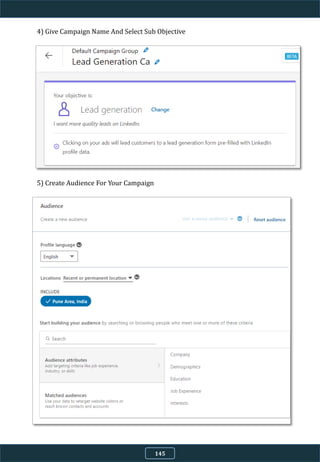
• What is search Engine ?
• Name of a few Search Engine
• What is Search Engine Optimization(SEO) ?
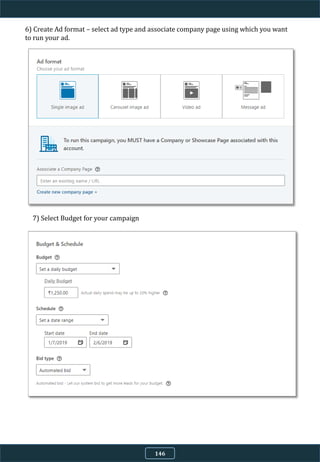
• What are the types of SEO ?
• What are the Techniques of SEO ?
• What is White hat SEO ?
• What is Black hat SEO ?
• What is mean by Crawler/Google Bot/ Spider ?
• What are Google Algorithms? Explain Each of them ?
• What is Keyword ?
Interview Questions & Answers
263
• Explain types of Keywords.
• Which are the best places to use the keywords ?
• Which are the tools you used for keyword research ?
• Which tool you used for analysis of competitor keyword research ?
• What are the parameters(Keyword Strategy) you consider while you research
for a keyword ?
• What is On-page SEO ?
• How You will optimize On-Page Basic factor? Explain it one by one.
• What are the advance factor of On-Page SEO ?
• What is Meta tag and it’s limit ?
• What is meta Description and it’s limit ?
• What is sitemap? What are it’s type ?
• What is XML sitemap ?
• What is HTML sitemap ?
• What is canonical tag? Give its example.
• What is redirection ?
• How you check the redirection ?
• What is SSL? Explain its need.
• Give the name of SEO Analysis & Website Speed Analysis Tools ?
• What is Robot.txt? Give its syntax.
• What is a back link ?
• What is anchor text ?
• Types of back links ?
• What is a do-follow/no-follow link ?
• Can you explain certain rules which you follow in doing link building ?
• What do you mean by SEO? What is a keyword and how vital is it for SEO?
• What is Page Authority(PA) ?
Interview Questions & Answers
264
• What is Domain Authority(DA) ?
• What is Moz Rank (mR) ?
• Tell me some off-page activity that you have done with example
• What is Search Console ? (Google Webmaster)
• What Google Webmaster Tools Give Us ?
• What is accelerated Mobile Pages(AMP) ?
Google Webmaster Interview Questions & Answers Guide
• How can I see what pages are indexed in Google?
• What is Google Webmaster Tools/Google Search Console?
• What is Google Fetch?
• What is bounce rate?
• Differences between bounce rate and pogo sticking.
• What are crawl stats?
• What Google Webmaster Tools Give Us?
• Explain Google Webmaster Tools?
• What is Search Console ? (Google Webmaster)
• What Google Webmaster Tools Give Us ?
• What is accelerated Mobile Pages(AMP) ?
Interview Questions & Answers
265
Social Media Marketing Interview Questions & Answers
• Importance of Social Media?
• What are the social media success tracking tools?
• What KPIs (Key Performance Indicators) would you recommend to report on
social media efforts?
• Is Google+ worth for using in a business ?
• What is RSS Feed and why it is crucial ?
• What are the elements of a viral video?
• In what ways can you measure social return on investment (ROI) ?
• What are the best practices on Twitter ?
• How can you boost Facebook reach ?
• Why did you choose Social Media industry ?
• What is your most successful social media campaign? Why?
• Do you know our competitors? What Social Media strategies are adopted by
them?
• What are the tricks that can drive more traffic to our blogs?
• What are top Social Media Marketing Tools to consider?
• What are the marketing strategies to generate leads ?
• What is the most important task of a social media manager?
• Have you ever handled online reputation crisis?
• How can we allocate a budget for social media advertising?
• What do you think of our current social media efforts? What could we be doing
better?
• What metrics do you use to measure the success of your social campaigns?
• What channels do you think are most relevant to our business? How do you use
each channel differently ?
• What tools do you use to manage your channels?
Interview Questions & Answers
266
• Tell me about a successful social campaign you’ve run from beginning to end.?
• How do you use social media as a tool for customer service?
• Say there’s a crisis on one of our social media channels. How do you handle it?
• When is it better not to engage on social media?
• What makes a piece of social media content successful?
• Give me a couple of examples of social media experiments you’d like to run with
our business.
• What Is Smo ?
• How Social Media Affects Seo ?
• Outline Lead Generation & Engagement Via Social Media?
• The Way To Get Leads And Engagements Exploitation Social Media Sites?
• How Does One Measure Social Media Performance, ROI And Its Success?
• What Social Media Tools Does One Use?
• What Are The Advantages To Use LinkedIn Teams And LinkedIn Pages?
• What’s Your Social Media Strategy For Content Marketing ?
• Why Use # Tag ?
• List Of Social Media ?
• Give List Of Only Photo Sharing Social Media ?
• Which Social Media Support # Tag ?
• Pinterest Support # Tag ?
• How Do You Measure Social Media Success ?
• Give Some Useful Idea To Increase Traffic On Your Blog?
• Give Tips To Promote Your Blog Or Content On Social Media Sites ?
• What Time Is Better For Get Indian Traffic From Social Media?
• How To Get Usa Or Uk Traffic On Indian Website?
• What Time Is Better For Get Usa Or Uk Traffic From Social Media?
• How To Earn Money Through Facebook ?
Interview Questions & Answers
268
Interview Questions & Answers On Twitter
• What is the definition of “Twitter impressions”?
• What is the definition of “Twitter engagement”?
• Are you finding that more people click un-shortened links, rather than shortened
links, due to trust and transparency?
• How do you balance the popularity of short tweets with in-depth content like
eBooks, reports, blogs, whitepapers, and so on?
• What is an average to good expected engagement rate of tweets?
• Why favorite a tweet? Isn’t that pretty much like saying, “I like you as a friend but
you’re not worth retweeting”?
• Do you prefer to favorite a tweet to show customers you acknowledged their post,
instead of responding?
• Do you ever use the favorite button as a bookmark?
• How do you get people to retweet you on Twitter?
• How dos one appeal to an audience that is not already interested?
• People only see your tweets if they already follow you, right?
• When I tweet, do I address it to a specific person, or am I putting it out there to
anyone who is paying attention?
• How can you tell if people are interacting with your tweet?
• What are some of the most effective ways to use hashtags?
• How much hash tagging is too much?
• Which tool should we use to graph hashtag usage?
• How do you find the best hashtag?
• Is it better to use a hashtag within the core sentence of the tweet or attached at the
end of the tweet?
• Should hashtags be included in user profiles?
• Should all my tweets have links or rich media?
Interview Questions & Answers
268
• How do you get your photos to appear in tweets?
• What’s the best practice for using Twitter to promote or distribute video content?
• Is there a danger to using too much text in a picture?
• Is it possible to schedule tweets?
• How much time should I give between tweets?
• How often should I tweet without a link back to my site?
• Should a series be published all in one day?
• What is the best time to release a tweet?
• What’s the optimal amount of tweets to send in a day? How much tweeting is too
much?
• How often can you retweet the same content before it starts getting ignored?
• How can you create ads, save them, and tweet them at a later date and time?
• What’s a Twitter card? How do you make one?
• Where do leads from my Twitter Cards go?
• What is the cost difference for a promoted tweet with a visual versus a text-only
tweet?
• How do you connect with users who have a private account?
• Is there a way for a Twitter user to know how many people have subscribed to
phone text alerts?
• My boss doesn’t think Twitter is “serious” enough – any tips here?
• Does posting via a third party app get penalized by social media networks like
Twitter?
• Is Twitter for Dummies available as an online download?
• Do you see any data around using emoji's to help drive engagement?
Interview Questions & Answers
269
Google Analytics Interview Questions & Answers
• What is Google Analytics?
• What are the Google Analytics Goals?
• What is meant by conversions and how will you track conversions through GA?
• What is meant by KPI in Analytics?
• What is a session?
• Which is more important – Bounce Rate or Exit Rate
• Would I be able to track my Google AdSense Campaigns with Google Analytics?
• What is implied by Conversions and in what manner will you track conversions
through GA?
• How can you track and enhance e-commerce sales via Google Analytics?
• What is bench marking?
• What is Funnel in Goals?
• What is Acquisition report in Google Analytics?
• 13. What is Behavior in Google Analytics?
• 14. What is Report in Google Analytics?
• 15. How many types of custom Reports are there in Google Analytics?
• 16. What is Map overlay?
• What is site search button?
• Define Cohort in Google Analytics?
• How can you identify the keywords that are sending paid traffic to your site?
• How can you identify where your site visitors are clicking the most?
• How can I track user engagement on websites that prefer using Flash or AJAX and
are located on one HTML page?
• What are the three elements of Event Tracking?
• How can you set up and install tracking for mobile apps?
• What is RPC in Google Analytics?
Interview Questions & Answers
270
Google Ads Interview Questions & Answer
• Explain what is google Ads?
• Explain how Ads work?
• Explain what is ad rank?
• Explain what is quality score?
• What are google ad extensions?
• What is the formulas for CTR(Click Through Rate)?
• What is difference between CPM, CPC, CPV bidding?
• Why do you think PPC is important in Digital Marketing?
• Which setting cannot be changed after creating an Ads account?
• What is difference between clicks and impression?
• What is Ad rotation?
• What is Remarketing?
• How can you improve conversion Rate?
• What do you know about Google Ads?
• Describe what is Pay Per Click advertising or PPC?
• How can you identify the most popular pages of your site in Google Analytics?
• What is the difference between Clicks and Visits?
• Name the different types of product linking in Google Analytics?
• What is the formula of ROI?
• What are the top channels Google Analytics uses to track your traffic sources?
• How can you create your goal in Google Analytics?
Interview Questions & Answers
271
TOOLS
Keyword Planner Keyword Research
Spyfu Competitor Analysis
Site-map Sitemap generator
301 & 302 Redirect
Generator Tool
Redirect url
Pingdom Tool Website Speed Test
Google Page Insight Website Speed Test
GT Metrix Website Speed Test
Image Optimized Tool-
Optimizilla
Image Compressor
Webmaster Tool/ Search
Console
Analysis tool
Structure Data Testing Tool Schema code Checker
Href Long Generator Hyperlink
Seooptimer SEO Error Analysis
SEO Site Check Map Sitemap Checker
Woorank SEO Analysis
Onpage. Org SEO Error analysis
SEO Quake Chrome Extension SEO Analysis
W3c Error Checking Tools W3 C Checker
PA/ DA Checker PA/ DA Rank Checking tool
PA/DA Robin Gupta PA/ DA Rank Checking tool
Backlinkwatch Competitor Backlink Checker
272
Markup Helper Schema Code Generator
Magisticseo.Com Link intelligence tools for SEO and Internet
PR
Semrush.Com Competitor Analysis tool
Ahref.Com Competitor Analysis tool
Check My Links Checking for Website links
Google Analytics Website analysis and tracking tool
Xml Sitemap Xml Sitemap generator
Sitemap Generator Xml Sitemap generator
Href Tool Hyperlink Generator
Url Shortner Short a long url
Mailchimp Email marketing tool
Buffer Social media image posting tool
Hootsuit Seo Analysis tool
Turbo Spinner Change duplicate content and convert to
unique content
Copyscape.Com Checking for pages duplicate content
Plagiarism Tool Plagiarism checker tool
Panguin Tool SEO tool
Moz Toolbar Extension for PA/ DA Checker
TOOLS
273
Call Now: 8983765316 | 7887612871 | 9168875782
Contact Us
Nal Stop Branch:
Digital Trainee, 2nd Floor, Office
No. 203,204 Siddharth Hall, Near
Ranka Jewellers, Behind HP
Petrol Pump, Opp to Mahesh
Bank,Karve Road, Erandwane,
Pune 411004
Viman Nagar Branch:
Office No. 102, Gulmohar Centre
Point, Sopan Nagar Road, Viman
Nagar Chowk, Pune, Maharashtra
411014
Visit: digitaltrainee.com
Email: info@digitaltrainee.com
Pimpri Chinchwad (PCMC)
Branch:
PCMC, Spot 18 Office no.610,
floor 6th, Rahatani, Pune,
Mana-mandir Society, Pimple
Saudagar, Pimpri-Chinchwad,
Maharashtra 411027

Study material digital marketing

  • 2.
    Digital Marketing Overview GoogleAds Social Media Marketing Email Marketing Google Analytics Search Engine Optimization Google AdSense YouTube SEO Affiliate Marketing App Store Optimization ASO Strategy 001 TableofContent 005 070 109 161 171 202 208 223 225 230 Growth Hacking 253 Interview Questions 263
  • 3.
    DIGITAL MARKETING 001 Content Ch. No. UnitName Page No. Digital Marketing 003 Google Layout 005
  • 4.
    Introduction to Marketing Marketingis the study and management of exchange relationships. The American Marketing Association has defined marketing as "the activity, set of institutions, and processes for creating, communicating, delivering, and exchanging offerings that have value for customers, clients, partners, and society at large." Traditional Marketing Digital Marketing 1. Traditional marketing is the process of promoting your product or service offline. 1. Digital marketing is the process of promoting your product or service online. 2. Costly 2. Cost Effective. 3. Reach maximum number of audience is not possible 3. Reach maximum number of audience is possible. 4. Cannot change/edit your ads anytime and anywhere. 4. Can change/edit your ads anything anywhere. 5. Audience tracking is not possible. 5. Audience tracking is possible. 6. Targeting the particular Audience is not possible 6 Targeting the particular Audience is possible Types of Marketing: Types Of Marketing Traditional Marketing Digital Marketing Introduction to MarketingCh. No. 1 002
  • 5.
    1.1 Digital Marketing Digitalmarketing (also known as data-driven marketing) is an umbrella term for the marketing of products or services using digital technologies, mainly on the Internet, but also including mobile phones, display advertising and any other digital medium. Inbound Marketing Outbound Marketing 1. Inbound marketing refers to marketing strategies that focus on pulling audiences in instead of going out to get prospects’ attention. 1. Outbound marketing is just another name for “traditional advertising methods”, it is devised to contrast with the newer “inbound marketing”. 2. Inbound marketing pulls visitors in, increase brand exposure, and creates brand authority through the creation of valuable content. 2. It includes television and radio advertising, print advertising, telemarketing, direct mail, and outdoor advertising. Types of Digital Marketing Modules Of Digital Marketing DIGITAL MARKETING TECHNIQUES SEO SEARCH ENGINE OPTIMIZATION SEM SEARCH ENGINE MARKETING SMO SOCIAL MEDIA OPTIMIZATION SMM SOCIAL MEDIA MARKETING 003
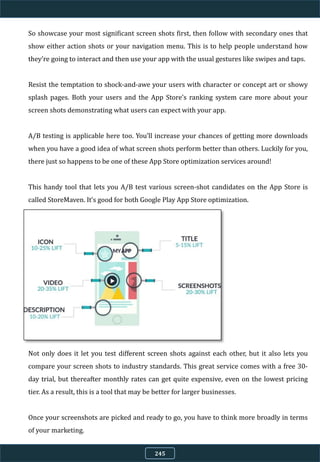
  • 6.
    1.2 Google Layout Thereare different types of layouts in Google as shown in below figure: SERVICE BASED KEYWORD PRODUCT BASED KEYWORD INFORMATION BASED KEYWORD Product Name Name Price Promoter (product listing Ads) PLA SEO Results 1 2 3 . . . . . . . . . 10 EX. Hotel in pune 1.Ads 2.Ads 3.Ads 4.Ads 1.Ads 2.Ads 3.Ads 4.Ads Local SEO Result 1. 2. 3. Local SEO Result 1. 2. 3. SEO Results 1 2 3 ….10 SEO Results 1 2 3 ….10 Google ads 1 2 3 Google ads 1 2 3 1 2 53 4 004
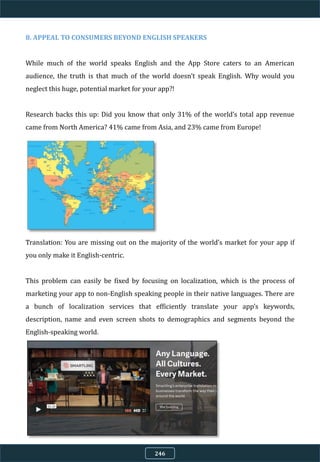
  • 7.
    Search Engine Optimization 005 Ch. No.Unit Name Page No. 2. Search Engine Optimization 007 2.1 How Search Engine Works 007 2.2 Google Algorithm 009 2.2.1 Panda Algorithm 009 2.2.2 Penguin 011 2.2.3 Humming Bird 012 2.2.4 Pigeon 013 2.3 Keyword Research and Competition 014 2.4 How to use keyword Planner? 015 2.5 How to use k-Meta 019 2.6 Onpage Optimization 022 2.7 Meta Tags Optimization 025 2.8 Onpage Factors 028 2.8.1 Sitemap 028 2.8.2 Canonical Tags 030 2.8.3 Redirection 031 2.8.4 Secure Socket Layer 032
  • 8.
    Content 006 Ch. No. UnitName Page No. 2.8.5 Domain name in SEO 033 2.8.6 SEO Analysis & Website Speed Tools 033 2.8.7 Robots.txt 033 2.9 Google Search Console 034 2.10 New Google Search Console 035 2.11 Offpage Optimization 044 2.11.1 Link Building 044 2.12 PA/DA Checker 046 2.12.1 Page Authority 047 2.12.2 Domain Authority 047 2.12.3 Link Building Guidelines 048 2.12.4 Link Building Platforms 050 2.13 Local SEO 051 Step By Step Implementation of Local SEO 054 SEO Task for Any Project 061
  • 9.
    Search Engine Optimization(SEO) is the activity of optimizing web pages or whole sites in order to make them search engine friendly, thus getting higher positions in search results. SEO techniques are classified into two broad categories: • White Hat SEO - white hat SEO refers to the usage of optimization strategies, techniques and tactics that focus on a human audience opposed to search engines and completely follows search engine rules and policies • Black Hat SEO - Techniques that search engines do not approve and attempt to minimize the effect of these techniques are also known as spamdexing. • Gray Hat SEO – Gray Hat SEO refers to tactics and strategies that straddle the line between ethical online marketing tactics and the unethical. 2.1 How The Search Engine Works? Search Engine refers to a huge database of internet resources such as web pages, newsgroups, programs, images etc. It helps to locate information on World Wide Web. STORE IT IN DATABASE INTERNET GOOGLE INDEXING FETCH/COLLECT WEBSITE DATA SANDBOX Search Engine OptimizationCh. No. 2 007
  • 10.
    Web crawler It isalso known as spider or Google bots. It is a software component that traverses the web to gather information. Search Engine Working Web crawler, database and the search interface are the major component of a search engine that actually makes search engine to work. Search engines make use of Boolean expression AND, OR, NOT to restrict and widen the results of a search. Following are the steps that are performed by the search engine: The search engine looks for the keyword in the index for predefined database instead of going directly to the web to search for the keyword. It then uses software to search for the information in the database. This software component is known as web crawler. Once web crawler finds the pages, the search engine then shows the relevant web pages as a result. These retrieved web pages generally include title of page, size of text portion, first several sentences etc. These search criteria may vary from one search engine to the other. The retrieved information is ranked according to various factors such as frequency of keywords, relevancy of information, links etc. 008
  • 11.
    2.2 Google Algorithm 2.2.1Panda It’s all related with “quality content” in your website. Quality Content: • Your content must be unique. • User friendly/ user engaging. • No Keyword Stuffing • Keyword density must be 2-3 % only. Google Panda takes the quality of a site’s content into account when ranking sites in the search results. For sites that have lower quality content, they would likely find themselves negatively impacted by Panda. As a result, this causes higher quality content to surface higher in the search results, meaning higher quality content are often rewarded with higher rankings, while low-quality content drops. When Panda originally launched, many saw it as a way for Google to target content farms specifically, which were becoming a major problem in the search results with their extremely low-quality content that tended to rank due to sheer volume. These sites were publishing a fantastic amount of low-quality content very quickly on topics with very little knowledge or research, and it was very obvious to a searcher who landed on one of those pages. Google has now evolved Panda to be part of the core algorithm. Previously, we had a known Panda update date, making it easier to identify when a site was hit or had recovered from Panda. Now it is part of a slow rolling update, lasting months per cycle. As a result, it is hard to know whether a site is negatively impacted by Panda or not, other than doing a content audit and identifying factors that sites hit by Panda tend to have. 009
  • 12.
    Do not removeyour user-generated content, whether it is forums, blog comments or article contributions, simply because you heard it is “bad” or marketed as a “Panda proof” solution. Look at it from a quality perspective instead. There are many highly ranking sites with user-generated content, such as Stack Overflow, and many sites would lose significant traffic and rankings simply because they removed that type of content. Even comments made on a blog post can cause it to rank and even get a featured snippet. Technical SEO Technical SEO also does not play any role in Panda. Panda looks just at the content, not things like whether you are using H1 tags or how quickly your page loads for users. That said, technical SEO can be a very important part of SEO and ranking in general, so it should not be ignored. But it does not have any direct impact on Panda specifically. Determining Quality If you are struggling to determine whether a particular piece of content is considered quality or not, there is one surefire way to confirm. Look in Search Analytics or your site’s analytics program such as Google Analytics and look at the individual page. If Google is ranking a page and sending it traffic, then clearly it is viewing it as quality enough to show high enough in the search results that people are landing there from those Google’s search results. Panda Prevention How to prevent Google Panda from negatively impacting your site is pretty simple. Create high-quality, unique content that answers the question searchers are asking. Reading content out loud is a great way to tell if content is high-quality or not. When content is read aloud, suddenly things like over usage of repetitive keywords, grammatical errors, and other signals that the content is less than quality will stand out. Read it out yourself and edit as you go, or ask someone else to read it so you can flag what should be changed. 010
  • 13.
    011 2.2.2 Penguin It’s allrelated to “Quality links” in your websites (Real time algorithm). Quality Links : • High authority site Link • Relevant link building Avoid: • Paid link building • Spam link building • Irrelevant link building The second major Google algorithm is Penguin. Penguin deals solely with link quality and nothing else. Sites that have purchased links or have acquired low-quality links through places such as low-quality directories, blog spam, or link badges and info graphics could find their sites no longer ranking for search terms. Who Should Worry about Penguin? Most sites do not need to worry about Penguin unless they have done some sketchy link building in the past or have hired an SEO who might have engaged in those tactics. Even if the site owner was not aware of what an SEO was doing, the owner is still ultimately responsible for those links. That is why site owners should always research an SEO or SEO agency before hiring.
  • 14.
    If you havedone link building in the past while tactics were accepted, but which are now against Google’s webmaster guidelines, you could be impacted by Penguin. For example, guest blogging was fine years ago, but is not a great way to build links now unless you are choosing your sites well. Likewise, asking site visitors or members to post badges that linked to your site was also fine previously, but will now definitely result in Penguin or a link manual action. 2.2.3 Humming Bird It gives you fast and accurate result of your queries in search engine. It analyzes of each and every word meaning and gives you the answer. Google Hummingbird is part of the main Google search algorithm and was the first major change to their algorithm since 2001. But what is different about Hummingbird is that this one is not specifically a spam targeting algorithm, but instead an algorithm to ensure they are serving the best results for specific queries. Hummingbird is more about being able to understand search queries better, particularly with the rise of conversational search. It is believed that Hummingbird is positively impacting the types of sites that are providing high-quality content that reads well to the searcher and is providing answers to the question the searcher is asking, whether it is implied or not. Hummingbird also impacts long-tailed search queries, similarly to how Rank Brain is also helping those types of queries. Google wants to ensure that they can provide high-quality results for the longer queries. For example, instead of sending a specific question related to a company to the company’s homepage, Google will try to serve an internal page on the site about that specific topic or issue instead. 012
  • 15.
    2.2.4 Pigeon Launched onJuly 24, 2014 for U.S. English results, the “Pigeon Update” is a new algorithm to provide more useful, relevant and accurate local search results that are tied more closely to traditional web search ranking signals. Google stated that this new algorithm improves their distance and location ranking parameters. Hummingbird cannot be optimized for, outside of optimizing for the rise of conversational search. Longer search queries, such as what we see with voice search, and the types of queries that searchers tend to do on mobile are often highlighted with a conversational search. And optimizing for conversational search is easier than it sounds. Make sure your content is highly readable and can answer those longer tail queries as well as shorter tail ones. 013
  • 16.
    A keyword isa term that is used to match with the query a person enters into a search engine to find specific information. Most people enter search phrases that consist of two to five words. Such phrases may be called search phrases/ keyword phrases/ query phrases, or just keywords. Good keyword phrases are specific and descriptive. Types of keyword in SEO: 1. Short tail keyword: 2,3 words per Keyword For Ex. 1. Hotel in pune 2. Samsung mobile phone 2. Long tail keyword: 3,4 and more For Ex. 1. Best veg-non veg hotel in pune 2.Samsung mobile phones under 10000 rupees Best Places to Put Keywords Here is a list of places where you should try to use your main keywords. • Keywords in the <title> tag(s). • Keywords in the <meta name="description">. • Keywords in <h1> or other headline tags. • Keywords in alt tags. • Keywords in the URL or website address. Keyword Research and competition2.3 014 Tools : 1. Keyword planner (for keyword research) 2. Spyfu and k-meta (for competitor keyword research tool) 3. SEMrush
  • 17.
    How To UseKeyword Planner Step 1: Search Keyword planner tool in Google and click on the first result. (Check Url) Step 2: Click On Sign in button 2.4 015
  • 18.
    Step 4: clickon Keyword Planner Step 3: Sign In using your Gmail account. 016
  • 19.
    Step 6: Startwith keyword planner. Step 5: Enter keywords you want to search 017
  • 20.
    Step 7: Selectspecific location where you want to check search location and search volume city wise or country wise. Or you can select multiple location. 018
  • 21.
    How To UseK-Meta2.5 019
  • 22.
  • 23.
  • 24.
    On-Page Element On-page SEOis the practice of optimizing individual web pages in order to rank higher and earn more relevant traffic in search engines. On-page refers to both the content and HTML source code of a page that can be optimized, as opposed to off-page SEO which refers to links and other external signals. 1. URL 2. HEADING TAG <H1> 3. IMAGE (ALT Tag) 4. CONTEXT 5. INTERNAL & EXTERNAL LINKS 6. FOOTER URL: Keyword must be in the url. Url should be in small letter. Space & underscores should be replace by hyphen Heading: Heading should be in <h1> Heading </h1> this format. Every page has only one H1 TAG. Put your main keyword in H1. On-Page Optimization2.6 022
  • 25.
    Image with ALTTag ALT Tag is the name of image, image must be used ALT tag for crawler understanding. Syntax : <img src=”image path” height=”500px” width=”600px” alt=”Name of Image”> Content: Quality content should be in your website follows by PANDA algorithm. Links: Internal and external links should be there in your website. Given links should be relevant. Internal Links: An internal link is a type of hyperlink on a webpage to another page or resource, such as an image or document, on the same website or domain. Hyperlinks are considered either "external" or "internal" depending on their target or destination. For Example: <a href="#seealso">Go to the see also section</a> 023
  • 26.
    External Links; External Linksare hyperlinks that point at (target) any domain other than the domain the link exists on (source). In layman's terms, if another website links to you, this is considered an external link to your site. Similarly, if you link out to another website, this is also considered an external link. Code Sample <a href="http://www.external-domain.com/">Link Anchor Text</a> Footer: • Footer is also an important part of your website for better understanding for crawler. • It is also an important part for on page factors. 024
  • 27.
    2.7 Meta Title : HTMLmeta tags are officially page data tags that lie between the open and closing head tags in the HTML code of a document. The text in these tags is not displayed, but passable and tells the browsers (or other web services) specific information about the page. Simply, it “explains” the page so a browser can understand it. Here’s a code example of meta tags: <head> <title>Your Meta Title </title> <meta name="description" content="Awesome Description Here"> </head> Meta Description: The meta description is the short paragraph of text placed in the HTML of a webpage that describes its content. The meta description will then appear under your page’s URL in the search results. This is also known as a snippet. For Ex. Meta Tags Optimization 025
  • 28.
    Meta keyword sizelimit Meta title 60 to 70 character 600 pxl Meta Description 120-158 character Meta Keyword Upto 255 character (Not Consider By Google) 026
  • 29.
    Copy the followinglines of code and insert them between the <HEAD> and </head> tags in your HTML document. That's it! 027
  • 30.
    On-Page Factors A sitemap (or sitemap) is a list of pages of a web site. Sitemaps used during the planning of a Web site by its designers. Human-visible listings, typically hierarchical, of the pages on a site. Structured listings intended for web crawlers such as search engines. • XML sitemap: A XML(extensible markup language) sitemap protocol is specifically intended for search engine spiders. At its root, XML is a file that includes all the behind the scenes activity on a web site. Not just the site’s main URL, but all the URLs within the site along with the associated metadata. This can include when the URL was last updated, how important it is, the average frequency changes occur, the URLs relation to the rest of the site, etc. • HTML sitemap: HTML(hypertext markup language) is just a general overview of the site, just the pages and info a user needs to be concerned with. If you’re on a web site and you’re looking for the shopping cart or the ‘Contact Us’ page and can’t find it, you’d go to the sitemap and easily find it there. While this is geared towards the user, it can also help your search engine ranking because your site is user-friendly and catering to the site visitor. Tool: 1. Sitemap generator 2.8.1. Sitemap 2.8 028
  • 31.
    How to generateSitemap 029 Upload Sitemap.xml on your public_html file section.
  • 32.
    2.8.2 Canonical tags Thecanonical tag is a page level meta tag that is placed in the HTML header of a webpage. It tells the search engines which URL is the canonical version of the page being displayed. It's purpose is to keep duplicate content out of the search engine index while consolidating your page’s strength into one ‘canonical’ page. Example: Multiple Url pointing to same content caused Duplicate issues. For ex. Following three url having same content to solve this issue we use canonical tag • www.digitaltrainee.com/Index • http://www.digitaltrainee.com • digitaltrainee.com So in this case we write following code in our head section to the crawler understanding that this different url indicating the same page. <Link rel= “Canonical” href=http://www.digitaltrainee.com”/> Finalize the url to understand Google crawler that the my actual website name is “http://www.digitaltrainee.com”. 030
  • 33.
    2.8.3 Redirection: A redirectis a way to send both users and search engines to a different URL from the one they originally requested. Below are descriptions of some of the commonly used types of redirects. 301 Redirect 301 (Permanent Redirect) should be used to clearly indicate a permanently moved page and to avoid confusing search engines. 302 Redirect A 302 (Temporary Redirect) Temporary Redirect one Url to another Url. Tools: • 301 and 302 Redirect generator tool 031
  • 34.
    2.8.4 SSL (SecureSocket Layer) SSL layer is used to boost ranking of your website. SSL Stands for “Secure Socket Layer”. It is the industry standard for web security technology and is accepted globally. As the name suggests, SSL establishes an encrypted link between the web server and the browser. Why do you need it? The answer is really simple. If your site is taking data from the user or sending him important data, then your site should implement SSL. With this benchmark in mind, most of the websites on the internet should implement SSL. This is because most websites today have login capabilities or at the least accept user email for newsletter subscription. 032
  • 35.
    2.8.5 Domain NameIn Seo What are domains? Domain names are the unique, human-readable Internet addresses of websites. They are made up of three parts: a top-level domain (sometimes called an extension or domain suffix), a domain name (or IP address), and an optional subdomain. The combination of only the domain name and top-level domain is known as a "root domain." The "http://" is part of a page's URL but not its domain name and is known as the "protocol.“ 2.8.6 SEO Analysis & Website Speed Analysis Tools • Pingdom tool • GTmatrix • Google Page Insight • SEO Optimer • Woorank • SEO site Checkup • Onpage.org 2.8.7 Robots.txt The robots exclusion standard, also known as the robots exclusion protocol or simply robots.txt, is a standard used by websites to communicate with web crawlers and other web robots. The standard specifies how to inform the web robot about which areas of the website should not be processed or scanned. For Ex. User-Agent: * Disallow: /file name 033
  • 36.
    Introduction To WebmasterTool • Complete website performance • Webmaster issues • Google index status • Crawling status • Crawling error etc. How to verify ownership • Search Google webmaster tool • Sign in with your Gmail • Add your website and add property • Verify ownership by using five methods • Html file upload • Html tag • DNP (Domain name provider) • Google analytics • Google tag manager Google webmaster tool • Search appearance • Search traffic • Google index • Crawl • Security issue Google Search Console2.9 034
  • 37.
    To access thenew Search Console, log into your GSC account, then click on “Try the new Search Console”. And you’ll see the new GSC in all its glory New Google Search Console 035
  • 38.
    Grab the sitemapURL. Then, hit the “Sitemaps” button. Paste in your URL and Click “Submit And That’s it. Use The New “Index Coverage” Report To Find (And Fix) Problems With Indexing 036
  • 39.
    If everything onyour website is setup right, Google will: a) Find your page and b) Quickly add it to their index But sometimes, things go wrong. Things you NEED to fix if you want Google to index all of your pages. And that’s where the Index Coverage report comes in. 037 What is Index Coverage Report? The Index Coverage report lets you know which pages from your site are in Google’s index. It also lets you know about technical issues that prevent pages from getting indexed. How to Find Errors With The Index Coverage Report At the top of the Index Coverage report we’ve got 4 tabs: 1. Error 2. Valid with warnings 3. Valid 4. Excluded
  • 40.
    038 What Is ThePerformance Report? The “Performance” report in Google Search Console shows you your site’s overall search performance in Google. This report not only shows you how many clicks you get, but also lets you know your CTR and average ranking position. And this new Performance Report replaces the “Search Analytics” report in the old Search Console (and the old Google Webmaster Tools).
  • 41.
    039 Yes, a lotof the data is the same as the old “Search Analytics” report. But you can now do cool stuff with the data you get (like filter to only show AMP results). But my favorite addition to the new version is this: In the old Search Analytics report you could only see search data from the last 90 days. We get 16 MONTHS of data: 0
  • 42.
    040 Compare your CTRon Desktop And Mobile The new Performance report lets you easily compare mobile and desktop CTR. Here’s How: Fire up the Peroformance report. Then, hit ‘New+’ to add a new filter, and select ‘Devices” Click the compare tab on the popup, select “desktop vs Mobile, and hit apply…
  • 43.
    041 You’ll get alist of queries, with separate stats for mobile and desktop
  • 44.
    Mobile Usability “Mobile Usability”report tells you if mobile users have trouble using your site. 042
  • 45.
    Links Here you cansee the top 1,000 pages on your site sorted by the number of internal links to those pages. If you have a small number of pages on your site, you can reverse the sort order by clicking on the Links header. Any pages that show zero internal links have been orphaned and should either be linked to from somewhere on your site, or redirected to an appropriate page if they’re old legacy pages. Also, This section identifies the domains that link to you the most, along with your most linked- to content. While you most likely won’t see every link that Google’s found for your site, you will see more than if you went to google.com and performed a search for “link:yoursite.com.” 043
  • 46.
    2.11 2.11.1 Link Building "Ingeneral, webmasters can improve the rank of their sites by increasing the number of high-quality sites that link to their pages.“ Link building is the SEO practice of obtaining links from external websites to your own to improve both direct referrals (i.e., people clicking on the links), and search engine ranking. Link building is all about increasing your site link popularity. Website Crawler goes to a site again and again whose ranking in a search engine is high. You can verify this fact by putting your site on a high-rank site. If your site link is available on a high-rank website, then you have 99.99% chances that your site is indexed within 24Hrs. Off-Page Optimization 044
  • 47.
    Do Follow VersusNo follow • Do Follow Dofollow Link is a hyperlink that is able to tell all search engines to pass along its page to an outbound link. Example of Nofollow Link: <a href=”http://www.google.com/” rel=”nofollow”>Google</a> • No Follow Nofollow Link is exactly the opposite. It is a hyperlink that removes the ability to pass on its page rank status to other site. Example of Dofollow Link: <a href=”http://www.google.com/”>Google</a> 045
  • 48.
    2.12.1 Page Authority Whatis Page Authority? Page Authority (PA) is a score developed by Moz that predicts how well a specific page will rank on search engine result pages (SERP). Page Authority scores range from one to 100, with higher scores corresponding to a greater ability to rank. How is Page Authority scored? We score Page Authority on a 100-point logarithmic scale. Thus, it's significantly easier to grow your score from 20 to 30 than it is to grow from 70 to 80. We constantly update the algorithm used to calculate Page Authority, so you may see your score fluctuate from time to time. What is a "good" Page Authority? Because of how Page Authority is calculated (see "Technical definition of Page Authority" below), it's best used as a comparative metric (rather than an absolute, concrete score) when doing research in the search results and determining which pages may have more powerful or important link profiles than others. Because it's a comparative tool, there isn't necessarily a "good" or "bad" Page Authority score. Page Authority vs. Domain Authority Whereas Page Authority measures the predictive ranking strength of a single page, Domain Authority measures the strength of entire domains or subdomains. The metrics are, however, calculated using the same methodology — so in many ways, they're more alike than they are different. PA/DA2.12 046
  • 49.
    2.12.2 What isdomain Authority? Domain authority is a measure of the power of a domain name and is one of many search engine ranking factors. Domain authority is based on three factors: Domain Age, Popularity, and Size. SEO gurus Moz can be credited with the metric known as DA or domain authority. Moz’s own search algorithm gauges the quality of any given site based on a huge complex combination of factors including onsite and offsite, taking into account things such as diversity of Back linking domains to come up with a score between 0 and 100. A brand new site, for example, will have 0 whereas a very high authority site might have 80/100. Domain Authority gives those working in the field of online marketing a useful metric by which to consider the apparent quality of any site. Where can you Find Domain Authority? Domain Authority metrics are incorporated into dozens of SEO and online marketing platforms across the web. Tools: 1. PA/DA Checker 047
  • 50.
    Simple link buildingtips 1. Ask for backlinks 2. Build relationships 4. Start a blog 5. List your site in trustworthy sites 6. Write a good guest post 7. Discover competitors' common backlinks 8. Get an indirect backlink from your competitor 9. Recover your dead backlinks 2.12.3 Link Building Guidelines Any links intended to manipulate PageRank or a site's ranking in Google search results may be considered part of a link scheme and a violation of Google’s Webmaster Guidelines. This includes any behavior that manipulates links to your site or outgoing links from your site. The following are examples of link schemes which can negatively impact a site's ranking in search results: • Buying or selling links that pass PageRank. This includes exchanging money for links, or posts that contain links; exchanging goods or services for links; or sending someone a “free” product in exchange for them writing about it and including a link • Excessive link exchanges ("Link to me and I'll link to you") or partner pages exclusively for the sake of cross-linking • Large-scale article marketing or guest posting campaigns with keyword-rich anchor text links • Using automated programs or services to create links to your site 048
  • 51.
    Additionally, creating linksthat weren’t editorially placed or vouched for by the site’s owner on a page, otherwise known as unnatural links, can be considered a violation of our guidelines. Here are a few common examples of unnatural links that may violate our guidelines: • Text advertisements that pass PageRank • Advertorials or native advertising where payment is received for articles that include links that pass PageRank • Links with optimized anchor text in articles or press releases distributed on other sites. For example: There are many wedding rings on the market. If you want to have a wedding, you will have to pick the best ring. You will also need to buy flowers and a wedding dress. • Low-quality directory or bookmark site links • Keyword-rich, hidden or low-quality links embedded in widgets that are distributed across various sites, for example: Visitors to this page: 1,472 car insurance • Widely distributed links in the footers or templates of various sites • Forum comments with optimized links in the post or signature, for example: Thanks, that’s great info! - Paul paul’s pizza san diego pizza best pizza san diego 049
  • 52.
    2.12.4 Link BuildingActivity Platforms : • Social Bookmarking • Document Sharing 1. PPT Submission 2. PDF submission • Image Sharing 1. Info graphic Submission • Video Sharing • Article Submission • Press Release Submission • Business Listing • Classified Ad Submission • Guest Posting • Forum Posting • Blog Commenting • Q & A Submission 050
  • 53.
    2.13 Importance Of LocalSeo Local SEO is an effective way to market your business online. It helps businesses promote their products and services to local customers at the exact time they’re looking for a local business. Local SEO uses a variety of strategies. Getting your site ranked on search engines like Google, business directories such as Yelp, Super pages, Foursquare, Yellow book, Google My Business listing, Bing Places for Business page, localized content on your website, online reviews and other strategies. Millions of customers use local search every day to find the best local businesses in their area. You can help increase your chances of getting found by these potential customers through Local SEO. Submission To Google My Business Adding or Claiming Your Business on Google My Business • Go to Google My Business. Click “Get on Google” • Enter Your Business Name and Address in the Search Box. • Select or Add Your Business. Click on your business listing if it appears among the suggested matches. • Verify Your Business. • Confirm your Business. Local SEO 051
  • 54.
    Local Seo RankingSignals & Local Seo Negative Signals Local Ranking Factors Localized Organic Ranking Factors 1. My Business Signals (Proximity, categories, keyword in business title, etc.) 19% 1. My Business Signals (Proximity, categories, keyword in business title, etc.) 7% 2. Link Signals (Inbound anchor text, linking domain authority, linking domain quantity, etc.) 17% 2. Link Signals (Inbound anchor text, linking domain authority, linking domain quantity, etc.) 29% 3. On-Page Signals (Presence of NAP, keywords in titles, domain authority, etc.) 14% 3. On-Page Signals (Presence of NAP, keywords in titles, domain authority, etc.) 24% 4. Citation Signals (IYP/aggregator NAP consistency, citation volume, etc.) 13% 4. Citation Signals (IYP/aggregator NAP consistency, citation volume, etc.) 8% 5. Review Signals (Review quantity, review velocity, review diversity, etc.) 13% 5. Review Signals (Review quantity, review velocity, review diversity, etc.) 7% 6. Behavioral Signals (Click- through rate, mobile clicks to call, check-ins, etc.) 10% 6. Behavioral Signals (Click-through rate, mobile clicks to call, check-ins, etc.) 11% 7. Personalization 10% 7. Personalization 9% 8. Social Signals (Google engagement, Facebook engagement, Twitter engagement, etc.) 4% 8. Social Signals (Google engagement, Facebook engagement, Twitter engagement, etc.) 4% 052
  • 55.
    Citations And LocalSubmission A local citation is any mention of your business on the web; it is any combination of your company name, phone number, address, zip or postal code, and website address. Citations in SEO are a key factor in improving your local search results. Local citations come in various forms, for example: • Company name. • Company name & phone number. • Company name, phone number, & address. • Company name, phone number, address, & website. • Company name, & website. • Company phone number. And so on. 053
  • 56.
    4.9.8 1. Search “GoogleMy Business” on Google search engine 2. You will be taken to below shown window. Now click on “START NOW “ Links Step By Step Implementation Of Local SEO 054
  • 57.
    3. Give your“Business name” 4. Give your “Business Location” 055
  • 58.
    5. Now locateyour Business on “Google Map”. 6. Choose your “Business Category” 056
  • 59.
    7. Give your“Contact Details” 8. Finish and Verify the Business 057
  • 60.
    9. Now entera contact name so that you will receive a verification code from Google within 12 working days. 058
  • 61.
    10. Once youreceive verification code then again login to Google My Business and go to Verify location. 059
  • 62.
    10. Enter the5 Digit verification code that you have received through Google. Your Business is all set and will be visible to users on local SEO 060
  • 63.
    Seo Task For AnyProjects 061
  • 64.
    1. KEYWORDS RESEARCHAND SELECTION Well-researched keywords are the foundation of any successful SEO campaign. Moreover, choosing your keywords wisely is half the battle won in accelerating your website to the top of Search Engines. Our Experts, will use a combination of keyword tools and compile a list of well-targeted terms and phrases that best describe your business, to help you choose your most important keywords for effective optimization. 2. COMPETITOR ANALYSIS Know who you are losing your audience to and why! We will provide you a complete report on how your competitors (those that rank for your chosen keywords) are faring on the search engines, and why they are ranking better than you. Based on these findings, our experts will devise an effective SEO strategy for your website so that you can outrank your competition over time. 3. TITLE AND METATAGS Search spiders crawl and display the contents of the Title and Meta tags of your website in return for a related search query. Hence, these tags serve a two-pronged strategy: • Wise use of the correct keywords in these tags will earn the favor of search engines. • The contents of these tags are displayed to users and are thus important to convey a crisp and compelling message to encourage click to your website. We will optimize these tags in a manner that will satisfy both the above goals, and help you garner greater traffic from the search engines. Seo Task For Any Projects 062
  • 65.
    4. HTML CODECLEANUP AND OPTIMIZATION We will ensure an error-free html code so that your website functions smoothly with impeccable internal linking and optimum structuring. This goes a long way in helping the search spiders crawl your website effectively. 5. IMAGE AND HYPERLINK OPTIMIZATION While search spiders are blind to images, they can pick up the Alt text attached to pictures on your website. Hence, in order to appeal to the spiders, all images and internal links will be renamed to include your crucial keywords to ensure better indexing. 6. CUSTOMIZED 404 PAGES While users may encounter a “Not Found” 404 error page due to outdated links, mis- spelt URLs, or dysfunctional internal links. We will ensure that their experience of your website is nevertheless maintained by customizing your error pages to display appropriate content and thus avoiding driving away valuable visitors. 7. ROBOTS.TXT OPTIMIZATION Our experts can guide the crawling of search spiders by creating a robots.txt file which explicitly allows or disallows crawling and indexing of certain pages on your website that may be under construction, have sensitive data, or are not meant for public display. 8. SEARCH ENGINE FRIENDLY URL CREATION URLs of all web pages and articles will be well-defined and optimized with strategic keywords to appeal to search engines by better matching users’ search terms. This not only increases the relevancy of your website to a particular search term, but also helps route traffic directly to Webpages that best serves users’ needs, thereby boosting sales. 063
  • 66.
    9. WEBSITE COPYOPTIMIZATION Better rankings are a function of better content. Our experts will optimize the content of your website, in order to place your keywords strategically and highlight them through the use of heading tags and strong tags. 10.GOOGLE, YAHOO! AND BING SITEMAP CREATION To ensure better ‘index ability’ of your website, our experts will create a search engine friendly sitemap. These sitemaps explain the structure of your website and will ensure that no relevant page misses the attention of the search bots. 11.BUILDING BACKLINKS (across 6 months) Search Engines recognize quality and attach a relevance score to your website on the basis of the number of incoming links from other related web portals. Hence, every backlink acts as a vote to the relevancy of your website to a particular search term. Our experts will build these valuable backlinks from similar-themed and high quality websites to ensure that you raise on the search engines through an increasing number of incoming votes. 12.MANUAL SUBMISSIONS TO FREE WEB DIRECTORIES (across 6 months) Search bots crawl web directories to find websites matching a search term. Our experts will manually submit your website to hundreds of these directories, which will not only serve as a backlink, but will also ensure better index ability by search spiders. These submissions will include your most important keywords and thus further your SEO objectives. 064
  • 67.
    13. MANUAL SUBMISSIONSTO PREMIUM PAID DIRECTORIES Our experts will also hand-submit your website to premium paid directories like Yahoo! and Business.com that count as valuable sources for search bots to find relevant, high quality websites. 14.ARTICLE WRITING AND SUBMISSIONS (across 6 months) Our copywriters will write keyword-rich articles that carry valuable information about your business and submit them to hundreds of article directories every month. Each submission will carry your URL and thus link back to your website. This not only contributes in building your link base, but also serves as a source of meaningful traffic to your website. 15.PRESS RELEASE WRITING AND SUBMISSIONS (across 6 months) Frequent touch points with your audience go a long way in fostering brand value and generating brand recall. Keep your audience abreast with the latest happenings in your company through Press Releases written by our in-house writers. Well optimized Press Releases not only help you grab search engine prominence, but also act as backlinks. 16. CREATING SOCIAL MEDIA PROFILES (across 6 months) With social networking sites such as Facebook and Twitter, becoming the hub of all internet activity, creating Social Media profiles helps you connect with your target audience through popular and well-visited media. Also, with changes in search algorithms, Twitter and Facebook feeds are prominently displayed in return for search queries. Our experts will create your profiles on the most popular portals to afford you valuable Google real estate. 065
  • 68.
    17. SOCIAL BOOKMARKING(across 6 months) Our Experts will bookmark your web pages with popular sites like Digg, StumbleUpon, del.icio.us etc. and tag them with relevant keywords in order to up your popularity quotient. As search bots increasingly pull out well-viewed and favorite webpage’s from these sites, it helps garner backlinks, gain better visibility and attract more traffic. 18. FORUM/BLOG COMMENTS (across 6 months) Our experts will comment on related blogs and appropriate threads on forums, to generate awareness about your company and how it addresses the needs of the readers. Moreover, each comment will include your web address and link back to your website, hence not only bringing more qualified traffic straight away, but also boosting your ranking on the search engines through an increasing number of backlinks. 19. PRESENTATION SUBMISSIONS (across 6 months) Our team will submit your company presentations to popular slide sharing networks to increase your company mentions across the internet and project you as an authority in your business. 20. VIDEO SUBMISSIONS (across 6 months) Videos have become an integral part of search results, featuring third or fourth on Google results (SERPs). Hence, to capitalize on the changes in the Google algorithm, our experts will submit your videos to key video-sharing sites so that they are pulled out and displayed every time a relevant search term is entered. Thus you garner valuable backlinks and attract instant, quality traffic. 066
  • 69.
    21. PHOTO SHARING(across 6 months) With changes in the Google landscape, images have become a natural part of first page Google results. Our experts will submit your photos every month to make sure that they are included in every popular photo-sharing portal, thus ensuring that your company is referenced at a prominent spot on search engines. 22. REPUTATION OPTIMIZATION Negative comments cropping up on the first page of search results can drive away valuable traffic and harm your brand. Our experts will help protect your reputation by pushing negative information about your company lower down in search results, thus ensuring that your reputation is insulated from negative publicity and not tarnished by ill-meaning competitors or frivolous complaints. 23. LOCAL SEARCH ENGINE SUBMISSION Our experts can effectively optimize your website to help you gain prominence on local search engines and thus establish you as a top quality and much-favoured provider of your products and services in your town or vicinity. 067
  • 70.
    24. Schema INTEGRATION SchemaCode is a micro format meant for easy display of contact details of people, companies and places, so that any parsing tool can extract these details easily and showcase them on search engines, especially the local ones. Google Listings and Google maps use these as a source to pick up contact details and display them prominently on search engines. 25. UPDATING PAGES FOR LOCAL SEARCH Our experts will improve your local rankings by infusing relevant local keywords in your website copy, internal links, titles, headings etc. so that you feature in top spots of local search engines. 26. GOOGLE ANALYTICS SET UP AND INTEGRATION With the main purpose of SEO being to attract greater and better quality traffic to your website, our experts will integrate Google Analytics and help you track your best performing keywords, main sources of traffic and the increase in visitors to your website. 27. GOOGLE ANALYTICS FUNNEL CREATION AND GOAL SETTING Our experts will put in place advanced analytics settings that will help you monitor how many visitors that came through search engines and other websites, converted to a sale by purchasing one or more of your products. Consequently, this will help you measure your ROI and calculate your profits. As your SEO strategy begins to take effect, your cost per customer acquisition will gradually decline with the same monthly investment, thus making our services more cost effective over time. 068
  • 71.
    28. GOOGLE WEBMASTERTOOLS SET UP AND MONITORING Setting up Webmaster Tools is a best practice prescribed by Google and Bing. It affords better visibility on the search engines and allows monitoring of incoming links as well as facilitates quick diagnosis of any problems. 29. SEARCH ENGINE RANKING REPORT 30. DIRECTORY SUBMISSION REPORT 31. ARTICLE AND PRESS RELEASE SUBMISSION REPORT 32. LINK-BUILDING REPORT 33. TRAFFIC REPORT 31. ACTIVITY REPORT 069
  • 72.
    Google Ads 070 Ch. No.Unit Name Page No. 3. Google Ads 071 3.1 Basic Parameters 070 3.1.1 Cost Per Click (CPC) 071 3.1.2 Cost Per Thousand Impression (CPM) 071 3.1.3 Cost Per Acquisition(CPA) 071 3.1.4 Click Through Rate (CTR) 072 3.1.5 Conversion Rate (CR) 072 3.1.6 Return On Investment (ROI) 072 3.1.7 Quality Score 073 3.2 Search Campaign 076 3.3 Display Campaign 084 3.4 Video Campaign 090 3.5 Universal Campaign 101 3.6 Shopping Campaign 103 3.7 Remarketing 107 3.8 Conversion 107 Shopping Campaign Videos 108
  • 73.
    3.1 Basic parameter 3.1.1CPC- Cost Per Click It is a great tool for understanding the basic costs of a campaign at a basic level. Most business owners have an idea of how much they are willing to pay for a lead and this simple calculation gives them a figure to work with. Formulae: Total Spend / Total Number Of Clicks 3.1.2 CPM-Cost Per Thousand Impression CPM stands for 'cost-per mille' but is more commonly known as 'cost-per-thousand impressions'. This metric allows us to understand how much it costs to get an advert in front of the eyes of the people the campaign is targeted at. Formulae: (Total Spend / Total Number Of Impressions) x 1000 3.1.3 CPA-Cost Per Acquisition Cost Per Acquisition is a metric that all marketers should find insatiably useful. It examines the relationship between total advertising spend and the number of conversions the account achieves. Formulae: Total Spend / Total Conversions Ch. No. 3 Google Ads 071
  • 74.
    3.1.4 CTR-Click ThroughRate A simple but hugely important calculation, 'click-through rate' allows us to understand licking on an advert in relation to how many times it is being shown. Formulae: Total Clicks / Total Impressions 3.1.5 CR-Conversion Rate Conversion rate helps us understand how often an ad click results in a desiredaction Number of conversion/ Total no. of ad clicks Means 10/100*100 = 10% Clicks 1000 People View website 1 2 3 10 CONVERT 100 Clicks 3.1.6 ROI-Return On Investment Return On Investment (ROI) is the holy grail of all the marketing metrics. ROI allows us to understand how much benefit a business is getting from a specific ad campaign. It looks at the fundamental building blocks of a basic sale, taking into account total revenue and incurred costs. Formulae: (Revenue - Cost) / Investment Cost X 100 (for %) 072
  • 75.
    3.1.7. QS-Quality Score Qualityscore is always be 1 to 10 score. This is very important in paid marketing. Parameter for Good quality Score; • Quality of your landing page • Keyword relevancy in Ad copy. • Past CTR must be high. How Ads Works Max CPC QS Ad Rank Actual CPC Flipkart 10 10 100 7.6 Amazon 15 5 75 12.1 Jobong 2 3 60 16.40 Snapdeal 25 2 50 No competitor Add Rank = CPC * QA Actual CPC = immediate competitor ad rank + 0.01 Your QS 073
  • 76.
    Google Networks • SearchNetwork- Search engine, Google map • Display Network- Google AdSense, partner sites, Gmail, Google finance etc • Video Network- YouTube There are Six types of Network campaign; • Search Campaign Network • Display campaign Network • Shopping Campaign • Video Campaign • Universal App Campaign Campaign Ad group Ad Copy Ad group Ad group Ad group Ad Copy Ad Copy Ad Copy Ad Copy Ad Copy Ad Copy Ad Copy 10,000 Campaigns 20,000 Ad group 50 Text Ads 074
  • 77.
    Different types ofad copy: • Text ad • Dynamic ads • Mobile app install • Mobile app engagement There are two types of bidding: • Automated This is the easiest way to bid. Set a daily budget and let Ads adjust your CPC bids to bring you the most clicks possible within that budget. • Manual Take full control of your CPC bids. Manual bidding lets you set bids at the ad group level, or for individual keywords or ad placements, so you know you're bidding just what you want for the clicks that mean the most to you. Limits for creating adds Heading 1 30 char Heading 2 Heading 3 30 char 30 char Final url 2048 Path 1 15 Path 2 15 Description 1 Description 2 90 char 90 char 075
  • 78.
    3.2 1. Click OnNew Camp 3. Select Campaign Type Google Ads Search Campaign 076
  • 79.
    4. Select Objective 5.Create Your Camp. Goal And Conti. 6. Give Campaign Name And Select Network 077
  • 80.
    7. Select LocationAnd Language 8. Add Budget 9. Select Bidding Type And Start End Date 078
  • 81.
    10. Add ExaltationsAnd Save And Cont. 11. Give Ad Gp Name Set Default Bid Give Keywords And Save And Cont 12. Click On New Add 079
  • 82.
    13. Give FinalUrl Headline And All 14. Click On Conti. To Camp 15. Select The Ad Gp 080
  • 83.
    16. Click OnKeyword 17. Select The Type Of Keyword 081
  • 84.
    Steps of AdsCampaign (Search Network) 082
  • 85.
  • 86.
    1. click oncreate campaign and select new campaign 2. Select display camp 3. select obj. (brand awareness and reach) Google Ads Display Campaign3.3 084
  • 87.
    4. select goaland country 5. give camp name location and language 6. select bidding and budget 7. give ad group name 085
  • 88.
    8. Select Audience 9.Select Bid Amount 10. Click On New Ad 086
  • 89.
    11. Give AdName Headline URL And All 087
  • 90.
    Steps of AdsCampaign (Display Network) 088
  • 91.
  • 92.
    3.4 1. Click OnNew Campaign 2. Select Video Video YouTube Campaign Now You Give campaign name 090
  • 93.
    3. Select Objective 4.Select Campaign Subtype 5. Give Campaign Name And Budget 091
  • 94.
    6. Select Networks 7.Select Language 8. Select Location 9. Select-bidding Strategy 092
  • 95.
    10. Select DevicesAnd Frequency Capping 11. Give Ad Group And Bidding 12. Select Audience Demographic 093
  • 96.
    13. Select Audience 14.Give Keyword 15. Select Placement 094
  • 97.
    16. Select YourVideo On You Tube 17select ad format 17. Select Ad Format 095
  • 98.
    18. Give URLAnd All 096
  • 99.
    Steps of AdsCampaign (Video Network) 097
  • 100.
    1. Click OnCreate New Campaign 2. Select Universal App 3.5 3. Select Mobile App Platform Google Ads Universal App Campaign 098
  • 101.
    4. Select MobileApp And Continue 5. Give Camp Name 6. Give Ad Set Like Description, Image, Video 7. Select Location And Language 099
  • 102.
    8. Select Camp.Optimization 9. Enter Budget And Bidding 10. Enter Start And End Date And Location 100
  • 103.
    Google Ads ShoppingCampaign3.6 1. Create new campaign 2. Select objective 3. Give a name to your campaign 101
  • 104.
    4. Select campaigntype 5. Bid Setting 102
  • 105.
    Google Ads ShoppingCampaign 1) If you want to create a shopping campaign then first you have To create an account on ‘Google Merchant’. • Google Merchant is a warehouse in which all of your products Are saved. 2) So, First you have to create Google Merchant account which Include following two steps i. Create your account ii. Verify & claim your site To create your merchant account type google.com/ merchants Fill all the information like business country , name of store, website name, contact details etc. Note: Your store name will be displayed on Google. i.e. in front of your Product so be sure it matches the name on your website. Note: There is an email address option in contact details & it is Tied to your site verification. Note: When you enter the website name enter the prefix http/https Otherwise, you get the error message later on. • Click on continue • Accept the terms & condition • Click on Finish 103
  • 106.
    3) Verify &Claim In Google Merchant dashboard, Click on business information In Business info click on website There are some option to verify an account select one option & click on confirm successful upload by visiting Click on verified & click on verify & claim unclaimed to claim your website. This is how you successfully create Google merchant account. Now you have to add the products. i) Set up your data feed ii) Add products. i) Set up your data feed:- Google spreadsheet to upload your product info everything will get submitted to merchant center automatically. Again in Google merchants dashboard click on ‘Product’ Click on the plus data feed button. Select the country & make sure you pick the correct language. Click on continue. 4) Then you have 4 options. • Google sheets – update your product in Google sheet & automatically update • Schedule fetch – Fetch the data from website & update automatically. • Upload • Content API 104
  • 107.
    Click on continue. Clickon save. ii) Add Products:- Select the spreadsheet which appear in your dashboard feed section. Note:- Don’t change the column headers otherwise your feed will get rejected. For eg. Columns like price , availability, condition etc. 105
  • 108.
    How to createshopping campaign:- 1) Link your accounts. 2) Create your campaign. 3) Confirm your billing information. Merchant Center Ads i. Link your account. ii. Login to Merchants center. iii. Click on ( ) (triple dots) on right side. iv. Click on account linking. v. Click on link account. Create the shopping campaign. Note:- You can create shopping campaign in Google Merchants also which is easy. If you want to run the shopping campaign then there are few steps :- 1) Create Google Merchants account. i. Create your account. ii. Verify & claim. 2) To add the product or feed the data . i. Set up your data feed (spread Sheet or content API) ii. Add product. 3) Link your Ads account & Google Merchant account. 4) Run the shopping campaign. 106
  • 109.
    3.7 Remarketing : Remarketingis a clever way to connect with visitors to your website who may not have made an immediate purchase or enquiry. It allows you to position targeted ads in front of a defined audience that had previously visited your website - as they browse elsewhere around the internet. 3.8 Conversion Conversion tracking is a powerful tool in Ads that lets you identify how well your ad campaign is generating leads, sales, downloads, email sign-ups, and other key actions for your business. The last page visit is known as conversion Types of conversion • Website [ track, purchase, form submission etc.] • App [track, app, download] • Phone calls [ track calls ] 107
  • 110.
    1) Guide toGoogle Shopping : Set up your Merchant Center account 2) Guide to Google Shopping: Upload your products with a data feed : 108
  • 111.
    Social Media MARKETING 109 Ch. No.Unit Name Page No. 4. Social Media Marketing 110 4.1 Social Media Optimization 112 4.2 Facebook Marketing 115 4.3 Facebook Advertising 117 4.4 Facebook Campaign Step By Step 119 4.5 Twitter Marketing 131 4.5.1 Twitter Paid Campaign 137 4.6 LinkedIn Marketing 143 4.7 Email Marketing 161
  • 112.
    Introduction to socialmedia marketing Social Media Marketing Social Media is a platform that lets us participate in social networking. We can share our posts on various social media platforms to improve business visibility. Today it is the best source for news updates, marketing, education, and Entertainment. Importance of Social Media The importance of social media is unbeatable. It is a powerful channel of marketing Business owners can improve search rankings, leads, sales, and traffic using search media. This can be done at reduced marketing expenses. Besides business, it is a cool platform to connect with friends and dear ones. A game changer for any business it provides us the flexibility to communicate at both personal as well as business levels. Business owners can improve search rankings, leads, sales, and traffic using search media. This can be done at reduced marketing expenses. Besides business, it is a cool platform to connect with friends and dear ones. Social Media MarketingCh. No. 4 110
  • 113.
    Business Profile Creationon Social Media • Social Media Marketing can help you in branding your business. It helps you increase your public profile as well. All you need is to Choose right Social Media Channel for your business. • Finalize a social content strategy. • Make a strong content strategy. • Participate in good conversation with your customers to let them feel more connected. • Keep track of all key metrics like potential reach, conversation share, links, etc. 111
  • 114.
    4.1 SMO Strategy forBusiness A wisely implemented Social Media Optimization (SMO) strategy can give a great boost to your business. To draw maximum benefit out of Social Media, you need to set clear and well-defined business goals and objectives. The following points are the backbone of any well-laid SMO strategy:  Set measurable and achievable goals.  Know you customers.  Do Research market and trends.  Explore more social networking platforms. Reflect your presence on all.  Choose core topics related to your business. Use them in content.  Set Social Engagement parameters.  Plan your resource use.  Track your results. Social Media Optimization 112
  • 115.
    Ad formats SMO –KeyConcepts  Aim for building reputation by depicting yourself as a trusted source or business.  Encourage more engagement and sharing.  Be an authorized name in your industry.  Gear up originality.  Keep it social.  Master over your media platforms.  Optimize every single point that hinders your efforts. Business Profile Creation Create an impactful Business profile. Add a well-defined persona and proficiency statement of your business.  Study competitors’ business profile, Analyze their strong points, and add them to yours.  Add prominent features of your business that makes it stand out among others.  Include the milestones achieved by your company.  Add address and other details.  Include data and statistics.  List your renowned vendors.  Add some keywords to it to get noticed by the web crawler. Brand Awareness Brand awareness is a degree to which your brand name is known. Brand name solidifies customers’ trust. So, it is important that your brand name overshadows your products. Promoting the brand name helps your business grow and get over obsolete business state. Social Media Marketing can help you in branding your business. It helps you 113
  • 116.
    Increase your publicprofile as well. All you need is to  Choose right Social Media Channel for your business.  Finalize a social content strategy.  Make a strong content strategy.  Participate in good conversation with your customers to let them feel more connected.  Keep track of all key metrics like potential reach, conversation share, links ,etc. Social Media Marketing At Marketing Land Marketing Land is the sister site to Search Engine Land that covers all facets of internet marketing, including these popular topics within social media marketing: • Facebook • Instagram • Twitter • Pinterest • LinkedIn • Google+ 114
  • 117.
    Introduction to Facebookmarketing Facebook is a social networking service provider. It lets you invite and connect with friends, send messages and pictures, like and comment or share them. Facebook has seen outstanding growth since its inception and is poised to maintain its dominance in social networking. How to Create a Fan Page? A Facebook fan page is an amazing way to promote your business, build awareness for a cause, and gather support for your brand. If you would like to create a fan page, follow these easy steps: • Log in to your Facebook account. • Click on the settings on the top right-hand corner of your page. • Click on create page. • Click on the type of page you would like to create. • Fill in all the information required. • Click on "get started". • Upload a profile picture and click on save photo. • Complete the 'about' section and click 'save info'. • Now decide whether you want to enable ads or skip (it will be payable if you enable). 4.2 Facebook Marketing 115
  • 118.
    Facebook Profiles Facebook Profilesare for people and they are generally meant for personal use only. A Facebook profile is an account that is allocated against an individual, who can use it to network with friends and colleagues, and share information with them. It is designed to be a unique profile on the Facebook network for that one individual, and it is not meant to be used to represent a company, an organization, or a fictional character. Facebook Places Facebook Places enable people to provide real-time update of where they are and what they are doing when they are on the move. It also enables its users to take advantage of unexpected coincidences such as discovering that they are at some concert as their friends. Users can check in when they arrive at a location, and see whether their friends are nearby. The best part about Facebook places is that it will more or less maintain itself once it has been created. Facebook users do have the ability to 'like' the Facebook places as well, so encourage visitors to press the 'like' button after they check in. Facebook Groups Facebook Groups are the places for small group communication where users can share their common interests and express their opinion. Groups allow people to come together around a common cause. Groups are for discussing issues and share related content. When we create a group, we can decide whether to make it publicly available for anyone to join, require administrator approval for members to join, or keep it private and by invitation only. Groups range widely – from light- hearted themes to organizing activities to serious topics such as politics and world events. Grow Your Business with Facebook Facebook is fast becoming a powerhouse of marketing activity due to the sheer number of engaging users on the site and the simplicity of connecting with them directly. 116
  • 119.
    What are Adverts? Advertson Facebook are unique. They are shown to specific groups of highly engaged people. If your adverts have a great creative content and are well targeted, they get more likes, comments, and shares. When we boost our page posts or expand the audience for the adverts, more people will see them when they visit Facebook. Facebook ads allow us to promote our business, get more fans to our business page, and drive more leads for our sales team. Facebook ads allow us to advertise a website or content that we manage on Facebook (like a group, page, or event) To create an ad, go to: http://www.facebook.com/advertising And click "create an ad". How to Create a Campaign? With targeted ads, stories, and wall posts, a successful campaign can be a powerful tool in our advertising arsenal. When running a Facebook campaign, we can draw on several Facebook components such as wall posts, Facebook ads, sponsored marketing, unique page tabs, etc. We can break down reports by campaign and also easily start/stop all ad sets within that campaign. Campaigns correspond to each of our advertising objectives, like building brand awareness or driving web traffic. They are designed to help optimize and measure our results for each objective across multiple ad sites and ads. Each campaign can feature multiple ad sets, each of which has its own budget and schedule. We can also organize each ad set to represent a particular audience segment, for example, we can have an ad set for people who live near our store. This will help us control the amount we spend on each audience, decide when they will see our ads, and measure their response. Within each ad set, we can have multiple ads, each of which can feature a different set of images, links, videos, or text. Facebook Advertising4.3 117
  • 120.
    Facebook offers awide variety of paid ad options and placements, but all ads can be broken down into three elements: • Campaigns. The campaign houses all of your assets. • Ad sets. If you're targeting separate audiences with different characteristics, you'll need an individual ad set for each. • Ads. Your actual ads live within your ad sets. Each ad set can hold a variety of ads that vary in color, copy, images, etc. With that terminology out of the way, let's dive in to creating an ad. Determine the most appropriate editor : Facebook offers users two different tools for creating a paid ad: the Ads Manager and the Power Editor. When deciding which one is the best fit for you, you'll want to consider both your company size and the number of ads you plan to run at once. While the Ads Manager best suits most companies, the Power Editor serves as a tool for larger advertisers who are looking for more precise control over a variety of campaigns. 118
  • 121.
    New Step ByStep Procedure For Facebook campaign 4.4 119 1. Search Facebook ad manager in Google search engine 3. Click on the ad manager result and click on create ad
  • 122.
    120 3. Go tothe right side of Facebook ad 4. Now click to “Switch to Quick Creation”. 5 Here we start. Now click on “+ CREATE” Button.
  • 123.
    121 Note: Click &Accept terms & conditions before going next. 6. Give campaign name and select objective for your campaign (Here we are selected LEAD GENERATION) 7. Give name to your adset 8. Name to your ad copy
  • 124.
    122 9. Click onedit and go to adset 10. Select Budget and schedule time for your campaign 11. Select location and age group
  • 125.
    123 12. Here selectyour targeted audience 13. Select audience from the list and save the audience for future use 14. Set bid cap for campaign. Now click on ad copy.
  • 126.
    124 15. Select imagefor your campaign ( recommended 1200x628 or 1080x1080) 16. Give heading and other details giving in adcopy 17. Create new form for your campaign (Only allow in lead generation campaigns). Click on create new form.
  • 127.
    125 18. Select NewForm 19. Fill out the given information.
  • 128.
    126 19. Review yourform and click to submit 20. Submit and click to publish.
  • 129.
    4.9.8 Step By StepProcess of Ads Manager *Steps of Ad Manager -Search on Google “Ad Manager” -Click on First Link. -Click on ‘Create an ad’. -Login with your Facebook account. 127
  • 130.
    4.9.8 Steps ofFacebook Campaign (Lead Generation) Lead generation campaign :- 1) Campaign Level. Give campaign name Select Objective Enter campaign spending limit (more than 5,000) Click on (>) 2) Ad set level. Click on ad set & edit. Select page & accept terms of services. (For first time page selection) Set the budget (daily) (100,200) Set audience, placement & all. 128
  • 131.
    Set bid amount(Manual & delivery type). 3) Ad level Click on Ads Click on edit Image/ Video “Lead form” Select new form Next fill info Save Finish. 129
  • 132.
    Steps of FacebookCampaign (Brand Awareness) Brand Awareness Campaign 1) Click on Campaign Select campaign & edit Select objective Set the campaign limit Click (>) 2) Click on ad set & edit Set the budget Set audience ---- location (city, km) age, gender 3) Click on Ads. Click in edit. Select the Facebook page Create Ads Add text url etc. & write steps. 4.9.8 Image/ Video Multiple Images/ Videos 130
  • 133.
    4.5 Twitter Marketing Withover 313 million monthly active users and a young demographic to boot, Twitter is a great platform for most marketers. ... Successful Twitter marketing is powerful. If you can become a pro with this fast paced social networking site, you'll unlock new opportunities to grow your business What Makes Twitter Different Your approach to every social media site should be different. For example, your Twitter marketing strategy isn’t going to be the same as your Pinterest or Facebook marketing plan. Understanding how Twitter works and where it fits in the social media landscape will shape the way you use it. Some of the main ways businesses use Twitter include: • Sharing information and content • Driving engagement for promotional activities • Interacting with consumers • Networking • Branding • Reputation management 131
  • 134.
    Create a Twitterbusiness profile Establish your Twitter presence Your profile shows the world who you are, and first impressions count. Each element should showcase your best content and accurately reflect your message. Your Twitter @name Your @name is your unique identifier on Twitter. It can contain up to 15 characters and should help people easily find your business. Your name (which you can change as you please) appears above your @name (which is permanent). Your profile photo Choose a profile photo that visually represents your business or brand and fits well in a small space. This image isn’t just on your profile page; it is the icon in every Tweet you post. 132
  • 135.
    Your bio You have160 characters to let people know what makes your account special, and why they should follow you. Include useful information, such as what you tend to Tweet about, your location or business hours, and a link to your website. Use a unique link, so you can track visitors to your site from Twitter. Your header image Consider this your billboard. You can use event photos, feature products, use a graphic with text, or highlight your work and team. Swap out this image periodically to spotlight promotions, events, product news, or just keep things fresh. Your pinned Tweet Keep an important Tweet at the top of your timeline by pinning it there. Click on the “more” option on the Tweet you want to pin and select “Pin to your profile page.” Use this feature to make sure visitors to your profile can’t miss your biggest, latest news. Twitter profile specifications The recommended image size for your profile pic is 400x400 pixels; the image will be resized to fit. The recommended size for a Twitter header image is 1500x500 pixels. On mobile, it’ll be cropped to a 2:1 aspect ratio. Use a GIF or PNG file for vector-based and line art images. For photos, upload a JPG or PNG file. 2. Create your Twitter content strategy Compelling content will help you attract new followers and keep them engaged over time. Keep it short A concise Tweet makes an impact. Keep each Tweet focused on one specific message rather than trying to communicate multiple things. You can include a link to a blog post or website if you have a longer message to convey. 133
  • 136.
    Use visuals inyour Tweets Adding a bold image, video, or GIF to your Tweets adds a touch of personality, and leads to higher Tweet engagement rates. In fact, people are three times more likely to engage with Tweets that contain videos and photos.* Can’t decide which photo to use? You can attach up to four photos to a single Tweet. Incorporate relevant hashtags Hashtags are a powerful tool that allow you to expand your reach and tap into relevant conversations. Focus on keywords that are relevant to your business. Best practices recommend using no more than two hashtags per Tweet. 134
  • 137.
    3. The valueof a follower When someone follows you on Twitter, they not only opt in to see your Tweets — they also take actions that provide value to your business. In fact, the findings from our ”Small Business Customer Insights Study” (2016) show that followers feel more positively about your business, help you expand your reach, and increase sales. Ready to build a community of engaged and valuable Twitter followers? Here are five steps to get started: Promote your username everywhere! Add a follow button to your website, include a link to your Twitter profile in your email signature, and promote it on offline collateral such as business cards, or store signage. Tap into your existing customer base. Upload your email contacts and let your customers know you’re ready to have a conversation by following them on Twitter. Search keywords and hashtags that relate to your industry and audience. Use them to enter into conversations and get noticed, and follow influencers who can help spread the word about your business. Bring your offline advocates online. Ask your employees to follow you and Retweet your content. If you partner with other businesses, arrange to promote each other’s handles. Ask for Retweets. When someone Retweets your content, they’re sharing your business with their networks and your reach grows exponentially. Be direct, and ask your followers for their support. Try an incentive: You can offer to release an exclusive coupon code or offer if a Tweet reaches a certain number of Retweets.135
  • 138.
    1) select objective 2)clcik on return to original campaign form 136
  • 139.
    1. Select Countryand Time Zone 2. Select objective part 1 Twitter Marketing Campaigns 137 4.5.1
  • 140.
    4.9.8 Steps ofTwitter Campaign Ads.twitter.com 1. Click on create campaign Select Objectives (website clicks) Return to original campaign form Give campaign name 2. Select Audience • Location • Gender • Age Lang, Device, Platforms, etc. Select Audience Advance • Keyword based • Followers based • Internet based 3. Set Budget 4. Create Creative 5. Finish 138
  • 141.
    3. Enter CampaignName, Funding Source and Budget Details 4. Create AD group Name, Schedule Bid type and Optimization Preference 139
  • 142.
    5. Select thetweet to promote 6. Select Custom Audience and Demographics. 140
  • 143.
    7. Select languagelocation technology. 8. Select Audience Features and Keywords 141
  • 144.
    8. Select retargetingOptions. 9. Review and Complete 142
  • 145.
    4.6 LinkedIn is abusiness-oriented social networking site launched in 2003. It has 300+ million users across the world. It is available in 20 languages. It allows users to create and customize profiles and connect with people having similar interest areas. Presently, it is the largest platform for social networking, assisting people with job opportunities. Jobseekers can connect and follow hiring managers and can update their profiles in a defined fashion to get easily discovered. One can follow a company, get notifications, bookmark jobs, like and comment other’s posts, and invite others on LinkedIn. The best part of LinkedIn is that you can see your recent visitors and endorse others’ skills. LinkedIn is a professional networking platform and it has all the features of a great marketing opportunity provider. Here you interact with people who mean business. To market through LinkedIn, you need to do the following: Build a robust business page that displays your products and services in a compelling format. • Invite clients and vendors to follow and recommend your page. • Launch a group that is related to your business. It can attract significant traffic. • Reach your audience through targeted advertising. • LinkedIn is a powerful social media tool. You just need to follow its policies and best practices. LinkedIn Marketing 143
  • 146.
    How to RunLinkedIn Ad Campaigns 1. Go to business. LinkedIn .com & Click on View Market solution 2. Add Account & Create new Account 3) Select Objective – Lead Generation Here 144
  • 147.
    4) Give CampaignName And Select Sub Objective 5) Create Audience For Your Campaign 145
  • 148.
    6) Create Adformat – select ad type and associate company page using which you want to run your ad. 7) Select Budget for your campaign 146
  • 149.
    8)Create conversion trackingfor your campaign – ( Its optional ) 9) Save & Exit 147
  • 150.
    10) Give thankyou note and link to your website and say save 11) Now click to create new ad 148
  • 151.
    12) select audienceand say next 13) Click to create new form 149
  • 152.
  • 153.
    13. Click saveand back to ad manager and click create. 151
  • 154.
    3) Establish theAd's Media and Format Once you establish the basic parameters for your ad, you'll be prompted to start building it. Decide where you want visitors to be directed when they click on your ad -- either to a specific LinkedIn page, or to a website. You'll want to create the copy for your ad, pair it with an image, and preview the different layout options. Of course, there are a few guidelines around the copy that we would suggest. Ad Headline The headline of your ad cannot be more than 25 characters. Ad Body The body of a LinkedIn ad can be up to 75 characters long. The copy should be relevant both to the person viewing the ad, and the offer or page to which you're sending them. For best results, create a different ad for each of your buyer personas, and tweak the copy accordingly. For example, when promoting a book to college professors, leading the title with the words, "College Professor's Guide to" may generate a higher CTR than generic, un-targeted copy. Call-to-Action (CTA) Having an actionable CTA within your ad copy will also help you improve your ad's click through rate. Consider asking people to "Download your eBook now," or "Click now for free samples," instead of writing copy that's devoid of actionable next steps. 152
  • 155.
    Value Incorporate your valueproposition into your ad copy -- that can make people more likely to click on your ad. By boasting something like, "20% off your first purchase," or "Clearance sale ends today, shop now," you're sending a clear signal of what someone will specifically gain when he or she clicks your ad. Testing Don't be afraid to test your ad copy, either. You can create multiple variations of your ad in each campaign, which allow you to test different images and copy within ads, to find what works best for your audience. 153
  • 156.
    4) Target YourAd Targeting who sees your ad can help increase conversions -- the more specific and relevant it is to your audience, the more clicks it's likely to get. LinkedIn allows you to target according to a few different categories, which we've outlined below. Even better? This process is the same for both text ads and sponsored content. Location You must select at least one location for your ads. Depending on your business, more specific targeting may be helpful. You can select a location as broad as North America, or as specific as the San Francisco Bay Area. You can also tailor your ad copy to specific locations. 154
  • 157.
    Gender and Age Ifyour audience is heavily skewed toward one gender and/or age group, target your ad toward them. Once you establish your ad targeting criteria, you can save it as a template for future campaigns. 5) Choose Your Bidding Options After selecting your targeting options, you can set up the bidding options that work best for you. The two options you have for any pay-per-click advertising are: Cost Per Click (CPC). You'll be charged each time someone clicks on your ad. LinkedIn will suggest a bid range depending on your budget and the competition for your ads -- the more advertisers bidding on a similar campaign, the higher your bid will need to be. This bid is the maximum you will be charged. If the current rate is lower than your max bid, you will only be charged the current rate. Pay Per 1,000 Impressions (CPM). You will be charged a certain amount each time your ad is viewed by 1,000 people on LinkedIn. 155
  • 158.
    Deciding on thebest maximum bid can be tricky. When deciding between CPC and CPM, think about your end goal. Are you trying to get as many people as possible to see your ad to help with something like a branding campaign? If so, CPM might be your best option. 6) Set a Daily Budget Set a daily budget for what works best for your company's marketing spending. Before investing a lot into one campaign, test and measure the success of each campaign and ad variation. You don't want to put thousands of dollars, for example, into an ad that doesn't end up resonating with your target audience. 156
  • 159.
    LinkedIn Ad Reporting Congratulations-- you've launched your LinkedIn Ad campaign. Now, you can track your progress in the Campaign Manager dashboard, where you'll see various charts that measure things like clicks, expenditures, and CTR, over certain periods of time. You can also keep track of conversions in the graphs toward the bottom of the dashboard. If Your Campaigns Are Under-Performing There are things you can do to optimize campaigns that aren't performing as well as you'd hope, especially if you have multiple ads. Look at the CTR of each one -- is one out-performing the other(s)? If so, you may want to pause the less successful campaign. 157
  • 160.
    Post-Click Reporting Once yourads are running and people begin clicking on them, it's time to determine if they're actually driving qualified traffic to your website. That isn't something LinkedIn can tell you -- you need to do some closed-loop reporting on these campaigns to get more details on the makeup of this traffic. How can you figure that out? It's all about "gated" offers and forms -- when someone clicks on your ad and lands on your website, putting the content you are offering behind a form will help you collect the data that qualifies that person as a good lead, or not. Connect that lead capture form to your customer relationship management (CRM) software, so that once the information is imported, your sales team can act upon them. But pay close attention to your ad campaigns, alongside the landing page form data in your CRM. Is the traffic to your website generated by LinkedIn ads qualified? Is it generating customers? If not, you might need to further optimize your campaigns. For example, if your LinkedIn ads are targeting people in companies sized 1-10, but you find that the majority of your closed deals are from leads with companies sized 100- 200 -- stop targeting those smaller companies on LinkedIn. The targeting options we covered above allow you to change any of your criteria, so use it to your advantage. With the right amount of patience and strategy, LinkedIn Ads can be a huge factor in your brand's success. 158
  • 161.
    Steps of LinkedInCampaign Business . Linkedin.com Marketing Solution (Select hire/ Market/ etc) Click on Create Ad Select Account Select Objective Create Ad (Must Submit URL) Audience Selection Budget Selection Set Bid Payment Done Campaign Manager New Campaign 159
  • 162.
    Sponsored Content Text AdCan create up to 100 ads variation Sponsored.in mail Audience :- Company name Company Industry Company Size Job Title Job Function For Dynamic & Display Ad, we need to contact LinkedIn Sales team. Website clicks Lead Generation Website click Lead Generation 160
  • 163.
  • 164.
    4.7 1. Create andImport Your List Ceate your List takes just a few minutes to set up a list in your MailChimp account. Provide us with a few details, add your subscribers, and we’ll get everything organized for you. Follow the steps below, and you’ll send a campaign to your subscribers in no time. Email Marketing 162
  • 165.
    3. Click theCreate List button from the options that appear 4. Type the list details with your information or your client’s information and preferences in the provided Felds. 163
  • 166.
    5. Click theSave button. 164
  • 167.
    6. You’ll seea notification that your list was created and a set of links to your next steps. 7. MailChimp’s signup forms help you quickly connect with people who may want to hear from you. When you create a list, we automatically generate a signup form for that list. Share the form on your website, Facebook, or anywhere else you have an online Presence, so subscribers can easily sign up for your newsletter. 165
  • 168.
    If you alreadyhave subscribers to add to your list, the following section walks through importing those in just a few steps. 1. Import Your List When it comes to importing to a list, MailChimp does the heavy lifting for you. Provide us with the subscriber details you want in your list, and we’ll make it easy to manage and organize. You can add subscribers in three ways: • Paste or type in subscriber contact information • Upload from a spreadsheet • Import from your CRM (customer relationship management) database If you’re working with an Excel fle, use the Copy/Paste from fle option on the import screen. If you have a CSV fle with all your contacts, upload the fle directly into the MailChimp list. Follow the steps below to upload your contacts from your computer. 1. Navigate to the Lists page. 2. Click the drop-down menu for the list you want to work with and choose Import. 3. Click the radio button for Copy/Paste from fle if you have an Excel fle or CSV or tab- delimited fle if you have a CSV fle. 4. Depending on the method you chose, copy and paste your contacts from an Excel fle or click the Browse button to select the CSV fle you want to upload. 5. Click Next in the lower-right corner. 6. On the Import Subscribers page, you’ll set a name for each list column and choose a type, such as frst name or address. This easy process makes sure that we read the data correctly and organize your list just the way you want. On the Import Checklist, review your import. Click Edit to make any changes. When you’re ready to import subscribers to your list, click Import in the lower-right corner. 166
  • 169.
    2. Create YourCampaign MailChimp’s Campaign Builder takes all the guesswork out of creating and sending an email campaign. Select a campaign type, add recipients, choose a template, add content, and send your creation out into the world. To create a campaign, navigate to the Campaigns page, and then select Create Campaign in the upper-right corner of the page. To start ,we recommend that you choose a Regular Campaign. Below is the Progress Bar, which allows you to navigate through the steps of the Campaign Builder. 167
  • 170.
    3. Design YourCampaign To start, we recommend choosing a drag and drop option from our Themes templates. We teamed up with some of the most talented designers on the web to bring you beautiful templates that are simple to use. You don’t have to know anything about design or programming to get started. Pick one of our predesigned Themes, plug in your content, and you’ve got a campaign. After you’ve picked out your template, you can add in your content, stylize the design, and more. When your campaign is ready to send, head over to the Confirm step, click Send, and wait for reporting data to roll in. 168
  • 171.
    3. Reports MailChimp’s reportsanalyze clicks, opens, and more. We provide an easy to-read overview of the reporting data you care about most. To view a campaign report, navigate to the reports page and select the campaign you want to view. Below is an overview of the Reporting information. In addition to the Overview, we give options to drill down into more detailed reporting data so you can get an idea of how subscribers engaged with your email campaign. 4. More Resources You’ll find a number of resources available to you on the MailChimp site as you learn more about email marketing, including our video resources, a glossary of terms, and our searchable Knowledge Base of how-to and troubleshooting articles. 5. More Advanced Features After you’re comfortable with the basics, MailChimp offers a number of advanced tools to take your email marketing plan to the next level. Here are a few of those options. Automation Send automatic emails based on event triggers Getting Started With Automation RSS- Driven Campaigns: Automatically send campaigns of your blog posts as your RSS feed is with new post. A/B testing campaign Test different variations of your campaign to see which performs best Getting Started with A/B Testing Campaigns 169
  • 172.
    Advanced Tracking Additional in-depthtracking options to add to your campaigns Additional Tracking Option for campaign. Custom Templates Create your own HTML templates from scratch, and include our template language to allow the template to be edited within MailChimp Create a Custom Template Custom Forms Customize your list forms and response emails from scratch Advanced Form customization 206
  • 173.
    Google Analytics 171 Ch. No. UnitName Page No. 4.9 Google Analytics 172 4.9.1 Audience 117 4.9.2 Acquisition 183 4.9.3 Behavior 187 4.9.4 Conversion 188 4.9.5 Audience Report 190 4.9.6 Behavior Report 191 4.9.7 Traffic Report 192 4.9.8 Conversion Tracking 194
  • 174.
    4.9 The Complete GuideTo Google Analytics How to install and setup Google Analytics the smart way If you have already installed Google Analytics, skip this part. This first part will teach you how to install Google analytics properly on your website. But even if you've installed Google analytics before there are still some tips here that will be valuable for anyone who uses it. 1. Use a Google account to create your Google analytics account. 2. Setup an account name. I usually use the domain name or business name on the account name. 3. Setup a website name. I just use the domain name here. 4. Then enter your website URL. If you have SSL or a secure site, make sure you use https:// 5. Choose your industry category. 6. Then choose your time zone. 7. Data sharing settings. I just leave this setting on default. (optional) Google Analytics 172
  • 175.
    8. Grab theGoogle analytics tracking code and add it on your website. In order to connect your new Google analytics account with your website, you need to add the Google Analytics tracking script to your website's header. This requires a little bit of technical and coding skills, so if you don't have a developer, you might need to research how to add this code on your website. Another alternative in installing Google Analytics is by using some plugins to install and connect it for you. Some platforms like WordPress have Free plugins that will install Google Analytics on your website in just a few clicks Lastly, you could also use Google Tag Manager to install Google analytics on your website easily. Here's how a Google Analytics Tracking code looks like: <script> (function(i,s,o,g,r,a,m){i['GoogleAnalyticsObject']=r;i[r]=i[r]||function(){ (i[r].q=i[r].q||[]).push(arguments)},i[r].l=1*new Date();a=s.createElement(o), m=s.getElementsByTagName(o)[0];a.async=1;a.src=g;m.parentNode.insertBefor e(a,m) })(window,document,'script','https://www.google- analytics.com/analytics.js','ga'); ga('create', 'UA-XXXXXXXX-X', 'auto'); ga('send', 'pageview'); </script> 173
  • 176.
    Google Analytics: Whatdoes it consist of? If you skipped the previous part, stop here. I'd like you to log into your Google analytics account and follow me along as I dive into detail in each section of Google Analytics. Home section Now browse to the left tab of your Google Analytics account. Let's start with the Home Section. The home section is a new dashboard that Google has introduced into Google analytics recently. In this dashboard, you can quickly have a bird's eye overview of how your website is doing. It shows how many users have visited your website in the past 7 days, your revenue (if ecommerce tracking is configured), the conversion rate for your goals and how many sessions were recorded. Sessions are higher than users because some users might have multiple sessions (instances where they've visited your website. Customization section In the customizations tabs, you'll find the dashboards, custom reports, saved reports and custom alerts. Aside from the Home dashboard that I've shown you, you could create your own custom dashboard that can be used to quickly check for different metrics without having to spend a lot of time finding it on analytics. 174
  • 177.
  • 178.
    If you wantto be notified via email or SMS for any significant changes in your traffic or stats, you can create a custom alert. Real-Time section This section shows you real time stats of your website's visitor. (There's a delay of a few minutes) but it's very useful to check if Google analytics is working on your website. The real time tab can help you get more granular in your analysis by segmenting by location, traffic sources, content, events, and goals. 176
  • 179.
    4.9.1 In the audienceoverview tab, you can get a quick insight about the people visiting your website. This will help you understand their interests, demographic profiles and how they behave on your website. A session is a group of user interactions with your website that take place within a given time frame. That time frame is usually after 30 minutes of inactivity or after midnight. A user can have multiple sessions, and one of the best ways to explain this difference is by an example. For example, John visited your website and left a page open for about 31 minutes because he took a break. When he continues that session after 31 minutes, it will then be counted as 2 sessions even though a page has been left open and the 30 mins timer will then be reset. For the other site metrics, I also look at the bounce rates of particular pages on my website. A 70% bounce rate means that out of 10 visitors, 7 of your visitors are just bouncing off your site. Optimizing and improving your website's bounce rates should be one of the parts of Conversion Rate Optimization strategies to increase conversions on your site For pages per visit, the more pages that are being visited by your users, the better it is. Ideally, that means that people are reading more of your content. Audience 177
  • 180.
    Would you liketo know the age and gender of your website visitors? Thedemographics tab holds that information. Interests Tab is where the audience tab gets more interesting. You can use this data if you're going to create advertising displays, banners and targeting for your ads. If you're looking for buyers, look into the affinity and in-market segments to identify which segments are getting conversions. You can also use the data that you've discovered in interests to create your Google Ads Display marketing campaign. 178
  • 181.
    Want to knowwhat language and location are your visitors coming from? Use the Geo Tab to find that out. Don't ignore the Behavior section as this is crucial to understanding how your website visitors are 'behaving' on your website. New vs. Returning Visitors — you'll want more people to return back to your website. When people return to your website, they'll usually convert higher because they are already familiar with your brand and website. Some of the strategies that will help bring more people back to your website is by sending out emails to your newsletter subscribers. 179
  • 182.
    Frequency and Recency— by looking at the number of sessions on your website, you'll know how many sessions are being regenerated by repeat visits on your website. Want to know if your readers are digging your content? Are they spending enough time on your website or are they bouncing off? Engagement Tab will show you the approximate session duration of most of your visitors. If it's usually less than 10 seconds, then you'll want to check why people are mostly bouncing off your website. Technology Tab is a tab that I didn't use a lot. It showcases the browsers that your website visitors are using. Unless you need to optimize for a particular website browser, then you probably won't be using the technology tab soon. Mobile Tab: In 2015, Google announced that mobile standard to surpass desktop in terms of "in the moment" searches. Searches like "I want to know", "I want to buy", "I want to go". This tab will show you if your website is getting more mobile traffic than desktop traffic just like what this website shows. 180
  • 183.
    So what doyou do when this happens? First, make sure that your website is mobile friendly and that it loads quickly. Google even released a website to test if your website is optimized and mobile friendly. Just enter your website here to test it out. Another analysis you could do on the mobile section is to check which mobile devices dominates your website traffic. In this example, it clearly shows that almost half of the mobile visits are coming from an Apple iPhone device, yet conversion on this device is almost half of an Apple iPad. My solution for this would be to make sure that the website loads and is optimized properly for an iPhone device. Sometimes, you'll want to use custom variables and user defined metrics and you'll be able to analyze them in Custom Tab. 181
  • 184.
    Benchmarking Tab isa new and interesting feature of Google Analytics because it uses other site data to compare your site's metric with other websites that are part of the network for benchmarking. (You may have remembered checking an option to be included in this benchmarking process anonymously when you first setup Google analytics). You can benchmark against the different sources of traffic for your site by channel. You can also benchmark by location and devices and see how your website performs over others in the same industry. 182
  • 185.
    4.9.2 This section talksabout how your website is "acquiring" traffic from different channels. This is a screenshot of the overview section and you'll be able to immediately see what is your top channel visually in the form of a pie graph. For this example, it clearly shows that 79.2% is coming from organic or free traffic from the search engines. In the All traffic tab, you'll be able to check different metrics on how you acquired your customer. There are many ways to use this section. One of them is by changing the Primary dimensions and Secondary dimensions to find what you are looking for. Let's say I wanted to know which "landing pages" are getting the most traffic, I'll change the primary dimension to "landing page," and then I'll see which pages have the highest session visits. Acquisition 183
  • 186.
    Google Ads tab:If you're running Ads, you'll want to connect Google analytics and Google Ads together because you'll be able to leverage the advance tracking features of Analytics into your Ads campaigns. Search Console is one of my favorite sections in Google Analytics. But in order for this to work, you'll need to connect your Google Webmaster Search Console with Google Analytics. Most SEO optimizations for your website can be done and fixed within Google Search Console. 184
  • 187.
    Take note thatthe search console section only provides information about your Google organic traffic. Bing has a similar search console (that you need to setup separately) called Bing Webmaster Tools if you want to check the search metrics of your site on the Bing network. In Social tab, you could check how your website acquired visits from social networks and how it performed (goal conversions). The Network referral provides you with more information about the exact social networks like YouTube, Facebook, etc that drove traffic to your site. If you're using Google Analytics builder or Google Ads, you'll find those campaigns at Campaigns tab. I usually use Google Analytics builder to tag specific email campaigns. By doing this, I could measure the performance of my email campaigns using Google Analytics and start measuring bounce rates, pages/sessions, etc. 185
  • 188.
  • 189.
    4.9.3 Do you wantto know how people are engaging on your website? You'll be able to find these metrics on the Behavior Section of Google Analytics. Site content helps you identify the metrics on content pages on your website. Site speed shows the loading speed of your site and existing pages. The events tab is what I use to track clicks and other engagement metrics on my website. If I want to track video views on my website, I could setup event tracking and that would show here. If you're a Google Adsense Publisher and you've connected your Analytics with Adsense, you'll be able to view Adsense metrics right inside Google Analytics. And lastly, you'll be able to run A/B split-testing campaigns using Google Optimize, and those results will be published in the experiments tab. Behavior 187
  • 190.
    For me personally,the most important section of Google Analytics is the conversion section. This is where you could actually put a dollar value and measure what's working for your business or not. Before you can get conversions to work, you need to setup Goal tracking first. You can do that by clicking on the Gear icon on the left sidebar within Google Analytics and then under VIEW (choose the correct view) then click on Goals. 4.9.4 Conversion 188
  • 191.
    You can thenmeasure goals based on purpose. Is it to track orders? Setup a revenue goal. Do you want to measure how many signed up for an account on your website, setup an acquisition goal. Do you want to measure how many people actually watched your videos at least 50% of the time? Setup an engagement goal. Ecommerce Tab — if you don't have an ecommerce website, you don't need to setup this section, but if you do have an ecommerce website, I strongly recommend that you set it up. You may also want to setup the enhanced ecommerce tracking to get more data out of your ecommerce stats. 189
  • 192.
    4.9.5 These reports tellyou everything you want to know about your visitors. In them, you will find detailed reports for your visitors' age and gender (Demographics), what their general interests are (Interests), where they come from (Geo > Location) and what language they speak (Geo > Language), how often they visit your website (Behavior), and the technology they use to view your website (Technology and Mobile). Acquisition reports These reports will tell you everything you want to know about what drove visitors to your website (All Traffic). You will see your traffic broken down by main categories (All Traffic > Channels) and specific sources (All Traffic > Source/Medium). You can learn everything about traffic from social networks (Social). You can also connect Google Analytics to Ads to learn more about PPC campaigns and to Google Webmaster Tools / Search Console to learn more about search traffic (Search Engine Optimization) Audience Report 190
  • 193.
    If you setup Goals within your Google Analytics, you can see how many conversions your website has received (Goals > Overview) and what URLs they happened upon (Goals > Goal URLs). You can also see the path that visitors took to complete the conversion (Goals > Reverse Goal Path). Speaking of goals and conversions, most of the tables within Google Analytics standard reports will tie specific data to your conversions. For example, you can see the number of conversions made by visitors from California in the Audience > Geo > Location report. You can see the number of conversions made by visitors from Facebook in the Acquisitions > All Traffic > Source/Medium report. You can see the number of conversions made by visitors who landed on specific pages in the Behavior > Site Content > Landing Pages report. If you have multiple goals, you can use the dropdown at the top of that section of data to switch to the goal you want to view or all of your goals if you prefer. 4.9.6 Behavior Report 191
  • 194.
    Custom Reports (underthe Customization menu at the top) allow you to create reports that look similar to the standard Google Analytics reports with the metrics you want to view. 4.9.7 Dashboards allow you to view your Google Analytics data in a dashboard format. You can access them at the top of the left sidebar. Traffic Report 192
  • 195.
    Segments allow youto view all of your Google Analytics data based on a specific dimension, such as all of your Google Analytics data based on visitors from the United States. You can also use them to compare up to four segments of data, such as United States versus United Kingdom traffic, search versus social traffic, mobile versus desktop traffic, and more. You can access Segments in each of your reports. 193
  • 196.
    What Are Conversions? Aconversion takes place when a visitor to your site takes an action you care about and “converts” to a customer. This could be through filling out a form, completing a purchase, or by simply showing a high level of engagement with your site. This post will help you define and measure which traffic sources result in conversions. How to Track Conversions If you’re already using Google Analytics, all it takes is a defined goal and a special URL that revea1ls the source of the click. If you haven’t installed Google Analytics yet, you can learn to configure it here. Step 1: Build your tracking URL You’ll need to use the Google Analytics URL Builder to tag your URLs with custom campaign tracking parameters. Simply fill out the form by inserting your landing page URL along with the rest of the campaign details. For example, if I’m trying to track conversions from a new LinkedIn Ads campaign, I’d fill out the form as follows: Website URL This is the URL of the page you are linking to: https://www.adstage.io/ Campaign Source This will record the campaign’s source: LinkedIn Conversion Tracking4.9.8 194
  • 197.
    Campaign Medium Thiswill record the type of campaign: cpc Campaign Term This can be used to record the keyword that is being targeted: (blank) Campaign Content: This can be used to record the ad that was shown: clear-ppc-reporting Campaign Name This will record the campaign’s name: Ad Stage-For-In-House-Marketers Step 2: Use your tracking URL Use the tagged URL as your ad destination Now take your new URL and use it in your campaign in place of your standard URL. Google Analytics will assume that anybody that clicks this URL is from this campaign. Consequently, it will attribute any actions they take to this campaign as well. 195
  • 198.
    Step 3: Defineyour goal If you don’t have them set up already, you’ll need to create goals in Google Analytics for the conversions you want to track. For example, if you’re an e-commerce site, you’ll want to track shopping cart checkouts. You can do this by creating a goal that counts visits to the URL of the order confirmation page that customers see when they complete their order. To create you goal in Google Analytics, follow these steps: 1. Click “Admin” in the navigation bar. 2. Click “Goals” under View. 3. Click “+New Goal”. 4. Create your goal by following the wizard. 196
  • 199.
    Once you’ve createdyour goal, Google Analytics will track your goal performance and attribute it to the appropriate sources. 197
  • 200.
    Creating Custom Reports Whenyou’ve created your goals in Google Analytics and you’ve tagged your ad URLs, you’ll be able to create easy-to-read reports that reveal your campaign’s performance. My favorite way of viewing this data is with Custom Reports in Google Analytics. To create your first custom report follow these simple steps: 1. Click “Customization” in the navigation bar. 2. Click “+New Custom Report.” 3. Give it a title. 4. Click “+ add metric” and choose the metric columns you’d like to see. Search for the goal you just created and select the metric for Completions [e.g., Purchases (Goal 1 Completions)]. This will show you the number of conversions of this type. You can add multiple metrics columns. 5. Click “+ add dimension” and choose how you would like to break up the data in rows. You can also add multiple dimensions in order to drill down into each successive level. I suggest adding “Source / Medium” as the first dimension, then “Campaign.” Click “Save” and you’ll be presented with a beautiful custom report to measure your conversion performance. With these steps, you can measure conversions across any digital source easily! 198
  • 201.
    The nice partabout these is that you don't have to create them from scratch. You can start by using pre-defined Custom Reports, Dashboards, and Segments from the Google Solutions Gallery. 199
  • 202.
    There, you willfind lots of Custom Reports, Dashboards, Segments, and other solutions that you can import into your Google Analytics and edit to fit your needs. Edit Custom Reports with the Edit button at the top. Edit Dashboards using the Add Widget or Customize Dashboard buttons at the top. 200
  • 203.
    Edit Segments byclicking the Action button inside the Segments selector box and choosing Edit. Or, when you have applied Segments to your reports, use the drop-down arrow at the top right to find the Edit option. As you get used to editing Custom Reports, Dashboards, and Segments, you will get more familiar with the way each works so you can create new ones on your own. 201
  • 204.
  • 205.
    The Adsense programintroduced by Google is one of the most popular and best options for making money from blogging for beginners. It is an advertisement program wherein some contextual ads are displayed on your online content and you get paid for the number of clicks these ads receive. For those newbie bloggers who are unaware of how to create Adsense Account, this essential guide would surely help. Signing up for an Adsense account is really simple and quick provided you meet the requirements for it. The first condition is that you should have a blog or website with at least 15-20 pages. Secondly, you must be above 18 years of age. What you will learn? • Create an Adsense account • Create hosted adsense account • Blogger Adsense • Adsense approval • Adsense payment Google AdsenseCh. No. 5 203
  • 206.
    Step by stepTutorial to create an Adsense Account: 1. Visit the signup page of Google Adsense http://www.google.com/adsense and select the red button for ‘Sign Up Now’. Here you will find option to create a new Google account or choose to use existing account. You can either use your Gmail address or any domain-specific email address if you have. 2. Complete the Google Adsense registration form. This is quite straightforward as it requires entering the website address and selecting the content language. You can specify your website URL or blog address to continue. 204
  • 207.
    3. Enter theappropriate ‘Payee name’. Make sure you use the same name under which you own a bank account. Changing the payee name may become difficult later. So, ensure that your payee name and bank account name are the same. Next, you can fill in your contact information and other details to proceed. These include your full name, address, country and phone and will be used when you receive your adsense payment. 4. Read all the Adsense policies and check all the three boxes to agree to them. Once checked, click on the ‘Submit’ button and the next page lets you review all the details provided. Here, you can assure that you have entered the correct and up-to-date information. 5. Click on ‘Submit my application’ button to complete the registration. 6. Once you sign up for Adsense, go to the dashboard. Create an Ad unit. You will get a javascript code. Copy this code and paste it in your website (mostly in the homepage in the side bar) 205
  • 208.
    Your application willthen be reviewed by the adsense team . The review process may take days to weeks. Google will send you an email when your adsense is approved. Once approved, you can start displaying Google ads on your site and earn money. Create Adsense account for Youtube Suppose if you don’t have a website or your site is under construction, still you can apply for adsense. This can be done by creating a YouTube account. Sign up for you tube account through Gmail. Create a channel. Start adding videos. The videos should be original and unique. Once you have uploaded 3-5 videos, head over to “monetization methods” from where you can apply for adsense account. Most of the time, your application gets approved. This type of account is referred as “hosted adsense account” as it is hosted on YouTube. The adsense revenue will be split between you and YouTube . This is one of the method to monetize YouTube videos. 206
  • 209.
    Create Blogger Adsenseaccount Create a blog on blogger (Check this post on how to start a blog on Blogger) . Add 10-15 posts . In the dashboard, you can find the option “connect to adsense”. when you will click this, you will be taken to a page that prompts “sign up for adsense with existing account, or create a new account” its always advisable to have the same account for both blogger and adsense. Sign up for adsense and your site will be reviewed. Once approved you can customize your blog layout on where to show the Ads. How to get Adsense approval While applying for adsense, your site should meet the following requirements 1. The website should be more than 6 months old 2. The content should be unique 3. The site should have at least 20-30 posts 4. The site should have a proper about us page, contact page and privacy policy. Adsense payment The amount earned is paid via EFT or through cheque. Once the amount reaches $10 , a pin will be sent to your mail . You have to enter this pin and complete the tax form [whichever applicable] to get eligible for adsense payment. 207
  • 210.
  • 211.
    YouTube Keyword Research TheYouTube SEO process begins with keyword research. Here’s exactly how to find the right keywords for your YouTube videos: First, generate a list of keywords ideas. All you need to do is head over to YouTube and pop in a word or phrase…and YouTube will hand you a bunch of keywords related to what you typed in: These suggested keywords are GREAT. Why? Because these are terms that people actually type into YouTube. So there’s no need to wonder if they’re popular or not. If YouTube suggests them to you, they 1000% are. You can also go to a popular video in your niche… and copy the same keywords that video is optimized around. As you probably know, keyword optimization is a KEY part of YouTube SEO. So if a video has lots and lots of views, chances are, that video is optimized around a popular keyword. YouTube SEOCh. No. 6 209
  • 212.
    To execute thisstep, go to another channel in your niche. Then, sort their videos by “Most Popular”. This will show you their videos that have generated the most views: Next, choose a video from the list. Obviously, you want to pick a video that you can create an awesome video around (more on that in step #2). But in general, if the video is in your niche, it’ll work. Finally, see which keywords that video is optimized around. 210
  • 213.
    This is easy.Just check out the keywords that video uses in its title, description and tags: (To see a video’s tags, I recommend the VidIQ Chrome extension. It shows you a video’s tags right on the page). search for your keyword in Google. Here’s the deal: Most views on YouTube come from within YouTube’s platform. But don’t stop there. Your video can get 2-5x more views if you can ALSO get it to rank in Google. How? The trick is to optimize your videos around keywords that already have video results in Google. 211
  • 214.
    You see, Googleonly includes videos in the search results for certain keywords. Unlike a normal first page with 10 webpage results, for certain keywords Google reserves a good chunk of the first page for video results: 212
  • 215.
    In general, Googletends to use video results for these types of keywords: • How-to keywords (“how to shave a cat”) • Reviews (“beats by Dre review”) • Tutorials (“Setting up WordPress”) • Anything fitness or sports related (“Cardio kickboxing”) • Funny videos (“Cute animals”) Why is this important? Well, let’s say you optimize your video around a keyword that doesn’t have any video results in Google. In that case, you’ll ONLY get traffic from people searching on YouTube. But if you optimize for a video keyword, you’ll also get targeted traffic to your video directly from Google’s first page. The question is: “How do you find these magical keywords?” All you need to do is search for one of the keywords you found in the last step. Then see if any of the keywords you searched for have YouTube video results, like this: 213
  • 216.
    Once you’ve founda Video Keyword, it’s time to see if there’s any search volume for that keyword. Otherwise, you might rank in Google for a keyword that only gets 20 searches per month. That’s not worth it. So make sure target keyword gets at least 100-1k searches per month in Google (you can find this information using the Google Keyword Planner): 214
  • 217.
    Once you’ve founda Video Keyword, it’s time to see if there’s any search volume for that keyword. Otherwise, you might rank in Google for a keyword that only gets 20 searches per month. That’s not worth it. So make sure target keyword gets at least 100-1k searches per month in Google (you can find this information using the Google Keyword Planner): 215
  • 218.
    Publish a High-RetentionVideo Here’s the truth: If you want your videos to rank, you need to keep people watching. The amount of your video that people watch is known as Audience Retention. And YouTube has gone on the record saying: “Audience Retention” is a HUGE ranking factor. To quote YouTube: In other words: If your video keeps people on YouTube, YouTube will rank your video higher in the search results. (After all, YouTube wants people to stay on the platform so they click on ads. And if you help them with that goal, they’ll promote your video). The question is: HOW do you create a video that keeps people engaged? (Also known as a “High- Retention Video”) Ranking Factors As long as your video is valuable and interesting to watch, you’re good to go. 1) Video Comments If someone leaves a comment, it sends a strong message to YouTube that they probably enjoyed the video (or at least engaged with it). 216
  • 219.
    Ranking Factors As longas your video is valuable and interesting to watch, you’re good to go. 1) Video Comments If someone leaves a comment, it sends a strong message to YouTube that they probably enjoyed the video (or at least engaged with it). So make sure to encourage your viewers to comment on your video (and reply to the comments that you get). 217
  • 220.
    2) “Subscribes "AfterWatching a Video If someone subscribes to your channel after watching your video that sends a HUGE signal that you have an amazing video. The best way to get more YouTube subscribers? Ask people to subscribe. 3) Video Shares How many people share your video on social media sites like Twitter and Facebook? Think about it this way: people don’t share crappy videos, right? So when YouTube sees that people are spreading the word about your video, they think: “Man this must be an awesome piece of content!”. So they’ll give you a rankings boost. (Also, social shares being more people FROM those networks to YouTube… which they like). 218
  • 221.
    4) Click-Through-Rate (CTR) Whensomeone searches for your keyword in YouTube, which result do they click on? Your video… or the other guy’s? As it turns out, YouTube pays VERY close attention to this user behavior. The percentage of people that click on your result is known as “click-through-rate” (CTR). Obviously, the higher your CTR, the better. In other words, you want YouTube searchers to click on your result. If YouTube notices that lots of people are clicking on your result, they think: “We need to give this video a boost!”. The best way to boost your CTR? Create compelling thumbnails and titles. 219
  • 222.
    Video Length I consistentlysee longer videos outperform shorter videos in YouTube and Google search. For example, if you search in YouTube for the keyword “WordPress”, 2 out of the top 4 videos are an hour long. 220
  • 223.
    Video Title The titleof your video should be at least 5 words long. That way, you can include your full keyword without keyword-stuffing. For example, this video title from my channel is 10 words …only 3 of which are my target keyword (“higher Google rankings”): Power Tip: Like with a blog post, you get a slight video SEO boost by putting your keyword at the beginning of the title. So if you were trying to rank for “surfing tutorial” you’d want a title like: "Surfing Tutorial: Learn How to Ride a Wave Today”. Description Your videos description is super important. Your video description helps YouTube and Google understand the context of your video. And the better they understand your video , the higher you’ll rank (and the more often you’ll show up in the Suggested Video sidebar). Here are the basic guidelines for the description: • Include your keyword in the first 25 words • Make the description at least 250 words • Include your keyword 2-4 times This SEO-optimized description helps tell Google and YouTube what your video is about without being Sammy. 221
  • 224.
    Promote Your Video Wetalked a lot about creating videos that maximize Audience Retention and user experience signals. Which is important. But for YouTube to measure these signals, you need to get views on your video! Here are some strategies you can use to get targeted views to your video: Mention Your Video on Quora and Other Q&A Sites Quora, forums and other Q&A sites are some of the most popular sites on the web (in fact, Quora is one of the most popular sites online). 222
  • 225.
  • 226.
    What is AffiliateMarketing? It’s a philosophy of marketing but also a common way to make money online. There are different styles of marketing, E-mail marketing, Telemarketing, Celebrity Marketing, Trade show marketing, Network marketing and etc… What is affiliate marketing? Marketing your products or services you recommend to people (your blog audience, followers or people you know). How do you really make money online? There are two essentially ways to make money online: • You can sell or promote your own products and services • You can sell or promote someone else products and services and get paid for it. • Learn how to market products before creating your own! • FYI – From what we have learned eventually you want to sell your own products and services, if you want to earn six-figures or more. There are 3 Steps to Affiliate Marketing 1. You recommend a product or service to your followers or friends 2. Your followers or friends click the affiliate link you sent or direct them to. 3. Your followers or friends purchase a product or service through the affiliate link and you get a commission from those purchases. Affiliate MarketingCh. No. 7 224
  • 227.
  • 228.
    App Store Optimization Whatis ASO? App store optimization (ASO) is the process of improving the visibility of a mobile app (such as an iPhone, iPad, Android, BlackBerry or Windows Phone app) in an app store (such as iTunes for iOS, Google Play for Android, Windows Store for Windows Phone or BlackBerry World for BlackBerry). Just like search engine optimization (SEO) is for websites, app store optimization is for mobile apps. Specifically, app store optimization includes the process of ranking highly in an app store's search results and top charts rankings. ASO marketers and mobile marketing companies agree that ranking higher in search results and top charts rankings will drive more downloads for an app. ASO Goal App store optimization marketers, such as SEO marketers, work by optimizing their content so the search engine position it higher on the search engine results page, driving more traffic to this content. While making their content achieve the first position on targeted search terms can sum their objectives, it's not required to evaluate the optimization's success. ASO marketers try to achieve goals such as: • Being found more easily by users on the app stores, due to the fact that App Store Search is the No. 1 source for people to discover new applications • Rank higher compared to competitors • Rank higher for specific keywords • Rank higher in Google´s semantic search through relevant back linking • Create appealing graphics (icon, screenshots and promo video) to increase the chances of being downloaded Ch. No. 7 226
  • 229.
    Why is ASOimportant? According to Forrester, 63% of apps are discovered through app store searches. This makes search, in the app store, the most used method for discovering and downloading new apps. Recently, at Google I/O, Ankit Jain reported that “For the average app, search actually makes up the vast majority of install.” Simply put, this means that: “If you’re not using ASO to increase your app’s search ranking, you’re missing out on the largest discovery channel available to your app.” With hundreds of thousands of apps in each app store vying to rank above one another, the amazing reality is that the majority of publishers are not investing in app store optimization. So here’s our gift to you: ASO is your secret weapon. Spend time every week improving your ASO, and you will meaningfully impact your app’s ranking and overall success. ASO Best Practices • App Title Around 84% apps in the app store did not have keywords in their titles. the other hand, only 16% apps used keywords in the app titles. While the app store search algorithm is always changing, some have suggested that keywords in the app title may have more impact on rankings than those entered in the Keywords field. • App Icon The app icon is the first visual element that people see when they view an app store listing. An icon should immediately convey what an app is about, in the simplest manner possible. Complex icon designs can be difficult to distinguish on smaller devices and should be avoided. 227
  • 230.
    • Screenshots Screenshots arealso one of the first visual elements that people see when viewing an app listing. Each screenshot should convey a specific benefit of the app and supplemental text should be used, whenever possible, to clarify what each screenshot is about. All available screenshot slots should be used to maximize visibility. The first 2 screenshots are the most important as they are the ones seen when scrolling through search results. • Video Both Google Play and iOS App Store permit the use of a short video to highlight the key features of the app. • Localization Translating an app into different languages can greatly increase downloads and expose an app to a larger potential audience. In one study, localization increased the downloads of an iPhone app by 767%. Another study showed that complete localization was able to increase app downloads by 300%. • App Description The app description has very different roles in ASO, when comparing the Apple App Store and the Google Play Store. Keywords in the description do not factor into the keywords that Apple associates with the app. However, keywords in the app description of Play Store apps are a primary source of keywords that Google uses to determine what an app is about. 228
  • 231.
    • Keyword Selection Mostapp publishers make the mistake of selecting keywords that get a lot of searches every month. What they do not realize is that these keywords are also extremely competitive and most apps will not be able to rank for them. Keywords should first be selected by download relevance, or would people actually download an app, if they searched for that keyword? The next criteria is competition. Does the Chance Score give the app a good chance of ranking in the top 10 for a keyword? Finally, only then should search traffic should be considered. There should be some search traffic for a keyword, but it doesn't have to be a lot. Ranking well for download relevant keywords is much more important. Finding good keywords usually involves targeting long-tail keywords, like in Search Engine Optimization (SEO). 229
  • 232.
  • 233.
    1. Understand What“App Store Optimization” Is And Why It’s Important The App Store has a ranking criteria in much the same way that Google has a ranking criteria for the websites it lists on its SERPS (search engine results pages) for specific keyword searches. That’s why you can optimize your app in the App Store and make it appear higher up in search results pages. Put another way: If you neglect ASO, no one will be able to find your app! It’s just like if you have a website but neglect to optimize it for the search engines. No one will be able to find it either. If you think that ASO is something you shouldn’t take seriously, think again. Look at these two stunning pieces of data about how people download and use their apps: • According to European Techno graphics Consumer Technology Online Survey, a significant 63% of all apps downloaded and used in the App Store are found by users browsing for apps. • Another survey, this one conducted by mobile marketing platform Tune, shows that 47% of all American iPhone users discovered the latest app they downloaded by browsing the App Store. ASO StrategyCh. No. 8 231
  • 234.
    This underscores howimportant it is for you to be on top of your ASO. You want your app to be at the top of the list, or at least on the first search results page for those users browsing in the store.  Breakdown of Mechanics and Factors Involved To know how to successfully optimize in the store, you have to know what signs and signals Apple is looking for. Once you know what Apple uses to rank your app’s search visibility, you have to optimize for these specific factors. 232
  • 235.
     Titles andKeywords Ideally, your keyword of choice should be within both the title and the description of your app. Obviously, the app title will draw the attention of your users so the keyword has to be there, but it’s equally important for the keyword to also be included in the description, as the description is what ultimately convinces users to download your app — particularly if it’s written persuasively! Check this great webinar out to learn more about app store keywords. Besides the target keywords in your app’s title and description (which are both under your control), there are also ratings and reviews to consider.  Ratings and Reviews You can’t control ratings and reviews much as you can control identifying and using the right keywords for ASO, but you can still influence your app’s ratings and reviews. These are two very important factors, even if Apple doesn’t place as much emphasis on them as the all-important choice of keywords.  Number of Downloads A secondary factor that Apple uses in its algorithm is the number of downloads that your app gets. Naturally, this tells Apple how popular your app is, and the more popular (read: more frequently-downloaded apps) also rank higher. The opposite is also true: More downloaded apps are also more popular. 233
  • 236.
    2. GET INTOTHE MIND OF YOUR TARGET AUDIENCE AND CUSTOM The foundation of any successful ASO strategy is knowing your target audience and customers. • For whom have you designed your app? • What demographics find great value in your app? • What problem does it solve for them? • The next step is doing some market research to figure out exactly who can benefit the most from using your app. Successful market research means you’ll know the demand for your app, its chances of selling (or being downloaded) in the App store, and the characteristics of your target audience. Market research traditionally involves two approaches — primary and secondary research. The former should come right from your intended target audience. For instance, if you’re thinking of developing an app geared to a certain diet and/or fitness lifestyle, then you’d go straight to the source of people who already live this way. To compile this info, you’d rely on methods like: • Focus groups • Online surveys • Social media feedback Once that’s done, secondary research that you actively do yourself — without input from anyone else — is next. Because of the web, a lot of tools are available to you right off the bat. 234
  • 237.
    As with keywordresearch for SEO, your job now is to try to think like your customers. Ask yourself what they’d look for if they searched for your app’s subject matter in the store. Here’s what to brainstorm: • How your customers would describe your app when doing keyword searches • What language these searches are performed in • What their number one reason for downloading and using your app would be At the same time, you want to know what your competitors are doing so you can figure out what keywords similar to yours they’re targeting. This intelligence will empower you to determine whether you want to go ahead and target these same keywords or not. You can also decide if it’s more important to you to rank in the top 10 of extremely competitive keywords or in the very top spot of less competitive keywords. You’ll most definitely get good exposure as long as you’re on the first page of search results—the question is just if you want to be at the very top of a page. One of the best App Store optimization tools to help you gather competitor intelligence is App Codes. This baby lets you track your competitors’ keywords in the App Store, whether that’s in their titles, descriptions or whole keyword lists. This way you’ll know for sure whether you have a good chance or not of targeting a specific keyword as part of your overall, bigger strategy to reach your target audience. 235
  • 238.
    If a keywordyou’re thinking of optimizing for already has numerous competitors gunning for it, then your app’s chances of being discovered will be better served by using another keyword that doesn’t already have so much competitor attention. 3: PICK THE RIGHT APP TITLE OR APP NAME The reason you performed your keyword research and identified the most relevant keyword is so you can now optimize your app title. This is one of the huge factors in play when people are browsing for apps in the store. They’ll, in part, make their downloading decision based on how you name your app. To help your ASO, your keyword should be in the title. As we talked about in the above Tune study, apps with keywords in their titles were ranked 10.3% higher than those that didn’t. If it seems hard to fit your keywords into your app name naturally and intelligibly, consider this: App Store titles can go up to 255 characters, so you have a generous amount of space to fit in keywords or even keyword phrases in a way that reads logically. Don’t think that this is an excuse to commit keyword stuffing though! You’ll be penalized for this, as keyword stuffing is widely denounced — as it should be. 236
  • 239.
    Also, keep inmind that longer titles will be automatically shortened by Apple, so you have to understand what characters in the URL will be flagged in the App Store. These characters are usually called unsafe URL characters because they won’t be included by the store as part of your app’s product page URL. A few examples of these unsafe URL characters include: • Spaces • Question marks • Greater than signs • Less than signs • Backslashes After the 23rd character, your app name will be shortened on either the search results page or the top charts one. So although you have 255 characters to play around with, to ensure you get your keywords in there naturally it’s a best practice to be straightforward when naming your app. Try to get all your important keywords into the first 23 characters. Then feel free to supplement the short title with nonessential keywords thereafter. You obviously don’t have to fill out all 255 characters, but it’s still a good idea to connect your app to select keywords, in addition to your most relevant ones. 237
  • 240.
    4. IDENTIFY THEBEST KEYWORDS According to a Tune blog post, keywords are so vital that apps that used keywords in their titles on average ranked 10.3% higher in the App Store than those that didn’t. If you could impact your app’s chances of being found, downloaded, and used by your customer base, then why wouldn’t you do something as simple as making the most of keywords? Since keywords are the words your potential users will type in to discover your app, it pays to identify the most appropriate ones, but how do you do this? You want to include keywords with the most search traffic in: • Your app title or name • Your app description • The keyword field As you try to find the best keywords to maximize your app visibility, focus particularly on the keyword ranking difficulty and traffic. These two factors play a huge role in ASO. The difficulty is a measure of how hard it’ll be to rank your app for any given keyword—in other words, how intense your competition for that keyword is. Traffic is a measure of your keyword’s popularity in the context of search volume. Aim for the perfect combination of a keyword that can be quite hard to come by, yet enjoys high traffic and very little competition. For such an ideal keyword, it can naturally take some time to find the perfect one! But that’s no problem. After all, there are wonderful App Store optimization tools that’ll empower you to find the most suitable keyword to boost your app in the rankings. Here they are: • Keyword Tool • App Annie • Sensor Tower • App Tweak 238
  • 241.
    It has tobe pointed out that Keyword Tool is the only free service, while the rest have different pricing models. However, to do very basic keyword research you should be fine with Keyword Tool (and App Tweak offers a free, seven-day trial). Should you want access to more detailed analytics reports and data down the road, you can always try the others. t’s also important to realize that you really should hold off on naming your app UNTIL AFTER you’ve used these keyword tools to settle on the keywords that you want to rank for in the App Store. The worst-case scenario is you wasting time on an app name, then doing keyword research, only to find out that your chosen app name doesn’t optimize well based on your keyword searches. After you’ve picked your most suitable keywords, you should integrate them into your app name or title for even better ASO results! As we said, you want to choose the keywords that have low competition, high traffic and are hard to come by. Using any of the tools above, find your ideal keyword by: Targeting categories that aren’t yet oversaturated; spotting keyword trends BEFORE they get popular Homing in on superlative searches such as “the best…” or “the top…” for a certain category Finding app-specific functions in searches, such as “prioritize tasks” or “crop images” 239
  • 242.
    5. WRITE APERSUASIVE APP DESCRIPTION Your choice of keywords also figures heavily into your app description, another huge factor in ASO. Here too though, you only have a limited amount of room to make your App Store optimization keywords count. Only the first five lines in the description are typically relevant to customers in the store unless they click on “more” to expand said description. This means that you’ve got to make the best of the small space in which you have to work. Persuasion is the key to making this happen to draw customers’ attention. If you’re having trouble arriving at a compelling description in such a tight space, then try going with one of the famous Cialdini Principles of Persuasion. They are: • Reciprocity • Commitment/Consistency • Social Proof • Authority • Liking • Scarcity For example, incorporate social proof into your description by citing how many people have already downloaded your app or are currently using it. Another tactic would be to cite authority figures who have endorsed or are using your app—maybe there’s an expert in the field who’s using your app. Yet another approach would be to generate likeability in your description by using words that resonate with consumers, such as casual, accessible, and easy-to-understand words that invoke friendliness. 240
  • 243.
    To help youwrite killer descriptions, check out this App Store optimization guide by Entrepreneur Magazine, and another by Copy hackers: • Write an App Store Description That Excites With These 5 Tips • How to Write an App Store Description (For iTunes) Here are some actionable app-description takeaways you can implement from the get go: 1) Put your most persuasive info in the first five lines (your sell) 2) Show how many people have already either talked about or used your app 3) Write a bullet list of your app’s biggest features This officially concludes the part of these App Store optimization tips that deal with written copy, but you still have to contend with the visual side of ASO! 241
  • 244.
    6. DESIGN THEPERFECT APP ICON People just can’t get enough of images. It’s true! We are visual creatures after all, as this series of studies determined. If conversions increase on websites because of high-quality and attractive images, you can bet the same principle’s at work in the App Store. If there’s a mantra you should employ when icon-designing, it’s this: UNIQUE. You want your icon to stand out in the App Store since there are 1.5 million apps there, all competing for attention, downloads and sales! The best way to achieve this is by designing your app icon to be unique so that it grabs users’ attention immediately — but how? The first thing is to respect the App Store’s preset standards for icon size across all mobile and tablet devices, which is 1024 X 1024. As long as you don’t run afoul of this requirement, your icon is good to go everywhere else, as Apple will automatically resize it to other considerations like: • App icons – 180 X 180 • Navigation icons – 66 X 66 • Tab bar icons – 75 X 75 With these tech specs out of the way, you can focus on the pure element of design. The key is clarity, because to surpass all the noise and competition in the App Store you need to design for minimalism and simplicity. Your icon has to convey what your app’s about right off the bat, even in the smaller view of the app menu. 242
  • 245.
    Therefore, stay awayfrom designing your icon with excess and ornamentation. Ideally, skip the superfluous colors, images and words in the icon that’ll just distract your potential buyers. Remember: On the web, people have a really short attention span and don’t really read content and thoroughly absorb things. With 1.5 million apps competing for this demographics' attention, stick to clarity through simplicity in icon design! For inspiration on what types of icons do well in the App Store, simply do some competitor research by browsing through the most highly ranked and top-rated apps in the store for various categories. The common bonds you’ll typically spot are: • Basic images • Vibrant colors (to snag customers’ attention) • Uncommon shapes If you need some help with logo design or inspiration, here are two DIY logo services: • Logo Maker • 99designs Logo Design 243
  • 246.
    7. FEATURE SCREENSHOTS This step reinforces the reality that your app users are visual beings, and the App Store is a visual medium. Images are so front-and-center to how customers make an app-downloading decision that you should think of your app’s screen shots as actual advertisements for it. After all, when you look at the store, you can see that screen shots are more dominant in how Apple lays out its app product pages. You can only upload a maximum of five screen shots, yet the App Store’s only going to show up to three in the gallery. In reality, your first three screen shots are going to be your visual selling points to customers. Here’s an idea: A/B test which screen shot has the best chance of persuading people to download your app by first running a banner ad on your site that features different screen shots of your app. Based on the click-through rates for each, you’ll have a much better idea of what screen shots work best at attracting people’s interest and thus persuading them to download your app on the App Store. Since screen shots are meant to draw the eyes of potential buyers, don’t worry about chronological order, telling a story, or otherwise appealing to people’s logic with these images. Screen shots are for the visual orgy of aesthetics and the functional aim of telling people what your app’s about and why this should matter to them. 244
  • 247.
    So showcase yourmost significant screen shots first, then follow with secondary ones that show either action shots or your navigation menu. This is to help people understand how they’re going to interact and then use your app with the usual gestures like swipes and taps. Resist the temptation to shock-and-awe your users with character or concept art or showy splash pages. Both your users and the App Store’s ranking system care more about your screen shots demonstrating what users can expect with your app. A/B testing is applicable here too. You’ll increase your chances of getting more downloads when you have a good idea of what screen shots perform better than others. Luckily for you, there just so happens to be one of these App Store optimization services around! This handy tool that lets you A/B test various screen-shot candidates on the App Store is called StoreMaven. It’s good for both Google Play App Store optimization. Not only does it let you test different screen shots against each other, but it also lets you compare your screen shots to industry standards. This great service comes with a free 30- day trial, but thereafter monthly rates can get quite expensive, even on the lowest pricing tier. As a result, this is a tool that may be better for larger businesses. Once your screenshots are picked and ready to go, you have to think more broadly in terms of your marketing. 245
  • 248.
    8. APPEAL TOCONSUMERS BEYOND ENGLISH SPEAKERS While much of the world speaks English and the App Store caters to an American audience, the truth is that much of the world doesn’t speak English. Why would you neglect this huge, potential market for your app?! Research backs this up: Did you know that only 31% of the world’s total app revenue came from North America? 41% came from Asia, and 23% came from Europe! Translation: You are missing out on the majority of the world’s market for your app if you only make it English-centric. This problem can easily be fixed by focusing on localization, which is the process of marketing your app to non-English speaking people in their native languages. There are a bunch of localization services that efficiently translate your app’s keywords, description, name and even screen shots to demographics and segments beyond the English-speaking world. 246
  • 249.
    Here are justa few examples: • Tethras • Smartling • Applingua Since the App Store even permits you to localize your app listing to different segments around the world, why not take advantage of this? It’d be a crime to your bottom line not to use App Store optimization tools like these to appeal to more customers around the world! 9. PROMOTE YOUR APP BEYOND THE APP STORE Think of the App Store as just the first place to market and push your app. If there’s anything this App Store optimization guide has shown you, it’s that it pays to think broadly with how you handle ASO. It’s a strategically smart and necessary goal to go beyond the App Store in raising your app’s visibility. ASO is based in part on Apple considering both product-page backlinks and overall page visits to determine your search visibility in the store. Of course, this means that SEO plays a huge role in directing traffic to your app’s product page in the store. 247
  • 250.
    That’s why yourASO should also incorporate elements of SEO in your push to reach beyond the App Store to get views, downloads and purchases of your app. More traffic to your product page means a higher ranking in the store, so use the following tactics for greater traffic: • Paid search • Link building through press coverage and reviews • Promoting your app to various, influential blogs • Social media Another strategy to employ is app indexing, which is relatively new but which more and more marketers swear by. It’s a system that lets mobile searchers click directly from listings in the SERPs into their apps on their iOS devices. These users will then either land right on your app’s product page, or even to the appropriate page in your app from which the search content was indexed (assuming that app is installed in their device to begin with). Since app indexing empowers you to drive traffic from SERPs right to your app’s product page in the store, it’s a powerful strategy. 248
  • 251.
    10. MAINTAIN YOURASO As with SEO for a website, ASO is something that you have to constantly work on to keep strong in the service of your goals. Remember to keep monitoring it and regularly tweak it over a length of time to keep it optimized. Be especially watchful of your own ranking and those of your competitors’. Your entire ASO maintenance depends on it. You want to see if you’re losing ground against your competitors and if they’re suddenly overtaking you in the rankings. Remember that they, too, will be tweaking their ASO regularly over time, so you can never rest on your laurels. In addition, there are more and more apps that are published on the App Store each day! That means a constant stream of new competitors in your category. Even if all of them aren’t on top of their ASO, all you need is a few new app companies publishing each week and maintaining their ASO to give you a run for your money in the search rankings. The best way to stay on top of your ASO is to just keep playing around with your keywords to constantly rank well for them. This’ll have the effect of driving greater traffic to your product page. 249
  • 252.
    Equally important isreleasing constant updates for your app. Typically, these updates incorporate user feedback in the relentless effort to keep improving app performance and user experience. Both Apple and your consumers naturally look at constantly updating apps as customer-focused and high-quality, both of which are vital search signals. Theoretically, each app update you release, since it implements user feedback, should be better than the last. Therefore, this’ll eventually increase your app ratings and reviews because your users will be getting better versions with each release. As it stands now, the average update frequency for an app is 30 to 40 days. Try to shoot for this, but realize that each update means a short-lived drop in your app ranking. This is due to the ratings resets that occur with every update. To avoid having an app that’s always experiencing rank volatility, don’t update your app more frequently than 30 to 40 days. 11. GET MORE APP REVIEWS AND RATINGS What to do with app reviews and ratings, out of all these App Store optimization tips, is potentially the most frustrating issue for designers and developers. You don’t have utter control over how they’ll break down. The most you can do is influence both reviews and ratings with your decisions. Everyone wants higher ratings because higher-rated apps rank higher in the store. So how do you avoid either negative reviews or apathetic users who don’t care enough to give ratings in the first place? 250
  • 253.
    11. GET MOREAPP REVIEWS AND RATINGS What to do with app reviews and ratings, out of all these App Store optimization tips, is potentially the most frustrating issue for designers and developers. You don’t have utter control over how they’ll break down. The most you can do is influence both reviews and ratings with your decisions. Everyone wants higher ratings because higher-rated apps rank higher in the store. So how do you avoid either negative reviews or apathetic users who don’t care enough to give ratings in the first place? One solution is to reach your users from directly within your app to let them give feedback right to the app developers. This can be happy users who want to give positive reviews or disgruntled users who want to complain and who you want to keep from writing a negative review or providing a bad rating. Just take a close look at the top apps in any category in the store and you’ll notice the blatant correlation between high ratings and popular apps. In other words, the more positive reviews and ratings you get, the more your app is going to show up high in the search results. These apps have all done extremely well in connecting to users in- app. A tool like Aspirator will remind your users to rate your app with an in-app pop-up box. This tool is ideal for when users have just experienced excellent UX—try making it pop up after they’ve just achieved something spectacular (as in a game, for instance). 251
  • 254.
    Alternately, you maywant a tool to help you deal with disgruntled users. One such tool is Help shift, an in-app IM service. Help shift is nifty because it attempts to deflect negative reviews by showing users a “send feedback” option instead. Help shift enables brands to communicate directly with their customers right from within the app. For example, it enabled Flip board to collect feedback and engage with their customers via a private channel. Unlike the app store, they can connect better with the customer base, understand their problems and at the same time maintain higher app store ratings. 252
  • 255.
  • 256.
    Growth Hacking Growth hackingis a process of rapid experimentation across marketing channels and product development to identify the most efficient ways to grow a business. Growth Hacking is more of Mindset than Toolset. Growth hacking refers to a set of both conventional and unconventional marketing experiments that lead to growth of a business. Growth hackers are marketers, engineers and product managers that specifically focus on building and engaging the user base of a business. Growth hackers often focus on low-cost alternatives to traditional marketing, e.g. using social media, viral marketing or targeted advertising instead of buying advertising through more traditional media such as radio, newspaper, and television. Overview To combat this lack of money and experience, growth hackers approach marketing with a focus on innovation, scalability, and user connectivity. Growth hacking does not, however, separate product design and product effectiveness from marketing. Growth hackers build the product's potential growth, including user acquisition, on-boarding, monetization, retention, and virility, into the product itself. Fast Company used Twitter "Suggested Users List" as example: "This was Twitter's real secret: It built marketing into the product rather than building infrastructure to do a lot of marketing." However growth hacking isn't always free. TechCrunch shared several nearly free growth hacks explaining that growth hacking is effective marketing and not mythical marketing pixie dust. As new tools(SaaS) come out specifically that focus on more advanced forms of Growth Hacking, more and more tools are being offered as free. Ch. No. 9 254
  • 257.
    The heart ofgrowth hacking is the relentless focus on growth as the only metric that truly matters. Mark Zuckerberg had this mindset while growing Facebook. While the exact methods vary from company to company and from one industry to the next, the common denominator is always growth. Companies that have successfully "growth hacked" usually have a viral loop naturally built into their onboarding process. New customers typically hear about the product or service through their network and by using the product or service, share it with their connections in turn. This loop of awareness, use, and sharing can result in exponential growth for the company. Twitter, Facebook, Drop box, Pinterest, YouTube, Group on, Udemy, Instagram and Google are all companies that used and still use growth hacking techniques to build brands and improve profits. Examples • An early example of "growth hacking" was Hotmail's inclusion of “Avenger" with a link for others to get the free online mail service. • Another example was the offer of more storage by Dropbox to users who referred their friends. 255
  • 258.
    Growth Hacker JobDescription Looking to hire a Growth Hacker? We created a job description we’ve used to help others hire this position. You’re welcome to use it as-is or alter it to your company’s needs to hire your very own Growth Hacker or build a team. Growth Hacker In this cross-functional role, you’ll be able to learn a lot, and will have exposure to all levels of the organization. Our growth hacker will be part of the product management team, but will work closely with marketing and engineering. Primary Job Responsibilities • Set up, QA and run A/B tests using Optimize. • Set up, QA and run usability tests, often, but not always, using UserTesting.com. • Ensure tests get up and running, and willing and able to help product and marketing team interpret results and present them to management without bias Requirements • Innate interest in learning about customers behavior through both numbers and qualitative data • Basic understanding of statistics • Decent Excel skills – know how to do pivot tables SQL knowledge a big bonus • Enough HTML/CSS/JS skills to be able to set up Optimizely tests. • Sufficient graphic editing skills to be able to modify graphics to create test variations • Willing to learn what you don’t already know Here’s a bit more about how we’re thinking about this role. You’ll start out learning how to fulfill it, and eventually grow into it. https://medium.com/growth- hackery/ca2231910082 To apply, simply provide a link to your LinkedIn profile and write a “headline” about why you’d be good for the job. The headline should be something like the headline of a newspaper article we’d read about why we should hire you, or the headline of a one page website about why we should hire you. So, to recap: headline & LinkedIn profile, that’s it. 256
  • 259.
    3. Customer Lifecycle Whatis the customer lifecycle? In terms of customer relationship management, the customer lifecycle describes the various stages a consumer goes through before, during and after they complete a transaction. Simply put, it's the Point A to Point B journey a customer takes until they make the final purchase. The phases a customer passes through during the course of an ongoing relationship with a brand vary on a case-by-case basis, but here are five basic stages of a customer lifecycle: Reach: Your marketing material and content needs to be in places where consumers will find it. Reach is the first step in the lifecycle because it develops awareness right away. Acquire: Ecommerce acquisition is very important. Reaching potential customers won't mean much if you can't offer relevant content or messaging. Understanding your brand, the products you offer and what type of person will buy them will help with acquisition. Contacting them directly with personalized communication improves the odds of a future conversion. Develop/nurture: Once that first purchase is made, your business needs to keep in contact with the customer. This is where you develop a relationship with the buyer, ensuring they're fully satisfied with their initial transaction. You can also use back-end analytics to predict what else they may like based on what they bought the first time around. Asking for feedback also helps develop the relationship; customers like that their opinion is valued. Retention: If you're able to continually send relevant and meaningful messaging to a customer, the chances that they return and make another purchase are higher. Retention begins with satisfying a consumer's needs, caring for them and cultivating the relationship. If you can take a customer's feedback and use it to improve a product or service, you make them feel as if they were a part of the process. This type of trust is valuable to customer retention. 257
  • 260.
    Advocacy: Once theretention stage of the lifecycle is reached, you want these customers to become a brand advocate for your business. If they are truly satisfied, they likely won't have issues recommending your products or services to friends and family. Spreading awareness amongst social circles is easy to do once a customer is loyal to a brand, and if they continually spread positive recommendations, their extended network is more likely to convert as well. The beauty of the customer lifecycle lies in the fact that it's nonlinear, meaning it follows a cyclical pattern at the end. Customer retention is the end goal in developing strong brand loyalty, but your business needs to continually offer relevant and timely messaging to prior customers, otherwise your top-of-mind awareness will quickly fade. The customer lifecycle can help your business maximize the revenue potential for each client who makes a purchase on your website. Once a customer has become a brand advocate, the potential for upselling increases as a result. New product features, releases or exclusive offers are also a great way to progress consumers through the lifecycle. As long as your messaging is consistent, relevant and is in tune with their needs, you can turn one-time buyers into loyal customers quickly. 4. What is Conversion Optimization? In internet marketing, conversion optimization, or conversion rate optimization (CRO) is a system for increasing the percentage of visitors to a website that convert into customers, or more generally, take any desired action on a webpage. It is commonly referred to as CRO. 258
  • 261.
    Statistical significance Frequently, whenmarketers study a lift in an ad campaign, they discover customer behavior is not consistent. Online marketing response rates fluctuate widely from hour to hour, segment to segment, and offer to offer. This phenomenon can be traced to the difficulty humans have separating chance events from real effects. Using the haystack process, at any given time, marketers are limited to examining and drawing conclusions from small data samples. However, psychologists (led by Daniel Kahneman and Amos Tversky) have documented tendencies to find spurious patterns in small samples to explain why poor decisions are made. Statistical methodologies can be leveraged to study large samples, mitigating the urge to see patterns where none exist. These methodologies, or "conversion optimization" methods, are then taken a step further to run in a real-time environment.[citation needed] The real-time data collection and subsequent messaging increases the scale and effectiveness of the online campaign. Methodology Conversion rate optimization seeks to increase the percentage of website visitors that take a specific action (often submitting a web form, making a purchase, signing up for a trial, etc.) by methodically testing alternate versions of a page or process.[citation needed] In doing so, businesses are able to generate more leads or sales without investing more money on website traffic, hence increasing their marketing return on investment and overall profitability A conversion rate is defined as the percentage of visitors who complete a goal, as set by the site owner. Some test methods, such as split testing or A/B testing, enable one to monitor which headlines, copy, images, social proof elements,[citation needed] and content help convert visitors into customers. Elements of the test focused approach Conversion optimization platforms for content, campaigns, and delivery consist of the following elements: • Data collection and processing The platform must process hundreds of variables and automatically discover which subsets have the greatest predictive power, including any multivariate relationship. A combination of pre- and post-screening methods is employed, dropping irrelevant or redundant data as appropriate. A flexible data warehouse environment accepts customer data as well as data aggregated by third parties. This means it's essential to ensure the data is as 'clean' as possible, before undertaking any data analysis. For example, eliminating activity from bots, staging websites, or incorrect configurations of tools such as Google Analytics. 259
  • 262.
    Data can benumeric or text-based, nominal or ordinal. Bad or missing values are handled gracefully. Data may be geographic, contextual, frequently, demographic, behavioral, customer based, etc. • Hypothesis After data collection, forming a hypothesis is the next step. This process forms the foundation of why changes are made. Hypotheses are made based on observation and deduction. It is important that each hypothetical situation be measurable. Without these no conclusions can be derived. • Optimization goals The official definition of "optimization" is the discipline of applying advanced analytical methods to make better decisions. Under this framework, business goals are explicitly defined and then decisions are calibrated to optimize those goals. The methodologies have a long record of success in a wide variety of industries, such as airline scheduling, supply chain management, financial planning, military logistics and telecommunications routing. Goals should include maximization of conversions, revenues, profits, LTV or any combination thereof. • Business rules Arbitrary business rules must be handled under one optimization framework. Using such a platform entails that one should understand these and other business rules, then adapt targeting rules accordingly. • Real-time decision making Once mathematical models have been built, ad/content servers use an audience screen method to place visitors into segments and select the best offers, in real time. Business goals are optimized while business rules are enforced simultaneously. Mathematical models can be refreshed at any time to reflect changes in business goals or rules. • Statistical learning Ensuring results are repeatable by employing a wide array of statistical methodologies. Variable selection, validation testing, simulation, control groups and other techniques together help to distinguish true effects from chance events. A champion/challenger framework ensures that the best mathematical models are deployed always. In addition, performance is enhanced by the ability to analyze huge datasets and to retain historical learning. 260
  • 263.
    Steps of WordPressInstallation 261
  • 264.
    Go back Create username & password Click on create user & (note down) Add user to database (username & db name) Click on All privileges Click on make changes Go again on your website & fill all the detailslike db- name, Username & password Submit it Click on run install Website title, username, emails etc & install Wordpress 262
  • 265.
    • Why didyou feel like applying for this position in Digital Marketing? • What attracted you to Digital Marketing industry? • Explain the term Digital Marketing • List out some of the top Digital Marketing tools • What do you mean by a responsive website? • Can you describe about the biggest challenge faced till date, in your Digital Marketing career? • Where do you see yourself 5 years down the line in this industry? • Rate yourself in between 1 to 10 based on your Digital Marketing knowledge • Where do you see yourself 5 years down the line in this industry? Search Engine Optimization Interview Questions & Answers Guide • What is Marketing? • What are types of Marketing • What is Inbound Marketing? • What is Outbound Marketing? • What are the Modules/Techniques of Digital Marketing (Inbound Marketing) ? • What is search Engine ? • Name of a few Search Engine • What is Search Engine Optimization(SEO) ? • What are the types of SEO ? • What are the Techniques of SEO ? • What is White hat SEO ? • What is Black hat SEO ? • What is mean by Crawler/Google Bot/ Spider ? • What are Google Algorithms? Explain Each of them ? • What is Keyword ? Interview Questions & Answers 263
  • 266.
    • Explain typesof Keywords. • Which are the best places to use the keywords ? • Which are the tools you used for keyword research ? • Which tool you used for analysis of competitor keyword research ? • What are the parameters(Keyword Strategy) you consider while you research for a keyword ? • What is On-page SEO ? • How You will optimize On-Page Basic factor? Explain it one by one. • What are the advance factor of On-Page SEO ? • What is Meta tag and it’s limit ? • What is meta Description and it’s limit ? • What is sitemap? What are it’s type ? • What is XML sitemap ? • What is HTML sitemap ? • What is canonical tag? Give its example. • What is redirection ? • How you check the redirection ? • What is SSL? Explain its need. • Give the name of SEO Analysis & Website Speed Analysis Tools ? • What is Robot.txt? Give its syntax. • What is a back link ? • What is anchor text ? • Types of back links ? • What is a do-follow/no-follow link ? • Can you explain certain rules which you follow in doing link building ? • What do you mean by SEO? What is a keyword and how vital is it for SEO? • What is Page Authority(PA) ? Interview Questions & Answers 264
  • 267.
    • What isDomain Authority(DA) ? • What is Moz Rank (mR) ? • Tell me some off-page activity that you have done with example • What is Search Console ? (Google Webmaster) • What Google Webmaster Tools Give Us ? • What is accelerated Mobile Pages(AMP) ? Google Webmaster Interview Questions & Answers Guide • How can I see what pages are indexed in Google? • What is Google Webmaster Tools/Google Search Console? • What is Google Fetch? • What is bounce rate? • Differences between bounce rate and pogo sticking. • What are crawl stats? • What Google Webmaster Tools Give Us? • Explain Google Webmaster Tools? • What is Search Console ? (Google Webmaster) • What Google Webmaster Tools Give Us ? • What is accelerated Mobile Pages(AMP) ? Interview Questions & Answers 265
  • 268.
    Social Media MarketingInterview Questions & Answers • Importance of Social Media? • What are the social media success tracking tools? • What KPIs (Key Performance Indicators) would you recommend to report on social media efforts? • Is Google+ worth for using in a business ? • What is RSS Feed and why it is crucial ? • What are the elements of a viral video? • In what ways can you measure social return on investment (ROI) ? • What are the best practices on Twitter ? • How can you boost Facebook reach ? • Why did you choose Social Media industry ? • What is your most successful social media campaign? Why? • Do you know our competitors? What Social Media strategies are adopted by them? • What are the tricks that can drive more traffic to our blogs? • What are top Social Media Marketing Tools to consider? • What are the marketing strategies to generate leads ? • What is the most important task of a social media manager? • Have you ever handled online reputation crisis? • How can we allocate a budget for social media advertising? • What do you think of our current social media efforts? What could we be doing better? • What metrics do you use to measure the success of your social campaigns? • What channels do you think are most relevant to our business? How do you use each channel differently ? • What tools do you use to manage your channels? Interview Questions & Answers 266
  • 269.
    • Tell meabout a successful social campaign you’ve run from beginning to end.? • How do you use social media as a tool for customer service? • Say there’s a crisis on one of our social media channels. How do you handle it? • When is it better not to engage on social media? • What makes a piece of social media content successful? • Give me a couple of examples of social media experiments you’d like to run with our business. • What Is Smo ? • How Social Media Affects Seo ? • Outline Lead Generation & Engagement Via Social Media? • The Way To Get Leads And Engagements Exploitation Social Media Sites? • How Does One Measure Social Media Performance, ROI And Its Success? • What Social Media Tools Does One Use? • What Are The Advantages To Use LinkedIn Teams And LinkedIn Pages? • What’s Your Social Media Strategy For Content Marketing ? • Why Use # Tag ? • List Of Social Media ? • Give List Of Only Photo Sharing Social Media ? • Which Social Media Support # Tag ? • Pinterest Support # Tag ? • How Do You Measure Social Media Success ? • Give Some Useful Idea To Increase Traffic On Your Blog? • Give Tips To Promote Your Blog Or Content On Social Media Sites ? • What Time Is Better For Get Indian Traffic From Social Media? • How To Get Usa Or Uk Traffic On Indian Website? • What Time Is Better For Get Usa Or Uk Traffic From Social Media? • How To Earn Money Through Facebook ? Interview Questions & Answers 268
  • 270.
    Interview Questions &Answers On Twitter • What is the definition of “Twitter impressions”? • What is the definition of “Twitter engagement”? • Are you finding that more people click un-shortened links, rather than shortened links, due to trust and transparency? • How do you balance the popularity of short tweets with in-depth content like eBooks, reports, blogs, whitepapers, and so on? • What is an average to good expected engagement rate of tweets? • Why favorite a tweet? Isn’t that pretty much like saying, “I like you as a friend but you’re not worth retweeting”? • Do you prefer to favorite a tweet to show customers you acknowledged their post, instead of responding? • Do you ever use the favorite button as a bookmark? • How do you get people to retweet you on Twitter? • How dos one appeal to an audience that is not already interested? • People only see your tweets if they already follow you, right? • When I tweet, do I address it to a specific person, or am I putting it out there to anyone who is paying attention? • How can you tell if people are interacting with your tweet? • What are some of the most effective ways to use hashtags? • How much hash tagging is too much? • Which tool should we use to graph hashtag usage? • How do you find the best hashtag? • Is it better to use a hashtag within the core sentence of the tweet or attached at the end of the tweet? • Should hashtags be included in user profiles? • Should all my tweets have links or rich media? Interview Questions & Answers 268
  • 271.
    • How doyou get your photos to appear in tweets? • What’s the best practice for using Twitter to promote or distribute video content? • Is there a danger to using too much text in a picture? • Is it possible to schedule tweets? • How much time should I give between tweets? • How often should I tweet without a link back to my site? • Should a series be published all in one day? • What is the best time to release a tweet? • What’s the optimal amount of tweets to send in a day? How much tweeting is too much? • How often can you retweet the same content before it starts getting ignored? • How can you create ads, save them, and tweet them at a later date and time? • What’s a Twitter card? How do you make one? • Where do leads from my Twitter Cards go? • What is the cost difference for a promoted tweet with a visual versus a text-only tweet? • How do you connect with users who have a private account? • Is there a way for a Twitter user to know how many people have subscribed to phone text alerts? • My boss doesn’t think Twitter is “serious” enough – any tips here? • Does posting via a third party app get penalized by social media networks like Twitter? • Is Twitter for Dummies available as an online download? • Do you see any data around using emoji's to help drive engagement? Interview Questions & Answers 269
  • 272.
    Google Analytics InterviewQuestions & Answers • What is Google Analytics? • What are the Google Analytics Goals? • What is meant by conversions and how will you track conversions through GA? • What is meant by KPI in Analytics? • What is a session? • Which is more important – Bounce Rate or Exit Rate • Would I be able to track my Google AdSense Campaigns with Google Analytics? • What is implied by Conversions and in what manner will you track conversions through GA? • How can you track and enhance e-commerce sales via Google Analytics? • What is bench marking? • What is Funnel in Goals? • What is Acquisition report in Google Analytics? • 13. What is Behavior in Google Analytics? • 14. What is Report in Google Analytics? • 15. How many types of custom Reports are there in Google Analytics? • 16. What is Map overlay? • What is site search button? • Define Cohort in Google Analytics? • How can you identify the keywords that are sending paid traffic to your site? • How can you identify where your site visitors are clicking the most? • How can I track user engagement on websites that prefer using Flash or AJAX and are located on one HTML page? • What are the three elements of Event Tracking? • How can you set up and install tracking for mobile apps? • What is RPC in Google Analytics? Interview Questions & Answers 270
  • 273.
    Google Ads InterviewQuestions & Answer • Explain what is google Ads? • Explain how Ads work? • Explain what is ad rank? • Explain what is quality score? • What are google ad extensions? • What is the formulas for CTR(Click Through Rate)? • What is difference between CPM, CPC, CPV bidding? • Why do you think PPC is important in Digital Marketing? • Which setting cannot be changed after creating an Ads account? • What is difference between clicks and impression? • What is Ad rotation? • What is Remarketing? • How can you improve conversion Rate? • What do you know about Google Ads? • Describe what is Pay Per Click advertising or PPC? • How can you identify the most popular pages of your site in Google Analytics? • What is the difference between Clicks and Visits? • Name the different types of product linking in Google Analytics? • What is the formula of ROI? • What are the top channels Google Analytics uses to track your traffic sources? • How can you create your goal in Google Analytics? Interview Questions & Answers 271
  • 274.
    TOOLS Keyword Planner KeywordResearch Spyfu Competitor Analysis Site-map Sitemap generator 301 & 302 Redirect Generator Tool Redirect url Pingdom Tool Website Speed Test Google Page Insight Website Speed Test GT Metrix Website Speed Test Image Optimized Tool- Optimizilla Image Compressor Webmaster Tool/ Search Console Analysis tool Structure Data Testing Tool Schema code Checker Href Long Generator Hyperlink Seooptimer SEO Error Analysis SEO Site Check Map Sitemap Checker Woorank SEO Analysis Onpage. Org SEO Error analysis SEO Quake Chrome Extension SEO Analysis W3c Error Checking Tools W3 C Checker PA/ DA Checker PA/ DA Rank Checking tool PA/DA Robin Gupta PA/ DA Rank Checking tool Backlinkwatch Competitor Backlink Checker 272
  • 275.
    Markup Helper SchemaCode Generator Magisticseo.Com Link intelligence tools for SEO and Internet PR Semrush.Com Competitor Analysis tool Ahref.Com Competitor Analysis tool Check My Links Checking for Website links Google Analytics Website analysis and tracking tool Xml Sitemap Xml Sitemap generator Sitemap Generator Xml Sitemap generator Href Tool Hyperlink Generator Url Shortner Short a long url Mailchimp Email marketing tool Buffer Social media image posting tool Hootsuit Seo Analysis tool Turbo Spinner Change duplicate content and convert to unique content Copyscape.Com Checking for pages duplicate content Plagiarism Tool Plagiarism checker tool Panguin Tool SEO tool Moz Toolbar Extension for PA/ DA Checker TOOLS 273
  • 277.
    Call Now: 8983765316| 7887612871 | 9168875782 Contact Us Nal Stop Branch: Digital Trainee, 2nd Floor, Office No. 203,204 Siddharth Hall, Near Ranka Jewellers, Behind HP Petrol Pump, Opp to Mahesh Bank,Karve Road, Erandwane, Pune 411004 Viman Nagar Branch: Office No. 102, Gulmohar Centre Point, Sopan Nagar Road, Viman Nagar Chowk, Pune, Maharashtra 411014 Visit: digitaltrainee.com Email: info@digitaltrainee.com Pimpri Chinchwad (PCMC) Branch: PCMC, Spot 18 Office no.610, floor 6th, Rahatani, Pune, Mana-mandir Society, Pimple Saudagar, Pimpri-Chinchwad, Maharashtra 411027