© Copyright S J Wilson www.stuwilson.co.uk
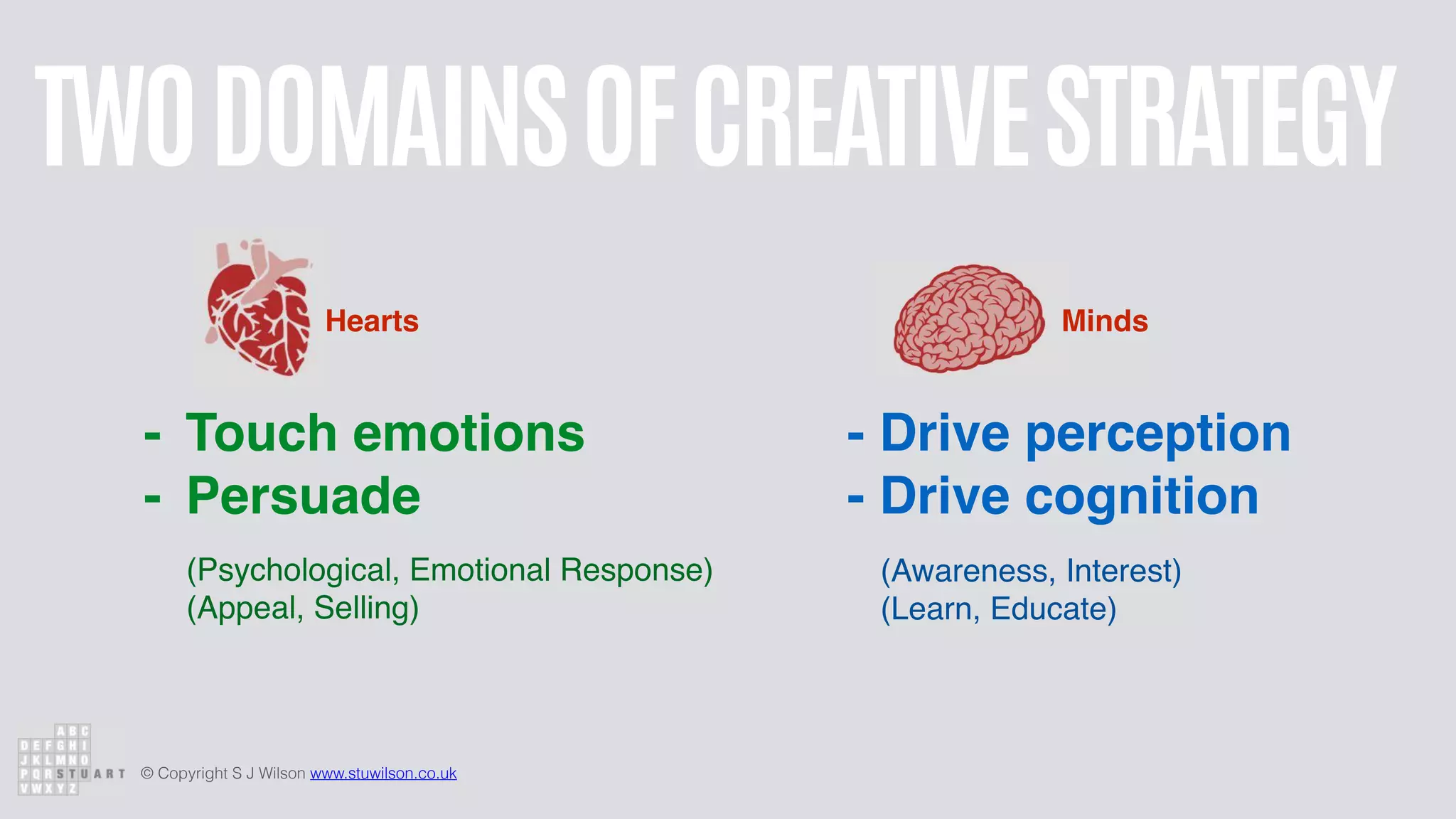
TWODOMAINSOFCREATIVESTRATEGY
(Psychological, Emotional Response)
(Appeal, Selling)
- Drive perception
- Drive cognition
- Touch emotions
- Persuade
(Awareness, Interest)
(Learn, Educate)
Hearts Minds
© Copyright S J Wilson www.stuwilson.co.uk
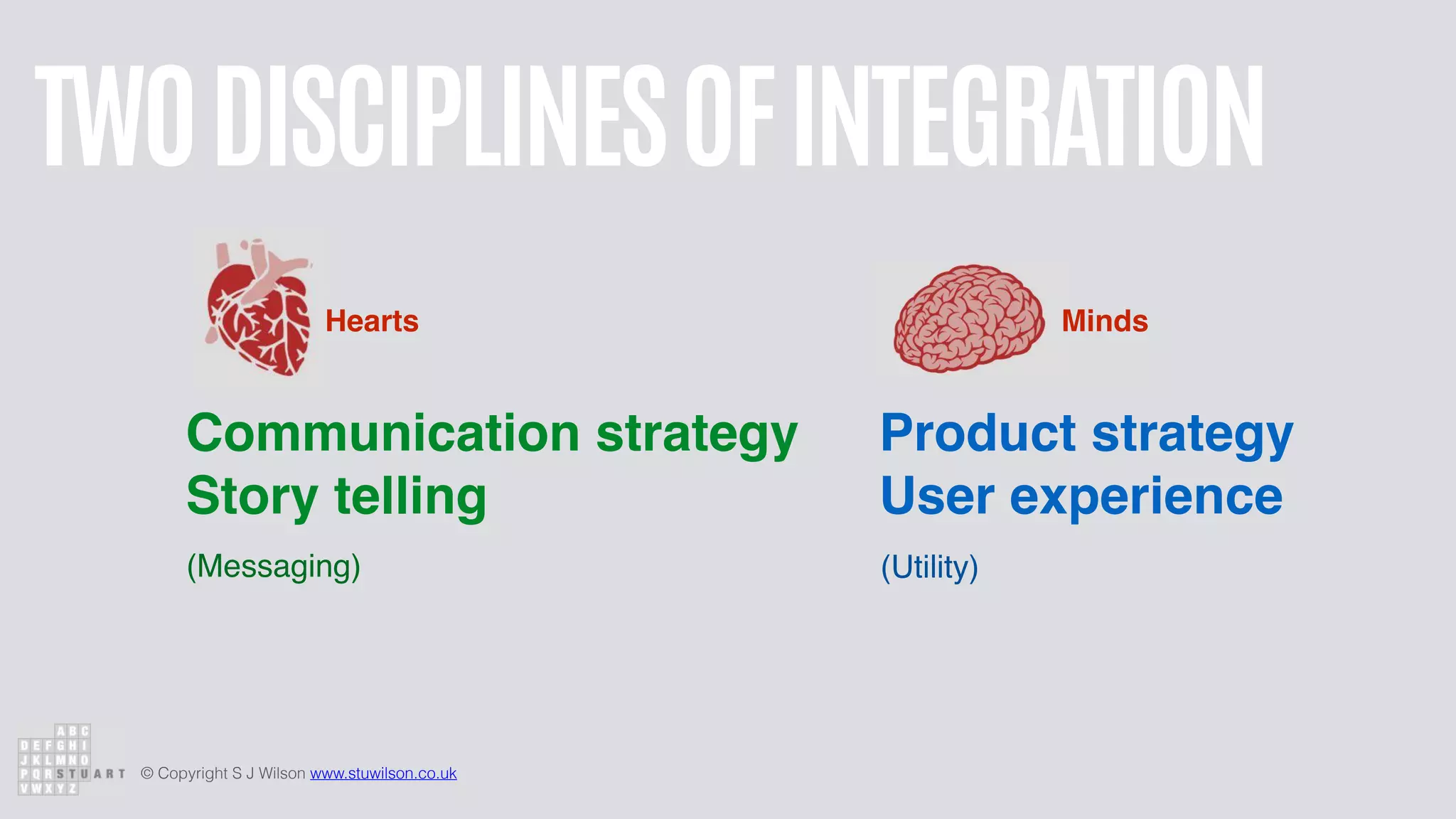
TWODISCIPLINESOFINTEGRATION
(Messaging)
Product strategy

User experience
Communication strategy
Story telling
(Utility)
Hearts Minds
© Copyright S J Wilson www.stuwilson.co.uk
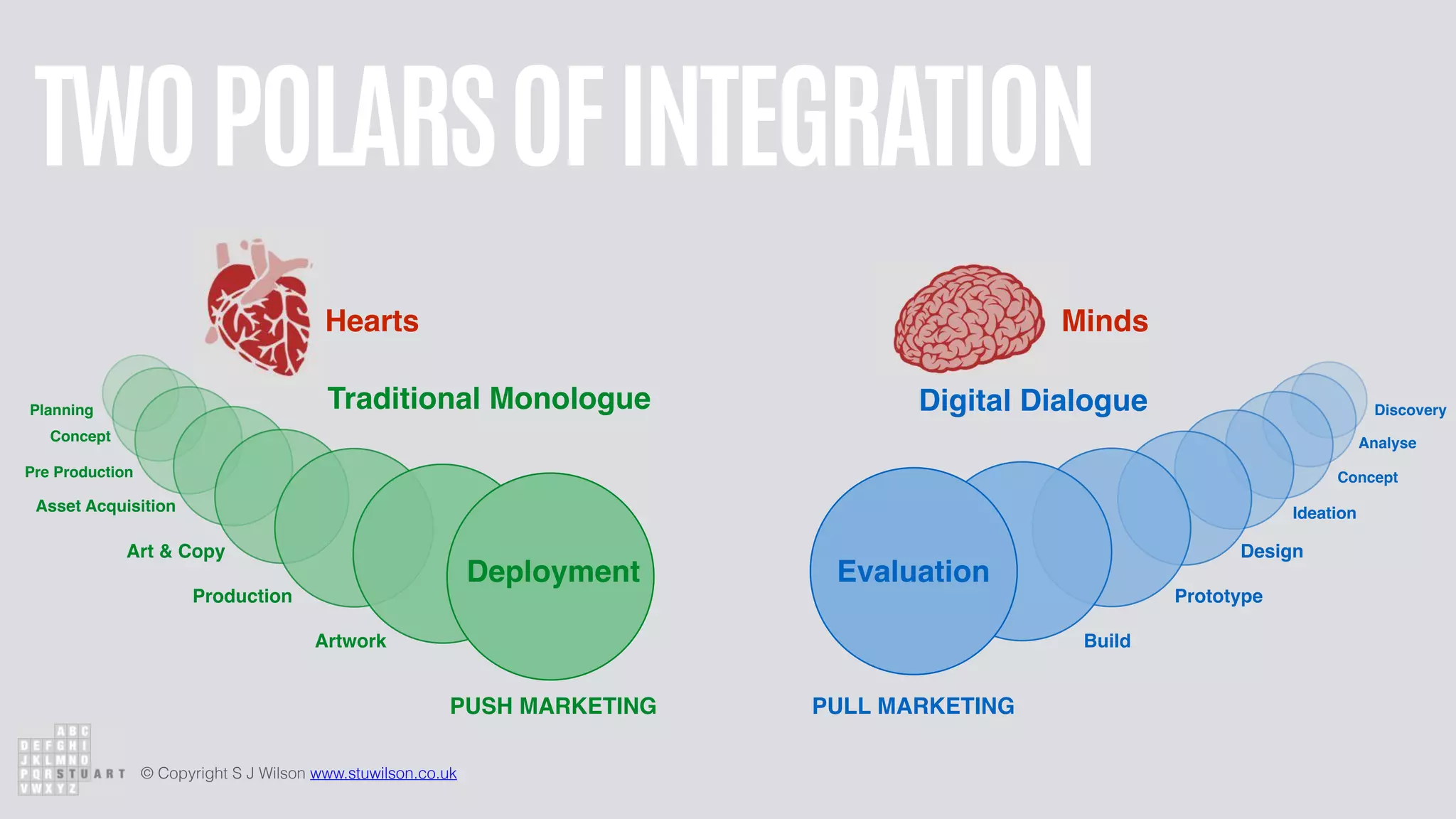
TWOPOLARSOFINTEGRATION
Hearts Minds
Deployment
Traditional Monologue Digital Dialogue
Evaluation
Artwork
Production
Art & Copy
Asset Acquisition
Pre Production
Concept
Planning
Build
Prototype
Design
Ideation
Concept
Analyse
Discovery
PUSH MARKETING PULL MARKETING
© Copyright S J Wilson www.stuwilson.co.uk
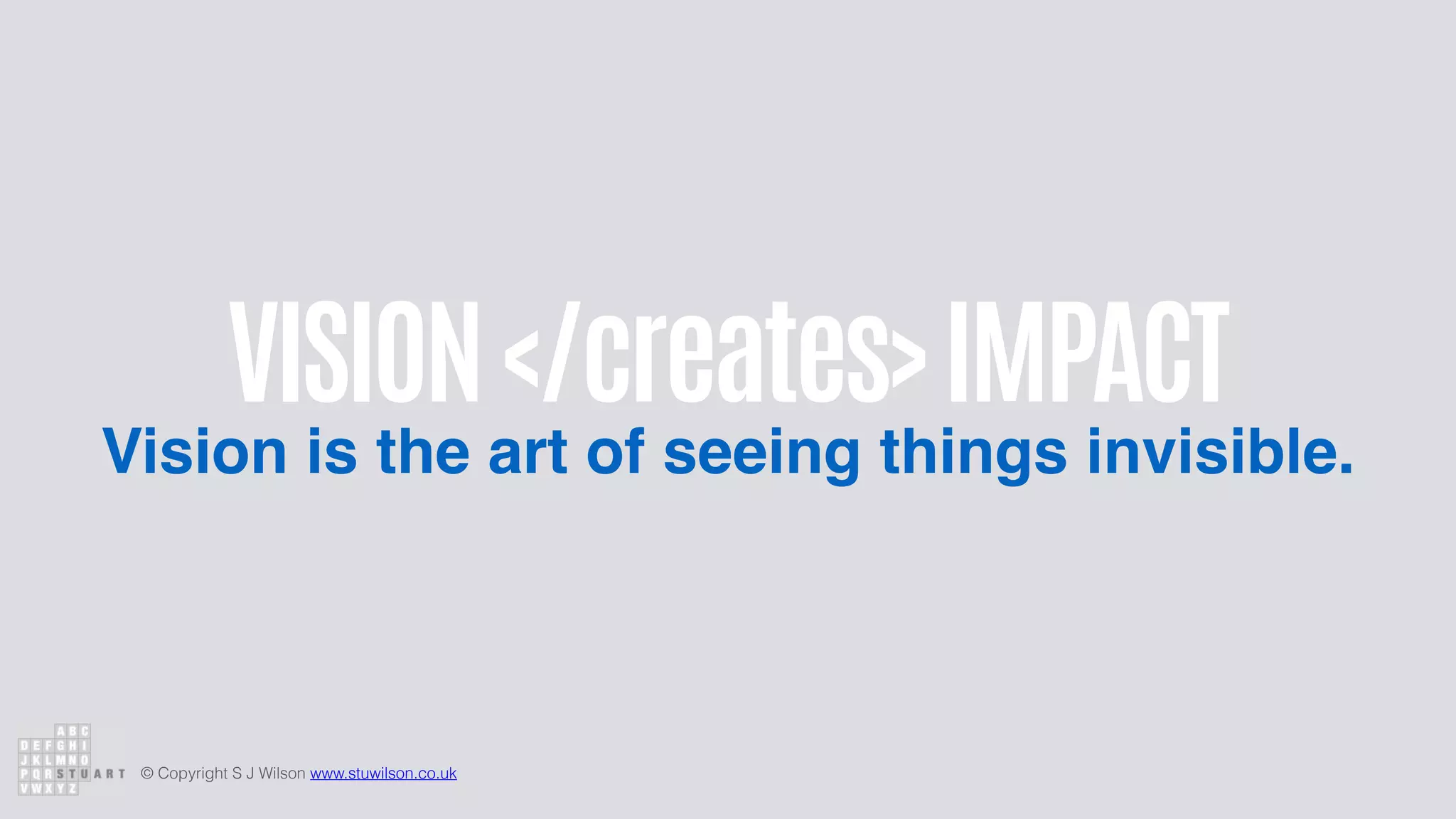
VISION
Vision is the art of seeing things invisible.
IMPACT
</creates>
© Copyright S J Wilson www.stuwilson.co.uk
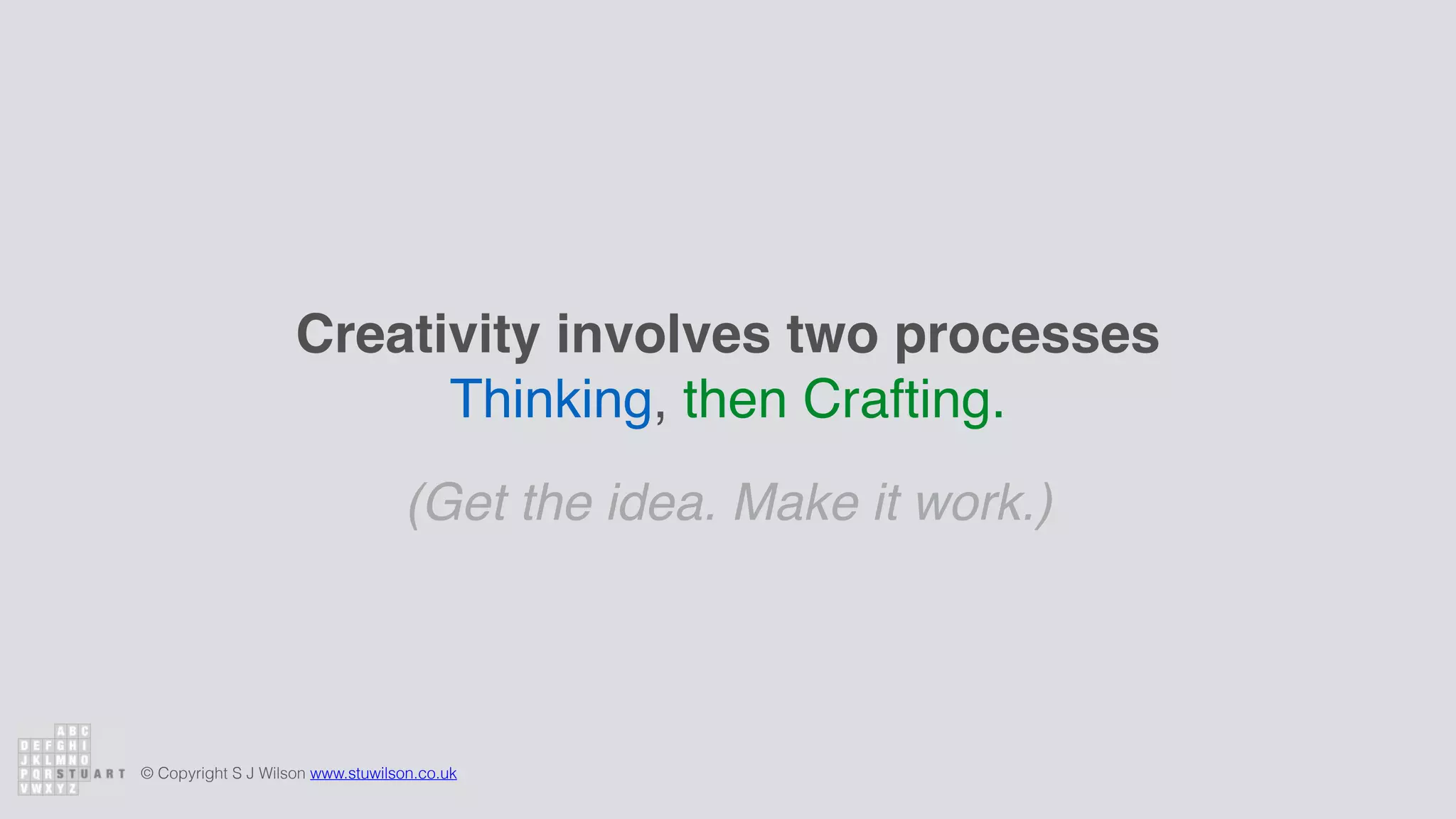
Creativity involves two processes
Thinking, then Crafting.
(Get the idea. Make it work.)
© Copyright S J Wilson www.stuwilson.co.uk
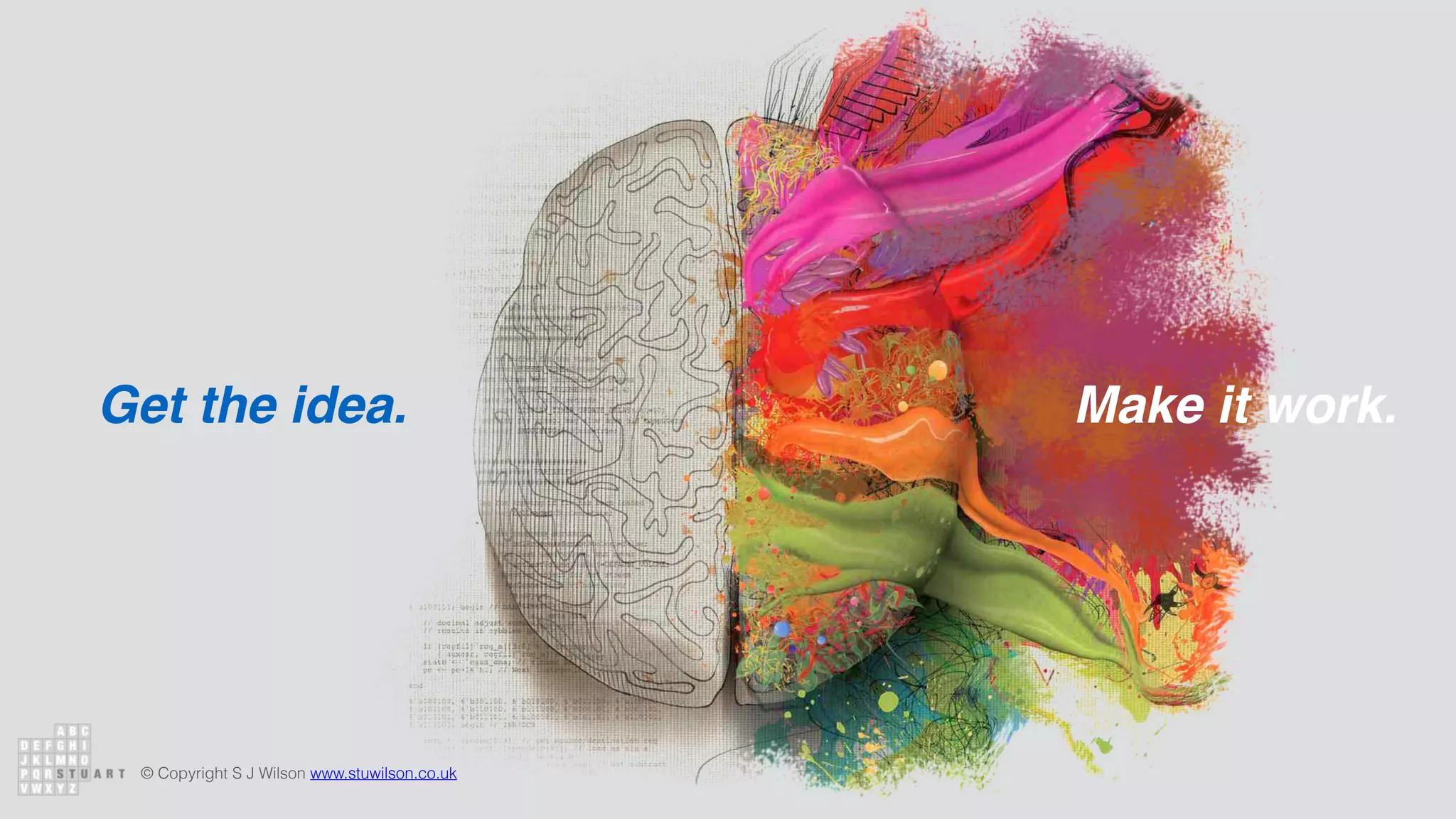
Make it work.
Get the idea.
20STEPBRANDBUILDINGPROCESS
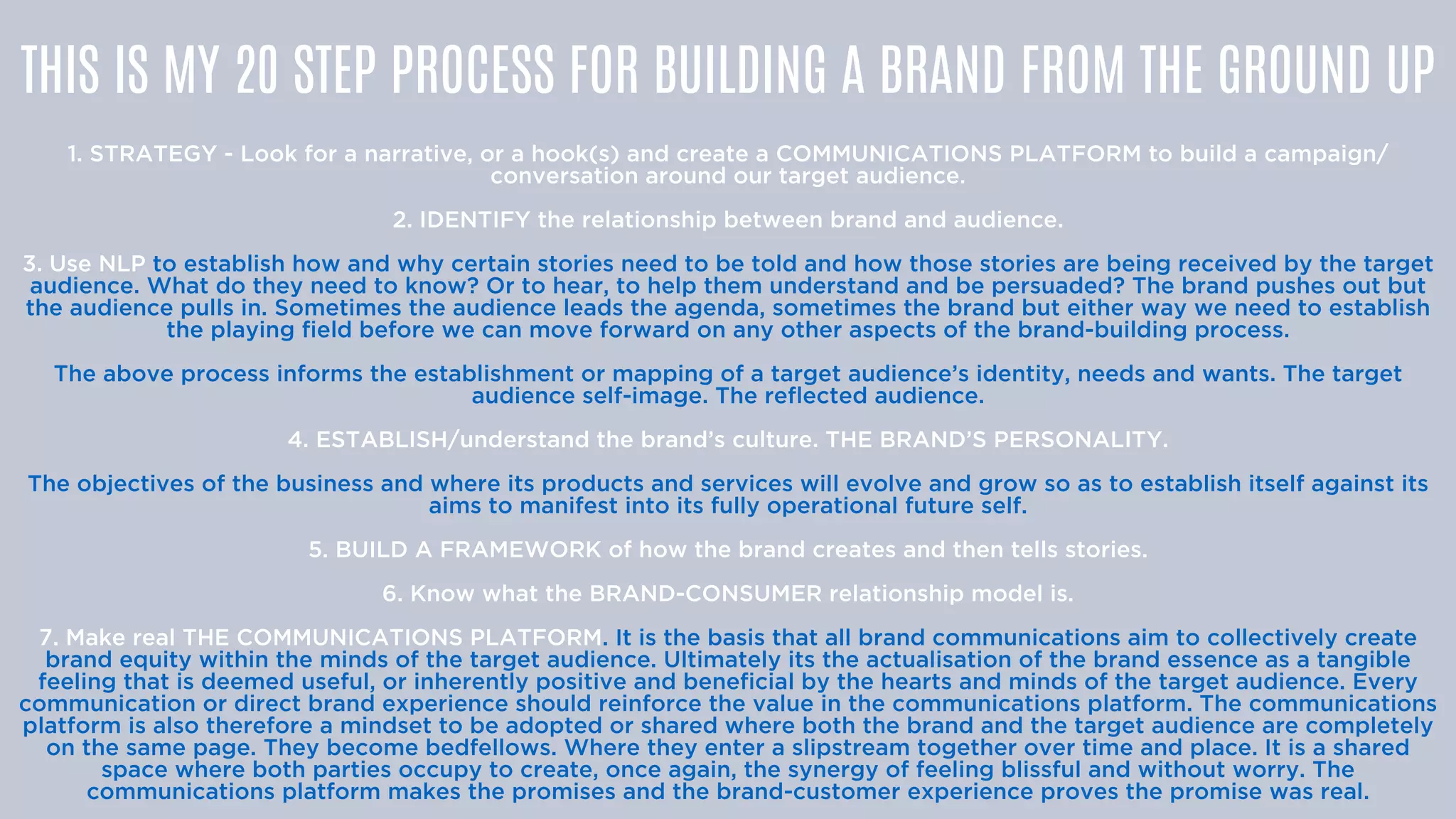
THIS IS MY 20 STEP PROCESS FOR BUILDING A BRAND FROM THE GROUND UP


1. STRATEGY - Look for a narrative, or a hook(s) and create a COMMUNICATIONS PLATFORM to build a campaign/
conversation around our target audience.


2. IDENTIFY the relationship between brand and audience.


3. Use NLP to establish how and why certain stories need to be told and how those stories are being received by the target
audience. What do they need to know? Or to hear, to help them understand and be persuaded? The brand pushes out but
the audience pulls in. Sometimes the audience leads the agenda, sometimes the brand but either way we need to establish
the playing field before we can move forward on any other aspects of the brand-building process.


The above process informs the establishment or mapping of a target audience’s identity, needs and wants. The target
audience self-image. The reflected audience.


4. ESTABLISH/understand the brand’s culture. THE BRAND’S PERSONALITY.


The objectives of the business and where its products and services will evolve and grow so as to establish itself against its
aims to manifest into its fully operational future self.


5. BUILD A FRAMEWORK of how the brand creates and then tells stories.


6. Know what the BRAND-CONSUMER relationship model is.


7. Make real THE COMMUNICATIONS PLATFORM. It is the basis that all brand communications aim to collectively create
brand equity within the minds of the target audience. Ultimately its the actualisation of the brand essence as a tangible
feeling that is deemed useful, or inherently positive and beneficial by the hearts and minds of the target audience. Every
communication or direct brand experience should reinforce the value in the communications platform. The communications
platform is also therefore a mindset to be adopted or shared where both the brand and the target audience are completely
on the same page. They become bedfellows. Where they enter a slipstream together over time and place. It is a shared
space where both parties occupy to create, once again, the synergy of feeling blissful and without worry. The
communications platform makes the promises and the brand-customer experience proves the promise was real.
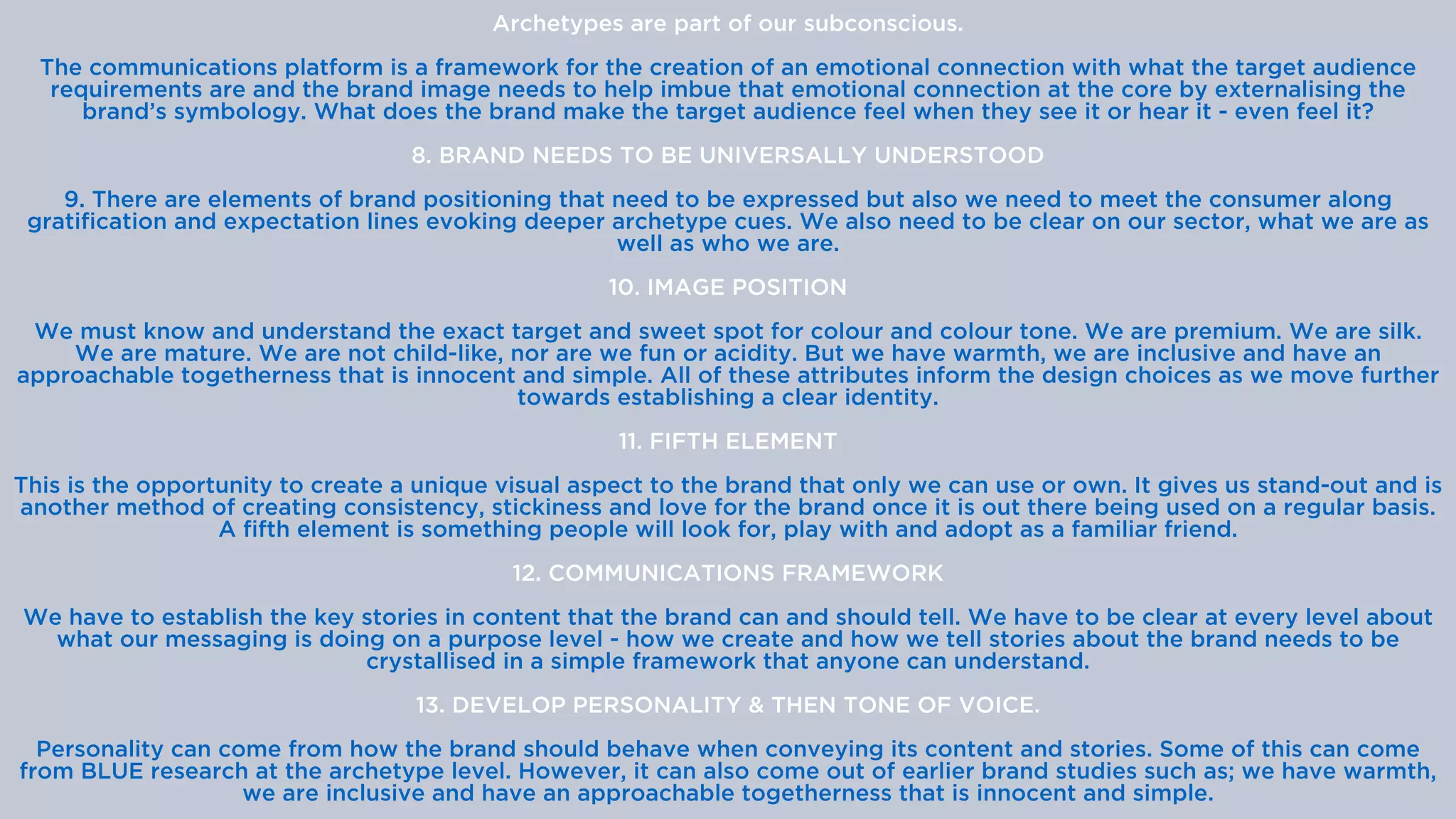
Archetypes are part of our subconscious.


The communications platform is a framework for the creation of an emotional connection with what the target audience
requirements are and the brand image needs to help imbue that emotional connection at the core by externalising the
brand’s symbology. What does the brand make the target audience feel when they see it or hear it - even feel it?


8. BRAND NEEDS TO BE UNIVERSALLY UNDERSTOOD


9. There are elements of brand positioning that need to be expressed but also we need to meet the consumer along
gratification and expectation lines evoking deeper archetype cues. We also need to be clear on our sector, what we are as
well as who we are.


10. IMAGE POSITION


We must know and understand the exact target and sweet spot for colour and colour tone. We are premium. We are silk.
We are mature. We are not child-like, nor are we fun or acidity. But we have warmth, we are inclusive and have an
approachable togetherness that is innocent and simple. All of these attributes inform the design choices as we move further
towards establishing a clear identity.


11. FIFTH ELEMENT


This is the opportunity to create a unique visual aspect to the brand that only we can use or own. It gives us stand-out and is
another method of creating consistency, stickiness and love for the brand once it is out there being used on a regular basis.
A fifth element is something people will look for, play with and adopt as a familiar friend.


12. COMMUNICATIONS FRAMEWORK


We have to establish the key stories in content that the brand can and should tell. We have to be clear at every level about
what our messaging is doing on a purpose level - how we create and how we tell stories about the brand needs to be
crystallised in a simple framework that anyone can understand.


13. DEVELOP PERSONALITY & THEN TONE OF VOICE.


Personality can come from how the brand should behave when conveying its content and stories. Some of this can come
from BLUE research at the archetype level. However, it can also come out of earlier brand studies such as; we have warmth,
we are inclusive and have an approachable togetherness that is innocent and simple.
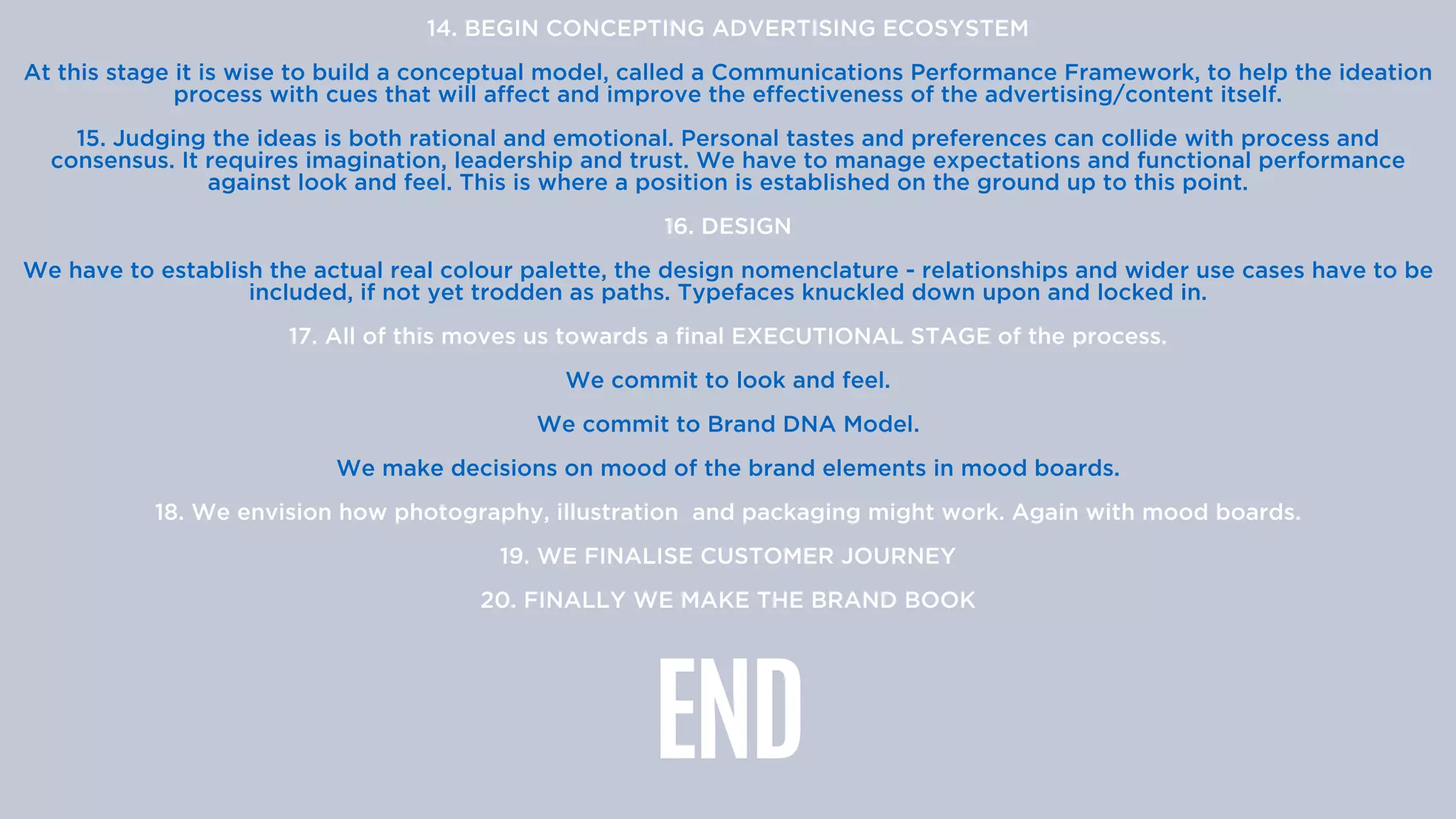
14. BEGIN CONCEPTING ADVERTISING ECOSYSTEM


At this stage it is wise to build a conceptual model, called a Communications Performance Framework, to help the ideation
process with cues that will affect and improve the effectiveness of the advertising/content itself.


15. Judging the ideas is both rational and emotional. Personal tastes and preferences can collide with process and
consensus. It requires imagination, leadership and trust. We have to manage expectations and functional performance
against look and feel. This is where a position is established on the ground up to this point.


16. DESIGN


We have to establish the actual real colour palette, the design nomenclature - relationships and wider use cases have to be
included, if not yet trodden as paths. Typefaces knuckled down upon and locked in.


17. All of this moves us towards a final EXECUTIONAL STAGE of the process.


We commit to look and feel.


We commit to Brand DNA Model.


We make decisions on mood of the brand elements in mood boards.


18. We envision how photography, illustration and packaging might work. Again with mood boards.


19. WE FINALISE CUSTOMER JOURNEY


20. FINALLY WE MAKE THE BRAND BOOK


END
Stuart Wilson - My Principles of creativity

Stuart Wilson - My Principles of creativity

  • 2.
    © Copyright SJ Wilson www.stuwilson.co.uk TWODOMAINSOFCREATIVESTRATEGY (Psychological, Emotional Response) (Appeal, Selling) - Drive perception - Drive cognition - Touch emotions - Persuade (Awareness, Interest) (Learn, Educate) Hearts Minds
  • 3.
    © Copyright SJ Wilson www.stuwilson.co.uk TWODISCIPLINESOFINTEGRATION (Messaging) Product strategy
 User experience Communication strategy Story telling (Utility) Hearts Minds
  • 4.
    © Copyright SJ Wilson www.stuwilson.co.uk TWOPOLARSOFINTEGRATION Hearts Minds Deployment Traditional Monologue Digital Dialogue Evaluation Artwork Production Art & Copy Asset Acquisition Pre Production Concept Planning Build Prototype Design Ideation Concept Analyse Discovery PUSH MARKETING PULL MARKETING
  • 5.
    © Copyright SJ Wilson www.stuwilson.co.uk VISION Vision is the art of seeing things invisible. IMPACT </creates>
  • 6.
    © Copyright SJ Wilson www.stuwilson.co.uk Creativity involves two processes Thinking, then Crafting. (Get the idea. Make it work.)
  • 7.
    © Copyright SJ Wilson www.stuwilson.co.uk Make it work. Get the idea.
  • 8.
  • 9.
    THIS IS MY20 STEP PROCESS FOR BUILDING A BRAND FROM THE GROUND UP 1. STRATEGY - Look for a narrative, or a hook(s) and create a COMMUNICATIONS PLATFORM to build a campaign/ conversation around our target audience. 2. IDENTIFY the relationship between brand and audience. 3. Use NLP to establish how and why certain stories need to be told and how those stories are being received by the target audience. What do they need to know? Or to hear, to help them understand and be persuaded? The brand pushes out but the audience pulls in. Sometimes the audience leads the agenda, sometimes the brand but either way we need to establish the playing field before we can move forward on any other aspects of the brand-building process. The above process informs the establishment or mapping of a target audience’s identity, needs and wants. The target audience self-image. The reflected audience. 4. ESTABLISH/understand the brand’s culture. THE BRAND’S PERSONALITY. The objectives of the business and where its products and services will evolve and grow so as to establish itself against its aims to manifest into its fully operational future self. 5. BUILD A FRAMEWORK of how the brand creates and then tells stories. 6. Know what the BRAND-CONSUMER relationship model is. 7. Make real THE COMMUNICATIONS PLATFORM. It is the basis that all brand communications aim to collectively create brand equity within the minds of the target audience. Ultimately its the actualisation of the brand essence as a tangible feeling that is deemed useful, or inherently positive and beneficial by the hearts and minds of the target audience. Every communication or direct brand experience should reinforce the value in the communications platform. The communications platform is also therefore a mindset to be adopted or shared where both the brand and the target audience are completely on the same page. They become bedfellows. Where they enter a slipstream together over time and place. It is a shared space where both parties occupy to create, once again, the synergy of feeling blissful and without worry. The communications platform makes the promises and the brand-customer experience proves the promise was real.
  • 10.
    Archetypes are partof our subconscious. The communications platform is a framework for the creation of an emotional connection with what the target audience requirements are and the brand image needs to help imbue that emotional connection at the core by externalising the brand’s symbology. What does the brand make the target audience feel when they see it or hear it - even feel it? 8. BRAND NEEDS TO BE UNIVERSALLY UNDERSTOOD 9. There are elements of brand positioning that need to be expressed but also we need to meet the consumer along gratification and expectation lines evoking deeper archetype cues. We also need to be clear on our sector, what we are as well as who we are. 10. IMAGE POSITION We must know and understand the exact target and sweet spot for colour and colour tone. We are premium. We are silk. We are mature. We are not child-like, nor are we fun or acidity. But we have warmth, we are inclusive and have an approachable togetherness that is innocent and simple. All of these attributes inform the design choices as we move further towards establishing a clear identity. 11. FIFTH ELEMENT This is the opportunity to create a unique visual aspect to the brand that only we can use or own. It gives us stand-out and is another method of creating consistency, stickiness and love for the brand once it is out there being used on a regular basis. A fifth element is something people will look for, play with and adopt as a familiar friend. 12. COMMUNICATIONS FRAMEWORK We have to establish the key stories in content that the brand can and should tell. We have to be clear at every level about what our messaging is doing on a purpose level - how we create and how we tell stories about the brand needs to be crystallised in a simple framework that anyone can understand. 13. DEVELOP PERSONALITY & THEN TONE OF VOICE. Personality can come from how the brand should behave when conveying its content and stories. Some of this can come from BLUE research at the archetype level. However, it can also come out of earlier brand studies such as; we have warmth, we are inclusive and have an approachable togetherness that is innocent and simple.
  • 11.
    14. BEGIN CONCEPTINGADVERTISING ECOSYSTEM At this stage it is wise to build a conceptual model, called a Communications Performance Framework, to help the ideation process with cues that will affect and improve the effectiveness of the advertising/content itself. 15. Judging the ideas is both rational and emotional. Personal tastes and preferences can collide with process and consensus. It requires imagination, leadership and trust. We have to manage expectations and functional performance against look and feel. This is where a position is established on the ground up to this point. 16. DESIGN We have to establish the actual real colour palette, the design nomenclature - relationships and wider use cases have to be included, if not yet trodden as paths. Typefaces knuckled down upon and locked in. 17. All of this moves us towards a final EXECUTIONAL STAGE of the process. We commit to look and feel. We commit to Brand DNA Model. We make decisions on mood of the brand elements in mood boards. 18. We envision how photography, illustration and packaging might work. Again with mood boards. 19. WE FINALISE CUSTOMER JOURNEY 20. FINALLY WE MAKE THE BRAND BOOK END