1
Lecture: 5
Cell biology
Instructor: Shahid Zadran
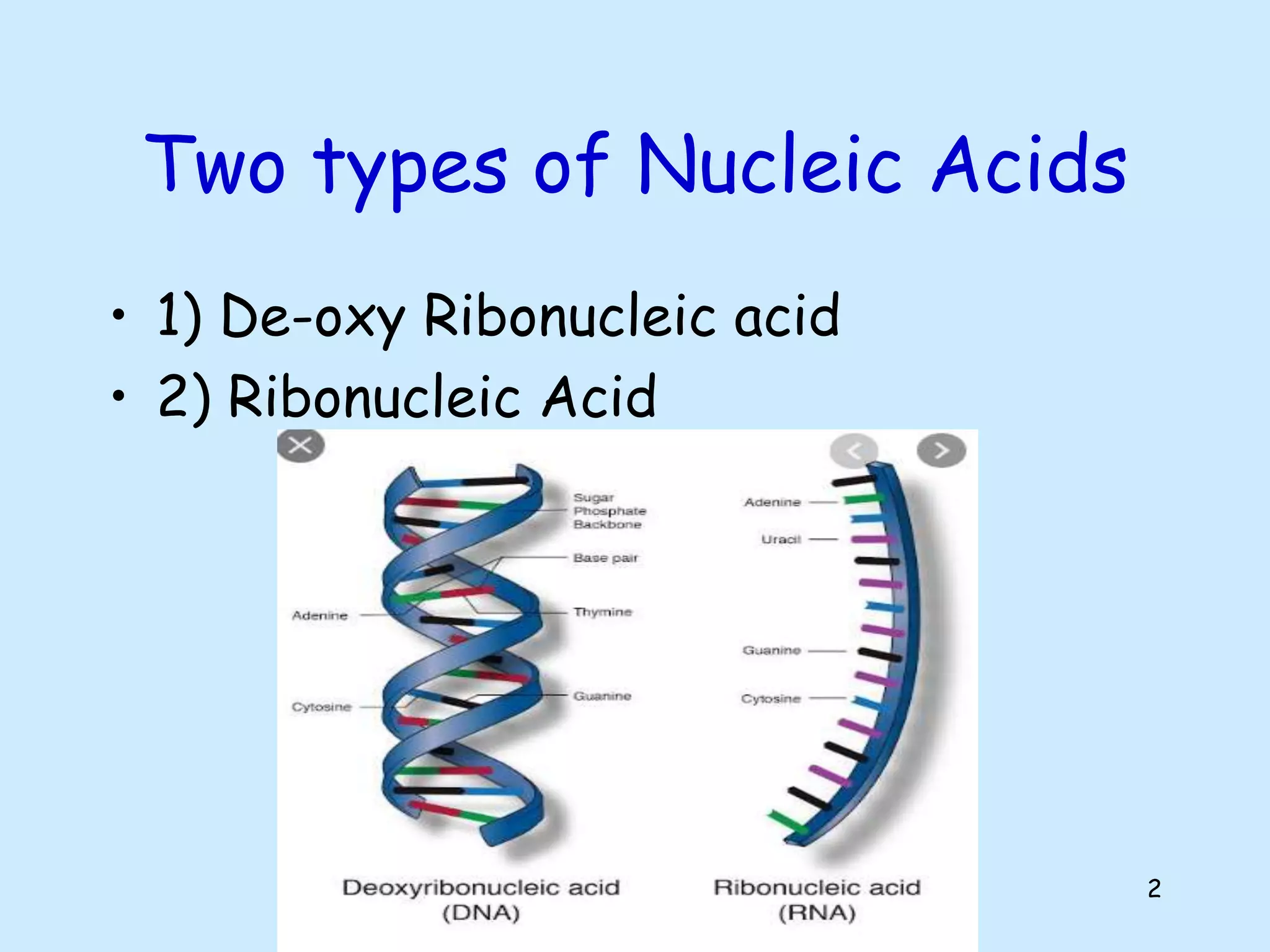
Two types of Nucleic Acids
• 1) De-oxy Ribonucleic acid
• 2) Ribonucleic Acid
2
3
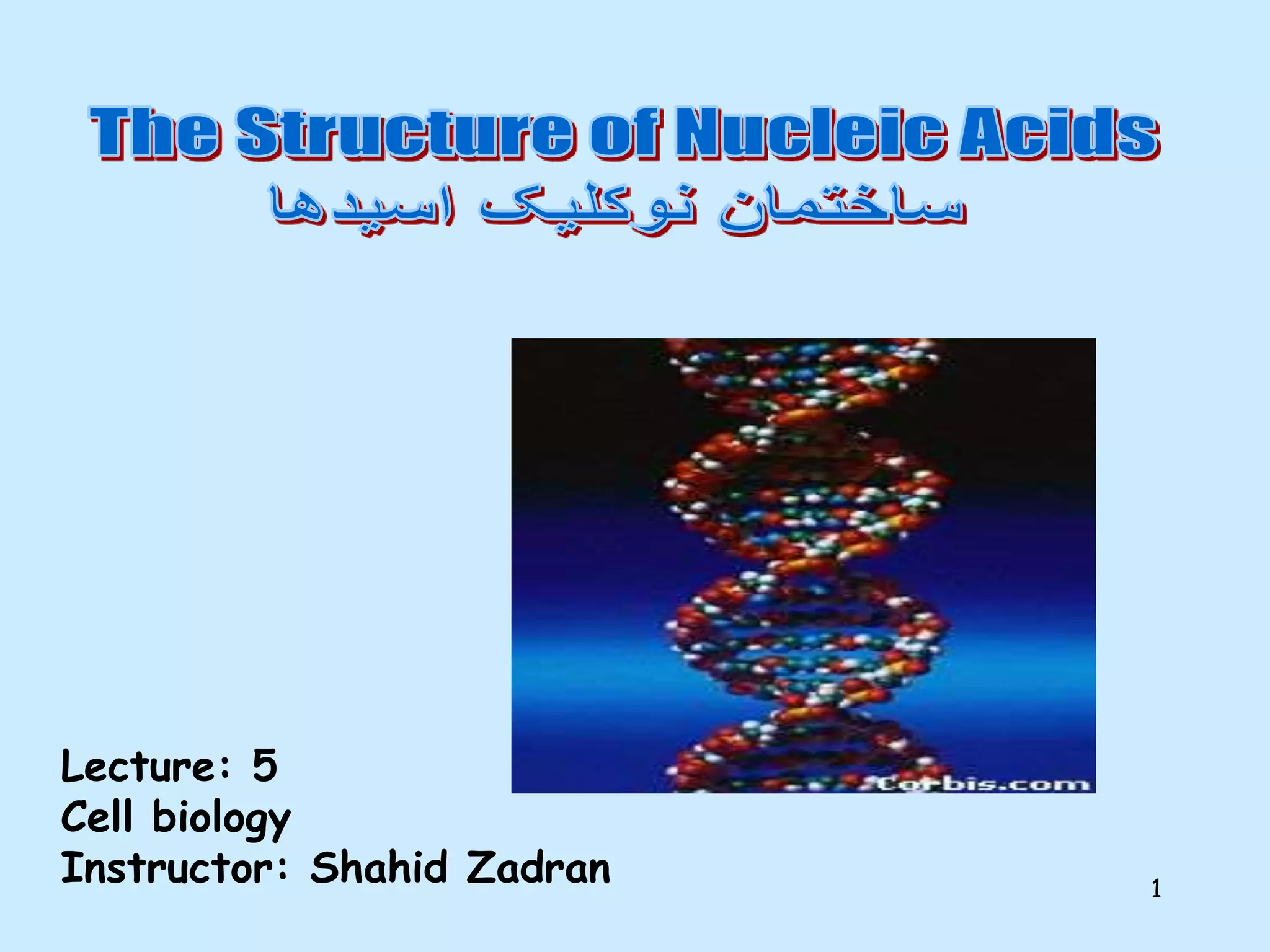
DNA
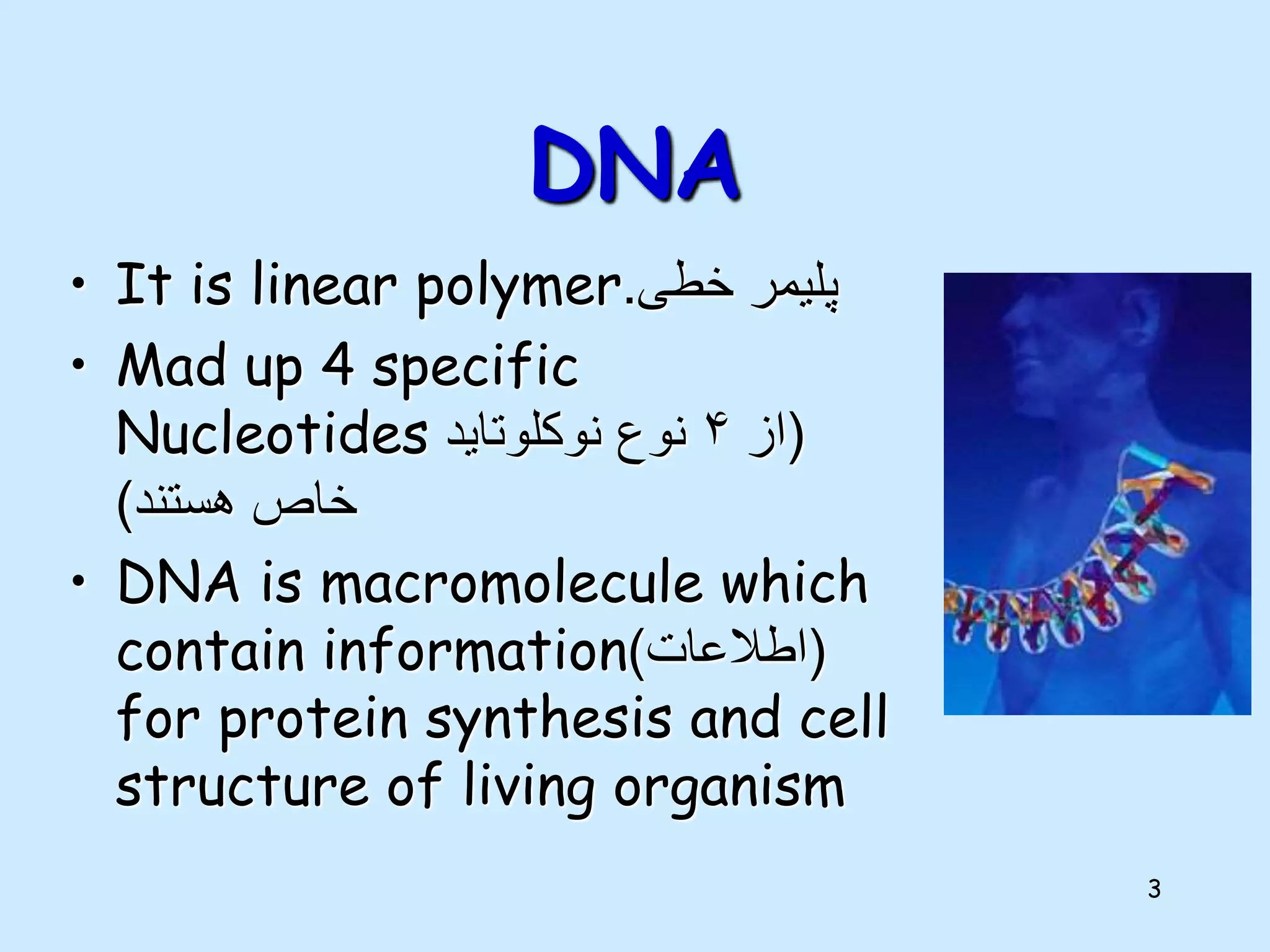
• It is linear polymer ‫خطی‬ ‫پلیمر‬
.
• Mad up 4 specific
Nucleotides (
‫از‬
۴
‫نوکلوتاید‬ ‫نوع‬
‫هستند‬ ‫خاص‬
)
• DNA is macromolecule which
contain information (
‫اطالعات‬
)
for protein synthesis and cell
structure of living organism
4
Monomer of Nucleic Acids
‫اسیدها‬ ‫نوکلیک‬ ‫منومرهای‬
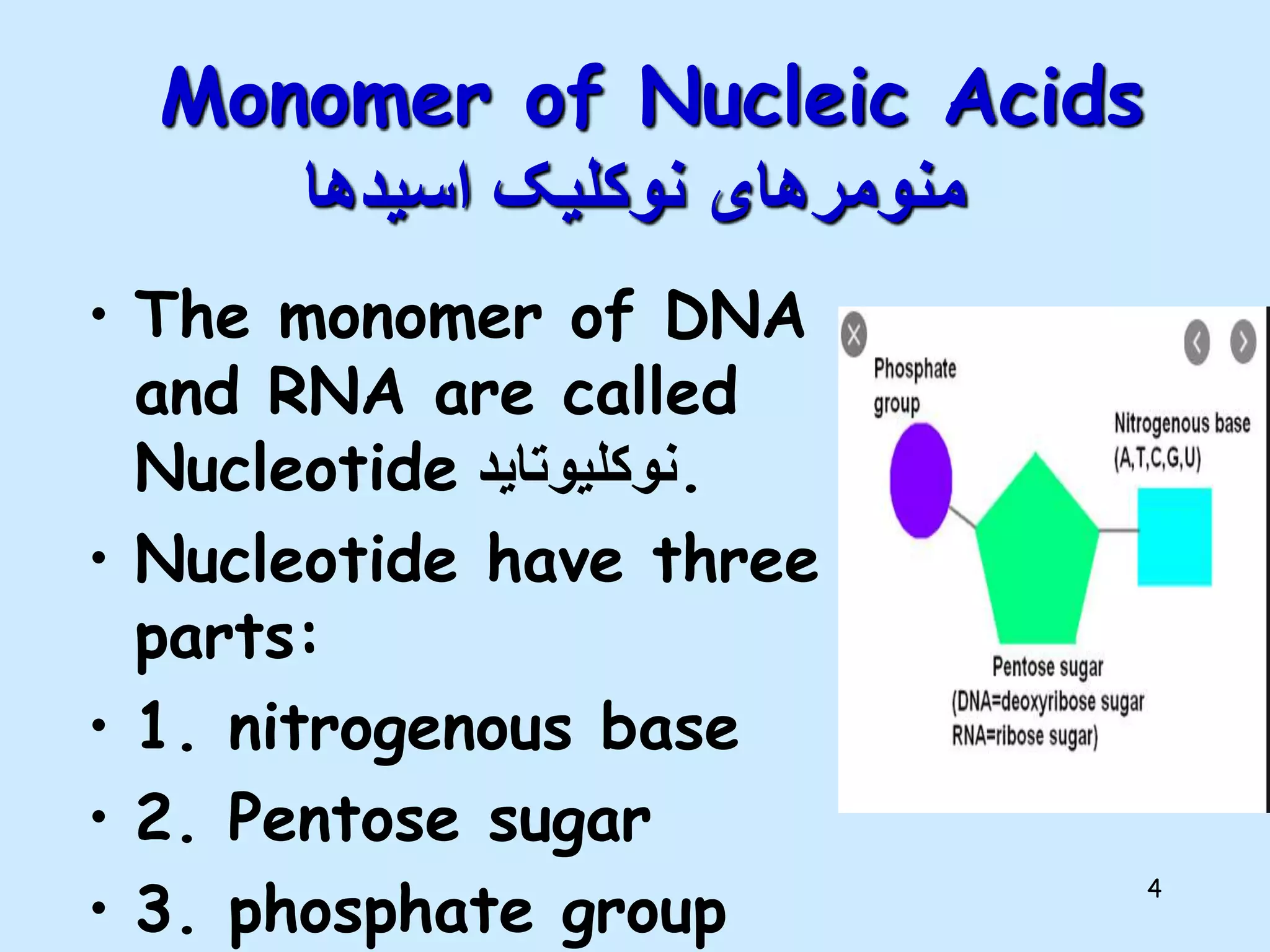
• The monomer of DNA
and RNA are called
Nucleotide ‫نوکلیوتاید‬.
• Nucleotide have three
parts:
• 1. nitrogenous base
• 2. Pentose sugar
• 3. phosphate group
5
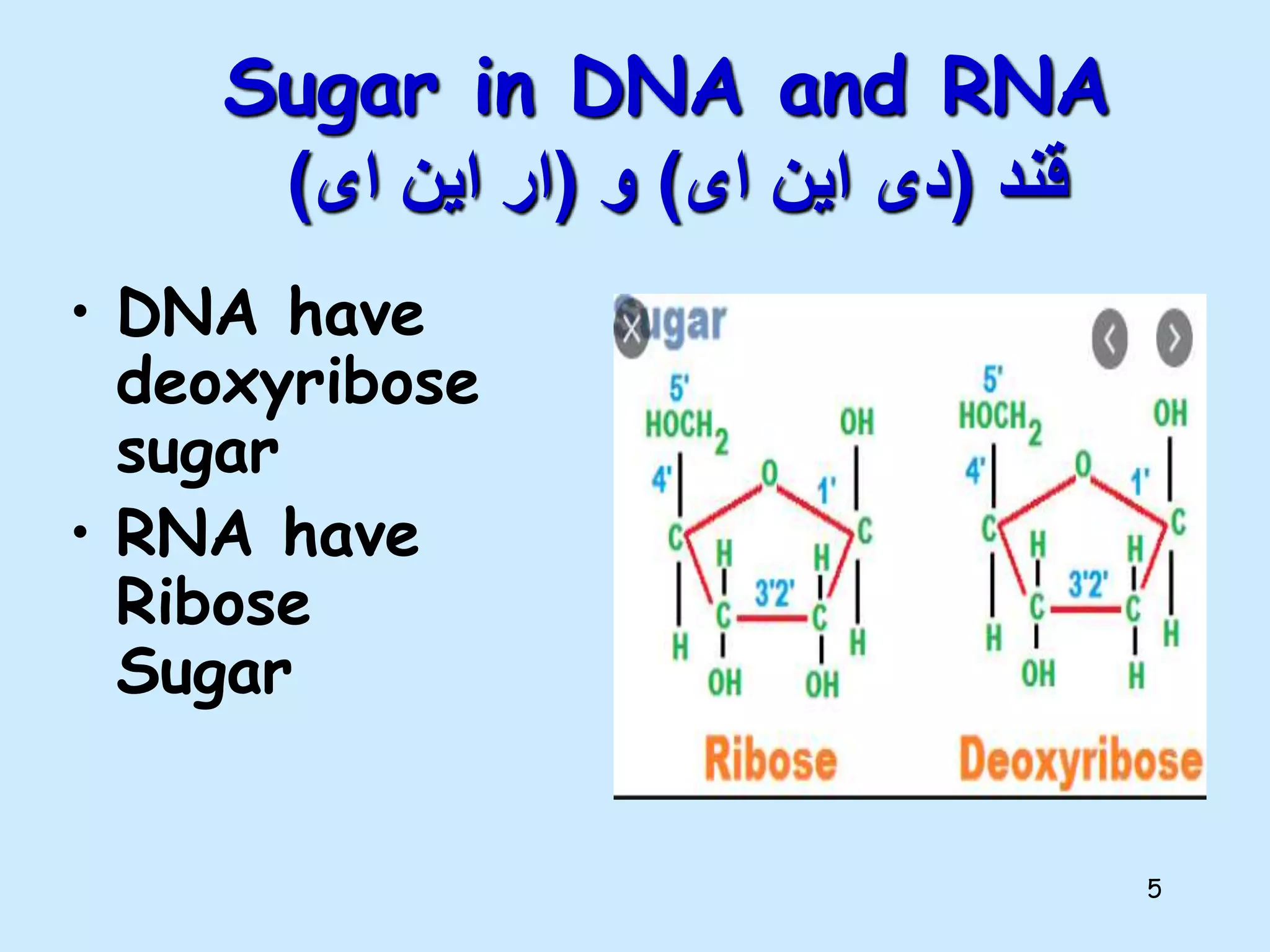
Sugar in DNA and RNA
‫قند‬
(
‫ای‬ ‫این‬ ‫دی‬
)
‫و‬
(
‫ای‬ ‫این‬ ‫ار‬
)
• DNA have
deoxyribose
sugar
• RNA have
Ribose
Sugar
6
Nitrogenous Bases
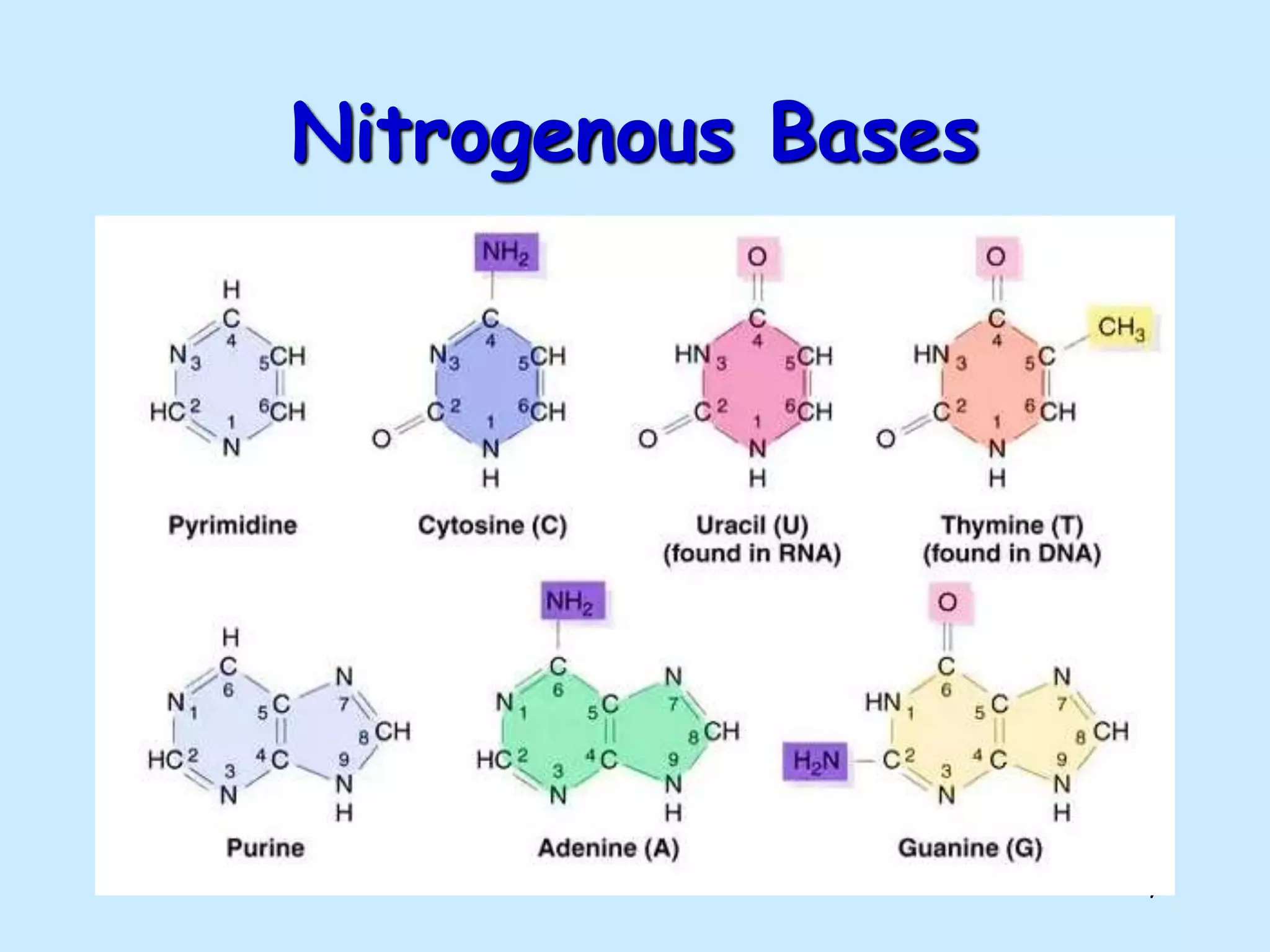
• Nitrogenous bases occur in two
shapes:
• 1) purine: have two rings (
‫حلقه‬ ‫دو‬
)
structure (Adenine,Guanin)
• 2) pyrimidine: have single ring
structure
(thymine,cytosine,uracil)
7
Nitrogenous Bases
8
nitrogenous bases
• Cytosine C
• Thymine T
• Adenine A
• Guanine G
DNA has four different bases:
Nucleoside
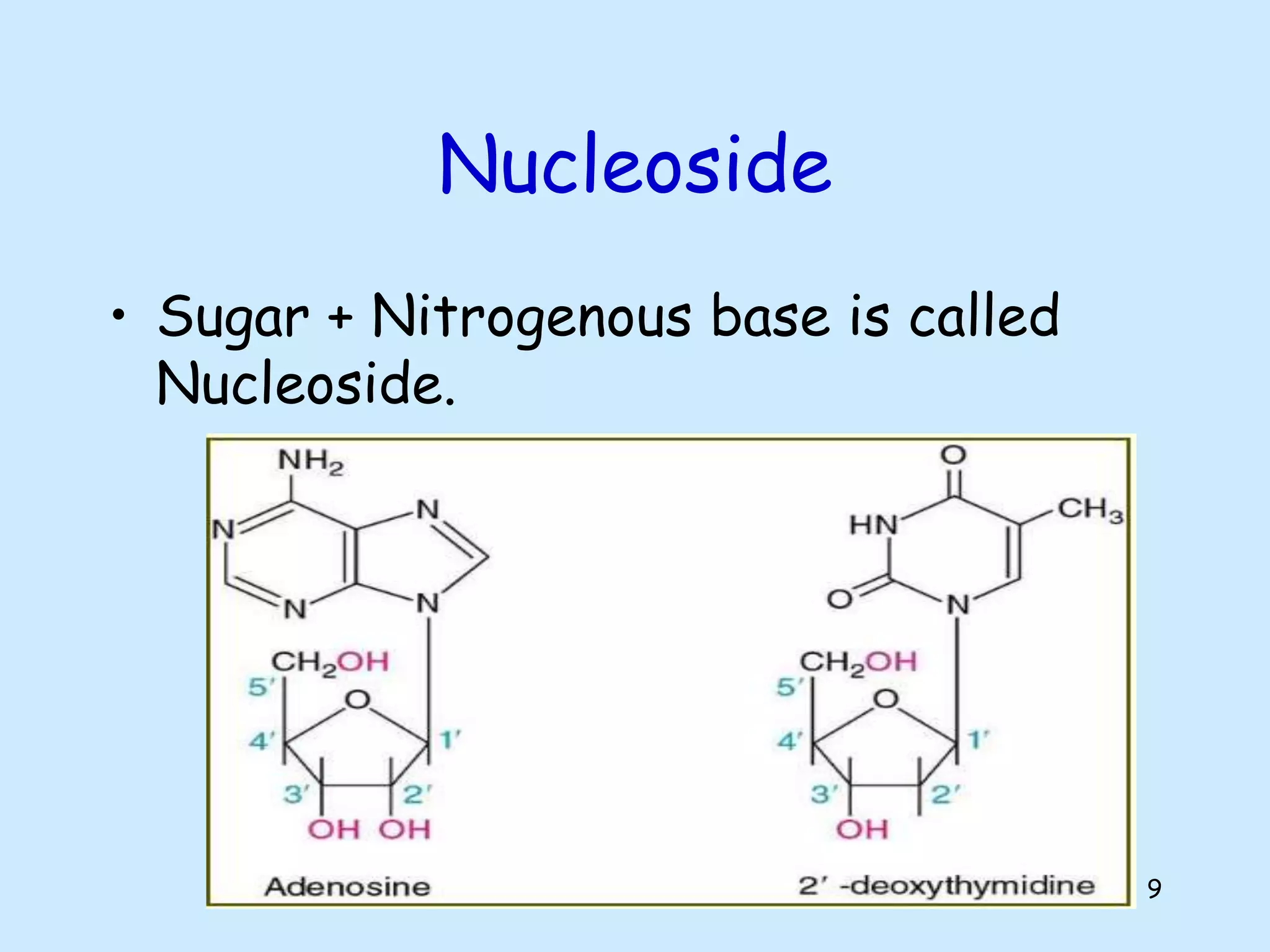
• Sugar + Nitrogenous base is called
Nucleoside.
9
10
Chargaff’s Rule:
• Adenine and Thymine
always join together
A T
• Cytosine and Guanine
always join together
C G
The Number of Adenine always
equal to thymine and guanine
always equal to cytosine in a
Bonds in Nucleotide
11
Primary Structure of DNA
. (
‫ای‬ ‫این‬ ‫دی‬ ‫در‬ ‫اولیه‬ ‫ساختار‬
)
12
Primary structure of Nucleic
acid
• Nucleotides of DNA and RNA are
linked through a covalent bond called
phosphodiester bond.
• This make a long chain of
polynucleotides and are called primary
structure of DNA or RNA
• POLYMERIZATION occur in 5c 3c
direction.
13
14
Secondary structure of DNA
‫ای‬ ‫این‬ ‫دی‬ ‫در‬ ‫دوم‬ ‫ساختار‬
• Proposed by Watson and Crick in 1953
• Called DNA double helix
structure (
‫ای‬ ‫دوګانه‬ ‫پیچ‬ ‫مار‬ ‫ساختار‬
)
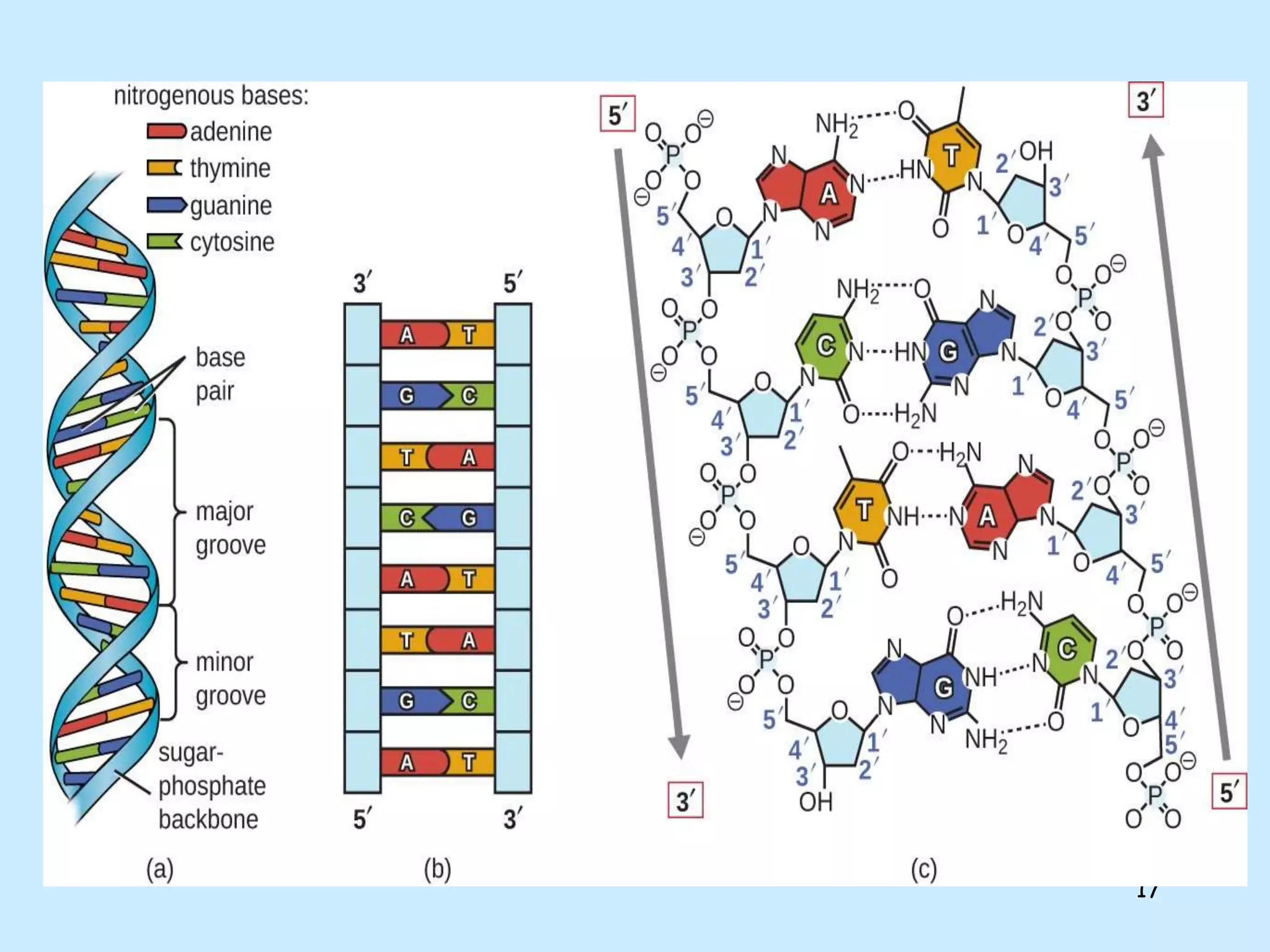
• Nitrogenous bases are towards
center
• Purine will always bind with pyrimidine
through hydrogen bonds.
• Purine with purine or pyrimidine with
pyrimidine can not bind with each 15
Secondary structure
• A=T have two hydrogen bonds
• G---C have three hydrogen bonds
• The two chains in double helix will be
anti-parallel.
• It means one strand will be (5-3)
from top to bottom, and the other
will be from (5-3) from bottom to
top.
16
17
Minor and Major Groove
‫بزرګ‬ ‫دهانه‬ ‫و‬ ‫کوچک‬ ‫دهانه‬
• Double helix of DNA form two groove
called minor and major grove.
18
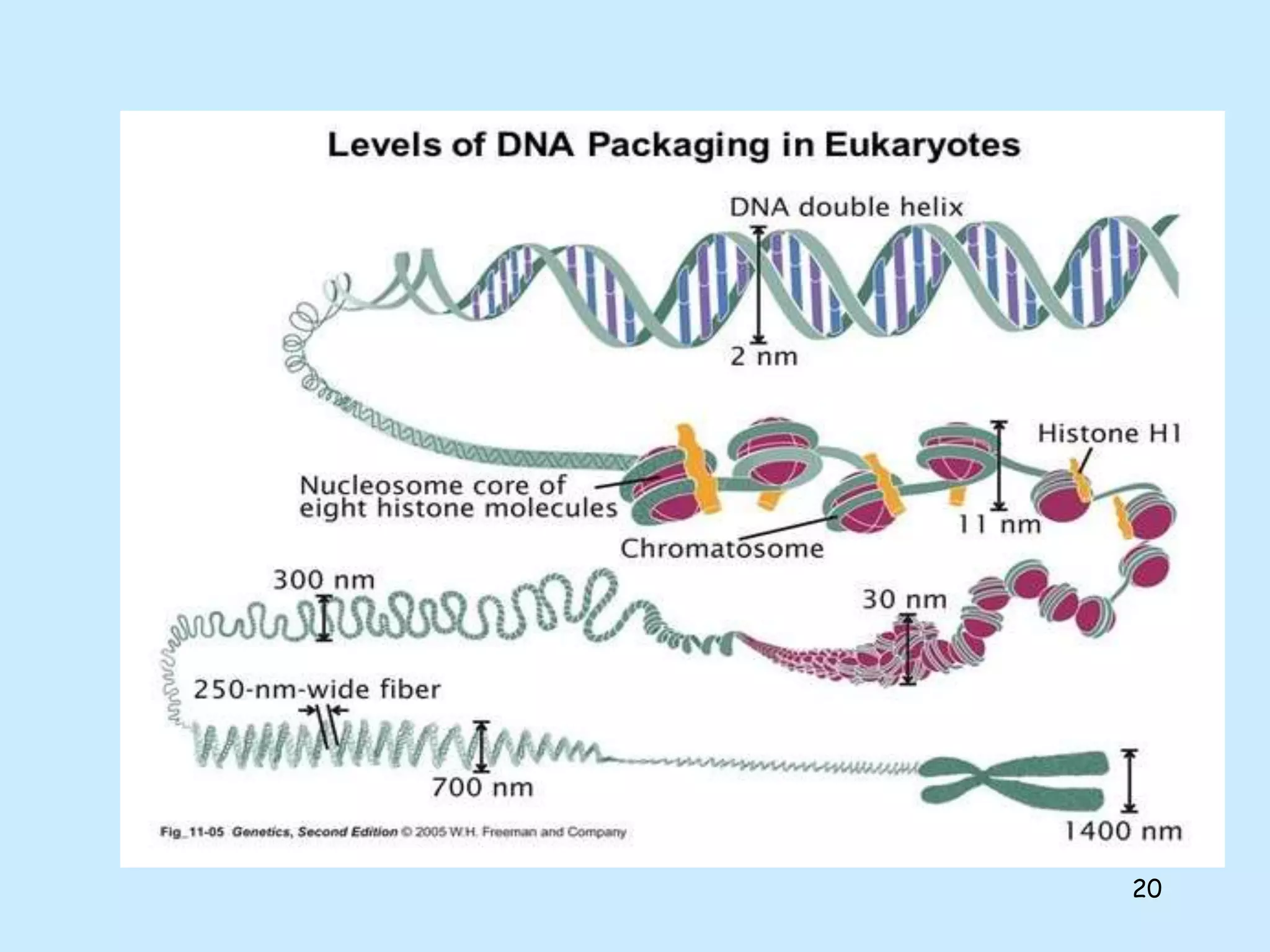
DNA Packaging
‫ای‬ ‫این‬ ‫دی‬ ‫بندی‬ ‫بسته‬
19
20
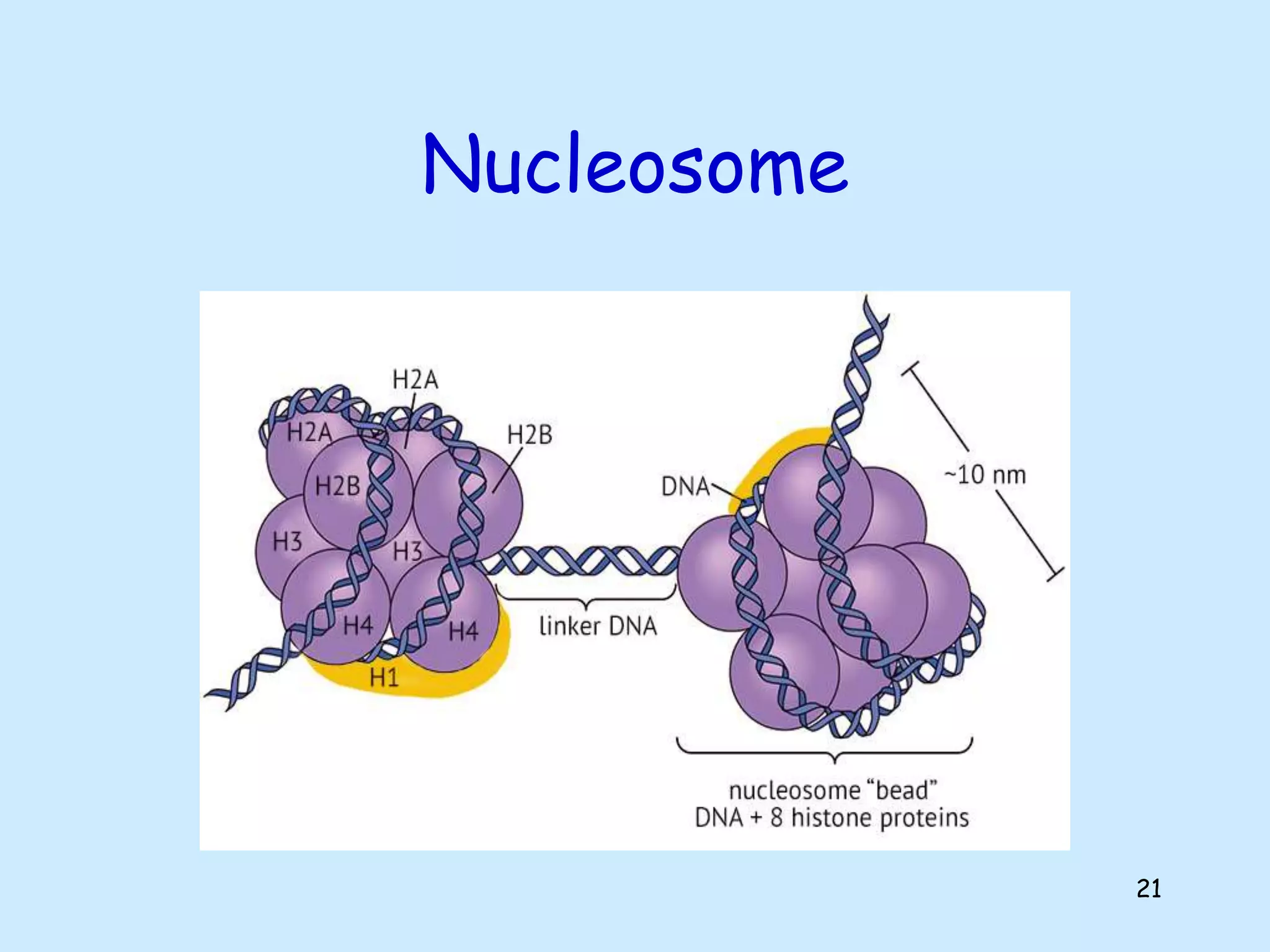
Nucleosome
21

Structure of Nucleic acids

  • 1.
  • 2.
    Two types ofNucleic Acids • 1) De-oxy Ribonucleic acid • 2) Ribonucleic Acid 2
  • 3.
    3 DNA • It islinear polymer ‫خطی‬ ‫پلیمر‬ . • Mad up 4 specific Nucleotides ( ‫از‬ ۴ ‫نوکلوتاید‬ ‫نوع‬ ‫هستند‬ ‫خاص‬ ) • DNA is macromolecule which contain information ( ‫اطالعات‬ ) for protein synthesis and cell structure of living organism
  • 4.
    4 Monomer of NucleicAcids ‫اسیدها‬ ‫نوکلیک‬ ‫منومرهای‬ • The monomer of DNA and RNA are called Nucleotide ‫نوکلیوتاید‬. • Nucleotide have three parts: • 1. nitrogenous base • 2. Pentose sugar • 3. phosphate group
  • 5.
    5 Sugar in DNAand RNA ‫قند‬ ( ‫ای‬ ‫این‬ ‫دی‬ ) ‫و‬ ( ‫ای‬ ‫این‬ ‫ار‬ ) • DNA have deoxyribose sugar • RNA have Ribose Sugar
  • 6.
    6 Nitrogenous Bases • Nitrogenousbases occur in two shapes: • 1) purine: have two rings ( ‫حلقه‬ ‫دو‬ ) structure (Adenine,Guanin) • 2) pyrimidine: have single ring structure (thymine,cytosine,uracil)
  • 7.
  • 8.
    8 nitrogenous bases • CytosineC • Thymine T • Adenine A • Guanine G DNA has four different bases:
  • 9.
    Nucleoside • Sugar +Nitrogenous base is called Nucleoside. 9
  • 10.
    10 Chargaff’s Rule: • Adenineand Thymine always join together A T • Cytosine and Guanine always join together C G The Number of Adenine always equal to thymine and guanine always equal to cytosine in a
  • 11.
  • 12.
    Primary Structure ofDNA . ( ‫ای‬ ‫این‬ ‫دی‬ ‫در‬ ‫اولیه‬ ‫ساختار‬ ) 12
  • 13.
    Primary structure ofNucleic acid • Nucleotides of DNA and RNA are linked through a covalent bond called phosphodiester bond. • This make a long chain of polynucleotides and are called primary structure of DNA or RNA • POLYMERIZATION occur in 5c 3c direction. 13
  • 14.
  • 15.
    Secondary structure ofDNA ‫ای‬ ‫این‬ ‫دی‬ ‫در‬ ‫دوم‬ ‫ساختار‬ • Proposed by Watson and Crick in 1953 • Called DNA double helix structure ( ‫ای‬ ‫دوګانه‬ ‫پیچ‬ ‫مار‬ ‫ساختار‬ ) • Nitrogenous bases are towards center • Purine will always bind with pyrimidine through hydrogen bonds. • Purine with purine or pyrimidine with pyrimidine can not bind with each 15
  • 16.
    Secondary structure • A=Thave two hydrogen bonds • G---C have three hydrogen bonds • The two chains in double helix will be anti-parallel. • It means one strand will be (5-3) from top to bottom, and the other will be from (5-3) from bottom to top. 16
  • 17.
  • 18.
    Minor and MajorGroove ‫بزرګ‬ ‫دهانه‬ ‫و‬ ‫کوچک‬ ‫دهانه‬ • Double helix of DNA form two groove called minor and major grove. 18
  • 19.
    DNA Packaging ‫ای‬ ‫این‬‫دی‬ ‫بندی‬ ‫بسته‬ 19
  • 20.
  • 21.