STRUCTURE OF FINANCIAL
SYSTEM
STRUCTURE OF FINANCIAL
SYSTEM
By
Sundilla Sagar
FINANCIAL SYSTEM
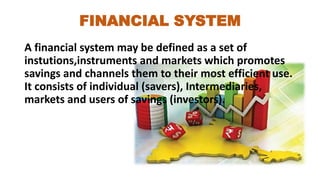
A financial system may be defined as a set of
instutions,instruments and markets which promotes
savings and channels them to their most efficient use.
It consists of individual (savers), Intermediaries,
markets and users of savings (investors).
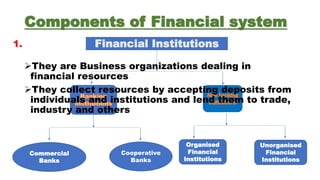
Financial Institutions
They are Business organizations dealing in
financial resources
They collect resources by accepting deposits from
individuals and institutions and lend them to trade,
industry and others
Components of Financial system
1.
Commercial
Banks
Cooperative
Banks
Organised
Financial
Institutions
Unorganised
Financial
Institutions
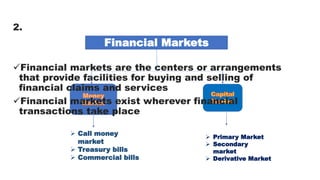
Financial Markets
2.
Financial markets are the centers or arrangements
that provide facilities for buying and selling of
financial claims and services
Financial markets exist wherever financial
transactions take place
 Call money
market
 Treasury bills
 Commercial bills
 Primary Market
 Secondary
market
 Derivative Market
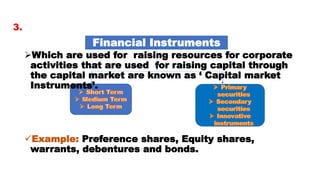
Which are used for raising resources for corporate
activities that are used for raising capital through
the capital market are known as ‘ Capital market
Instruments’.
Example: Preference shares, Equity shares,
warrants, debentures and bonds.
Financial Instruments
3.
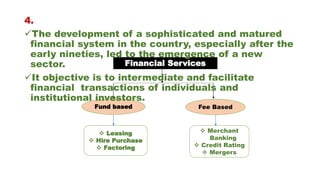
 Leasing
 Hire Purchase
 Factoring
Fee Based
 Merchant
Banking
 Credit Rating
 Mergers
Fund based
Financial Services
4.
The development of a sophisticated and matured
financial system in the country, especially after the
early nineties, led to the emergence of a new
sector.
It objective is to intermediate and facilitate
financial transactions of individuals and
institutional investors.
THANK YOU….!

STRUCTURE OF FINANCIAL SYSTEM.pptx

  • 1.
    STRUCTURE OF FINANCIAL SYSTEM STRUCTUREOF FINANCIAL SYSTEM By Sundilla Sagar
  • 2.
    FINANCIAL SYSTEM A financialsystem may be defined as a set of instutions,instruments and markets which promotes savings and channels them to their most efficient use. It consists of individual (savers), Intermediaries, markets and users of savings (investors).
  • 3.
    Financial Institutions They areBusiness organizations dealing in financial resources They collect resources by accepting deposits from individuals and institutions and lend them to trade, industry and others Components of Financial system 1. Commercial Banks Cooperative Banks Organised Financial Institutions Unorganised Financial Institutions
  • 4.
    Financial Markets 2. Financial marketsare the centers or arrangements that provide facilities for buying and selling of financial claims and services Financial markets exist wherever financial transactions take place  Call money market  Treasury bills  Commercial bills  Primary Market  Secondary market  Derivative Market
  • 5.
    Which are usedfor raising resources for corporate activities that are used for raising capital through the capital market are known as ‘ Capital market Instruments’. Example: Preference shares, Equity shares, warrants, debentures and bonds. Financial Instruments 3.
  • 6.
     Leasing  HirePurchase  Factoring Fee Based  Merchant Banking  Credit Rating  Mergers Fund based Financial Services 4. The development of a sophisticated and matured financial system in the country, especially after the early nineties, led to the emergence of a new sector. It objective is to intermediate and facilitate financial transactions of individuals and institutional investors.
  • 7.